


The residential support worker salary in the UK typically ranges from £22,000 for someone starting out to £30,000 for an experienced worker, according to the National Careers Service. Actual earnings depend on experience, location, employer and working patterns.
Some positions also offer sleep-in allowances, overtime and additional payments for unsocial hours. Understanding these extras is important when comparing jobs, as a higher advertised salary does not always mean a higher basic wage.
Considering children’s residential care? HF Online’s Safeguarding Children Job Ready Programme with Complete Career Guide 2026 offers safeguarding knowledge and career-focused study for people interested in working with children. It can support your preparation, although completing the programme does not guarantee employment or a particular salary.
How Much Does a Residential Support Worker Earn in the UK?
Residential support workers provide practical and emotional support to people living in residential care settings. Their pay varies according to responsibilities, experience and the organisation employing them.
Starting Salary vs Experienced Salary
The National Careers Service provides the following indicative salary figures:
| Experience level | Annual salary |
|---|---|
| Starting residential support worker | £22,000 |
| Experienced residential support worker | £30,000 |
These figures are useful benchmarks rather than fixed national pay scales. A newly recruited worker may earn more or less depending on their contract, working hours and employer.
Senior positions can offer higher earnings because they may involve supervising colleagues, coordinating shifts or supporting care planning.
For a wider view of pay across related occupations, see safeguarding career opportunities.
Residential Support Worker Salary Per Hour and Month
Annual salaries become easier to assess when converted into monthly and hourly amounts.
The following examples assume 37.5 paid hours each week over 52 weeks.
| Annual gross salary | Monthly gross pay | Hourly equivalent |
|---|---|---|
| £25,000 | £2,083.33 | £12.82 |
| £28,000 | £2,333.33 | £14.36 |
| £30,000 | £2,500.00 | £15.38 |
These are illustrative calculations, not additional national salary averages. The hourly equivalents assume 37.5 paid hours per week over 52 weeks. Actual earnings depend on contracted hours, working arrangements and any additional allowances.
Monthly figures are before Income Tax, National Insurance, pension contributions and other deductions.
Always compare salaries against the number of paid hours required. Two jobs advertising £28,000 annually may offer different hourly equivalents if one involves a longer working week.
What Affects Residential Support Worker Salaries?
Residential support worker wages are influenced by several factors. Looking beyond the advertised annual figure can help you identify which opportunities offer better overall value.
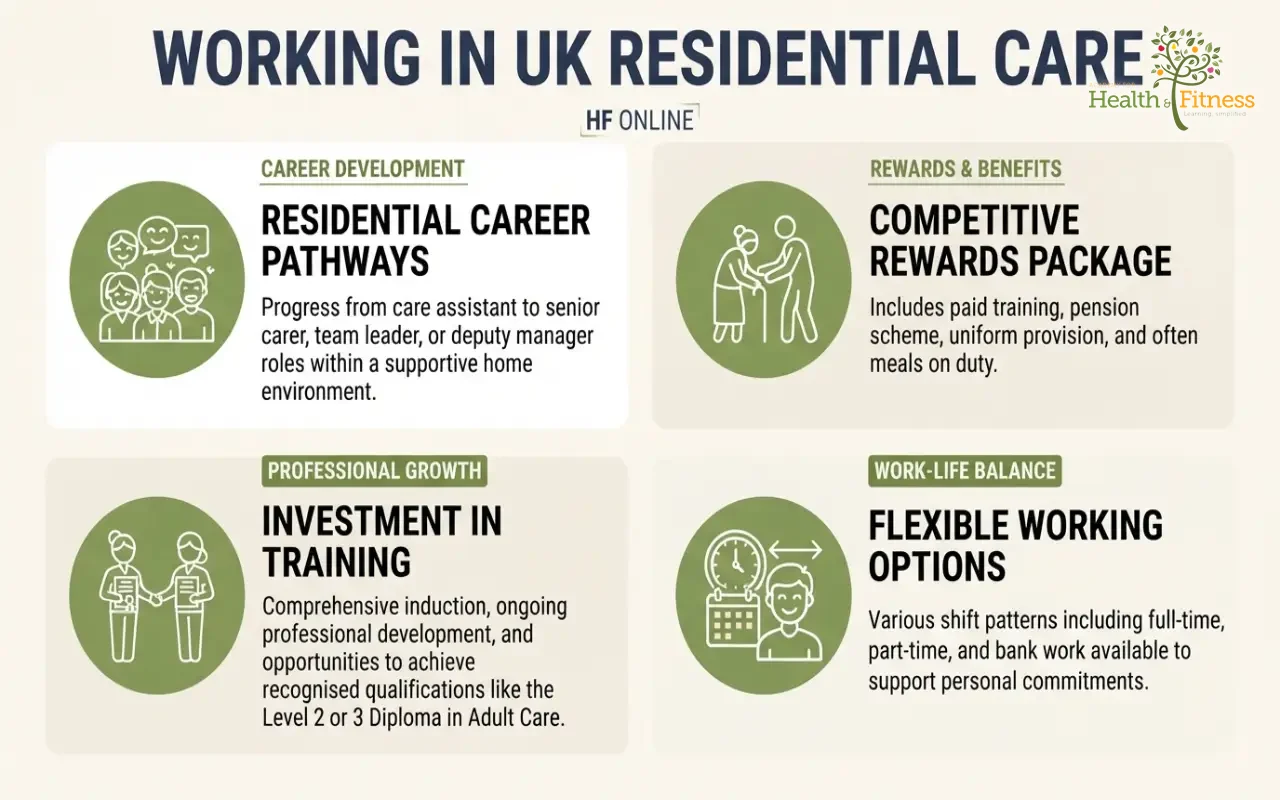
Experience and Seniority
Entry-level workers often begin with supervised responsibilities while developing their knowledge of care procedures, communication and safeguarding.
Experienced staff may undertake additional duties, including mentoring colleagues or supporting care plans. Senior positions may offer higher salaries where these responsibilities are recognised.
Alongside workplace experience, care standards training can help aspiring workers develop introductory knowledge of care responsibilities, communication and safeguarding.
HF Online’s Care Certificate Course – Standards (1 to 16) provides online learning, but completing the course alone does not establish completion of all workplace assessment requirements associated with the Care Certificate.
Location and Employer Type
Pay can differ between local authorities, private care providers and charitable organisations.
For example, a Surrey County Council children’s residential worker vacancy advertised a salary of £31,659–£33,952 in November 2026, with additional enhancements.
This is one employer-specific example, not the average salary for Surrey or the wider UK.
When considering regional differences, compare working hours, living costs, pension arrangements and additional allowances alongside basic pay.
Children’s vs Adults’ Residential Care
Residential support workers may assist children, young people, older adults or individuals with disabilities and additional support needs.
The responsibilities and training expectations can differ between settings.
For those interested in children’s services, our guide to working in children’s residential care provides more detail about the role and entry routes.
People considering adult residential services may benefit from studying dignity and safeguarding in adult care, particularly when preparing for responsibilities involving vulnerable adults and person-centred support.
If you are considering alternative roles, other careers working with children may provide additional options.
Do Residential Support Workers Get Extra Pay for Sleep-Ins and Night Shifts?
Yes, some residential support workers receive additional payments for sleep-in duties, waking-night shifts, overtime or unsocial hours. However, these payments are not automatically included in every contract.
Sleep-In Payments vs Waking-Night Shifts
A sleep-in shift generally involves remaining at the workplace overnight with an expectation of sleeping, while being available if assistance is needed.
A waking-night shift requires the employee to remain awake and carry out duties throughout the shift.

The distinction matters for pay.
Under the GOV.UK guidance on calculating the minimum wage, the treatment of sleep-in periods depends on the working arrangements. Where someone is genuinely expected to sleep and suitable sleeping facilities are provided, time spent asleep generally does not count as working time for minimum-wage purposes. Time spent awake for work can count.
Workers who are required to remain awake and work throughout the night are treated differently.
Employers may also agree to separate sleep-in allowances.
Overtime, Weekend and Bank Holiday Pay
Some employers offer higher rates for nights, weekends or bank holidays. Others use standard hourly rates with separate allowances.
There is no universal statutory requirement for enhanced night-shift or bank-holiday rates simply because those hours are worked. Contractual arrangements and applicable minimum-wage requirements still matter.
Check the employment contract rather than assuming that every unsocial shift attracts extra pay.
How to Calculate Potential Total Earnings
Consider a hypothetical worker with:
- Basic annual salary: £28,000
- Sleep-in allowance: £60 per shift
- Four sleep-ins monthly: £2,880 annually
- Other agreed annual shift enhancements: £1,000
Their potential annual gross earnings would be:
£28,000 + £2,880 + £1,000 \= £31,880
This is an illustration, not a typical or guaranteed earnings figure. Actual payments depend on the contract and shifts completed.
A vacancy advertising £31,880 including allowances should not automatically be considered equivalent to another offering £31,880 as basic salary.
How to Assess a Residential Support Worker Salary Offer
Before accepting a position, examine the full employment package rather than focusing only on the headline salary.
Use this five-point checklist:
- Check the basic salary. Is the advertised figure guaranteed, or does it include potential allowances and overtime?
- Confirm paid working hours. A 40-hour contract and a 37-hour contract can produce different hourly rates despite offering the same annual salary.
- Ask about sleep-in duties. How often are they required, what is the allowance, and how is time spent working overnight recorded and paid?
- Review employment benefits. Consider pension contributions, annual leave, paid training and other contractual benefits.
- Check whether the salary is full-time equivalent. Part-time vacancies may advertise the full-time salary even though actual earnings are calculated proportionately.

These questions can also be useful when preparing for a residential support worker interview.
A clear understanding of the offer helps you compare positions fairly and avoid relying on potential earnings that may not be guaranteed.
Can Training and Experience Help You Progress to Better-Paid Roles?
Experience, relevant skills and additional responsibilities may improve your prospects of moving into more senior residential support positions. However, training alone does not guarantee promotion or increased pay.
Progression into Senior Residential Support Roles
Experienced workers may progress into senior support, team leader or supervisory positions.
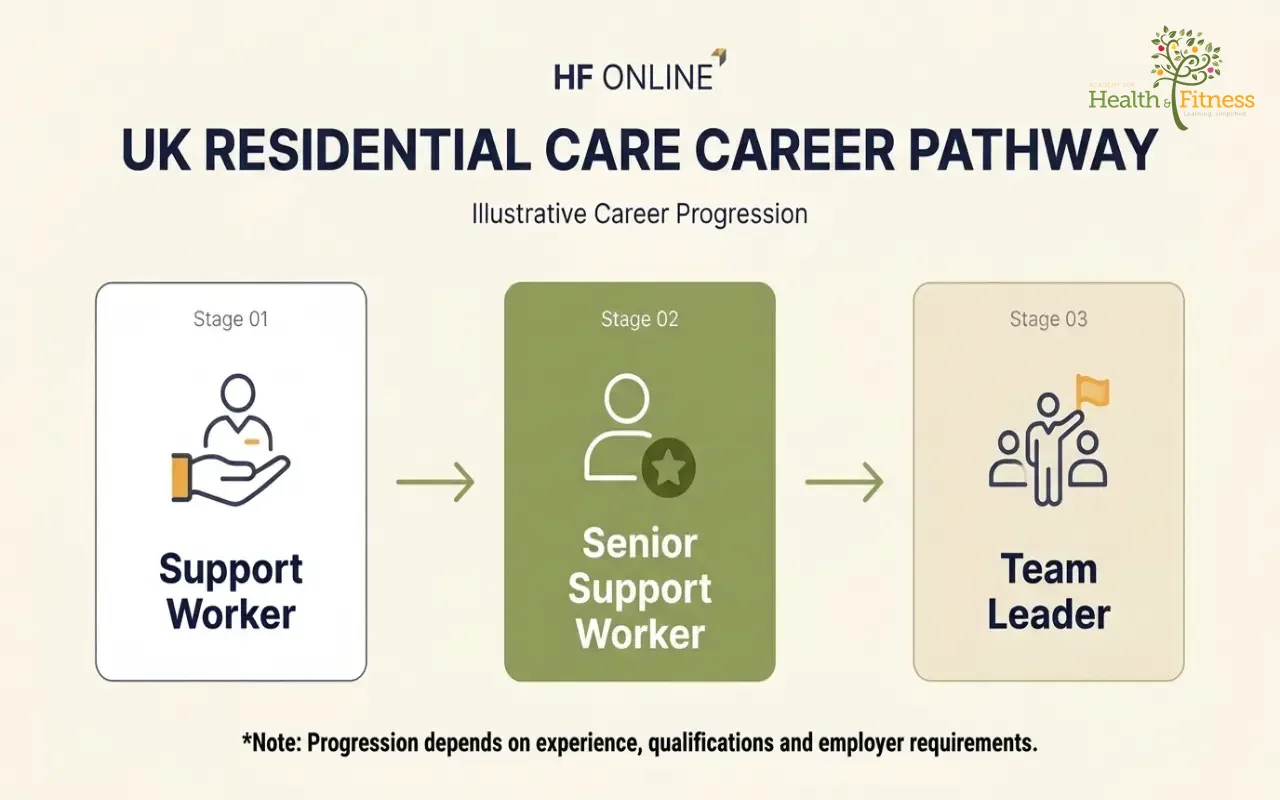
These roles can involve coordinating staff, supporting care plans, maintaining records and helping colleagues follow safeguarding procedures.
Employers may consider practical experience, relevant qualifications and demonstrated leadership skills when recruiting.
If you are new to the sector, starting a safeguarding career without experience provides a useful starting point.
Building Relevant Care and Safeguarding Knowledge
Safeguarding awareness is important in residential care, particularly when supporting people who may be at risk of abuse, neglect or exploitation.
Workers interested in strengthening their knowledge may consider HF Online’s Adult Safeguarding for Social Care Workers, which covers safeguarding-related topics relevant to adult social care.
Such learning can support professional development, but it should not be confused with regulated qualifications or employer-specific competency assessments.
For further guidance, see safeguarding training for job applications.
You can also review choosing relevant safeguarding training when considering which learning options match your career goals.

Get Job-Ready for Residential Childcare Roles
For aspiring residential support workers who want the safeguarding knowledge and career guidance employers look for before you apply.
- 30 core courses plus 10 career support courses
- Includes Caring for Children and Young People Level 2
- 1 year access with 24/7 tutor support
Conclusion
The residential support worker salary in the UK depends on experience, employer, location and working patterns. Although official career guidance provides a useful starting point, actual earnings may differ because of contracted hours, sleep-in allowances and other payments.
When assessing opportunities, compare guaranteed basic pay with potential additional earnings and consider the responsibilities involved.
Relevant experience and professional development may support future career progression, but the best starting point is a clear understanding of what each role offers.
Frequently Asked Questions
The National Careers Service gives an indicative starting salary of £22,000 annually. Actual starting offers vary by employer and hours, and must comply with applicable minimum-wage rules. Entry-level workers should check the hourly equivalent rather than relying solely on the annual figure.
Hourly earnings depend on gross salary and paid working hours. For example, £28,000 annually over 37.5 paid hours per week equals approximately £14.36 per hour. Additional allowances may increase gross earnings.
From 1 April 2026, the National Living Wage is £12.71 per hour for workers aged 21 and over. The minimum rate is £10.85 for those aged 18–20 and £8.00 for eligible younger workers and apprentices.
These are statutory minimums, not residential support worker salary averages.
Residential support work may suit people who enjoy supporting others and are comfortable with responsibility and shift-based working. It can offer opportunities for skill development and progression, although earnings, workload and working conditions vary between employers.
Some employers recruit applicants without previous residential care experience and provide workplace training. However, entry requirements differ, particularly in children's residential services. Applicants should check each vacancy's qualification, safeguarding and recruitment requirements.
Table of Contents