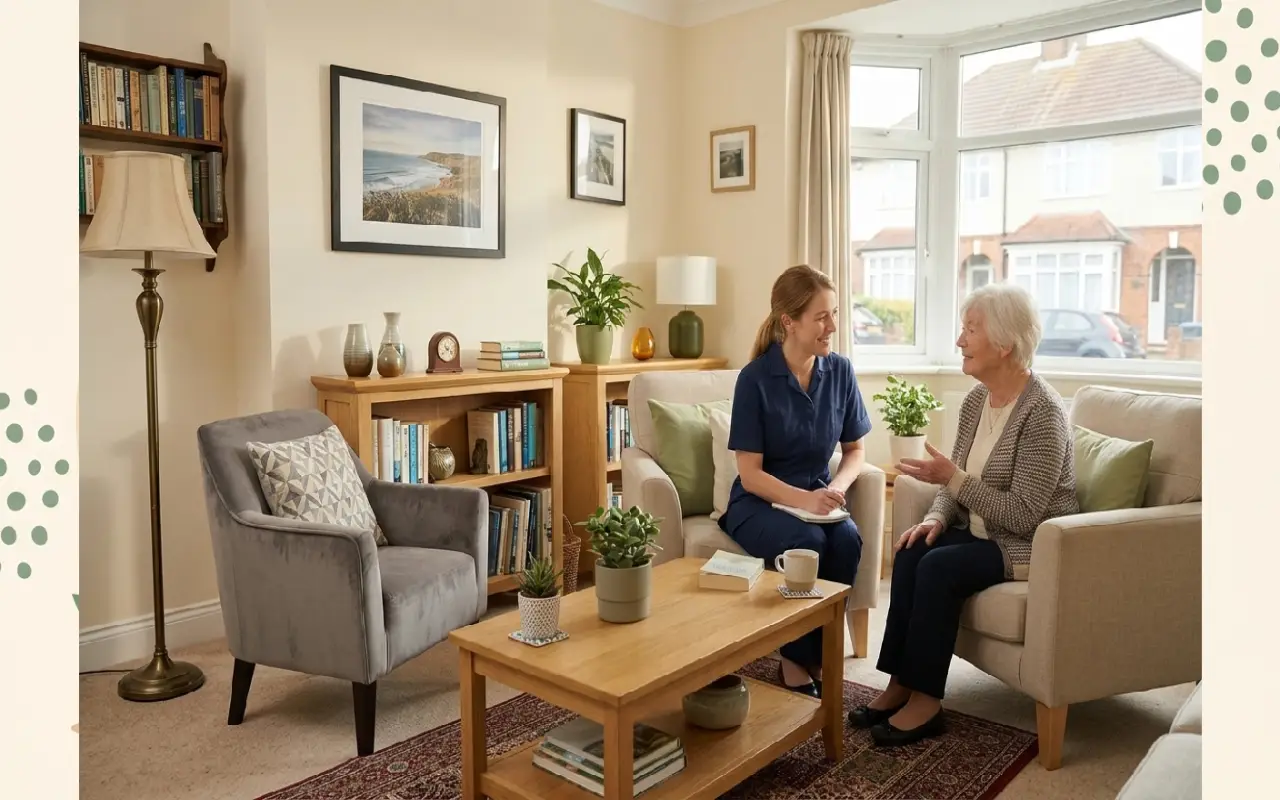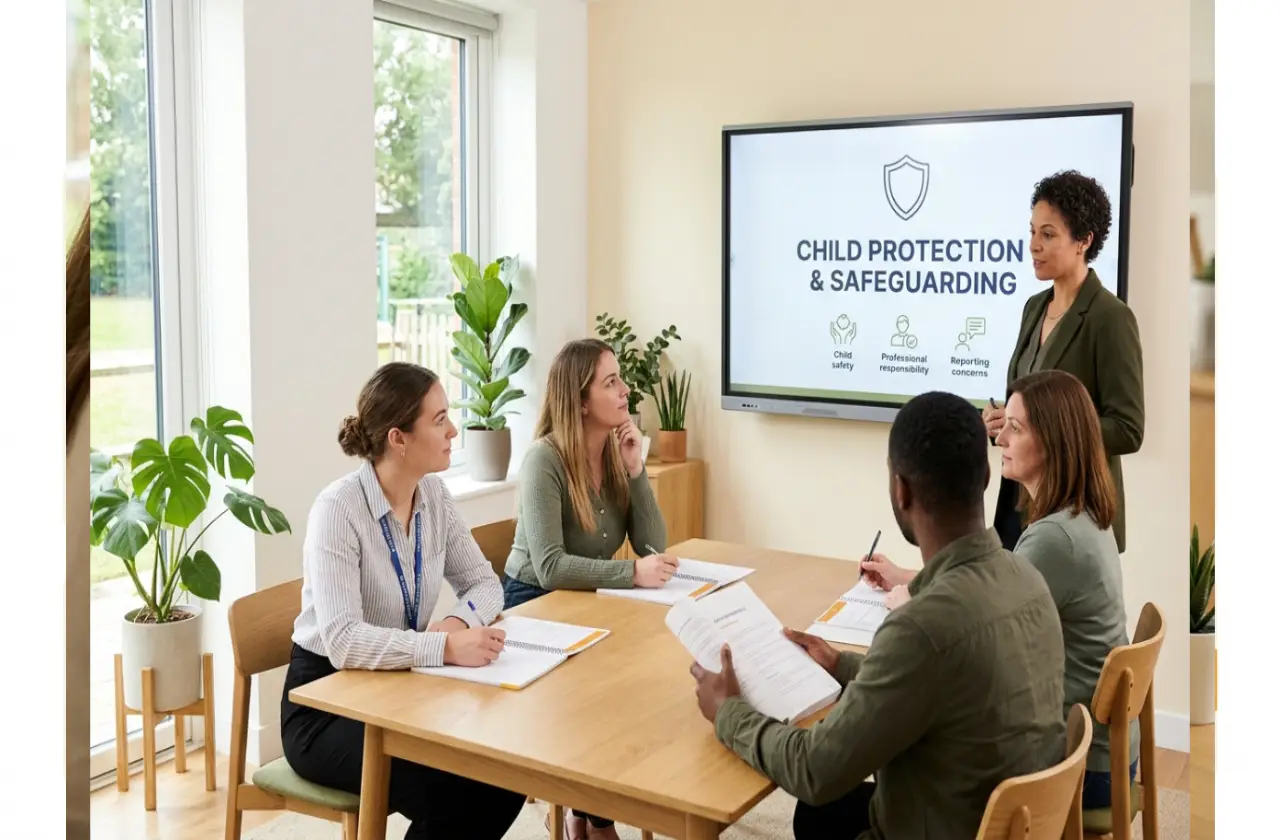


Safeguarding jobs offer opportunities to support children, young people and adults who may be at risk of harm. Whether you are interested in working in a school, care home, charity or healthcare organisation, there are several career paths worth considering.
Safeguarding jobs in the UK include safeguarding officers, child protection officers, safeguarding coordinators, pastoral support workers, social workers and specialist safeguarding nurses. Some support roles offer entry routes for people with transferable skills, while specialist positions require professional qualifications and experience.
This guide explains the main safeguarding careers, typical salaries, qualifications and practical steps for finding suitable vacancies.
Interested in preparing for a child safeguarding career? HF Online’s Safeguarding Children Job Ready Programme with Complete Career Guide 2026 combines safeguarding-related learning with career preparation, including CV and interview guidance. It can support your professional development, although completing the programme does not guarantee employment or replace qualifications required by an employer.
Prefer a one-page overview? Download the free Safeguarding Career Roadmap (PDF).
Strengthen your safeguarding knowledge for roles in schools, childcare and children's services.
- Apply safeguarding principles in line with UK care standards
- Use risk assessment and management strategies
- Understand your legal and professional responsibilities
What Types of Safeguarding Jobs Are Available in the UK?
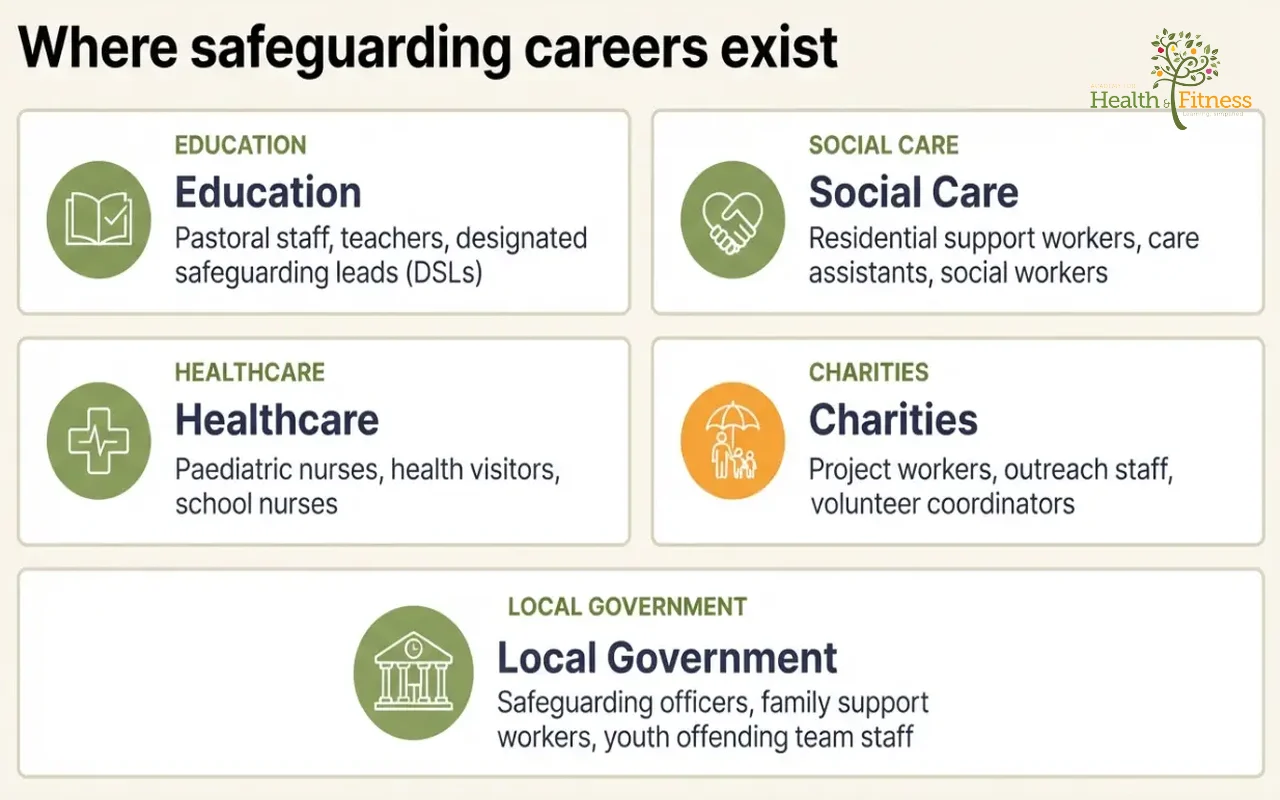
Safeguarding responsibilities exist across education, healthcare, social care, local government and the voluntary sector. However, not every job involving safeguarding is a specialist safeguarding position.
Some professionals coordinate safeguarding procedures, while others work directly with people who need protection or support.
Safeguarding Officers and Coordinators
Safeguarding officers help organisations recognise, record and respond appropriately to concerns about people’s safety and wellbeing.
Depending on the employer, their responsibilities may include:
- Receiving and documenting safeguarding concerns.
- Supporting referrals to appropriate agencies.
- Helping staff follow safeguarding procedures.
- Maintaining confidential records.
- Coordinating safeguarding training or awareness activities.
Safeguarding coordinators may also support policy implementation, reporting and communication between departments.
The National Careers Service’s child protection officer profile provides an official overview of relevant responsibilities and career routes.
School Safeguarding Leads and Pastoral Support Staff
Schools employ staff with responsibilities for protecting pupils and supporting their welfare.
A Designated Safeguarding Lead (DSL) takes lead responsibility for safeguarding and child protection arrangements within a school or college. Pastoral support officers may help pupils experiencing attendance difficulties, family challenges or emotional wellbeing concerns.
In England, the Department for Education’s Keeping Children Safe in Education 2026 sets out statutory safeguarding and safer recruitment requirements for schools and colleges.
These roles differ in seniority and responsibilities. A pastoral support position may offer relevant experience, but becoming a DSL generally requires appropriate organisational responsibility, experience and training.
Professionals seeking additional child safeguarding knowledge may consider HF Online’s Safeguarding Children Level 3 course. This is supplementary training, not an automatic qualification for a DSL appointment.
Children's Residential and Family Support Workers
Residential support workers help children and young people living in care settings. Their work may involve daily routines, emotional support, maintaining safe environments and recognising safeguarding concerns.
Family support workers may help families access services, improve wellbeing and respond to challenges affecting children.
These roles often require patience, communication skills and the ability to maintain professional boundaries.
If residential care interests you, read more about working in children’s residential care.
You can also consider other career options involving children, including positions with different education and experience requirements.
Social Workers and Safeguarding Practitioners
Social workers assess needs, support vulnerable individuals and families, and contribute to safeguarding decisions. Depending on their role, they may undertake statutory assessments, coordinate support plans and work with other agencies.
Some specialise in children’s safeguarding, while others work in adult social care.
Unlike many general support positions, social work is a regulated profession. In England, individuals using the protected title social worker must meet the relevant professional registration requirements.
A short safeguarding course cannot replace an approved social work qualification or professional registration.
NHS, Charity and Adult Safeguarding Roles
Safeguarding careers also exist outside children’s services.
NHS organisations employ specialist safeguarding nurses, practitioners and leads. Clinical positions generally require relevant professional registration and experience.
Charities may recruit safeguarding officers, caseworkers, advisers and managers to support their services and organisational responsibilities.
Adult social care providers employ care workers, safeguarding coordinators and managers who help protect adults at risk of abuse or neglect.
People interested in care-sector opportunities may consider HF Online’s Safeguarding in Care Job Ready Programme with Complete Career Guide 2026 as an additional learning and career-preparation option.
The right position depends on your experience, qualifications and preferred working environment.
How Much Do Safeguarding Jobs Pay in the UK?
Safeguarding salaries vary considerably because the term covers different occupations, levels of responsibility and professional requirements.
Typical Salaries Across Safeguarding Roles
The following comparison provides a starting point for salary research.
| Safeguarding-related role | Indicative annual salary | Source |
|---|---|---|
| Child protection officer | £27,000–£50,000 | National Careers Service |
| Residential support worker | £22,000–£30,000 | National Careers Service |
| Social worker | £32,000–£48,000 | National Careers Service |
| Specialist safeguarding nurse Band 6 example | £39,959–£48,117 | NHS Employers, England 2026/27 |
| Safeguarding manager | Varies by employer and seniority | Check current vacancies |
These figures provide a general indication of earnings rather than guaranteed salaries. National Careers Service ranges are occupational estimates, while the NHS figures reflect a specific pay band in England. Actual salaries depend on the employer, location, qualifications, experience and responsibilities. Always check the latest vacancy advertisement before applying.
For other positions, check current advertisements rather than assuming a single national salary. Specialist clinical, social work and management roles are not directly comparable with entry-level support jobs.
What Affects Safeguarding Salaries?
Several factors influence earnings:
- Experience: Experienced practitioners may qualify for more senior positions.
- Qualifications: Professional registration and specialist expertise can affect eligibility and pay.
- Employer: Schools, councils, charities and healthcare providers use different pay arrangements.
- Location: Salaries may vary across UK regions.
- Working patterns: Residential roles may include shifts, weekends or additional allowances.
For a closer look at residential care worker earnings, consult the dedicated salary guide.
When comparing vacancies, check whether advertised figures represent annual salaries, hourly rates or temporary agency payments.
What Qualifications Do You Need for Safeguarding Jobs?
There is no single qualification that makes someone eligible for every safeguarding job.
Requirements depend on the employer, sector, responsibilities and whether the position belongs to a regulated profession.
Safeguarding guidance, professional registration arrangements and certain employment requirements differ across England, Scotland, Wales and Northern Ireland. Always check the rules and employer requirements that apply in the nation where you intend to work.
Entry-Level Requirements and Relevant Experience
Some safeguarding-related support positions may accept applicants without a university degree.
Employers may consider experience gained through:
- Childcare, education or youth work.
- Health and social care.
- Community volunteering.
- Customer-facing support services.
- Administrative or recordkeeping responsibilities.
Communication, reliability and professional judgement can also be valuable transferable skills.
However, applicants must still meet the requirements stated in each vacancy.
If you are new to the sector, our guide to starting a safeguarding career without experience covers entry routes in greater detail.
Apprenticeships, Degrees and Professional Registration
Apprenticeships can provide structured routes into certain safeguarding-related occupations.
For example, the Level 3 Safeguarding Support Officer apprenticeship is an occupational training route in England covering safeguarding support responsibilities.
Other careers have different requirements.
Social workers generally need an approved professional qualification and registration with the relevant regulator. Specialist safeguarding nurses require appropriate healthcare qualifications, registration and relevant experience.
A safeguarding manager may need substantial practical experience, leadership capabilities and qualifications appropriate to the employer’s sector.
Always check the person specification before applying. A course title containing “Level 3” does not automatically mean it meets a vacancy’s regulated qualification requirements.
Safeguarding Training, CPD and DBS Checks
Safeguarding training can help applicants develop knowledge of recognising concerns, responding appropriately, confidentiality and reporting procedures.
Continuing Professional Development (CPD) courses may also help existing workers refresh or extend their knowledge.
However, completion certificates should not be confused with regulated qualifications, professional registration or employer approval.
For practical guidance, see how safeguarding training can support job applications.
Some positions also involve criminal record checks. The appropriate level depends on the role and its legal eligibility criteria, as explained in the government’s DBS eligibility guidance.
Employers may additionally require references, identity checks and role-specific safeguarding training.

How to Get Started in Safeguarding Work
Getting into safeguarding work begins with choosing a realistic career route. You do not necessarily need to start with a specialist officer position.
The following five steps can help you prepare.
Step 1: Choose a Suitable Safeguarding Role
Start by identifying the type of work that interests you.
Would you prefer supporting children in education, working in residential care, helping adults access services or coordinating safeguarding procedures?
Read several job descriptions and consider whether the responsibilities suit your skills and experience.
A support position may be a more appropriate starting point than a specialist management role.
Step 2: Check Employer Requirements
Before applying, review the job’s person specification.
Look for essential qualifications, relevant experience, professional registration, safeguarding knowledge and required checks.
Pay particular attention to the difference between essential and desirable criteria.
For example, an employer may welcome safeguarding training but require a recognised professional qualification for a particular position.
Checking these details early helps you focus on suitable opportunities.
Step 3: Build Relevant Knowledge and Experience
Consider how your existing experience relates to safeguarding responsibilities.
You may have developed useful skills through education, care work, community activities or customer support.
Relevant volunteering can also provide experience, although opportunities involving children or adults at risk may involve recruitment checks and supervision.
Training can strengthen your knowledge, but it should complement rather than replace the qualifications and experience an employer requires.
For further guidance, see selecting safeguarding career training.
Step 4: Prepare Your CV and Application
A safeguarding job application should demonstrate how your skills relate to the position.
Rather than simply writing that you are responsible or compassionate, provide evidence.
For example, you could describe how you maintained confidential records, supported someone experiencing difficulties or followed a workplace reporting procedure.
Use examples that accurately reflect your experience and protect other people’s confidentiality.
If you are applying for residential care positions, reviewing support worker interview preparation may help you anticipate relevant questions.

Step 5: Apply and Prepare for Recruitment
Tailor each application to the advertised role.
Employers may ask competency-based questions about professional boundaries, communication, safeguarding awareness and responding to concerns.
Prepare examples showing how you make decisions, follow procedures and seek appropriate support.
Remember that safeguarding recruitment may include references, identity checks, background checks and further employer-specific requirements.
Where Can You Find Safeguarding Job Vacancies?
Finding suitable vacancies is easier when you search by both job title and employer sector.
Search by Employer and Sector
The UK government’s Find a Job service is one place to search for current opportunities.
For NHS safeguarding jobs, check NHS Jobs and individual NHS trust recruitment pages. School safeguarding and pastoral positions are commonly advertised through school or academy trust websites and education recruitment platforms. Local authority safeguarding roles can be found on council careers pages, while charities advertise opportunities through their own websites and specialist charity recruitment platforms.
Useful search terms include:
- Safeguarding officer jobs
- Safeguarding support officer
- Child protection officer
- Safeguarding coordinator
- School safeguarding lead
- Pastoral support officer
- Safeguarding practitioner
Search for related roles as well. Some employers advertise safeguarding responsibilities under titles such as welfare officer, family support worker or student support adviser.
Before applying, check the location, salary, contract type, essential criteria and application deadline.
Vacancy numbers change frequently, so a current search is more useful than relying on an older list of available positions.
Remote, Hybrid and Part-Time Opportunities
Some safeguarding-related administrative, advisory and coordination roles may offer remote or hybrid working.
However, positions involving direct support, residential care, school attendance or clinical responsibilities often require an on-site presence.
Part-time and fixed-term opportunities may also be available.
When searching for flexible positions, review the actual duties rather than relying on the job title alone.
What Skills Help You Succeed in Safeguarding Jobs?
Safeguarding work requires professional judgement alongside interpersonal and organisational skills.
Important abilities include:
- Communication: Listening carefully and sharing concerns through appropriate channels.
- Empathy: Supporting people respectfully without making assumptions.
- Recordkeeping: Maintaining accurate, factual and confidential information.
- Professional boundaries: Recognising the limits of your responsibilities.
- Risk awareness: Identifying concerns and following established procedures.
- Teamwork: Cooperating with colleagues and relevant safeguarding professionals.
You should also be willing to update your knowledge as organisational procedures and guidance change.
HF Online’s Child Protection & Safeguarding course is one option for developing foundational knowledge of safeguarding responsibilities, recognising concerns and appropriate responses.
Is Safeguarding a Good Career?
Safeguarding can be a rewarding career for people who value supporting others, maintaining safe environments and contributing to responsible professional practice.
There are opportunities across several sectors, and experience may support progression into coordination, specialist practice or management.
However, safeguarding work can also be emotionally demanding. Some roles involve difficult conversations, complex situations and significant documentation responsibilities.
Career progression depends on your experience, professional development and the qualifications required for your chosen role.
A suitable career choice should reflect both your interests and your readiness for the responsibilities involved.
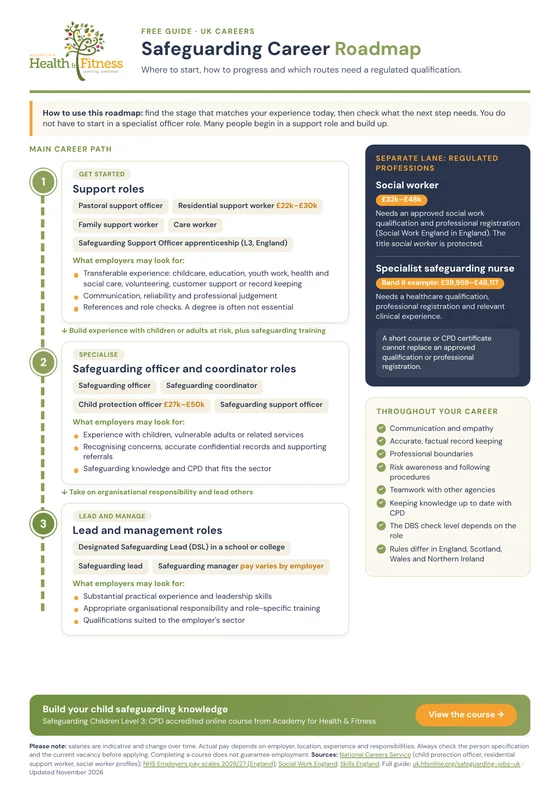
Safeguarding Career Roadmap (UK)
See the whole safeguarding career path on one printable page.
- Three stages: support roles, specialist roles, lead and management roles
- What employers may look for at each stage, with indicative pay
- Regulated routes (social work and nursing) shown separately
Conclusion
Safeguarding jobs in the UK offer varied opportunities across education, healthcare, social care, charities and local government. Salaries, qualifications and responsibilities differ, so choosing the right position begins with researching employer expectations.
Identify roles that match your experience, develop relevant skills and review current vacancies. With suitable preparation and a realistic career plan, you can take informed steps towards working in safeguarding.
Frequently Asked Questions About Safeguarding Jobs
Yes, some safeguarding-related support, administrative and care positions may accept applicants without a university degree. Employers may consider relevant experience, transferable skills and vocational training. However, regulated professions such as social work require recognised qualifications and professional registration.
A safeguarding officer helps an organisation respond appropriately to concerns about people's safety and wellbeing. Duties may include receiving concerns, maintaining records, supporting referrals, coordinating procedures and advising colleagues. Exact responsibilities depend on the organisation and the seniority of the position.
Some entry-level support roles may accept applicants without previous safeguarding employment. Relevant volunteering, transferable skills and training can strengthen an application. Specialist safeguarding officer positions may require substantial experience working with children, vulnerable adults or related services.
A school safeguarding lead generally needs appropriate experience, relevant safeguarding knowledge and training suitable for the responsibilities of the position. The school must ensure its designated safeguarding lead arrangements meet the applicable statutory guidance. Completing an online course alone does not automatically qualify someone for appointment.
Some safeguarding coordination, advisory, administrative and policy-related positions may offer remote or hybrid arrangements. However, many safeguarding roles involve direct contact, workplace attendance or responsibilities that cannot be performed entirely from home. Always check the advertised working arrangements.****
Table of Contents