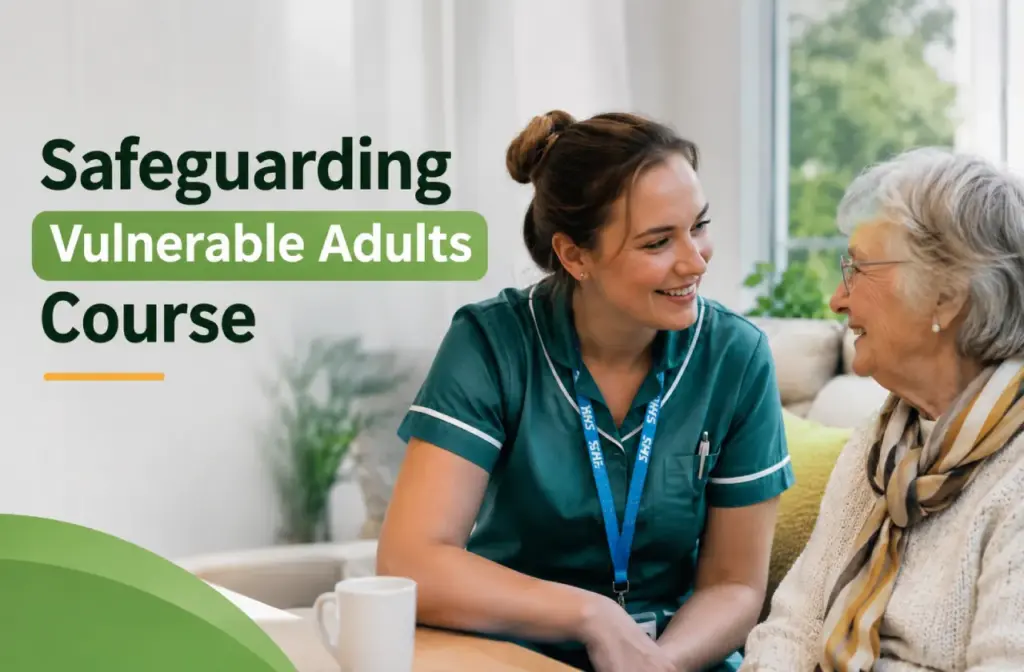


Working with adults who need care or support comes with important responsibilities. Recognising abuse, responding to concerns and protecting individual rights are essential parts of safeguarding vulnerable adults, particularly in health and social care settings.
A safeguarding vulnerable adults course covers recognising abuse and neglect, understanding safeguarding responsibilities, reporting concerns and following appropriate procedures. It helps learners develop the awareness needed to support adults at risk while respecting their dignity and independence.
Whether you’re a care assistant, support worker, volunteer or new to the sector, choosing suitable training matters. This guide explains what adult safeguarding courses cover, who should take them, UK training requirements and what to check before enrolling.
Vulnerability, Abuse & Safeguarding
What Does a Safeguarding Vulnerable Adults Course Cover?
A safeguarding vulnerable adults course introduces the knowledge needed to identify possible harm and respond appropriately. The exact curriculum depends on the provider, training level and intended audience.
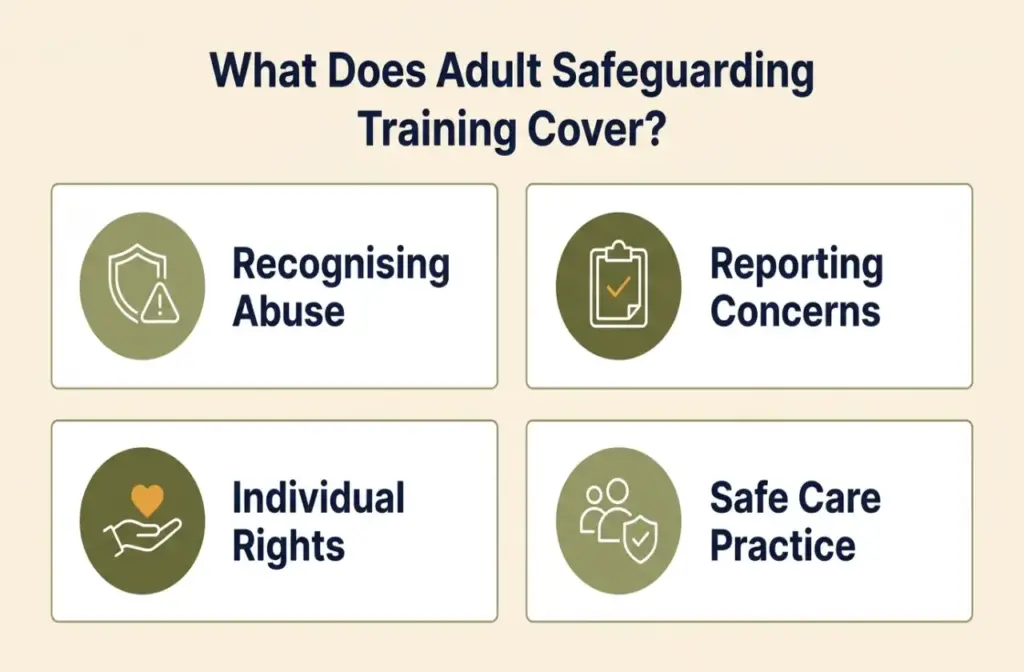
Most adult safeguarding training covers three important areas.
Safeguarding Levels 1, 2 and 3 Explained
Recognising potential abuse is a central part of safeguarding training. Learners become familiar with common warning signs and situations where adults may need additional protection.
Topics generally include:
- Physical abuse: Harm caused through violence or inappropriate physical treatment.
- Emotional abuse: Intimidation, humiliation, threats or controlling behaviour.
- Financial abuse: Theft, fraud or misuse of someone’s money or property.
- Neglect: Failing to meet essential care and support needs.
- Exploitation and self-neglect: Recognising circumstances that may place adults at risk.
Training also emphasises respecting personal choices and avoiding assumptions about someone’s circumstances.
Reporting Concerns and Following Safeguarding Procedures
Recognising possible abuse is only the first step. Learners also need to understand how to respond safely.
Safeguarding courses typically introduce reporting procedures, accurate record-keeping, confidentiality, information sharing and whistleblowing.
For example, a support worker might notice unexplained withdrawals from an adult’s bank account. Rather than investigating independently, they should record relevant observations and report their concerns through the appropriate safeguarding procedure.
Safeguarding Principles and Individual Rights
Effective safeguarding protects people without unnecessarily restricting their independence.
England’s Care and support statutory guidance identifies six safeguarding principles, including empowerment, prevention and accountability.
Training may also address consent, person-centred care, restrictive practices and online safety. These topics help learners understand why individual rights must remain central to safeguarding decisions. For those working in care settings, HF Online’s Dignity & Safeguarding course offers additional knowledge of respectful care, individual rights and safeguarding responsibilities.
Who Should Take a Safeguarding Vulnerable Adults Course?
Adult safeguarding training is particularly relevant to people whose work brings them into contact with adults who have care and support needs.
Potential learners include:
- Care assistants and support workers: Recognising concerns and supporting people safely in residential or community settings.
- Healthcare assistants: Understanding safeguarding responsibilities during everyday care.
- Social care and community workers: Identifying potential harm and following reporting procedures.
- Volunteers and charity workers: Supporting adults who may experience abuse, neglect or exploitation.
- Career changers: Developing introductory safeguarding knowledge before entering relevant roles.
- Employers and training coordinators: Identifying appropriate safeguarding awareness training for staff.
Safeguarding awareness can also benefit people considering health and social care careers, although the necessary training varies by role.

Registered professionals, safeguarding leads and managers may require more advanced or specialised training alongside introductory courses. Those whose responsibilities involve assessing decision-making capacity may also benefit from HF Online’s Mental Capacity Training, which examines capacity assessments, consent and relevant legal responsibilities.
Is Safeguarding Adults Training Mandatory in the UK?
Safeguarding training requirements depend on your responsibilities, employer and the regulations governing your workplace.
In England, CQC Regulation 18 requires regulated care providers to ensure staff receive appropriate training, support and professional development for their duties.
However, this does not mean every UK worker must complete the same safeguarding course or obtain one specific certificate.
Employers may also require workplace induction, practical competency assessments, refresher training and knowledge of local safeguarding procedures.
UK requirements are not identical across all four nations. England, Scotland, Wales and Northern Ireland have different adult safeguarding frameworks and procedures. Learners should check the requirements relevant to their workplace.
What Certificate Will You Receive After Safeguarding Training?
Certificates vary between training providers. Before enrolling, check what the certificate represents and whether it meets your employer’s requirements.
Three distinctions are particularly important:
- CPD certificate: Provides evidence of continuing professional development and relevant learning activities.
- QLS-endorsed certificate: Recognises completion of a non-regulated learning programme endorsed through the Quality Licence Scheme.
- Regulated qualification: A formal qualification regulated by an appropriate qualifications regulator, such as Ofqual in England.
A course advertised as Level 2 is not automatically an Ofqual-regulated Level 2 qualification.
For example, the Level 2 Adult Social Care Certificate is a separate Ofqual-regulated qualification involving assessment of workplace knowledge and skills.
An online safeguarding certificate can demonstrate relevant learning, but it does not independently provide professional registration or a licence to practise.
How to Choose the Right Safeguarding Adults Course
Choosing a course should involve more than comparing prices or certificate descriptions. The most suitable training will reflect your current knowledge, responsibilities and learning needs.
Check These Five Things Before Enrolling
- Course content: Check whether the curriculum covers abuse recognition, safeguarding responsibilities, reporting procedures and individual rights.
- Training level: Consider whether the course suits beginners, existing care workers or professionals with advanced safeguarding responsibilities.
- Learning format: Decide whether flexible, self-paced online training suits your schedule and learning preferences.
- Assessment and certification: Review the assessment requirements, certificate type and any additional certificate fees.
- Workplace expectations: Ask your employer whether the training meets the requirements of your role or whether further practical training is necessary.
For adult care workers in England, the Care Certificate standards provide another useful reference. Standard 10 addresses adult safeguarding knowledge and responsibilities.
However, completing an individual safeguarding awareness course does not automatically mean someone has completed Care Certificate Standard 10. Learners preparing for care roles may also consider HF Online’s Care Certificate course, which covers the knowledge associated with all 16 standards, including adult safeguarding and duty of care. Workplace assessment is still required where practical competence must be demonstrated.
The right course should provide relevant knowledge without making unsupported promises about qualifications or employment opportunities.
Is HF Online's Vulnerability, Abuse & Safeguarding Course Right for You?
If you’re looking for flexible online safeguarding awareness training, HF Online offers the Vulnerability, Abuse & Safeguarding course.

The course introduces relevant safeguarding topics and is designed for self-paced online learning.
Key details include:
- Course level: Advertised as Level 2, non-regulated training.
- Duration: Approximately 1 hour and 21 minutes.
- Access: One year of course access.
- Learning topics: Suspected abuse, safeguarding procedures, whistleblowing, information sharing, restrictive practices and online safety.
- Assessment: Assignment-based assessment with a stated minimum pass mark of 60%.
- Certification: CPD and QLS-endorsed certificate options, subject to the provider’s stated arrangements and applicable fees.
This course may suit learners seeking introductory or supplementary safeguarding knowledge. However, it is not an Ofqual-regulated qualification and should not replace any additional training required by an employer or professional regulator.
Reviewing the full curriculum and certificate conditions can help you decide whether it meets your learning needs.
Conclusion
A safeguarding vulnerable adults course introduces essential knowledge about recognising abuse, responding to concerns and protecting adults at risk. These skills are particularly relevant to people working or volunteering in care and support environments.
Before enrolling, consider your responsibilities, existing knowledge and the training expectations of your workplace. Understanding the difference between safeguarding awareness certificates and regulated qualifications will also help you make an informed choice.
HF Online provides a flexible option for developing safeguarding knowledge through online training. Reviewing the course content, assessment requirements and certificate details will help you decide whether it is appropriate for your needs.
Frequently Asked Questions
Yes. Many safeguarding awareness courses are available online, allowing learners to access training remotely. However, some roles also require workplace-based learning, practical assessment or additional professional training.
Not necessarily. Many introductory safeguarding courses are suitable for beginners. Always check the course description, eligibility requirements and intended training level before enrolling.
Course duration varies depending on the provider, learning level and curriculum. Short awareness courses may take a few hours, while advanced professional training can require considerably more time.
There is no single refresher interval that applies to every role across the UK. Employers should consider regulatory guidance, workplace policies, changes in responsibilities and individual training needs when arranging refresher learning.
Yes. You can include relevant safeguarding training on your CV, stating the course title, provider and certificate accurately. However, a non-regulated course certificate should not be described as a regulated professional qualification.
Table of Contents