

Abuse does not always leave visible injuries. Sometimes, it involves controlling someone’s money, isolating them from others or repeatedly failing to meet their care needs. Recognising these situations is an important part of protecting adults from harm.
In England, the types of abuse in safeguarding adults are grouped into ten broad categories under the Care Act 2014’s supporting guidance. These categories help care workers, families and professionals recognise possible abuse and neglect.
If you are new to safeguarding vulnerable adults, knowing the differences between these categories is a useful starting point.
This article explains all ten types, their possible warning signs and practical examples from everyday care settings.
Vulnerability, Abuse & Safeguarding
What Are the 10 Types of Abuse in Adult Safeguarding?
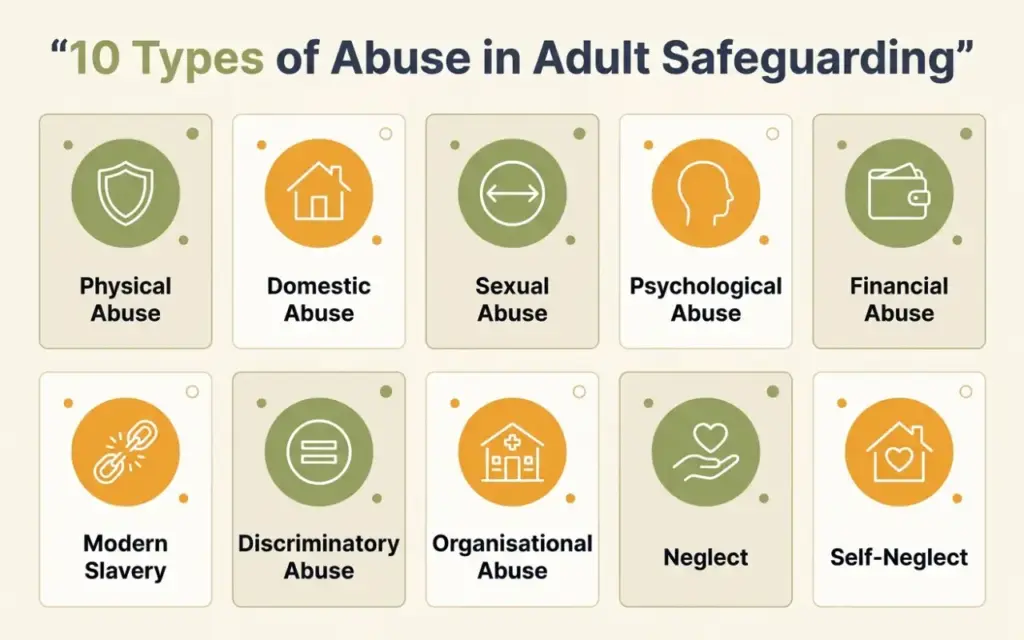
The ten types of abuse recognised in England’s adult safeguarding guidance are:
- Physical abuse
- Domestic abuse
- Sexual abuse
- Psychological abuse
- Financial or material abuse
- Modern slavery
- Discriminatory abuse
- Organisational abuse
- Neglect and acts of omission
- Self-neglect
These categories appear in the government’s Care and Support Statutory Guidance, which supports the Care Act 2014.
They are not an exhaustive list. An adult may experience several forms of abuse simultaneously, and safeguarding concerns must be considered according to individual circumstances.
Understanding what each category involves makes it easier to recognise situations that may require further attention.
How Does the Care Act 2014 Define Adult Safeguarding?
Adult safeguarding involves protecting an adult’s right to live safely, free from abuse and neglect, while respecting their wellbeing, wishes and independence.
Under Section 42 of the Care Act 2014, local authorities in England have a duty to make, or arrange, safeguarding enquiries when there is reasonable cause to suspect that an adult:
- Has needs for care and support, whether or not the local authority meets those needs.
- Is experiencing, or is at risk of, abuse or neglect.
- Cannot protect themselves from that risk or experience because of their care and support needs.
Not every adult experiencing abuse meets these specific criteria. However, concerns about harm should still be taken seriously.
For further context, it helps to consider adults who may need safeguarding support.The following ten categories provide a practical framework for recognising different forms of harm.
The 10 Types of Abuse Explained: Signs and Examples
1. Physical Abuse
Physical abuse involves deliberately causing physical harm or using physical force or treatment inappropriately. It can include hitting, pushing, slapping, rough handling, misuse of medication and inappropriate restraint.
Example: A care worker forcefully pulls an older resident from a chair despite the resident showing pain and distress.
Possible signs and indicators:
- Unexplained bruises, cuts, burns or fractures.
- Frequent injuries with inconsistent explanations.
- Fear or distress around a particular person.
- Unusual reluctance to receive physical assistance.
Physical abuse can also involve unnecessary restrictions on movement. However, questions about restrictions on a person’s liberty require a separate legal assessment.
Not every injury indicates abuse, but unexplained or repeated injuries should be taken seriously.
2. Domestic Abuse
Domestic abuse occurs between people who are personally connected, such as partners, former partners or certain family members.
It may involve physical violence, threats, sexual abuse, controlling behaviour, psychological harm or economic abuse.
Under the Domestic Abuse Act 2021 statutory guidance, the statutory definition applies where both people are aged 16 or over and meet the personal connection criteria.
Example: An adult’s partner controls their bank account, prevents contact with relatives and threatens them when they question these restrictions.
Possible signs and indicators:
- Fear of a partner or family member.
- Sudden isolation from friends and relatives.
- Restricted access to personal money.
- Changes in behaviour when a particular person is present.
Domestic abuse does not have to involve physical violence. Controlling or coercive behaviour can also cause serious harm.
3. Sexual Abuse
Sexual abuse involves unwanted sexual behaviour, sexual exploitation or sexual activity without valid consent.
It can include unwanted touching, sexual harassment, sexual assault, exposure to sexual material without consent and pressure to participate in sexual activities.
Example: A person receiving care is subjected to unwanted sexual touching by someone responsible for supporting them.
Possible signs and indicators:
- Distress or fear around particular individuals.
- Unexplained injuries or discomfort.
- Sudden changes in behaviour or mood.
- Withdrawal from previously comfortable activities.
- A disclosure of unwanted sexual contact.
Adults have the right to make decisions about consensual relationships. Age, disability or receiving care does not automatically mean someone cannot consent.
Concerns about sexual abuse require a sensitive response that respects the individual’s dignity and privacy.
4. Psychological Abuse
Psychological abuse, sometimes called emotional abuse, involves behaviour that undermines someone’s confidence, independence or emotional wellbeing.
It can include threats, humiliation, intimidation, verbal abuse, isolation and controlling behaviour.
Example: A support worker repeatedly insults an adult, calls them a burden and threatens to withdraw assistance whenever they express an opinion.
Possible signs and indicators:
- Increased anxiety, fear or distress.
- Loss of confidence.
- Withdrawal from social activities.
- Changes in sleep or behaviour.
- Reluctance to speak openly around someone.
Psychological abuse can occur without any physical contact.
It may develop through repeated behaviour, although a single serious incident can also cause harm. Changes in someone’s behaviour should be considered alongside their circumstances rather than treated as automatic proof of abuse.
5. Financial or Material Abuse
Financial abuse involves stealing, misusing or exploiting another person’s money, benefits, possessions or property.
It may include fraud, theft, pressure over inheritance, misuse of bank cards or controlling financial decisions.
Example: A relative regularly withdraws money from an older adult’s account without permission and refuses to explain where it has gone.
Possible signs and indicators:
- Unexplained withdrawals or missing money.
- Sudden financial difficulties.
- Missing valuables or important documents.
- Unusual changes to financial arrangements.
- Someone else controlling access to money without appropriate authority.
Financial exploitation can also happen online. For example, an adult may be pressured into sharing banking details or transferring money.
Financial abuse may overlap with domestic or psychological abuse when threats and intimidation are involved.
6. Modern Slavery
Modern slavery involves severe exploitation, including human trafficking, forced labour, slavery and domestic servitude.
People experiencing modern slavery may be controlled through threats, deception, debt or restrictions on their freedom.
Example: An adult is forced to work long hours without proper payment. Their documents are withheld, and they are threatened when they try to leave.
Possible signs and indicators:
- Restricted freedom of movement.
- Someone else holding identity documents.
- Fearfulness or reluctance to speak independently.
- Poor living or working conditions.
- Signs of exploitation or excessive dependence on another person.
Modern slavery can occur in domestic environments, businesses and other workplaces.
The government’s guidance on modern slavery provides further information about exploitation and the UK’s response.
A person experiencing exploitation may not feel able to disclose what is happening, particularly when they fear consequences for themselves or their family.
7. Discriminatory Abuse
Discriminatory abuse involves harmful or degrading treatment connected to someone’s personal characteristics, identity or background.
It may include racist remarks, disability-related harassment, religious discrimination or degrading treatment because of age, sex or sexual orientation.
Example: A care worker repeatedly mocks a resident’s disability and excludes them from activities that other residents can access.
Possible signs and indicators:
- Repeated insulting or discriminatory comments.
- Exclusion from activities or services.
- Unequal treatment without justification.
- Distress linked to someone’s identity.
- Harassment or degrading behaviour.
Discriminatory abuse can also form part of psychological or organisational abuse.
Care services should respect individual differences, support dignity and provide appropriate person-centred care.
8. Organisational Abuse
Organisational abuse, also known as institutional abuse, occurs when harmful practices, poor routines or an unsafe organisational culture affect people receiving care.
It may involve repeated neglect, rigid rules, inappropriate restrictions or a failure to respond to concerns.
Example: Residents in a care home are routinely left waiting for essential assistance because management consistently prioritises staffing convenience over individual needs.
Possible signs and indicators:
- Repeated complaints about poor care.
- Residents appearing frightened or distressed.
- Consistently poor hygiene or living conditions.
- Lack of privacy or personal choice.
- Staff routinely dismissing concerns.
The Care Quality Commission’s Regulation 13 guidance explains the responsibilities of regulated providers to protect people from abuse and improper treatment.
When problems continue despite being reported, staff may need guidance on raising concerns about unsafe care practices.
Organisational abuse is not simply about one individual making a mistake. It can reflect wider patterns of harmful practice.
9. Neglect and Acts of Omission
Neglect involves failing to provide necessary care or support, potentially placing someone’s health, safety or wellbeing at risk.
Acts of omission occur when someone responsible for care fails to take an action needed to meet a person’s essential needs.
Example: A resident who needs assistance with eating and drinking is repeatedly left without adequate support at mealtimes.
Possible signs and indicators:
- Poor personal hygiene.
- Unexplained weight loss or dehydration.
- Unmet medical or personal care needs.
- Inappropriate clothing for the weather.
- Unsafe or unsuitable living conditions.
Neglect may result from deliberate behaviour or a failure to provide appropriate care. The circumstances and responsibilities involved should always be considered.
Unlike self-neglect, this category commonly concerns failures by another person or service responsible for meeting care needs.
10. Self-Neglect
Self-neglect occurs when an adult seriously neglects their own personal care, health or living environment.
It may involve poor personal hygiene, failure to address essential health needs, unsafe living conditions or severe hoarding.
Example: An adult lives in a property containing substantial clutter and safety hazards, while essential personal care and health needs remain unmet.
Possible signs and indicators:
- Severe deterioration in personal hygiene.
- Unsafe or unhygienic living conditions.
- Significant difficulties with everyday self-care.
- Untreated health problems.
- Accumulation of possessions creating serious hazards.
Self-neglect can be complex. An adult’s refusal of support does not automatically mean they lack mental capacity.
Professionals should consider the person’s circumstances, decisions, rights and any relevant risks before determining an appropriate response.
How Can Different Types of Abuse Overlap?
The ten categories help professionals recognise harm, but real situations do not always fit neatly into one category.
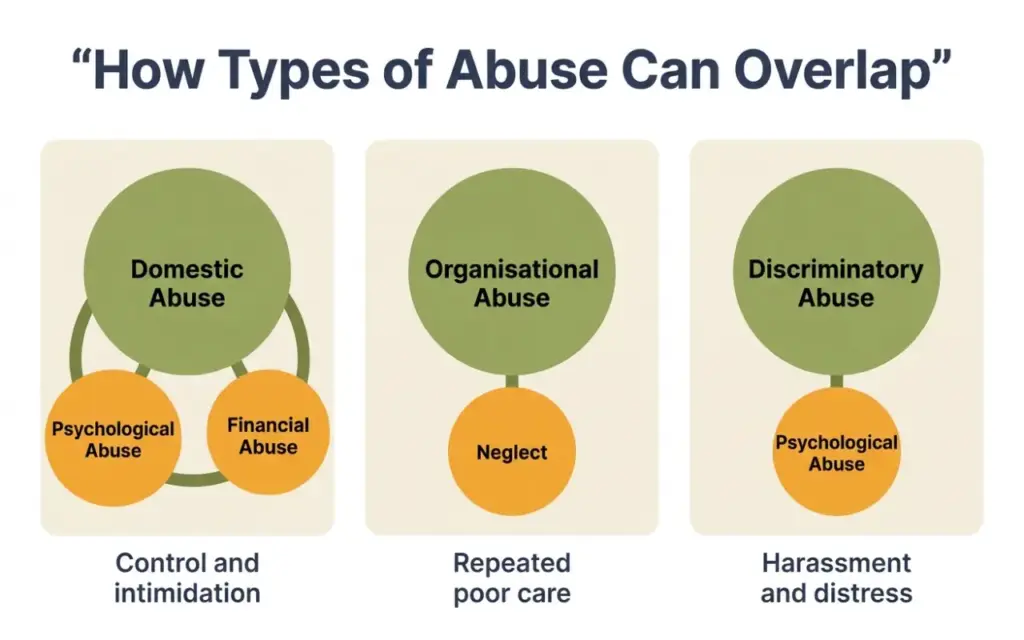
For example, someone experiencing domestic abuse might also be subjected to financial control and psychological intimidation.
Similarly, repeated neglect within a care home may indicate organisational abuse.
| Situation | Possible Overlapping Types |
|---|---|
| A partner controls money through threats | Domestic, financial and psychological abuse |
| Residents repeatedly receive inadequate care | Neglect and organisational abuse |
| Someone experiences racist threats | Discriminatory and psychological abuse |
| A person is forced to work through intimidation | Modern slavery and psychological abuse |
Recognising these connections helps prevent important concerns from being overlooked.
It is also important to remember that warning signs are not conclusive evidence. They indicate that a situation may need further attention, assessment or safeguarding action.
How Can Care Workers Recognise Possible Abuse?
Care workers often notice changes in people’s everyday behaviour, appearance or circumstances.
Recognising potential abuse involves paying attention to these changes while avoiding assumptions.
Some useful approaches include:
- Observe changes: Notice unexplained injuries, withdrawal, distress or changes in personal care.
- Listen carefully: Give people opportunities to express concerns privately and without pressure.
- Consider patterns: Repeated incidents may reveal problems that are less obvious individually.
- Record observations: Keep accurate, factual records according to workplace procedures.
- Seek guidance: Raise concerns promptly rather than attempting to determine the cause alone.
Staff also need appropriate knowledge of their responsibilities. The exact safeguarding training requirements depend on the person’s role, workplace and applicable standards.
What Should You Do If You Suspect Adult Abuse?
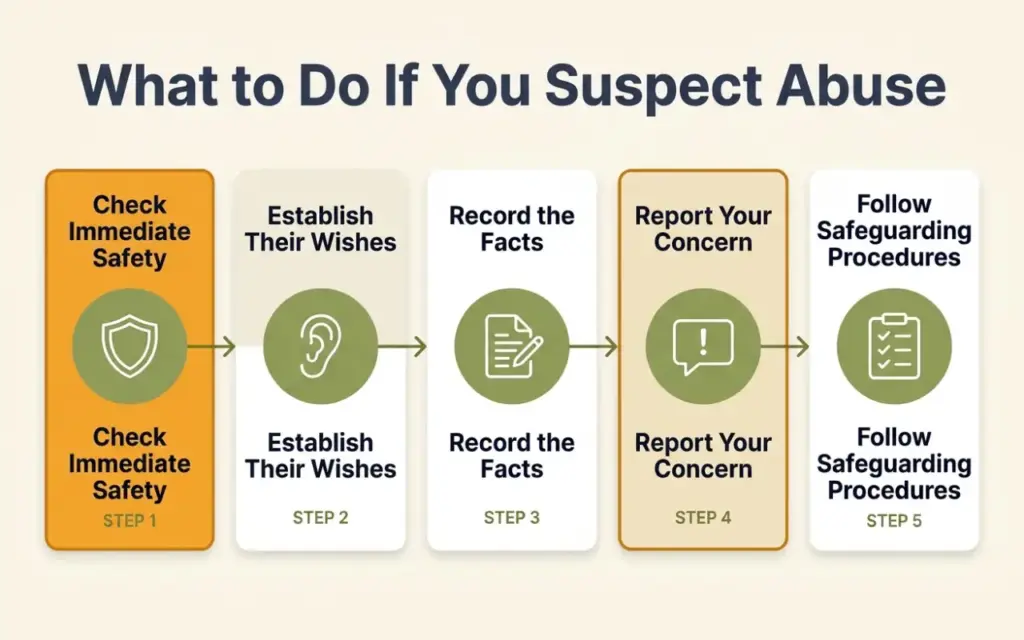
Recognising a possible sign of abuse is only the beginning. The response should prioritise safety while respecting the adult’s wishes, dignity and rights.
If you suspect an adult is experiencing abuse:
- Check immediate safety. If someone is in immediate danger, call 999.
- Listen calmly. Take the concern seriously without pressuring the person for details.
- Avoid investigating yourself. Do not confront an alleged abuser or ask leading questions.
- Record factual information. Note what was observed or disclosed, including relevant dates and circumstances.
- Report concerns promptly. Follow workplace safeguarding procedures and contact the safeguarding lead or appropriate authority.
- Seek further advice when necessary. Concerns can be raised with the local authority’s adult safeguarding team, including when a workplace response is inadequate.
Do not promise complete confidentiality. Information may need to be shared appropriately to protect the adult or others.
Where possible, involve the adult in decisions about their safety. Safeguarding should support their wellbeing and independence, not unnecessarily remove their choice and control.
Why Does Safeguarding Training Matter for Care Workers?
Recognising abuse is an important part of working safely in adult social care.
The Care Certificate standards, updated in March 2025, include Standard 10 on safeguarding adults. This covers relevant knowledge and responsibilities for care workers.
For people wishing to develop their understanding further, HF Online’s Safeguarding Vulnerable Adults Training covers abuse and neglect, UK safeguarding legislation, professional responsibilities, communication and incident reporting.
The course offers CPD-focused learning and should not be confused with a regulated qualification or a licence to practise.
Readers considering further study may also benefit from information about what an adult safeguarding course covers.
Depending on the provider, online courses may include video lessons, reading materials, practical scenarios, quizzes and assessments.
Before enrolling, check the course duration, access period, assessment requirements and certificate arrangements.
Online learning can support professional development, but it may not replace workplace induction, practical training or other requirements set by employers and relevant organisations.
For roles involving additional safeguarding responsibilities, instructor-led or specialist training may also be necessary.
Frequently Asked Questions
England's Care and Support Statutory Guidance identifies ten broad types of abuse and neglect. These include physical, domestic, sexual, psychological, financial, modern slavery, discriminatory, organisational, neglect and self-neglect.
Yes. Several forms of abuse can occur together. For example, domestic abuse may involve financial exploitation, emotional manipulation and physical harm.
Neglect generally involves another person or service failing to meet an adult's essential care needs. Self-neglect involves an adult seriously neglecting their own care, health or living environment.
Common warning signs include unexplained injuries, sudden behavioural changes, withdrawal, anxiety, poor hygiene, missing money and fear of particular individuals. These signs do not automatically confirm abuse, but they may indicate that further safeguarding attention is needed.
Yes. Abuse can involve emotional manipulation, financial exploitation, discrimination, controlling behaviour or neglect without physical violence. Psychological and financial abuse, for example, may cause significant harm without leaving visible injuries.
Psychological abuse involves emotional harm through threats, humiliation, intimidation or controlling behaviour. Domestic abuse occurs between personally connected individuals and can involve psychological, physical, sexual or economic abuse. Psychological abuse can therefore be one form of domestic abuse.
Safeguarding is a shared responsibility. Care workers, managers, healthcare professionals and local authorities all have relevant roles. In England, local authorities have specific safeguarding duties under the Care Act 2014, while care providers must follow applicable safeguarding requirements.
Table of Contents