Dignity & Safeguarding In Adult Health And Social Care is a CPD-accredited programme for care assistants, support workers, healthcare assistants, and adult social care staff, aimed at those who want to become safeguarding professionals. Build confidence in dignity, duty of care, abuse awareness, and person-centred practice that protects adults daily.
4.8 Star Rating
(7 Reviews)
315 Students
Exclusive Deal! 94% Off, Today Only!
Sale Ends In
Could one short course strengthen how you protect vulnerable adults, respect individual choice, and work more confidently in care every day? Yes—because dignity and safeguarding in adult health and social care sits at the heart of safe, lawful, compassionate practice for care assistants, support workers, healthcare assistants, and adult care staff.
This dignity and safeguarding in adult health and social care course is highly relevant if you want stronger knowledge of adult safeguarding in health and social care, dignity in care, duty of care in adult health and social care, confidentiality and safeguarding in care, consent and best interests in health and social care, and person centred care dignity and respect.Â
The need is real. Skills for Care estimates 1.71 million adult social care posts in England in 2024/25, including 925,000 care worker and support worker posts, with 111,000 vacancies unfilled and a projected need for 470,000 extra posts by 2040.Â
You will learn how to recognise signs of abuse in adult health and social care, respond to dilemmas in adult health and social care, support safer communication, promote dignity, and understand safeguarding expectations linked to the Care Act 2014 safeguarding adults framework.Â
Enrol today and build confidence employers trust.
Build core confidence in understanding dignity and safeguarding in adult health and social care as you strengthen safer, more respectful care practice. You will deepen knowledge of safeguarding responsibilities, dignity in care, communication, consent, confidentiality, abuse indicators, infection control, professional standards, and person-centred support for vulnerable adults in everyday settings.
This dignity and safeguarding in adult health and social care course online UK is designed to help you build essential, career-focused knowledge for adult safeguarding, dignity in care, duty of care, abuse awareness, and person-centred support roles, giving you the confidence and subject understanding employers and care-focused organisations increasingly value.
This dignity and safeguarding course online suits learners entering care and support roles, existing staff refreshing safeguarding knowledge, and jobseekers strengthening dignity, abuse awareness, communication, and duty of care understanding. It is especially useful for adults working in residential care, domiciliary care, community support, and healthcare environments across the UK.
There are no specific prerequisites to enrol in this Dignity & Safeguarding In Adult Health And Social Care – CPD Accredited Course. Anyone and everyone can take this course.
The Dignity & Safeguarding In Adult Health And Social Care – CPD Accredited Course is fully accessible from any internet-enabled smart device. So, you can study from the comfort of your home!
All you need is a passion for learning, literacy, and to be over the age of 16.
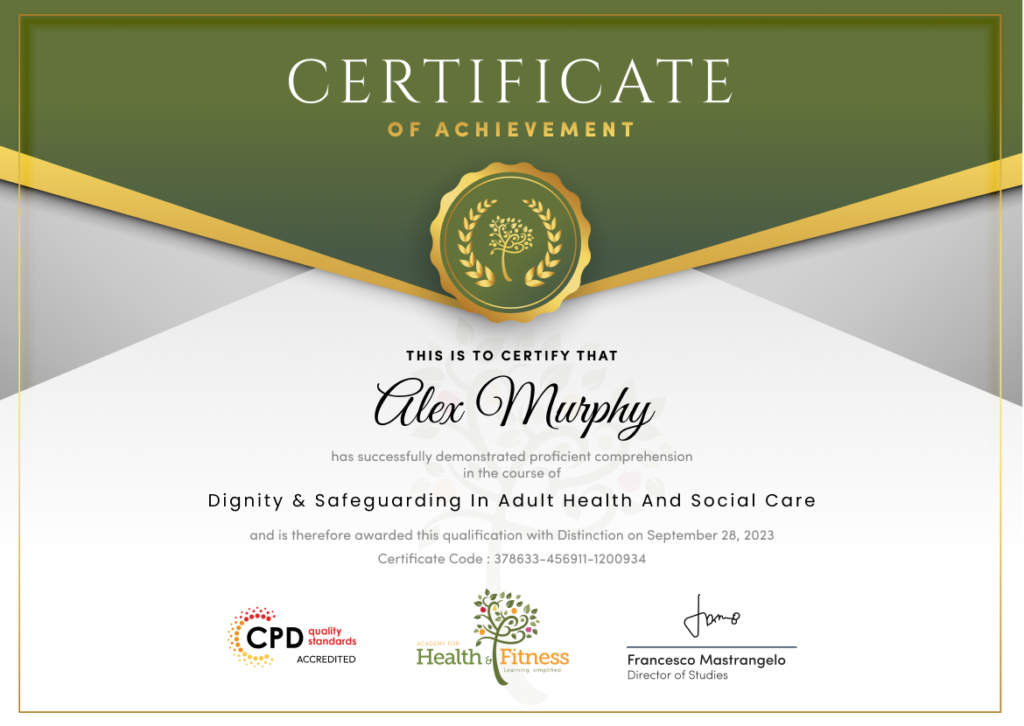
After successfully completing the Dignity & Safeguarding In Adult Health And Social Care course, you will qualify for a CPD Certificate as proof of your continued professional development and achievement. This certificate can enhance your professional profile and showcase your commitment to building relevant skills and knowledge. You can receive your digital certificate for only £10, or request a printed hard copy sent by post for just £29 or both for £39.
After successfully completing the Dignity & Safeguarding In Adult Health And Social Care course, learners will be able to order a QLS Endorsed Certificate as proof of their new achievement. The Level QLS Endorsed certificate can be ordered and get delivered to your home by post for £119 only. There is an additional £10 postage charge for international students.
For assessing your learning, you have to complete an automated MCQ exam. It is required for the students to score at least 60% to pass the exam and fulfil the Quality Licence Scheme-endorsed certificate criteria. Learners can apply for the certificate after they clear the exam.
There are assignment questions provided at the end of the course. You are suggested to complete the questions to enrich your understanding of the course. You can complete this according to your preferred time. The expert tutor will provide feedback on your performance after assessing your assignment.
Strong safeguarding awareness and respectful care practice matter across adult care services. This knowledge can support entry into frontline roles and strengthen progression in care settings. Some jobs may require employer training, workplace experience, or further qualifications. Below are common UK roles where dignity, safeguarding, and practice matter every day.
Salary range: £20,000 – £25,000.
Salary range: £24,000 – £29,000.
Salary range: £25,000 – £27,000.
 Salary range: £26,000 – £31,000.Â
Salary range: £26,000 – £31,000.
Salary range: £20,000 – £28,000.Â
Salary range: £19,000 – £30,000.
Salary range: £25,000 – £28,000.Â
Salary range: £25,000 – £55,000.Â
Salary range: £32,000 – £48,000.
Safeguarding means protecting a person’s health, wellbeing, and human rights and enabling them to live free from harm, abuse, and neglect. In adult care, it is a shared responsibility across staff, providers, and partner organisations.
Dignity in care means providing support that protects a person’s self-respect, recognises their abilities and ambitions, and does nothing to undermine them. It sits at the centre of respectful, person-centred care practice.
Duty of care means acting in the best interests of the individual, working within your role, and not ignoring risks or concerns. Skills for Care says duty of care forms part of the code of conduct for adult social care workers in England.
Warning signs can include poor hygiene, dehydration, unexplained injuries, isolation, intimidation, controlling behaviour, and sudden changes in mood or presentation. One sign alone does not prove abuse, but concerns should be recorded and escalated through safeguarding procedures.
In England, the Care Act 2014 provides the core legal framework for protecting adults at risk of abuse or neglect, and the statutory guidance explains how safeguarding responsibilities should operate in practice across local authorities and partners.
Promoting dignity means asking how a person wants to be supported, respecting privacy, involving them in decisions, and never treating them in ways that undermine self-respect. CQC also expects people receiving care to be treated with dignity and respect at all times.
Safeguarding focuses on protecting people from abuse, neglect, and harm. Duty of care is the wider responsibility to act safely, work within competence, and take reasonable steps when risks or concerns arise. They work together in adult health and social care practice.
Adults with capacity must be able to make informed decisions about care, and those decisions should be respected. When someone lacks capacity for a particular decision, any action taken must be in their best interests under the Mental Capacity Act framework.
Confidentiality matters, but it is not a reason to stay silent when someone may be at risk. NHS England says information sharing is essential for effective safeguarding, and professional guidance says personal information should be shared appropriately and lawfully.
Safeguarding is a collective responsibility across organisations and professionals, while local authorities have formal safeguarding duties under the Care Act framework. In practice, every worker should notice concerns, record them properly, and report them through the correct process without delay.
| Adult Nursing Training | |||
| Module 15: Introduction to Nursing | 00:17:00 | ||
| Working in Different Healthcare Settings | 00:15:00 | ||
| Understanding legal, professional standards of practice and ethical aspects of health care- Part 1 | 00:52:00 | ||
| Understanding legal, professional standards of practice and ethical aspects of health care- Part 2 | 00:50:00 | ||
| Effective Communication in Nursing | 00:47:00 | ||
| Health and Safety | 00:47:00 | ||
| Hygiene | 00:30:00 | ||
| Infection Control | 00:57:00 | ||
| Asepsis in Nursing | 00:16:00 | ||
| Medication Administration in Nursing | 00:18:00 | ||
| Adult Care in Different Life Stages | 00:17:00 | ||
| Understanding Immune System in Nursing | 00:28:00 | ||
| Rest and Sleep Management | 00:19:00 | ||
| Mobility and Immobility Issues of Patients | 00:17:00 | ||
| Pain Management | 00:24:00 | ||
| Nutrition | 00:25:00 | ||
| Fluid and Electrolyte Balance | 00:23:00 | ||
| Assisting with Elimination | 00:30:00 | ||
| Oxygenation | 00:30:00 | ||
| Health and Social Care Training | |||
| Introduction to Health and Social Care | 00:19:00 | ||
| Communication and its Relevance | 00:41:00 | ||
| Rights and Responsibilities as a Health and Social Care Worker | 00:39:00 | ||
| Role as A Caregiver and Healthcare Professional | 00:23:00 | ||
| Working in Health and Social Care; Promoting Equality, Diversity and Rights | 00:46:00 | ||
| Important Principles and Policies in Health and Social Care Work | 00:20:00 | ||
| Safeguarding Vulnerable Individuals | 00:52:00 | ||
| Health and Safety Responsibilities | 00:51:00 | ||
| Risk Management in Health and Social Care | 00:03:00 | ||
| Mock Exam | |||
| Mock Exam – Dignity & Safeguarding In Adult Health And Social Care | 00:20:00 | ||
| Final Exam | |||
| Final Exam – Dignity & Safeguarding In Adult Health And Social Care | 00:20:00 | ||
| Adult Nursing Training | |||
| Module 15: Introduction to Nursing | 00:17:00 | ||
| Working in Different Healthcare Settings | 00:15:00 | ||
| Understanding legal, professional standards of practice and ethical aspects of health care- Part 1 | 00:52:00 | ||
| Understanding legal, professional standards of practice and ethical aspects of health care- Part 2 | 00:50:00 | ||
| Effective Communication in Nursing | 00:47:00 | ||
| Health and Safety | 00:47:00 | ||
| Hygiene | 00:30:00 | ||
| Infection Control | 00:57:00 | ||
| Asepsis in Nursing | 00:16:00 | ||
| Medication Administration in Nursing | 00:18:00 | ||
| Adult Care in Different Life Stages | 00:17:00 | ||
| Understanding Immune System in Nursing | 00:28:00 | ||
| Rest and Sleep Management | 00:19:00 | ||
| Mobility and Immobility Issues of Patients | 00:17:00 | ||
| Pain Management | 00:24:00 | ||
| Nutrition | 00:25:00 | ||
| Fluid and Electrolyte Balance | 00:23:00 | ||
| Assisting with Elimination | 00:30:00 | ||
| Oxygenation | 00:30:00 | ||
| Health and Social Care Training | |||
| Introduction to Health and Social Care | 00:19:00 | ||
| Communication and its Relevance | 00:41:00 | ||
| Rights and Responsibilities as a Health and Social Care Worker | 00:39:00 | ||
| Role as A Caregiver and Healthcare Professional | 00:23:00 | ||
| Working in Health and Social Care; Promoting Equality, Diversity and Rights | 00:46:00 | ||
| Important Principles and Policies in Health and Social Care Work | 00:20:00 | ||
| Safeguarding Vulnerable Individuals | 00:52:00 | ||
| Health and Safety Responsibilities | 00:51:00 | ||
| Risk Management in Health and Social Care | 00:03:00 | ||
| Mock Exam | |||
| Mock Exam – Dignity & Safeguarding In Adult Health And Social Care | 00:20:00 | ||
| Final Exam | |||
| Final Exam – Dignity & Safeguarding In Adult Health And Social Care | 00:20:00 | ||