

A school pastoral officer helps pupils feel supported, stay engaged with education and overcome difficulties that may affect their learning. Their work can involve emotional wellbeing, attendance, behaviour and communication with families.
If you enjoy helping young people and want a rewarding school-based career, pastoral support could be worth exploring. But what does the job involve, how much can you earn, and do you need teaching qualifications?
This guide explains the responsibilities, typical UK pay, essential skills and practical steps towards becoming a school pastoral officer.
Interested in working in school pastoral support? Understanding safeguarding is an important part of supporting pupils’ wellbeing. HF Online’s Child Protection and Safeguarding course offers an opportunity to build relevant knowledge of child protection and safeguarding practices alongside your career preparation.
Child Protection and Safeguarding
What Is a School Pastoral Officer?
A school pastoral officer is a member of staff who supports pupils’ welfare, personal development and engagement with school life. They may work with individual pupils, small groups, teachers and families to address challenges affecting education.
Schools may advertise similar positions as pastoral support officer, pastoral care worker or pastoral support assistant. The National Careers Service pastoral care worker profile describes this area of work and its possible entry routes.
However, not every pastoral position carries the same responsibilities.
| School Role | Main Responsibility |
|---|---|
| Pastoral officer | Supporting pupils' day-to-day wellbeing, attendance and behaviour |
| Pastoral lead or manager | Coordinating pastoral provision, sometimes across a year group |
| Designated Safeguarding Lead (DSL) | Leading safeguarding arrangements and managing child protection concerns |
Pastoral officers may contribute to safeguarding, but they are not automatically DSLs. Understanding this distinction is important when exploring safeguarding officer responsibilities.
What Does a School Pastoral Officer Do?
Pastoral officer duties vary between schools, but the central responsibility is helping pupils overcome difficulties that interfere with their wellbeing or education.
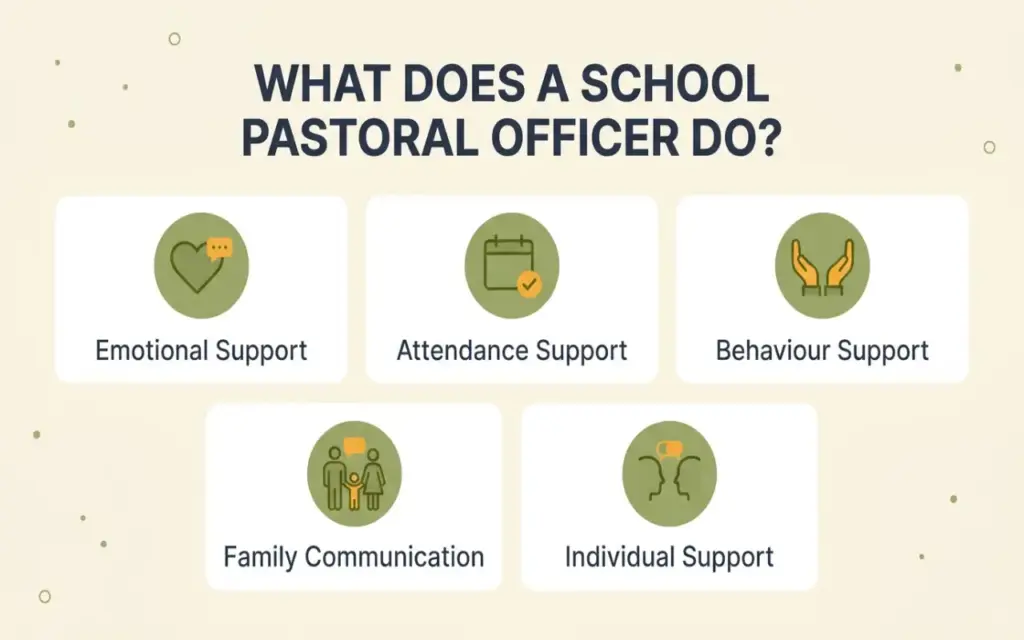
Supporting pupils’ wellbeing, behaviour and attendance
Typical responsibilities include:
- Emotional support: Listening to pupils experiencing anxiety, friendship difficulties or personal challenges.
- Attendance support: Identifying barriers to attendance and working with families and school staff.
- Behaviour support: Helping pupils understand expectations, manage conflicts and develop positive habits.
- Family communication: Discussing concerns with parents and carers while maintaining appropriate confidentiality.
- Individual support: Providing mentoring, regular check-ins or structured support sessions.
For example, a pupil who frequently misses lessons may be struggling with friendship problems. A pastoral officer might meet the pupil, speak with relevant staff and help coordinate support rather than treating absence solely as a disciplinary issue.
Safeguarding and working with other professionals
Pastoral officers may notice signs that a child needs additional protection or support.
In England, Keeping Children Safe in Education sets out safeguarding expectations for schools and colleges.
Staff must follow their school’s safeguarding procedures, including reporting concerns promptly through the appropriate channels. A pastoral officer should not independently investigate suspected abuse or promise a pupil absolute confidentiality.
Depending on the school’s structure, pastoral staff may also work alongside the DSL, teachers, attendance teams and external professionals.
To understand how these responsibilities connect, see the role of a safeguarding coordinator.
How Much Does a School Pastoral Officer Earn?
The school pastoral officer salary depends on experience, location, employer, responsibilities and contract arrangements.
The National Careers Service gives the following indicative annual salary range for pastoral care workers:
| Experience | Indicative Annual Salary |
|---|---|
| Starting salary | £24,000 |
| Experienced salary | £31,000 |
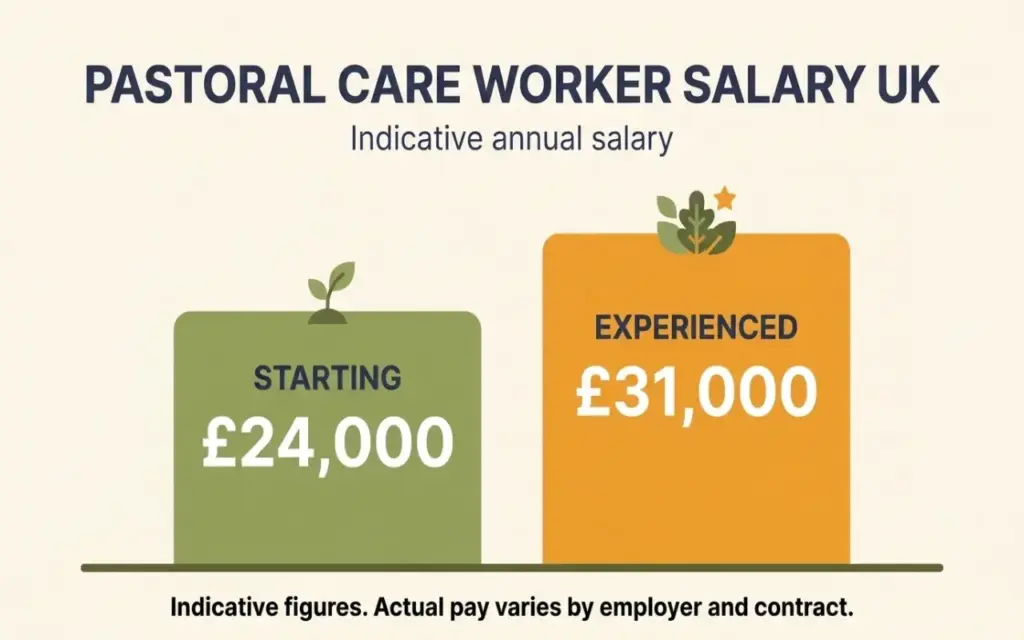
These are occupational estimates, not guaranteed salaries for every school vacancy. Senior pastoral roles may have different pay structures.
Does term-time working affect your salary?
Yes. Many school support positions operate on term-time-only contracts, meaning the actual annual pay may be lower than the advertised full-time equivalent (FTE) salary.
For example, suppose a vacancy advertises:
- FTE salary: £28,000
- Illustrative paid-year fraction: 88%
- Actual annual salary: £24,640
This is only an example. Employers calculate term-time pay according to their contractual hours, paid weeks and holiday arrangements.
Before applying, check whether the advertised figure is FTE or actual salary.
If you’re considering related safeguarding careers, child protection salary expectations can provide further context.
What Qualifications and Skills Do You Need?
There is no single qualification required for every school pastoral officer position. Schools set their own recruitment criteria according to the responsibilities involved.
Qualifications and experience
Employers may look for:
- GCSEs or equivalent qualifications, particularly English and maths.
- Relevant Level 2 or Level 3 qualifications, where specified.
- Experience supporting children or young people.
- Previous work in education, youth services or community support.
- Knowledge of safeguarding and pupil wellbeing.
Experience as a teaching assistant, learning mentor or youth worker can provide a useful foundation.
Qualified Teacher Status (QTS) is not universally required for non-teaching pastoral roles, although some pastoral leadership positions may be teaching posts.
Essential skills and safeguarding knowledge
Strong pastoral support officer skills include empathy, active listening, patience and clear communication.

You also need sound judgement, professional boundaries, accurate recordkeeping and the ability to remain calm during difficult conversations.
Safeguarding knowledge is particularly relevant because pastoral staff may be among the first adults to hear about a pupil’s concerns. Understanding how to recognise concerns, maintain professional boundaries and follow school safeguarding procedures is essential.
If you’re considering further development, choosing appropriate safeguarding training can help you identify learning options that relate to school pastoral responsibilities.
How to Become a School Pastoral Officer
There is no single route into pastoral support. Schools may recruit people with different qualifications and professional backgrounds.
These five steps can help you prepare.
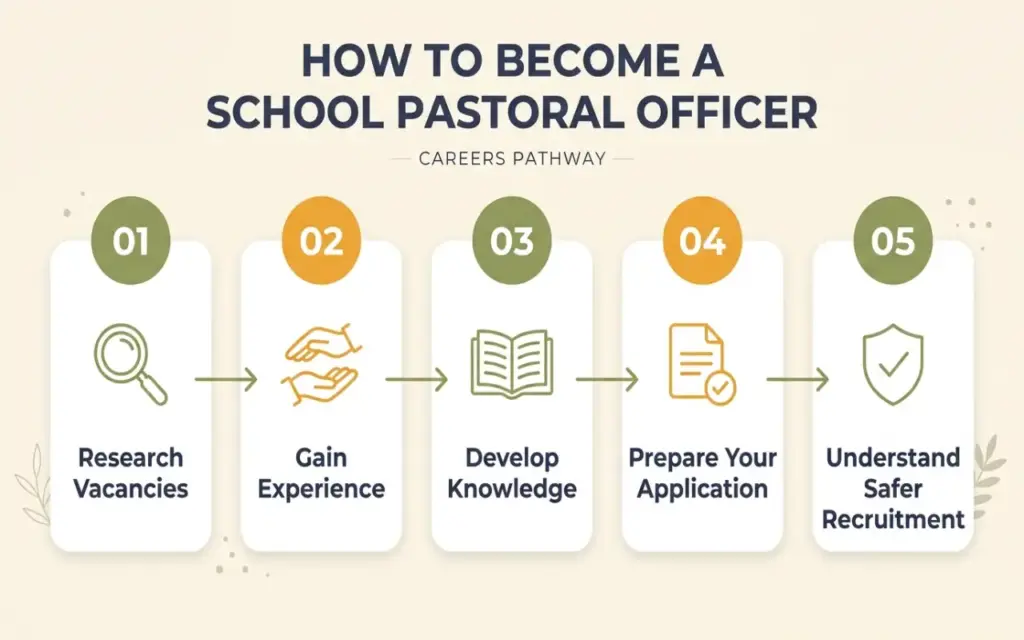
- Research school vacancies. Look for pastoral support officer, pastoral assistant and pupil welfare positions. Read the person specification carefully to identify essential and desirable requirements.
- Gain relevant experience. Working as a teaching assistant, learning mentor or youth worker can help you develop skills in supporting young people. Volunteering in suitable education or community settings may also be valuable.
- Develop your knowledge. Build your understanding of safeguarding, pupil wellbeing, behaviour support and communication. Choose training that addresses genuine gaps in your knowledge.
- Prepare a focused application. Show how your experience meets the school’s requirements. For example, describe a situation where you listened to a young person’s concerns, responded appropriately and worked with colleagues to provide support.
- Understand safer recruitment. Schools carry out suitability checks before appointing staff. These may include references and appropriate criminal record checks. The DBS eligibility guidance explains how the required level of check is determined for roles in England and Wales. Scotland and Northern Ireland have separate checking arrangements.
With experience, you may also explore career pathways in child protection, although these positions can have different responsibilities and requirements.
Working Hours and Career Progression
Working hours and school holidays
The National Careers Service lists typical pastoral care worker hours as 30–37 hours per week during term time. Actual arrangements depend on the school and contract.
Some positions involve meetings with families, attendance reviews or activities outside normal lesson hours. Check the advertised working pattern rather than assuming every pastoral role follows the same schedule.
Where can the role lead?
With experience and suitable further development, potential progression routes include:
- Pastoral lead or pastoral support manager.
- Education welfare officer.
- Non-teaching head of year.
- Related youth support or safeguarding positions.
Progression depends on vacancies, experience and the requirements of the next role.
Final Thoughts
Becoming a school pastoral officer can offer an opportunity to support young people through everyday educational and personal challenges.
Start by reviewing school vacancies, identifying your transferable skills and gaining relevant experience. Developing safeguarding knowledge can also support your preparation, provided you understand the specific requirements of the role you want.
Frequently Asked Questions
Find answers to common questions about school pastoral officer roles, qualifications and career opportunities.
01 Can you become a school pastoral officer without a degree?
Yes. Some school pastoral officer positions do not require a university degree. Relevant experience, suitable qualifications and strong interpersonal skills may be sufficient, depending on the employer.
02 Do school pastoral officers need teaching qualifications?
Not necessarily. Many pastoral support positions are non-teaching roles and do not require Qualified Teacher Status. However, some pastoral leadership posts may be combined with teaching responsibilities.
03 Is a pastoral officer the same as a safeguarding officer?
No. Pastoral officers generally support pupil wellbeing, attendance and behaviour. Safeguarding officers have specific child protection responsibilities. The exact duties depend on the school's staffing arrangements.
04 Can a teaching assistant become a pastoral officer?
Yes. Teaching assistants often develop useful experience in pupil support, behaviour management and communication. Additional pastoral responsibilities or relevant training may strengthen their applications.
05 Can nursery staff move into school pastoral support?
Yes, potentially. Nursery experience can develop transferable skills in child wellbeing, communication and safeguarding. Understanding safeguarding training in nursery settings may help explain that background, although school employers may require additional experience or qualifications.
Table of Contents