

What could you earn by helping protect children and keep them safe? Is becoming a child protection officer a rewarding career, and does the salary match the level of responsibility? If you are exploring this career path, understanding the child protection officer salary UK employers offer is a good place to start.
According to the National Careers Service, salaries range from around £27,000 for starters to £50,000 for experienced professionals. However, these figures are only a guide. Your earnings may depend on your experience, qualifications, job title and employer.
So, how much can you earn in schools, local authorities or charities? And what can help you progress to a higher-paying role? This guide breaks down the child protection officer salary UK by role and sector, explains what affects pay and explores the career opportunities available.
Child Protection and Safeguarding
What Is the Average Child Protection Officer Salary in the UK?
The child protection officer salary UK can vary across employers and job settings. The National Careers Service gives a salary guide of:
- Starter salary: Around £27,000 per year.
- Experienced salary: Up to £50,000 per year.
These figures give job seekers a useful starting point when researching child protection officer jobs. However, they should not be treated as a guaranteed starting or maximum salary.
The term child protection officer can cover different responsibilities. Some professionals work directly with children and families, while others focus on safeguarding policies, staff guidance, risk checks and reporting concerns.
For this reason, a safeguarding officer salary UK may differ from the pay offered to a child and family social worker or a school-based Designated Safeguarding Lead (DSL).
It is also important to understand three common salary terms:
- Average salary: The mean amount earned or advertised across a group.
- Median salary: The middle figure when salaries are placed in order.
- Advertised salary: The pay an employer offers in a job vacancy.
Always check what a salary figure measures before comparing it with another role. Full-time salaries may also differ from the actual pay offered for part-time or term-time work.
For a wider look at the career route, read our How to Become a Child Protection Officer in the UK. It explains the steps, experience and training that may help you enter this field.
Child Protection Officer Salary by Role
Not every safeguarding job has the same duties or pay. Job titles can also vary between schools, councils, charities and care organisations.
The following sections explain some common roles and the salary information available for each one.
1. Child Protection Officer Salary
A child protection officer helps protect children from abuse, neglect, exploitation and other forms of harm. The role may involve speaking with children and families, looking into concerns, sharing information with other services and helping organisations follow safeguarding policies.
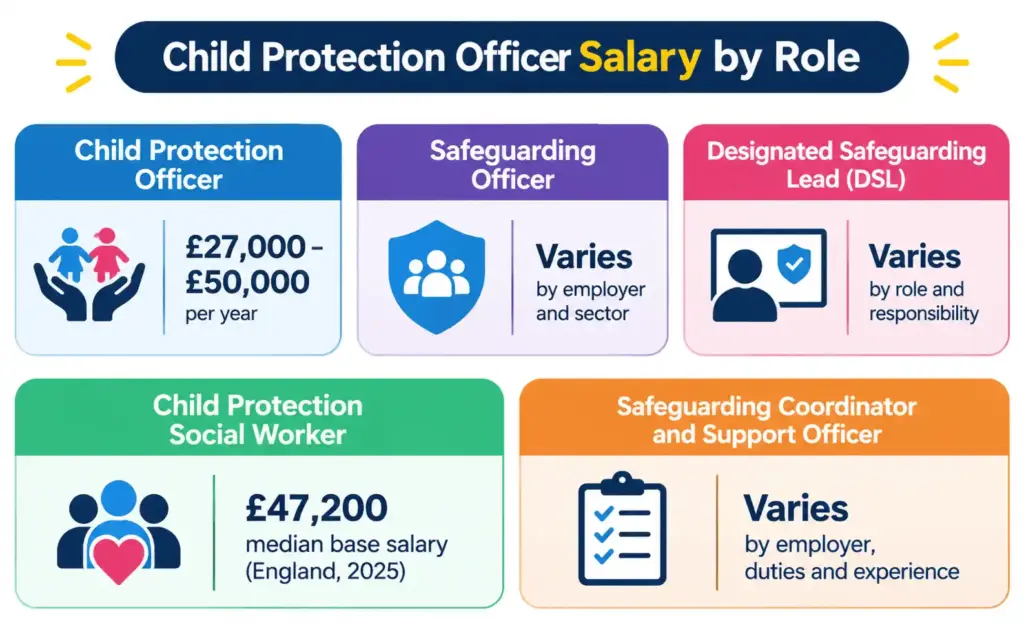
The National Careers Service gives a child protection officer salary guide of £27,000 to £50,000 per year, depending on experience.
Your actual pay may depend on:
- Your previous work with children and families.
- Your relevant qualifications and training.
- The level of responsibility in the job.
- The type of employer.
- The location of the role.
Some employers may ask for experience in social work, education, youth support or family services. Others may consider applicants with suitable experience and further training.
If you are researching child protection officer jobs, read the job description carefully. Similar job titles can involve different levels of responsibility and different salary ranges.
2. Safeguarding Officer Salary UK
A safeguarding officer helps an organisation protect children or vulnerable people from harm. The role may involve receiving concerns, keeping accurate records, supporting staff and helping make sure safeguarding procedures are followed.
The safeguarding officer salary UK can vary because the job exists in different sectors. A charity, school, local authority or care provider may offer different pay and benefits.
Typical duties may include:
- Receiving and recording safeguarding concerns.
- Helping staff understand safeguarding procedures.
- Supporting risk assessments.
- Sharing information with the right people.
- Helping review safeguarding policies.
- Referring concerns to the relevant services when required.
The salary may also depend on whether the role is an assistant, coordinator, officer or senior position.
For more detail about the work involved, read our related guide: Safeguarding Officer Job Description: Duties, Skills and Pay. This supporting article can help readers understand the daily tasks, skills and pay factors linked to the role.
3. Designated Safeguarding Lead (DSL) Salary
A Designated Safeguarding Lead, often called a DSL, is responsible for leading safeguarding arrangements within a school or education setting.
The role usually involves managing safeguarding concerns, supporting staff, keeping records and working with external agencies when needed.
A DSL may also have another role in the school, such as a teacher, senior leader or headteacher. This means the salary can depend on the person’s main job, seniority and additional responsibilities.
When comparing a DSL salary, check:
- Whether the role is full-time or part-time.
- Whether the salary is full-time equivalent (FTE).
- Whether the DSL duties are part of another job.
- Whether the employer offers additional responsibility payments.
- The school type and location.
There is no single salary that applies to every DSL role. Check current school vacancies to understand what employers are offering.
4. Child Protection Social Worker Salary
A child protection social worker is a qualified professional who supports children and families where there may be welfare or safety concerns. The work can include assessing family needs, managing cases, arranging support and taking action when a child may be at risk.
Social work is a separate professional route from many safeguarding officer jobs. Some child protection roles require a recognised social work qualification and registration.
The Department for Education’s 2025 Children’s Social Work Workforce statistics reported a median base salary of £47,200 for full-time child and family social workers in post at 30 September 2025. The figures covered 32,300 full-time social workers with recorded salary information.
The same report showed that median base salary varied by seniority, from £41,800 for case holders to £84,400 for senior managers.
These figures relate to child and family social workers in England. They should not be presented as the average child protection officer salary UK-wide because the job groups and professional requirements are different.
Read the official Department for Education workforce statistics for more detail.
5. Safeguarding Coordinator and Support Officer Salary
A safeguarding coordinator or support officer helps an organisation manage its safeguarding work. The role may include handling records, supporting referrals, sharing information and helping staff follow the correct procedures.
Skills England lists Safeguarding Support Officer as a Level 3 technical occupation. The role can be found in sectors such as education, health and social care, housing, charities and voluntary organisations.
Related job titles may include:
- Safeguarding Assistant.
- Safeguarding Coordinator.
- Safeguarding Adviser.
- Safeguarding Support Officer.
The salary depends on the employer, duties and level of experience. Entry-level support roles may have different pay and requirements from senior safeguarding positions.
You can explore the Skills England occupational profile to learn more about the occupation and its responsibilities.
Child Protection Officer Salary by Sector in the UK
The sector you work in can affect your salary, working hours and daily responsibilities. A school safeguarding role may be different from a position in a local authority or charity.
Here are some of the main sectors where child protection and safeguarding professionals work.
1. Schools and Education
Schools need safeguarding arrangements to help protect pupils and respond to concerns. Some employ a dedicated safeguarding officer or DSL, while others give safeguarding responsibilities to a senior member of staff.
Your pay may depend on your teaching or support role, experience, school type and additional responsibilities.
When looking at school vacancies, check whether the salary is shown as a full-time equivalent amount or the actual pay for the working pattern. This is especially important for term-time positions.
2. Local Authorities and Children’s Services
Local authorities employ professionals who work with children and families to assess concerns, provide support and protect children at risk.
Jobs may include child protection social worker, family support worker, safeguarding officer and other children’s services roles.
Pay can depend on the job grade, experience, professional qualifications and local authority salary structure. Some vacancies may also include additional payments or market supplements.
For example, a child and family social worker’s salary should not be compared directly with a safeguarding support officer’s salary. Their qualifications, duties and professional responsibilities may be very different.
3. Charities and Voluntary Organisations
Charities often work with children, young people and families who need support. They may employ safeguarding officers to help protect service users, support staff and manage concerns.
Common responsibilities include:
- Maintaining safeguarding policies.
- Supporting volunteers and staff.
- Recording and reporting concerns.
- Helping manage safeguarding risks.
- Working with relevant external organisations.
A charity’s size, funding, location and level of responsibility can affect pay. Some positions may also combine safeguarding duties with project or support work.

4. Health and Social Care Services
Health and social care organisations also have safeguarding responsibilities. Staff may work with children, families and vulnerable people who need care or support.
Depending on the employer, relevant jobs may include safeguarding coordinator, child protection social worker, family support worker or safeguarding adviser.
The child protection officer salary UK offered in this sector will depend on the exact job title, employer and professional requirements. Always check the vacancy details rather than assuming that every safeguarding role has the same pay.
Whether you are considering a school, council, charity or care organisation, compare the duties and requirements as well as the salary. This will help you understand which role best matches your experience and career goals.
What Affects a Child Protection Officer's Salary?
The child protection officer salary UK employers offer can change depending on several factors. Two people with similar job titles may earn different amounts because their experience, duties and employers are not the same.
Here are the main factors that can affect your pay.
1. Work Experience
Experience is an important factor when applying for child protection officer jobs. Employers may value previous work in schools, childcare, social care, youth support or family services.
People with more experience may be suitable for roles with greater responsibility. However, experience alone does not guarantee a higher salary.
2. Qualifications and Training
Some child protection jobs require specific professional qualifications. For example, a child and family social worker usually needs a recognised social work qualification and professional registration.
Other safeguarding roles may accept relevant experience alongside suitable training. Always check the requirements listed by the employer.
3. Employer and Sector
A school, local authority, charity and care provider may have different salary structures. The size of the organisation and the level of responsibility can also affect pay.
4. Location
Salary offers may vary across the UK. Employers in different areas may use different pay scales, local agreements and recruitment arrangements.
5. Level of Responsibility
A support officer may have different duties from a senior safeguarding officer or manager. Roles that involve leading a team, managing complex cases or overseeing safeguarding policies may have different pay levels.
6. Working Hours and Contract Type
Full-time, part-time and term-time roles may offer different actual earnings. Check whether a vacancy shows a full-time equivalent (FTE) salary or the amount you will receive for the stated working pattern.
Key Safeguarding Skills Every Child Protection Professional Should Develop
Working in child protection involves more than understanding children’s needs. Professionals must be able to recognise concerns, respond appropriately and follow safeguarding procedures. Developing these skills can help you prepare for the responsibilities involved in safeguarding work.
| Essential Skill | Why It Matters | How It Is Used in Practice |
|---|---|---|
| Recognising Signs of Abuse | Helps professionals identify when a child may be at risk. | Noticing unusual behaviour, unexplained injuries or signs of neglect. |
| Risk Assessment | Helps identify possible dangers and decide what action may be needed. | Assessing concerns and considering a child’s safety. |
| Communication | Supports clear and sensitive conversations with children and families. | Listening carefully and asking appropriate questions. |
| Confidentiality | Helps protect children’s private information. | Sharing sensitive details only with authorised people when appropriate. |
| Accurate Record Keeping | Creates a clear record of safeguarding concerns and actions taken. | Documenting disclosures, observations and referrals. |
| Understanding Safeguarding Procedures | Helps professionals follow the correct steps when concerns arise. | Reporting concerns and following organisational policies. |
Build Your Safeguarding Knowledge
These skills are important across many child protection and safeguarding settings. The HF Online Child Protection and Safeguarding course covers topics such as recognising abuse, risk assessment, reporting concerns and record keeping, helping learners develop a better understanding of safeguarding responsibilities.
How to Become a Child Protection Officer in the UK
If you want to work in child protection, it helps to understand the role before choosing a training route. There is no single pathway for every safeguarding job. Requirements depend on the employer, job title and level of responsibility.
Here are some practical steps to consider.
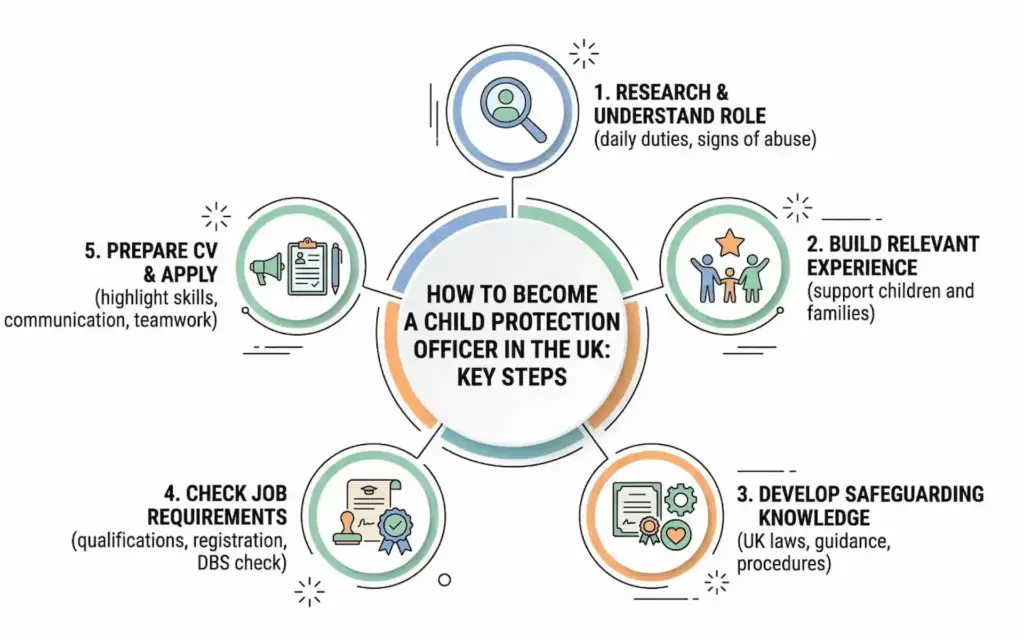
1. Understand the Role and Its Requirements
Start by researching child protection officer jobs and related safeguarding roles. Read job descriptions to understand the daily duties, required skills and qualifications.
You should also learn about:
- Child protection and safeguarding responsibilities.
- Recognising possible signs of abuse or neglect.
- Reporting concerns through the correct channels.
- Keeping clear and accurate records.
- Working with children, families and other professionals.
For a more detailed career guide, read our pillar blog: How to Become a Child Protection Officer in the UK.
2. Build Relevant Work Experience
Experience can help you understand how to support children and families. Depending on the role, useful backgrounds may include:
- Teaching and school support.
- Childcare and early years.
- Youth work.
- Family support.
- Health and social care.
- Community and charity work.
Some employers may offer entry-level support positions. These can help you gain practical experience before applying for roles with more responsibility.
3. Develop Your Safeguarding Knowledge
You should understand how safeguarding concerns are recognised, recorded and reported. It is also useful to learn about relevant UK laws, guidance and workplace procedures.
Training can help you develop this knowledge. Choose a course that matches your learning needs and check its content, level and accreditation before enrolling.
4. Check the Job Requirements
Before applying, look at the qualifications and experience listed in the vacancy. Some jobs may require a degree or professional registration, while others may accept relevant experience and training.
You should also check whether an enhanced Disclosure and Barring Service (DBS) check is required for the role in England and Wales. Different checking arrangements apply in Scotland and Northern Ireland.
5. Prepare Your CV and Apply
Your CV should show relevant experience, skills and training. Include examples of communication, record keeping, teamwork and handling sensitive information.
Read each vacancy carefully and explain how your background matches the employer’s requirements.
What Qualifications Do You Need for Child Protection Jobs?
There is no single qualification that is required for every child protection job in the UK. The right qualification depends on the role and the organisation.

For example:
- Safeguarding support roles: Some employers may consider relevant work experience and safeguarding training.
- School safeguarding roles: Employers may look for education experience, safeguarding knowledge and suitable training.
- Social work roles: Child and family social workers need an approved social work qualification and registration with the relevant regulator.
- Senior safeguarding roles: Employers may ask for strong practical experience, specialist knowledge and leadership skills.
A short safeguarding course can help you understand key topics, but it does not replace a professional qualification where one is required.
When researching child protection officer qualifications, check the job advert and the relevant professional or regulatory requirements. Do not assume that completing one course makes you eligible for every role.
How Can Safeguarding Training Support Your Career?
Safeguarding training can help you build knowledge for work with children and families. It can also support your professional development if you already work in education, childcare, health or social care.
Useful learning areas include:
- Understanding child protection and safeguarding.
- Learning about relevant laws and guidance.
- Recognising possible signs of abuse.
- Responding to disclosures and reporting concerns.
- Understanding risk assessment.
- Keeping clear safeguarding records.
- Learning what happens after a referral.
If you want to develop your knowledge, you can explore the HF Online Child Protection and Safeguarding course.
The course is listed as a Level 4, CPD-accredited programme with 10 CPD points. It covers topics such as safeguarding laws and guidance, child abuse, responding to disclosures, risk assessment, referrals and record keeping.
It is an online learning option for people who want to improve their understanding of child protection and safeguarding. However, it is not a professional social work qualification and does not guarantee a job, professional registration or a higher salary.
Before enrolling, review the course details and check whether the learning matches your career or workplace needs.
Where to Find Child Protection Officer Jobs in the UK
You can search for child protection officer jobs through public-sector, education, health and charity recruitment websites.
Here are some useful places to start:
- National Careers Service: Explore job profiles, career routes and general salary information.
- Find a Job: Search for vacancies across different sectors.
- Teaching Vacancies: Look for school-based safeguarding and education roles.
- NHS Jobs: Search for relevant safeguarding and child protection positions in health services.
- Local authority websites: Check council recruitment pages for children’s services and social care jobs.
- Charity job websites: Explore vacancies in organisations that support children, young people and families.
Try different search terms, including child protection officer jobs, safeguarding officer jobs, safeguarding coordinator and Designated Safeguarding Lead.
Compare the job duties, salary, location, working hours and qualifications before applying. This will help you find roles that match your experience.
Career Progression and Higher-Paying Safeguarding Roles
A career in child protection can develop in different directions. Your next step will depend on your experience, qualifications, professional background and the type of work you want to do.
Possible career routes include:
- Safeguarding Support Officer: Helps with records, reporting and day-to-day safeguarding procedures.
- Safeguarding Coordinator: Supports the organisation’s safeguarding arrangements and helps staff follow policies.
- Safeguarding Officer: Handles concerns and supports safeguarding practice.
- Designated Safeguarding Lead: Leads safeguarding arrangements in a school or education setting.
- Senior Safeguarding Officer: May take on more complex responsibilities and support other staff.
- Safeguarding Manager: May oversee policies, procedures, teams and safeguarding practice.
- Child and Family Social Worker: Follows a separate professional route with specific qualification and registration requirements.
Moving into a senior role does not automatically mean a higher salary. Employers will usually consider the level of responsibility, experience and qualifications needed for the position.
If you are planning your next career step, compare the requirements of different vacancies and identify any skills or training you may need to develop.
Build Your Child Protection and Safeguarding Knowledge
Understanding child protection is important for anyone who works with children or wants to develop a career in safeguarding. Learning about reporting concerns, recognising abuse, risk assessment and record keeping can help you understand the responsibilities involved.
HF Online offers a Child Protection and Safeguarding course for learners who want to develop their knowledge through online study.
Explore the course content, learning outcomes and certificate details to decide whether it meets your learning needs.
Ready to develop your safeguarding knowledge? Visit HF Online and explore the course to learn more.
Conclusion
Is a career in child protection your next big step? If you want a role where your work can help keep children safe while building a meaningful career, understanding the earning potential is a good place to begin.
The child protection officer salary UK ranges from around £27,000 for starters to £50,000 for experienced professionals, according to the National Careers Service. However, your earning potential depends on your experience, qualifications, job role and employer. There are also different career paths across schools, local authorities, charities and social care.
The next step is to build the right knowledge, gain relevant experience and understand what employers expect. Explore the HF Online Child Protection and Safeguarding course to discover how its learning content could support your professional development. Your journey towards a career in safeguarding can start with the knowledge you build today.
Table of Contents


Child Protection and Safeguarding
Frequently Asked Questions
What Is the Average Child Protection Officer Salary in the UK?
The National Careers Service gives a general salary guide of £27,000 for starters and up to £50,000 for experienced child protection officers. Actual pay depends on the employer, role, experience and location.
How Much Does a Child Protection Officer Earn Per Month?
Using the National Careers Service salary guide, £27,000 a year is around £2,250 per month before tax. At £50,000 a year, the monthly amount is around £4,167 before tax.
These are simple gross monthly estimates. Your take-home pay will depend on tax, National Insurance, pension contributions and other deductions.
Do Child Protection Officers Earn More in Local Authorities?
Not always. Local authorities offer different roles and pay grades. A qualified child and family social worker may have a different salary from a safeguarding support officer. Compare the exact job title, duties and salary scale before deciding.
What Is the Salary of a Designated Safeguarding Lead in the UK?
There is no single national salary for a Designated Safeguarding Lead. Pay depends on the school, location, seniority and whether safeguarding is a separate job or an extra responsibility within another position.
Can I Become a Child Protection Officer Without a Social Work Degree?
Some safeguarding and support roles may not require a social work degree. However, certain child protection and social work positions do require an approved professional qualification and registration. Always check the requirements for the job you want.
What Qualifications Do I Need for a Child Protection Job?
Requirements vary by employer. Some jobs ask for relevant experience and safeguarding training, while others require a degree, professional registration or specialist qualifications. Read the vacancy carefully before applying.
Does Safeguarding Training Help With Career Development?
Safeguarding training can help you understand child protection procedures, recognise concerns and improve your knowledge. It may support your professional development, but it cannot guarantee employment or promotion.