

A safeguarding coordinator helps an organisation manage safeguarding procedures, maintain accurate records, communicate concerns and support staff training. The safeguarding coordinator role can involve working with safeguarding leads, arranging meetings and ensuring concerns reach the right professionals. However, responsibilities vary depending on the workplace and the authority assigned to the position.
Safeguarding coordination is important in schools, healthcare settings, charities and other organisations supporting children or adults at risk.
If you’re considering this role or have recently taken on safeguarding responsibilities, understanding what the job involves can help you work confidently and recognise when specialist support is needed.
Want to strengthen your safeguarding knowledge? HF Online’s Child Protection and Safeguarding course covers recognising signs of abuse, responding to disclosures, safeguarding procedures and record-keeping. It offers a practical starting point for building relevant knowledge, whether you’re exploring safeguarding responsibilities or supporting safeguarding work in your organisation
Child Protection and Safeguarding
What Is a Safeguarding Coordinator?
A safeguarding coordinator is someone who helps an organisation organise and maintain its safeguarding arrangements. Their work may involve managing information, supporting reporting procedures, coordinating training and communicating with designated safeguarding professionals.
The position is not identical across every UK workplace. Some coordinators have formally assigned safeguarding leadership responsibilities, while others provide administrative or operational support.
For example, the Royal College of General Practitioners’ guidance on safeguarding support roles explains that these positions can vary considerably and should operate within clear responsibilities and supervision arrangements.
A coordinator might work alongside a designated safeguarding lead (DSL), safeguarding manager, clinical professional or another appointed safeguarding officer.
For people exploring related careers, understanding the role can also provide useful context for becoming a child protection officer.
What Are the Main Responsibilities of a Safeguarding Coordinator?
Safeguarding coordinator responsibilities generally involve supporting the systems that help organisations identify, record, report and respond appropriately to safeguarding concerns.
Although the exact duties depend on the employer, several responsibilities appear across different settings.
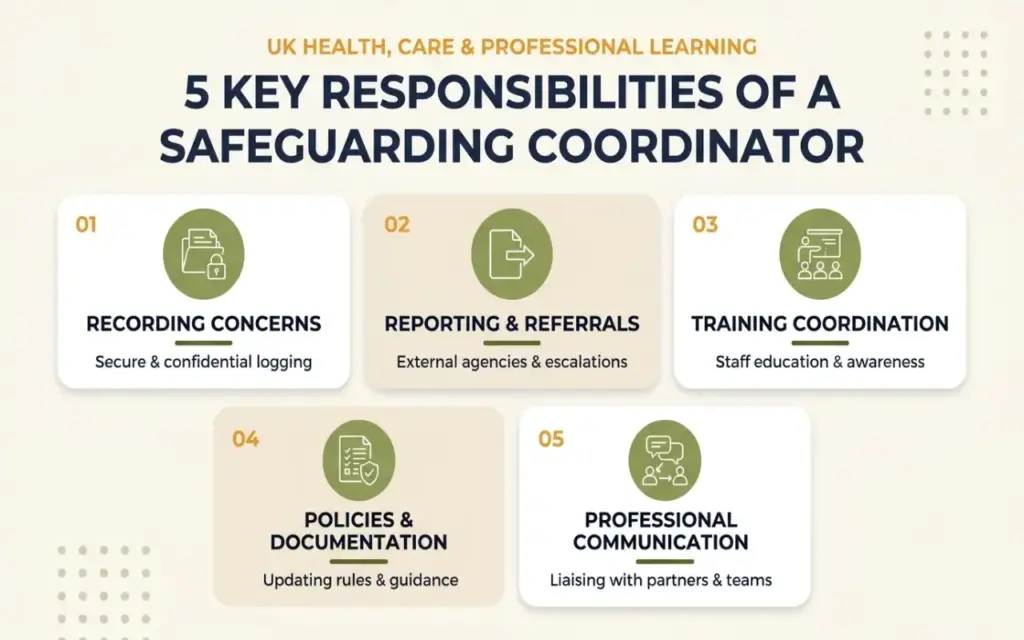
Recording and Managing Safeguarding Concerns
Accurate records help safeguarding professionals understand concerns and identify relevant information.
A coordinator may be responsible for:
- Maintaining confidential safeguarding records.
- Updating authorised case management systems.
- Organising reports and supporting documentation.
- Checking that information is stored securely.
- Ensuring records are accessible to authorised professionals.
Coordinators must handle sensitive information carefully and follow their organisation’s data protection and safeguarding procedures.
Supporting Safeguarding Reporting and Referrals
When someone raises a safeguarding concern, it must reach the appropriate person without unnecessary delay.
A coordinator may help record the information, notify the designated safeguarding professional and support referral administration where authorised.
In English schools, Keeping Children Safe in Education sets out expectations for staff responding to safeguarding concerns.
A coordinator should not assume responsibility for investigating suspected abuse unless they have a specific, lawful and appropriately authorised function. Their role is to follow established procedures and escalate concerns appropriately.
Coordinating Safeguarding Training and Awareness
Staff need to understand how to recognise concerns and follow their workplace’s reporting procedures.
Safeguarding coordinators may arrange training sessions, maintain attendance records and communicate relevant policy updates.
They might also help organise induction materials for new employees or volunteers.
These activities support consistent safeguarding awareness across the organisation.
Maintaining Policies and Safeguarding Documentation
Safeguarding procedures need to remain accessible, organised and appropriately reviewed.
A coordinator may maintain policy documents, track review dates, prepare administrative records for audits and support managers responsible for safeguarding arrangements.
However, responsibility for approving policies or making significant safeguarding decisions remains with the appropriately authorised people.
Communicating With Safeguarding Leads and Other Professionals
Safeguarding work often involves communication between different professionals.
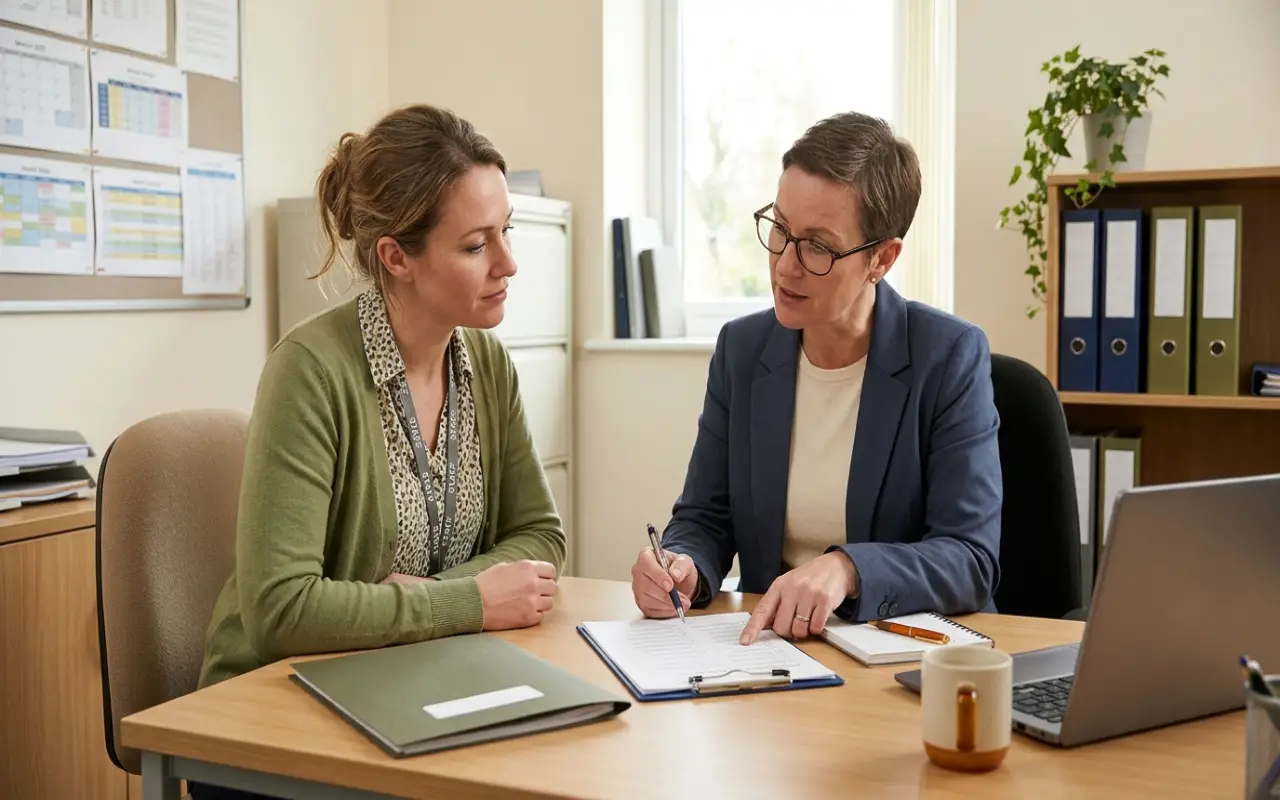
A coordinator may arrange meetings, share authorised information and follow up on agreed actions.
They might communicate with safeguarding leads, managers, social care professionals or other agencies, depending on their responsibilities.
These activities can overlap with wider safeguarding officer responsibilities, although the two job titles do not necessarily carry identical authority.
What Does a Safeguarding Coordinator Do on a Typical Day?
There is no fixed daily schedule for safeguarding coordinators. Some positions focus on administration, while others involve direct communication with safeguarding professionals and organisational leadership.
A typical working day might include:
1. Reviewing outstanding actions: Checking safeguarding administration tasks, upcoming meetings and assigned follow-ups.
2. Updating records: Entering authorised information into secure systems and checking documentation for completeness.
3. Communicating with safeguarding leads: Passing on relevant information and confirming that concerns have reached the appropriate professional.
4. Organising training: Arranging staff safeguarding sessions or maintaining training attendance records.
5. Following up: Checking that assigned actions have been completed and appropriately documented.

For example, a coordinator working in a school might spend part of the morning updating safeguarding records and the afternoon arranging staff training with the DSL.
These are illustrative activities rather than a prescribed timetable. Urgent concerns must be escalated promptly in line with the organisation’s procedures, rather than waiting for a scheduled administrative review.
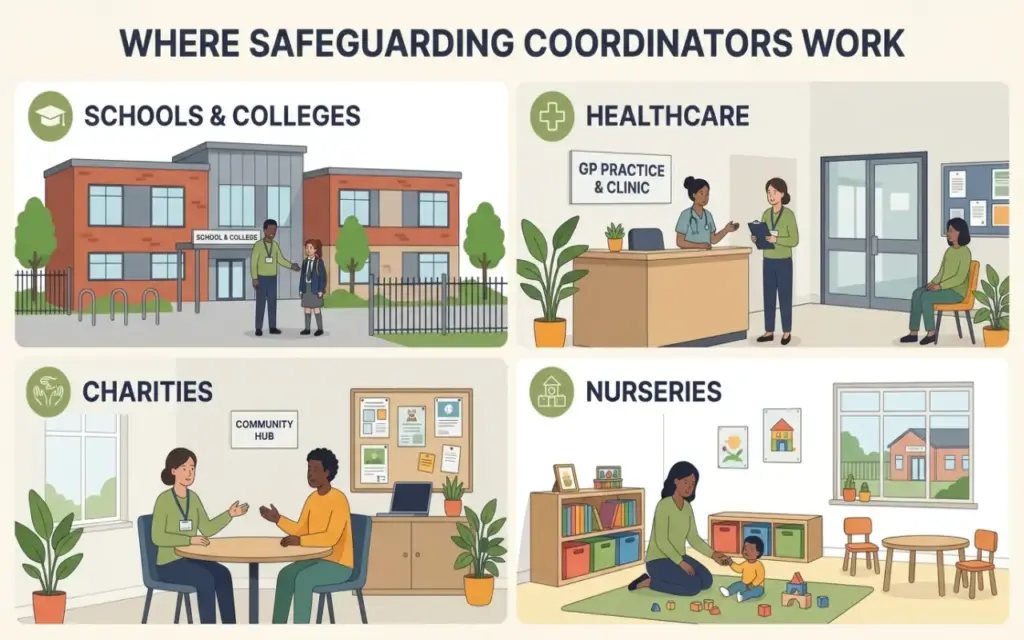
Where Do Safeguarding Coordinators Work?
Safeguarding coordination is relevant across several UK sectors, but the nature of the work depends on the organisation and the people it supports.
| Workplace | Typical Safeguarding Coordination Activities |
|---|---|
| Schools and Colleges | Supporting safeguarding records, staff communication and designated safeguarding arrangements. |
| GP Practices and Healthcare | Coordinating safeguarding information and supporting clinical safeguarding leads. |
| Charities and Community Organisations | Supporting safeguarding policies, reporting procedures and staff or volunteer awareness. |
| Nurseries and Early Years Settings | Supporting child safeguarding documentation, communication and staff training arrangements. |
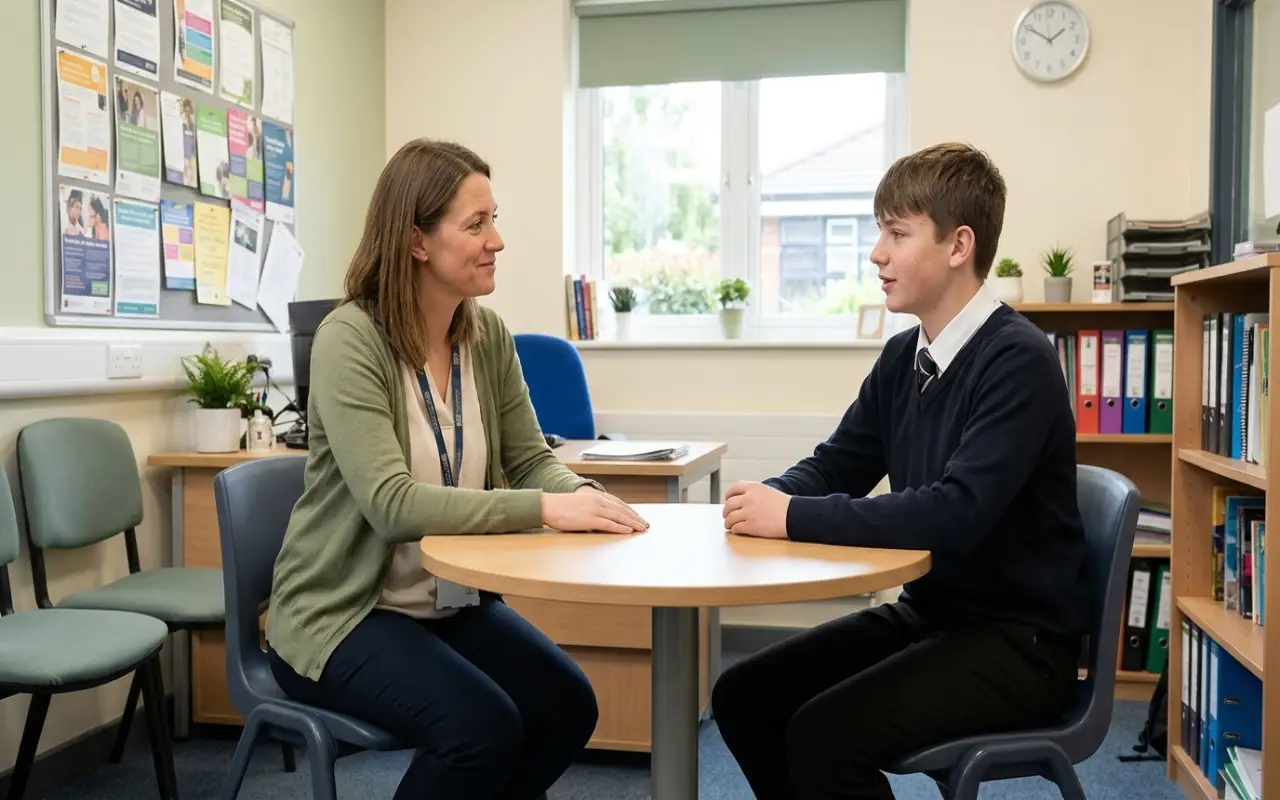
In schools, safeguarding coordinators may work closely with pastoral teams. However, pastoral support roles in schools can include wider responsibilities for pupils’ wellbeing, attendance and personal development.
In healthcare, safeguarding support roles may involve organising information and coordinating administrative processes while clinical decisions remain with appropriately qualified professionals.
Nursery staff also work within safeguarding arrangements suited to early years settings. Understanding safeguarding training for nursery teams can help explain the knowledge required in these environments.
Across all these settings, the coordinator’s responsibilities should be clearly defined by the employer.
Is a Safeguarding Coordinator the Same as a Designated Safeguarding Lead?
Not necessarily. A safeguarding coordinator and a designated safeguarding lead may work together, but their responsibilities are not automatically interchangeable.
In schools and colleges in England, the DSL is a formally designated role with responsibilities established through Department for Education safeguarding guidance.
A safeguarding coordinator may support that person through record management, communication and administrative coordination.
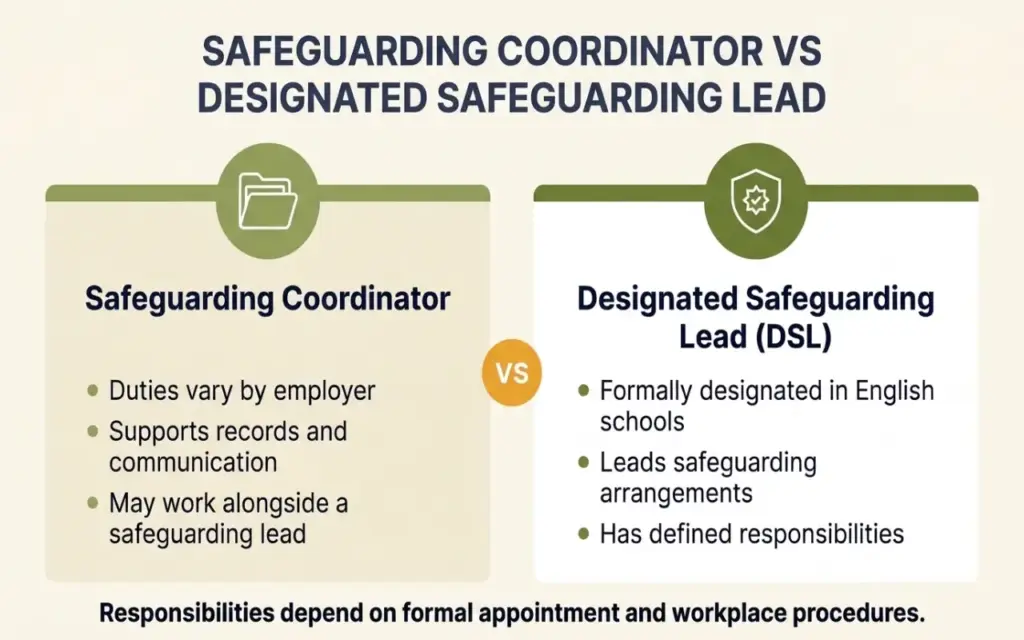
| Safeguarding Coordinator | Designated Safeguarding Lead (DSL) |
|---|---|
| Responsibilities vary depending on the employer and organisation. | Has formally assigned safeguarding leadership responsibilities in relevant education settings. |
| May support safeguarding records, staff training and communication. | Takes lead responsibility for safeguarding and child protection arrangements. |
| May work under the direction of a designated safeguarding lead. | Operates within defined safeguarding accountability and reporting arrangements. |
Some organisations may appoint a coordinator who also holds designated safeguarding responsibilities. What matters is the person’s formal appointment, competence and actual job description, not simply their title.
This distinction is particularly important when handling referrals, safeguarding decisions and concerns requiring specialist intervention.
What Skills and Training Does a Safeguarding Coordinator Need?
Safeguarding coordinators need a combination of communication, organisational and safeguarding knowledge. The precise requirements depend on the employer and the responsibilities assigned.
Essential Skills
Important skills include:
- Communication: Listening carefully and sharing information appropriately.
- Confidentiality: Handling sensitive personal information responsibly.
- Record-keeping: Maintaining clear, accurate and timely documentation.
- Organisation: Managing meetings, training records and follow-up tasks.
- Professional judgement: Recognising when concerns require prompt escalation.
- Teamwork: Cooperating with safeguarding leads and other professionals.
A coordinator also needs to understand the limits of their authority and know when to seek specialist advice.
Qualifications and Safeguarding Training
There is no single qualification requirement for every safeguarding coordinator position in the UK. Employers may request relevant professional experience, safeguarding training or sector-specific qualifications.
Relevant safeguarding training can help learners recognise concerns, understand reporting procedures and maintain appropriate records. However, course completion alone does not establish eligibility for a designated safeguarding role.
For further guidance on choosing appropriate safeguarding training, consider the course content alongside the requirements of your intended role.
Conclusion
A safeguarding coordinator helps organisations maintain effective safeguarding arrangements through accurate records, clear communication, training coordination and appropriate reporting.
Although responsibilities differ between workplaces, understanding safeguarding procedures and professional boundaries is essential. Anyone considering the role should review the employer’s job description, training expectations and reporting arrangements before applying.
Table of Contents


Child Protection and Safeguarding
Frequently Asked Questions
Can a safeguarding coordinator make safeguarding decisions?
It depends on their assigned responsibilities, competence and authority. Some coordinators hold designated safeguarding responsibilities, while others provide support. Staff must follow organisational procedures and escalate concerns to the appropriate professionals.
Who does a safeguarding coordinator report to?
Reporting arrangements vary by organisation. A coordinator might report to a designated safeguarding lead, safeguarding manager, senior manager or clinical safeguarding lead, depending on the workplace.
How much does a safeguarding coordinator earn in the UK?
Pay varies according to the sector, location, seniority and responsibilities. A coordinator managing organisation-wide safeguarding arrangements may have a different salary from someone in an administrative support role.
For related remuneration information, see child protection officer pay in the UK.