

Many applicants search for NHS vacancies every day, but finding a suitable role is only the beginning. The biggest challenge is creating an application that clearly shows recruiters why you match the position.
The NHS Jobs website gives candidates access to a wide range of healthcare, administration and support opportunities. However, many applications do not progress because applicants choose unsuitable vacancies, overlook essential criteria or write supporting information that does not demonstrate their skills effectively.
Using NHS Jobs successfully requires more than searching for a job title and clicking apply. You need to understand how vacancies are structured, what recruiters look for during shortlisting and how to present your experience in a way that connects with the role requirements.
Whether you are applying for your first NHS position, changing careers or looking for professional development opportunities, this guide explains how to use the NHS Jobs website effectively and improve your application approach.
Content reviewed using official NHS recruitment guidance and NHS Jobs information. Vacancy requirements can vary between organisations, so always check the details provided in each job advert.
Table of Contents
What Is the NHS Jobs Website and How Does It Work?
The NHS Jobs website is the official online recruitment platform where candidates can search and apply for vacancies across NHS organisations throughout the UK.
You can access the official website here:
Unlike general job boards, NHS Jobs focuses specifically on healthcare-related employment opportunities. The platform allows applicants to explore vacancies, review role requirements, complete applications and communicate with employers during the recruitment process.
The website supports applicants by allowing them to:
- Search vacancies by keyword, location and organisation
- Create an applicant account
- Save suitable opportunities
- Complete online application forms
- Add employment history and qualifications
- Submit supporting information
- Track applications
The NHS recruitment journey usually follows a clear process:
| Stage | What Happens |
|---|---|
| Find a vacancy | Search for roles that match your skills and career goals |
| Review requirements | Check the job description and person specification |
| Prepare your application | Add relevant experience, qualifications and supporting information |
| Submit your application | Complete all sections before the deadline |
| Recruitment stages | Attend interviews and complete checks if successful |
Although the process looks straightforward, the quality of your application plays a major role in whether you progress. Recruiters need evidence that your skills and experience match the vacancy, which is why understanding each stage is important.
What Types of NHS Roles Can You Find Online?
The NHS Jobs website includes vacancies across many areas of healthcare and support services. This makes it suitable for applicants with different backgrounds, including experienced professionals, career changers and people entering healthcare for the first time.
Common job areas include:
| Job Area | Example Roles |
|---|---|
| Healthcare Support | Healthcare Assistant, Clinical Support Worker |
| Administration | NHS Administrator, Medical Receptionist |
| Nursing | Registered Nurse, Nursing Associate |
| Technical Services | Pharmacy Assistant, Laboratory Assistant |
| Support Services | Porter, Domestic Assistant, Catering Assistant |
Each role has different expectations. Some vacancies require professional registration or specific qualifications, while others focus more on communication, teamwork and reliability.
For example, someone working in retail may not have NHS experience, but they may already have skills in supporting people, handling difficult conversations and working under pressure. These abilities can become valuable when applying for suitable roles.
Who Can Use the NHS Jobs Website?
The NHS Jobs website is available for anyone interested in NHS employment opportunities. Applicants come from many different backgrounds, and previous experience can be relevant in different ways depending on the role.
People commonly use NHS Jobs when they are:
- Starting a healthcare career
- Moving from another industry
- Looking for support roles
- Returning to work
- Progressing within healthcare
The important factor is understanding what each vacancy requires. A person specification explains the skills and experience the employer wants, helping you identify whether your background matches the position.
For example:
| Previous Background | Skills That May Transfer |
|---|---|
| Retail | Communication, patience and supporting different needs |
| Hospitality | Teamwork and working in busy environments |
| Administration | Organisation, accuracy and confidentiality |
| Childcare | Supporting individuals and safeguarding awareness |
When these skills are explained with relevant examples, they can strengthen an application.
Step 1: Create an NHS Jobs Account
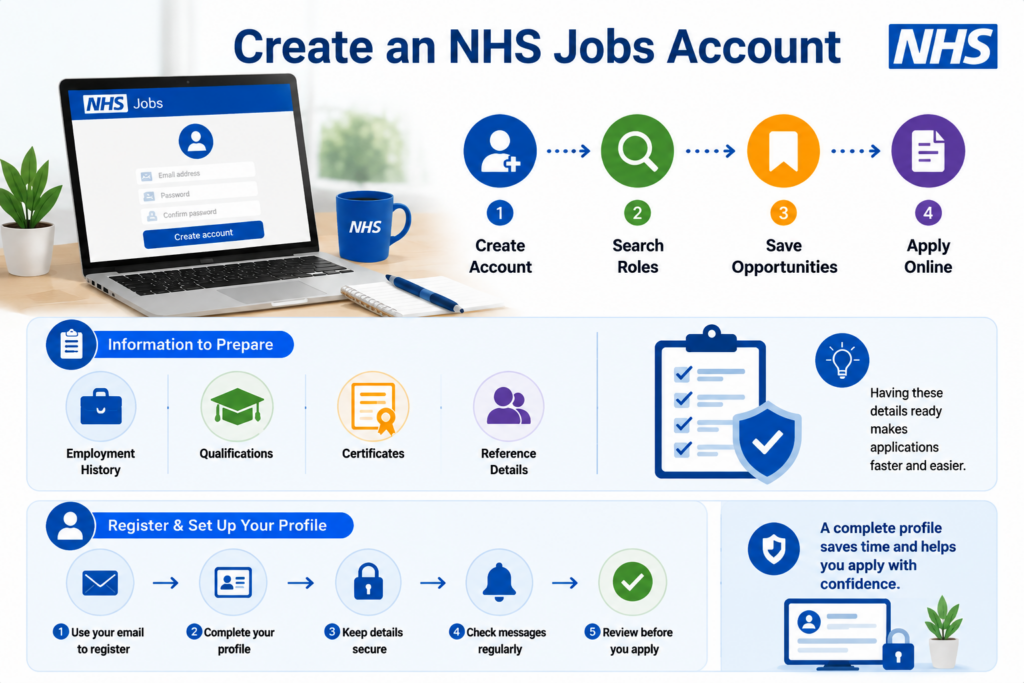
Creating an NHS Jobs account is the first practical step before applying for vacancies. Your account allows you to search roles, save opportunities and complete applications online.
Before registering, prepare the information you are likely to need. Having these details available makes the process smoother and allows you to spend more time improving your application rather than searching for basic information.
Useful information includes:
| Information | Why It Helps |
|---|---|
| Employment history | Helps explain your previous responsibilities |
| Qualifications | Shows relevant education and training |
| Certificates | Provides evidence of completed learning |
| Reference details | Supports the recruitment process |
You should also think about examples from your previous experience before starting applications. These examples will later help you explain your skills in the supporting information section.
How to Register and Set Up Your Profile
To create an account, visit the NHS Jobs website and register using an email address you regularly check.
After registration, complete your profile carefully and make sure your information remains accurate. A complete profile saves time when applying for multiple vacancies because you can reuse basic details while adapting your application for each specific role.
When managing your account:
- Keep your contact details updated
- Check NHS Jobs messages regularly
- Store login details securely
- Review saved information before submitting applications
Although your account stores your information, avoid sending identical applications for every vacancy. Each NHS role has different requirements, and recruiters want to see how your experience connects with the position you are applying for.
NHS Jobs Login Problems and Common Account Issues
Applicants sometimes experience difficulties accessing their NHS Jobs account. These problems usually happen because of forgotten passwords, incorrect email details or outdated account information.
If you cannot access your account, use the password recovery option instead of creating a new account. Keeping one account makes it easier to manage applications and track recruitment progress.
Common login issues include:
| Problem | Possible Solution |
|---|---|
| Forgotten password | Use the password reset option |
| Missing emails | Check spam or junk folders |
| Incorrect email details | Confirm your registered email address |
| Old account information | Update your profile details |
To avoid future issues, use an email address you check regularly and keep your profile information current. This becomes especially important when you are applying for roles with short deadlines.
Step 2: Search for NHS Vacancies Effectively
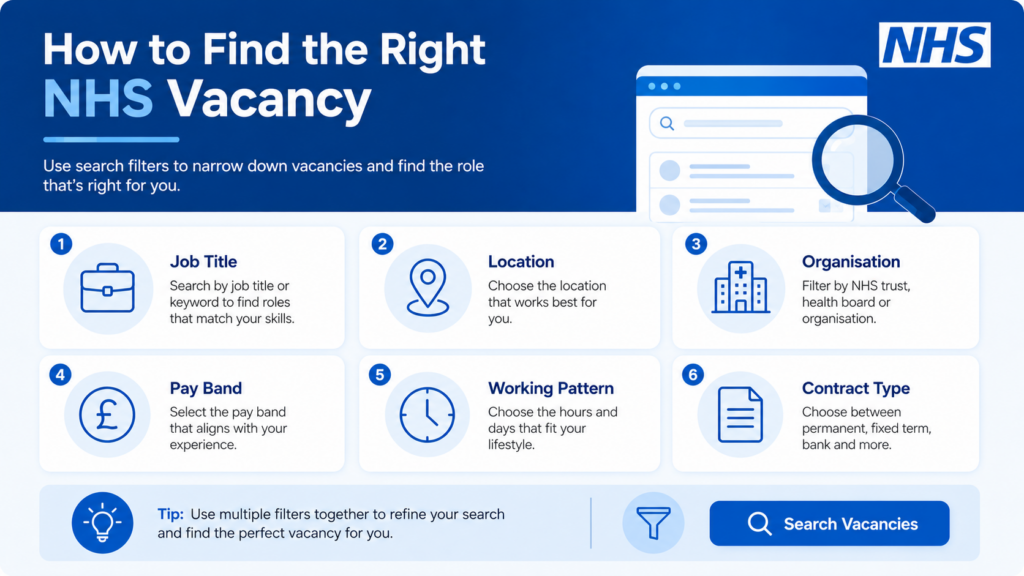
Finding suitable NHS vacancies requires a targeted approach. Searching with broad terms can create hundreds of results, making it harder to identify roles that genuinely match your skills.
Before searching, consider what type of role you want, where you would like to work and what level of experience you currently have.
A focused search helps you:
- Find relevant vacancies faster
- Understand employer expectations
- Spend more time creating stronger applications
How to Use Keywords When Searching NHS Jobs
The keywords you use influence the vacancies that appear. Specific job titles usually produce more relevant results than general searches.
For example:
| Broad Search | More Targeted Search |
|---|---|
| Care | Healthcare Assistant |
| Hospital | Clinical Support Worker |
| Office | NHS Administrator |
| Health | Patient Support Worker |
Useful search terms may include:
- Healthcare Assistant
- Clinical Support Worker
- Nursing Assistant
- Ward Assistant
- NHS Administrator
- Patient Services Assistant
Career changers should also search by responsibilities rather than only previous job titles. For example, someone with customer service experience may find opportunities where communication and support skills are valuable.
Using Filters to Find Suitable Roles
NHS Jobs provides filters that help narrow your search results. These tools are useful because they allow you to focus on vacancies that match your circumstances.
Common filters include:
| Filter | Purpose |
|---|---|
| Location | Finds vacancies in preferred areas |
| Pay band | Helps identify suitable role levels |
| Working pattern | Shows full-time or part-time options |
| Contract type | Finds permanent or temporary roles |
| Organisation | Searches specific NHS employers |
After finding a vacancy, always read the full advert before applying. The job description and person specification provide the information you need to decide whether the role is suitable.
Can You Use the NHS Jobs Website on Mobile Devices?
The NHS Jobs website works on mobile browsers, allowing applicants to search vacancies and manage applications using smartphones and tablets.
Although some users search for an “NHS Jobs app”, the official NHS Jobs website remains the safest way to access your account.
When applying on mobile, take extra care with longer written sections. Supporting information requires careful editing, so many applicants prefer drafting responses on a larger screen before submitting.
Step 3: Understand NHS Job Advert Requirements Before Applying
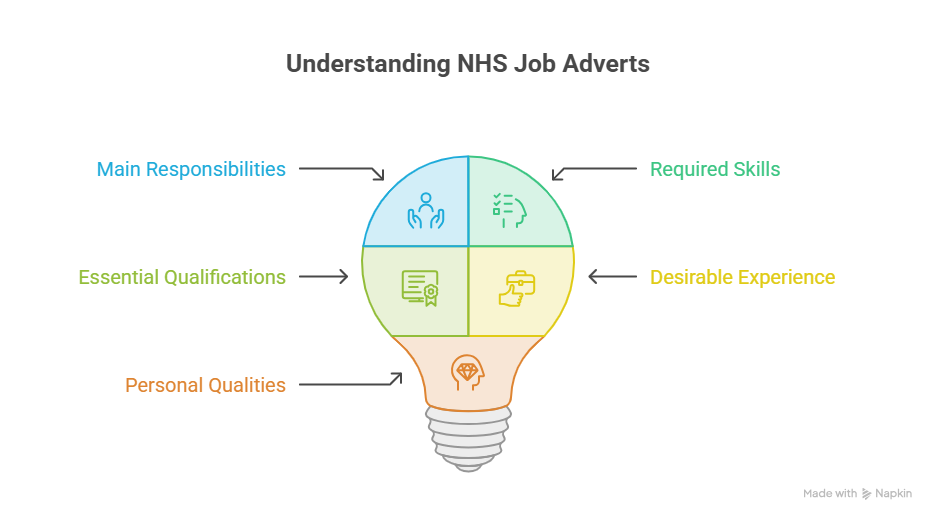
Finding a suitable vacancy is only the first stage of the NHS Jobs process. Before applying, you need to understand what the employer expects and identify how your experience matches the role.
Every NHS job advert provides important information about the position, including:
- Main responsibilities
- Required skills
- Essential qualifications
- Desirable experience
- Personal qualities
Reading this information carefully helps you avoid applying for unsuitable roles and allows you to create a more focused application.
Understanding Job Descriptions
The job description explains what the successful applicant will do and what responsibilities the role involves.
For example, a Healthcare Assistant vacancy may include responsibilities such as supporting patients with daily activities, communicating with healthcare professionals, maintaining dignity and following workplace procedures.
When reading a job description, consider:
- Have I completed similar tasks before?
- Which skills from my previous experience are relevant?
- What examples can demonstrate my ability?
For example, someone applying for an NHS administrator role may not have worked in healthcare previously. However, experience managing records, handling confidential information and supporting customers can demonstrate useful skills for an administrative position.
The key is not simply having similar job titles. It is showing how your experience connects with the responsibilities of the role.
What Is a Person Specification?
A person specification explains the skills, experience, qualifications and personal qualities an employer wants from applicants.
Recruiters use this information during shortlisting to compare candidates and identify who meets the requirements of the role.
Most NHS person specifications include two categories:
| Criteria | Explanation |
|---|---|
| Essential criteria | Skills or experience normally required for the role |
| Desirable criteria | Additional qualities that can strengthen your application |
For example:
Essential criteria:
- Good communication skills
- Ability to work within a team
- Understanding of confidentiality
- Ability to support individuals
Desirable criteria:
- Previous healthcare experience
- Relevant training
- Experience using healthcare systems
When writing your application, focus first on the essential criteria. These usually have the greatest influence during shortlisting.
How to Prioritise Essential and Desirable Criteria
Before completing your application, highlight the requirements that appear in the person specification.
A useful approach is to connect each requirement with evidence from your own background.
For example:
| Requirement | Your Evidence |
|---|---|
| Communication skills | Supporting customers, colleagues or service users |
| Teamwork | Working successfully with others |
| Organisation | Managing records, tasks or deadlines |
| Problem-solving | Handling challenges professionally |
Avoid simply repeating phrases from the job advert.
Instead of writing:
“I have excellent communication skills.”
Explain how you used that skill:
“In my previous role, I communicated with people from different backgrounds, listened to their concerns and provided clear information to help resolve issues.”
This gives recruiters evidence they can assess.
Step 4: Add Your Personal and Employment Details
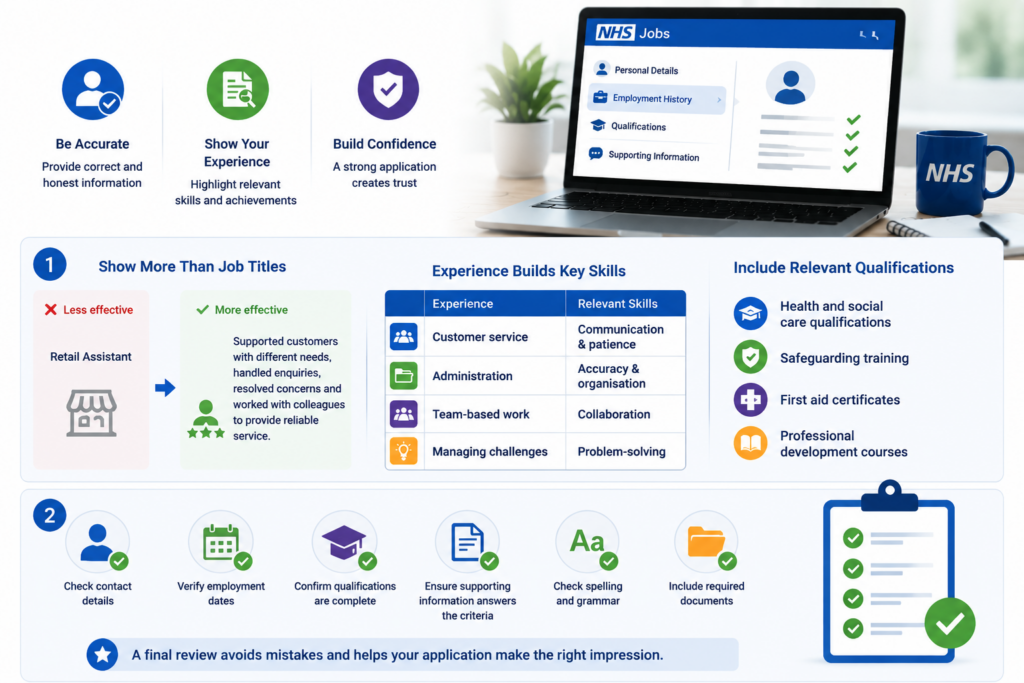
After choosing a suitable NHS vacancy, the next stage is completing your application details. This information helps recruiters understand your professional background before they review your supporting information.
Accuracy is important because your application should provide a clear and honest picture of your experience.
Adding Employment History and Qualifications
Your employment history should explain more than your previous job titles. Focus on responsibilities, skills and achievements that relate to the vacancy.
For example:
Less effective:
Retail Assistant
More effective:
Supported customers with different needs, handled enquiries, resolved concerns and worked with colleagues to maintain a reliable service.
This approach helps recruiters understand the skills you developed.
Previous experience can demonstrate:
| Experience | Relevant Skills |
|---|---|
| Customer service | Communication and patience |
| Administration | Accuracy and organisation |
| Team-based work | Collaboration |
| Managing challenges | Problem-solving |
Your qualifications section should include relevant education, training and certificates.
Examples may include:
- Health and social care qualifications
- Safeguarding training
- First aid certificates
- Professional development courses
Only include qualifications and training that accurately represent your background.
Reviewing Your Application Before Submission
Before submitting your NHS Jobs application, review every section carefully.
Check that:
- Your contact details are correct
- Employment dates are accurate
- Qualifications are complete
- Supporting information answers the criteria
- Spelling and grammar are correct
- Required documents are included
A final review can prevent simple mistakes and improve how professionally your application appears.
How to Write Supporting Information for NHS Jobs
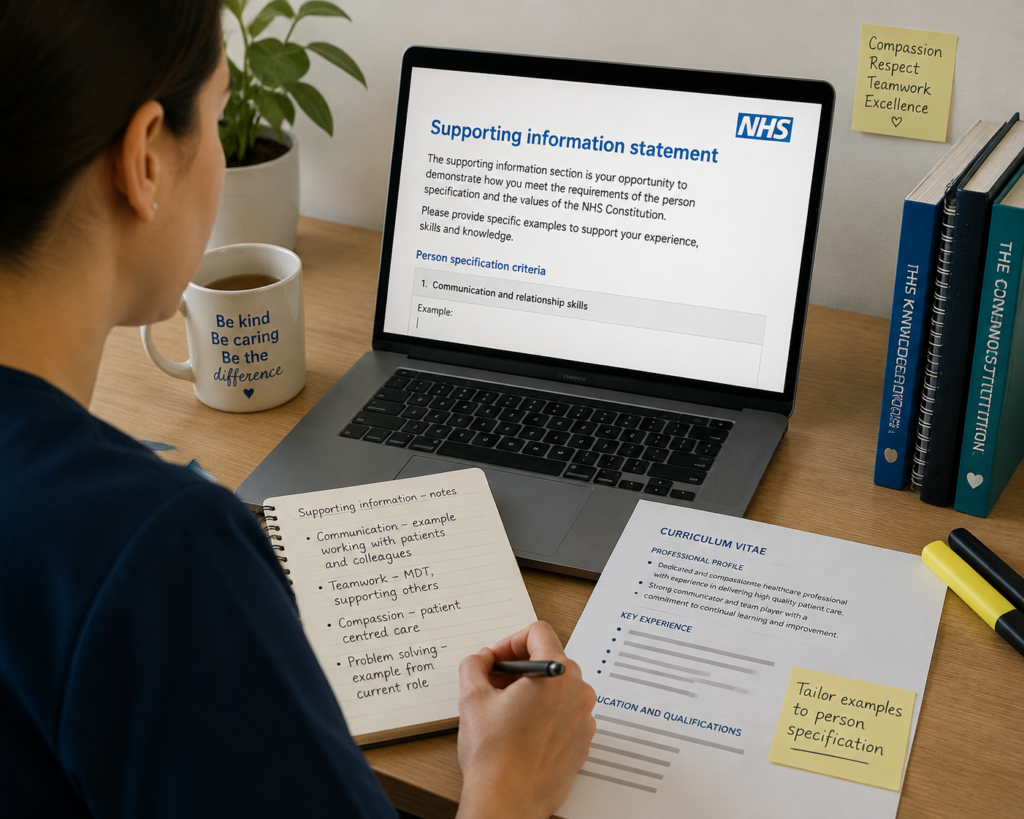
The supporting information section is one of the most important parts of an NHS Jobs application. It gives you the opportunity to explain why you are suitable for the role and show evidence that matches the person specification.
Many applicants make the mistake of listing personal qualities without explaining how they have demonstrated them.
A stronger supporting statement should:
- Address the requirements of the vacancy
- Include examples from your experience
- Explain your responsibilities
- Show the outcome of your actions
Think of this section as your opportunity to connect your experience with the employer’s expectations.
Matching Your Skills to the Person Specification
The person specification should guide the structure of your supporting information.
For each requirement, ask:
What skill does the employer need?
When have I demonstrated this skill?
What happened as a result?
For example:
Requirement: Teamwork
Evidence:
“In my previous workplace, I worked alongside colleagues during busy periods to organise tasks, share information and maintain a reliable service. This experience helped me develop strong teamwork and communication skills.”
This approach shows evidence rather than making unsupported claims.
Using STAR Examples to Strengthen Your Application
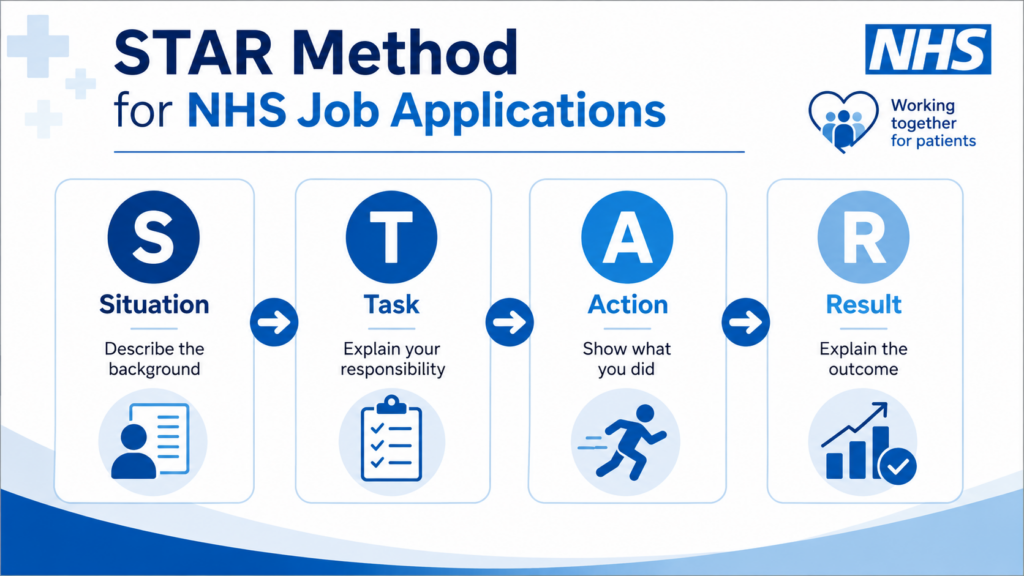
The STAR method helps you explain workplace examples clearly.
| STAR | What To Explain |
|---|---|
| Situation | Describe the background |
| Task | Explain your responsibility |
| Action | Explain what you did |
| Result | Describe the outcome |
For example:
Weak statement:
“I work well under pressure.”
Stronger STAR example:
“During a busy period in my previous customer service role, I managed several enquiries while supporting colleagues and maintaining service standards. I prioritised urgent tasks, communicated clearly and helped ensure customers received timely support.”
The stronger example demonstrates your actions and shows how your skills apply in a workplace setting.
Your examples do not need to come from an NHS role. They can come from employment, volunteering, education or other responsibilities, as long as they demonstrate relevant skills.
Showing NHS Values in Your Application
NHS employers look for applicants who understand the importance of respectful, compassionate and professional support.
You can demonstrate NHS values by showing how you:
- Treat people with dignity and respect
- Listen to individual needs
- Work positively with others
- Take responsibility for your actions
- Maintain professional standards
Avoid simply writing:
“I share NHS values.”
Instead, explain how your actions reflect these principles.
For example:
“In previous roles, I focused on listening carefully, understanding individual needs and providing respectful support. These experiences helped me develop the patience and professionalism needed when working with others.”
Applying for NHS Jobs Without NHS Experience

A lack of NHS experience does not automatically prevent you from applying for suitable roles. Many applicants move into healthcare from other industries by showing how their existing skills match the responsibilities of the position.
The important factor is demonstrating relevant abilities rather than focusing only on previous job titles.
Using Transferable Skills From Other Industries
Skills developed in other workplaces can be valuable when applying for NHS roles.
| Previous Background | Skills That May Transfer |
|---|---|
| Retail | Communication, patience and supporting people |
| Hospitality | Teamwork and working in busy environments |
| Administration | Accuracy, confidentiality and organisation |
| Childcare | Safeguarding awareness and supporting individuals |
For example, someone from hospitality may already have experience communicating with different people, managing difficult situations and following procedures.
When writing your application, focus on what your experience has taught you and how those skills connect with the vacancy.
Entry-Level NHS Roles You Can Consider
Applicants starting their NHS career may explore roles such as:
| Role | Main Responsibilities |
|---|---|
| Healthcare Assistant | Supporting patients with daily care needs |
| Clinical Support Worker | Assisting healthcare teams |
| Ward Support Assistant | Supporting ward services |
| NHS Administrator | Helping manage healthcare operations |
| Patient Services Assistant | Supporting patients with information and services |
Always review the person specification before applying because requirements vary between roles.
Common NHS Jobs Application Mistakes to Avoid
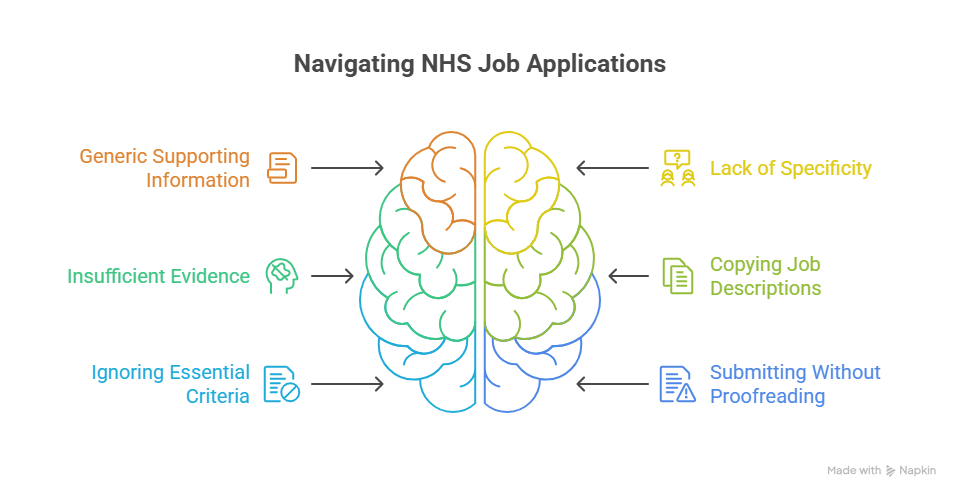
Even when applicants have suitable experience, mistakes in their application can reduce their chances of progressing.
Writing Generic Supporting Information
A common mistake is using the same supporting statement for every vacancy.
Recruiters want to see that you understand the specific role and have considered how your skills match the requirements.
Instead of:
“I am hardworking and caring.”
Explain:
“My previous support experience helped me develop communication skills, patience and the ability to respond professionally to different needs.”
A tailored response creates a stronger connection between your experience and the vacancy.
Not Providing Evidence
Simply stating that you have a skill is not enough.
Instead of:
“I have good teamwork skills.”
Explain:
“I worked with colleagues to manage daily responsibilities, share information clearly and maintain an effective service during busy periods.”
Avoid:
- Copying job descriptions
- Listing skills without examples
- Ignoring essential criteria
- Submitting without proofreading
What Happens After You Submit an NHS Jobs Application?
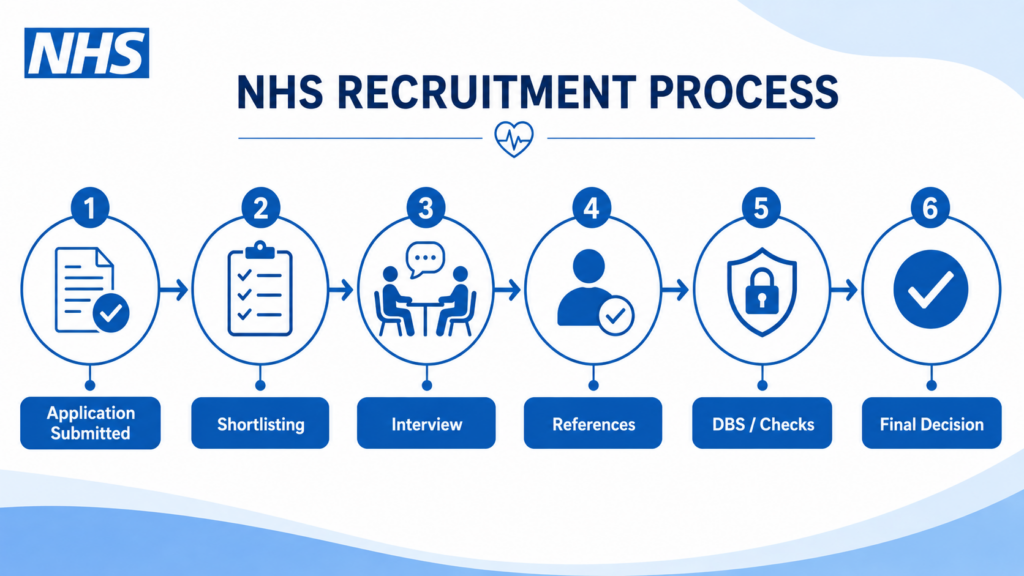
After submission, the NHS organisation reviews applications and decides which candidates progress to the next stage.
Understanding this process helps you prepare for what happens after applying.
How NHS Shortlisting Works
During shortlisting, recruiters compare applications against the job description and person specification.
They usually consider:
- Essential criteria
- Relevant experience
- Qualifications
- Supporting information
- Evidence of skills
An application that clearly explains your experience can stand out more than one that only lists previous responsibilities.
NHS Interviews and References
If shortlisted, you may receive an interview invitation.
NHS interviews often explore:
- Your understanding of the role
- Previous experience
- Communication skills
- Teamwork
- NHS values
Preparing examples using the STAR method can help you answer questions clearly.
Successful candidates may then complete recruitment checks before receiving a final offer.
What Happens During an NHS DBS Check?
Some NHS roles require a Disclosure and Barring Service (DBS) check as part of safer recruitment procedures.
A DBS check helps employers review relevant criminal record information when required for a specific role.
Other checks may include:
- Identity verification
- Right-to-work checks
- References
- Qualification checks
The checks required depend on the responsibilities of the vacancy.
How Long Does NHS Recruitment Take?
The recruitment timeline varies depending on the organisation, role and number of applicants.
The process usually includes:
- Application review
- Shortlisting
- Interview
- References and checks
- Final decision
Some vacancies progress quickly, while others take longer due to recruitment schedules and required checks
Can AI Help With an NHS Jobs Application?
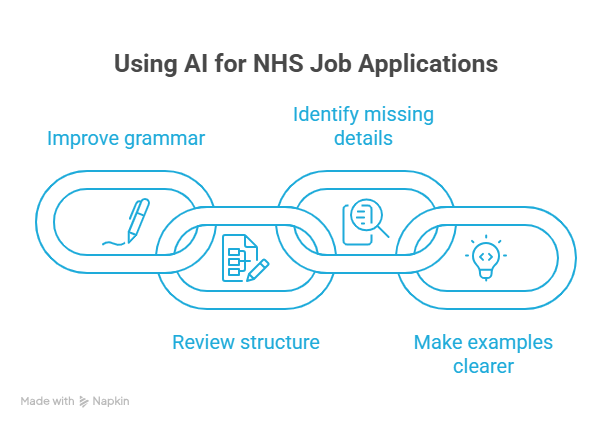
AI tools can support applicants by improving the clarity and structure of their applications. However, they should support your own experience rather than replace it.
AI can help you:
- Improve grammar
- Review structure
- Identify missing details
- Make examples clearer
Using AI Effectively
A useful approach is:
- Write your application using your own experience.
- Use AI to review clarity and structure.
- Improve weaker sections.
- Submit only accurate information.
AI should not create false experience, qualifications or responsibilities. Healthcare employers value honesty because NHS roles involve trust and responsibility.
How Training Can Support Your NHS Career Development
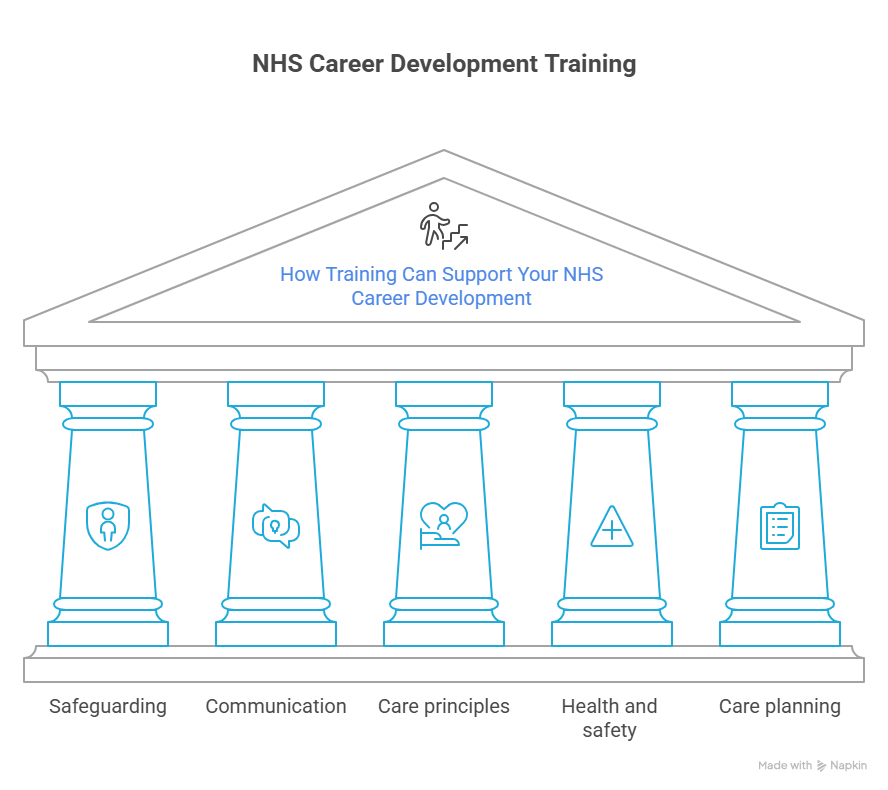
Developing relevant knowledge can help you understand healthcare environments and prepare for future opportunities.
Training does not guarantee employment, but it can support professional development by helping you build knowledge in areas such as:
- Safeguarding
- Communication
- Care principles
- Health and safety
- Care planning
For applicants preparing for healthcare roles, this knowledge can help them understand important workplace responsibilities and discuss relevant topics more confidently during applications and interviews.
Final Takeaway: Use the NHS Jobs Website With Confidence
The NHS Jobs website provides access to a wide range of healthcare and support opportunities, but finding vacancies is only the first stage.
A strong application depends on understanding the role, matching your experience with the person specification and providing clear examples that demonstrate your skills.
Take time to search carefully, prepare your supporting information and review each application before submission. By approaching NHS Jobs strategically, you can improve the quality of your applications and feel more confident throughout the recruitment process.
Frequently Asked Questions
How Do I Create an NHS Jobs Account?
You can create an NHS Jobs account by registering on the official website using your email address. Once registered, you can search vacancies, save roles and submit applications online.
How Do I Search for NHS Jobs Effectively?
Use specific keywords related to your target role and apply filters such as location, organisation, working pattern and pay band to find suitable vacancies.
Is the NHS Jobs Website Free to Use?
Yes. The NHS Jobs website is free for applicants. You can create an account, search vacancies and apply for roles without paying registration or application fees.
Can I Apply for NHS Jobs Without Previous NHS Experience?
Yes. Some roles consider transferable skills from other industries, including communication, teamwork, organisation and supporting people.
Do I need to include every criterion from the person specification?
Give priority to the essential criteria and use the available space carefully. NHS England advises HCSW applicants to demonstrate how they meet the essential criteria in their supporting information. Where you meet desirable criteria, include them when they add useful evidence.
What Should I Include in NHS Jobs Supporting Information?
Your supporting information should explain how your skills and experience match the person specification. Use examples rather than only listing personal qualities.
How Long Does the NHS Recruitment Process Take?
The timeline varies depending on the vacancy and organisation. It may include shortlisting, interviews, references and pre-employment checks.
Can AI Help With an NHS Jobs Application?
AI can help improve structure and readability, but your application should always contain genuine examples from your own experience.