


A Healthcare Assistant can build a rewarding career by gaining experience, developing skills and taking on greater responsibilities over time. For many people working in NHS support roles, the move from Band 2 to Band 3 represents an important career step. But what actually changes between these two roles?
The main difference between a Band 2 and Band 3 Healthcare Assistant is the level of responsibility, the range of duties and the knowledge required to support patients safely. Both roles provide essential care, but Band 3 Healthcare Assistants usually take on additional responsibilities, including more complex support tasks and greater involvement in clinical activities.
Healthcare Assistants play an important role across hospitals, community services, mental health settings and other healthcare environments. They support registered professionals, help patients with daily needs and contribute to safe, compassionate care.
Choosing between a Band 2 and Band 3 role depends on your experience, career goals and the type of responsibilities you want to develop. A Band 2 position can provide a strong foundation for healthcare experience, while a Band 3 role may offer opportunities to expand your skills and work with increased responsibility.
This guide explains the key differences between Band 2 and Band 3 Healthcare Assistant roles, including:
- Daily duties and responsibilities
- Patient care and clinical support tasks
- NHS pay differences
- Skills needed for progression
- Training and development opportunities
- Career pathways within healthcare support roles
Understanding these differences can help current Healthcare Assistants plan their next career move and help new applicants understand what each NHS band involves.

Table of Contents
Band 2 vs Band 3 Healthcare Assistant: Quick Answer and Comparison
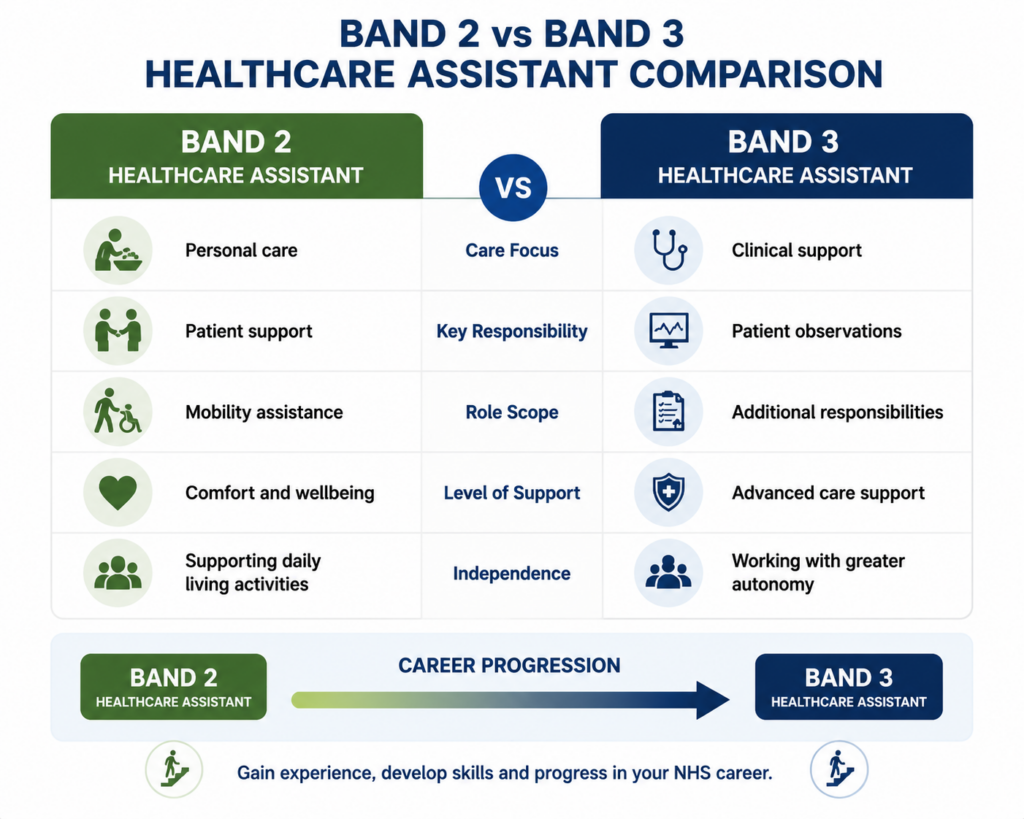
A Band 2 Healthcare Assistant mainly focuses on providing essential patient support, including personal care, comfort and assistance with daily activities. A Band 3 Healthcare Assistant carries out similar duties but usually takes on additional responsibilities, such as delegated clinical support tasks and more complex aspects of patient care.
Both roles work as part of a wider healthcare team and support nurses and other professionals. The difference does not come from the value of the work; it comes from the level of knowledge, responsibility and competencies expected within the role.
A Band 2 Healthcare Assistant may support patients with:
- Washing, dressing and personal hygiene
- Mobility and repositioning
- Eating and drinking
- Comfort and emotional support
- Maintaining a safe care environment
A Band 3 Healthcare Assistant may continue these duties while also supporting areas such as:
- Recording patient observations
- Supporting specific clinical procedures
- Monitoring changes in a patient’s condition
- Carrying out delegated healthcare tasks within their training
The exact responsibilities depend on the NHS Trust, department and job description. For example, a Band 3 Healthcare Assistant working in an acute hospital ward may have different duties from someone working in a community healthcare setting.
The NHS uses the Agenda for Change framework to organise many healthcare roles and pay structures. The framework considers factors such as skills, responsibilities and knowledge requirements when evaluating roles. More information about NHS pay structures is available through NHS Employers Agenda for Change guidance.
Band 2 vs Band 3 Healthcare Assistant Comparison Table
The table below highlights the main differences between Band 2 and Band 3 Healthcare Assistant roles. The exact duties can vary depending on the employer, department and individual role requirements.
| Area | Band 2 Healthcare Assistant | Band 3 Healthcare Assistant |
|---|---|---|
| Main focus | Essential patient care and support | Patient care with additional responsibilities |
| Daily responsibilities | Personal care, comfort and wellbeing support | Care duties plus delegated clinical support |
| Patient support | Helps with everyday care needs | Supports more complex care activities |
| Clinical involvement | Limited clinical support tasks | Greater involvement in clinical support activities |
| Responsibility level | Works with guidance from senior staff | Takes greater responsibility within competencies |
| Experience level | Suitable for developing healthcare experience | Usually requires broader skills and experience |
| Career stage | Foundation healthcare support role | Progression-focused healthcare support role |
A Band 3 role does not mean a Healthcare Assistant works without support or supervision. All Healthcare Assistants must work within their role boundaries, follow workplace procedures and seek guidance when a situation requires additional expertise.
What Does a Band 2 Healthcare Assistant Do?
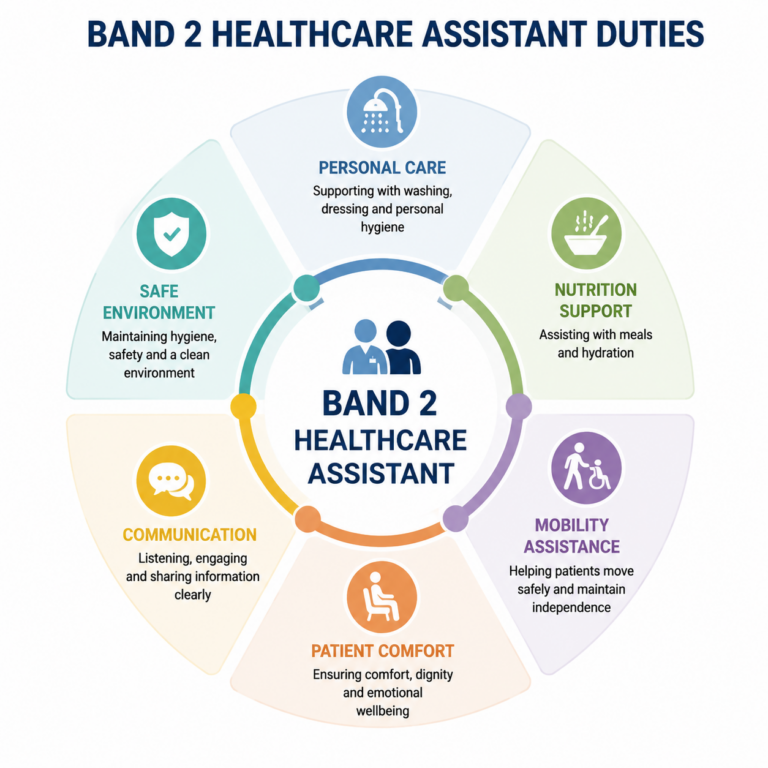
A Band 2 Healthcare Assistant provides day-to-day support that helps patients maintain their dignity, comfort and independence. These roles often provide the first step into healthcare support and allow individuals to develop valuable experience in patient care environments.
Band 2 Healthcare Assistants usually work alongside nurses and other healthcare professionals. Their responsibilities focus on meeting patients’ basic care needs and supporting the smooth running of care services.
Common Band 2 Healthcare Assistant duties include:
- Helping patients with personal care, such as washing and dressing
- Supporting mobility and safe movement
- Assisting with meals and hydration
- Providing reassurance and emotional support
- Helping maintain clean and safe care areas
- Reporting concerns or changes in a patient’s condition
A Band 2 Healthcare Assistant may also support healthcare teams by recording basic information, preparing care areas and helping patients feel comfortable during their care journey.
For example, a Healthcare Assistant working on a hospital ward may help a patient get ready in the morning, support them during meals and inform a nurse if they notice changes in mobility, behaviour or general wellbeing.
Strong communication and observation skills are important because Healthcare Assistants often spend significant time with patients. They may notice small changes that help nurses and other professionals understand a patient’s needs.
Band 2 roles require compassion, reliability and a willingness to support people during vulnerable moments. The experience gained in this role can create a strong foundation for future career progression within healthcare.
Common Patient Support Tasks and Care Activities
Band 2 Healthcare Assistants support many areas of daily patient care. Their work helps patients maintain independence while ensuring they receive safe and respectful support.
Typical patient support activities include:
| Care Area | Examples of Support |
|---|---|
| Personal care | Supporting washing, dressing and hygiene needs |
| Mobility | Helping patients move safely and comfortably |
| Nutrition | Assisting with meals and hydration |
| Comfort | Providing reassurance and emotional support |
| Communication | Listening to concerns and reporting changes |
| Environment | Helping maintain a safe care setting |
For example, a Band 2 Healthcare Assistant supporting an older patient may help with personal care, encourage independence during daily activities and report any concerns about their health or wellbeing to the wider care team.
Although Band 2 Healthcare Assistants focus mainly on essential care support, the role develops important foundations for progression. Experience with patients, communication with colleagues and understanding care procedures can help individuals prepare for higher-level healthcare support roles.
What Does a Band 3 Healthcare Assistant Do?
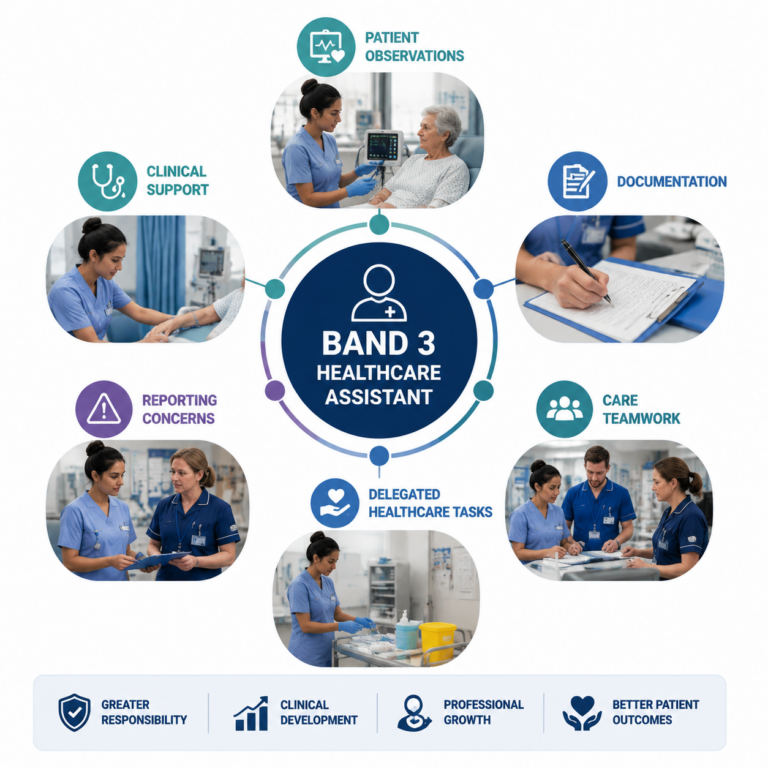
A Band 3 Healthcare Assistant takes on a wider range of responsibilities while continuing to provide essential patient support. The role usually involves the same foundations as Band 2 care, such as supporting personal needs and promoting patient wellbeing, but it often includes additional clinical support duties within agreed competencies.
Band 3 Healthcare Assistants commonly work closely with registered nurses and other healthcare professionals. They use their experience to support more complex aspects of care, recognise changes in patients and contribute to effective communication across the healthcare team.
Typical Band 3 Healthcare Assistant duties may include:
- Supporting patients with personal care and daily activities
- Recording patient observations, such as temperature, pulse or blood pressure, when trained and required
- Supporting clinical procedures under appropriate guidance
- Monitoring and reporting changes in a patient’s condition
- Assisting with care planning activities and documentation
- Supporting new or less experienced colleagues in some settings
The exact duties depend on the NHS Trust, clinical area and job description. A Band 3 Healthcare Assistant working in an acute hospital environment may support different tasks compared with someone working in community care, mental health or specialist services.
For example, a Band 3 Healthcare Assistant on a medical ward may support a nurse by completing delegated observations, identifying concerns and ensuring important information reaches the right team member. Their role requires confidence, good judgement and an understanding of when to escalate concerns.
Band 3 does not mean a Healthcare Assistant works independently of the wider healthcare team. They still follow professional guidance, workplace policies and competency requirements. The role reflects increased responsibility rather than replacing the role of registered healthcare professionals.
Additional Clinical Support Responsibilities
Band 3 Healthcare Assistants may support a broader range of healthcare activities depending on their training, workplace requirements and employer expectations. These responsibilities often involve closer involvement with patient monitoring and clinical support.
Examples of additional responsibilities may include:
| Area | Example Responsibilities |
|---|---|
| Patient monitoring | Recording observations and identifying changes |
| Clinical support | Assisting with delegated healthcare tasks |
| Documentation | Updating records accurately and clearly |
| Communication | Sharing important information with the care team |
| Care support | Helping deliver more complex patient care activities |
A Band 3 Healthcare Assistant may support tasks such as monitoring vital signs, carrying out simple tests or assisting with specific procedures where they have received appropriate training and assessment. The exact activities vary between roles.
The NHS outlines that Healthcare Support Workers should work within their knowledge, skills and level of competence. This means a Band 3 Healthcare Assistant should only complete tasks they have been trained and assessed to perform.
Good organisation and attention to detail become increasingly important at this level. Healthcare Assistants often handle more information about patient care, which means accurate recording and clear communication help maintain safe standards.
For someone progressing from Band 2, the move to Band 3 often involves developing greater confidence, understanding clinical processes and taking more responsibility for supporting patient outcomes.
Band 2 vs Band 3 Healthcare Assistant Salary: Pay Comparison
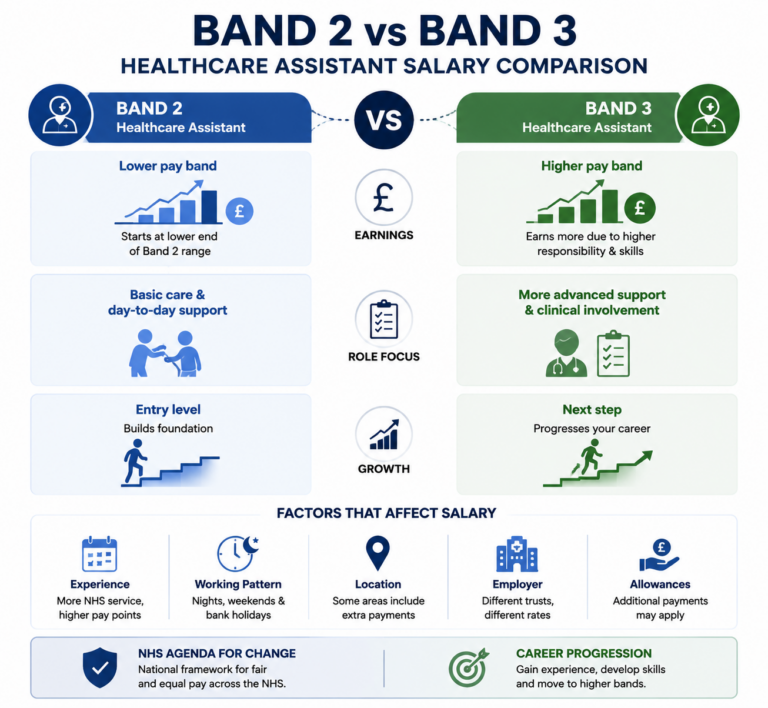
Band 2 Healthcare Assistant salaries follow the NHS Agenda for Change pay structure. The exact amount depends on factors such as the current NHS pay scale, years of service, location and additional payments such as unsocial hours enhancements.
A Band 2 Healthcare Assistant usually starts at the lower end of the NHS Band 2 pay range. With experience and progression through NHS pay points, earnings can increase over time.
Salary can also vary depending on working patterns. Healthcare Assistants who work evenings, nights, weekends or bank holidays may receive additional payments under NHS pay arrangements.
Factors that can influence Band 2 Healthcare Assistant pay include:
- Length of NHS service
- Working hours and shift patterns
- Location and employer
- Additional allowances or enhancements
The NHS regularly reviews pay arrangements, so readers should check the latest NHS Agenda for Change pay scales for current figures. Official pay information is available through NHS Employers Pay and Conditions Circulars.
A Band 2 role can provide valuable experience for people beginning their healthcare career. Many Healthcare Assistants use this experience to develop skills and apply for higher-band opportunities when they meet employer requirements.
How Much Does a Band 3 Healthcare Assistant Earn?
Band 3 Healthcare Assistants usually earn more than Band 2 Healthcare Assistants because the role involves additional responsibilities and a higher level of knowledge and competency.
Like Band 2 roles, Band 3 salaries follow the NHS Agenda for Change framework. Earnings depend on the current pay scale, experience, location and working arrangements.
A Band 3 Healthcare Assistant may receive higher pay because the role often includes:
- Greater responsibility for patient support
- More advanced healthcare support activities
- Increased involvement in clinical tasks
- Higher expectations around knowledge and experience
However, salary should not be the only factor when considering progression. Moving from Band 2 to Band 3 can also help Healthcare Assistants develop professionally, gain confidence and prepare for future career opportunities.
Anyone comparing NHS healthcare roles should review the latest pay information because NHS salary bands change through national pay agreements.
NHS Agenda for Change Pay Bands and Factors Affecting Salary
The NHS Agenda for Change system provides a national framework for many NHS salaries. It places roles into pay bands based on factors such as responsibilities, skills, knowledge and decision-making requirements.
Band 2 and Band 3 Healthcare Assistant roles sit within this framework, but the difference reflects the expectations attached to each position.
Several factors can affect how much a Healthcare Assistant earns:
- Experience: Healthcare Assistants may move through pay points as they gain NHS service.
- Location: Some areas may include additional payments based on local circumstances.
- Working pattern: Nights, weekends and bank holidays may attract extra payments.
- Role responsibilities: Higher-band roles usually reflect increased duties and competencies.
Understanding NHS pay bands helps Healthcare Assistants see how career progression can affect both responsibilities and earnings.
How to Progress From Band 2 to Band 3 Healthcare Assistant
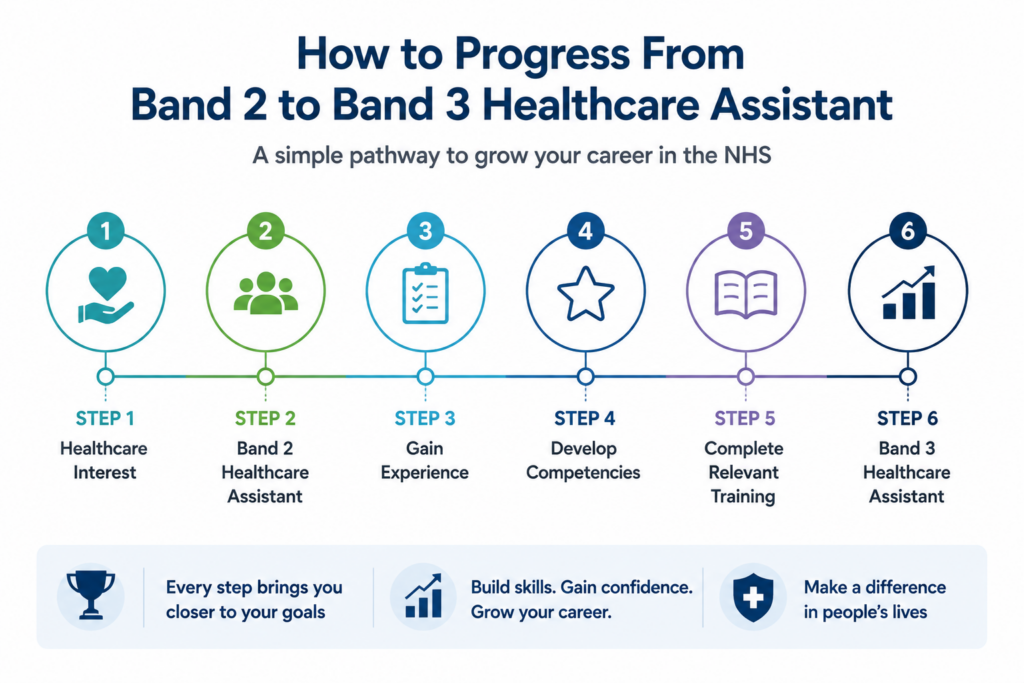
Moving from Band 2 to Band 3 usually requires more than completing a certain amount of time in a role. Employers look for evidence that a Healthcare Assistant has developed the skills, confidence and knowledge needed for greater responsibility.
A Band 2 role provides opportunities to build important healthcare experience, including:
- Understanding patient-centred care
- Communicating with patients and healthcare teams
- Recognising changes in patient wellbeing
- Following care procedures safely
- Working effectively within a multidisciplinary team
Experience in different healthcare environments can also help. For example, working on a hospital ward, in community care or within specialist services may expose Healthcare Assistants to different types of patient needs.
Keeping a record of training, feedback and new responsibilities can support future applications. When applying for Band 3 positions, candidates need to demonstrate how their experience matches the requirements of the role.
Progression depends on individual development, available vacancies and employer criteria. A Band 2 Healthcare Assistant can prepare for Band 3 opportunities by actively building relevant skills and seeking development opportunities within their workplace.
Developing Competencies for a Band 3 Position
Band 3 Healthcare Assistant roles often require broader competencies because the position may involve additional clinical support responsibilities.
Skills that can support progression include:
- Strong communication with patients and colleagues
- Accurate recording and reporting
- Confidence recognising concerns and escalating them appropriately
- Understanding healthcare procedures
- Working safely within professional boundaries
Healthcare Assistants should also understand their responsibilities and complete tasks only when they have received appropriate training and assessment.
Professional development can include workplace learning, employer training programmes and relevant courses that improve healthcare knowledge. The right development route depends on the individual’s career goals and employer expectations.
The Care Certificate provides a common foundation for many Healthcare Support Workers in England and covers areas such as communication, safeguarding, infection prevention and person-centred care. More information is available from Skills for Care Care Certificate guidance.
Applying for Band 3 Healthcare Assistant Opportunities
When applying for a Band 3 Healthcare Assistant role, candidates should focus on showing how their experience matches the job requirements.
A strong application can include:
- Examples of patient care experience
- Evidence of relevant training
- Examples of teamwork and communication
- Situations where they identified and reported concerns
- Understanding of safe and compassionate care
Healthcare Assistant applications often require candidates to explain how their skills meet the person specification. Reading the job description carefully helps applicants understand which competencies the employer values.
A move from Band 2 to Band 3 is a common progression goal for many Healthcare Assistants. With relevant experience, continued learning and the right opportunities, individuals can develop their healthcare careers while taking on increased responsibilities.
What Skills Support Healthcare Assistant Career Progression?
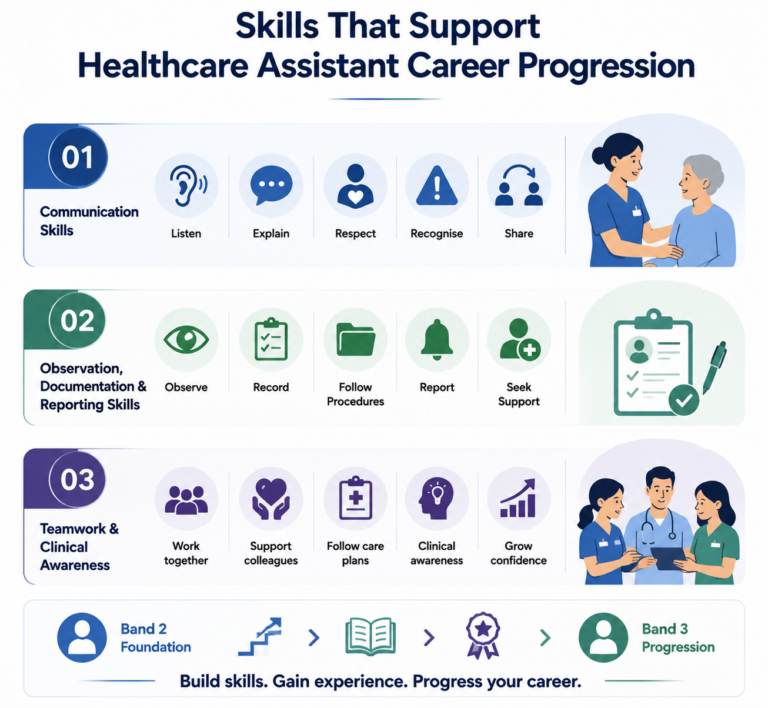
Strong communication skills are essential for Healthcare Assistants at every level. Whether someone works as a Band 2 or Band 3 Healthcare Assistant, they need to build positive relationships with patients, families and healthcare professionals.
As Healthcare Assistants progress, communication becomes even more important because they may support patients with more complex needs and share important information with the wider care team.
Patient-centred communication involves:
- Listening carefully to patients and understanding their concerns
- Explaining care activities clearly and respectfully
- Supporting patient dignity and choice
- Recognising when a patient needs additional help
- Sharing accurate information with colleagues
For example, a Healthcare Assistant may notice that a patient appears more confused, uncomfortable or less mobile than usual. Communicating this change clearly to the nursing team can help ensure the patient receives appropriate support.
Empathy also plays an important role. Many patients receiving healthcare support may feel anxious, vulnerable or uncertain about their condition. A Healthcare Assistant who communicates with patience and respect can help improve the overall care experience.
Band 3 roles often require Healthcare Assistants to communicate confidently across the wider healthcare team. They may need to discuss observations, report concerns and contribute information that supports safe decision-making.
Developing communication skills can therefore support both daily responsibilities and long-term career progression within healthcare.
Observation, Documentation and Reporting Skills
Healthcare Assistants play an important role in noticing changes in a patient’s health and wellbeing. Strong observation skills help staff identify concerns early and share relevant information with the appropriate professionals.
Both Band 2 and Band 3 Healthcare Assistants need to understand the importance of accurate reporting. However, Band 3 roles may involve greater involvement in recording observations and supporting clinical monitoring activities.
Important skills include:
- Paying attention to changes in a patient’s condition
- Recording information accurately
- Following workplace documentation procedures
- Reporting concerns promptly
- Understanding when to seek support from senior colleagues
Accurate documentation helps healthcare teams maintain continuity of care. A small detail recorded correctly can provide valuable information for nurses, doctors and other professionals involved in a patient’s treatment.
For example, if a Healthcare Assistant notices a change in a patient’s mobility, appetite or behaviour, recording and reporting this information allows the team to assess the situation and respond appropriately.
Healthcare Assistants should always follow their employer’s procedures and only complete documentation or clinical tasks they have received appropriate training for. Developing these skills can help individuals prepare for roles with greater responsibility.
Teamwork and Clinical Awareness
Healthcare relies on teamwork. Healthcare Assistants work alongside nurses, doctors, therapists and other professionals to support patients effectively.
Strong teamwork skills help Healthcare Assistants:
- Understand their role within the wider care team
- Support colleagues during busy periods
- Share important information clearly
- Follow care plans and workplace procedures
- Contribute to a positive care environment
Clinical awareness also supports career progression. This means understanding basic healthcare principles, recognising changes in patient needs and knowing when to raise concerns.
A Band 3 Healthcare Assistant often needs greater confidence when supporting clinical activities. They must understand their responsibilities while recognising the limits of their role.
Developing teamwork and clinical awareness does not happen overnight. Healthcare Assistants usually build these skills through workplace experience, training and feedback from colleagues.
Do You Need Qualifications to Become a Band 3 Healthcare Assistant?

There is no single qualification that guarantees progression to a Band 3 Healthcare Assistant role. NHS employers usually consider a combination of experience, skills, training and the requirements of the specific vacancy.
Many Band 3 Healthcare Assistant job descriptions look for evidence of:
- Previous healthcare support experience
- Understanding of patient-centred care
- Ability to work safely within guidelines
- Communication skills
- Relevant workplace competencies
The requirements can vary between NHS Trusts and departments. A Band 3 role in an emergency department may require different experience from a Band 3 role in a community setting.
For Healthcare Assistants currently working at Band 2, gaining experience in patient care and taking opportunities to develop new skills can support future applications.
Employers often look at how candidates demonstrate their abilities rather than only focusing on job titles. Experience supporting patients, working with healthcare teams and completing relevant training can strengthen an application.
CPD Training and Knowledge Development
Continuing Professional Development (CPD) can help Healthcare Assistants expand their knowledge and maintain professional growth. CPD courses allow learners to develop understanding of important healthcare topics and strengthen confidence in their role.
Useful areas of development may include:
- Safeguarding awareness
- Infection prevention and control
- Communication in care settings
- Dementia awareness
- Health and safety
- Person-centred care
CPD training can support learning and professional development, but it does not automatically provide eligibility for a specific NHS band. Employers decide the requirements for each role based on their own job descriptions and competency frameworks.
For example, completing a healthcare-related course may help someone improve their understanding of patient care, while an employer may still require workplace experience and assessed competencies for a Band 3 position.
Healthcare Assistants should choose development opportunities that match their career goals and complement their existing experience.
Regulated Qualifications and Career Pathways
Some Healthcare Assistants choose to complete regulated qualifications to build broader knowledge and support their career development.
Examples of relevant learning routes may include:
- Health and Social Care qualifications
- Adult Care qualifications
- Apprenticeship pathways
- Employer-led training programmes
Regulated qualifications can provide structured learning and demonstrate commitment to professional development. However, requirements for NHS roles vary, so candidates should always check individual job descriptions before applying.
Career progression in healthcare can take different directions. Some Healthcare Assistants continue developing within support roles, while others progress towards specialist areas or further healthcare training.
Understanding the difference between learning opportunities and formal job requirements helps Healthcare Assistants make realistic career plans
Band 2 vs Band 3 Healthcare Assistant: Which Role Is Right for You?
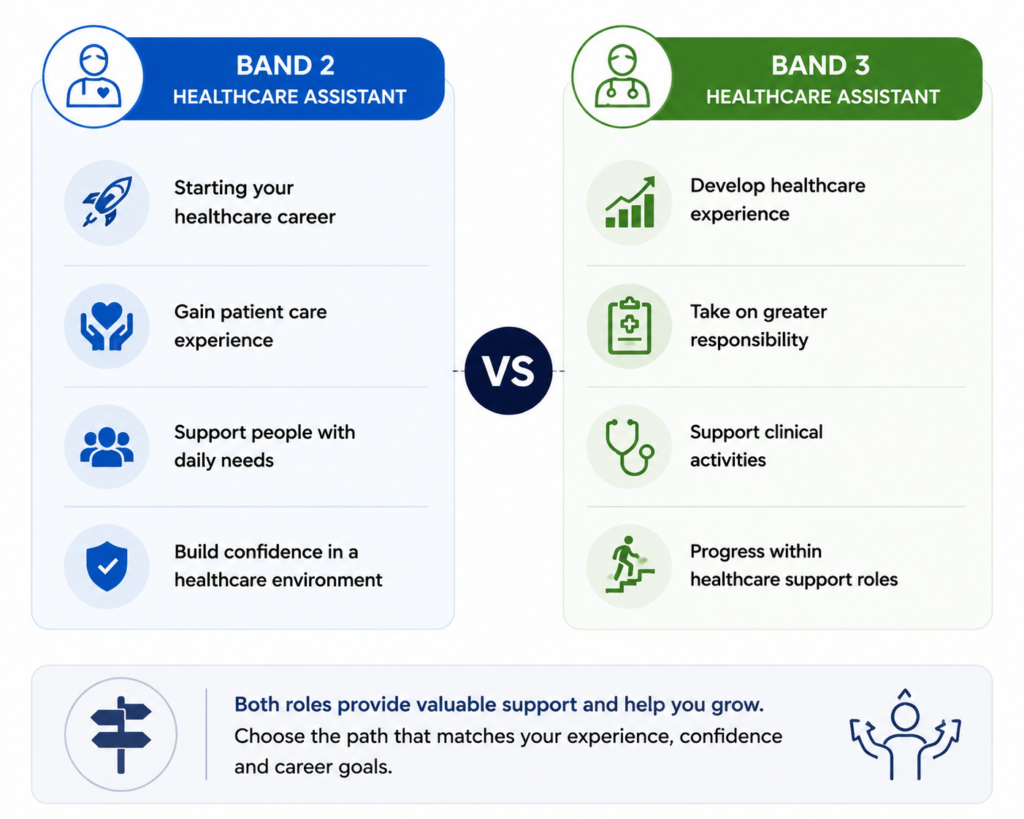
Choosing between a Band 2 and Band 3 Healthcare Assistant role depends on your experience, confidence and career goals.
A Band 2 Healthcare Assistant role may suit someone who:
- Is starting their healthcare career
- Wants to gain patient care experience
- Enjoys supporting people with daily needs
- Wants to build confidence in a healthcare environment
A Band 3 Healthcare Assistant role may suit someone who:
- Has developed healthcare experience
- Wants greater responsibility
- Enjoys supporting clinical activities
- Wants to progress within healthcare support roles
Both roles provide valuable contributions to patient care. The right choice depends on where you are in your career journey and the type of responsibilities you want to develop.
For many Healthcare Assistants, Band 2 provides the foundation needed to progress towards Band 3. With experience, professional development and the right opportunities, individuals can continue building their healthcare careers.
Final Thoughts: Understanding Band 2 and Band 3 Healthcare Assistant Progression
The difference between a Band 2 and Band 3 Healthcare Assistant comes down to responsibility, skills and the level of support provided within healthcare settings.
Band 2 Healthcare Assistants play a vital role by supporting patients with essential care needs and building valuable experience. Band 3 Healthcare Assistants usually take on broader responsibilities, including additional clinical support tasks and greater involvement in patient care activities.
Progression from Band 2 to Band 3 is possible for many Healthcare Assistants who develop their experience, strengthen their skills and meet employer expectations. Building knowledge through workplace learning, CPD and relevant qualifications can support professional development.
A successful healthcare career is built through continuous learning, compassion and a commitment to safe, person-centred care. Understanding NHS role levels can help Healthcare Assistants make informed decisions about their next career step.
Frequently Asked Questions
Is Band 3 higher than Band 2 Healthcare Assistant?
Yes. Band 3 is a higher NHS pay band than Band 2 and usually involves additional responsibilities, skills and competencies. However, the exact duties depend on the employer, department and job description.
Can a Band 2 Healthcare Assistant become Band 3?
Yes. Many Healthcare Assistants progress from Band 2 to Band 3 by gaining experience, developing relevant skills and meeting employer requirements. Progression depends on available roles and individual competency development.
What does a Band 2 Healthcare Assistant do?
A Band 2 Healthcare Assistant supports patients with essential care needs, including personal care, mobility support, nutrition, comfort and reporting concerns to senior healthcare professionals.
What does a Band 3 Healthcare Assistant do?
A Band 3 Healthcare Assistant provides patient support while often taking on additional delegated clinical responsibilities, such as recording observations and supporting more complex care activities.
How much does a Band 2 Healthcare Assistant earn?
Band 2 Healthcare Assistant pay follows the NHS Agenda for Change framework. The exact salary depends on the current pay scale, experience, location and working pattern.
How much does a Band 3 Healthcare Assistant earn?
Band 3 Healthcare Assistant salaries follow the NHS Agenda for Change framework and are generally higher than Band 2 because the role involves increased responsibilities and competencies.
Do Band 3 Healthcare Assistants have more responsibility?
Yes. Band 3 Healthcare Assistants usually take on additional responsibilities compared with Band 2 roles, while still working within their training, competencies and employer guidelines.
Do Band 3 Healthcare Assistants give medication?
Medication responsibilities depend on the employer, training and local policies. Healthcare Assistants should only support medication-related tasks when they have received appropriate training and authorisation.