

Why Is Communication Important in Health and Social Care? The key to safer care
Have you ever watched communication in health and social care go wrong because one detail was misunderstood, rushed or never passed on? That small gap can affect trust, dignity, medication, safeguarding and safety. The answer is not simply to talk more. It is to communicate clearly, listen properly and check understanding. The Communication Skills in Health and Social Care Course helps learners build stronger communication skills for care settings, including patient interaction, body language, confidentiality and professional communication.
The need for effective communication in health and social care is huge. In England, local authorities received 2.02 million requests for adult social care support from people new to social care in 2024–25, including 335,000 requests linked to hospital discharge. For example, every request can involve assessments, records, referrals, handovers and conversations with individuals or families. When information moves between people and services, clear communication helps reduce misunderstandings, supports continuity and keeps decisions focused on the person receiving care.
In this guide, you will learn what communication in health and social care means, why it matters, how verbal and non-verbal communication differ, and how active listening, empathy and person-centred communication improve care. You will also explore communication barriers, dementia and disability support, confidentiality, consent, Care Certificate Standard 6, the Accessible Information Standard, handovers and care records. Ready to communicate with greater clarity and confidence? Start learning with the Communication Skills in Health and Social Care Course.
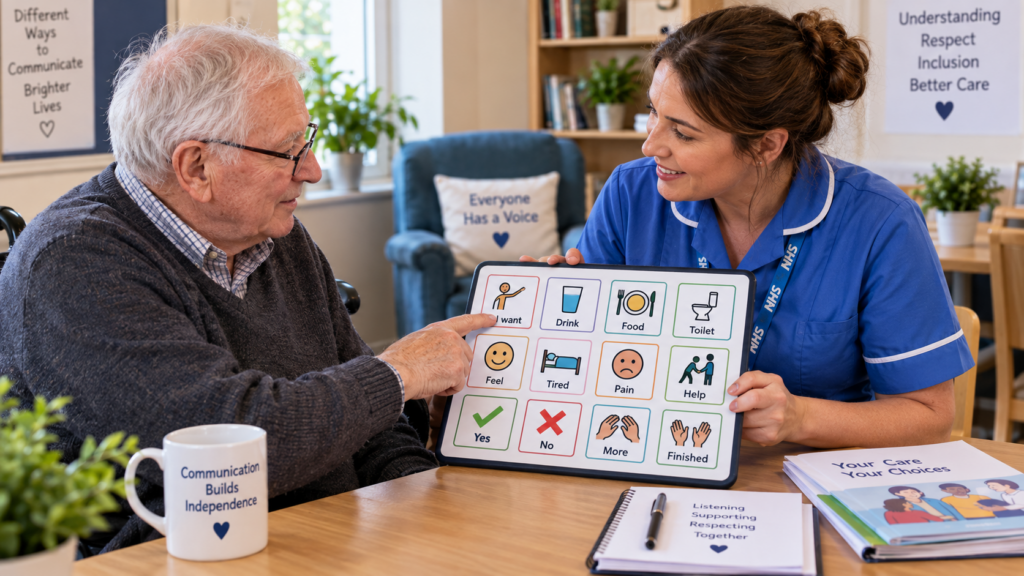
What Is Communication in Health and Social Care, and Why Is It Important?
Communication in health and social care is the two-way exchange of information, feelings, needs, choices and understanding between people receiving care, professionals, families and other services. It involves speaking, listening, observing and checking that everyone understands the message correctly. As a result, strong communication helps people explain pain, worries and preferences while giving care professionals accurate information to guide support. Importantly, the updated Care Certificate Standard 6 recognises communication as a core skill for health and social care workers.
So, why is communication important in health and social care? Communication is important in health and social care because it helps professionals understand people’s needs, explain care clearly and make safer decisions. In turn, good communication builds trust, supports dignity and reduces anxiety, while accurate information sharing improves teamwork and continuity of care. It also helps people express concerns, preferences and changes in their condition. Understanding communication is essential for anyone supporting people in health and social care. The Communication Skills in Health and Social Care Course helps learners develop knowledge of professional communication, active listening, confidentiality and ways to build positive relationships with individuals receiving care.
Good communication improves the care experience in several connected ways:
Build Trust and Reduce Anxiety –
Firstly, clear and respectful communication helps people understand what is happening and what to expect next. When professionals listen carefully, answer questions honestly and explain care calmly, individuals often feel more secure, respected and confident about discussing concerns.
Promote Dignity, Choice and Independence –
Moreover, effective communication gives people a genuine voice in their care. For example, professionals can ask about preferences, explain available choices and support individuals to express decisions, helping them maintain control, independence and dignity wherever their situation allow.
Prevent Misunderstandings –
In addition, accurate communication reduces confusion about symptoms, medicines, appointments, care instructions and personal needs. Therefore, care workers should clarify unclear information, avoid unnecessary jargon and check understanding before acting, especially when a misunderstanding could affect someone’s safety or wellbeing.
Strengthen Teamwork and Continuity of Care –
Similarly, clear information sharing helps professionals understand what has happened, what support someone needs and what should happen next. As a result, accurate records and handovers allow colleagues and different services to coordinate care without repeatedly relying on assumptions.
Encourage Concerns and Safer Decisions –
Finally, open communication makes it easier for people to report pain, changes, worries or safeguarding concerns. Care professionals can then gather relevant information, ask follow-up questions and respond appropriately, supporting better-informed decisions and reducing avoidable risks.
Think about the person receiving care. They may already feel frightened, uncomfortable or dependent on others. Being heard can change the entire experience. That is why effective communication in health and social care is not simply about speaking clearly. It is about creating enough understanding for care to remain safe, respectful and person-centred.
Ultimately, effective communication in health and social care turns information into understanding, helping people receive safer, more respectful and person-centred support.
Verbal vs Non-Verbal Communication in Health and Social Care: What Is the Difference?
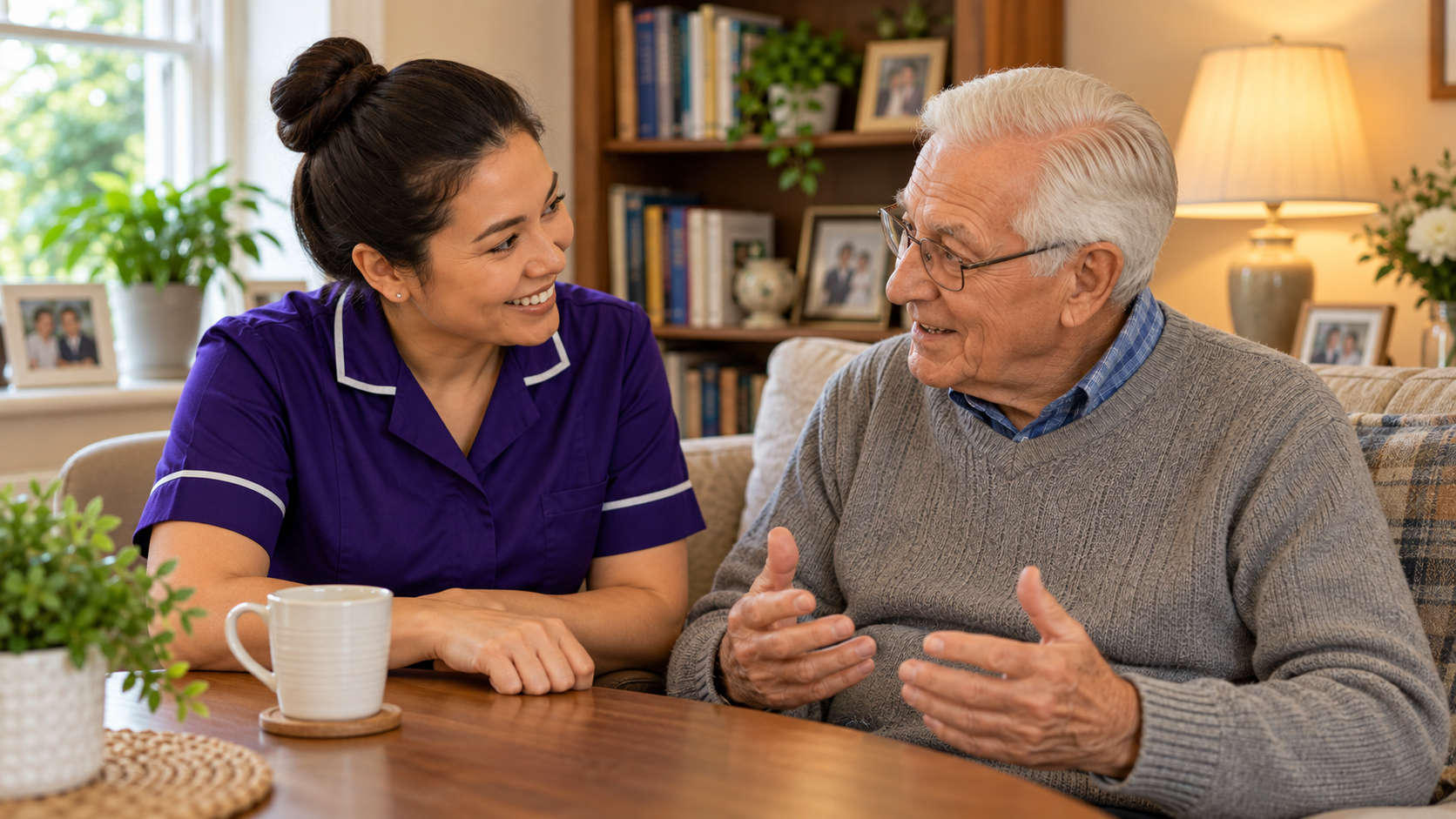
Verbal communication uses spoken words to exchange information, while non-verbal communication uses facial expressions, eye contact, gestures, posture, movement and personal space to convey meaning. In health and social care, professionals need both methods because people communicate through what they say and how they behave. Skills for Care also identifies tone, volume, body language and eye contact as important parts of effective care communication.
Understanding the two methods separately makes it easier to see how they work together during everyday care:
Verbal Communication –
Firstly, verbal communication in health and social care includes face-to-face conversations, telephone calls, questions, explanations and spoken instructions. As a result, care professionals strengthen understanding when they use familiar words, adjust their pace and volume, avoid unnecessary jargon, listen carefully and clarify information when someone appears uncertain or confused.
Non-Verbal Communication –
In contrast, non-verbal communication includes facial expressions, eye contact, posture, gestures, body positioning, movement and physical distance. Tone and volume also shape how spoken messages feel. Care workers should observe these signals carefully because they can reinforce words, reveal discomfort or suggest that someone needs further support.
Verbal vs Non-Verbal Communication in Health and Social Care
| Area | Verbal Communication | Non-Verbal Communication |
|---|---|---|
| Main method | Uses spoken words to share information, explain care, ask questions and discuss needs. | Uses facial expressions, gestures, posture, eye contact, movement and personal space to communicate meaning. |
| Main purpose | Helps professionals explain choices, gather information, clarify concerns and provide instructions clearly. | Helps professionals notice emotions, engagement, discomfort or uncertainty that words may not fully express. |
| Example | A care worker asks where a person feels pain and explains what will happen next. | The person avoids eye contact, frowns or moves away while answering, giving the worker additional information to explore. |
| Key skill | Use clear language, suitable questions, respectful tone and an appropriate speaking pace. | Observe carefully, respect cultural and personal differences, and avoid making assumptions from one gesture alone. |
| How they connect | Spoken words communicate the direct message. | Non-verbal cues can support, weaken or contradict that spoken message. |
For example, imagine a nervous person asking about a procedure. Saying, “I’ll explain each step,” can reassure them. However, rushing the words while looking towards the door may communicate impatience instead. Therefore, effective communication requires professionals to make their words, tone and behaviour work together.
Overall, verbal and non-verbal communication in health and social care work together to create clearer understanding, stronger trust and person-centred care.
Active Listening, Empathy and Person-Centred Communication in Care
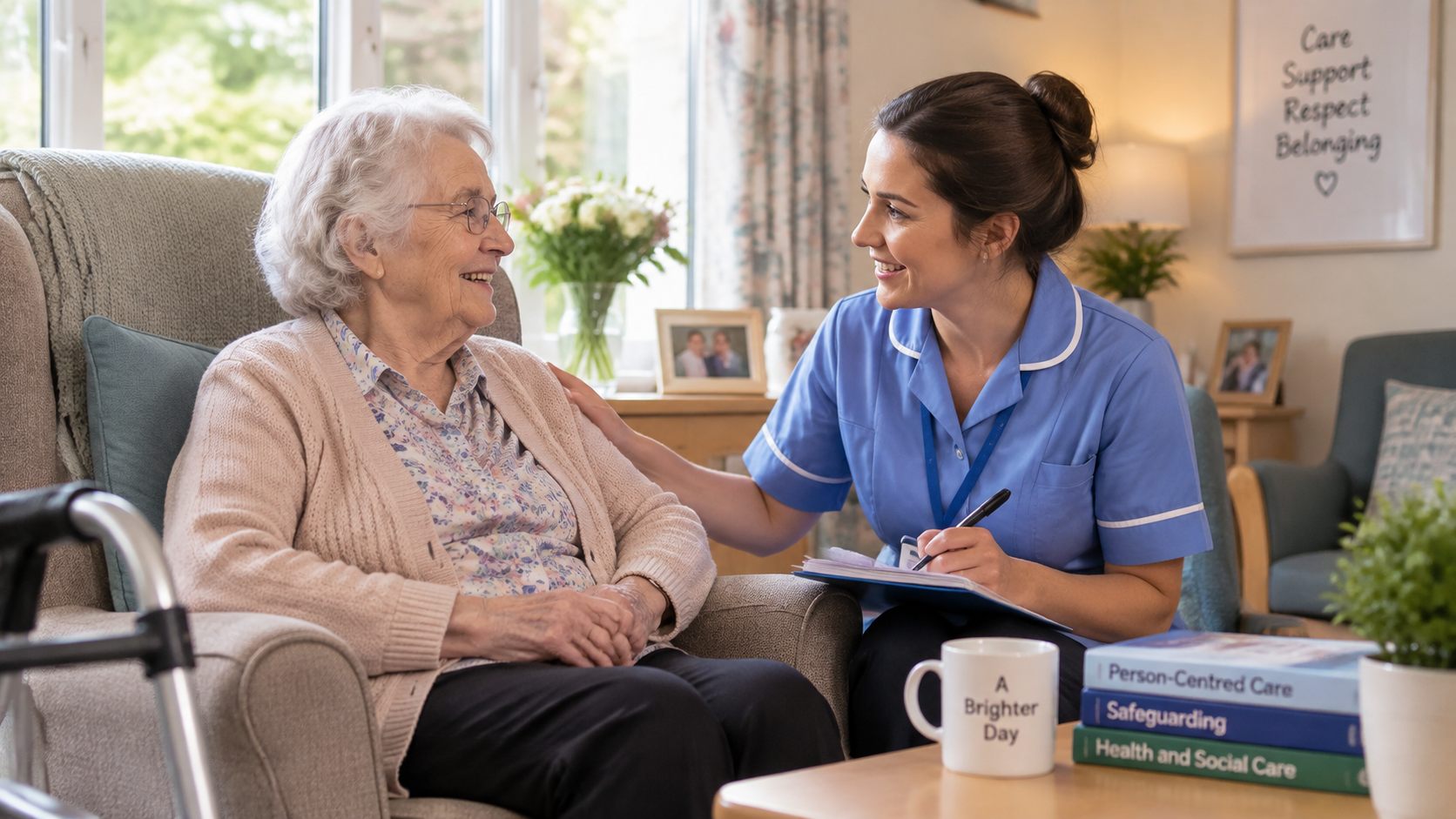
Communication in health and social care works best when professionals listen carefully, understand emotions and adapt their approach to each individual. Effective communication goes beyond giving information. For example, care workers need to notice what a person says, how they respond and what matters to them. NHS England recommends plain language, active listening and calm body language to build rapport and reduce distress. These skills help professionals create respectful conversations, understand concerns accurately and support people to participate in decisions about their care.
Three communication skills play a particularly important role in creating safe, respectful and person-centred conversations:
Active Listening –
Firstly, active listening means giving someone your full attention instead of preparing your next response. For this reason, care professionals should avoid unnecessary interruptions, use open questions, notice verbal and non-verbal cues, clarify unclear information and summarise important points. This approach helps reduce assumptions while showing the person that their concerns genuinely matter.
Empathy –
Moreover, empathy helps professionals recognise and respond sensitively to another person’s feelings without assuming they fully understand that experience. Acknowledging fear, frustration or uncertainty can strengthen trust and reduce distress. NHS guidance also connects empathy with compassionate, respectful and person-centred care, particularly during difficult or emotionally demanding conversations.
Person-Centred Communication –
Finally, person-centred communication focuses on the individual’s needs, preferences, values and choices. For example, professionals should use the person’s preferred name, respect privacy, involve them in decisions and adapt communication where necessary. This approach supports dignity, autonomy and independence because it encourages staff to communicate with people rather than simply speaking about them.
Together, active listening, empathy and person-centred communication help professionals understand people better while building trust, dignity and meaningful involvement in care.
Communication and Patient Safety: What Happens When Communication Goes Wrong?
Communication and patient safety are closely connected because care professionals depend on accurate information to make safe decisions. For example, a missed allergy, unclear medication instruction, unreported symptom or incomplete handover can affect what happens next. NHS England notes that communication failure appears commonly in serious incident investigations and highlights the importance of safety-critical spoken communication. Therefore, professionals must communicate clearly, confirm important details, record changes promptly and share relevant information with the right people.
A communication error can move through several stages, with each stage increasing the potential risk to the person receiving care:
Incorrect Information →
Firstly, a safety problem can begin when someone shares incomplete, unclear or incorrect information about medication, allergies, symptoms, falls risks or safeguarding concerns. Care professionals should ask questions, confirm important details and avoid assumptions before they record or act on information.
Inaccurate Record →
Next, incorrect information can enter care notes, medication records, care plans or electronic systems. Colleagues may then rely on that record when making decisions. Therefore, staff should record facts accurately, use clear language and update significant changes promptly so everyone works from reliable information.
Poor Handover →
Moreover, incomplete handovers can cause important information to disappear between shifts, teams or services. NHS England states that accurate clinical handovers support continuity and safety of care. Professionals should highlight relevant changes, risks, medication information and actions rather than assuming colleagues already know them.
Wrong Decision →
Consequently, professionals who receive inaccurate or incomplete information may choose an unsuitable action, delay treatment or overlook a developing problem. Clear communication helps them understand the current situation, recognise priorities and decide when they need clarification, escalation or additional professional input.
Increased Risk →
Finally, communication failures can contribute to delayed care, medication problems, missed worsening conditions, unnecessary distress or poor continuity. One communication error can therefore affect several people and decisions. Staff reduce this risk when they clarify, confirm, document and share safety-critical information appropriately.
In short, safer care depends on accurate communication: ask, clarify, confirm, record and share appropriately whenever information may affect someone’s safety.
Good Communication vs Poor Communication in Health and Social Care: What Is the Impact?
Good communication in health and social care builds trust, supports dignity and helps people understand their care, while poor communication creates confusion, anxiety and avoidable risk. For instance, clear explanations encourage people to ask questions and express preferences. Accurate information also helps professionals coordinate care across shifts and services. NHS England highlights clear language, timely updates and shared decision-making as important principles of good patient communication.
The difference becomes clearer when we look at how each communication style affects everyday care:
Good Communication –
Firstly, good communication uses clear language, active listening, accurate information and respectful responses. Professionals explain what will happen, encourage questions and check understanding. As a result, people feel more involved and confident, while staff gain reliable information that supports teamwork, continuity and safer decisions.
Poor Communication –
In contrast, poor communication occurs when professionals rush conversations, use unclear language, fail to listen or share incomplete information. Consequently, people may feel ignored or anxious, while teams may miss important details. Skills for Care warns that inaccurate or misleading information can contribute to mistakes and non-person-centred care.
Good Communication vs Poor Communication in Health and Social Care
| Area | Good Communication | Poor Communication |
|---|---|---|
| Trust | Builds confidence because professionals listen, explain clearly and respond respectfully. | Damages trust when people feel ignored, rushed or uncertain about what happens next. |
| Dignity and Choice | Encourages people to express preferences and take part in decisions about their care. | Can exclude people from conversations and reduce their sense of control or independence. |
| Safety | Helps staff identify symptoms, risks, medication issues and changes in condition accurately. | Can create misunderstandings, missed information, delayed action or inappropriate decisions. |
| Teamwork | Gives colleagues accurate information during records, referrals and handovers. | Leaves staff working from incomplete, inconsistent or outdated information. |
| Anxiety | Reduces uncertainty by explaining what will happen and giving people opportunities to ask questions. | Increases worry when people receive unclear, conflicting or incomplete information. |
| Continuity of Care | Keeps important information moving consistently between workers, shifts and services. | Creates gaps when staff fail to record or pass on important details. |
NHS England’s 2024 inpatient survey also found that communication strongly influenced whether patients felt involved, listened to and confident in their care.
Ultimately, effective communication in health and social care strengthens trust, safety, dignity and continuity, while poor communication can weaken every one of them.
Barriers to Communication in Health and Social Care and How to Overcome Them
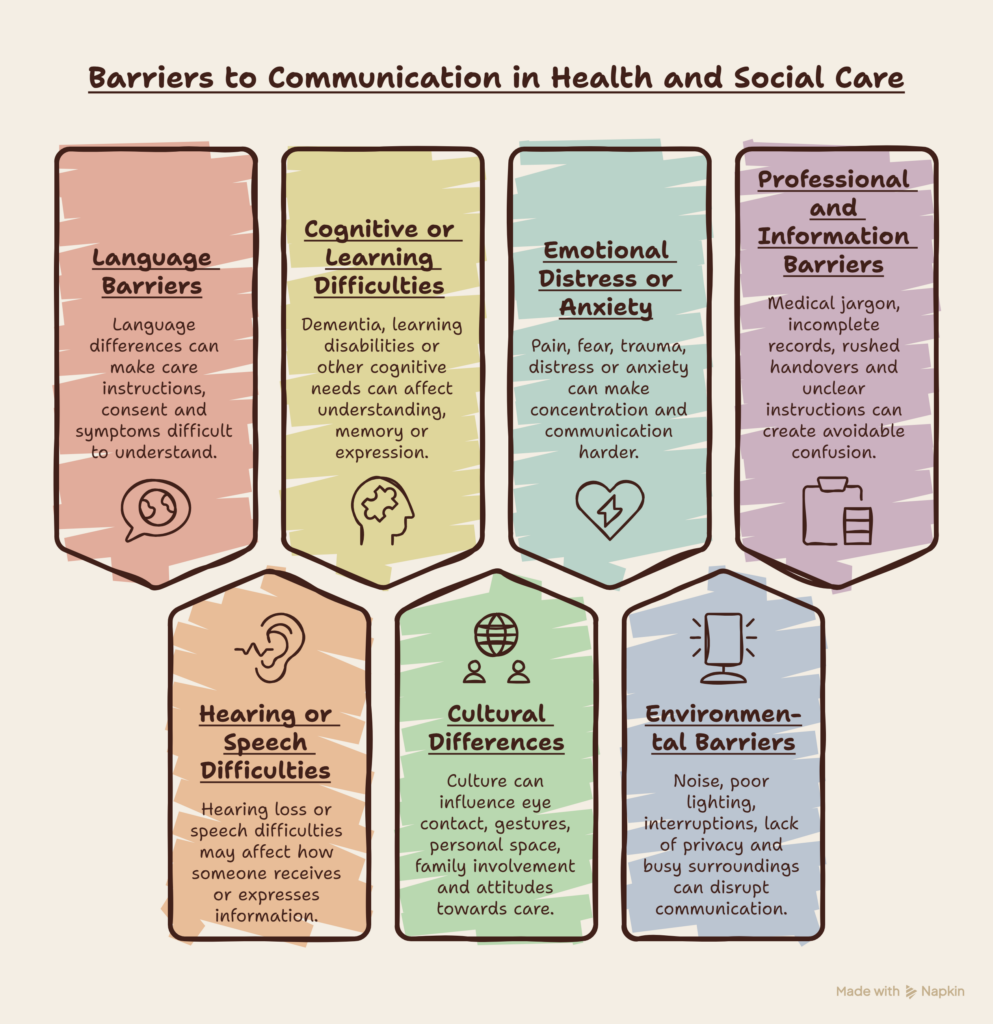
Barriers to communication in health and social care are anything that prevents people from sending, receiving or understanding information clearly. These barriers may come from language differences, disabilities, health conditions, emotions, cultural expectations, the environment or poor professional practice. Care workers should identify the person’s individual communication needs rather than make assumptions. NHS England’s Accessible Information Standard requires relevant health and adult social care services to identify communication needs and provide suitable information or support.
In practice, professionals can reduce the most common communication barriers by adapting how, where and with whom they communicate:
Language Barriers –
Firstly, language differences can make care instructions, consent and symptoms difficult to understand. Professionals should use plain English, suitable translated information, visual aids and qualified interpreters when necessary. Importantly, they should avoid relying solely on relatives or automatic translation tools for sensitive or complex conversations where accuracy and confidentiality matter.
Hearing or Speech Difficulties –
Secondly, hearing loss or speech difficulties may affect how someone receives or expresses information. For example, care workers can reduce these barriers through hearing support, written information, communication boards or other aids. They should also face the person, speak clearly without shouting and allow enough time for responses.
Cognitive or Learning Difficulties –
Moreover, dementia, learning disabilities or other cognitive needs can affect understanding, memory or expression. Professionals can use short explanations, familiar words, pictures, Easy Read information and repetition where appropriate. They should present one idea at a time and regularly check what the person has understood.
Cultural Differences –
Similarly, culture can influence eye contact, gestures, personal space, family involvement and attitudes towards care. Professionals should ask about individual preferences instead of relying on stereotypes. Respectful questions help workers adapt communication while protecting dignity, choice and the person’s involvement in decisions.
Emotional Distress or Anxiety –
In addition, pain, fear, trauma, distress or anxiety can make concentration and communication harder. Care workers should remain calm, listen patiently and give the person enough time to speak. A quieter setting and clear reassurance can also help someone process information without feeling rushed or pressured.
Environmental Barriers –
Meanwhile, noise, poor lighting, interruptions, lack of privacy and busy surroundings can disrupt communication. For example, professionals can move conversations to a quieter place, improve lighting, reduce distractions and protect privacy. These simple changes often make listening easier, especially for people with sensory or concentration difficulties.
Professional and Information Barriers –
Finally, medical jargon, incomplete records, rushed handovers and unclear instructions can create avoidable confusion. Professionals should use familiar language, record information accurately, confirm important details and check understanding. Clear information sharing also helps colleagues maintain continuity when care moves between workers, shifts or services.
Ultimately, overcoming communication barriers in health and social care requires professionals to listen, adapt, check understanding and respect each person’s individual needs.
Supporting Individual Communication Needs: Dementia, Disabilities and Communication Aids
Supporting individual communication needs means adapting communication to the person rather than expecting everyone to communicate in the same way. A person’s needs may relate to dementia, autism, learning disabilities, hearing loss, visual impairment or another condition. Care professionals should ask how the person prefers to communicate, observe what works and review care plans or communication passports where appropriate. NHS England stresses that staff should identify the person’s specific communication needs instead of making assumptions based only on a diagnosis.
In practice, professionals can support individual communication needs through three closely connected approaches:
Dementia –
Firstly, someone living with dementia may need familiar words, short explanations, a calm tone and extra time to respond. Professionals should reduce distractions, avoid rushing and repeat information when appropriate. Changes such as agitation or withdrawal may also communicate discomfort, fear, confusion or another unmet need that requires sensitive exploration.
Disabilities –
Secondly, disabilities can affect communication in different ways, so professionals should adapt their approach to the individual. Someone with hearing loss may need a clear view of the speaker, while a visually impaired person may prefer verbal or audio information. Autistic people or people with learning disabilities may benefit from clear, direct language and accessible formats.
Communication Aids –
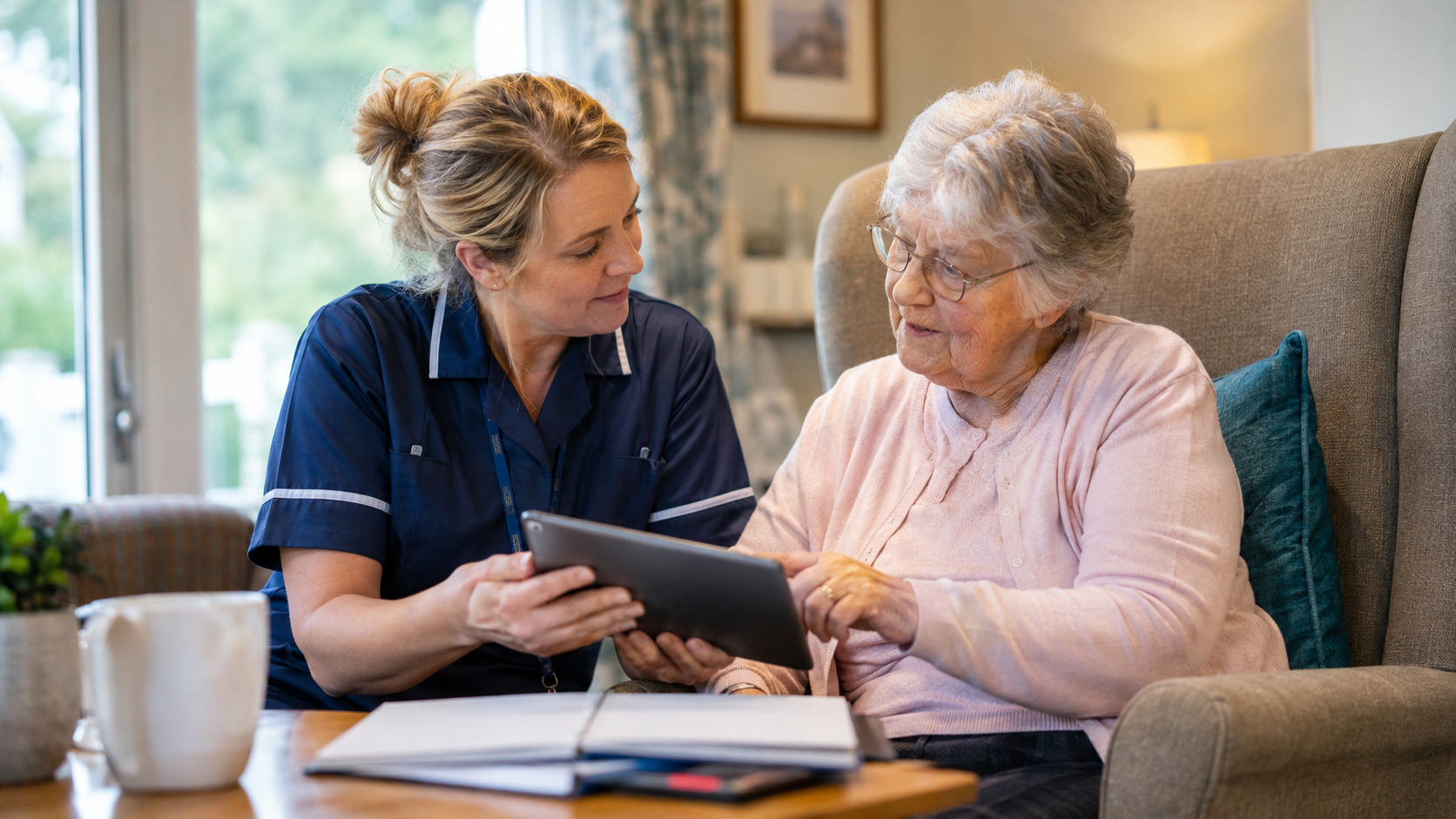
Finally, communication aids can help people receive information, express choices and participate in their care. Support may include British Sign Language, Makaton, Easy Read, Braille, large print, pictures, symbols, communication boards, hearing aids, audio information or speech-generating devices. NHS England also recognises communication professionals and assistive technology as important forms of support.
The NHS England Accessible Information Standard explains how health and adult social care services should identify and meet communication needs linked to disability, impairment or sensory loss.
Learners who want broader knowledge around these needs can also explore the Mental Health, Dementia and Learning Disabilities course, which covers communication and behaviour alongside wider care-related topics.
Ultimately, supporting individual communication needs means asking, observing and adapting so every person can understand, express themselves and participate meaningfully.
Communicating With Families, Confidentiality, Information Sharing and Informed Consent
Communicating with families in health and social care helps professionals understand a person’s routines, history, preferences and changing needs while protecting the individual’s rights. Families and carers can provide valuable information, but professionals must still respect confidentiality, consent and the person’s wishes. Good communication means listening carefully, explaining decisions clearly and involving relatives appropriately. Importantly, communication difficulty does not automatically mean someone lacks mental capacity; professionals must first support the person to understand and communicate their own decision.
Three principles help professionals decide what they can share, how they should communicate and who should remain involved:
Confidentiality –
Firstly, professionals must protect personal information and respect what the individual wants others to know. However, family involvement does not automatically give relatives unrestricted access to health or care information. Staff should establish what the person agrees to share, with whom, and under which situation before disclosing confidential details.
Information Sharing –
Secondly, professionals should share relevant information when safe and effective care requires it, while following confidentiality and safeguarding requirements. They should listen to information that relatives provide, because it may improve care planning. However, staff must balance family involvement with the person’s wishes, privacy and legal rights.
Informed Consent –
Finally, valid consent requires a person to receive relevant information, understand the available options and make the decision voluntarily. Professionals should explain benefits, risks and alternatives clearly, allow questions and adapt communication where necessary. If communication proves difficult, interpreters, advocates or specialist support may help the person participate.
The Mental Capacity Act guidance for health and social care workers also states that professionals should make every reasonable effort to support communication before concluding that someone lacks capacity.
In conclusion, good communication helps families contribute correctly while protecting confidentiality, informed consent, autonomy and each person’s right to make decisions.
What Does Care Certificate Standard 6 Say About Communication?
The updated Care Certificate Standard 6: Communication explains the communication knowledge and skills that care workers need in everyday practice. The Care Certificate standards were updated in March 2025 and now contain 16 standards. Standard 6 focuses on effective communication, individual communication needs, communication barriers, assistive support and confidentiality. Together, these areas help workers communicate clearly while respecting each person’s dignity, preferences and involvement in care.
According to the updated standard, care workers are expected to develop six important areas of communication practice:
1. Understand Different Ways of Communicating –
Firstly, workers should recognise verbal, non-verbal, written, digital and other communication methods. Choosing the right method can improve understanding, strengthen professional relationships and help individuals express their needs, concerns and preferences more confidently.
2. Identify Individual Communication Needs –
Secondly, workers should find out each person’s language needs, communication preferences and preferred ways of receiving information. This person-centred approach prevents assumptions and helps professionals adapt communication to the individual rather than expecting everyone to communicate in the same way.
3. Use Communication Aids and Technology –
In addition, workers should understand how communication aids, assistive technologies and digital tools can support communication. Depending on individual needs, this may include visual information, communication devices, accessible formats or other suitable forms of support.
4. Recognise and Reduce Communication Barriers –
Moreover, workers need to identify factors that make communication difficult and take practical steps to reduce them. Barriers may involve language, disability, the environment, emotions or communication methods, so professionals need to adapt their approach accordingly.
5. Check Understanding and Recognise Behaviour as Communication –
Importantly, workers should never assume that a person understands information simply because they have heard it. They need to check understanding and recognise that changes in behaviour may sometimes communicate discomfort, distress, confusion or another unmet need.
6. Maintain Confidentiality –
Finally, workers must protect confidential information, understand when appropriate information sharing may become necessary and know when to seek advice. Clear communication should always work alongside privacy, professional responsibility and safeguarding duties.
These expectations reflect the current 2025 Care Certificate Standard 6, which connects communication with individual needs, accessibility, relationships and confidentiality. According to Skills for Care – Care Certificate Standards 2025, the standards describe the knowledge, skills and behaviours expected in health and social care roles.
For structured learning across all 16 standards, The Care Certificate Course – Standards 1 to 16 covers communication alongside person-centred care, safeguarding, privacy, dignity and other essential areas.
Ultimately, Standard 6 helps care workers communicate clearly, adapt to individual needs, reduce barriers and protect confidentiality throughout everyday care.
What Is the Accessible Information Standard for Communication?
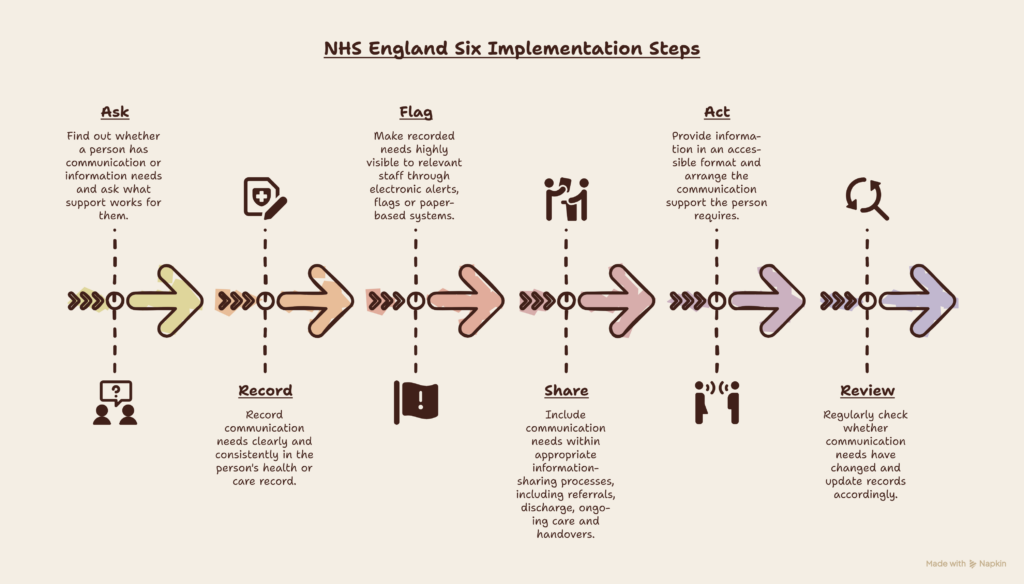
The Accessible Information Standard explains how NHS and publicly funded adult social care services should identify and meet the communication and information needs of people with disabilities, impairments or sensory loss. It helps people access information they can understand and receive suitable communication support. NHS England updated the standard in 2025 and added a sixth review stage. Organisations now follow six steps: Ask, Record, Flag, Share, Act and Review. NHS England organises the standard around six practical steps that help services recognise needs early and respond consistently.
NHS England describes six implementation steps:
Ask —
Firstly, staff should find out whether a person has communication or information needs and ask what support works for them. For example, someone may need Easy Read information, large print, audio, Braille or a British Sign Language interpreter. Asking directly prevents professionals from making assumptions about individual needs.
Record —
Secondly, professionals should record communication needs clearly and consistently in the person’s health or care record. As a result, accurate documentation helps other staff understand exactly what support the individual needs. It also reduces the chance that someone must repeatedly explain the same communication requirements at every appointment.
Flag —
Next, organisations should make recorded needs highly visible to relevant staff through electronic alerts, flags or suitable paper-based systems. A clear flag prompts staff to notice the requirement and take action, such as arranging an interpreter or producing information in an accessible format.
Share —
Moreover, services should include communication needs within appropriate information-sharing processes, including referrals, discharge, ongoing care and handovers. Sharing these needs helps the next professional prepare suitable support before meeting the person, while staff must continue to follow existing information-handling and confidentiality requirements.
Act —
Most importantly, identifying a need achieves little unless staff respond to it. Services should provide information in an accessible format and arrange the communication support the person requires. This may include Easy Read, large print, audio information, Braille, BSL support or other appropriate communication assistance.
Review —
Finally, professionals should regularly check whether communication needs have changed and update records accordingly. A person’s eyesight, hearing, health, technology use or preferred communication method can change over time. Regular reviews help services continue providing suitable information rather than relying on outdated assumptions or records.
Overall, the Accessible Information Standard helps services make communication accessible, consistent and responsive to each person’s changing needs.
Effective Communication in Practice: Handovers, Care Records, Teamwork and Communication Skills
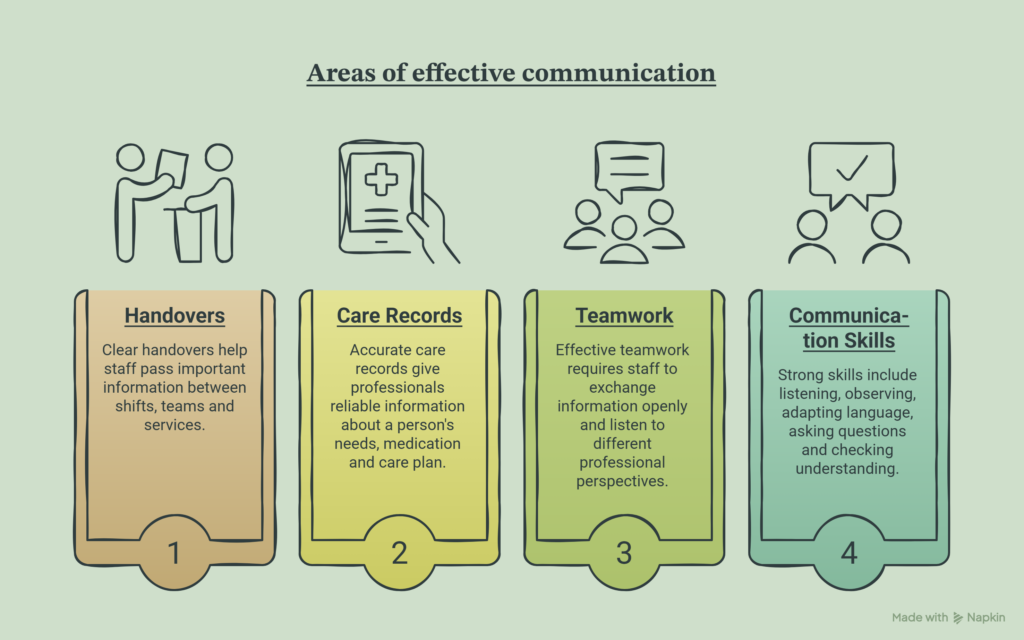
Effective communication in practice means sharing the right information clearly, accurately and at the right time so people receive safe, coordinated care. During handovers, referrals, discharge and changes in condition, professionals need to listen, clarify details, document facts and confirm understanding. NHS England states that good teamwork depends on open, respectful and two-way communication across professional groups. Clear communication also helps staff coordinate decisions and maintain continuity between health and social care services.
Four areas show how effective communication in health and social care works in everyday practice:
Handovers –
Firstly, clear handovers help staff pass important information between shifts, teams and services. Professionals should communicate changes in condition, risks, medication information and actions that still need attention. Structured communication reduces ambiguity and helps the next professional understand the person’s current situation and priorities. NHS England has highlighted SBAR as a structured communication tool that can help care staff communicate changes in a person’s condition to other professionals.
SBAR can provide structure:
Situation → Background → Assessment → Recommendation
Care Records –
Secondly, accurate care records give professionals reliable information about a person’s needs, medication, allergies, preferences and care plan. Staff should record relevant changes promptly, objectively and clearly. NHS England explains that up-to-date shared care records help authorised professionals make better-informed decisions and provide connected, personalised care.
Teamwork –
Moreover, effective teamwork requires staff to exchange information openly, listen to different professional perspectives and raise concerns when something appears unsafe. Good communication helps multidisciplinary teams coordinate care rather than work from separate assumptions. As a result, professionals can respond more consistently when a person’s needs change.
Communication Skills –
Finally, strong communication skills in health and social care include listening, observing, adapting language, asking questions, checking understanding and sharing information appropriately. Closed-loop communication strengthens this process because the receiver confirms important information, helping the sender identify misunderstandings before they influence care or safety decisions.
A useful communication skills checklist is:
Prepare → Listen → Observe → Adapt → Clarify → Check Understanding → Record → Share Appropriately
Ultimately, effective communication connects handovers, records and teamwork, helping professionals share accurate information and provide safer, more coordinated person-centred care.
Final Thoughts: Why Communication Matters in Health and Social Care
Every care interaction begins with communication.
A question can reveal pain. Careful listening can uncover a worry. A clear handover can prevent important information from disappearing between shifts. An accessible explanation can help someone take part in a decision about their own care.
That is why communication is important in health and social care. It connects safety with compassion, information with action, and professionals with the people they support.
From verbal communication in health and social care to body language, active listening, accessible information, confidentiality and accurate records, every method has the same purpose: creating shared understanding.
The strongest communicators are not simply good talkers. They notice what matters, listen carefully, adapt their approach and check understanding.
And in health and social care, that understanding can change the quality of someone’s entire care experience.
Ready to strengthen the way you listen, respond and communicate in care? Start learning with the Communication Skills in Health and Social Care Course and build the knowledge to communicate with greater clarity, empathy and professionalism.
Table of Contents

Frequently Asked Questions
Why is communication important in health and social care?
Communication is important in health and social care because it helps professionals understand people’s needs, preferences and concerns. Good communication builds trust, supports dignity, improves safety, reduces misunderstandings and allows care workers to provide more person-centred support.
What are the benefits of good communication in care settings?
The benefits of good communication in care settings include stronger relationships, improved teamwork, safer decision-making and better understanding of individual needs. It helps reduce anxiety, supports informed choices, improves continuity of care and ensures people feel respected, valued and involved.
What are the different types of communication in health and social care?
The main types of communication in health and social care include verbal, non-verbal, written, visual and digital communication. Verbal communication uses spoken words, while non-verbal communication includes body language, facial expressions and gestures. Written records and digital systems help share important care information.
What are the barriers to communication in health and social care?
Barriers to communication in health and social care include language differences, hearing or sight loss, dementia, learning disabilities, autism, cultural differences, anxiety, medical jargon, noise and lack of privacy. Identifying these barriers helps care workers adapt their approach and provide more effective support.
How can communication barriers be overcome in care?
Communication barriers in care can be overcome by using clear language, listening carefully, allowing extra time, reducing distractions, using communication aids, providing interpreters and checking understanding. Adapting communication methods to individual needs helps people participate more confidently in conversations and decisions.
What is person-centred communication in health and social care?
Person-centred communication means communicating with individuals in a way that respects their choices, preferences, values and personal circumstances. It focuses on listening, understanding individual needs, supporting independence and involving people in decisions about their own care and support.
How does communication improve patient safety in health and social care?
Communication improves patient safety by ensuring important information about health conditions, medicines, risks and care needs is shared accurately. Clear communication reduces misunderstandings, prevents avoidable mistakes, supports effective teamwork and helps professionals respond quickly when a person’s condition changes.
Why is active listening important in health and social care?
Active listening is important because it helps care workers understand what people are communicating verbally and non-verbally. It involves giving full attention, asking questions, showing empathy, confirming understanding and responding appropriately. This builds trust and supports better person-centred care.
How does poor communication affect health and social care?
Poor communication can lead to misunderstandings, reduced trust, incorrect information, delays in care, increased anxiety and safety risks. It may affect teamwork, documentation, decision-making and the quality of support people receive. Clear communication helps prevent these problems and promotes safer care.
What communication skills do care workers need?
Care workers need communication skills including active listening, empathy, patience, respect, clear speaking, observation, questioning and adapting communication methods. They also need to understand confidentiality, individual communication needs and how to use appropriate communication aids when supporting different people.
How does communication support dignity and respect in care?
Communication supports dignity and respect by allowing people to express their wishes, make choices and maintain control over their care. Using preferred communication methods, listening without judgement and involving individuals in conversations helps create respectful relationships between care workers and service users.
Why is confidentiality important in communication in health and social care?
Confidentiality is important because it protects people’s private information and maintains trust between individuals and professionals. Care workers must understand when information should remain private and when it may need to be shared appropriately, such as for safeguarding or safety reasons.
What is non-verbal communication in care settings?
Non-verbal communication in care settings includes body language, facial expressions, gestures, posture, eye contact and tone of voice. These signals can show emotions, comfort levels and understanding. Care workers should observe non-verbal cues because they may reveal needs that someone cannot easily express verbally.
How does communication help with teamwork in health and social care?
Communication helps teamwork by ensuring professionals share accurate information, understand responsibilities and coordinate support effectively. Clear communication between colleagues, including during handovers and referrals, improves continuity of care and helps reduce mistakes caused by missing or unclear information.
What is Care Certificate Standard 6 communication?
Care Certificate Standard 6 focuses on communication in care settings, including understanding different communication methods, meeting individual needs, reducing barriers, maintaining confidentiality, using verbal and non-verbal communication and supporting communication aids or technology.