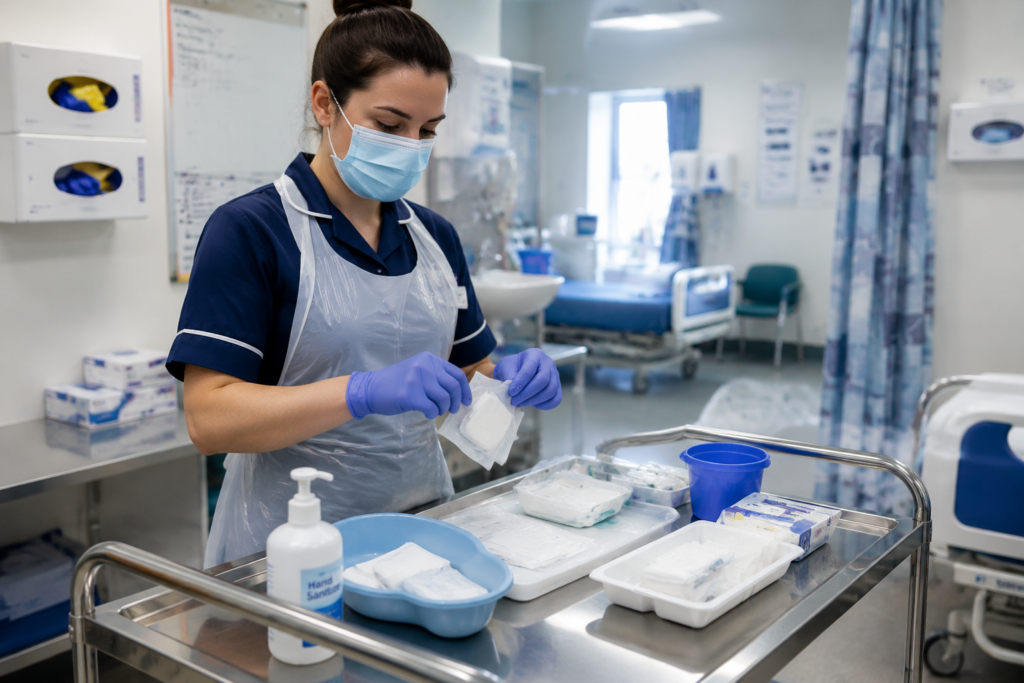


A nurse prepares a wound dressing procedure before approaching a patient. The equipment is arranged carefully, the working area is ready and each item has been checked before use. However, during the procedure, a sterile surface is accidentally touched. The nurse now needs to recognise whether contamination has occurred and decide what action to take before continuing.
This situation shows why aseptic technique is such an important part of healthcare practice.
What is aseptic technique? Aseptic technique refers to the methods healthcare workers use to prevent harmful microorganisms from entering patients, equipment or clinical environments during healthcare procedures.
Healthcare settings naturally contain microorganisms, but some situations require additional protection because contamination could affect treatment, delay healing or increase infection risks. Aseptic technique helps professionals manage these situations through careful preparation, correct handling and appropriate infection prevention measures.
Healthcare workers use aseptic principles during many procedures, including wound dressing changes, urinary catheter care, intravenous therapy and medication preparation. These practices are relevant across hospitals, clinics and community healthcare environments.
This guide explains the meaning of aseptic technique, compares aseptic, clean and sterile approaches, explores the principles behind effective practice, explains Aseptic Non Touch Technique (ANTT®), and shows how healthcare workers apply these methods during real clinical procedures.
Table of Contents
What Is Aseptic Technique?
Aseptic technique is a planned approach that healthcare workers use to prevent microorganisms from contaminating areas involved in clinical procedures.
Rather than attempting to remove every microorganism from the healthcare environment, aseptic technique focuses on controlling how contamination occurs and preventing harmful microorganisms from reaching areas where they could cause problems.
Healthcare workers apply aseptic technique when procedures involve:
- Open wounds
- Medical devices
- Sterile equipment
- Surgical or insertion sites
- Areas where contamination could affect patient care
Common examples include:
- Wound dressing changes
- Urinary catheter procedures
- Intravenous therapy
- Medication preparation and administration
- Procedures involving sterile materials
Aseptic technique involves more than wearing gloves or opening sterile packaging. Healthcare workers must consider the entire procedure, including preparation, equipment handling, environmental conditions and actions taken if something becomes contaminated.
For example, a healthcare worker preparing medication may organise every item correctly but accidentally touch the sterile end of a syringe. Although the mistake may seem minor, that contact can affect whether the equipment remains suitable for use.
A strong understanding of aseptic technique allows healthcare workers to recognise potential problems early and make appropriate decisions during patient care.
Aseptic Technique vs Clean Technique vs Sterile Technique
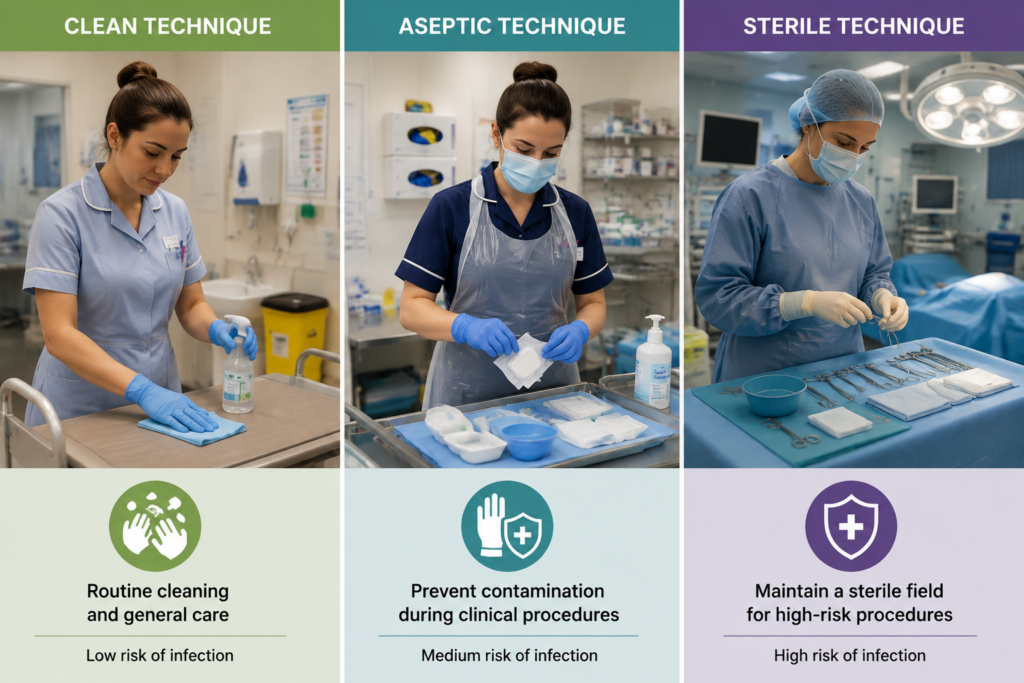
Healthcare workers select different techniques depending on the procedure, the level of protection required and the potential consequences of contamination.
Although aseptic, clean and sterile techniques all contribute to infection prevention, they serve different purposes.
| Technique | Purpose | Level of Control | Examples |
|---|---|---|---|
| Aseptic Technique | Prevent harmful microorganisms from entering vulnerable areas during clinical procedures | High level of contamination control focused on protecting important areas | Wound care, catheter care, intravenous procedures |
| Clean Technique | Reduce the spread of microorganisms during routine care activities | General hygiene approach with fewer contamination controls | Personal care tasks and non-invasive procedures |
| Sterile Technique | Maintain an environment free from microorganisms during procedures requiring maximum protection | Highest level of control | Surgical procedures and complex invasive interventions |
Aseptic Technique
Aseptic technique focuses on preventing microorganisms from reaching areas where they could affect patient care.
Healthcare workers achieve this through:
- Careful preparation before procedures
- Correct handling of equipment
- Appropriate hygiene measures
- Controlled working practices
It is commonly used when procedures involve areas that need additional protection, such as wounds, catheter sites or intravenous access points.
Clean Technique
Clean technique focuses on maintaining hygiene and reducing unnecessary spread of microorganisms during routine care.
It does not require the same level of control as aseptic technique because these activities usually do not involve sterile areas or procedures with a high contamination concern.
Healthcare workers commonly use clean techniques during general care activities and non-invasive tasks.
Sterile Technique
Sterile technique provides the highest level of protection by aiming to maintain an environment free from microorganisms.
Healthcare professionals use this approach during procedures where even small amounts of contamination could create serious consequences, including surgical interventions and complex invasive procedures.
Understanding the difference between these approaches helps healthcare workers choose the correct method for each clinical situation.
What Are the Key Principles of Aseptic Technique?
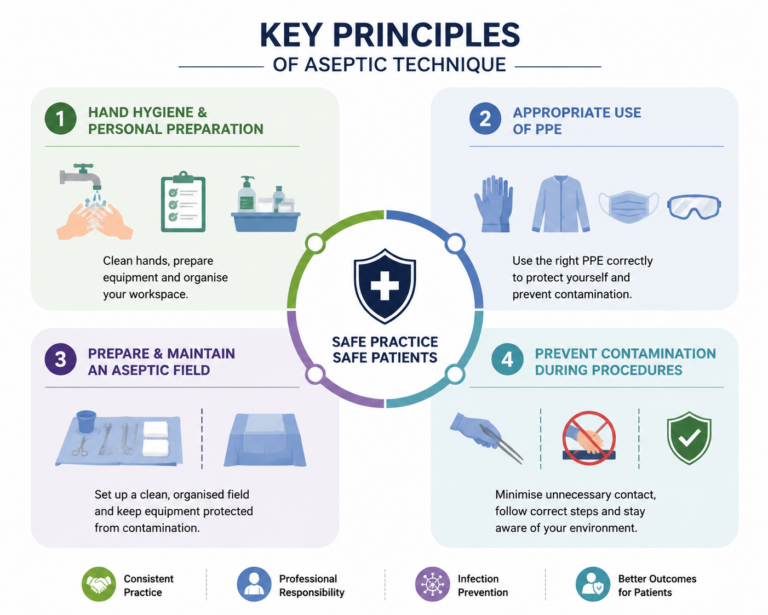
Aseptic technique depends on several core principles that guide healthcare workers before, during and after procedures.
These principles help professionals prepare their environment, handle equipment correctly and make informed decisions throughout patient care.
The main principles include:
- Effective hand hygiene and personal preparation
- Appropriate use of personal protective equipment (PPE)
- Preparing and maintaining an aseptic field
- Preventing unnecessary contact during procedures
Aseptic practice relies on these principles working together. For example, gloves provide protection, but they cannot replace effective hand hygiene, correct preparation or careful equipment handling.
Hand Hygiene and Personal Preparation
Hand hygiene plays a central role in aseptic practice because healthcare workers’ hands can transfer microorganisms between surfaces, equipment and patients.
Before beginning a procedure, healthcare workers should:
- Perform hand hygiene at the appropriate stage
- Prepare all required equipment
- Check that supplies are suitable for use
- Remove unnecessary items from the working area
Good preparation creates an organised environment and allows healthcare workers to focus on the procedure without avoidable interruptions.
In UK healthcare settings, infection prevention guidance such as the NHS National Infection Prevention and Control Manual supports consistent approaches to reducing avoidable transmission during care activities.
Personal Protective Equipment (PPE)
Personal protective equipment creates an additional barrier between healthcare workers, patients and possible sources of contamination.
Healthcare workers select PPE based on the procedure, the level of exposure and workplace guidance.
Common PPE includes:
- Gloves
- Aprons or gowns
- Eye protection or masks where required
PPE supports safe practice, but it does not remove the need for correct technique. Gloves, for example, may become contaminated if they touch unsuitable surfaces during a procedure.
Effective PPE use involves:
- Selecting appropriate protection
- Wearing equipment correctly
- Avoiding unnecessary contact with contaminated areas
- Removing PPE safely after use
Preparing and Maintaining an Aseptic Field
An aseptic field provides a controlled area where healthcare workers can organise equipment and complete procedures safely.
Before starting, healthcare workers prepare the field by:
- Arranging equipment in the correct order
- Separating clean and contaminated items
- Limiting unnecessary movement around the area
- Keeping equipment protected from avoidable contact
A well-prepared aseptic field supports a more organised procedure and allows healthcare workers to identify problems before they affect patient care.
Preventing Contamination During Procedures
During a clinical procedure, contamination can occur through simple actions such as touching unsuitable surfaces, incorrect equipment handling or poor preparation.
Healthcare workers reduce these risks by:
- Following the correct sequence of actions
- Handling equipment carefully
- Maintaining awareness of the environment
- Recognising when an item may no longer be suitable
These principles form the foundation of Aseptic Non Touch Technique (ANTT®), which provides a structured framework for protecting important areas during healthcare procedures.
What Is Aseptic Non Touch Technique (ANTT®)?

Aseptic Non Touch Technique (ANTT®) provides healthcare workers with a structured approach for applying aseptic principles during clinical procedures. It helps professionals identify the areas that require protection and make safer decisions throughout each stage of care.
The main idea behind ANTT® is straightforward: healthcare workers should avoid unnecessary contact with areas that need to remain free from contamination. By following this approach, professionals can focus on careful handling, appropriate preparation and correct procedural steps.
The Aseptic Non Touch Technique (ANTT®) Clinical Practice Framework, developed by the Association for Safe Aseptic Practice (ASAP), provides guidance for healthcare workers using aseptic principles across different clinical environments.
ANTT® helps healthcare professionals:
- Identify areas that require protection during procedures
- Prepare equipment and the working environment effectively
- Follow consistent approaches during clinical tasks
- Recognise situations where contamination may have occurred
Healthcare workers apply ANTT® during many procedures, including:
- Wound dressing changes
- Urinary catheter care
- Intravenous therapy
- Medication administration
- Procedures involving medical devices
ANTT® encourages healthcare workers to consider the entire procedure rather than focusing only on the final outcome. Each decision, from preparing equipment to completing care, can influence whether a procedure remains suitable and safe.
Key Parts and Key Sites Explained
Within ANTT®, healthcare workers identify two important areas that require careful attention: key parts and key sites.
These concepts help professionals understand which equipment areas and patient locations need the highest level of protection during clinical procedures.
Key Parts
Key parts are equipment areas that must remain protected because contamination could allow microorganisms to enter the patient.
Examples of key parts include:
- Syringe tips
- Needle ends
- Catheter connection points
- Intravenous access points
- Sterile equipment ends
Healthcare workers handle key parts carefully and avoid unnecessary contact with these areas during procedures.
For example, if a healthcare worker touches the sterile end of a syringe or catheter connection, microorganisms from hands or surrounding surfaces may transfer to the equipment.
Key Sites
Key sites are vulnerable areas on the patient where microorganisms could enter and potentially affect health.
Examples of key sites include:
- Open wounds
- Surgical sites
- Catheter insertion areas
- Intravenous access sites
Healthcare workers take care when working around key sites because these areas may have reduced protection against microorganisms.
Recognising key parts and key sites allows healthcare workers to focus their attention on the areas that require the most careful handling.
Standard ANTT® vs Surgical ANTT®
Healthcare workers choose between Standard ANTT® and Surgical ANTT® depending on the complexity of the procedure, the number of protected areas involved and the level of preparation required.
| Area | Standard ANTT® | Surgical ANTT® |
|---|---|---|
| Purpose | Used for routine procedures where healthcare workers protect key parts and key sites | Used for complex procedures requiring stricter contamination control |
| Procedure complexity | Suitable for shorter procedures with fewer technical requirements | Suitable for longer or more complex procedures |
| Aseptic field | Usually involves a smaller controlled working area | Requires a larger and more controlled aseptic field |
| Equipment handling | Focuses on protecting key parts through non-touch principles | Requires greater control of equipment, materials and sterile areas |
| Examples | Simple wound care, medication procedures and routine catheter care | Complex wound procedures and invasive clinical interventions |
Standard ANTT® is commonly used for routine healthcare procedures, while Surgical ANTT® provides additional controls for procedures that require a higher level of preparation and environmental management.
How Is Aseptic Technique Applied During Healthcare Procedures?
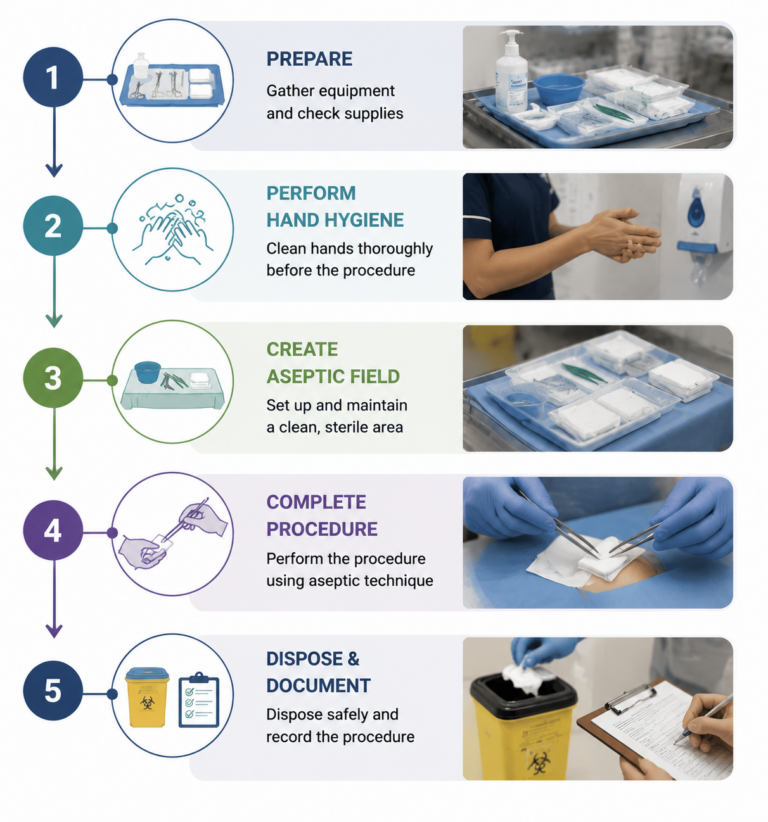
Aseptic technique follows a planned process that begins before a procedure starts and continues after it finishes.
Healthcare workers consider three main stages:
- Preparation before the procedure
- Maintaining asepsis during the procedure
- Actions after the procedure
Each stage requires careful planning and attention to detail.
Preparation Before the Procedure
Preparation creates the foundation for an effective aseptic procedure. Before beginning care, healthcare workers should understand the task, organise equipment and prepare the environment.
Preparation may include:
- Reviewing the procedure requirements
- Performing appropriate hand hygiene
- Collecting required equipment
- Checking packaging and expiry dates
- Preparing the working area
- Explaining the procedure to the patient
For example, before changing a wound dressing, a healthcare worker should have all required materials available and arrange them in a suitable order. This reduces unnecessary interruptions and allows the procedure to continue smoothly.
Good preparation also improves communication because patients understand what will happen before care begins.
Maintaining Asepsis During the Procedure
During the procedure, healthcare workers focus on careful handling and following the planned sequence of actions.
Important practices include:
- Avoiding unnecessary contact with key parts and key sites
- Keeping clean and contaminated items separate
- Handling equipment correctly
- Maintaining awareness of the environment
- Replacing items if contamination occurs
Aseptic procedures require continuous attention because contamination can happen through simple actions. For example, placing equipment on an unsuitable surface or touching a protected area may affect whether materials remain appropriate for use.
Following ANTT® principles helps healthcare workers recognise these situations and respond appropriately.
Actions After the Procedure
Aseptic practice continues after the main clinical task has finished. The final steps help healthcare workers complete the procedure safely and maintain accurate records.
After completing a procedure, healthcare workers may:
- Dispose of waste correctly
- Remove PPE safely
- Clean the working area where required
- Store equipment appropriately
- Record relevant information
- Report concerns according to workplace procedures
Completing these actions supports consistent infection prevention practices and helps healthcare teams maintain clear records of care.
Examples of Aseptic Technique in Healthcare
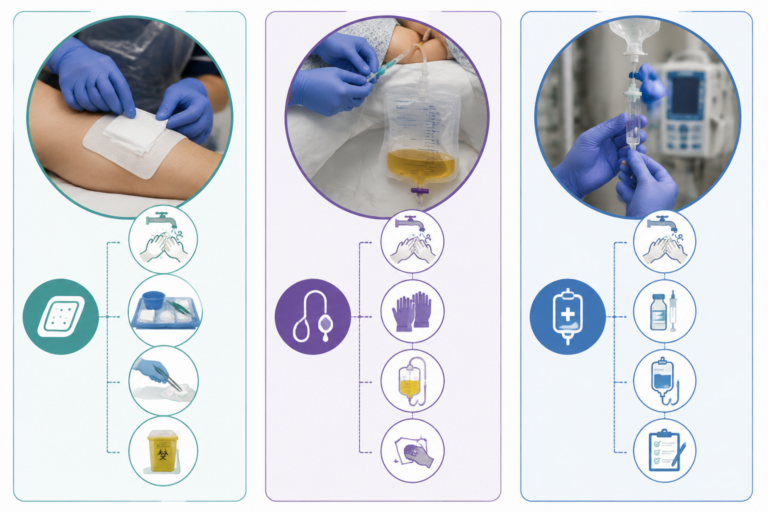
Healthcare workers use aseptic technique across many areas of healthcare. Although each procedure has specific requirements, the same principles guide preparation, handling and decision-making.
Wound Dressing Changes
Wound care requires careful attention because damaged skin reduces the body’s natural barrier against microorganisms.
During a wound dressing change, healthcare workers need to:
- Prepare materials before beginning
- Organise the working area
- Handle dressing materials correctly
- Follow the required procedure steps
- Dispose of used materials safely
A nurse changing a dressing must consider both the wound area and the equipment being used. Careful handling helps prevent unnecessary contamination during the procedure.
Urinary Catheter Care
Urinary catheter procedures require careful management because the catheter creates a pathway into the urinary system.
Healthcare workers apply aseptic principles by:
- Performing hand hygiene correctly
- Handling catheter equipment carefully
- Following appropriate procedures
- Paying attention to connection points
Correct catheter care requires consistent technique because contamination can affect patient wellbeing.
Intravenous Therapy and Medication Administration
Intravenous therapy and medication procedures require careful preparation because equipment connects directly with the patient’s body.
Healthcare workers apply aseptic principles by:
- Preparing equipment correctly
- Handling medication safely
- Protecting connection points
- Following workplace procedures
These procedures require attention to detail because contamination of equipment or access points may affect the safety of treatment.
Common Aseptic Technique Breaches and How to Prevent Them
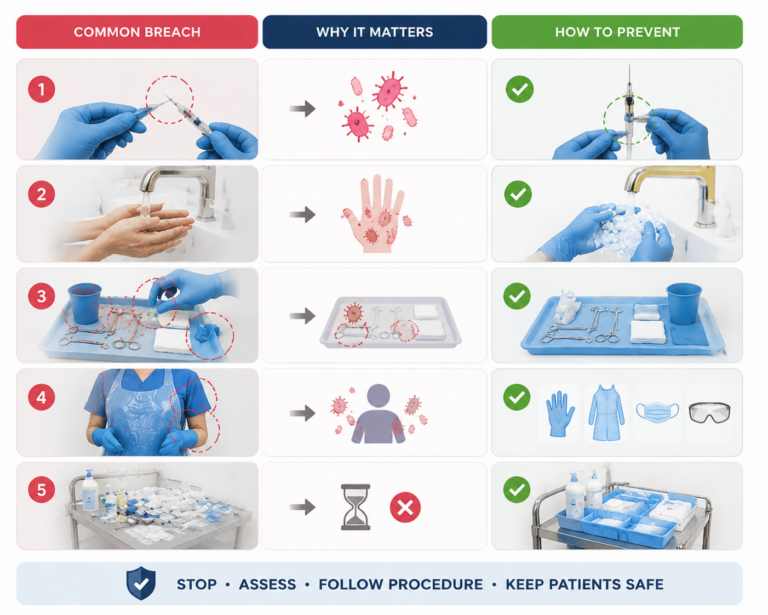
Aseptic technique can become compromised through mistakes during preparation, equipment handling or completion of a procedure. Understanding common problems helps healthcare workers respond effectively.
| Common Breach | Why It Matters | Prevention |
|---|---|---|
| Touching key parts or key sites | May transfer microorganisms to areas requiring protection | Avoid unnecessary contact and follow ANTT® principles |
| Poor hand hygiene | Can transfer microorganisms between surfaces and patients | Perform hand hygiene at appropriate stages |
| Breaking the aseptic field | Equipment may no longer remain suitable for use | Prepare carefully and maintain an organised workspace |
| Incorrect PPE use | Reduces the effectiveness of protective measures | Select and use PPE correctly |
| Poor preparation | Interruptions may affect the procedure | Organise equipment before starting |
If contamination occurs, healthcare workers should stop, assess what happened and follow workplace procedures before continuing.
Who Needs Aseptic Technique Knowledge?
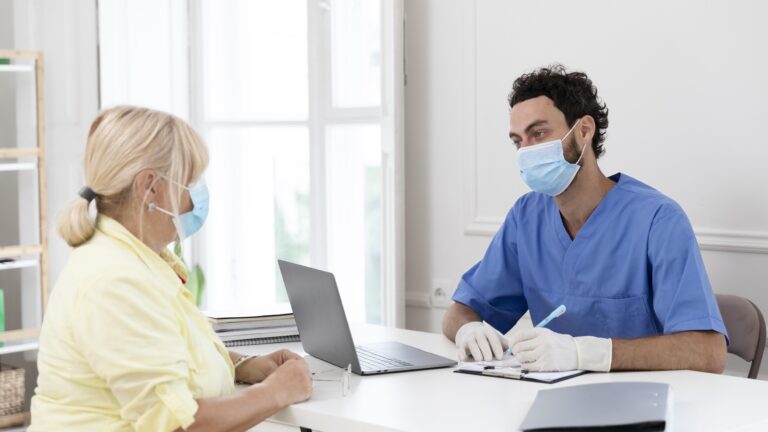
Aseptic technique knowledge is valuable for healthcare workers involved in procedures where infection prevention plays an important role.
This includes:
- Nurses
- Healthcare assistants
- Clinical support workers
- Care workers supporting clinical activities
- Healthcare professionals involved in patient care
A strong understanding of aseptic principles allows healthcare workers to make informed decisions when preparing equipment, completing procedures and responding to contamination events.
For healthcare learners, this knowledge provides an important foundation for understanding infection prevention responsibilities and safe clinical practice.
Final Takeaway: Why Aseptic Technique Matters in Healthcare
Aseptic technique provides healthcare workers with a structured approach for managing procedures where contamination could affect patient care.
By understanding aseptic principles, applying ANTT® correctly and recognising the importance of careful preparation and handling, healthcare professionals can make safer decisions during clinical tasks.
From wound dressing changes and catheter care to intravenous therapy and medication procedures, aseptic practice remains an essential part of infection prevention across healthcare settings.
For healthcare learners and professionals, developing knowledge of aseptic technique helps build awareness of safe procedures, infection prevention responsibilities and the importance of careful clinical practice.
Care workers who understand SICPs can make informed decisions, recognise infection risks and follow safer working practices across different care settings.
Building infection prevention knowledge supports professional development and helps care teams provide safer, more effective support for the people they care for.
Frequently Asked Questions
What is the touch and non-touch rule in Standard ANTT®?
The touch and non-touch rule means healthcare workers avoid unnecessary contact with key parts and key sites during procedures.
The purpose is to prevent accidental contamination of areas that need to remain protected. Healthcare workers use this approach alongside correct preparation and handling methods.
What happens if aseptic technique is broken during a procedure?
If contamination occurs, healthcare workers should stop and assess the situation before continuing.
They should follow workplace procedures, replace affected equipment where required and restart the necessary steps to ensure the procedure can continue appropriately.
What is the difference between key parts and key sites?
Key parts are equipment areas that must remain protected, such as syringe tips, catheter connections and IV access points.
Key sites are vulnerable patient areas, such as wounds, surgical sites and insertion areas where microorganisms could enter.
Can gloves replace hand hygiene during aseptic procedures?
No. Gloves provide an additional protective barrier, but they do not replace hand hygiene.
Gloves can become contaminated during procedures, so healthcare workers must continue following hand hygiene guidance before, during and after patient care.
How should healthcare workers manage an exposed aseptic field?
Healthcare workers should assess whether contamination has occurred and follow workplace procedures.
Depending on the situation, they may need to replace affected equipment, prepare a new area or restart part of the procedure before continuing.