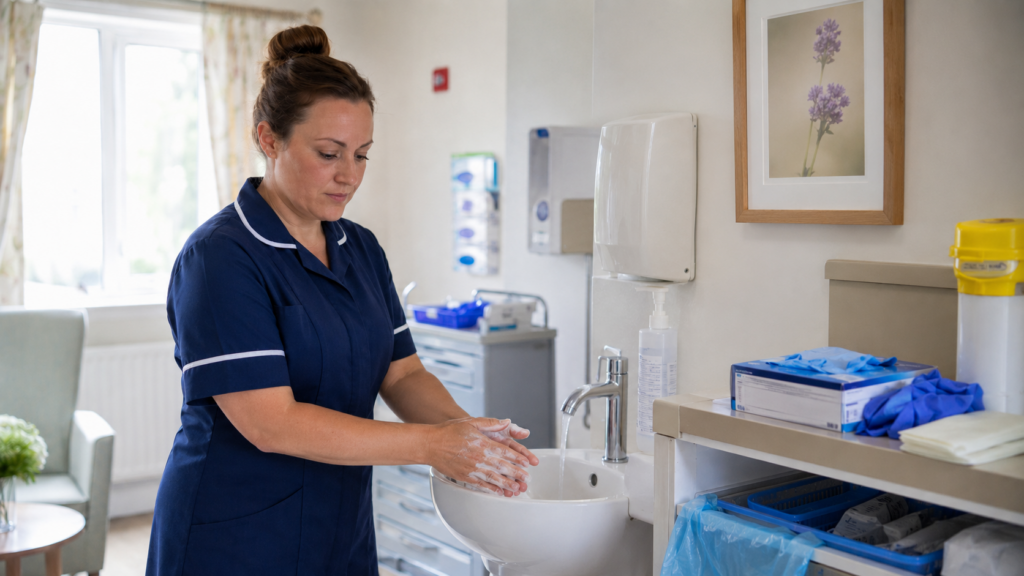


A care worker enters a resident’s room to provide personal care. Before starting, they clean their hands, check the environment and consider whether PPE is needed. These simple actions form part of everyday infection prevention and control.
Standard Infection Control Precautions (SICPs) give care workers a consistent approach to reducing infection risks. They apply across health and social care settings and cover everyday practices such as hand hygiene, PPE, respiratory hygiene, equipment cleaning and safe waste handling.
Infections can spread through contact with people, contaminated equipment, body fluids and the surrounding environment. For this reason, care workers need to recognise potential risks before, during and after providing care. In addition, good infection control protects residents, staff and visitors.
Whether you work in a care home, supported living service or provide domiciliary care, infection prevention forms part of your daily responsibilities. This guide explains the 10 Standard Infection Control Precautions used in UK health and social care, how they apply in everyday care and why infection control knowledge matters.
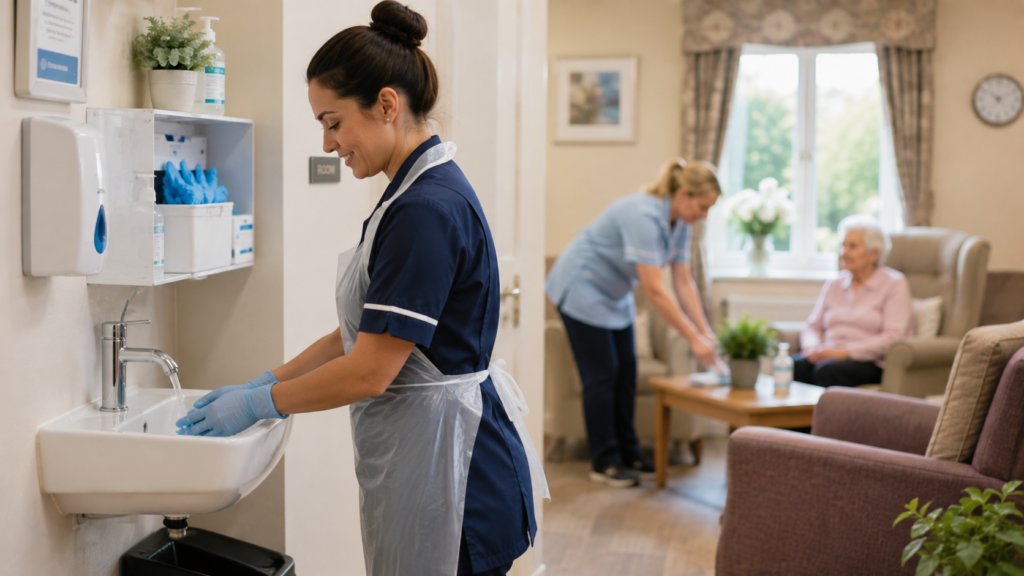
Table of Contents
What Are Standard Infection Control Precautions (SICPs)?
Standard Infection Control Precautions (SICPs) are the basic infection prevention measures that care workers follow during all care activities to reduce infection transmission. They apply to every person receiving care, whether an infection is known, suspected or not identified.
SICPs recognise that people may carry microorganisms without showing symptoms. As infection risks are not always visible, care workers must use consistent precautions during every interaction.
These precautions help manage risks linked to:
- Direct contact with people receiving care
- Contaminated equipment and surfaces
- Blood and body fluids
- Respiratory droplets
- Waste and linen handling
| Infection control area | Purpose |
|---|---|
| Hand hygiene | Reduces the spread of microorganisms through contact |
| PPE use | Protects workers when exposure risks exist |
| Equipment management | Prevents contamination through shared items |
| Environmental safety | Supports cleaner care environments |
| Waste and linen handling | Reduces exposure to contaminated materials |
SICPs provide the foundation for infection prevention and control in health and social care settings. Workers may also follow additional precautions when specific infections require extra measures.
Understanding the Purpose of Standard Precautions in Health and Social Care
Standard precautions in health and social care help workers make safer decisions during everyday care activities. Care workers may face infection risks when supporting personal care, handling linen, cleaning equipment or managing body fluid exposure.
Before starting a task, workers should consider possible risks and choose suitable precautions. For example, using appropriate PPE, performing hand hygiene and following safe disposal procedures can reduce infection transmission during personal care.
Standard precautions support:
| Purpose | Benefit |
|---|---|
| Protecting people receiving care | Reduces exposure to harmful microorganisms |
| Protecting care workers | Helps manage workplace infection risks |
| Maintaining safe environments | Limits contamination during care activities |
Why Standard Infection Control Precautions Apply to Every Care Situation
SICPs apply to every care situation because infections can spread before symptoms appear. They support safe practice across care homes, supported living services, nursing homes and domiciliary care settings.
Examples include:
| Care activity | Infection risk | Precaution |
|---|---|---|
| Personal care | Body fluid exposure | Hand hygiene and PPE |
| Respiratory support | Droplet spread | Cough hygiene |
| Equipment use | Contaminated surfaces | Safe cleaning |
| Linen handling | Microorganism transfer | Safe linen procedures |
SICPs do not suggest that every person has an infection. They provide a consistent way for care workers to reduce risks and protect everyone involved in care.
How Many Standard Infection Control Precautions Are There?
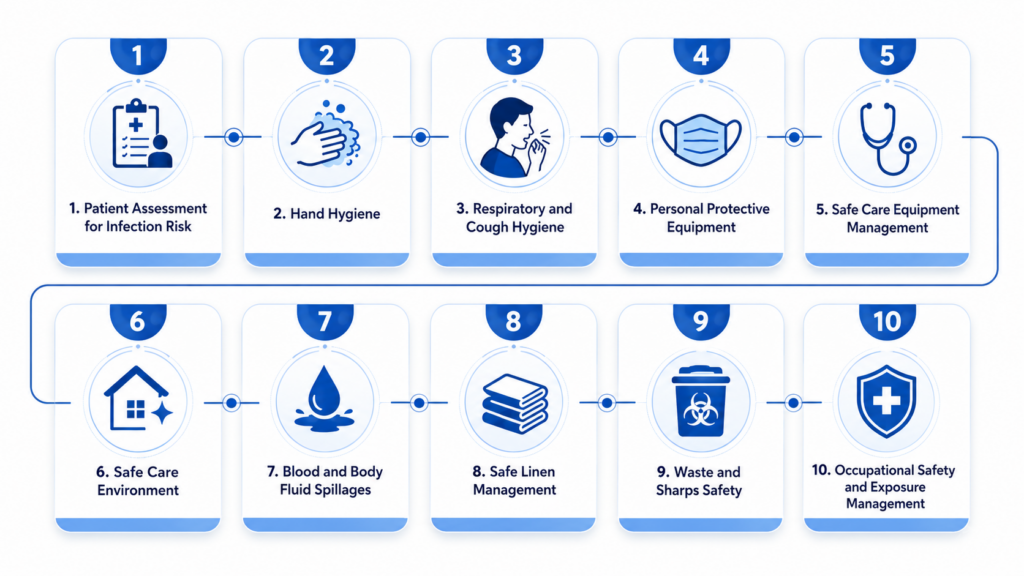
There are 10 official Standard Infection Control Precautions (SICPs) recognised in the UK under the NHS National Infection Prevention and Control Manual (NIPCM). These precautions apply to all health and social care workers across care settings to reduce cross-contamination and prevent infection transmission during everyday care activities.
The 10 SICPs provide a structured approach that covers different areas of infection prevention.
They include:
- Patient assessment for infection risk
- Hand hygiene
- Respiratory and cough hygiene
- Personal protective equipment (PPE)
- Safe management of care equipment
- Safe management of the care environment
- Safe management of blood and body fluid spillages
- Safe management of linen
- Safe disposal of waste (including sharps)
- Occupational safety and exposure management
Care workers apply these precautions together rather than separately. The correct approach depends on the task, environment and possible exposure risks.
The 10 Standard Infection Control Precautions Explained
Patient Assessment for Infection Risk
Patient assessment for infection risk helps care workers identify possible hazards before providing support. Workers should consider the person’s condition, the activity they need to complete and whether the task creates an infection exposure risk.
A simple assessment helps workers decide:
- Whether PPE is required
- How to complete the activity safely
- Whether additional precautions may apply
- How to protect themselves and the person receiving care
For example, before supporting someone with a wound or continence care, a worker should consider the possibility of contact with blood or body fluids.
Assessing risks before care begins helps workers prepare properly and choose suitable infection prevention measures.
Hand Hygiene
Hand hygiene remains one of the most important infection prevention practices in care settings. Care workers can transfer microorganisms through their hands when they touch people, equipment or surfaces.
Effective hand hygiene involves:
- Cleaning hands at the correct moments
- Using the correct technique
- Following workplace procedures
- Keeping hands clean before and after care activities
Care workers should perform hand hygiene:
- Before touching a person receiving care
- Before clean procedures
- After body fluid exposure risks
- After touching a person
- After touching their surroundings
Good hand hygiene helps prevent microorganisms from spreading between people, equipment and care environments.
Respiratory and Cough Hygiene
Respiratory and cough hygiene helps reduce the spread of infections transmitted through respiratory droplets.
Care workers can support good respiratory hygiene by encouraging people to:
- Cover their mouth and nose when coughing or sneezing
- Dispose of tissues safely
- Clean their hands after coughing or sneezing
This precaution becomes especially important during periods when respiratory infections increase within communities or shared living environments.
Care workers should also remain alert to changes in a person’s condition and report concerns according to workplace procedures.
Personal Protective Equipment (PPE)
Personal protective equipment (PPE) helps care workers create a barrier between themselves and possible sources of infection. Workers should choose PPE based on the activity they perform and the level of exposure risk involved.
PPE may include:
| PPE item | Purpose |
|---|---|
| Gloves | Protect hands when contact with blood, body fluids or contaminated materials may occur |
| Aprons | Protect clothing during activities where contamination may happen |
| Masks or eye protection | Reduce exposure risks from respiratory droplets or fluid splashes |
PPE does not replace good hand hygiene. Care workers should clean their hands before putting on PPE and after removing it to reduce the chance of spreading microorganisms.
Common PPE-related issues include:
- Wearing gloves between different care activities without changing them
- Touching clean surfaces with contaminated gloves
- Removing PPE incorrectly
- Using PPE without considering the actual risk
Care workers should always follow workplace procedures and use PPE correctly to support safer care.
Safe Management of Care Equipment
Care equipment can become a source of infection if workers do not clean and manage it correctly. Items used directly during care activities may transfer microorganisms between people if they become contaminated.
Examples of care equipment include:
- Hoists
- Commodes
- Mobility aids
- Blood pressure monitors
- Thermometers
Care workers should:
- Clean equipment according to workplace procedures
- Follow manufacturer guidance where required
- Store cleaned equipment safely
- Avoid using contaminated items for another person
For example, a commode used by one person should receive appropriate cleaning before another person uses it. This prevents microorganisms from transferring between service users.
Safe equipment management supports infection prevention by reducing contamination risks during daily care activities.
Safe Management of the Care Environment
The care environment includes the physical spaces where people receive support, such as bedrooms, communal areas and shared facilities. These areas require regular attention because microorganisms can remain on frequently touched surfaces.
Care workers can support a safer environment by:
- Keeping care areas clean and organised
- Reporting damaged surfaces or equipment
- Following cleaning schedules
- Reducing unnecessary clutter
Common high-touch areas include:
| Area | Why it requires attention |
|---|---|
| Door handles | Many people touch them throughout the day |
| Bed rails | Regular contact occurs during care activities |
| Light switches | Frequent hand contact can transfer microorganisms |
| Shared furniture | Multiple people may use these areas |
A clean environment depends on everyone working in the care setting. Care workers contribute by noticing risks, following procedures and maintaining good infection prevention practices during everyday tasks.
Safe Management of Blood and Body Fluid Spillages
Blood and body fluids can contain microorganisms that may cause infection. Care workers must manage these situations carefully to protect themselves and others.
Examples of body fluids include:
- Blood
- Urine
- Faeces
- Vomit
- Other bodily secretions
When responding to a spillage, care workers should:
- Assess the situation before taking action
- Wear suitable PPE
- Follow approved cleaning procedures
- Dispose of contaminated materials safely
- Report incidents when required
For example, if a person experiences an injury that causes bleeding, the care worker should provide appropriate support while following workplace infection control procedures.
Prompt and safe management reduces exposure risks and helps maintain a safer care environment.
Safe Management of Linen
Used linen can carry microorganisms and requires careful handling to prevent contamination. Care workers may handle bedding, clothing and other reusable materials during daily support activities.
Safe linen management includes:
- Avoiding unnecessary shaking of used linen
- Wearing appropriate PPE when required
- Following workplace laundry procedures
- Moving used linen safely to the correct area
Care workers should avoid actions that may spread microorganisms, such as shaking contaminated bedding. This can release particles into the surrounding environment.
For example, when changing a resident’s bed, workers should handle used linen carefully and clean their hands after completing the task.
Correct linen management protects people receiving care, staff members and the wider environment.
Safe Disposal of Waste (Including Sharps)
Safe waste management reduces infection risks by ensuring contaminated materials receive appropriate handling and disposal.
Care workers may manage different types of waste during their role, including:
- Clinical waste
- Contaminated materials
- Sharps such as needles
Workers should:
- Place waste into the correct disposal container
- Avoid overfilling waste bags or sharps bins
- Handle sharps carefully
- Follow workplace disposal procedures
Care workers should never:
- Recap used needles
- Push items into full sharps containers
- Ignore sharps injuries
Sharps injuries can expose workers to blood-borne infections. Reporting incidents quickly allows organisations to provide appropriate support and review safety procedures.
Occupational Safety and Exposure Management
Occupational safety and exposure management focuses on protecting care workers from infection risks linked to their role.
Exposure risks may include:
- Needlestick injuries
- Contact with blood or body fluids
- Accidental contamination
- Exposure to infectious materials
Care workers should:
- Follow workplace health and safety procedures
- Report exposure incidents promptly
- Seek advice after an exposure event
- Complete required infection control training
For example, if a care worker experiences a needlestick injury, they should report it immediately according to workplace procedures rather than continuing their duties without support.
Quick action helps protect the worker and allows employers to review risks and improve safety measures.
Why Are Standard Precautions Important in Health and Social Care?
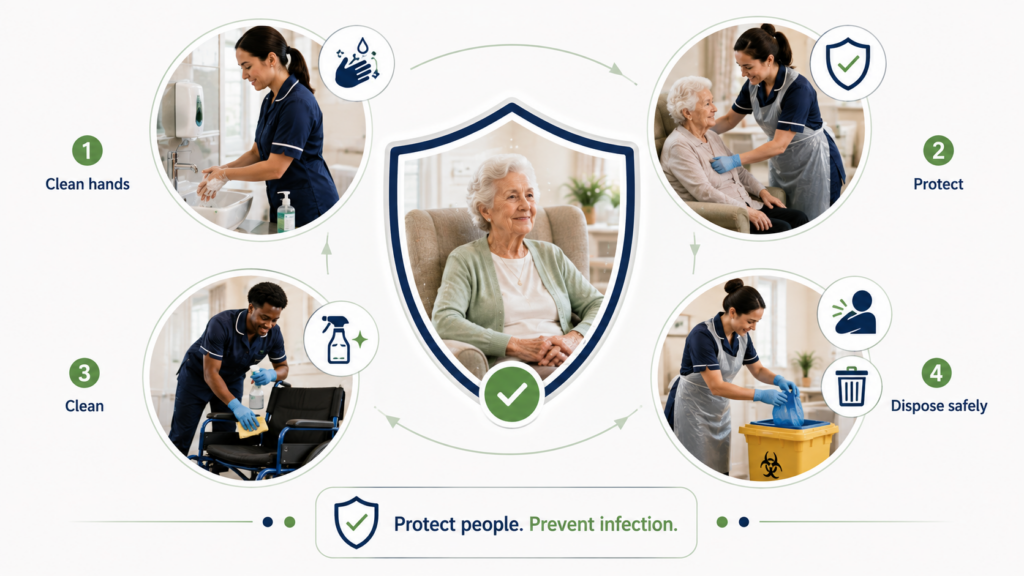
Standard precautions help care workers reduce infection risks during everyday activities. They provide a consistent approach that protects people receiving care, staff members and visitors.
Many people receiving support may have a higher risk of infection because of age, health conditions or reduced immunity. Applying SICPs correctly helps reduce unnecessary exposure.
Standard precautions support:
| Benefit | How SICPs help |
|---|---|
| Safer care environments | Reduce opportunities for infection transmission |
| Protection for vulnerable people | Lower exposure to harmful microorganisms |
| Worker safety | Help staff manage workplace infection risks |
| Consistent practice | Provide clear infection prevention steps |
SICPs also support person-centred care. Care workers can protect people from infection while maintaining dignity, independence and respectful support.
Applying Infection Control Precautions in Everyday Care Settings
Care workers use infection control precautions throughout their daily responsibilities. The correct approach depends on the task, environment and possible risks involved.
Supporting Personal Care Safely
Personal care activities often involve close contact and possible exposure to body fluids.
Care workers should:
- Complete a risk assessment
- Select suitable PPE
- Perform hand hygiene before and after care
- Follow safe disposal procedures
These actions help reduce infection risks while maintaining the person’s dignity.
Managing Shared Equipment and Care Items
Shared equipment requires appropriate cleaning before another person uses it.
Examples include:
- Mobility equipment
- Hoists
- Monitoring devices
Following cleaning procedures reduces the chance of microorganisms spreading between people.
Handling Laundry, Waste and Contaminated Materials
Care workers should handle contaminated materials carefully by:
- Using suitable PPE
- Following workplace procedures
- Avoiding unnecessary contact
- Cleaning hands after handling materials
Supporting People With Respiratory Infection Risks
Respiratory infections can spread quickly in shared environments.
Care workers can reduce risks by:
- Supporting good cough hygiene
- Encouraging hand hygiene
- Following additional precautions when required
- Reporting changes in health conditions
Essential Infection Prevention Practices Every Care Worker Should Understand
Some infection prevention practices require particular attention because they affect almost every care activity.
Hand Hygiene and the Five Moments for Hand Hygiene
The Five Moments for Hand Hygiene help care workers identify when cleaning their hands becomes essential.
These include:
- Before touching a person receiving care
- Before clean or aseptic procedures
- After body fluid exposure risks
- After touching a person
- After touching the person’s surroundings
Effective hand hygiene remains one of the simplest ways to reduce infection transmission.
Selecting and Using PPE Correctly
Care workers should choose PPE based on the activity and possible exposure risk.
Before using PPE, workers should consider:
- What risks could occur?
- Which PPE provides suitable protection?
- How should PPE be removed safely?
Correct PPE use helps prevent contamination during care activities.
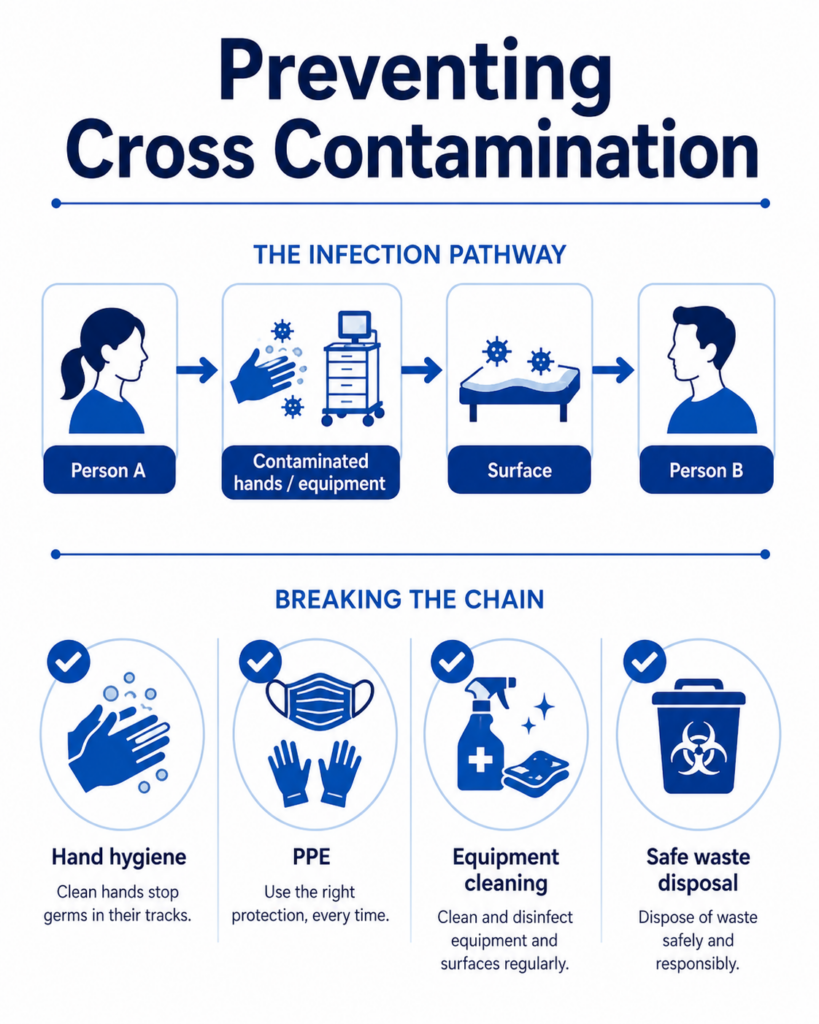
Preventing Cross Contamination During Care Activities
Cross contamination occurs when microorganisms move from one person, surface or object to another.
Care workers can reduce this risk by:
- Cleaning hands regularly
- Changing PPE when required
- Cleaning shared equipment
- Following waste procedures
Cleaning and Decontamination of Equipment
Cleaning and decontamination help remove microorganisms from care equipment.
Workers should:
- Follow workplace cleaning procedures
- Use approved cleaning methods
- Store equipment safely after cleaning
Standard Precautions vs Transmission-Based Precautions: What Is the Difference?
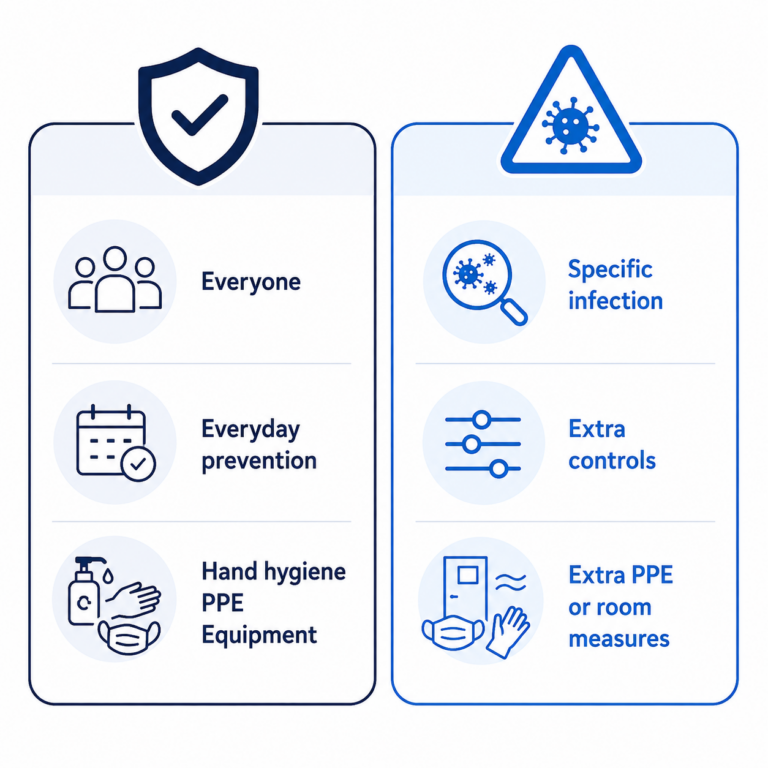
Standard precautions apply during all care activities, while transmission-based precautions provide additional measures when a person has a specific infection risk.
| Standard precautions | Transmission-based precautions |
|---|---|
| Used for every person receiving care | Used when a specific infection requires extra measures |
| Form the foundation of infection prevention | Add further controls to reduce transmission |
| Include hand hygiene, PPE assessment and safe equipment use | May involve additional PPE or environmental controls |
Both approaches work together. Care workers continue using standard precautions while applying additional measures when required.
Common Infection Control Challenges and How Care Workers Can Improve Practice
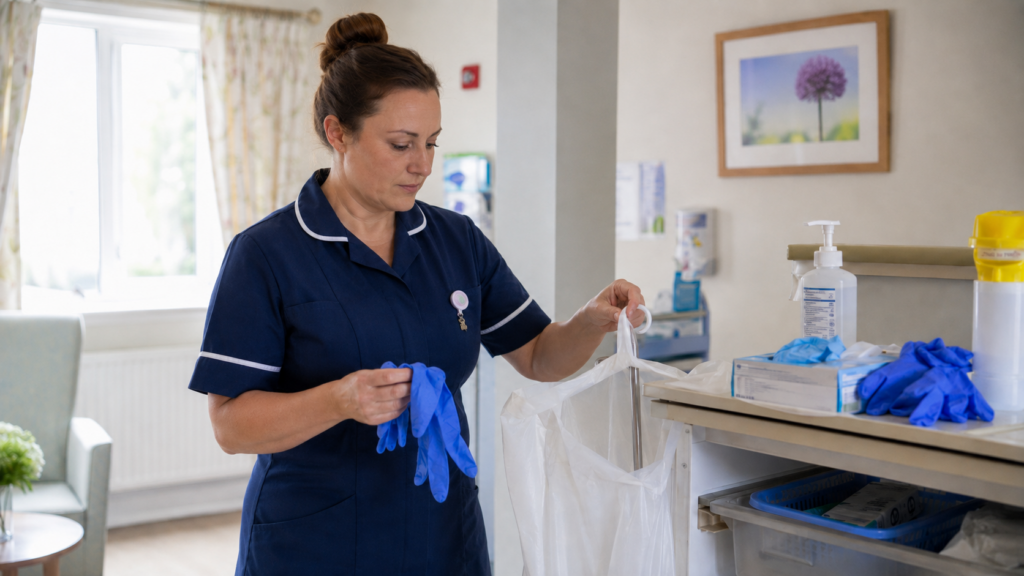
Care workers may experience situations where infection prevention becomes more challenging. Understanding common issues helps teams improve their approach.
Using Gloves Without Effective Hand Hygiene
Gloves protect workers, but they do not replace hand hygiene. Microorganisms can still spread if workers touch contaminated surfaces or remove gloves incorrectly.
Incorrect PPE Selection or Removal
Using unsuitable PPE or removing it incorrectly may increase contamination risks.
Workers should follow training and workplace procedures.
Poor Equipment Cleaning Practices
Shared equipment requires appropriate cleaning between uses. Missing cleaning steps can allow microorganisms to spread.
Failing to Report Infection Risks or Exposure Incidents
Care workers should report:
- Infection risks
- Equipment concerns
- Exposure incidents
- Unsafe practices
Early reporting helps organisations respond quickly and improve safety.
Care Worker Responsibilities for Infection Prevention and Control
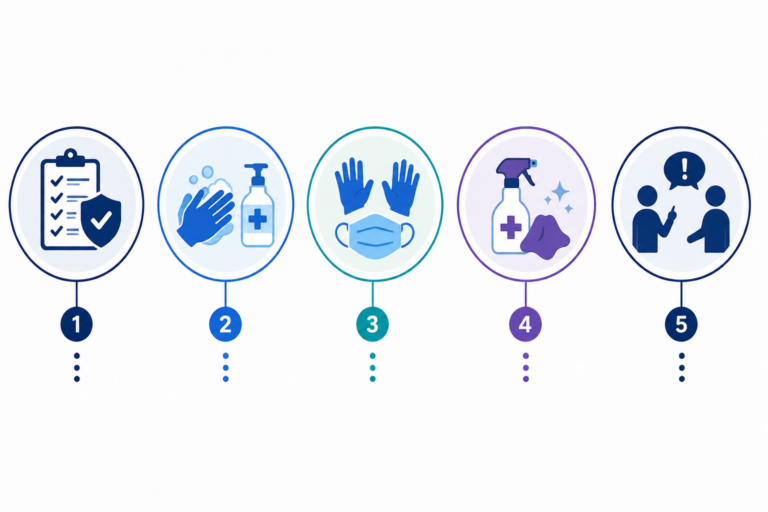
Care workers play an important role in maintaining infection prevention standards. Their responsibilities include following procedures, recognising risks and supporting safer environments.
Care workers should:
- Follow workplace infection control procedures
- Complete required training
- Use PPE appropriately
- Report infection risks
- Follow guidance from supervisors and healthcare professionals
Infection prevention works best when every member of the care team understands their role.
How Infection Control Training Supports Safe Care Practice

Infection control training helps care workers develop knowledge of infection prevention principles and safe working practices.
Training can support learning about:
- Standard Infection Control Precautions
- Hand hygiene practices
- PPE selection and use
- Infection transmission risks
- Safe care procedures
For people working in health and social care, infection control training supports continuing professional development and helps build confidence when managing everyday care responsibilities.
A CPD infection control course can help learners strengthen their understanding of infection prevention practices and workplace expectations.
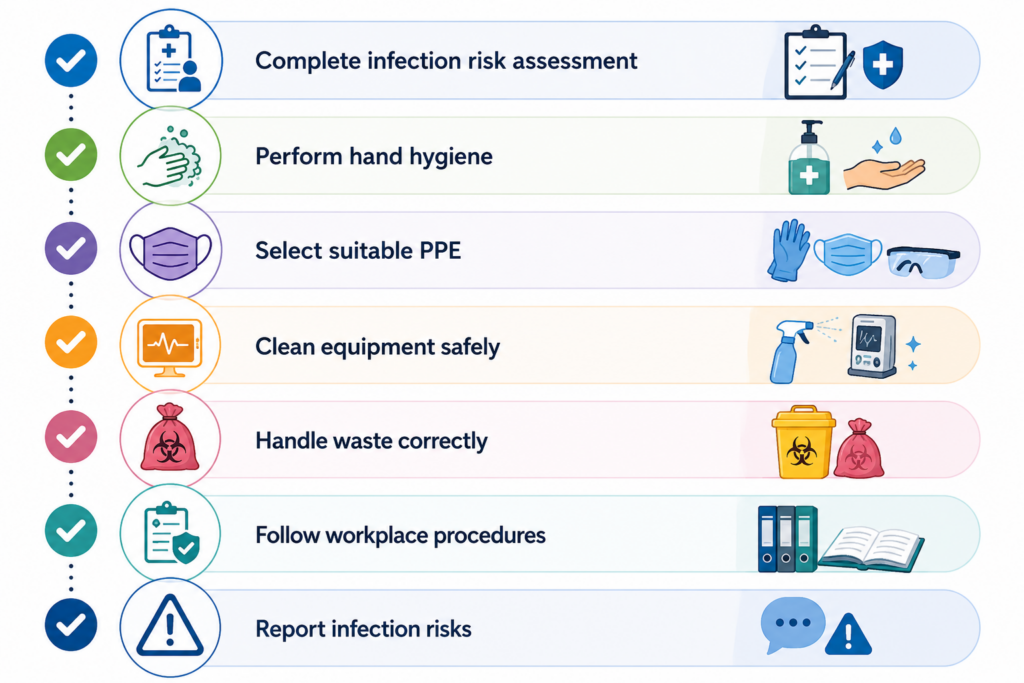
Standard Infection Control Precautions Checklist for Care Workers
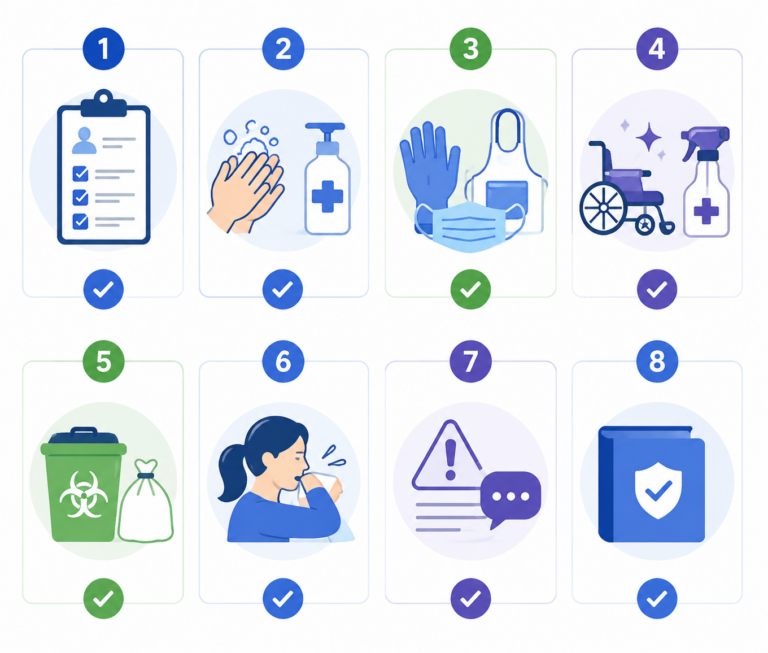
Care workers can use this checklist to remember key infection prevention practices:
- Complete infection risk assessments before care activities
- Perform hand hygiene at the correct moments
- Select PPE based on the level of risk
- Clean and manage equipment safely
- Handle waste and linen correctly
- Follow respiratory hygiene practices
- Report infection risks and exposure incidents
- Follow workplace infection prevention procedures
Final Takeaway: Safe Care Starts With Effective Infection Prevention
Standard Infection Control Precautions provide care workers with a clear approach to reducing infection risks during everyday activities. From hand hygiene and PPE use to equipment management and safe waste handling, each precaution supports safer care environments.
Care workers who understand SICPs can make informed decisions, recognise infection risks and follow safer working practices across different care settings.
Building infection prevention knowledge supports professional development and helps care teams provide safer, more effective support for the people they care for.
Frequently Asked Questions
What are standard infection control precautions?
Standard Infection Control Precautions are basic infection prevention measures that care workers follow during all care activities to reduce infection transmission risks.
How many standard infection control precautions are there?
There are 10 official Standard Infection Control Precautions (SICPs) recognised in the UK under the National Infection Prevention and Control Manual.
What are the 10 SICPs in infection control?
The 10 SICPs include patient assessment for infection risk, hand hygiene, respiratory hygiene, PPE, care equipment management, environmental management, blood and body fluid management, linen management, waste disposal and occupational safety.
Are standard precautions used for every person receiving care?
Yes. Care workers apply standard precautions during every care activity because infection risks may exist even when someone does not show symptoms.
What PPE is used for infection prevention?
PPE may include gloves, aprons, masks and eye protection depending on the activity and possible exposure risk.
What is the difference between standard precautions and transmission-based precautions?
Standard precautions apply to everyone receiving care, while transmission-based precautions provide additional measures for specific infection risks.
Do care workers need infection control training?
Infection control training helps care workers understand infection prevention practices, workplace procedures and their responsibilities when supporting safe care.