


How much does an NHS Healthcare Support Worker earn, and what can you expect to take home each month? For many people exploring a healthcare career, understanding NHS salary bands, additional payments and progression opportunities is an important first step before applying for roles.
An NHS Healthcare Support Worker salary depends mainly on the NHS Agenda for Change (AfC) pay band attached to the role. In England, most Healthcare Support Worker positions fall within Band 2 or Band 3, with pay increasing as employees move through NHS pay points, gain experience and take on greater responsibilities.
The salary figures in this guide are based on NHS Agenda for Change pay scales in England. Pay arrangements may differ across Scotland, Wales and Northern Ireland. In addition, the amount a Healthcare Support Worker receives in their bank account depends on deductions such as Income Tax, National Insurance, NHS pension contributions and any additional payments.
According to NHS England, Healthcare Support Workers provide essential support across NHS services, helping patients with daily care needs while working alongside registered healthcare professionals.
The NHS uses structured pay bands to create a clear connection between responsibilities and salary. Therefore, understanding Band 2 Healthcare Support Worker salary, Band 3 Healthcare Support Worker salary, take-home pay and additional NHS payments can help current and future support workers plan their career pathway.
This guide covers:
- NHS Healthcare Support Worker salary bands
- NHS Agenda for Change pay scales
- Band 2 and Band 3 salary differences
- Take-home pay after deductions
- Unsocial hours and overtime payments
- NHS High Cost Area Supplement (HCAS)
- Career progression opportunities

Table of Contents
How Much Does an NHS Healthcare Support Worker Earn?

An NHS Healthcare Support Worker usually earns between around £25,000 and £27,500 per year in basic salary, depending on their NHS pay band and position within the Agenda for Change pay structure.
Unlike many private-sector roles, NHS Healthcare Support Worker pay follows nationally agreed salary scales. This means earnings are linked to the responsibilities, skills and knowledge required for the role rather than individual salary negotiation.
Several factors can affect total earnings:
- NHS pay band: Higher bands reflect roles with increased responsibility.
- Pay point progression: Employees can move through pay points within their band.
- Working hours: Full-time and part-time contracts affect annual income.
- Shift patterns: Eligible nights, weekends and bank holidays may receive enhancements.
- Location: Some areas provide additional payments through HCAS.
NHS Healthcare Support Worker Salary Overview (England)
| NHS Pay Band | Typical Role | Basic Annual Salary |
|---|---|---|
| Band 2 | Healthcare Support Worker | Around £25,272 |
| Band 3 | Experienced Healthcare Support Worker | Around £25,760–£27,476 |
Band 3 roles usually involve broader responsibilities and greater support duties compared with Band 2 positions.
These figures represent basic NHS salary before deductions. They do not include overtime, unsocial hours enhancements, additional shifts or High Cost Area Supplements.
Alongside basic salary, NHS Healthcare Support Workers may receive benefits such as:
- NHS pension scheme membership
- Paid annual leave
- Structured pay progression
- Professional development opportunities
For many people entering healthcare, the starting salary is only one part of the decision. The NHS also provides a structured pathway where employees can develop skills, gain experience and progress towards higher responsibilities.
Healthcare Support Worker Pay Bands Explained
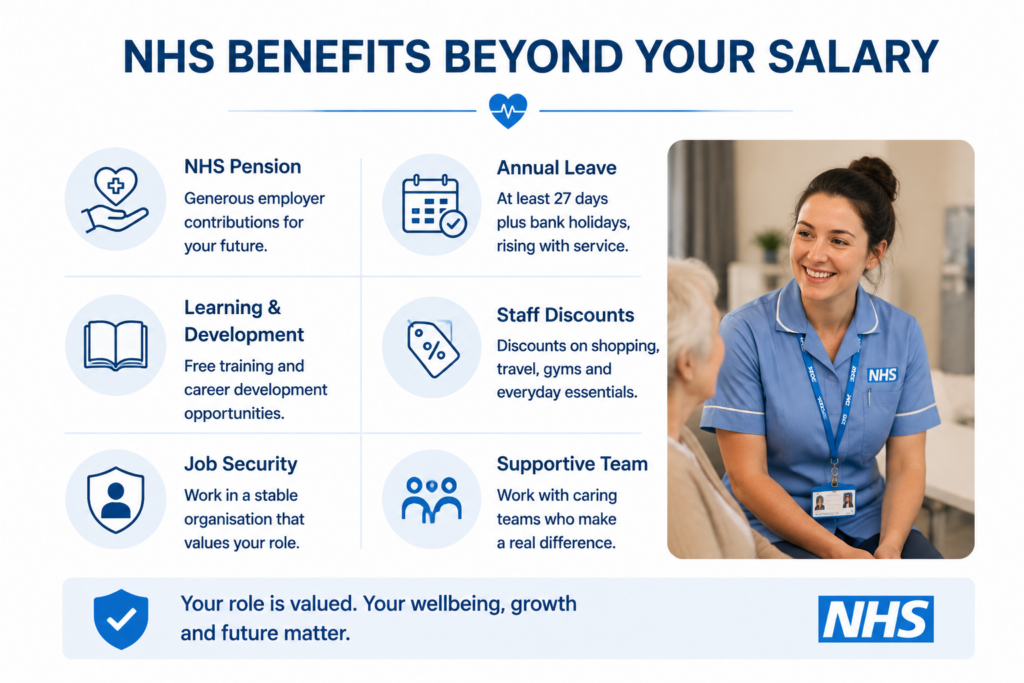
The NHS uses the Agenda for Change (AfC) pay system to organise salaries for many healthcare roles. Each role is placed into a band based on factors such as responsibility, knowledge requirements, skills and complexity of duties.
Healthcare Support Workers commonly work within Band 2 and Band 3 roles. While both positions support patients and healthcare teams, the responsibilities attached to each role can differ.
Understanding these bands helps explain why Healthcare Support Workers working in different positions may receive different salaries.
Band 2 Healthcare Support Worker Salary
Band 2 is a common starting point for people beginning an NHS Healthcare Support Worker career. These roles focus on supporting patients with essential care needs while working alongside registered healthcare professionals.
Typical Band 2 responsibilities include:
- Supporting personal care and daily activities
- Helping patients maintain dignity and comfort
- Supporting mobility and independence
- Observing patients and reporting changes
- Assisting healthcare teams with routine care activities
The Band 2 Healthcare Support Worker salary in England is around £25,272 per year in basic pay under the current NHS Agenda for Change structure.
Employees may progress through NHS pay points within Band 2 as they gain eligible experience. However, moving into higher-band roles usually requires Healthcare Support Workers to demonstrate additional skills and meet the requirements of available vacancies.
Band 2 provides a valuable foundation for people entering healthcare. It allows employees to build confidence, develop communication skills and gain experience in areas such as safeguarding, infection prevention and person-centred care.
Many Healthcare Support Workers use this experience as a foundation for future progression opportunities within health and social care.
Band 3 Healthcare Support Worker Salary
Band 3 Healthcare Support Worker roles usually involve broader responsibilities and a higher level of independence compared with Band 2 positions.
A Band 3 Healthcare Support Worker may support patients by:
- Assisting with more complex care needs
- Completing delegated healthcare tasks
- Recording and sharing important patient information
- Supporting clinical teams with specific care activities
- Helping colleagues understand workplace procedures
The Band 3 Healthcare Support Worker salary in England generally ranges from around £25,760 to £27,476 per year in basic pay, depending on the NHS pay point.
Band 3 roles often require employees to demonstrate stronger knowledge, confidence and the ability to take on additional responsibilities within their scope of practice.
For Healthcare Support Workers planning progression, developing knowledge in areas such as safeguarding, communication, professional responsibilities and person-centred care can help build the skills needed for future opportunities.
How NHS Agenda for Change Affects Healthcare Support Worker Pay
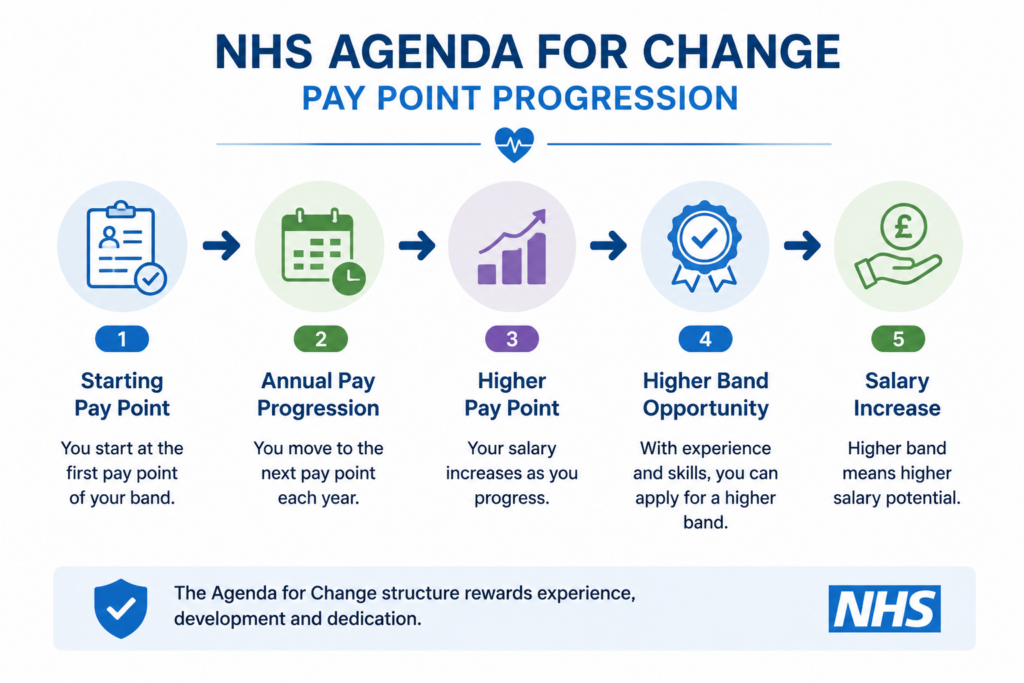
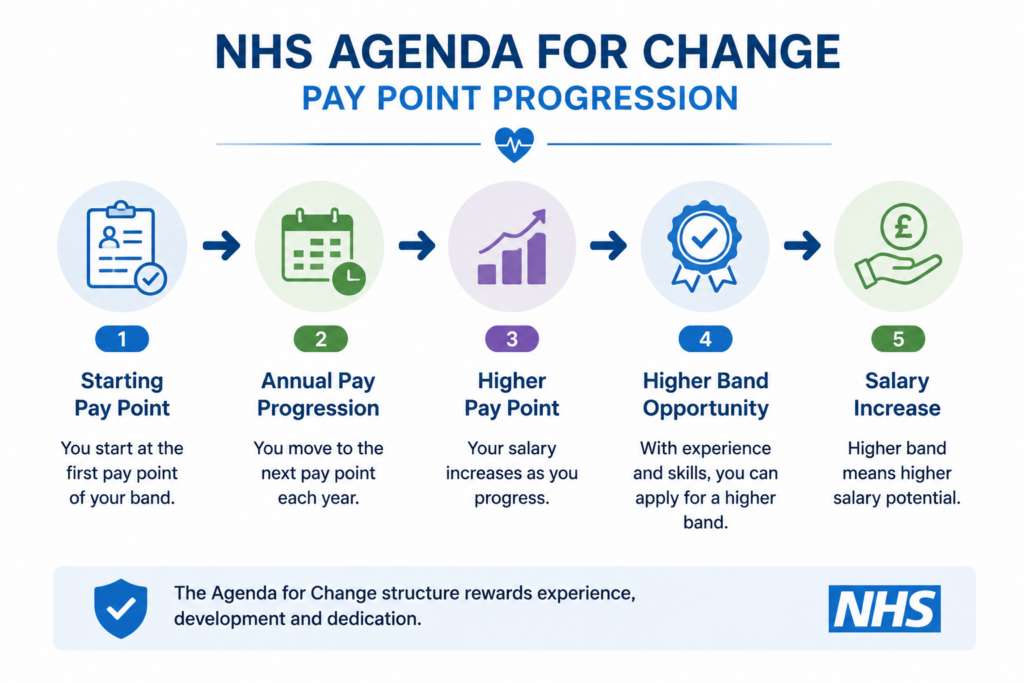
The NHS Agenda for Change (AfC) system provides the framework used to determine salaries for many NHS employees, including Healthcare Support Workers.
Under AfC, roles are assigned to pay bands according to:
- Knowledge required for the role
- Level of responsibility
- Skills needed
- Complexity of duties
Each NHS pay band includes several pay points. As employees gain eligible experience, they can progress through these points within their current band.
For example, a Band 2 Healthcare Support Worker may move through the available pay points within Band 2. However, moving into Band 3 normally requires applying for a suitable vacancy and demonstrating the required skills and responsibilities.
According to NHS Employers – Pay and Reward, Agenda for Change provides national arrangements for NHS pay, terms and conditions.
Understanding NHS AfC pay bands helps Healthcare Support Workers understand how their current salary is structured and what steps may support future career development.
Take-Home Pay: What NHS Healthcare Support Workers Actually Receive
The salary shown on an NHS job advert is the gross salary, which means the amount before deductions. However, the amount a Healthcare Support Worker receives in their bank account each month is their take-home pay after deductions have been applied.
Common deductions from NHS salaries include:
- Income Tax
- National Insurance contributions
- NHS pension contributions
- Student loan repayments, where applicable
For example, a Band 2 Healthcare Support Worker earning around £25,272 per year may receive approximately:
| Salary Information | Approximate Amount |
|---|---|
| Annual gross salary | £25,272 |
| Monthly gross salary | Around £2,106 |
| Estimated monthly take-home pay | Around £1,700–£1,850 |
This example provides an estimate rather than a guaranteed amount. The exact take-home pay depends on personal circumstances, including tax code, pension contribution rate, student loan repayments and any additional earnings.
Healthcare Support Workers can use NHS salary calculators to estimate how deductions may affect their monthly income. However, these calculators should be treated as guidance because individual circumstances can change the final amount received.
Part-time Healthcare Support Workers receive pay on a pro-rata basis. This means their salary reflects the number of hours they work compared with a full-time NHS contract.
For example, a Healthcare Support Worker working 22.5 hours per week would usually receive a proportion of the full-time salary based on their contracted hours.
Understanding NHS take-home pay helps applicants plan realistically because the salary displayed on an NHS vacancy does not represent the final amount paid after deductions.
NHS Pay Enhancements and Additional Earnings Explained
Basic salary is only one part of an NHS Healthcare Support Worker’s total earnings. Depending on their contract and working pattern, employees may receive additional payments for working evenings, nights, weekends and bank holidays.
These additional earnings can include:
- Unsocial hours enhancements
- Weekend payments
- Bank holiday payments
- Overtime opportunities
- NHS staff bank shifts
The amount received depends on the employee’s NHS pay band, working pattern and eligibility under current Agenda for Change arrangements.
For example, two Healthcare Support Workers working in the same NHS pay band may have different overall earnings if one regularly works enhanced shifts while the other works standard daytime hours.
Unsocial Hours Payments for Nights, Weekends and Bank Holidays
Healthcare services operate continuously, so many Healthcare Support Workers work outside traditional daytime hours. NHS Agenda for Change arrangements recognise these working patterns through additional pay enhancements.
Typical unsocial hours enhancements include:
| Shift Type | Band 2 Enhancement | Band 3 Enhancement |
|---|---|---|
| Night and Saturday shifts (8pm–6am) | +41% | +35% |
| Sundays and bank holidays | +83% | +69% |
These enhancements are added to eligible basic pay and can significantly increase the total earnings of Healthcare Support Workers who regularly work evenings, nights or weekends.
However, the exact payment depends on current NHS pay arrangements, contracted hours and the employee’s individual working pattern.
Applicants should always check the details of specific NHS job adverts because enhancement eligibility can vary between roles.
Overtime and Additional NHS Shifts
Some Healthcare Support Workers increase their earnings by accepting additional shifts when opportunities become available.
Additional earning opportunities may include:
- Working extra hours within their department
- Taking NHS staff bank shifts
- Supporting services during busy periods
- Covering temporary staffing requirements
However, overtime is not guaranteed and depends on workforce requirements, available shifts and employer policies.
Although additional shifts can increase income, Healthcare Support Workers should also consider workload, rest requirements and maintaining safe standards of patient care.
NHS High Cost Area Supplement (HCAS): How Location Affects Healthcare Support Worker Pay
NHS Healthcare Support Worker salaries can vary depending on where someone works. The main reason is the High Cost Area Supplement (HCAS), which provides additional payments to eligible NHS employees working in areas where living costs are higher.
HCAS is paid on top of the basic NHS Agenda for Change salary. Therefore, a Healthcare Support Worker working in an eligible London location may receive a higher overall salary than someone in the same pay band elsewhere.
The supplement is calculated as a percentage of basic salary, subject to minimum and maximum limits.
| Location Area | HCAS Supplement Rate | Typical Annual Addition |
|---|---|---|
| Inner London | 20% of basic salary | Around £5,100–£8,000 |
| Outer London | 15% of basic salary | Around £4,500–£5,500 |
| London Fringe | 5% of basic salary | Around £1,100–£2,100 |
HCAS payments are calculated according to NHS rules and depend on salary level, eligibility and workplace location.
For example, a Band 2 Healthcare Support Worker working in an eligible Inner London area may receive additional HCAS payments on top of their basic salary, increasing their overall annual earnings.
Location is only one factor that affects NHS Healthcare Support Worker salary. Pay band, experience, contracted hours and shift enhancements can also influence total income.
Band 2 vs Band 3 Healthcare Support Worker: What Is the Difference?
Band 2 and Band 3 Healthcare Support Worker roles both provide essential support to patients and healthcare teams. However, the main difference lies in the level of responsibility, independence and skills expected.
| Area | Band 2 Healthcare Support Worker | Band 3 Healthcare Support Worker |
|---|---|---|
| Role focus | Supports essential patient care activities | Supports patients with broader care responsibilities |
| Responsibility | Works within established guidance | Takes on increased responsibility |
| Skills | Develops core healthcare support skills | Demonstrates wider knowledge and confidence |
| Career development | Builds experience within healthcare | Supports progression into higher-level roles |
Band 3 positions usually require Healthcare Support Workers to demonstrate stronger knowledge, confidence and the ability to manage additional responsibilities within their role.
How Can Healthcare Support Workers Increase Their Earnings?
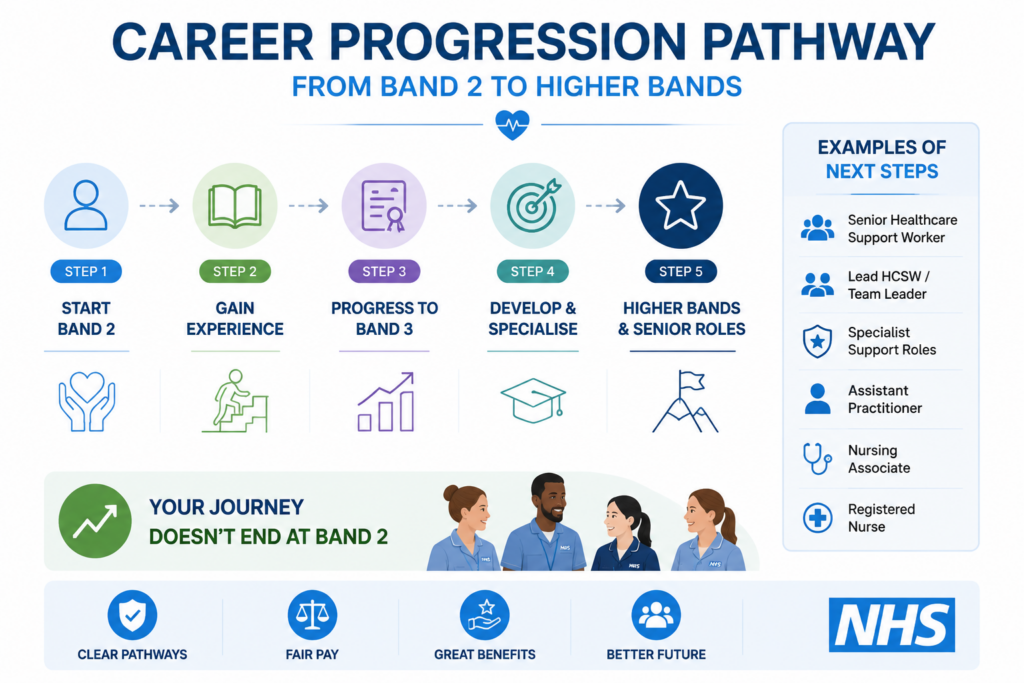
Healthcare Support Workers can improve their earning potential by developing their skills, gaining experience and preparing for roles with greater responsibility.
Common ways to increase NHS earning potential include:
- Progressing from Band 2 to Band 3 roles
- Developing specialist healthcare knowledge
- Completing relevant training
- Taking on additional responsibilities
- Applying for higher-band opportunities
Building knowledge in areas such as safeguarding, communication, infection prevention, person-centred care and professional responsibilities can help Healthcare Support Workers strengthen their career foundation.
The Care Certificate is also an important development pathway for many new care professionals because it covers essential standards expected within health and social care environments.
For Healthcare Support Workers who want to expand their knowledge and prepare for future career opportunities, the Health and Social Care Level 3 Diploma – HF Online provides structured learning in areas such as safeguarding, communication, care principles and professional practice.
Developing further knowledge does not guarantee promotion or employment, but it can help learners build a stronger foundation for progression within health and social care.
Healthcare Support Worker Roles Compared With Other NHS Careers

Working in healthcare involves many different roles, each with its own level of training, responsibility and contribution to patient care. Comparing Healthcare Support Workers with other NHS professionals can help learners understand where each position fits within the wider healthcare pathway.
Healthcare Support Worker vs Healthcare Assistant
Although the titles are sometimes used interchangeably, Healthcare Support Worker and Healthcare Assistant roles can vary depending on the employer, department and workplace setting. Both positions focus on supporting patients and helping healthcare teams provide safe, compassionate care.
Typical responsibilities may include:
- Supporting patients with daily care needs
- Promoting dignity, comfort and independence
- Assisting with mobility and wellbeing
- Reporting changes in a patient’s condition
- Working alongside nurses and wider healthcare teams
The exact duties depend on the requirements of the role and the healthcare environment where the employee works.
Healthcare Support Worker vs Nursing Associate
A Nursing Associate works between a Healthcare Support Worker and a registered nurse within the healthcare team. This role requires approved training and allows professionals to take on additional clinical responsibilities within their scope of practice.
Compared with Healthcare Support Workers, Nursing Associates may contribute to a wider range of patient care activities, including supporting assessments, monitoring patients and contributing to planned care.
For those looking to continue developing within the NHS, the Nursing Associate pathway offers another potential route for career progression.
Healthcare Support Worker vs Registered Nurse
Registered Nurses complete professional nursing education and must register with the Nursing and Midwifery Council before practising.
Their role includes assessing patients, planning care, making clinical decisions and coordinating treatment within their area of practice. Healthcare Support Workers provide essential assistance that supports nurses and helps deliver safe, person-centred care.
Both roles play an important part in patient wellbeing, but they differ in terms of education requirements, clinical responsibility and decision-making authority.
Final Thoughts: Understanding Healthcare Support Worker Pay and Progression
Understanding NHS Healthcare Support Worker salary structures helps people make informed decisions about their healthcare careers.
Basic salary depends on the NHS Agenda for Change pay band, while total earnings can increase through pay progression, unsocial hours enhancements, overtime and location supplements.
For many people, Healthcare Support Worker roles provide an opportunity to develop valuable skills, support patients and build experience within the NHS.
By understanding NHS pay bands, take-home pay and progression opportunities, future Healthcare Support Workers can make clearer decisions about their career direction and the steps they can take to continue developing professionally.
Frequently Asked Questions
How much does an NHS Healthcare Support Worker earn?
An NHS Healthcare Support Worker salary depends on the NHS pay band, pay point, experience, location and working pattern. Most roles fall within Band 2 or Band 3 under the NHS Agenda for Change system.
What is the Band 2 Healthcare Support Worker salary?
A Band 2 Healthcare Support Worker in England earns around £25,272 per year in basic salary under current NHS Agenda for Change pay arrangements.
What is the Band 3 Healthcare Support Worker salary?
A Band 3 Healthcare Support Worker in England generally earns around £25,760–£27,476 per year in basic salary, depending on their pay point.
Should I mention qualifications already listed elsewhere in my application?
Mention a qualification when it helps demonstrate how you meet a criterion. Simply repeating your full qualifications list adds little value. Instead, explain how relevant learning supports your suitability for the role.
Do I need to include every criterion from the person specification?
Yes. Eligible Healthcare Support Workers may receive additional payments for nights, Saturdays, Sundays and bank holidays. Enhancement rates depend on the shift type and NHS pay band
How much does a Healthcare Support Worker take home after tax?
Take-home pay depends on deductions and personal circumstances. A Band 2 Healthcare Support Worker earning around £25,272 may receive approximately £1,700–£1,850 per month after typical deductions.
Does NHS Healthcare Support Worker salary change by location?
Yes. Eligible employees working in areas such as London may receive High Cost Area Supplements in addition to their basic NHS salary.
How much does a part-time NHS Healthcare Support Worker earn?
Part-time Healthcare Support Workers receive a pro-rata salary based on their contracted hours. For example, someone working half the hours of a full-time employee would usually receive around half of the basic salary before deductions.