



What Mental Health and Dementia Awareness Mean in the Care Certificate
Mental health and dementia awareness in the Care Certificate mean understanding how emotional wellbeing and cognitive health affect every part of a person’s life and care experience. They form the foundation of safe, respectful, and person-centred support.
Mental health refers to a person’s emotional and psychological wellbeing. It includes how we think, feel, and act — how we handle stress, relate to others, and make daily decisions. Good mental health allows people to cope with life’s challenges, maintain relationships, and live independently. Poor mental health can affect mood, concentration, and even physical health, making awareness and early response vital in all care roles.
Dementia awareness means recognising how memory loss, confusion, and communication difficulties can affect someone’s confidence, safety, and dignity. It involves understanding that behaviour often expresses unmet needs — a person may act out of fear, frustration, or confusion rather than intent. Being aware of these patterns helps carers respond with empathy rather than judgement.
Both mental health and dementia awareness are at the heart of person-centred care. They remind us that every individual has unique needs, history, and feelings. By recognising signs early and responding with understanding, carers can build trust, prevent distress, and promote wellbeing in ways that respect each person’s identity.
Under Standard 9: Awareness of Mental Health, Dementia and Learning Disability of the Care Certificate, all care workers are expected to show practical understanding of these conditions, use clear communication, and adapt support to meet individual needs. The 2025 update deepens this expectation — moving from awareness to active, informed practice that protects dignity and supports independence.
The Mental Health & Dementia Awareness Update in the 2025 Care Certificate

In March 2025, Skills for Care and Skills for Health introduced significant updates to the Care Certificate to strengthen awareness and understanding of mental health and dementia across the care sector. This marks the first major refresh of Standard 9: Awareness of Mental Health, Dementia and Learning Disability since its launch in 2015, aligning training with today’s emotional, cognitive, and digital care challenges.
The updated standard highlights how mental health and dementia awareness are essential to quality care — not as separate areas but as overlapping elements of human wellbeing. The 2025 changes move away from theory-based understanding and towards confident, compassionate practice that adapts to individual needs.
Key Enhancements Under Standard 9
- Stronger focus on trauma-informed care. Carers are now expected to recognise how past experiences may shape a person’s emotional responses and behaviours, especially in dementia care.
- Added emphasis on early signs and intervention. Staff should identify mood changes, anxiety, or confusion promptly and report them through the correct channels to prevent escalation.
- Updated dementia communication guidance. The revised framework introduces clearer examples of tone, language, and body language that promote trust and reduce distress.
- Integration of mental health first aid awareness. Every care worker is encouraged to understand basic mental health support principles and know when to seek professional help.
- New section on digital inclusion and emotional wellbeing. Carers are trained to use digital tools — such as communication apps and electronic records — while maintaining empathy and privacy.
According to Skills for Care (2025 Care Certificate update PDF), these enhancements are designed to “embed emotional intelligence and person-centred care within everyday practice.” They reflect a national shift towards prevention, collaboration, and psychological safety in all care environments.
The result is a more balanced and compassionate approach — one that values emotional understanding as highly as physical care, setting a new benchmark for professional standards in 2025 and beyond.
Understanding the Link Between Mental Health and Dementia

Mental health and dementia often overlap, particularly in older adults, making accurate recognition and response a vital part of good care. While dementia affects memory and thinking, mental health conditions such as depression or anxiety influence mood and behaviour. When these conditions appear together, symptoms can blend, making it harder to identify what the person truly needs.
Both conditions can cause similar signs, such as:
- Confusion or forgetfulness
- Mood changes, including sadness, irritability, or withdrawal
- Anxiety or restlessness
- Difficulty concentrating or making decisions
- Loss of interest in activities once enjoyed
Because the symptoms often overlap, carers must approach each person with curiosity and patience. A resident who appears forgetful may not have dementia — they might be experiencing low mood or anxiety. Equally, someone with dementia might show depression that is mistaken for a normal part of memory loss.
Correct identification ensures proper support and protects dignity. Recognising when a person’s behaviour or mood changes allows timely action — involving healthcare professionals, reviewing medication, or adjusting care routines to reduce distress.
You can think of an individual with early-stage dementia has stopped joining group activities and seems quiet during meals. Rather than assuming it’s “part of dementia,” the carer reports the concern. A nurse assessment confirms mild depression. With support and social engagement, the person’s confidence improves, showing how awareness and observation make a real difference.
Understanding how mental health and dementia connect helps carers see the person, not just the condition — a key message in Standard 9 of the Care Certificate.
Communication Strategies for Mental Health & Dementia Care

Good communication in mental health and dementia care is about connection, not just conversation. Every tone, gesture, and pause carries meaning. The 2025 Care Certificate reinforces that communication must be calm, respectful, and adapted to each person’s needs — ensuring dignity and understanding at all times.
Verbal Communication
Speak clearly and slowly, using short, familiar words. A calm, steady tone helps reduce anxiety and confusion. Avoid medical jargon or complex instructions; instead, break information into simple steps. Reassure through gentle words and a positive tone. Repeating key points or offering choices can make the person feel more in control.
According to Skills for Care, clear verbal communication reduces misunderstanding and helps carers build trust with individuals experiencing cognitive decline or emotional distress.
Non-Verbal Communication
Body language often speaks louder than words. A warm smile, open posture, and eye contact show patience and respect. Use gestures to support understanding — for example, pointing to an object when offering it. Touch, when appropriate and consented to, can bring comfort and reassurance.
DSDWeb notes that consistent non-verbal cues help individuals with dementia interpret meaning, even when words are forgotten. Avoid sudden movements or loud tones, which may feel threatening or confusing.
Active Listening
Active listening means focusing on what the person is expressing — not just hearing their words. It involves nodding, maintaining gentle eye contact, and allowing pauses. Reflect feelings back by saying things like, “It sounds like you’re upset,” or “I can see that made you feel worried.” This approach validates emotion before offering a solution.
Example Scenario
A resident becomes upset, believing it is time to “go home.” Instead of correcting them, the carer listens and responds softly: “You miss your home — tell me about it.” The resident relaxes and begins to share memories. The carer gently shifts the focus to something familiar, such as looking at family photos. This calm response lowers anxiety and builds trust — demonstrating effective communication in practice.
Communication in care is more than exchanging information. It is about empathy, tone, and presence. By using clear speech, gentle gestures, and active listening, carers meet the standards set by Skills for Care and the 2025 Care Certificate — ensuring every interaction supports wellbeing and dignity.
Supporting Mental Health in the Workplace

Supporting mental health in the workplace is essential to providing consistent, compassionate, and safe care. When care staff feel valued, supported, and emotionally healthy, the quality of care they deliver improves. Stress, burnout, or emotional fatigue can lead to mistakes or reduced empathy — so maintaining mental wellbeing protects both workers and the people they care for.
The 2025 Care Certificate places new emphasis on resilience and self-awareness. It encourages every care worker to understand their limits, recognise early signs of stress, and seek help when needed. Wellbeing is no longer viewed as personal — it is seen as part of professional responsibility.
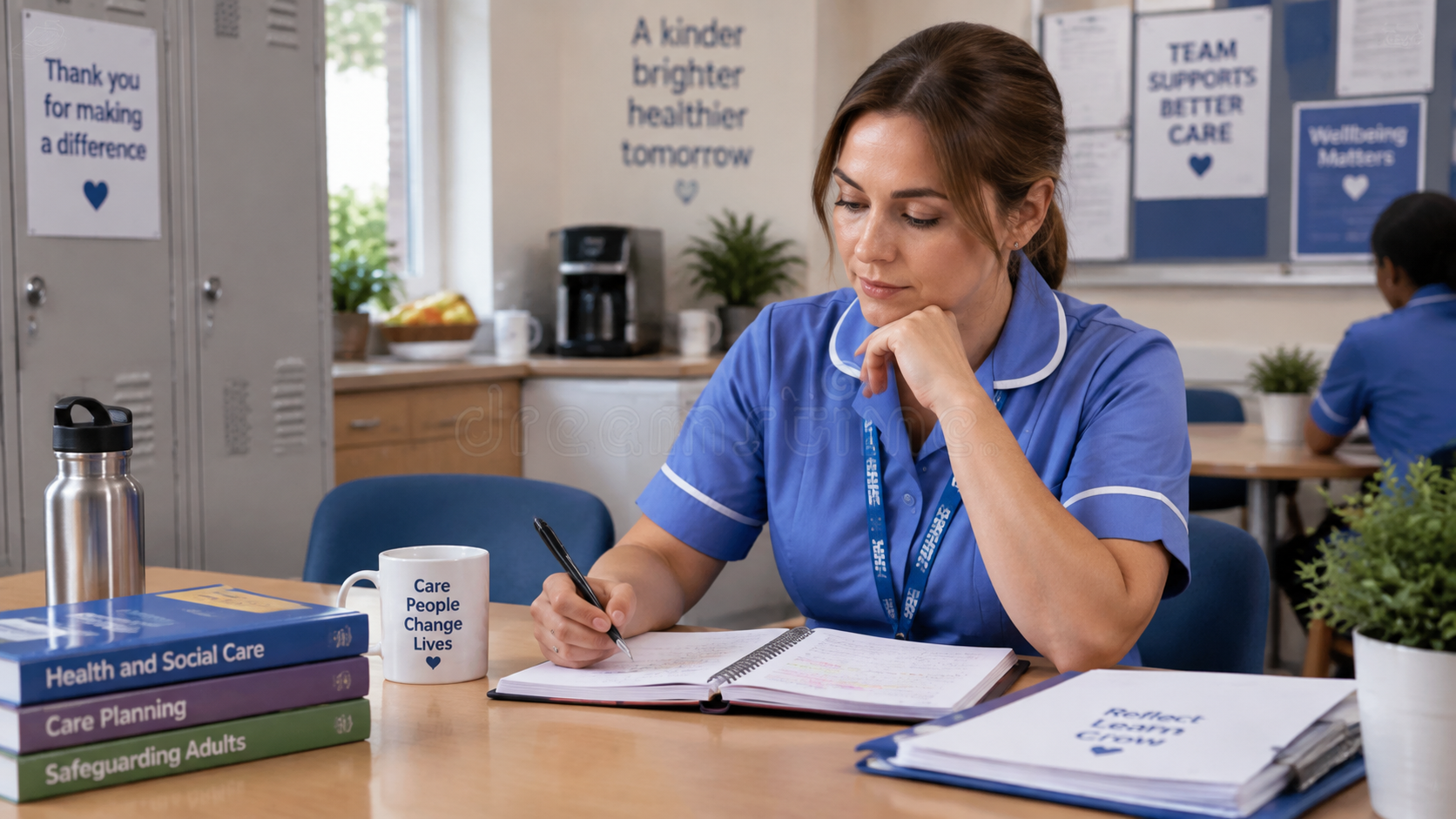
Reflective practice helps workers process challenging situations and learn from them without blame. Taking time to reflect — either alone or with a supervisor — allows staff to notice patterns, explore emotions, and adjust how they respond to stress in future.
Supervision also plays a key role. Regular check-ins with managers or mentors provide a safe space to discuss emotional strain, workload, or uncertainty. They reinforce confidence, accountability, and emotional safety at work.
Many care organisations now introduce Mental Health First Aiders — trained colleagues who can offer initial support, listen without judgement, and direct staff to professional help if needed. This approach creates an open culture where wellbeing is respected and prioritised.
By promoting staff mental health, care providers strengthen the foundations of good practice. A resilient, self-aware workforce is better equipped to communicate calmly, respond empathetically, and maintain the person-centred standards that define the Care Certificate.
Person-Centred Dementia Support
Person-centred dementia support means seeing the individual first and the condition second. It focuses on what matters most to the person — their history, preferences, and sense of identity. Care becomes more than a routine; it becomes a relationship built on respect, reassurance, and familiarity.
Good dementia care creates comfort through consistency. Predictable routines, gentle communication, and familiar surroundings reduce anxiety and confusion. Small, thoughtful actions — such as addressing someone by name or keeping treasured items nearby — help preserve a sense of self and dignity.
Best Practices for Person-Centred Dementia Care
- Maintain familiarity and comfort. Use consistent routines, staff faces, and settings to help the person feel secure.
- Encourage independence where safe. Support simple choices, such as picking clothes, setting the table, or watering plants. Independence builds confidence and prevents frustration.
- Engage through memory cues, photos, and music. Visual reminders and familiar sounds can spark recognition and emotional connection, even when words are hard to find.
A calm environment with good lighting, clear signage, and limited background noise also supports understanding and safety.
According to the Care Quality Commission (CQC) dementia care guidance, effective dementia-friendly practice involves adapting both the environment and communication to the individual’s needs. It emphasises empathy, respect, and meaningful engagement over task completion — key principles now reflected in the 2025 Care Certificate updates.
Person-centred dementia care is not about doing more; it’s about doing better — listening, noticing, and responding in ways that protect dignity and promote comfort every day.
The Role of Digital Awareness in Mental Health & Dementia Care

Digital awareness in mental health and dementia care means understanding how technology can support wellbeing, monitoring, and communication without replacing human connection. The 2025 Care Certificate update recognises that technology can strengthen person-centred practice — when used thoughtfully and alongside compassion.
How Technology Supports Care
Digital tools now play a growing role in how care teams understand, record, and respond to changing needs.
- Digital care plans help track mood, memory, and behaviour patterns. They allow staff to log changes and identify triggers for distress or confusion, improving early intervention.
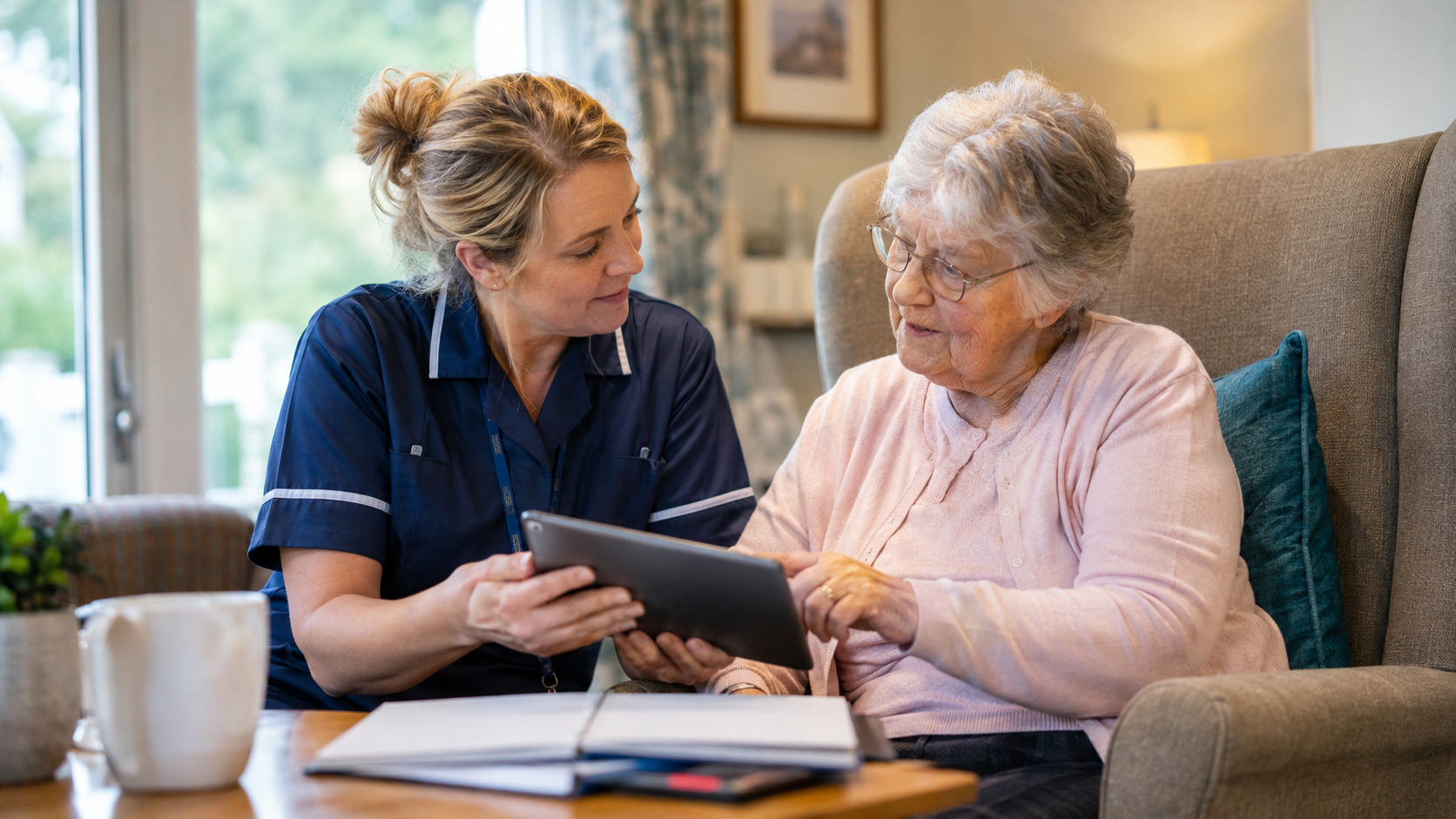
- Tablets and video calls help people stay connected to family and friends, reducing loneliness and supporting emotional wellbeing.
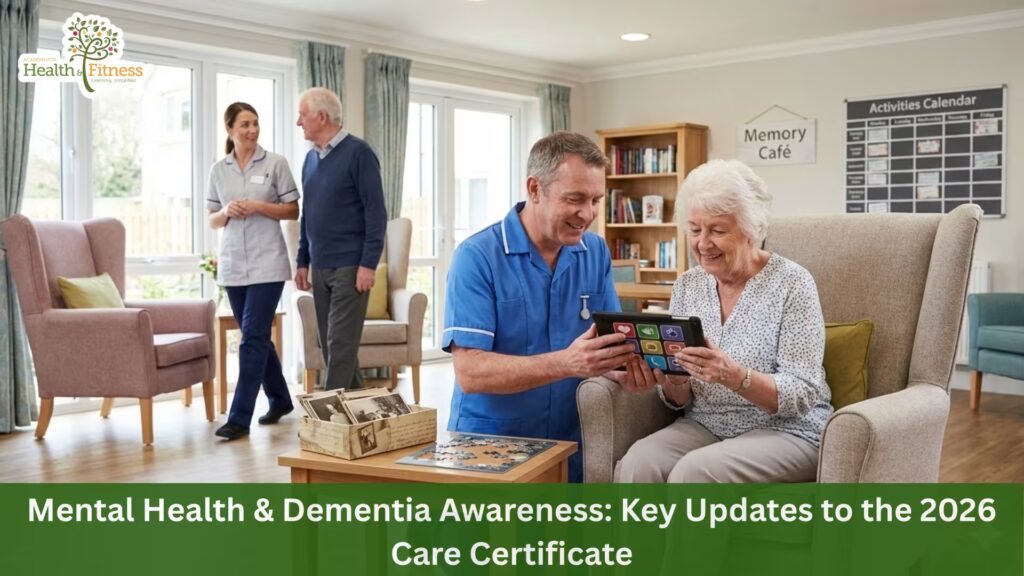
- Reminiscence and cognitive apps provide interactive ways to stimulate memory and conversation through photos, music, or puzzles. These tools promote engagement and can ease agitation in people living with dementia.
Technology also helps teams share information securely, making updates visible across shifts. For example, changes in a person’s appetite, sleep, or mood can be recorded and viewed immediately by all staff involved.
However, digital systems must never replace empathy. A well-designed app can show data, but it cannot read emotion. Carers still need to observe body language, tone, and facial expressions to understand how someone truly feels. Human understanding gives context to digital information and ensures decisions remain person-centred.
Under Standard 9.5 of the Care Certificate, care workers are expected to use digital tools responsibly, protect confidentiality, and apply technology in ways that promote wellbeing. The goal is balance — combining accuracy and compassion to deliver care that is both modern and humane.
Digital awareness is not about screens; it is about connection. When used wisely, technology enhances communication, strengthens relationships, and supports better outcomes for both carers and the people they serve.
Conclusion
The 2025 Care Certificate update strengthens how care workers understand and respond to mental health and dementia. By focusing on early recognition, trauma-informed care, and clear communication, it builds both skill and empathy across every role.
Awareness is more than knowledge — it is daily practice. When carers listen, notice, and respond with compassion, they create safer, kinder care environments where dignity and understanding truly come first.