

What Is the Care Certificate?

The Care Certificate is a training programme designed for people starting out in health and social care. It lays down the foundations — the things every carer should know before working unsupervised.
It was introduced in 2015 by Skills for Care, Health Education England, and Skills for Health, following the Cavendish Review. The goal is to make care safer, more consistent, and more person‑centred.
The certificate covers 16 essential standards — from communication and safeguarding to equality, privacy, and infection control. These aren’t just boxes to tick. They’re core principles that shape how you care, every day.
It’s widely recognised by employers and used by regulators like the CQC as a quality benchmark.
How the Care Certificate Supports Progression

The Care Certificate isn’t just about starting a job — it’s about setting the stage for a career. Here’s how it can support you through every step.
Early Career: From Trainee to Confident Carer
When you’re new, everything feels a bit overwhelming. The Care Certificate gives you the basics — how to communicate well, support safely, and respect people’s dignity. It builds your confidence and shows your manager you’re ready to work independently. It’s often the first step from “just starting out” to becoming a trusted care assistant.
Mid-Career: Standing Out for Senior Roles
Once you’ve found your feet, the certificate becomes your proof of commitment. Want to apply for senior carer or team leader roles? The Care Certificate shows you’ve mastered the essentials and take your role seriously. It helps you stand out when employers are looking for people to guide others or take on more responsibility.
Long-Term Growth: A Pathway to Qualifications
If you’re thinking bigger — maybe becoming a care coordinator, trainer, or manager one day — the Care Certificate lays the groundwork. It’s often a requirement before moving on to advanced qualifications like Level 3 or Level 5 Diplomas in Health and Social Care. It’s your stepping stone to real career development.
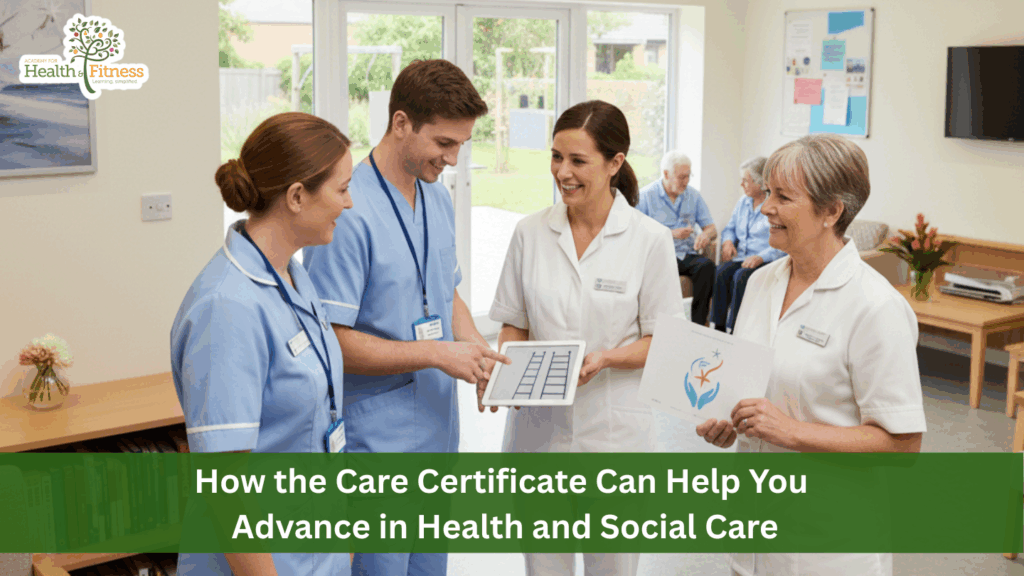
How the Care Certificate Can Help You Advance in Health and Social Care
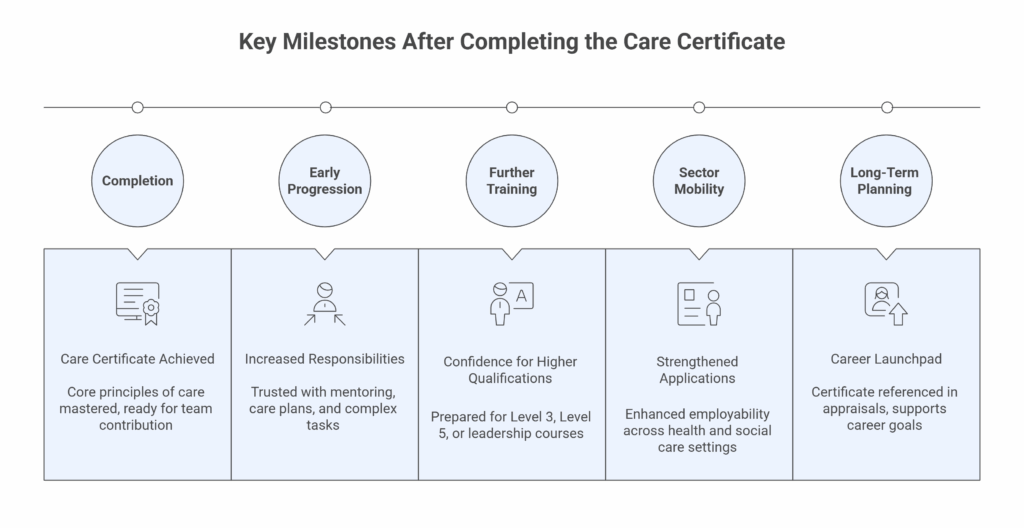
The Care Certificate doesn’t just help you get started — it sets the pace for your whole career. Whether you’re brand new to care or thinking about long-term progression, it builds the base you need to grow confidently and steadily.
1. Establishes a Strong Foundation
From the moment you complete the Care Certificate, you’ve got something solid to stand on. It shows you’ve learned the core principles of care — dignity, safety, communication, and respect — and you understand how to apply them in real life. This makes you a valuable team member, right from the beginning.
2. Unlocks Early Progression Opportunities
Finishing your certificate means you’re more likely to take on extra responsibilities, like mentoring new staff or helping with care plans. It shows your employer you’re ready to step up, even before you go for promotions. In many settings, it’s the first step toward being trusted with more complex care or specialist roles.
3. Builds Confidence for Further Training
Once you’ve completed the Care Certificate, going for a Level 3 or even a Level 5 qualification doesn’t feel so daunting. You’ve already studied, reflected, and demonstrated what you’ve learned. That experience gives you a head start when it’s time to take on bigger courses or leadership training.
4. Strengthens Applications Across the Sector
Whether you’re moving into home care, residential services, or the NHS, having the Care Certificate shows you’re serious and capable. Employers see it as proof that you understand the basics — which makes you a safer bet when they’re hiring or promoting.
5. Supports Long-Term Career Planning
Over time, the Care Certificate acts like a launchpad. It’s often referenced during appraisals, supervision sessions, and career development reviews. If you’ve got it early in your career, you’re in a much better position to talk about where you want to go next — and actually make it happen.
Transferable Skills You Gain from the Care Certificate
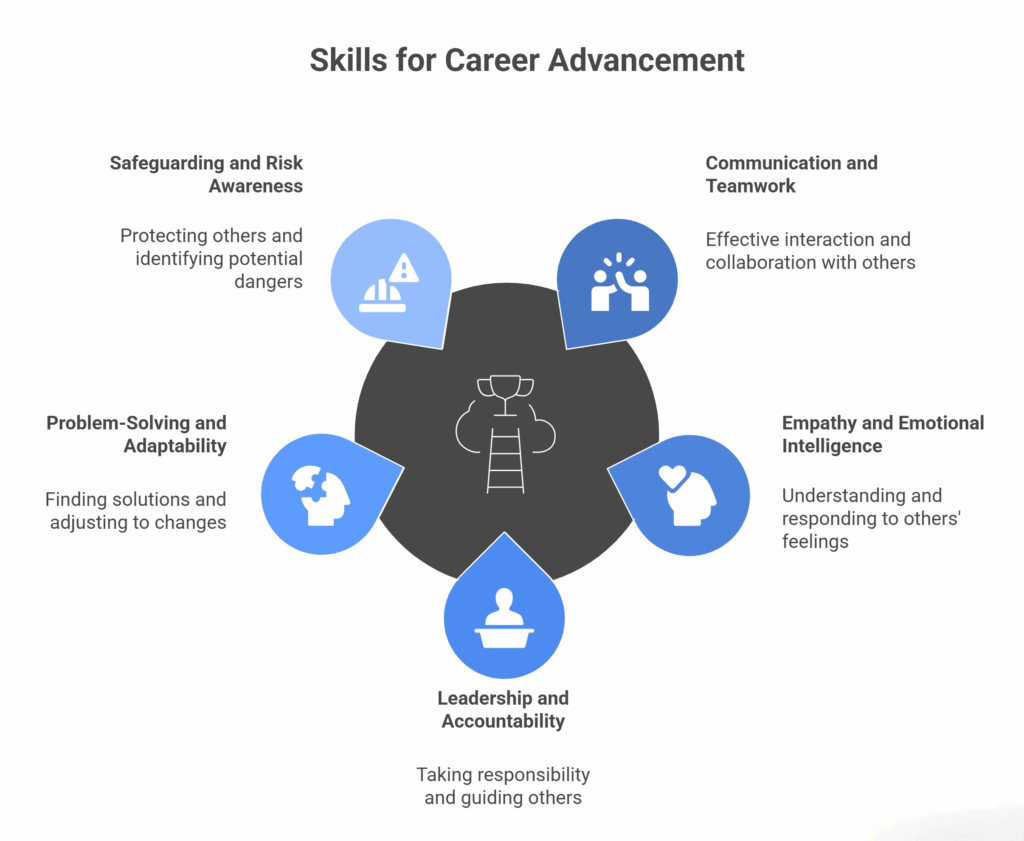
The Care Certificate doesn’t just prepare you for care work — it builds skills you can take with you anywhere. Whether you stay in health and social care or move into something new, these core abilities stick with you:
Communication and teamwork
You learn to listen well, speak clearly, and work closely with others — all essential in care, but also valuable in any role that involves people.
Empathy and emotional intelligence
Understanding what others are going through, staying calm under pressure, and showing kindness — these skills make you a better carer and a better colleague.
Leadership and accountability
You’re taught to take ownership of your actions, follow procedures, and support others. Over time, these habits grow into leadership qualities.
Problem-solving and adaptability
No two days in care are the same. You learn to think on your feet, respond to changing situations, and stay flexible when things don’t go to plan.
Safeguarding and risk awareness
Knowing how to spot danger, protect vulnerable people, and take action builds your confidence — and helps keep everyone safer, no matter the setting.
Real-World Benefits for Employers and Service Users

The Care Certificate isn’t just useful for carers — it’s a win for everyone involved in care delivery.
For Employers:
- Consistency across the team
When every new staff member follows the same standards, you get a more reliable, unified approach to care — no guesswork, no mixed messages. - Better safety and fewer mistakes
Trained staff are more aware of risks and how to prevent them. That means fewer accidents, better safeguarding, and a safer environment for everyone. - Trust from inspectors and families
The Care Certificate shows that a provider takes training seriously. It ticks the box for regulators like the CQC and reassures families that their loved ones are in good hands.
For Service Users:
- Improved communication
Carers are trained to listen, explain clearly, and understand needs — especially helpful for people living with dementia, learning disabilities, or mental health conditions. - More dignity and respect
From personal care to everyday interactions, the Care Certificate encourages carers to treat people as individuals — with compassion, not just competence. - Safer, more personalised support
When carers are confident and well-informed, people receive care that’s not only safe but also shaped around their preferences and goals.
In short? The Care Certificate lifts standards for everyone — carers, employers, and most importantly, the people receiving care.
How to Build on Your Care Certificate
Completing the Care Certificate is a great start — but it’s just the beginning. If you’re serious about growing your career in health and social care, there are plenty of ways to keep moving forward.
- Go for further qualifications
Many carers move on to formal diplomas, like the Level 3 or Level 5 in Health and Social Care. These open doors to senior roles, supervisory positions, and even management. - Take specialised courses
Want to support people living with dementia? Or work in end-of-life care? Focused training helps you build expertise in areas that matter most to you — and to those you support. - Keep learning through CPD
Continuous Professional Development isn’t just a buzzword. It’s how you stay up to date, grow your confidence, and prove your commitment to great care.
The more you learn, the more opportunities open up — for you and the people you care for.
Conclusion
The Care Certificate isn’t just a starting point — it’s a launchpad. It gives you the foundation to grow, stand out and deliver care that truly makes a difference. Whether you’re just stepping into the sector or aiming higher, it helps you prove your value and gain the confidence to take on more.
So, don’t stop at the certificate. Keep learning, keep building. Because in care, every step you take forward helps someone else feel safer, seen and supported.