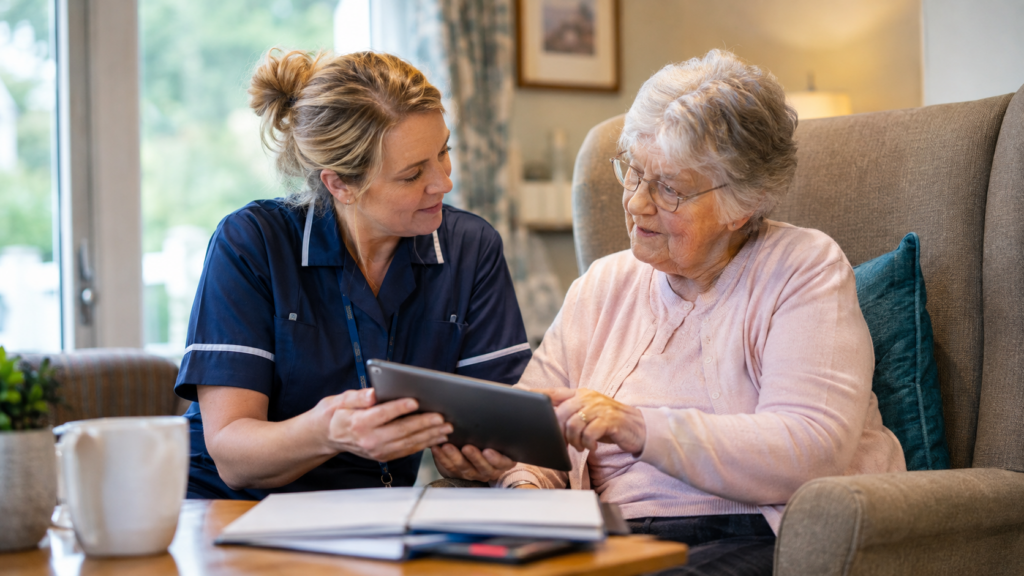


A care planning course can help learners understand how health and social care professionals identify individual needs, organise support and maintain accurate records that reflect a person’s preferences, goals and wellbeing. In care settings, a well-developed care plan is more than paperwork; it provides a clear approach to delivering consistent, person-centred support.
Imagine a care worker supporting an older person whose mobility, medication needs or daily routine has changed. Without an updated care plan, important information could be missed, leading to inconsistent support. Effective care planning helps professionals understand what matters to each individual, communicate changes clearly and review support as needs develop.
A care planning course with a CPD certificate provides structured learning around care planning processes, person-centred approaches, record keeping, confidentiality and safeguarding. With the UK adult social care sector supporting millions of people every day, employers continue to value professionals who understand how to contribute to safe, personalised and well-organised care.
This guide explains what a care planning course covers, the skills learners can develop, the meaning of CPD certification and how this training can support professional development in health and social care.
Table of Contents
What Is a Care Planning Course and What Does It Teach?
A care planning course is online training designed to develop knowledge of how care needs are assessed, planned, recorded, delivered and reviewed. It helps learners understand the principles behind creating effective care plans that place individuals at the centre of decisions about their support.
Care planning training is relevant for anyone involved in supporting people in health and social care environments, including care workers, healthcare assistants, support workers and individuals beginning their journey in the sector.
A quality care planning course typically covers:
- Understanding the care planning process
- Identifying individual needs and preferences
- Developing person-centred care plans
- Recording and maintaining accurate information
- Reviewing and updating care plans
- Understanding confidentiality and safeguarding responsibilities
Rather than focusing only on completing documents, care planning education helps learners understand the purpose behind each stage of the process and how effective planning contributes to better support outcomes.
What Is Care Planning in Health and Social Care?
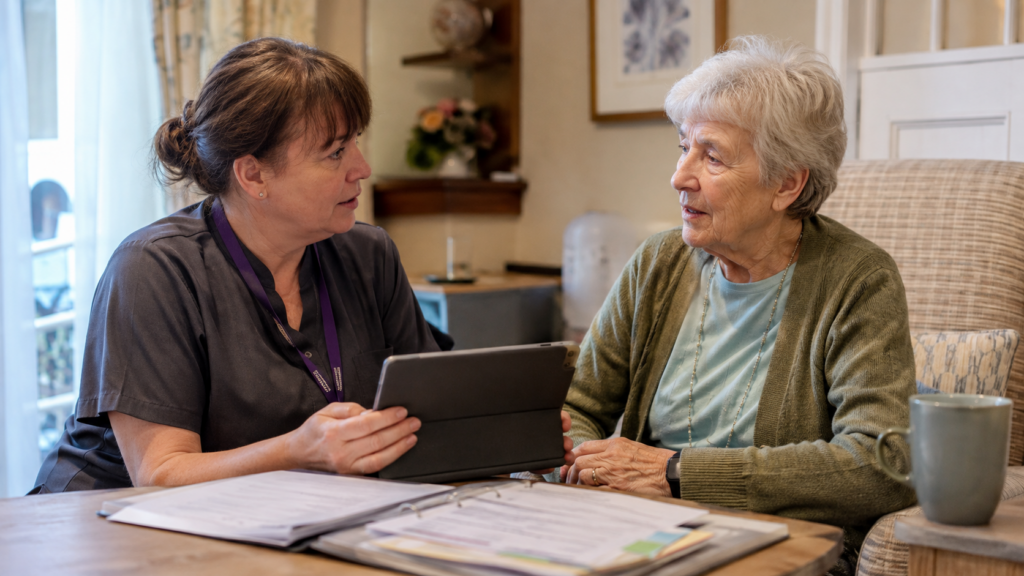
Care planning in health and social care is the process of creating a structured plan that explains how an individual’s needs will be supported. It involves gathering information about a person’s health, wellbeing, preferences, daily routines, abilities and personal goals.
A care plan helps professionals understand:
- What support an individual requires
- How care should be provided
- What outcomes the person wants to achieve
- How progress should be monitored
- When support arrangements may need to change
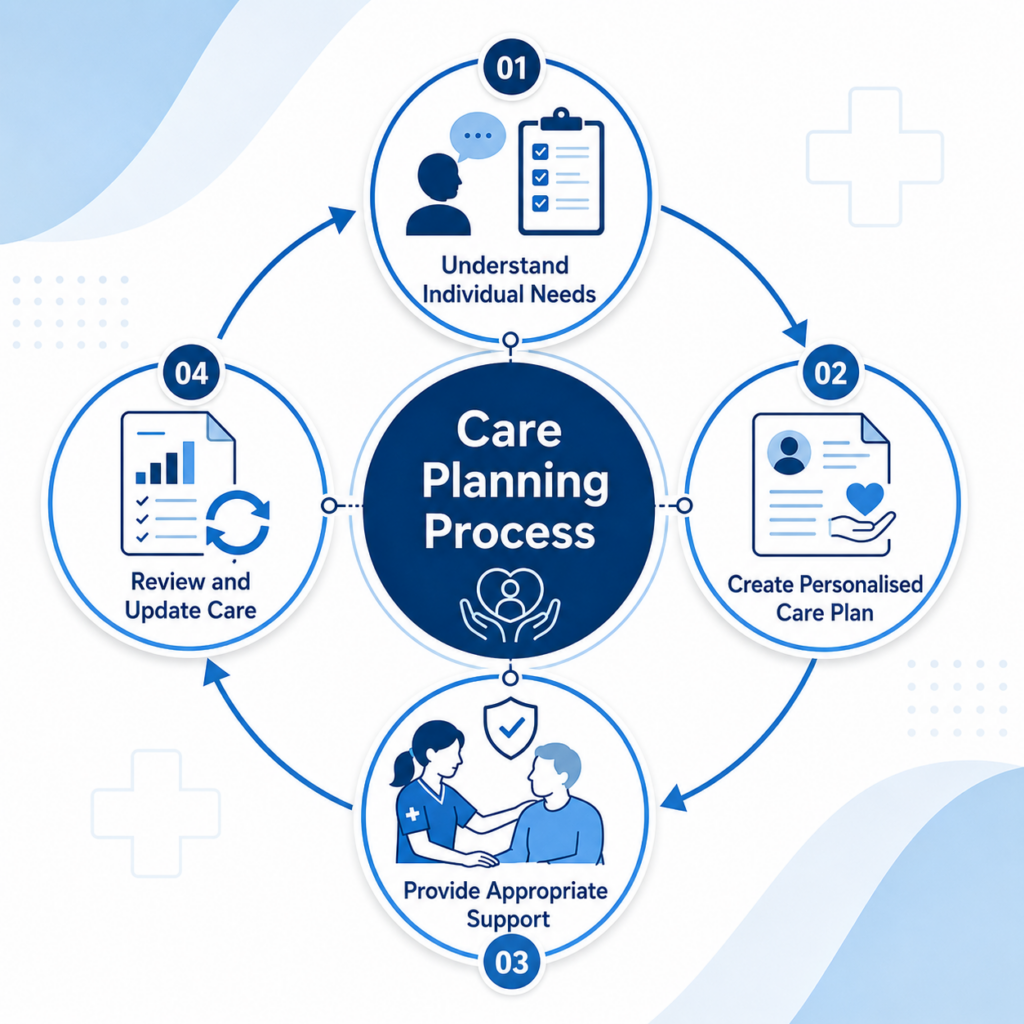
The care planning process usually follows several important stages:
Assessment
The first stage involves understanding the individual’s needs, circumstances and preferences. This may include information about physical health, emotional wellbeing, communication needs, lifestyle choices and personal goals.
Planning
Once needs are understood, professionals can develop a plan that outlines appropriate support. Good care planning considers the person’s wishes and encourages involvement wherever possible.
Implementation
The agreed care plan guides how support is provided. It helps different professionals and carers understand their responsibilities and maintain consistency.
Review
People’s needs can change over time. Regular reviews help ensure that care plans remain accurate, relevant and suitable for the individual.
A care planning course helps learners understand these stages and the importance of keeping care information accurate and up to date.
What Is Person-Centred Care Planning?
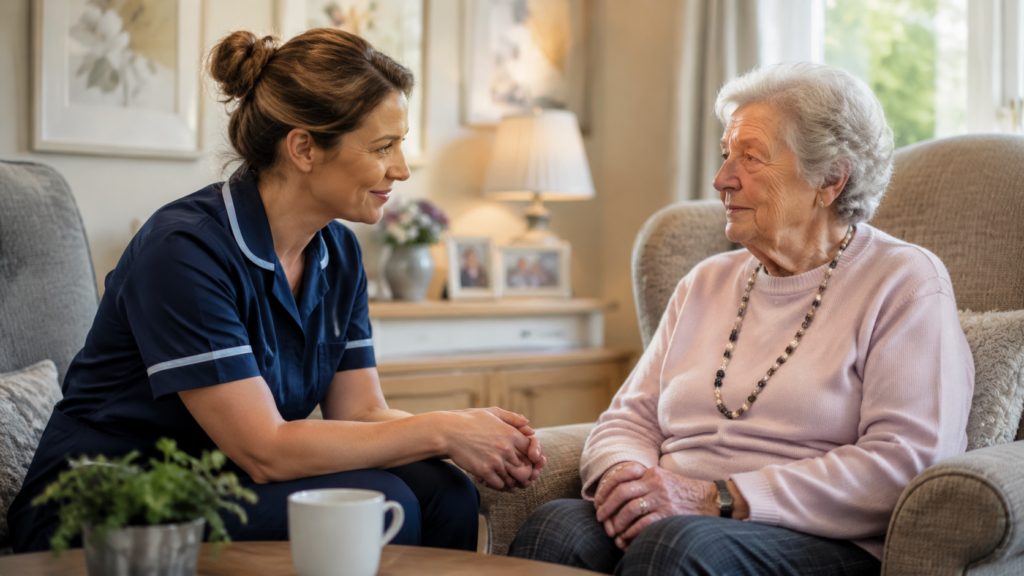
Person-centred care planning focuses on the individual rather than only their condition, diagnosis or support needs. It recognises that every person has different preferences, experiences, values and goals that should influence the care they receive.
A person-centred care plan considers areas such as:
- Personal preferences and routines
- Communication requirements
- Cultural and personal choices
- Independence and abilities
- Health and wellbeing goals
- Family involvement where appropriate
The aim is to ensure that people remain involved in decisions about their own care and receive support that respects their dignity, choices and individuality.
According to NHS England, personalised care and support planning involves meaningful conversations where individuals are supported to understand their health and wellbeing needs and participate in decisions about their care.
For care workers and healthcare professionals, understanding person-centred planning is an essential part of delivering respectful and effective support.
A care planning course helps learners develop this understanding by exploring how professionals can create plans that reflect the individual behind the care requirements.
Why Are Care Planning Skills Important in UK Health and Social Care?
Care planning skills are important because they support safe, consistent and individualised care. When professionals understand how to create, maintain and review care plans, they can contribute more effectively to coordinated support.
In the UK, health and social care organisations expect care workers to understand the importance of person-centred approaches, accurate documentation and professional communication.
The Department of Health and Social Care’s Care Workforce Pathway highlights the knowledge, skills, values and behaviours expected across adult social care roles, including providing personalised support and working effectively with individuals.
Strong care planning knowledge helps professionals:
- Understand individual needs more clearly
- Communicate important information with colleagues
- Recognise when support requirements change
- Maintain accurate care records
- Contribute to safer care delivery
For anyone working towards a career in health and social care, developing care planning knowledge can strengthen their understanding of how professional care is organised.

Supporting Person-Centred Care and Individual Needs
Person-centred care is one of the foundations of effective health and social care practice. It means recognising that individuals should have their preferences, choices and personal circumstances considered when receiving support.
A care plan provides a practical way to record this information and ensure that everyone involved in supporting the person understands their needs.
For example, a person receiving care may have specific preferences around:
- Daily routines
- Communication methods
- Food choices
- Mobility support
- Personal activities
- Emotional support
Recording these details allows care teams to provide support that feels personal rather than routine.
Care planning training helps learners understand how person-centred information should be collected, recorded and reviewed while maintaining respect for the individual.
The Importance of Accurate Care Records
Care planning and record keeping work together. A care plan is only effective when information is accurate, clear and updated when circumstances change.
Accurate records help ensure continuity of care, especially when multiple professionals support the same individual. They allow teams to understand previous decisions, monitor progress and identify changes that may require further attention.
Good care records should be:
- Accurate
- Clear and understandable
- Updated regularly
- Relevant to the individual’s needs
- Stored and handled appropriately
The Care Quality Commission (CQC) highlights the importance of maintaining accurate and complete records relating to people’s care and treatment under Regulation 17 of the Health and Social Care Act 2008 (Regulated Activities) Regulations.
This is why record keeping forms an important part of care planning education. Professionals need to understand not only how to write information down but also why accurate documentation protects the individual receiving care.
Care Planning Responsibilities in Professional Practice
Care planning involves more than creating documents. It requires professionals to understand their responsibilities when supporting individuals and handling sensitive information.
Key responsibilities include:
Maintaining Confidentiality
Care workers and healthcare professionals must respect privacy and ensure personal information is handled appropriately.
Following Care Policies and Procedures
Every organisation has policies that guide how care plans are created, updated and stored.
Recognising Safeguarding Concerns
Care plans may include important information about risks, vulnerabilities and support needs. Professionals must understand when concerns need to be reported through the correct procedures.
Communicating Changes Clearly
When a person’s needs change, accurate communication helps ensure appropriate support is provided.
A care planning course helps learners understand these responsibilities and how they connect with professional standards in health and social care.
What Does a Care Planning Course Cover?
A care planning course covers the key knowledge areas needed to understand how effective care plans are developed and maintained.
Depending on the programme, learners may study topics such as:
- The principles of care planning
- Planning care with individuals
- Concept care mapping
- Implementing and evaluating care plans
- Medical records and documentation
- Confidentiality and information handling
- UK care planning policies
- Safeguarding responsibilities
These topics help learners build a stronger understanding of how care planning supports individuals, families and care teams.
For learners looking for broader health and social care knowledge, care planning can also form an important part of wider professional development. A Health and Social Care Level 3 Diploma covers wider areas of care practice alongside topics such as safeguarding, communication and person-centred support.
Care Planning Course Modules: What Will You Learn?
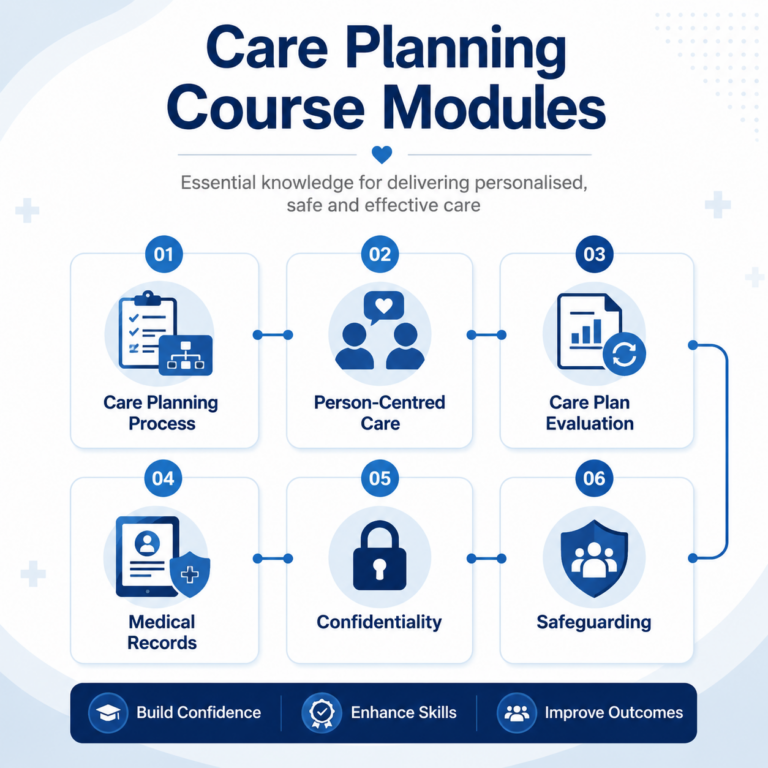
A care planning course provides structured learning around how care needs are identified, documented, implemented and reviewed. The exact modules depend on the training provider, but a comprehensive care planning and record keeping course should cover the essential knowledge areas required to understand person-centred support, professional documentation and safe care practices.
The Care Planning and Record Keeping Health & Safety Online Course from HF Online is designed around key areas including the care planning process, individualised care planning, care plan evaluation, medical records, confidentiality, UK care planning policies and safeguarding.
Understanding these topics helps learners develop a clearer picture of how care plans support communication, consistency and quality within health and social care environments.
Module 1 — Introduction to the Care Planning Process
The care planning process begins with understanding an individual’s needs, circumstances and personal preferences. This module introduces learners to the purpose of care plans and explains how effective planning supports better outcomes for individuals receiving care.
Learners develop an understanding of:
- The purpose and importance of care plans
- Different stages of the care planning process
- How information is gathered and used
- The relationship between assessment, planning, implementation and review
A strong foundation in the care planning process helps professionals understand why care plans are continuously updated rather than treated as one-time documents.
Care needs can change because of health conditions, personal circumstances, independence levels or wellbeing goals. Understanding this process allows care workers to contribute more effectively to personalised support.
Module 2 — Planning Care With the Individual in Need
Person-centred care planning requires professionals to involve individuals in decisions about their own support. This module focuses on creating plans that reflect personal choices, preferences and goals.
Learners explore how care planning can consider:
- Individual needs and expectations
- Personal routines and preferences
- Communication requirements
- Independence and choice
- Support goals and desired outcomes
Effective care planning is not simply about recording what support someone needs. It is about understanding what matters to the individual and ensuring their voice remains part of the process.
For care workers, this knowledge supports more respectful interactions and helps create a stronger understanding of personalised care approaches.
Module 3 — Concept Care Mapping
Concept care mapping helps learners understand how different aspects of an individual’s care needs connect together.
This approach encourages structured thinking by linking information such as:
- Health needs
- Personal circumstances
- Support requirements
- Risks and priorities
- Desired outcomes
By understanding these connections, learners can better appreciate how different factors influence an individual’s overall care plan.
Care mapping can help professionals organise information more clearly and understand why a person may require specific types of support.
Module 4 — Implementing and Evaluating the Care Plan
Creating a care plan is only the beginning of effective care planning. A care plan must be followed, monitored and reviewed to ensure it continues to reflect the person’s needs.
This module focuses on how care plans are implemented and evaluated.
Learners explore:
- How care plans guide daily support
- Monitoring whether planned outcomes are being achieved
- Identifying changes in individual needs
- Reviewing whether support remains appropriate
For example, if an individual’s mobility changes, their care plan may need updating to reflect new support requirements. Regular evaluation helps ensure care remains relevant and responsive.
Module 5 — Maintaining Medical Records
Accurate record keeping is a fundamental part of safe health and social care practice. This module explains why clear documentation supports communication, accountability and continuity of care.
Learners develop knowledge of:
- Maintaining accurate care records
- Recording relevant information clearly
- Understanding the purpose of documentation
- Supporting communication between care professionals
Good records help ensure that everyone involved in supporting an individual has access to accurate information.
The connection between care planning and record keeping is especially important in environments where multiple professionals may contribute to an individual’s support.
Module 6 — Care Planning Policy in the UK
Care planning takes place within a wider framework of professional standards, organisational procedures and UK health and social care expectations.
This module introduces learners to the importance of understanding care planning policies and how they guide professional practice.
Learners explore:
- The purpose of care policies
- Professional responsibilities
- The importance of following agreed procedures
- How policies support consistent care delivery
Understanding policies helps care workers recognise the standards expected within health and social care environments.
Module 7 — Confidentiality and Record Keeping
Care professionals often work with sensitive personal information. Understanding confidentiality is essential when creating, updating and sharing care records.
This module focuses on responsible information handling, including:
- Protecting personal information
- Understanding confidentiality responsibilities
- Sharing information appropriately
- Maintaining professional boundaries
Respecting confidentiality helps protect individuals’ privacy and builds trust between care professionals and those receiving support.
Care planning training helps learners understand that accurate records and confidentiality must work together. Information needs to be available to the right people while remaining protected.
Module 8 — Safeguarding Children, Young People and Their Families
Safeguarding knowledge is an important part of health and social care practice. Care plans may contain information that helps professionals recognise risks, vulnerabilities or changes in circumstances.
This module introduces learners to:
- The importance of safeguarding awareness
- Recognising potential concerns
- Recording relevant information
- Following appropriate reporting procedures
Understanding safeguarding responsibilities helps professionals contribute to safer care environments.
While care planning knowledge supports awareness and professional development, specific safeguarding responsibilities will always depend on an individual’s role, training and workplace procedures.
What Skills Can You Develop Through Care Planning Training?
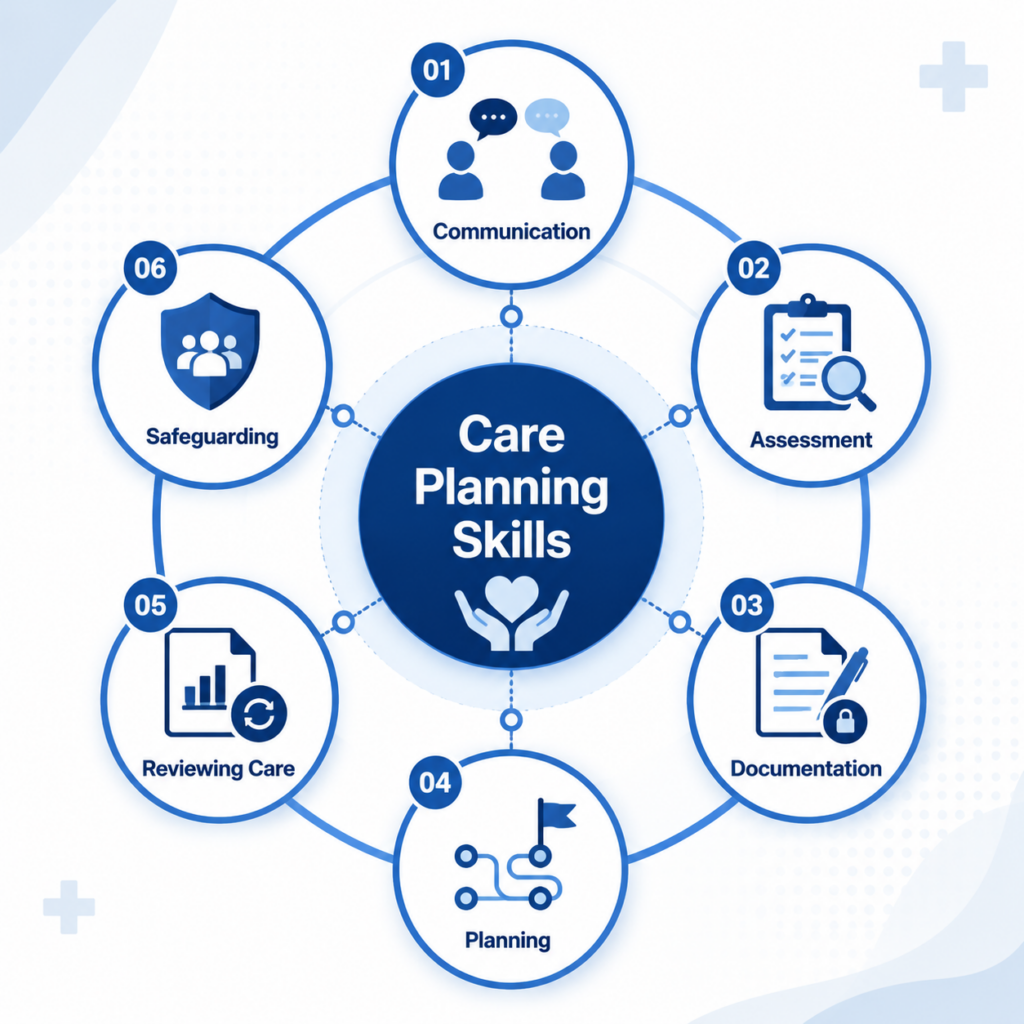
A care planning course helps learners build knowledge and skills that are relevant to supporting individuals in health and social care environments. These skills are valuable because effective care planning requires more than completing documents; it requires understanding people, communicating clearly and recognising changing needs.
The following skills are commonly developed through care planning training.
Person-Centred Planning Skills
Person-centred planning is one of the most important areas covered in care planning education.
Learners develop an understanding of how to:
- Consider individual preferences and choices
- Recognise personal goals and priorities
- Support dignity and independence
- Understand the importance of involving individuals in decisions
These skills help professionals move beyond task-based support and understand the person behind the care requirements.
Communication and Active Listening Skills
Communication plays a central role in effective care planning. Professionals need to gather accurate information, understand individual concerns and share relevant updates with colleagues.
Care planning training helps learners understand the importance of:
- Asking appropriate questions
- Listening carefully to individual needs
- Communicating changes clearly
- Working effectively with care teams
Strong communication supports better collaboration between individuals, families and professionals involved in care.
Assessment and Observation Skills
Care plans are built around understanding needs. This requires professionals to recognise relevant information and identify when circumstances change.
Learners develop knowledge of:
- Gathering information about care needs
- Observing changes in wellbeing
- Recognising areas requiring review
- Understanding how information influences care decisions
These skills support more accurate and responsive care planning.
Care Documentation and Record-Keeping Skills
Accurate documentation is essential for maintaining clear communication within care settings.
Care planning training helps learners understand:
- How records support continuity of care
- Why information must be accurate and relevant
- The importance of updating care documentation
- How professional records contribute to safer support
Reviewing and Updating Care Plans
People’s needs can change over time, meaning care plans must be reviewed regularly.
Learners develop awareness of:
- Recognising when changes may be needed
- Understanding review processes
- Evaluating whether support remains suitable
- Communicating important updates
Safeguarding Awareness Skills
Care planning often includes information about risks, vulnerabilities and support requirements.
Training helps learners understand:
- Why safeguarding awareness matters
- The importance of recording concerns
- How information supports safer care decisions
- The need to follow workplace safeguarding procedures
What Does a CPD Certificate in Care Planning Mean?
A CPD certificate in care planning shows that an individual has completed structured learning designed to support their continuing professional development. CPD, or Continuing Professional Development, refers to activities that help people maintain and improve their knowledge and skills within their area of interest or profession.
For health and social care learners, CPD training can be a useful way to demonstrate commitment to ongoing learning and professional growth.
However, it is important to understand what a CPD certificate represents and how it differs from regulated qualifications.
Understanding CPD Certification
CPD training allows learners to develop knowledge in a specific subject area. A care planning CPD certificate can demonstrate that a learner has completed training covering topics such as:
- Care planning principles
- Person-centred support
- Record keeping
- Confidentiality
- Safeguarding awareness
CPD certificates are commonly used by professionals to evidence learning activities and maintain their professional development records.
CPD Certificate vs Regulated Qualification
A CPD certificate and a regulated qualification serve different purposes.
A CPD course:
- Focuses on professional development and knowledge improvement
- Helps learners expand their understanding of a specific topic
- Provides evidence of completed training
A regulated qualification:
- Follows an approved qualification framework
- Has formal assessment requirements
- Meets recognised qualification standards
A CPD certificate in care planning can support learning and professional development, but it should not be confused with a regulated health and social care qualification.
Adding Care Planning Training to Your Professional Development
Completing care planning training can help learners demonstrate their commitment to improving their knowledge of important care practices.
It may be useful for individuals who want to:
- Strengthen their understanding of care documentation
- Develop confidence around care planning principles
- Support their ongoing professional learning
- Prepare for further health and social care study
For learners looking for broader sector knowledge, combining specialist care planning training with a wider programme such as a Health and Social Care Level 3 Diploma can provide a more comprehensive learning pathway.
What Are the Professional Benefits of a Care Planning Course?
A care planning course can support professional development by helping learners understand how effective care plans are created, maintained and reviewed. For people working in health and social care, this knowledge can strengthen their understanding of person-centred approaches, accurate documentation and professional responsibilities.
Care planning is a key part of delivering consistent support because it connects individual needs with practical care decisions. Developing knowledge in this area can help learners feel more confident when contributing to discussions about care, understanding records and recognising why regular reviews are important.
Some of the main professional benefits of care planning training include:
Improve Understanding of Person-Centred Care
Person-centred care is central to modern health and social care practice. A care planning course helps learners understand how support should reflect an individual’s preferences, circumstances, abilities and personal goals.
This knowledge can help professionals better understand:
- Why individual choice matters in care decisions
- How personal preferences influence support plans
- The importance of dignity, respect and independence
- How care plans help maintain consistency across different care providers
By developing a stronger understanding of person-centred planning, learners can recognise that effective care is not only about meeting physical needs but also about supporting a person’s overall wellbeing.
Develop Knowledge of Care Documentation
Accurate documentation is essential in health and social care because records help professionals communicate important information and maintain continuity of support.
Care planning training develops understanding of:
- The purpose of care records
- Why information must be accurate and relevant
- How updates should reflect changing needs
- The importance of confidentiality when handling personal information
For care workers and healthcare professionals, stronger record-keeping knowledge can support safer working practices and improve communication within care teams.
Understand How Care Plans Are Reviewed and Updated
A care plan should change when an individual’s circumstances change. Health conditions, mobility, communication needs, personal preferences and support requirements may develop over time.
Care planning training helps learners understand:
- When care plans may need reviewing
- How changes in needs can be identified
- Why regular evaluation matters
- How updated information supports better care decisions
This knowledge is particularly valuable for professionals who contribute to ongoing care support.
Strengthen Continuing Professional Development
CPD training allows individuals to continue building their knowledge throughout their professional journey. Completing a care planning course can demonstrate a commitment to learning and improving understanding of important care practices.
For learners already working in health and social care, CPD activities can support:
- Ongoing knowledge development
- Professional confidence
- Skills improvement
- Career-focused learning goals
A CPD certificate does not guarantee employment or career progression, but it can provide evidence of completed learning and support an individual’s wider professional development record.
Build Knowledge Relevant to Health and Social Care Roles
Care planning knowledge is relevant across many areas of health and social care because many professionals contribute to understanding, delivering or reviewing support.
The knowledge gained from care planning training can be useful for people working towards or currently involved in roles such as:
- Care assistants
- Healthcare assistants
- Support workers
- Residential care workers
- Domiciliary care workers
- Senior care staff
The exact responsibilities of each role depend on workplace requirements, employer expectations and individual training.

Who Should Take a Care Planning Course?
A care planning course is suitable for anyone who wants to develop their understanding of how care needs are identified, recorded and reviewed. It can benefit beginners entering the sector as well as existing professionals who want to strengthen specific areas of their knowledge.
The course can be particularly useful for:
Care Assistants and Care Workers
Care assistants often contribute directly to supporting individuals with daily activities, personal care needs and wellbeing. Understanding care plans helps them recognise the importance of following agreed support approaches and reporting relevant changes.
Care planning training can help care workers understand:
- How individual needs are reflected in care plans
- Why accurate communication matters
- How records support consistent care
Healthcare Assistants
Healthcare assistants work alongside healthcare professionals and often support individuals with different health and wellbeing needs.
Care planning knowledge can help healthcare assistants understand:
- The importance of accurate information sharing
- How care plans guide support
- Why changes in individual needs should be communicated appropriately
Support Workers
Support workers may assist people with a range of needs, including those related to disability, mental health, learning difficulties or independent living.
Care planning training can support their understanding of:
- Individualised support approaches
- Goal-focused care planning
- Person-centred decision-making
Senior Care Workers and Team Leaders
Those with additional responsibilities may need a deeper understanding of how care plans are reviewed, maintained and used to support teams.
Care planning knowledge can help senior staff understand:
- The importance of consistent documentation
- Supporting colleagues with care processes
- Maintaining effective communication within teams
People Starting a Career in Health and Social Care
For individuals exploring a future in health and social care, a care planning course can provide an introduction to an important area of professional practice.
It can help learners understand:
- How care support is organised
- The importance of individual needs
- The role of documentation in care environments
For those wanting broader knowledge across the sector, a Health and Social Care Level 3 Diploma may provide a wider learning pathway covering multiple areas of care practice.
How Care Planning Knowledge Applies in Real Care Settings
Care planning knowledge becomes valuable when applied to everyday situations where individuals require personalised support.
The following examples show how care planning principles may be used in care environments.
Supporting Someone With Changing Care Needs
An individual’s needs may change due to health conditions, recovery, ageing or personal circumstances.
A care plan helps professionals understand:
- What support is currently required
- What changes have occurred
- What actions may need reviewing
Clear documentation and communication help ensure support remains appropriate.
Recording Important Information During Care
Care workers may notice changes in a person’s wellbeing, behaviour, mobility or preferences.
Accurate records help ensure relevant information is shared with the appropriate people and considered during future care discussions.
Working With Families and Other Professionals
Effective care often involves communication between individuals, families, carers and other professionals.
A clear care plan provides a shared understanding of:
- Individual needs
- Support approaches
- Personal preferences
- Important considerations
Responding to Safeguarding Concerns
Care plans may contain information that helps professionals recognise risks or vulnerabilities.
Understanding how to record concerns and follow workplace procedures supports safer care practices.
How to Choose a Care Planning Course in the UK
With many online courses available, choosing the right care planning course requires careful consideration.
Before enrolling, consider the following:
Check the Course Content
Look for training that covers important areas such as:
- Care planning processes
- Person-centred approaches
- Record keeping
- Confidentiality
- Safeguarding
A detailed curriculum helps ensure the course provides meaningful subject knowledge.
Understand the Certificate and Accreditation
Check whether the course provides a CPD certificate and understand what this means.
CPD certification demonstrates completed professional development training, but it is different from a regulated qualification.
Consider Your Learning Goals
Think about what you want to achieve.
A specialist care planning course may be suitable if you want focused knowledge, while a broader Health and Social Care Level 3 course may be more suitable if you want wider sector understanding.
Review Online Learning Flexibility
Many learners choose online courses because they allow study around existing work and personal commitments.
Consider:
- Self-paced learning options
- Course access period
- Learning resources provided
- Assessment requirements
Frequently Asked Questions
What Is a Care Planning Course?
A care planning course teaches learners how care needs are identified, planned, recorded and reviewed. It covers areas such as person-centred care, documentation, confidentiality and safeguarding awareness.
What Do You Learn on a Care Planning Course?
Learners typically study care planning processes, individual needs assessment, care plan implementation, record keeping, reviewing support and professional responsibilities.
Is Care Planning Training Suitable for Beginners?
Yes, care planning training can be suitable for beginners who want to understand an important area of health and social care practice before entering or progressing within the sector.
Is a Care Planning Course CPD Accredited?
Many care planning courses provide CPD certification. Learners should check the specific course details to understand the accreditation and certificate provided.
What Does a CPD Certificate Mean?
A CPD certificate shows that a learner has completed structured professional development training. It provides evidence of learning but is not the same as a regulated qualification.
Is a CPD Certificate a Regulated Qualification?
No. A CPD certificate and a regulated qualification serve different purposes. CPD supports continuing learning, while regulated qualifications follow recognised qualification frameworks.
How Long Does an Online Care Planning Course Take?
Course duration depends on the provider, learning format and individual study pace. Online courses often allow learners to complete training flexibly.
Who Can Benefit From Care Planning Training?
Care assistants, healthcare assistants, support workers, senior care staff and individuals interested in health and social care can benefit from developing care planning knowledge.
Does Care Planning Include Record Keeping?
Yes. Record keeping is an important part of care planning because accurate documentation supports communication, continuity and safe care practices.