

What Is the Care Certificate?

The Care Certificate is designed for new care workers, ensuring they have the essential knowledge and skills to provide safe, compassionate care. It covers 16 practical care standards, including areas like communication, safeguarding, infection control, and person-centred care.
Developed by, Health Education England, and Skills for Health, the certificate was created to ensure consistency and high-quality care across the sector. Although it’s not legally required, most employers make it a part of their induction process to ensure new staff meet the necessary standards from day one.
What Is an NVQ/RQF Diploma in Health and Social Care?

The NVQ (National Vocational Qualification) has now been replaced by the Regulated Qualifications Framework (RQF), but it still serves the same purpose. These diplomas are more in-depth qualifications, available at levels 2, 3, or 5, which focus on developing specialised skills and expertise.
These diplomas are accredited nationally, making them widely recognised and valued across the sector. They’re often required for more senior or specialist roles, such as team leaders, senior carers, or management positions, where more responsibility and experience are needed.
Key Differences between the Care Certificate and NVQ Qualification
When it comes to choosing between the Care Certificate and an NVQ/RQF Diploma, the key differences lie in their purpose, depth, and the level of responsibility they prepare you for. Here’s a quick breakdown:

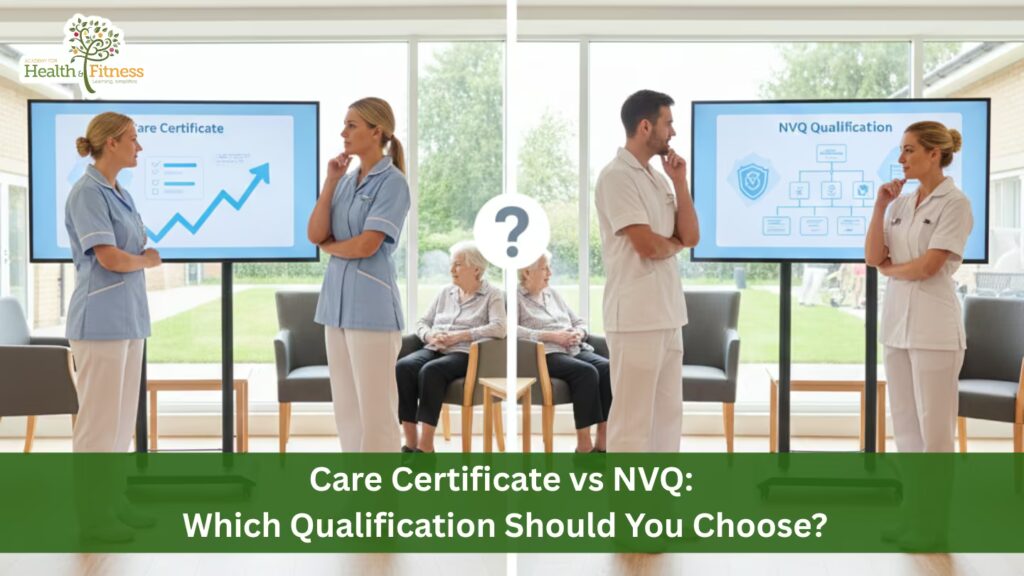
Care Certificate vs NVQ: Which Qualification Should You Choose?
If you’re just starting out in the health and social care sector, the Care Certificate is the ideal qualification to begin with. It’s designed specifically for new care workers, providing a solid foundation in key areas like communication, dignity, safeguarding, and infection control.
This certification ensures you can provide safe, compassionate care from the very beginning, equipping you with the essential skills and knowledge to meet the high standards expected in the industry. Completing the Care Certificate is often a requirement for new employees and will be part of your induction process in most care settings.
However, if you’re looking to advance in your career or specialise in a particular area of care, then moving on to an NVQ/RQF Diploma is the next logical step. The NVQ/RQF Diploma offers a much deeper level of expertise and focuses on practical application of knowledge.
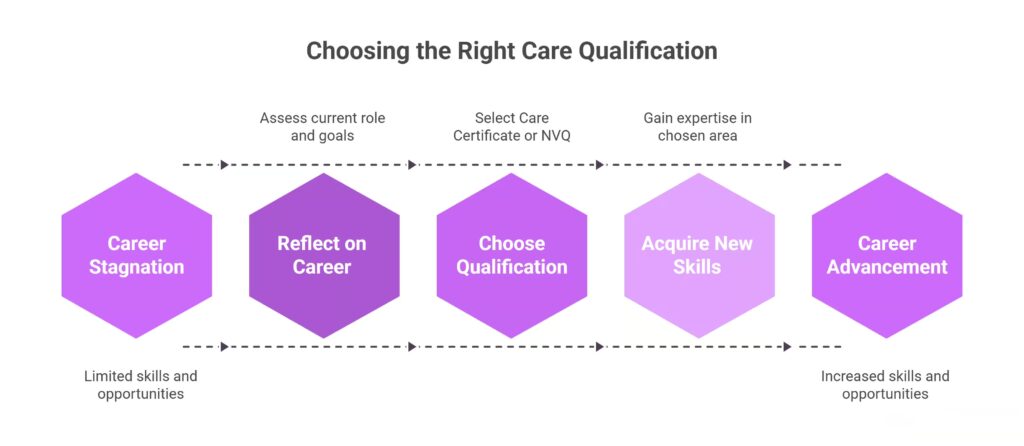
For example, it covers areas such as leadership, managing a team, or dealing with more complex care needs. It’s often required for more senior positions, like senior care assistants, team leaders, or managerial roles. The NVQ demonstrates that you can handle increased responsibilities, and it’s recognised by employers as a sign of your competence and professional growth.
Ultimately, the qualification you choose depends on your career stage, experience, and aspirations. If you’re new to care, the Care Certificate will give you the essentials you need to get started.
If you’re looking to grow within your role, specialise, or move into higher-level positions, an NVQ/RQF Diploma will provide the depth and credibility needed to progress. So, take a moment to reflect on where you are in your career and where you want to go. The right choice for you will depend on your current role, your goals, and the areas of care that excite you most.
Care Certificate vs NVQ: Can You Do Both?

Yes — and actually, many people start with the Care Certificate and then move on to an NVQ/RQF Diploma. The two qualifications are complementary, not competing, and each serves a different purpose in your care career journey.
The Care Certificate provides the foundational knowledge and skills you need as a new care worker. It focuses on essential areas such as communication, dignity, safeguarding, and infection control, giving you the confidence to provide high-quality care. Once you’ve completed this, the NVQ/RQF Diploma offers a deeper dive into the practical and technical aspects of care work. It focuses on applying your skills to specific situations, such as managing a team or dealing with complex care needs.
Many employers actively encourage progression from the Care Certificate to an NVQ/RQF Diploma. As you gain experience, they may support you in furthering your qualifications to develop your expertise and increase your chances of moving into senior roles. By completing both, you can develop a well-rounded skill set that makes you more employable and better equipped to take on leadership or specialist roles in health and social care.
In summary, doing both qualifications not only enhances your knowledge and expertise, but it also demonstrates your commitment to personal and professional growth. Whether you’re new to the sector or looking to move up, both qualifications will help you stand out and open doors for further opportunities.
Conclusion
Choosing between the Care Certificate and an NVQ/RQF Diploma really comes down to where you are in your career and where you want to go. The Care Certificate is the perfect starting point for new carers, while an NVQ/RQF diploma helps you move up the ladder and specialise in more advanced roles.
No matter which qualification you choose, both are stepping stones to a fulfilling and rewarding career in health and social care. Take the time to consider your goals and get started on the path that suits you best.