

Why Is Promoting Effective Communication in Health and Social Care Important?
Have you ever wondered why Promoting Effective Communication in Health and Social Care is essential for creating trust, improving understanding and supporting better outcomes? In care settings, the way information is shared can influence how safe, respected and valued a person feels. The Communication Skills in Health and Social Care Course helps learners understand how to communicate clearly, listen actively, recognise individual needs and develop the skills required to build positive relationships with people receiving care.
Effective communication is becoming increasingly important as health and social care services support a growing number of people with diverse and complex needs. The UK adult social care sector supports around 1.6 million filled posts in England, while more than 10 million people in the UK are aged 65 and over, increasing the need for compassionate and personalised care. The sector is also expected to require hundreds of thousands of additional care workers in the coming years to meet rising demand. Strong communication skills are essential for care workers to understand individual needs, reduce misunderstandings and provide safe, person-centred support.
In this guide, you will learn what effective communication means in health and social care, why communication skills are important, how verbal and non-verbal communication influence relationships, common barriers that affect understanding, and practical ways to promote respectful communication. You will also explore how strong communication supports safeguarding, teamwork, confidentiality, informed choices and high-quality person-centred care.
Ready to improve your understanding of communication in care settings and develop skills that support better interactions? The Communication Skills in Health and Social Care Course helps learners explore essential communication principles, active listening, professional responsibilities and person-centred approaches to support effective care conversations.

What Is Effective Communication in Health and Social Care? Meaning, Principles and Importance
Effective communication in health and social care means sharing information, feelings, concerns and choices in a way that both people can understand. It is not only about speaking clearly but also about listening carefully, recognising emotions and responding with respect. Care workers use communication every day to understand individual needs, explain support plans, record important details and build relationships based on trust. Strong communication helps people feel valued, involved and confident about the care they receive.
In care settings, communication requires professionals to adjust their approach depending on each person’s abilities, preferences and situation. For example, a care worker may need to explain a routine in simple language, provide reassurance to someone feeling anxious or communicate important updates with colleagues. The right approach ensures information remains clear, accurate and meaningful. Effective communication also supports safer care because sharing information accurately helps teams work together and respond appropriately to individual needs.
To understand what is effective communication in health and social care, it is important to explore its meaning, the principles that guide it and why it plays such an important role in providing person-centred support.
Meaning of Effective Communication
Effective communication focuses on creating shared understanding between the person giving information and the person receiving it. It involves expressing messages clearly while also paying attention to responses, emotions and non-verbal signals.
In health and social care, communication includes:
- Sharing information about care needs and preferences.
- Listening to concerns and experiences.
- Supporting individuals to make informed choices.
- Creating respectful relationships between care workers, service users and families.
Good communication ensures people do not feel ignored or misunderstood. When care workers listen actively and respond appropriately, individuals become more comfortable discussing their needs and concerns. Active listening helps professionals understand both spoken messages and unspoken feelings, supporting stronger relationships and better experiences of care.
Principles of Effective Communication
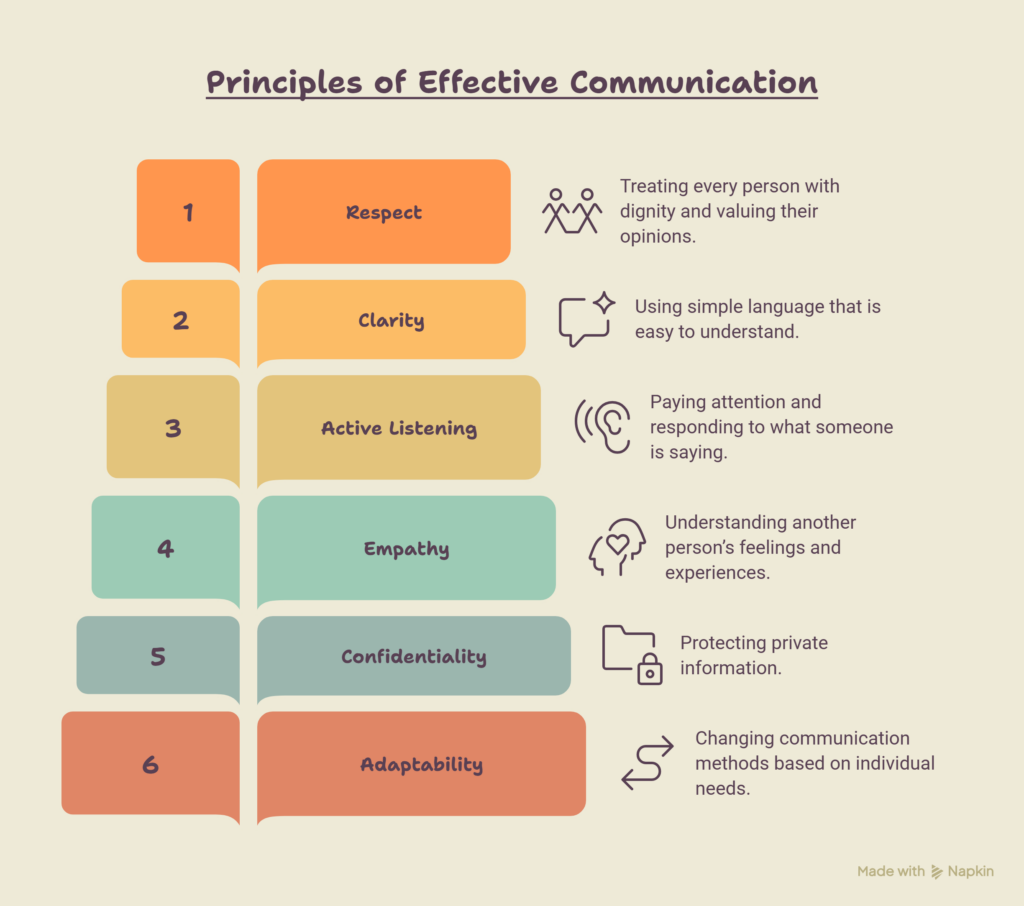
Effective communication in health and social care follows several important principles that help professionals provide respectful and inclusive support. These principles guide how care workers interact with individuals, families and colleagues.
The Main Principles of Effective Communication Include:
-
Respect: Treating Every Person With Dignity and Valuing Their Opinions
Respect means recognising every individual as a unique person with their own experiences, beliefs and preferences. Care workers should listen without judgement, value personal choices and communicate in a way that protects dignity. Respectful communication helps people feel accepted, confident and involved in decisions about their care.
-
Clarity: Using Simple Language That Is Easy to Understand
Clear communication helps prevent confusion and ensures people receive accurate information. Care workers should avoid complicated terminology and explain information using simple, familiar words. When messages are easy to understand, individuals can make informed choices and participate more confidently in conversations about their support.
-
Active Listening: Paying Attention and Responding to What Someone Is Saying
Active listening involves giving full attention, understanding the message and responding appropriately. Care workers should ask questions, confirm understanding and allow people enough time to express themselves. This approach helps identify concerns, improves relationships and ensures individuals feel genuinely heard.
-
Empathy: Understanding Another Person’s Feelings and Experiences
Empathy allows care workers to recognise emotions and respond with kindness and understanding. By considering how someone feels, professionals can provide more compassionate support during difficult situations. Empathetic communication builds trust and helps individuals feel valued rather than overlooked.
-
Confidentiality: Protecting Private Information
Confidentiality means keeping personal information secure and sharing details only with appropriate people when necessary. Care workers must respect privacy during conversations and follow professional guidelines when handling sensitive information. Protecting confidentiality helps build trust and reassures individuals that their personal details remain safe.
-
Adaptability: Changing Communication Methods Based on Individual Needs
Adaptability means adjusting communication methods to support different abilities, situations and preferences. Some individuals may need visual aids, extra time, simpler explanations or alternative communication tools. Flexible communication ensures everyone has an equal opportunity to understand information and express their needs.
Importance of Effective Communication in Health and Social Care
Effective communication plays a central role in delivering safe, person-centred and compassionate care. When professionals communicate well, they create stronger relationships and help individuals feel involved in decisions about their support.
The importance of communication includes:
- Improving trust between care workers and service users.
- Supporting accurate information sharing between teams.
- Reducing mistakes caused by misunderstandings.
- Encouraging people to express their needs and preferences.
- Helping families and professionals work together.
For example, a care worker who listens carefully to a person’s concerns about their support routine can identify problems early and provide a better response. Similarly, clear communication during care handovers helps ensure important information reaches the right people.
According to the NHS communication guidance, effective conversations support better understanding between healthcare professionals and the people they care for. Clear communication remains a key part of safe and respectful healthcare delivery.
Developing strong communication skills helps care workers create meaningful connections and provide support that respects every individual’s needs, choices and wellbeing.
Benefits of Good Communication in Care Settings: Building Trust, Safety and Better Relationships
Good communication in care settings helps create positive experiences for individuals, families and care teams. It allows people to express their needs, share concerns and take part in decisions about their support. When care workers communicate clearly, respectfully and compassionately, they build confidence and create an environment where people feel valued and understood. Effective communication also supports person-centred care by ensuring that individual choices, preferences and wellbeing remain central to every interaction.
The benefits of good communication in care settings include stronger relationships, improved safety and better teamwork. Clear communication helps care workers understand individual needs, provide appropriate support and prevent avoidable misunderstandings. It also allows care teams to share important information accurately, helping them deliver consistent and respectful care. According to the Social Care Institute for Excellence (SCIE), effective communication supports dignity and person-centred approaches by helping workers understand what matters most to each individual.
Communication brings three key benefits that strengthen care quality and relationships:
-
Building Trust With Patients and Service Users
Firstly, good communication helps care workers develop trust with the people they support. When individuals feel listened to and respected, they become more comfortable sharing their feelings, concerns and preferences. Care workers who show empathy, provide clear explanations and encourage questions create stronger connections that support confidence and cooperation.
-
Improving Safety Through Clear Information Sharing
Secondly, effective communication improves safety by helping care teams exchange accurate and timely information. Care workers use clear communication during handovers, record keeping and daily interactions to share important updates about a person’s needs. This reduces confusion, supports continuity of care and helps teams make informed decisions.
-
Creating Better Relationships Through Empathy and Respect
Finally, respectful communication helps care workers build meaningful relationships based on empathy and understanding. By listening carefully and recognising individual experiences, workers can provide more personalised support. A compassionate conversation can reduce anxiety, improve comfort and help individuals feel valued throughout their care journey.
In conclusion, good communication strengthens trust, improves safety and creates respectful relationships that support high-quality person-centred care.
Types of Communication in Health and Social Care: Verbal, Written, Digital and Visual Methods
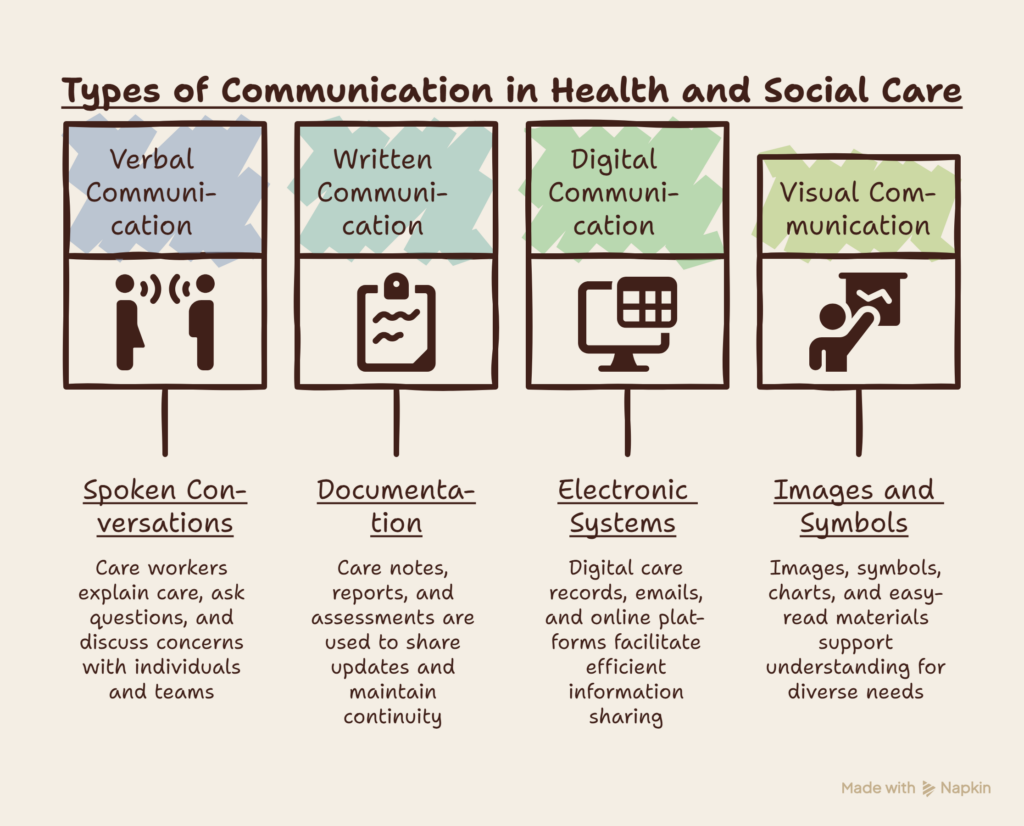
Good communication plays an essential role in health and social care because it helps people share information, express concerns and make informed choices about their support. Care workers who communicate effectively can build trust, reduce confusion and provide more personalised care. Different communication methods allow individuals with varied needs and abilities to participate in conversations, while accurate information sharing helps teams work together safely and consistently.
There are several communication methods that help care workers meet individual needs in varied situations:
-
Verbal Communication
Firstly, verbal communication involves spoken conversations between care workers, individuals, families and healthcare teams. It includes explaining care activities, asking questions, providing reassurance and discussing concerns. Clear verbal communication helps prevent misunderstandings, supports informed decisions and allows care workers to respond appropriately to a person’s emotions, preferences and changing needs.
-
Written Communication
Secondly, written communication includes care notes, reports, assessments and other important records. Care workers use accurate written information to share updates, document support provided and maintain continuity of care. Clear documentation helps teams understand a person’s needs, track changes in wellbeing and make safer decisions based on reliable information.
-
Digital Communication
Additionally, digital communication uses electronic systems such as digital care records, emails and online communication platforms to share information efficiently. These tools help care teams access important updates quickly while following confidentiality requirements. According to the NHS Digital official website, digital systems support better information management across health and care services.
-
Visual Communication
Finally, visual communication uses images, symbols, signs, charts and easy-read materials to support understanding. This approach helps people who experience difficulties with reading, hearing or processing information. Visual tools can make important messages clearer and encourage greater independence by helping individuals understand choices, instructions and care information.
Using different communication methods allows care workers to create inclusive environments where every individual can participate, feel respected and receive appropriate support. Effective communication strengthens relationships, improves teamwork and contributes to safer, person-centred care.
In summary, good communication methods help care workers understand individual needs, improve safety and deliver respectful, effective support.
Verbal Communication vs Non-Verbal Communication in Health and Social Care: What Is the Difference?
Effective communication in health and social care involves more than simply exchanging information. Care workers use both verbal and non-verbal communication to understand people’s needs, provide reassurance, respect personal choices and develop trusting relationships. While verbal communication focuses on spoken words, non-verbal communication uses behaviour, expressions and physical cues to support or influence the message being shared.
Explore each communication method to understand its meaning, purpose, and practical role within care settings:
-
Verbal Communication in Health and Social Care
Verbal communication refers to the use of spoken words to share information, explain care decisions, ask questions and provide guidance. Care workers use clear language, appropriate tone, active listening and suitable pace to make sure people understand important information. Effective verbal communication helps build trust, encourage cooperation and support person-centred care.
-
Non-Verbal Communication in Health and Social Care
Non-verbal communication involves sharing messages without using spoken words. It includes facial expressions, eye contact, body language, gestures and posture. In care environments, these signals can reveal emotions, discomfort or concerns that a person may not express verbally. Positive non-verbal communication helps individuals feel respected, valued and understood.
Verbal vs Non-Verbal Communication in Health and Social Care: Key Differences
Although verbal and non-verbal communication often work together, they influence care interactions in different ways. Understanding their differences helps care workers choose appropriate approaches when supporting people with different communication needs.
| Aspect | Verbal Communication | Non-Verbal Communication |
|---|---|---|
| Meaning | Verbal communication uses spoken language to exchange information, thoughts and feelings between individuals. | Non-verbal communication shares messages through physical behaviours, expressions and visual signals without spoken words. |
| Main Methods | It includes conversations, questions, explanations, instructions and discussions with individuals, families and care teams. | It includes eye contact, facial expressions, gestures, posture, personal space and body movements. |
| Purpose in Care Settings | It helps care workers explain procedures, provide reassurance, gain consent and share important information clearly. | It helps care workers understand emotions, identify concerns and show empathy through supportive behaviours. |
| Importance | Clear verbal communication reduces confusion and supports accurate information sharing between care workers and individuals. | Effective non-verbal communication strengthens trust because actions and expressions can influence how messages are received. |
| Example | A care worker calmly explains a medication routine using simple language to improve understanding. | A care worker maintains eye contact and uses a welcoming posture to help someone feel comfortable and listened to. |
Understanding both verbal and non-verbal communication allows care workers to create meaningful conversations, recognise individual needs and deliver respectful, person-centred support.
Active Listening in Health and Social Care: Understanding People Beyond Their Words
Active listening in health and social care means giving complete attention to another person and showing that you understand their message, feelings and concerns. It goes beyond simply hearing words because it requires care workers to observe emotions, respond thoughtfully and create meaningful conversations. According to Care Learning, active listening helps professionals understand individual needs, build trust and provide more person-centred support. It plays an important role in effective communication because people often communicate feelings through both words and behaviour.
In care settings, active listening helps workers recognise concerns that individuals may find difficult to express. A person may appear unwilling to accept support, but their response could come from fear, anxiety or uncertainty. By listening carefully, asking appropriate questions and responding with empathy, care workers can understand the reason behind the behaviour and provide suitable reassurance. NCBI claims active listening also strengthens teamwork because clear understanding reduces communication problems between individuals and professionals.
To practise active listening effectively, care workers can use several techniques that encourage open conversations and help people feel respected, heard and valued.
The most important active listening techniques include:
-
Asking Open Questions
Firstly, asking open questions encourages individuals to share more information about their feelings, experiences and concerns. Instead of asking questions that only require a “yes” or “no” answer, care workers can use phrases such as “Can you tell me more about how you feel?” This approach creates deeper conversations and helps professionals understand personal needs more clearly.
-
Summarising Information
Secondly, summarising information helps care workers confirm that they understand what someone has communicated. By repeating key points in their own words, professionals can check accuracy and prevent misunderstandings. This technique shows the individual that their concerns matter and gives them an opportunity to correct or add important details.
-
Checking Understanding
Additionally, checking understanding ensures that both the care worker and the individual share the same information. Care workers can ask follow-up questions or confirm important details to avoid confusion. This approach becomes especially important when discussing care routines, personal preferences or changes in someone’s condition.
-
Showing Interest Through Responses
Furthermore, showing interest through verbal and non-verbal responses helps people feel comfortable during conversations. Maintaining appropriate eye contact, using encouraging responses and showing patience demonstrate that the care worker values what the person is saying. These actions help create trust and encourage more open communication.
-
Allowing Time for Someone to Speak
Finally, allowing time for someone to speak gives individuals the opportunity to express themselves without pressure. Some people may need extra time to organise their thoughts, explain emotions or communicate concerns. Patience helps care workers understand the complete message rather than making assumptions too quickly.
Active listening allows care workers to understand people beyond their words, creating stronger relationships and more compassionate support in health and social care settings. Developing active listening alongside other communication techniques can help care workers handle conversations more confidently. The Communication Skills in Health and Social Care Course provides further learning around communication approaches used in health and social care.
Person-Centred Communication in Care: Respecting Individual Needs, Choices and Preferences
Person-centred communication in health and social care focuses on treating each person as an individual rather than only focusing on their care requirements. It places the person’s values, preferences, experiences and choices at the centre of every interaction. This approach helps care workers understand what matters most to individuals and provide support that respects their identity, independence and personal circumstances. According to, Skills for Health effective person-centred communication also encourages people to participate actively in decisions about their care.
Every person communicates differently. Their culture, background, abilities, confidence and personal experiences can influence how they express their thoughts and needs. Care workers must adapt their communication style to support different individuals, whether that means using simpler language, providing additional time to respond or using alternative communication methods.
Person-centred communication helps create stronger relationships because people feel heard, respected and valued. When care workers listen carefully and understand individual preferences, they can provide support that reflects the person’s goals rather than making assumptions about what they need.
To understand how person-centred communication supports better care, it is important to explore the key areas that help respect individual needs, choices and preferences.
The main principles of person-centred communication include:
-
Respecting Personal Choices
Firstly, respecting personal choices means recognising that every individual has the right to express their preferences and make decisions about their care. Care workers should listen to what matters to the person, understand their wishes and involve them in conversations about their support. This approach promotes dignity and helps individuals maintain control over their own lives.
-
Supporting Independence
Secondly, supporting independence means encouraging individuals to take part in decisions and activities whenever possible. Person-centred communication allows care workers to understand what a person can do for themselves and where they may need support.
Rather than completing every task on someone’s behalf, care workers should encourage participation and confidence. Simple actions, such as asking for opinions or allowing extra time for responses, can help people maintain independence and feel more involved in their daily lives.
-
Adapting Communication Methods
Finally, adapting communication methods ensures that every individual has the opportunity to understand information and express themselves. People may communicate differently because of hearing difficulties, speech challenges, dementia, learning disabilities or language barriers.
Care workers can adapt their approach by using visual aids, simple explanations, gestures or additional time during conversations. Adjusting communication methods helps remove barriers and ensures that individuals can participate fully in discussions about their care.
who.int claims, person-centred communication creates a foundation of trust, respect and understanding. By recognising individual needs, choices and preferences, care workers can provide more meaningful support and improve the overall care experience.
When communication places the individual at the centre, people feel respected, empowered and confident to share their needs, choices and concerns.
Barriers to Communication in Health and Social Care and How to Overcome Them
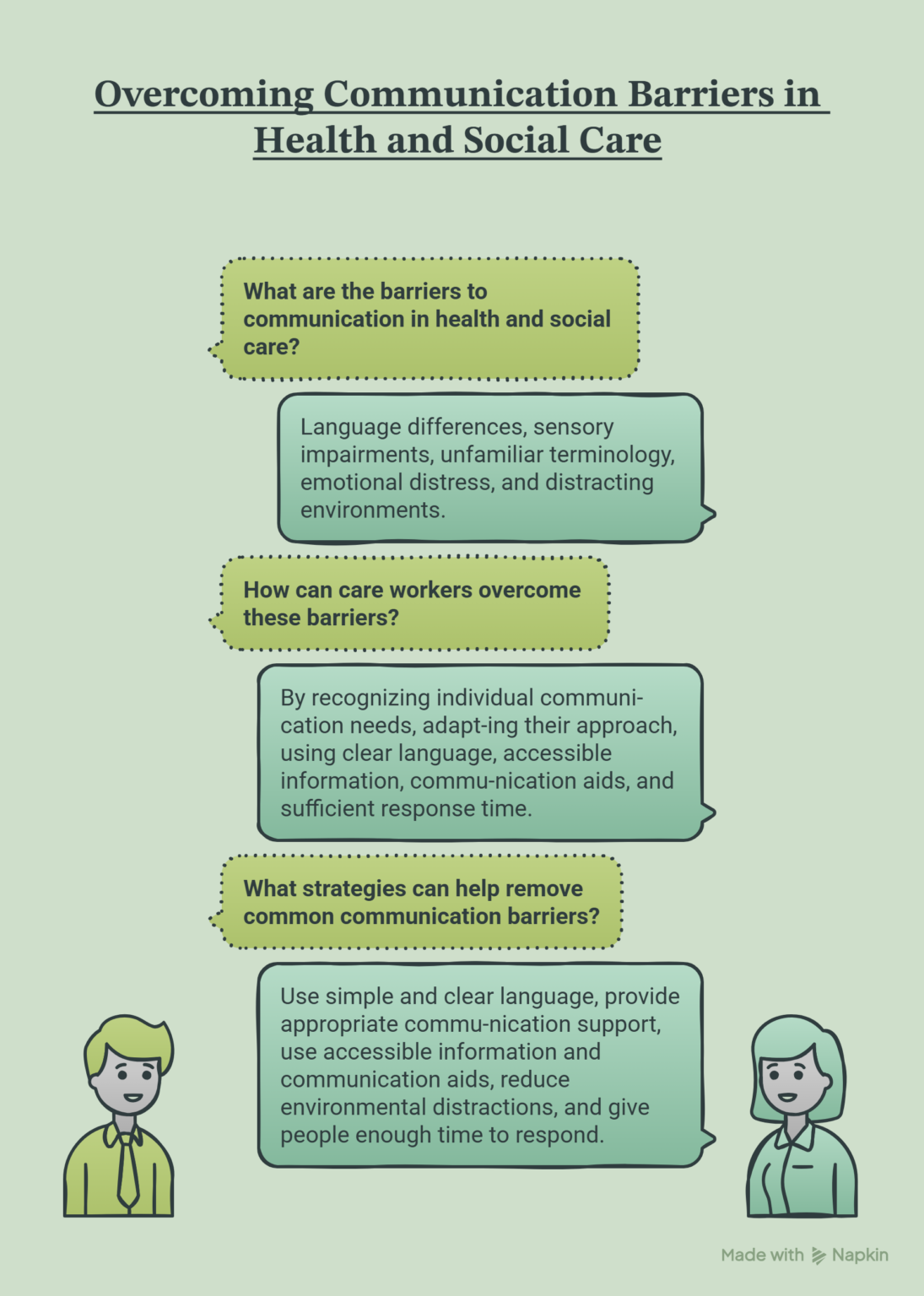
Barriers to communication in health and social care can prevent people from understanding information, expressing their needs or taking part confidently in decisions about their support. Language differences, sensory impairments, unfamiliar terminology, emotional distress and distracting environments can all affect communication. As a result, care workers can overcome these barriers by recognising individual communication needs and adapting their approach. Clear language, accessible information, communication aids and sufficient response time help create more inclusive, respectful and person-centred interactions. NHS England’s Accessible Information Standard also requires relevant NHS and publicly funded adult social care services to identify and meet communication and information needs linked to disability, impairment or sensory loss.Care workers should first identify what prevents effective communication and then choose an approach that suits the individual.
The following strategies can help remove common communication barriers:
-
Use Simple and Clear Language:
Firstly, care workers should use familiar words, short explanations and straightforward questions. Avoiding unnecessary medical terminology helps people understand important information. Workers should also explain unfamiliar terms when they cannot avoid them and check understanding instead of assuming that the person has followed everything correctly.
-
Provide Appropriate Communication Support:
Secondly, some people may need interpreters, British Sign Language support or other communication assistance. Care workers should identify these needs early and arrange suitable support. NHS England advises services to ask people about their communication needs rather than making assumptions about what assistance will work best.
-
Use Accessible Information and Communication Aids:
Additionally, visual aids, easy-read materials, large print, audio information and communication boards can improve understanding. These options support people with sensory loss, learning disabilities or other communication needs. NHS England’s Accessible Information Standard explains how health and care services should provide accessible information and appropriate communication support.
-
Reduce Environmental Distractions:
Furthermore, noise, interruptions, poor lighting and lack of privacy can make communication difficult. Care workers should choose a calm environment whenever possible, face the person directly and remove unnecessary distractions. A suitable setting helps individuals concentrate, understand information and feel more comfortable discussing personal or sensitive concerns.
-
Give People Enough Time to Respond:
Finally, care workers should avoid rushing conversations. Some individuals need extra time to process information, organise their thoughts or communicate their response. Patience supports dignity and reduces pressure. Workers can pause, listen carefully and check understanding before moving to the next point.
Recognising communication barriers and adapting support helps care workers improve understanding, protect dignity and create safer, more inclusive care experiences.
Communication Aids and Supporting People With Dementia, Disabilities and Additional Needs
Communication aids in health and social care help people understand information, express choices and take part in conversations when speech, hearing, memory or understanding creates difficulties. For example, people living with dementia, autism, learning disabilities, hearing loss or speech difficulties may need different forms of support. As a result, they can choose suitable communication aids, reduce frustration and help people participate more independently. Care workers should identify each person’s preferred communication method rather than make assumptions. By adapting information and using suitable communication aids, workers can reduce frustration, promote independence and create more inclusive, person-centred interactions.
When supporting someone living with dementia, care workers should speak calmly, use familiar words and allow enough time for a response. They should also watch facial expressions, gestures and behaviour because these signals may communicate discomfort, fear or confusion. The NHS England Accessible Information Standard explains that health and adult social care services should help people access understandable information and receive the communication support they need.
Several communication aids can help workers adapt conversations to different abilities, preferences and situations:
-
Picture Cards:
Firstly, picture cards use recognisable images to represent objects, activities, feelings or choices. They can help people who find spoken or written language difficult to communicate basic needs, understand routines and make choices more independently.
-
Communication Boards:
Secondly, communication boards present words, symbols, letters or pictures that a person can point towards. They provide another way to express requests, emotions and preferences when speech becomes difficult or unavailable.
-
Digital Tools:
Additionally, tablets, communication apps and voice-output devices can support people who experience speech or communication difficulties. Digital tools may allow individuals to select symbols, type messages or generate spoken words during conversations.
-
Easy-Read Information:
Furthermore, easy-read materials combine simple language with supportive pictures to make information easier to understand. NHS England identifies easy read as an accessible format that can particularly support people with learning disabilities.
-
Visual Reminders:
Finally, visual reminders such as calendars, signs, photographs and illustrated schedules can help people understand routines and upcoming activities. They may reduce uncertainty, support memory and give individuals greater confidence when completing everyday tasks.
Using appropriate communication aids helps people express themselves, understand information and participate more confidently in decisions about their care.
Good Communication vs Poor Communication in Health and Social Care: Impact on Care Quality
Good communication and poor communication can lead to very different outcomes in health and social care. For example, clear, respectful communication helps people understand information, express concerns and feel involved in decisions. In contrast, unclear or incomplete communication can create confusion, damage trust and increase safety risks. Care workers therefore need to share accurate information, listen carefully and record important details clearly to maintain safe, respectful and person-centred care.
Comparing both approaches shows how communication shapes understanding, teamwork, safety and care:
-
Good Communication in Health and Social Care
Firstly, good communication involves sharing information clearly, listening actively and responding respectfully. It builds trust, supports dignity and improves teamwork. Care workers who communicate effectively help individuals understand their choices, reduce uncertainty and contribute to safer decisions by ensuring colleagues receive accurate and timely information.
-
Poor Communication in Health and Social Care
In contrast, poor communication occurs when workers provide unclear, incomplete or inaccurate information or fail to listen properly. It can create misunderstandings, weaken relationships and increase risks. Missing details during handovers, unclear instructions or inaccurate records may prevent teams from responding appropriately to changing care needs.
Good Communication vs Poor Communication in Health and Social Care: Comparison
| Area | Good Communication | Poor Communication |
|---|---|---|
| Trust | Builds confidence because workers listen, explain clearly and respond respectfully. | Damages trust when individuals feel ignored, rushed or misunderstood. |
| Safety | Supports safer decisions by sharing accurate, complete and timely information. | Increases risk when workers omit, misunderstand or delay important information. |
| Dignity | Respects individual choices, privacy, preferences and communication needs. | Can make people feel excluded, dismissed or unable to express their wishes. |
| Teamwork | Helps teams coordinate responsibilities, discuss concerns and maintain continuity of care. | Creates confusion over responsibilities and may lead to inconsistent support. |
| Decision-Making | Gives individuals clear information so they can understand options and make informed choices. | Limits understanding and may leave individuals uncertain about their care or available options. |
| Handovers | Communicates relevant changes, risks and priorities clearly between workers. | Misses essential details and can disrupt continuity or delay appropriate action. |
| Record Keeping | Maintains clear, accurate records that support coordinated care. | Creates gaps or inaccuracies that make future decisions more difficult. |
Ultimately, good communication strengthens safety, trust and dignity, while poor communication can create confusion, weaken relationships and increase avoidable risks.
Communication and Patient Safety: Preventing Errors Through Clear Information Sharing
Communication and patient safety are closely connected because healthcare teams rely on accurate information to make safe decisions. As a result, missing, unclear or outdated details can contribute to delays, misunderstandings and inappropriate care. According to NHS England’s guidance on safety-critical spoken communication, communication failures commonly appear in serious patient-safety incident investigations. Therefore, nurses, doctors, care workers and other team members must communicate clearly, confirm important details and share relevant changes promptly to maintain safe, consistent and person-centred care.
Clear communication matters most when important information passes between people and teams:
-
Care Handovers:
Firstly, care handovers transfer important information and responsibility between workers or teams. Staff should communicate current needs, risks, recent changes and required actions clearly. Accurate handovers help incoming workers understand the situation, maintain continuity and avoid missing essential information that could affect a person’s safety.
-
Team Discussions:
Secondly, team discussions allow nurses, doctors, care workers and other professionals to combine their knowledge. Clear conversations help everyone understand care priorities, raise questions and coordinate responsibilities. As a result, multidisciplinary teams can make more informed decisions while reducing confusion about who needs to take action.
-
Reporting Concerns:
Additionally, care workers should communicate concerns promptly when they notice changes, risks or unexpected problems. Clear reporting gives appropriate colleagues the information they need to assess the situation and respond. Workers should describe what they observed accurately rather than relying on assumptions or vague explanations.
-
Updating Records:
Furthermore, accurate records give care teams reliable information about needs, observations, decisions and actions. Workers should record relevant details clearly and promptly. Up-to-date records help colleagues understand what has happened, what support someone currently needs and whether the team must take further action.
-
Sharing Changes in Care Needs:
Finally, workers must communicate significant changes in a person’s condition, behaviour, preferences or support requirements. Timely information sharing helps colleagues adjust care appropriately, coordinate responsibilities and maintain continuity when different workers or services support the same individual.
Clear, timely and accurate communication strengthens teamwork, supports continuity of care and helps protect people from preventable patient-safety risks.
Communication, Confidentiality and Informed Consent: Respecting Rights and Sharing Information Safely
Communication in health and social care must always protect individual rights, privacy and dignity. Therefore, care workers need to share information clearly while respecting confidentiality and maintaining professional boundaries. Effective communication allows individuals to understand their care, express their choices and make informed decisions about the support they receive. Guidance from NHS Digital also emphasises the importance of using and sharing information appropriately while maintaining confidence and trust.
Care workers often handle sensitive information about a person’s health, personal circumstances and care needs. In addition, they must communicate responsibly, follow workplace procedures and share information only with appropriate people when necessary. At the same time, individuals have the right to receive clear explanations before making decisions about their care. Care workers should adapt information to the person’s communication needs so they can understand their options and participate confidently in discussions.
To understand how communication supports individual rights, it is important to explore confidentiality, informed consent and respectful information sharing.
The main principles that guide safe and respectful communication include:
-
Protecting Confidentiality and Personal Information
Firstly, confidentiality means protecting personal information and sharing it only when there is an appropriate reason. Care workers must safeguard details about an individual’s health, circumstances and support needs. The Information Commissioner’s Office provides guidance on UK GDPR responsibilities, including how organisations should handle personal information lawfully and securely. Following these principles helps maintain trust and encourages individuals to communicate openly.
-
Supporting Informed Consent Through Clear Communication
Secondly, informed consent requires individuals to receive clear, relevant and understandable information before making decisions about their care. Care workers should explain available options, answer questions and check understanding rather than assume that a person has understood. NHS England explains that consent and information sharing should respect individual choices and support appropriate decision-making.
-
Communicating With Families and Carers Respectfully
Finally, communication with families and carers requires care workers to balance helpful information sharing with the individual’s right to privacy. Families may contribute important information or provide ongoing support, but workers must still respect confidentiality and personal wishes. The General Medical Council highlights the importance of partnership, respectful communication and involving people appropriately in discussions about care.
Respecting confidentiality and informed consent creates a foundation of trust, helping individuals feel valued, involved and confident when making decisions about their care.
Clear communication protects individual rights, strengthens trust and supports safe, respectful and person-centred care across health and social care settings.
Real Examples of Effective Communication in Health and Social Care Settings
Effective communication appears in everyday care situations and helps professionals understand individual needs, respond appropriately and build stronger relationships. Real examples show how care workers use listening, empathy, patience and clear explanations to support people in different circumstances. For example, if someone feels anxious, lives with dementia, raises a complaint or needs sensitive information explained, the right communication approach can create trust and improve their experience of care. Clear communication also supports safer and more person-centred support.
Care workers often face situations where people may feel worried, confused or unable to express their concerns clearly. In these moments, communication becomes more than sharing information. It becomes a way to provide reassurance, respect individual feelings and help people feel involved in their care decisions.
Real-life situations show how effective communication helps care workers improve their approach:
Example 1: Supporting Someone Who Feels Anxious
A care worker supported an individual who felt nervous about starting a new care routine. The person appeared uncertain and avoided asking questions because they did not fully understand what would happen.
The care worker used active listening by allowing the individual to explain their concerns without interruption. They provided clear explanations, answered questions patiently and used reassuring communication to reduce anxiety.
This experience showed the importance of creating a safe environment where people feel comfortable expressing their worries. By combining empathy with clear information, the care worker helped the individual feel more confident and involved in their support.
Moving forward, the care worker continued using simple explanations, checking understanding and giving people enough time to respond during conversations.
Example 2: Communicating With Someone Living With Dementia
A care worker supported a person living with dementia who became confused during daily interactions. The worker realised that providing too much information at once made communication more difficult.
They adapted their approach by using familiar words, speaking calmly and allowing extra time for responses. They also paid attention to facial expressions and behaviour to understand emotions that the person could not always communicate through words.
This situation helped the care worker understand that effective communication requires flexibility. People living with dementia may communicate feelings through actions, so recognising these signals helps workers provide better support.
After reflecting on the interaction, the worker continued adapting communication methods to match the person’s abilities and preferences.
Example 3: Handling Complaints Respectfully
A care worker received a complaint from a service user who felt unhappy about their support experience. Instead of becoming defensive, the worker listened carefully and allowed the person to explain their concerns.
The worker acknowledged the feelings involved, asked questions to understand the situation and explained possible solutions clearly. This approach helped rebuild trust and showed the individual that their opinion mattered.
The experience demonstrated that complaints can become opportunities to improve communication and relationships. When care workers respond with patience and respect, they can resolve concerns while maintaining dignity and professionalism.
Example 4: Discussing Sensitive Information
A care worker needed to discuss sensitive information with an individual and understood that the conversation required privacy, patience and respect.
The worker chose an appropriate environment, communicated calmly and ensured the person understood the information being shared. They encouraged questions and avoided using complicated language.
This approach helped the individual feel respected and supported during a difficult conversation. Sensitive discussions require care workers to balance honesty with empathy, ensuring people receive information in a way they can understand.
Effective communication helps people feel heard, respected and supported while creating stronger relationships between care workers and those receiving care. By applying these approaches, professionals can provide safer and more compassionate support. According to the NHS England – Improving communication between health care professionals and patients, effective communication supports better understanding and stronger relationships between people receiving care and those supporting them.
Real examples of communication in care settings show that listening, empathy and understanding can transform everyday interactions into meaningful experiences. In conclusion, effective communication helps care workers provide compassionate support, strengthen relationships and improve outcomes in health and social care settings.

How Care Workers Can Improve Their Communication Skills: Practical Strategies for Better Care
Communication skills in health and social care can always improve through continuous learning, reflection and practice. For example, even experienced care workers can strengthen the way they communicate by understanding different perspectives, developing emotional awareness and learning from everyday interactions. Strong communication helps professionals create respectful relationships, support individual needs and provide better care experiences. As a result, these skills can improve teamwork, strengthen trust and support the overall quality of care.
Employers value these skills because they influence teamwork, trust and the overall quality of support provided within care settings. Active listening, empathy and clear responses remain essential parts of effective communication. According to the Skills for Care, effective communication remains an essential skill for developing a capable and compassionate adult social care workforce.
Improving communication does not happen overnight. Care workers develop confidence by practising important skills, receiving feedback and reflecting on their experiences. When professionals understand how their communication affects others, they can make positive changes that improve conversations with service users, families and colleagues.
To develop stronger communication skills in health and social care, care workers can focus on several practical approaches that support better interactions and more person-centred care.
The key strategies for strengthening communication skills include:
-
Practising Active Listening
Firstly, practising active listening helps care workers understand people beyond their spoken words. It involves giving full attention, avoiding interruptions and responding thoughtfully. Active listening allows professionals to recognise concerns, emotions and preferences more clearly. By focusing on what someone communicates, care workers can build trust and create conversations where individuals feel respected and valued.
-
Developing Empathy
Secondly, developing empathy helps care workers understand another person’s feelings, experiences and concerns. Empathetic communication allows professionals to respond with patience, kindness and understanding rather than making assumptions. For example, recognising that someone’s frustration may come from fear or anxiety helps care workers provide more appropriate reassurance and emotional support.
-
Asking for Feedback
Additionally, asking for feedback helps care workers identify areas where they can improve their communication approach. Feedback from colleagues, managers or individuals receiving support can highlight strengths and possible improvements. By accepting feedback positively, professionals can adjust their methods, improve confidence and develop more effective communication habits over time.
-
Learning From Experiences
Furthermore, learning from daily experiences allows care workers to reflect on conversations and identify what worked well or what they could change. Reflection helps professionals understand different communication situations, recognise challenges and develop better responses. Each interaction provides an opportunity to improve skills and provide more personalised support.
-
Improving Confidence
Moreover, improving confidence helps care workers communicate more clearly and professionally. Confidence allows individuals to express information effectively, handle difficult conversations and support people during challenging situations. Care workers can build confidence through practice, training and positive experiences while continuing to maintain respect, patience and compassion in every interaction.
-
Taking Part in Professional Development
Finally, taking part in professional development helps care workers keep their communication skills updated. Training courses, workshops and learning activities provide opportunities to develop new approaches and understand changing expectations within health and social care. Continuous development supports career growth while helping professionals provide safer and more effective support.
Strong communication skills in health and social care create positive relationships, improve teamwork and help individuals receive respectful, person-centred support. By practising, reflecting and continuing to learn, care workers can communicate with greater confidence and compassion.
Developing communication skills is an ongoing journey that helps care workers build trust, improve care quality and support better outcomes.
Final Thoughts: Promoting Effective Communication in Health and Social Care
Every conversation in care has meaning. For example, a simple question, a patient explanation or a few minutes of active listening can change how someone feels about the support they receive.
Promoting effective communication in health and social care means understanding people as individuals, respecting their choices and adapting your approach when their needs change. From verbal communication and body language to confidentiality and person-centred support, every skill contributes to better relationships and safer care.
Ultimately, strong communication helps create care environments built on trust, understanding and respect. By developing communication skills in health and social care, learners and care workers can create interactions where people feel valued, heard and supported.
Want to communicate with greater confidence, understand individual needs and build stronger relationships in care settings? The Communication Skills in Health and Social Care Course offers flexible online, CPD-accredited learning covering professional communication, confidentiality, adapting communication to individual needs and effective patient interactions.
Start learning today and build the communication knowledge needed to support safer, more respectful and person-centred care.
Table of Contents

Frequently Asked Questions
What Is Effective Communication in Health and Social Care?
Effective communication in health and social care means sharing information, feelings, needs and choices clearly and respectfully. It involves speaking, listening, body language, written records and digital methods. Effective communication helps people understand care, express preferences, participate in decisions and maintain positive relationships with confidence.
What Are the Benefits of Good Communication in Care Settings?
Good communication can build trust, support dignity, reduce confusion and help people participate in decisions about their care. It also supports teamwork and continuity by helping staff share accurate information. Respectful communication can make people feel heard, valued and involved throughout their care and support.
What Are the Main Barriers to Communication in Health and Social Care?
Common barriers include language differences, hearing or speech difficulties, visual impairment, cultural differences, emotional distress, complex terminology, environmental distractions and communication difficulties linked to health conditions. Care workers should identify individual needs, adapt their approach and check understanding rather than assuming their message was understood.
How Can You Overcome Communication Barriers in Care Settings?
Care workers can overcome communication barriers by using plain language, allowing enough time, reducing distractions, checking understanding and using suitable communication aids. Interpreters or other support may also help where appropriate. The approach should reflect the person’s communication needs, wishes, preferences and specific circumstances.
What Is Active Listening in Health and Social Care?
Active listening means giving someone full attention and trying to understand their words and meaning. Useful techniques include avoiding interruptions, asking open questions, reflecting information, summarising key points and checking understanding. Active listening can help people feel heard while supporting clearer, more respectful care conversations.
What is person-centred communication in health and social care?
Person-centred communication means communicating with individuals in a way that respects their choices, preferences, values and personal circumstances. It focuses on listening, understanding individual needs, supporting independence and involving people in decisions about their own care and support.
What Is the Difference Between Verbal and Non-Verbal Communication in Health and Social Care?
Verbal communication uses spoken words, while non-verbal communication includes facial expressions, gestures, posture, eye contact, movement and other signals. They often work together. For example, calm words may reassure someone, while tense posture or facial expressions may suggest anxiety that requires further attention during conversation.
What Are the Effects of Poor Communication in Health and Social Care?
Poor communication can contribute to misunderstandings, incomplete information, reduced trust, distress and safety risks. In care settings, unclear handovers or inaccurate records may affect continuity. Respectful, accurate communication helps staff understand needs, coordinate support and identify concerns that might otherwise be missed during everyday care.
How Should You Communicate With Someone Living With Dementia?
When communicating with someone living with dementia, speak clearly and calmly, use short sentences, maintain eye contact and allow time for responses. Avoid rushing or interrupting. Pay attention to facial expressions and body language, and adapt questions or communication methods when needed to support understanding.
How Does Communication Support Informed Consent and Confidentiality in Care?
Communication supports informed consent by helping people understand proposed care or treatment, including risks, alternatives and information needed to make decisions. Information should be understandable, with suitable communication support and enough time for questions. Confidential information should be shared appropriately, following legal and organisational requirements.