


A Community Support Worker Course UK learners can complete online offers a flexible route to developing the knowledge, confidence and professional awareness needed to support people across health and social care settings. Community support workers help older adults, people with disabilities, individuals experiencing mental health challenges and others who may need additional support to maintain independence, wellbeing and quality of life.
Whether you are considering your first social care job in the UK, changing careers or strengthening knowledge gained in an existing care role, structured CPD Accredited Support Worker Training can help you understand professional responsibilities before taking your next step.
With Flexible Online Learning, you can develop valuable Support Worker Skills around your existing work, family or caring commitments while gaining an Online Support Worker Certification that demonstrates your commitment to continuing professional development.
What Is a Community Support Worker, and What Do They Do?
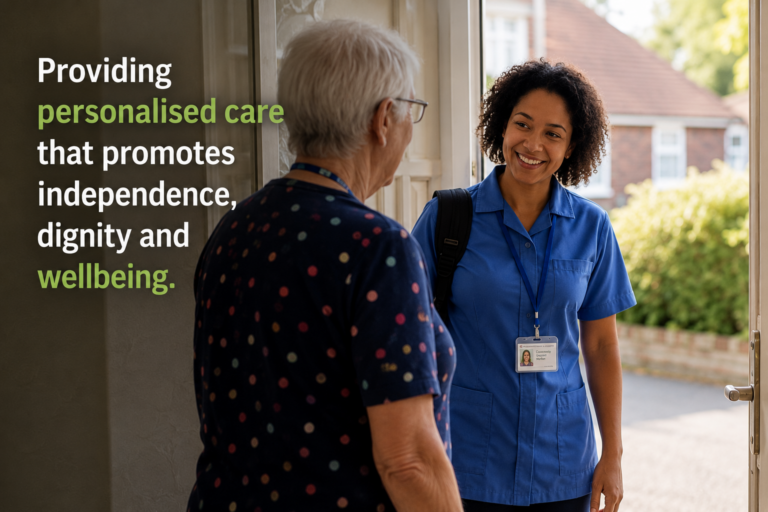
A community support worker helps individuals manage everyday life while encouraging choice, dignity, independence and participation within their community. Depending on the setting, support may involve emotional wellbeing, communication, daily routines, appointments, social activities and working alongside other health and social care professionals.
The emphasis is usually on person-centred support. Rather than treating everyone in the same way, support workers need to understand each individual’s preferences, abilities, circumstances and goals.
Day to day, that tends to break down into a few recurring responsibilities:
Practical, Everyday Support
Support workers may help individuals organise routines, attend appointments, prepare for daily activities and access community services. The aim is to encourage independence wherever possible rather than unnecessarily taking control away from the person receiving support.
Emotional Support and Reducing Isolation
Strong communication and empathy are essential Support Worker Skills. Listening without judgement, offering appropriate encouragement and helping people remain socially connected can contribute to confidence and emotional wellbeing.
Supporting care plans
Community support workers may contribute to agreed care or support plans by observing changes, recording relevant information and communicating concerns to colleagues or other professionals according to organisational procedures.
Safeguarding
Staying alert to signs of abuse or neglect, and knowing the correct process for raising a concern, in line with the Care Act 2014 statutory guidance. This is a legal and ethical responsibility, not an optional extra.
Support workers are employed across England, Scotland, Wales, and Northern Ireland, and many specialise over time in areas such as dementia care, learning disability support, or community mental health.
Why Community Support Workers Are in High Demand
Two things are driving demand at once: the UK’s population is ageing, and health and social care policy has been shifting deliberately toward community-based care — keeping people in their own homes rather than in hospital or residential settings wherever it’s safe to do so.
The scale is documented, not anecdotal. Skills for Care’s most recent workforce data puts the adult social care vacancy rate at 6.2% in 2025/26 — the lowest in ten years, but still roughly three times the vacancy rate in the wider UK economy — and projects the sector will need a further 410,000 posts by 2040. Recent changes to overseas recruitment rules have also made domestic training more important to employers than it was a few years ago.
People who benefit from community support services include:
- Older adults who want to keep living independently
- People with physical or learning disabilities
- People recovering from illness or injury
- People experiencing mental health difficulties or social isolation
Relevant training won’t guarantee a job, but it does give candidates a genuine head start: understanding safeguarding, person-centred care, and professional boundaries before day one is exactly what most employers say they’re screening for.
Where Community Support Workers Work
The workplace usually depends on who you’re supporting and which area you choose to specialise in:
| Workplace Setting | What the Role Looks Like There |
|---|---|
| Residential care homes | Supporting residents with daily activities, personal care, and independence. |
| Supported living services | Helping people live more independently with practical and emotional support. |
| Home care agencies | Visiting people in their own homes for personalised, one-to-one care. |
| Local authority social care | Supporting community care programmes for people receiving social care. |
| Charities and voluntary organisations | Running wellbeing programmes and support services for vulnerable groups. |
| Community rehabilitation services | Helping people recovering from illness, injury, or a change in health. |
| Mental health support services | Helping people manage mental health challenges and access local resources. |
| Learning disability services | Supporting people with learning disabilities towards independence and personal goals. |
| NHS community services | Supporting patients alongside clinical staff through community-based programmes. |
Many support workers build specialist experience over time — moving, for example, from general support into mental health work or rehabilitation.
Essential Skills Every Community Support Worker Needs

Communication
Support workers communicate with service users, relatives, carers, nurses, social workers and other professionals. Active listening, clear explanations and adapting your communication style to the individual are therefore essential.
Empathy
People receiving support may be experiencing illness, disability, loss, anxiety or major changes in their lives. Empathy helps workers build respectful relationships while maintaining appropriate professional boundaries.
Problem-Solving and Adaptability
Care environments can change quickly. Support workers need to respond calmly, follow organisational procedures and recognise when a situation should be referred to someone with greater responsibility.
Teamwork
Community care often involves multidisciplinary working. Reliable information sharing and respectful collaboration help different professionals work towards consistent person-centred outcomes.
Safeguarding Awareness
Good Safeguarding Training helps learners recognise potential concerns and understand why prompt, appropriate reporting matters. Government guidance emphasises that social care staff should understand signs of abuse or neglect and know how to respond or seek assistance.
Qualifications, Training, and the Value of a CPD Certificate
A common question: do you need formal qualifications to become a community support worker? It depends on the employer. Many entry-level roles are open to people with no prior experience, provided they can demonstrate empathy, reliability, and communication skills. That said, employers increasingly favour candidates who can show they understand professional care practices before they start — which is where a course like the Level 3 Diploma in Adult Social Care or a shorter CPD course can help.
This is where structured training earns its place. A well-designed Community Support Worker Course builds understanding of:
- Person-centred care and professional boundaries
- Safeguarding responsibilities and how to report concerns
- Effective, adaptable communication
- Equality, diversity, and inclusion
- Confidentiality, data protection, and duty of care
- Health and safety in a care setting
- Supporting mental wellbeing
A CPD Certificate (Continuing Professional Development) is worth having if your goal is to strengthen a CV or show a genuine, ongoing commitment to the sector — it’s a recognised marker of structured learning. What it isn’t is a substitute for a regulated vocational qualification where one is legally required for a role. Be wary of anything that implies otherwise; the honest pitch is that a CPD certificate complements formal qualifications, not replaces them.
It tends to be most useful for career changers, existing care assistants formalising skills they already have, and people returning to work after a break — anyone who needs a concrete way to demonstrate readiness before applying.
Course Modules Explained
Course content varies by provider, but a comprehensive one — such as the Health & Social Care Level 3 Diploma — should cover the following ground:
Understanding the role
Professional responsibilities, ethical practice, duty of care, and confidentiality — the foundation everything else sits on.
Communication skills in health and social care
Active listening, verbal and non-verbal communication, and building trust with families and healthcare professionals.
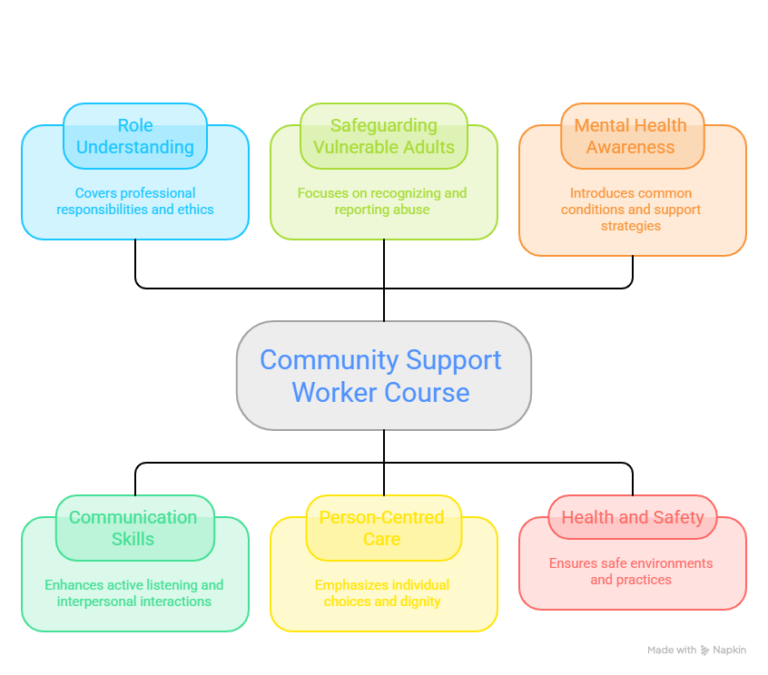
Safeguarding vulnerable adults
Recognising signs of abuse or neglect and reporting concerns correctly under UK safeguarding legislation.
Person-centred care
Respecting individual choice and involving people in decisions about their own support.
Mental health awareness
Recognising emotional distress, reducing stigma, and understanding professional boundaries — particularly relevant for anyone interested in community mental health support roles.
Health, safety, and risk awareness
Risk assessment, infection prevention, manual handling awareness, and safe working practices.
Studying Online: What to Expect

Online CPD courses have become the default choice for a lot of learners simply because they fit around existing jobs, caring responsibilities, or family commitments. The practical advantages are straightforward:
- Study at your own pace, with no fixed class times
- Revisit modules whenever you need to
- No travel time or cost
- Lower cost than in-person training, generally
If you want a flexible way to build this knowledge, HF Online’s Support Worker Diploma & Care Assistant Certificate covers communication, safeguarding, person-centred care, mental health awareness, and professional practice, with a CPD Certificate on completion.
Career Paths and Job Roles in the UK
Community support work covers a genuinely wide range of specific roles, all sharing the same underlying aim — helping people stay independent and well — but differing in day-to-day focus.
| Career Path | Main Focus |
|---|---|
| Community Support Worker | Practical and emotional support to help people manage daily life and stay connected to their community. |
| Care Assistant | Personal care, daily routines, mobility, and general wellbeing. |
| Healthcare Support Worker | Assisting clinical staff and supporting patients’ health needs in community settings. |
| Residential Support Worker | Ongoing care and encouragement for people in care homes or supported living. |
| Home Care Worker | Care and support delivered in a person’s own home. |
| Rehabilitation Support Worker | Supporting people recovering from illness, injury, or a health setback. |
| Community Outreach Worker | Connecting people with local services and activities to reduce isolation. |
| Learning Disability Support Worker | Encouraging independence and confidence for people with learning disabilities. |
| Mental Health Support Worker | Practical and emotional support for people managing mental health challenges. |
| Domiciliary Care Worker | Personalised care and assistance within people’s homes. |
NHS community roles specifically tend to offer more structured progression — working alongside nurses, occupational therapists, and physiotherapists on rehabilitation and monitoring — and often come with clearer pay banding than private-sector equivalents. Anyone drawn specifically to the mental health support pathway can build that knowledge directly through Mental Health Awareness Training Level 3.
Community Support Worker Salary in the UK

Salary data for this role varies noticeably by source, because job titles overlap heavily with ‘care assistant’ and ‘support worker’ more broadly, and because pay depends on region, employer, and sector (NHS, local authority, or private provider). Pulling from current job-market data (Glassdoor and Indeed, mid-2026):
- UK-wide average base salary: roughly £21,000–£25,000 per year for community/care support worker roles
- Typical range: around £19,000 at the lower end to £27,000–£31,000 for more experienced roles, before specialisation
- NHS community roles often sit within structured Agenda for Change pay bands, which can offer clearer progression than some private-sector roles
- Senior, specialist, and coordination roles (mental health, complex care, team leadership) can move into the low-to-mid £30,000s and above, though these figures are less consistently reported
These figures are indicative, drawn from current job-board data rather than official government statistics, and change with location, employer, and experience. Treat any specific number — including these — as a starting point for research, not a guarantee. For a specific role, check the employer’s own advertised pay or NHS Agenda for Change banding directly.
What actually moves the number
- Location — cities and areas with staff shortages tend to pay more
- Experience and time in the sector
- Relevant training and qualifications
- Employer type — NHS and local authority roles often have clearer pay structures than private providers
- Specialisation — mental health, rehabilitation, and complex care experience
- Shift patterns — nights, weekends, and overtime typically pay more