From digital records to smart wearables, each innovation plays a part in making healthcare safer, quicker, and more personalised. Here are some of the most useful technologies changing the way care services work today.

1. Electronic Health Records (EHRs)
Paper records are a thing of the past. Electronic Health Records (EHRs) store patient information digitally, making it easy for doctors to access medical histories, prescriptions, and test results in seconds. This means faster, more efficient care.
Key Benefits of EHRs
- Reduces Paperwork & Errors – No more lost files or illegible handwriting. Digital records ensure clear, accurate patient information.
- Speeds Up Decision-Making – Doctors can quickly retrieve test results and medical histories, leading to faster diagnoses and treatments.
- Improves Coordination Between Healthcare Providers – Hospitals, clinics, and specialists can securely share records, ensuring seamless patient care.
- Enhances Patient Safety – Accurate records help prevent medication errors and misdiagnoses.
Security & Privacy
- Encrypted & Restricted Access – EHR systems have strong security measures to protect patient data.
- Strict Regulations – Laws ensure patient information remains private and confidential.
EHRs make healthcare more organised, accurate, and efficient. As technology advances, these systems will continue to improve patient care and safety.
2. Telehealth and Virtual Consultations
Getting medical advice no longer means sitting in a waiting room. Telehealth lets you speak to a doctor from the comfort of your home using a phone, tablet, or computer. It’s quick, convenient, and ideal for non-urgent care.
Virtual consultations are especially helpful for people with mobility issues or those living in remote areas. Instead of travelling long distances, they can now access care in just a few clicks. This saves time, reduces stress, and makes healthcare more inclusive.
Why Telehealth Matters
- Increases Access to Care – Patients who might skip appointments due to distance or time can now get help easily.
- Reduces Pressure on Clinics – Fewer in-person visits mean healthcare centres can focus on urgent or complex cases.
- Supports Ongoing Care – Perfect for follow-ups, medication reviews, and mental health support.
Telehealth also helps reduce exposure to illness, which became vital during the COVID-19 pandemic. Even now, it remains a safer option for many.
As technology continues to evolve, virtual consultations are becoming more advanced and widely accepted. For both patients and providers, it’s a smarter, more flexible way to deliver care.
3. Wearable Health Devices
These days, keeping track of your health can be as easy as wearing a watch. Wearable health devices, like fitness trackers and smartwatches, monitor things like heart rate, steps, sleep, and even blood oxygen levels. They give you real-time insights into your body.
You don’t need to be unwell to benefit from them. Wearables encourage healthy habits by helping you stay active, sleep better, and manage stress. Plus, they’re easy to use and fit right into your daily routine.
How They Help in Care Services
- Early Detection – Changes in your daily stats can alert you or your doctor before symptoms appear.
- Remote Monitoring – Healthcare providers can track a patient’s health without needing them to visit the clinic.
- Chronic Condition Support – People with heart issues, diabetes, or high blood pressure can manage their condition more easily.
These devices are especially useful for elderly patients or those who need ongoing monitoring. They offer peace of mind for families and allow quicker action if something seems off.
As technology improves, wearables are becoming more accurate and affordable. They’re a simple but powerful tool for better everyday healthcare.
4. Artificial Intelligence (AI) in Healthcare
While AI might sound like something from the future, it’s already changing how we deliver care. Artificial Intelligence (AI) can quickly analyse medical data and help doctors make faster, more accurate decisions. It’s like giving healthcare professionals an extra pair of expert eyes.
You might not even realise it, but AI is used in many areas—scanning X-rays, predicting illnesses, and even reminding patients to take their medicine. These tools support doctors, not replace them, making their work safer and more efficient.
How AI is Making a Difference
- Faster Diagnoses – AI can spot patterns in scans or test results that humans might miss.
- Predictive Care – It helps detect risks before a condition worsens, especially for chronic illnesses.
- Better Workflow – Automates admin tasks like scheduling or data entry, giving staff more time for patients.
AI is also used in chatbots for basic health advice and virtual assistants for patient queries. This frees up time for human staff and keeps care moving smoothly.
Though it’s still growing, AI holds huge potential to improve how we manage and deliver healthcare. When used wisely, it becomes a trusted tool that benefits both patients and professionals.
5. Automated Medication Management
Remembering to take the right medication at the right time can be tricky, especially for those with long-term health conditions. That’s where automated medication management steps in to help. These systems use smart dispensers, reminders, and tracking tools to keep everything on schedule.
You’ll often find these in care homes or for patients who live independently. The devices give clear alerts, release the correct dose, and even notify caregivers if a dose is missed. This reduces stress for both patients and support staff.
Why It Matters
- Improves Safety – Reduces human error by giving the right dose at the right time.
- Supports Independence – Patients can manage their medication without constant supervision.
- Helps Carers – Care staff can monitor medication remotely, saving time and effort.
Automated systems are especially useful for those with memory problems or complex treatment plans. They help avoid missed doses or accidental double-taking, which can be dangerous.
As these tools become more advanced, they’re making medication management simpler, safer, and more reliable. It’s a small change that’s making a big difference in everyday care.
3D Printing in Healthcare
3D printing is doing far more than creating plastic models—it’s helping reshape modern medicine. Healthcare professionals now use it to produce personalised medical devices, surgical tools, prosthetics, and implants tailored to individual patients. This customisation leads to better comfort, faster recovery, and reduced complications.
During the COVID-19 pandemic, 3D printing proved its value even more. Hospitals faced critical shortages of personal protective equipment (PPE), ventilator parts, and testing swabs. In response, 3D printers were used around the world to quickly manufacture emergency supplies when traditional production couldn’t keep up.
Today, 3D printing is being used to create biocompatible implants, like titanium bone replacements and dental bridges, often at a lower cost. It also helps surgeons by printing anatomical models of patients’ organs, allowing them to plan and practise procedures more effectively.
Exciting developments are also happening in bioprinting, where researchers are working on printing human tissues and potentially even organs using living cells. Though this is still in progress, it shows how 3D printing could one day help solve organ shortages.
As innovation continues, 3D printing is proving to be a reliable, fast, and cost-effective way to improve patient care—especially when every second counts.
Blockchain for Medical Records
You might know blockchain as the technology behind cryptocurrencies—but it’s doing much more than that. In healthcare, blockchain offers a secure and transparent way to store and share medical records. It keeps sensitive patient information safe while allowing authorised providers to access it when needed.
With traditional systems, data can be lost, altered, or hard to transfer between hospitals. But blockchain creates a permanent, time-stamped record that can’t be changed without everyone knowing. This helps prevent errors, data loss, and unauthorised access.
For patients, it means greater control. You can give permission for certain doctors or clinics to view your health history—and revoke it just as easily. This builds trust and privacy, while still supporting better, faster care.
Blockchain also helps with fraud prevention. Because records can’t be tampered with, it’s harder for fake entries or false claims to slip through. As a result, both patient safety and healthcare billing become more reliable.
While it’s still being explored in many areas, blockchain holds real promise for the future of medical records. As more healthcare systems adopt it, we’ll see safer, smarter, and more connected care across the board.
Internet of Things (IoT)
Imagine if your medical devices could talk to your doctor in real time—that’s the power of the Internet of Things (IoT) in healthcare. It connects everyday devices, like heart monitors or glucose sensors, to the internet so they can collect and share health data automatically. This means quicker responses, fewer hospital visits, and better tracking of ongoing conditions.
For example, a smart blood pressure monitor at home can send updates directly to your GP. If something seems off, you’ll get a call before things get serious. That kind of early intervention can make a huge difference.
Why IoT Matters in Care
- Real-Time Monitoring – Doctors get live updates on patient vitals without waiting for in-person check-ups.
- Improved Chronic Disease Management – Conditions like asthma, diabetes, or heart issues can be tracked closely from home.
- Fewer Emergency Visits – Problems can often be caught early, avoiding sudden hospital trips.
IoT is also helping care homes and hospitals monitor equipment use, room temperature, and even patient movement. This improves comfort, safety, and how smoothly the facility runs.
As more devices become “smart,” the role of IoT in healthcare will only grow. It’s making care more connected, proactive, and personal—for both patients and providers.
Blockchain for Medical Records
You might know blockchain as the technology behind cryptocurrencies—but it’s doing much more than that. In healthcare, blockchain offers a secure and transparent way to store and share medical records. It keeps sensitive patient information safe while allowing authorised providers to access it when needed.
With traditional systems, data can be lost, altered, or hard to transfer between hospitals. But blockchain creates a permanent, time-stamped record that can’t be changed without everyone knowing. This helps prevent errors, data loss, and unauthorised access.
For patients, it means greater control. You can permit certain doctors or clinics to view your health history—and revoke it just as easily. This builds trust and privacy, while still supporting better, faster care.
Blockchain also helps with fraud prevention. Because records can’t be tampered with, it’s harder for fake entries or false claims to slip through. As a result, both patient safety and healthcare billing become more reliable.
While it’s still being explored in many areas, blockchain holds real promise for the future of medical records. As more healthcare systems adopt it, we’ll see safer, smarter, and more connected care across the board.
Social Connectivity Tools
Good health isn’t just about physical care—staying socially connected matters too, especially for older adults. Loneliness can affect mental health, sleep, and even recovery times. That’s where social connectivity tools make a real difference.
Today, many seniors use smartphones, tablets, or video call apps to stay in touch with family and friends. Whether it’s a quick call, a shared photo, or a group chat, it helps them feel included and valued.
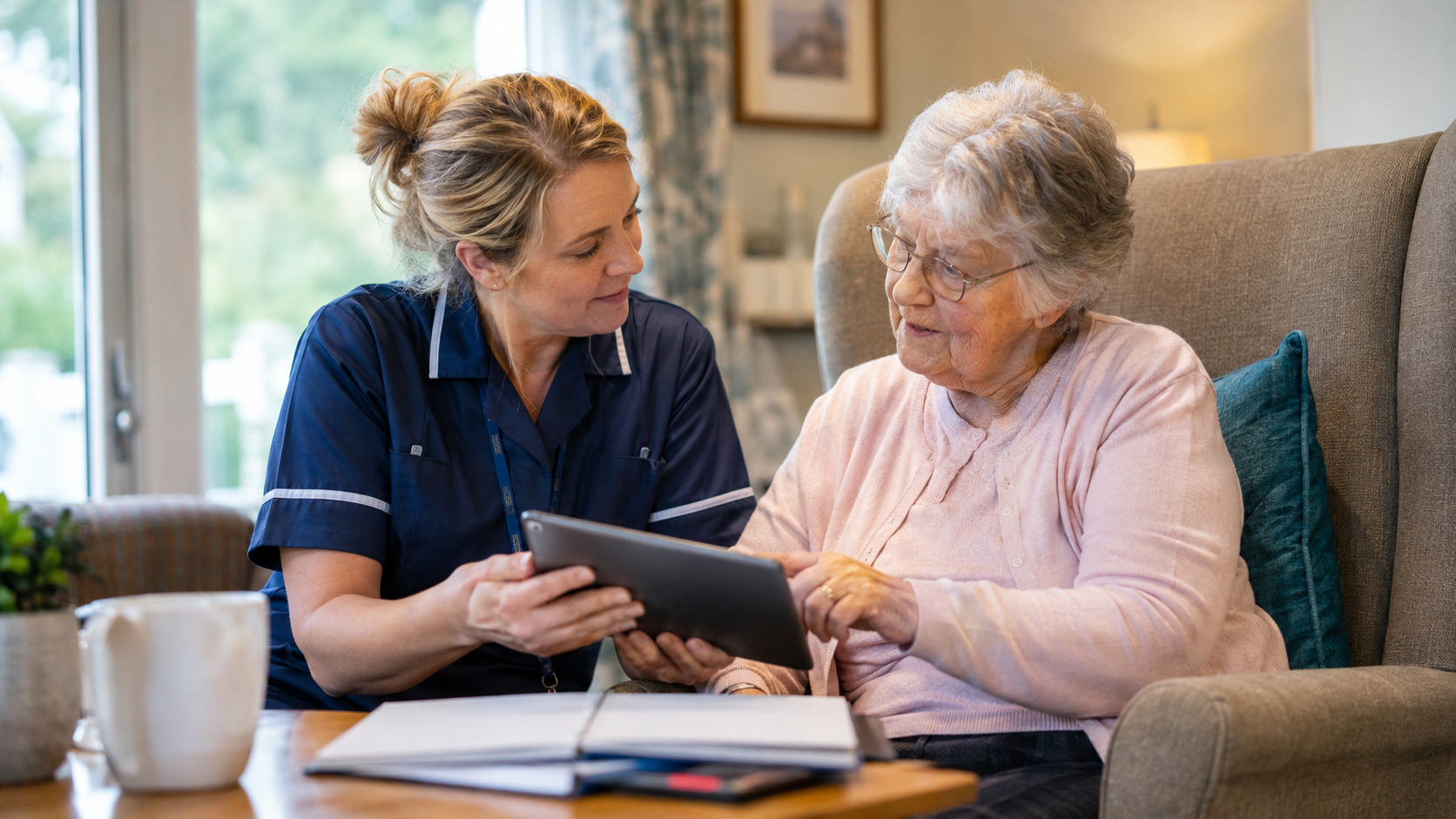
Even simple tech like voice-activated assistants can help with reminders to call loved ones or join virtual events. And for those in care homes, tablets or interactive screens make it easier to connect with loved ones who can’t visit.
These tools also encourage participation in online communities, virtual classes, or social games—all of which boost mood and reduce isolation. That connection can be just as important as medicine.
As more seniors become tech-savvy, these tools are playing a bigger role in day-to-day care. They’re an easy yet powerful way to improve emotional wellbeing and quality of life.
Real-Time Location Systems (RTLS)
In a busy hospital or care home, knowing where everything is can save valuable time. Real-Time Location Systems (RTLS) help track people, equipment, and even medication in real time. It’s like having a smart map of the whole facility.
For staff, this means less time searching for machines, wheelchairs, or supplies. With RTLS, you can quickly find what you need and focus more on patient care.
It also improves patient safety. RTLS can alert staff if a patient wanders into a restricted area or needs urgent help. That’s especially helpful in dementia care or emergency situations.
Key Benefits of RTLS
- Faster Response Times – Staff can locate patients and tools instantly.
- Better Workflow – Reduces delays and supports smoother operations.
- Increased Security – Helps monitor high-risk areas and manage movement.
As more healthcare settings adopt RTLS, the results are clear—better coordination, quicker care, and a safer environment for everyone. It’s a small change that brings big improvements.
Data Analytics in Decision-Making
In healthcare, every decision matters—and data analytics helps make those decisions smarter. By looking at large amounts of information, care providers can spot trends, predict outcomes, and plan better services. It turns numbers into insight.
For example, hospitals can use data to see which treatments work best for certain conditions. This helps them improve care plans and reduce unnecessary procedures. It also means better use of resources, like beds, staff, and medication.
How Data Helps Healthcare
- Tracks Patient Outcomes – Understand what’s working and where to improve.
- Predicts Future Needs – Helps plan for busy periods or rising health risks.
- Supports Evidence-Based Care – Decisions are based on facts, not just guesswork.
Analytics can even help prevent illness. By studying past cases, systems can flag risks early—like spotting flu outbreaks or identifying patients likely to be readmitted.
As technology grows, data will continue to shape the future of care. It’s not just about collecting numbers—it’s about using them to make care safer, faster, and more effective for everyone.