


Mental Capacity Act Course with CPD Certificate – What’s Included and Why Is It Important?
Gain the knowledge and confidence to support lawful, ethical and person-centred decision-making.
Making decisions on behalf of another person is one of the greatest responsibilities faced by professionals working in healthcare, social care, education and community support. Every day, care workers, healthcare assistants, nurses, support workers and allied professionals encounter situations where an individual may have difficulty understanding information, communicating a decision or weighing up the consequences of a choice. In these circumstances, understanding the Mental Capacity Act 2005 (MCA) is essential to ensure decisions are made lawfully, ethically and in the person’s best interests.
A Mental Capacity Act Course with CPD Certificate provides learners with a comprehensive introduction to the legal framework that protects adults who may lack the capacity to make specific decisions for themselves. Rather than assuming a person cannot make decisions because of age, disability or medical condition, the Mental Capacity Act promotes empowerment, dignity and individual rights. It establishes clear legal principles that help professionals balance personal autonomy with appropriate safeguarding while ensuring every decision is person-centred and proportionate.
Whether you are beginning a career in health and social care or already work within healthcare, residential care, supported living, domiciliary care or community services, understanding the Mental Capacity Act is an important part of delivering safe, compassionate and legally compliant care. Employers increasingly expect professionals to demonstrate knowledge of mental capacity legislation because poor decision-making can affect individual rights, safeguarding responsibilities and the quality of care delivered.
This online Mental Capacity Act Course explores the key principles of the Mental Capacity Act 2005, explains how capacity assessments are carried out, introduces best interests decision-making, examines consent and deprivation of liberty, and helps learners understand their professional responsibilities when supporting adults who may lack capacity.
What Is a Mental Capacity Act Course?
A Mental Capacity Act Course is a structured training programme that explains the legal principles of the Mental Capacity Act 2005, helping learners understand how to support adults who may have difficulty making particular decisions for themselves. The course combines legal knowledge with practical guidance, enabling professionals to apply the Act confidently in everyday healthcare and social care settings.
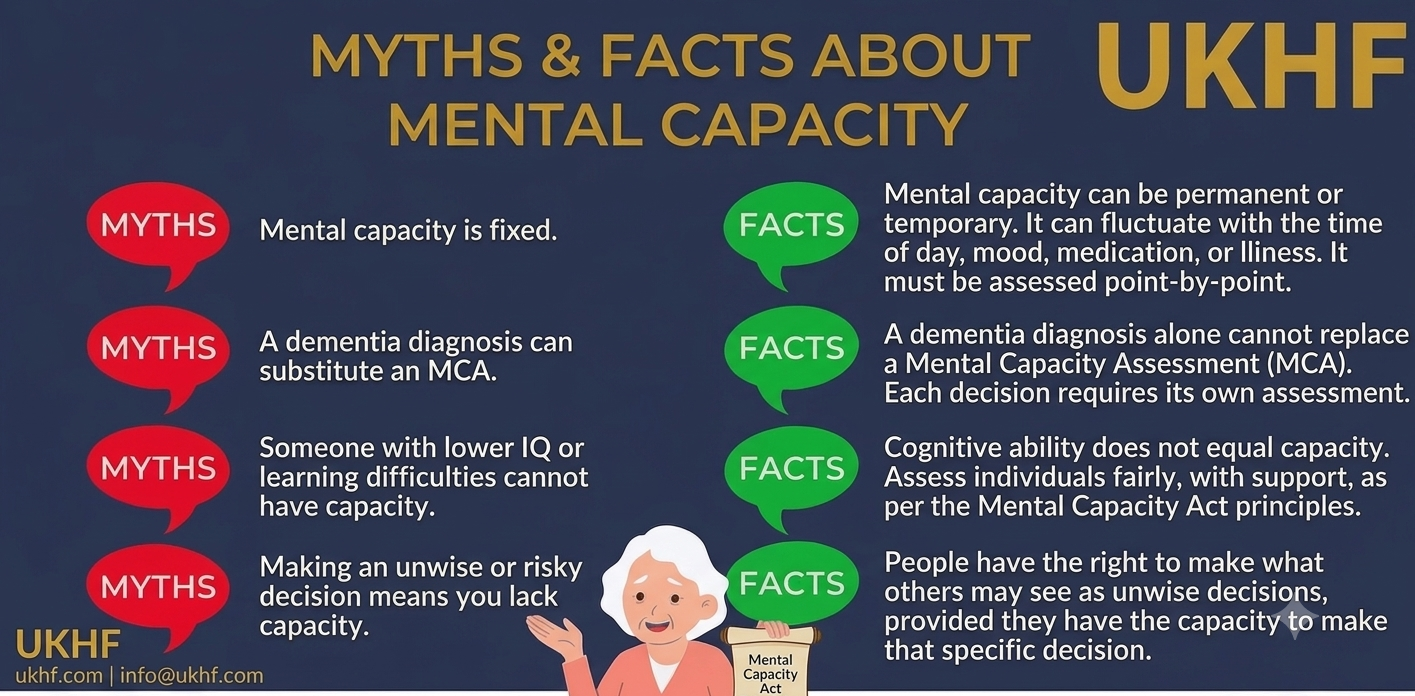
Unlike general safeguarding training, the Mental Capacity Act focuses specifically on decision-making capacity. It recognises that every adult has the right to make their own decisions unless it is established that they lack capacity for a particular decision at a particular time. Importantly, capacity is both decision-specific and time-specific, meaning a person may have capacity to make some decisions but not others, and their capacity may change over time.
A high-quality Mental Capacity Act Course with CPD Certificate introduces learners to the five statutory principles of the Act, the process of assessing capacity, the legal concept of best interests, the role of advocates, deprivation of liberty safeguards, consent to treatment and professional accountability. By understanding these areas, learners are better equipped to provide person-centred support while respecting individual rights and complying with legal requirements.
Why Is the Mental Capacity Act Important?
The Mental Capacity Act 2005 provides one of the most important legal safeguards for adults who may struggle to make certain decisions because of illness, injury, learning disability, dementia, brain injury, mental health conditions or temporary impairment. Without clear legal guidance, professionals could unintentionally restrict an individual’s rights or make decisions that fail to reflect their wishes and preferences.
The Act protects people by ensuring they are supported to make their own decisions wherever possible. It also provides a structured legal framework for situations where someone genuinely lacks the capacity to decide for themselves. Decisions must always be made in the person’s best interests and should restrict their rights and freedoms as little as possible.
For professionals, understanding the Mental Capacity Act reduces uncertainty when dealing with complex care situations. It supports lawful practice, promotes ethical decision-making and strengthens public confidence in health and social care services.
What Will You Learn in a Mental Capacity Act Course?
A professionally designed Mental Capacity Act Course with CPD Certificate provides learners with the knowledge and confidence to apply the principles of the Mental Capacity Act in real-life care settings. Rather than focusing solely on legislation, the course explains how legal requirements translate into practical, person-centred decision-making.
You will explore the five statutory principles of the Mental Capacity Act, understand how mental capacity assessments are carried out, examine the best interests checklist, learn about consent and refusal of treatment, explore the role of Independent Mental Capacity Advocates (IMCAs), and understand the legal framework surrounding deprivation of liberty and safeguarding responsibilities.
The course also encourages learners to reflect on professional values, communication techniques and ethical practice, helping them support individuals with dignity, respect and compassion while meeting their legal obligations.

Mental Capacity Act Course Modules
Module 1: Introduction to the Mental Capacity Act 2005
The course begins with an overview of the Mental Capacity Act 2005, explaining why the legislation was introduced and how it protects adults who may lack decision-making capacity.
Learners explore the purpose of the Act, its scope within England and Wales, and the professionals who apply it in practice. The module also introduces key legal terminology and explains how the Act promotes both independence and protection.
Understanding the background to the legislation helps learners appreciate why respecting autonomy and supporting individual choice remain central to high-quality care.
Module 2: The Five Statutory Principles of the Mental Capacity Act
The five statutory principles form the foundation of all decision-making under the Mental Capacity Act. This module examines each principle in detail and demonstrates how they guide professional practice.
You will learn why every adult must be presumed to have capacity unless proven otherwise, why individuals should receive practical support before concluding they cannot make a decision, and why making an unwise decision does not automatically indicate a lack of capacity.
The module also explores the principles of acting in a person’s best interests and choosing the least restrictive option whenever intervention becomes necessary.
Through practical examples, learners develop confidence in applying these principles consistently within healthcare and social care environments.
Module 3: Understanding Mental Capacity
Capacity is rarely an all-or-nothing concept. This module explains that mental capacity is both decision-specific and time-specific, meaning an individual may have capacity to make some decisions while requiring support with others.
Learners examine the legal definition of capacity, factors that may affect decision-making and the importance of avoiding assumptions based on diagnosis, disability or age.
The course also explores temporary fluctuations in capacity and explains why assessments should always consider whether capacity may improve or whether decisions can safely be delayed.
Module 4: How Mental Capacity Assessments Are Carried Out
Assessing capacity is one of the most important responsibilities covered by the Mental Capacity Act. This module introduces the two-stage test of capacity and explains how professionals determine whether an individual can understand, retain, use or weigh relevant information before communicating a decision.
Learners discover the importance of conducting assessments fairly, documenting findings accurately and ensuring that all reasonable support has been provided before concluding that a person lacks capacity.
Realistic scenarios demonstrate how capacity assessments differ depending on the decision involved, reinforcing the principle that capacity should never be judged using a one-size-fits-all approach.
Module 5: Best Interests Decision-Making
When a person lacks capacity to make a particular decision, professionals must act in that individual’s best interests. This module explains the legal best interests checklist and demonstrates how decisions should involve the individual as much as possible.
Learners explore the importance of considering the person’s past wishes, values, beliefs and preferences while consulting family members, carers and relevant professionals where appropriate.
The module reinforces that best interests decisions should promote dignity, maximise independence and restrict personal freedom only where necessary and proportionate.
Module 6: Consent, Refusal of Treatment and Supported Decision-Making
Consent is a fundamental legal and ethical principle within health and social care. Every adult with mental capacity has the right to make decisions about their own care, treatment and daily life, even if those decisions appear unusual or carry a degree of risk. This module explores the relationship between consent, mental capacity and supported decision-making, helping learners understand how professionals should respect individual autonomy while meeting their legal responsibilities under the Mental Capacity Act 2005.
You will learn the legal requirements for obtaining valid consent, including the importance of ensuring that consent is given voluntarily, by an individual with capacity, and based on appropriate information. The course explains why consent should never be assumed and why individuals must always receive practical support to help them understand their options before any decision is made.
The module also examines situations where an individual refuses treatment. Learners discover that a person with mental capacity has the legal right to refuse medical treatment or care, even if that decision may place their health at risk. Understanding this principle helps professionals balance their duty of care with respect for personal choice and human rights.
Throughout this section, practical case studies demonstrate how clear communication, accessible information and person-centred support enable individuals to make informed decisions while promoting dignity, independence and lawful practice.
Module 7: Independent Mental Capacity Advocates (IMCAs)
There are occasions when an adult lacks the capacity to make a significant decision and has no family members or friends available to represent their interests. In these situations, the Mental Capacity Act provides additional protection through the involvement of an Independent Mental Capacity Advocate (IMCA).
This module explains the purpose of the IMCA service, when an advocate must be appointed and how IMCAs contribute to fair and transparent decision-making. Learners explore the advocate’s role in supporting individuals who face important decisions relating to serious medical treatment, long-term accommodation and safeguarding procedures.
Rather than making decisions on behalf of individuals, IMCAs ensure that the person’s wishes, values and preferences remain central to discussions. The course highlights how advocacy strengthens accountability, promotes fairness and protects vulnerable adults who may otherwise have no independent representation.
Understanding the IMCA process enables professionals to recognise when advocacy is legally required and how effective collaboration contributes to person-centred care.
Module 8: Deprivation of Liberty Safeguards (DoLS) and Liberty Protection Safeguards (LPS)
Protecting an individual’s safety should never come at the unnecessary expense of their personal freedom. This module introduces the legal principles surrounding Deprivation of Liberty Safeguards (DoLS) and explains why restrictions placed on an individual’s liberty must always be lawful, proportionate and necessary.
Learners examine circumstances in which restrictions may amount to a deprivation of liberty, particularly within hospitals, residential care settings and supported living services. The course explains why restrictions should always represent the least restrictive option available while ensuring that the individual’s rights remain protected.
The module also introduces Liberty Protection Safeguards (LPS), providing learners with an understanding of the evolving legal framework designed to strengthen safeguards for people who lack capacity.
Realistic care scenarios help learners recognise when additional legal authorisation may be required and reinforce the importance of documenting decisions carefully while involving multidisciplinary professionals throughout the process.
Module 9: Record Keeping, Documentation and Professional Accountability
Accurate documentation forms an essential part of lawful decision-making under the Mental Capacity Act. Every capacity assessment, best interests discussion and significant decision should be recorded clearly to demonstrate that appropriate legal procedures have been followed.
This module explores best practice for recording capacity assessments, documenting professional reasoning, recording consultation with family members and maintaining accurate care records. Learners understand how good documentation protects both the individual receiving care and the professionals responsible for supporting them.
The course also examines professional accountability, emphasising the importance of working within organisational policies, maintaining confidentiality and seeking advice whenever uncertainty arises.
By developing strong record-keeping skills, learners contribute to safer decision-making, improved continuity of care and greater legal protection for everyone involved.
Benefits of Completing a Mental Capacity Act Course with a CPD Certificate
Completing a Mental Capacity Act Course with CPD Certificate provides practical knowledge that supports both professional development and high-quality care. Rather than simply understanding legislation, learners develop the confidence to apply the Mental Capacity Act appropriately within real-world healthcare and social care settings.
One of the greatest benefits of the course is the ability to make informed, person-centred decisions while protecting the rights, dignity and independence of individuals who may have impaired decision-making capacity. This knowledge helps professionals avoid unnecessary restrictions while ensuring that safeguarding responsibilities are met lawfully.
The course also improves confidence when participating in multidisciplinary decision-making, completing capacity assessments, consulting family members and applying best interests principles. By strengthening legal awareness, learners reduce uncertainty and contribute to safer, more consistent care.
For employers, staff with a sound understanding of the Mental Capacity Act help organisations maintain high professional standards, improve regulatory compliance and promote ethical practice across healthcare and social care services.
Practical Applications in Health and Social Care
The Mental Capacity Act influences decision-making across a wide range of healthcare and social care environments. Professionals working within hospitals regularly apply the Act when discussing treatment options, obtaining consent, planning discharge arrangements or supporting patients experiencing temporary or permanent cognitive impairment.
Residential care homes rely on Mental Capacity Act principles when making decisions about daily care, medication, personal care, financial matters and safeguarding. Community healthcare teams frequently assess capacity during home visits while ensuring that individuals remain actively involved in decisions affecting their lives.
Learning disability services, dementia care, mental health support, rehabilitation services and supported living providers all use Mental Capacity Act principles to balance individual autonomy with appropriate protection. Understanding the legislation helps professionals provide consistent, person-centred care while respecting each individual’s rights and preferences.
The course also benefits professionals working outside traditional healthcare settings, including housing services, advocacy organisations, social work, education and voluntary sector support services where decision-making and safeguarding responsibilities frequently arise.
Skills You Will Develop
Completing this Mental Capacity Act Course enables learners to develop both legal knowledge and practical professional skills that are highly valued across healthcare and social care.
You will strengthen your understanding of mental capacity legislation, capacity assessments, supported decision-making, best interests principles, consent procedures and safeguarding responsibilities. The course also develops communication skills by encouraging professionals to explain information clearly, support informed decision-making and involve individuals in discussions whenever possible.
Learners improve their ability to evaluate complex situations, document decisions accurately, collaborate with multidisciplinary teams and apply ethical reasoning within everyday practice. These transferable skills contribute to safer care, stronger professional confidence and improved quality of service delivery.
Perhaps most importantly, the course promotes compassionate, person-centred thinking by reinforcing that every individual should remain at the centre of decisions affecting their own life.
Who Should Take This Mental Capacity Act Course?
This Mental Capacity Act Course with CPD Certificate is suitable for anyone working with adults who may experience difficulties making certain decisions because of illness, disability or cognitive impairment. The flexible online format makes the course accessible to both beginners and experienced professionals wishing to update their knowledge.
It is particularly valuable for healthcare assistants, nurses, support workers, care workers, senior carers, residential care staff, domiciliary carers, social care professionals, occupational therapy assistants, rehabilitation staff, mental health support workers, learning disability practitioners and community healthcare teams.
Managers, safeguarding leads, voluntary sector professionals, housing support officers and individuals preparing to enter health and social care careers may also benefit from developing a thorough understanding of the Mental Capacity Act and its practical application.
No previous legal knowledge is required, making the course an excellent introduction for anyone seeking to strengthen their professional practice.
CPD Certificate and Continuing Professional Development
After successfully completing the course and meeting the assessment requirements, learners are eligible to receive a CPD Certificate in Mental Capacity Act Training.
A CPD certificate demonstrates your commitment to maintaining professional knowledge and continuing professional development throughout your career. It provides evidence that you have undertaken structured learning designed to strengthen your understanding of legal responsibilities, person-centred decision-making and ethical practice.
Many employers value CPD-certified training because it supports lifelong learning and helps staff remain informed about current legislation and professional standards. Although a CPD certificate does not replace regulated qualifications or professional registration, it complements existing education and demonstrates your commitment to delivering high-quality care.
Adding a Mental Capacity Act CPD certificate to your professional portfolio can also strengthen job applications, annual appraisals and career progression opportunities within health and social care.
Career Benefits of Mental Capacity Act Training
Knowledge of the Mental Capacity Act 2005 has become increasingly important across the health and social care sector. Employers expect professionals to understand how legal principles influence consent, safeguarding, best interests decisions and person-centred care.
Completing a Mental Capacity Act Course can support career development in roles such as Healthcare Assistant, Care Worker, Support Worker, Senior Care Assistant, Nursing Associate, Residential Care Worker, Community Support Worker, Occupational Therapy Assistant, Mental Health Support Worker and Learning Disability Support Worker.
Existing healthcare professionals may also use the course to refresh their legal knowledge and demonstrate ongoing commitment to professional development.
While no course can guarantee employment, understanding mental capacity legislation enhances professional credibility and prepares learners to contribute confidently within multidisciplinary teams.
Why Choose This Mental Capacity Act Course?
Choosing a high-quality Mental Capacity Act Course with CPD Certificate enables you to develop practical legal knowledge that directly supports safer, more compassionate care. Rather than presenting legislation in complex legal language, this course explains the Mental Capacity Act through realistic healthcare scenarios and practical examples that can be applied within everyday professional practice.
The flexible online learning format allows you to study at your own pace while balancing employment, education and personal commitments. Clear explanations, structured learning materials and practical case studies help learners build confidence gradually while developing a thorough understanding of mental capacity legislation.
By completing the course, you will strengthen your knowledge of capacity assessments, consent, best interests decision-making, safeguarding responsibilities, professional accountability and person-centred care. These skills not only support legal compliance but also help improve communication, strengthen ethical decision-making and promote greater respect for individual rights.
Whether you are beginning your healthcare career or enhancing existing professional knowledge, this CPD-certified Mental Capacity Act Course provides valuable training that supports safer decision-making, protects vulnerable adults and contributes to higher standards of care across health and social care services.

Table of Contents

Frequently Asked Questions
What is the Mental Capacity Act 2005?
The Mental Capacity Act 2005 (MCA) is a key piece of legislation in England and Wales that protects adults aged 16 and over who may lack the mental capacity to make specific decisions for themselves. It establishes five statutory principles that promote independence, protect individual rights and ensure that any decisions made on behalf of a person are lawful, proportionate and in their best interests. The Act is widely applied across healthcare, health and social care, community services and safeguarding practice.
What is a Mental Capacity Act Course?
A Mental Capacity Act Course is a professional training programme that explains the principles of the Mental Capacity Act 2005 and shows learners how to apply them in real-life healthcare and social care settings. The course covers mental capacity assessments, best interests decision-making, consent, safeguarding, Independent Mental Capacity Advocates (IMCAs), deprivation of liberty and professional responsibilities.
Is this Mental Capacity Act Course suitable for beginners?
Yes. This online Mental Capacity Act Course with CPD Certificate is suitable for complete beginners as well as experienced professionals who wish to update their knowledge. No previous legal training is required, making it an ideal introduction for anyone entering healthcare, health and social care or community support roles.
Can I study the Mental Capacity Act Course online?
Yes. The course is delivered entirely online, allowing you to study whenever it is convenient. Flexible online learning enables you to complete the training around work, family and personal commitments while progressing at your own pace.
What will I learn during the Mental Capacity Act Course?
You will learn about the Mental Capacity Act 2005, the five statutory principles, mental capacity assessments, supported decision-making, consent, best interests decision-making, deprivation of liberty, safeguarding responsibilities, record keeping and professional accountability. The course combines legal knowledge with practical examples to help you apply the legislation confidently in professional settings.
What are the five principles of the Mental Capacity Act?
The five statutory principles form the foundation of the Mental Capacity Act and guide all decision-making. They include:
- Presuming every adult has capacity unless proven otherwise.
- Supporting individuals to make their own decisions wherever possible.
- Recognising that making an unwise decision does not automatically mean a person lacks capacity.
- Acting in the person’s best interests if they lack capacity.
- Choosing the least restrictive option when making decisions on another person’s behalf.
Understanding these principles helps professionals promote independence while protecting vulnerable adults.
How is mental capacity assessed?
Mental capacity assessments follow the legal framework outlined in the Mental Capacity Act. Professionals consider whether an individual can understand, retain, use or weigh relevant information and communicate their decision. Assessments are always specific to the particular decision being made and should never be based solely on age, disability, appearance or diagnosis.
What is a Best Interests decision?
If an individual lacks the capacity to make a particular decision, professionals must make that decision in the person’s best interests. This involves considering the individual’s wishes, beliefs, values, previous decisions, views of family members and carers, and choosing the least restrictive option available while promoting dignity and wellbeing.
What is an Independent Mental Capacity Advocate (IMCA)?
An Independent Mental Capacity Advocate (IMCA) supports individuals who lack capacity and have no appropriate family members or friends available to represent them. IMCAs ensure the person’s rights, wishes and interests remain central during important decisions involving serious medical treatment, accommodation or safeguarding.
What is the difference between DoLS and LPS?
Deprivation of Liberty Safeguards (DoLS) provide legal protection when restrictions placed on an individual amount to a deprivation of liberty in hospitals or care homes. Liberty Protection Safeguards (LPS) are intended to replace DoLS and provide a broader legal framework for authorising necessary restrictions across a wider range of care settings while strengthening individual rights.