

Safeguarding Officer Job Description: Duties, Skills and Pay
A safeguarding officer helps protect children and adults at risk by identifying concerns, supporting appropriate action, and ensuring safeguarding procedures are followed. Their responsibilities typically include recording incidents, advising colleagues, coordinating referrals and helping organisations maintain safe practices.
If you are considering this career, understanding the safeguarding officer job description is an important first step. The role requires sound judgement, communication skills and knowledge of safeguarding procedures. However, expectations vary between schools, healthcare organisations, charities and other employers.
This guide explains the main safeguarding officer duties, the qualifications and experience employers may expect, typical UK salaries and how to prepare for the role.
What Does a Safeguarding Officer Do?
A safeguarding officer supports an organisation’s efforts to protect people from abuse, neglect, exploitation and other safeguarding risks. They help ensure concerns are recognised, recorded and referred to the appropriate people or services.
Depending on the organisation, their work may involve advising employees, reviewing safeguarding procedures, communicating with external agencies and monitoring ongoing concerns.
You may also encounter titles such as Designated Safeguarding Officer (DSO), Designated Safeguarding Lead (DSL) or Safeguarding Coordinator. These positions can overlap, but they are not necessarily interchangeable.
For example, schools in England have specific requirements for a designated safeguarding lead, while charities and care organisations may structure their safeguarding responsibilities differently.
A safeguarding officer’s role is generally to support appropriate safeguarding action, not to independently establish whether an allegation of abuse is true.
Safeguarding Officer Roles and Responsibilities
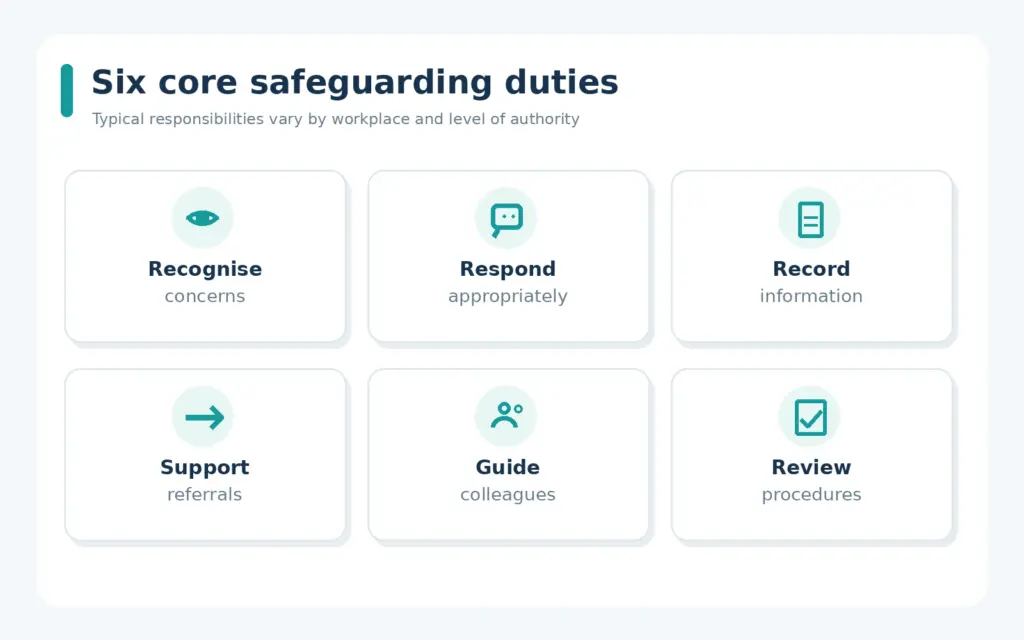
The exact responsibilities depend on the workplace, but most safeguarding officer job descriptions include recognising concerns, maintaining records, supporting staff and following reporting procedures.
Recognising and Responding to Safeguarding Concerns
One of the main safeguarding officer duties is helping the organisation identify and respond appropriately to potential harm.
This may involve recognising signs of:
- Physical, emotional or sexual abuse.
- Neglect and poor treatment.
- Domestic abuse or coercive control.
- Online grooming and exploitation.
- Financial abuse or other risks affecting adults.
Safeguarding officers must also respond sensitively when somebody shares a concern.
For example, if a young person discloses possible abuse, the appropriate response is to listen carefully, avoid leading questions, record relevant information and follow the organisation’s safeguarding procedure.
The officer should not promise absolute confidentiality or attempt to investigate the allegation independently.
Recording Concerns and Making Referrals
Accurate record keeping is another essential responsibility.
Safeguarding officers may document concerns, record actions taken, maintain secure case information and follow up referrals. Records should distinguish factual observations from opinions and explain relevant decisions.
Depending on their authority and the organisation’s procedures, officers may also communicate with children’s social care, adult social care, the police or other safeguarding professionals.
In England, Working Together to Safeguard Children 2026 sets out statutory guidance for organisations and practitioners involved in supporting and protecting children through multi-agency arrangements.
Information sharing also requires careful judgement. The statutory guidance on safeguarding information sharing explains the relevant framework for practitioners and organisations working with children and young people in England.
Safeguarding information should be shared lawfully, securely and where necessary for an appropriate safeguarding purpose.
Supporting Staff and Maintaining Safeguarding Procedures
Safeguarding officers often help colleagues understand their responsibilities.
Their work may include:
- Explaining how staff should report concerns.
- Supporting safeguarding awareness and training.
- Reviewing organisational policies and procedures.
- Monitoring safeguarding records and follow-up actions.
- Contributing to safeguarding meetings and audits.
- Working with external professionals when necessary.
Some employers divide these responsibilities between officers, leads and coordinators.
To understand how these positions may differ, explore the responsibilities of a safeguarding coordinator.
A Typical Day in the Life of a Safeguarding Officer
Safeguarding work is varied. Some days involve reviewing procedures and supporting staff, while others require a more immediate response to a concern.
Consider this fictional example of a safeguarding officer working in an educational organisation.
The morning begins with reviewing outstanding safeguarding records and checking whether previous concerns require follow-up.
Later, a member of staff reports that a student has shared information suggesting difficulties at home. The officer listens to the account, checks what has already been recorded and follows the organisation’s safeguarding procedures.
Where necessary, the concern is escalated to the designated lead or the appropriate external service.
During the afternoon, the officer attends a safeguarding meeting, updates records and helps a colleague understand the correct reporting process.
Not every day involves serious incidents. Much of the work concerns prevention, coordination, documentation and ensuring people know how to respond when concerns arise.
The precise activities depend on the officer’s responsibilities, seniority and workplace.

Where Do Safeguarding Officers Work?
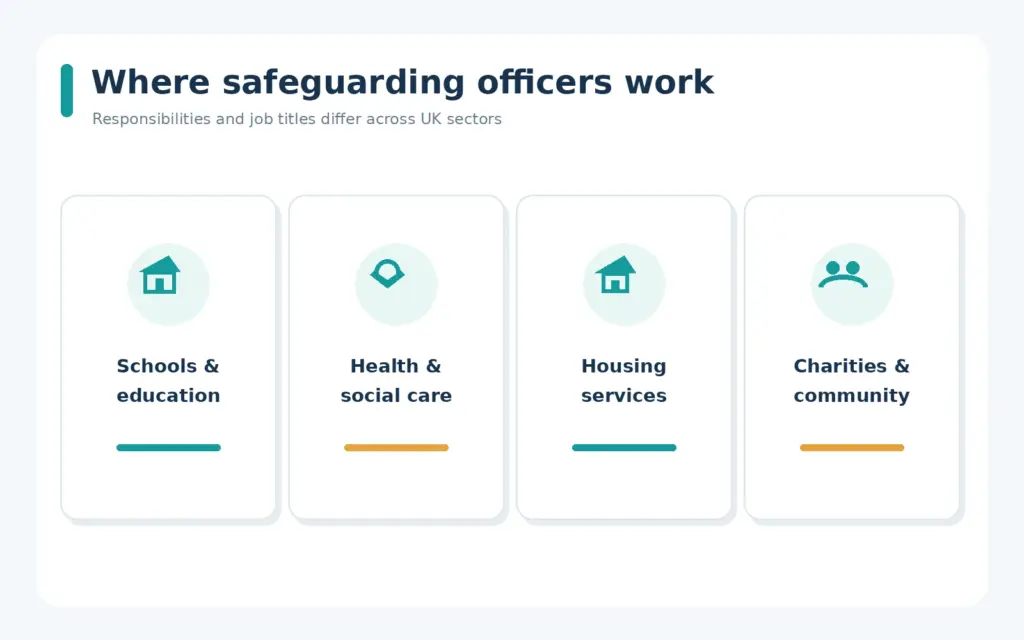
Safeguarding officers work across several sectors, and the people they protect influence their responsibilities.
Schools, Nurseries and Education Settings
In schools, safeguarding work focuses on protecting children and young people, responding to welfare concerns and helping staff follow child protection procedures.
In England, Keeping Children Safe in Education 2026 sets out safeguarding requirements for schools and colleges. The September 2026 version is currently in force.
Schools must have a designated safeguarding lead with responsibility for overseeing safeguarding and child protection arrangements.
Safeguarding and pastoral support may work closely together, although the positions have different purposes. Anyone exploring education-based careers may also benefit from understanding what a school pastoral officer does.
Health, Social Care, Housing and Charities
In health and social care, safeguarding responsibilities may involve adults who have care and support needs and are experiencing, or are at risk of, abuse or neglect.
Officers may support staff, coordinate referrals, maintain records and communicate with local authority safeguarding teams.
Under the Care Act 2014, local authorities in England have particular adult safeguarding enquiry duties when the relevant statutory criteria are met. These are explained in the government’s Care and Support Statutory Guidance.
Housing associations, charities, sports organisations and community services may also employ safeguarding officers.
Across these workplaces, the central purpose remains similar, but procedures and professional expectations vary.
What Skills Does a Safeguarding Officer Need?
Effective safeguarding work requires a combination of interpersonal abilities, professional knowledge and practical organisation.
Communication and Interpersonal Skills
Safeguarding officers regularly communicate with people who may be distressed, uncertain or reluctant to discuss sensitive experiences.
Strong listening skills, empathy and the ability to remain calm are therefore important.
Officers also need to communicate clearly with colleagues, families and external professionals without making assumptions or disclosing unnecessary personal information.
Practical and Professional Skills
| Essential skill | How it supports safeguarding work |
|---|---|
| Active listening | Helps people communicate concerns without pressure |
| Professional judgement | Supports proportionate responses and appropriate escalation |
| Record keeping | Ensures safeguarding information is accurate and accessible to authorised staff |
| Confidentiality | Helps protect sensitive personal information |
| Communication | Supports cooperation with staff and external agencies |
| Organisation | Helps manage records, follow-ups and competing priorities |
| Risk awareness | Helps identify concerns requiring further action |
Employers may also value resilience, professional curiosity, cultural awareness and a willingness to seek guidance when situations are outside an individual’s expertise.
Having these safeguarding officer skills does not mean knowing every answer. Recognising when to consult a senior colleague or specialist service is equally important.
Safeguarding Officer Qualifications and Job Requirements in the UK
There is no single qualification that every UK safeguarding officer must hold. Requirements depend on the sector, employer and level of responsibility.
Some positions require substantial safeguarding experience or relevant professional qualifications, while others emphasise transferable skills and suitable training.
Do You Need a Degree to Become a Safeguarding Officer?
Not every safeguarding officer job requires a university degree.
Some employers may accept candidates with relevant experience in education, social care, healthcare, youth services or community support.
More specialised positions may prefer applicants with professional qualifications and experience managing safeguarding cases.
When reviewing a vacancy, distinguish between:
- Essential requirements: Qualifications, knowledge or experience the employer considers necessary.
- Desirable requirements: Additional abilities or qualifications that may strengthen an application.
Applicants should assess the actual job specification rather than assume all safeguarding positions share identical entry requirements.
Safeguarding Training, Experience and DBS Checks
Safeguarding training helps professionals recognise concerns, understand reporting arrangements and follow appropriate procedures.
However, completing a training course does not automatically establish that someone is qualified for every safeguarding officer position.
Employers may also expect experience with vulnerable individuals, accurate documentation, professional boundaries and organisational safeguarding systems.
Training needs can differ significantly between sectors. For instance, those working in early years education should understand the safeguarding training requirements for nursery staff. Some positions also involve criminal-record checks.
The official DBS eligibility guidance explains how employers in England and Wales determine the appropriate check. Eligibility depends on the duties involved, rather than the job title alone.
Scotland and Northern Ireland operate separate criminal-record checking arrangements.
How to Become a Safeguarding Officer in the UK
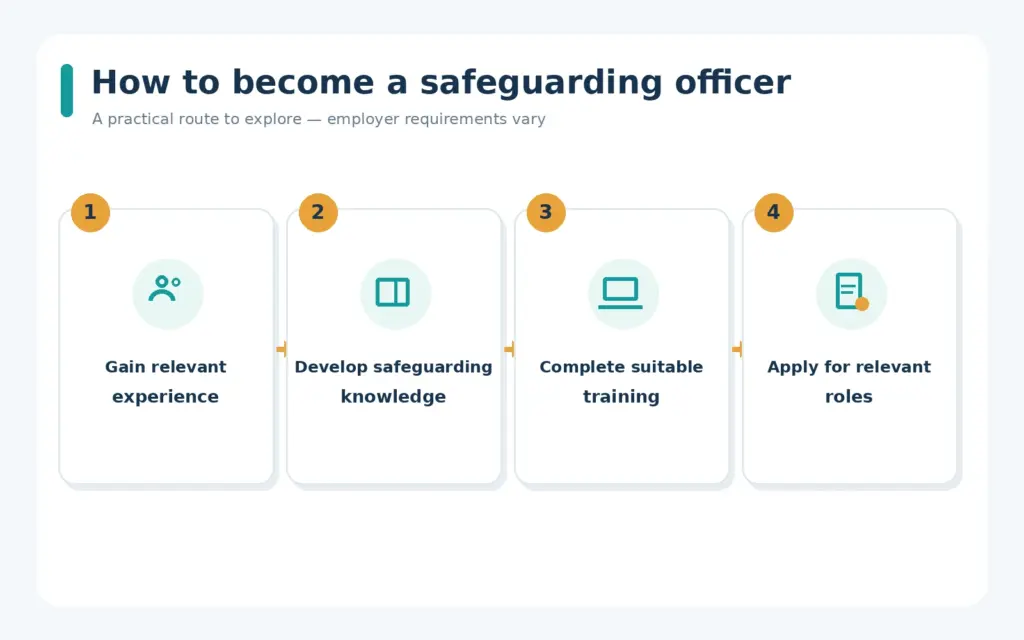
If you are interested in becoming a safeguarding officer, begin by comparing your experience with real job specifications.
A practical route involves four steps.
- Gain relevant experience. Work or volunteering in education, social care, youth services, charities or similar settings can help build relevant knowledge and transferable skills.
- Understand safeguarding procedures. Develop familiarity with recognising concerns, accurate reporting, professional boundaries, and working with other services.
- Complete suitable safeguarding training. Choose learning that matches your current experience and intended responsibilities.
Before enrolling, it is worth understanding how to choose a child protection and safeguarding course rather than relying solely on its title or advertised level.
For learners developing child protection knowledge, HF Online offers the Safeguarding Children Level 3 Designated Lead DSL course. This online, self-paced CPD-accredited course covers recognising abuse, responding to disclosures, reporting concerns, record keeping and understanding designated safeguarding responsibilities.
It is designed to support professional development. Its CPD certificate is not, by itself, a regulated qualification or a guarantee of appointment to a safeguarding role.
- Apply for appropriate positions. Focus on vacancies that match your experience. Explain how your previous responsibilities demonstrate communication, safeguarding awareness, sound judgement and accurate record keeping.
Some applicants may begin in safeguarding support or related roles before progressing into positions with greater responsibility.
Safeguarding Officer Salary and Working Conditions in the UK
How Much Does a Safeguarding Officer Earn in the UK?
Safeguarding officer salaries vary according to location, employer, sector, experience and the complexity of the position.
Selected UK vacancies advertised during 2026 provide useful examples:
| Employer | Advertised annual salary | Sector |
|---|---|---|
| Cardiff City FC Community Foundation | £26,227.50– |
Sport and community |
| Samaritans | £35,000– |
Charity |
| Archdiocese of Southwark | £38,000– |
Faith‑based charity |
These figures come from published recruitment information, including a 2026 designated safeguarding officer vacancy listed by UK Sport.
They illustrate differences between particular roles, rather than establishing a national average salary. Actual earnings depend on the employer, contract and responsibilities.
For more detailed comparisons, explore how child protection officer salaries vary across UK sectors.
Working Hours and Job Expectations
Safeguarding officers may work full-time or part-time, depending on the employer. Some positions offer hybrid arrangements, while others require regular attendance at schools, care settings or community locations.
The role can involve sensitive information and emotionally demanding situations. Good supervision, appropriate workloads and clear organisational procedures are important forms of professional support.
Candidates should also check whether a vacancy requires travel, occasional evening work or participation in safeguarding meetings outside normal hours.
Table of Contents

Frequently Asked Questions
Can You Become a Safeguarding Officer Without a Degree?
Yes, some employers consider applicants without degrees if they have relevant experience, safeguarding knowledge and suitable skills. However, senior or specialised positions may require particular professional qualifications.
Is a Safeguarding Officer the Same as a Designated Safeguarding Lead?
Not necessarily. A safeguarding officer’s responsibilities depend on the employer. In English schools, the Designated Safeguarding Lead has a defined role under statutory safeguarding guidance.
Does a Safeguarding Officer Investigate Abuse?
Safeguarding officers may gather and document relevant information, support internal processes and coordinate appropriate referrals. They should not independently conduct statutory investigations unless they have the necessary authority and responsibilities.
Is Safeguarding Officer a Stressful Job?
The role can be emotionally demanding because it involves sensitive concerns and professional responsibility. Clear procedures, supportive colleagues, supervision, and appropriate training can help staff manage these demands.