

Start Building Confidence in Safe Medication Administration
A single medication error can affect a person’s health, confidence, and quality of care — which is why safe medication practice is a responsibility that cannot be taken lightly. For care workers and healthcare professionals, administering medication is not simply about handing someone a tablet or recording a dose; it involves safeguarding wellbeing, following legal procedures, recognising risks, and ensuring every medicine is given safely, accurately, and with dignity.
A Medication Administration Course helps learners develop a stronger understanding of medicines management, safe administration procedures, and the responsibilities involved in supporting people who rely on medication as part of their daily care. Whether you’re starting your first care role, refreshing existing knowledge, or arranging medication administration training for a whole team, getting this right matters more than almost any other day-to-day task in the sector.
For many employers across the UK, completing a CPD-certified Medication Administration Course demonstrates a commitment to safe practice and continuous professional development. This guide explains what medication administration training covers, who needs it, whether it is mandatory, and how to choose a reliable provider — grounded in CQC Regulation 12 and the NICE guideline on managing medicines in care homes (SC1) rather than generic claims.
What Is a Medication Administration Course?
A Medication Administration Course teaches healthcare and social care staff how to administer medicines safely and in accordance with UK legislation, workplace procedures, and recognised best practice. It covers medicine handling, records, legal responsibilities, and patient safety, while helping learners reduce the risk of medication errors.
Administering medicines extends well beyond giving a tablet at the right time. Every stage—from receiving prescriptions and checking medication instructions to storing medicines correctly, documenting administration, and reporting concerns—plays a vital role in protecting the person receiving care. Even seemingly routine tasks require attention to detail, as accurate medicine administration contributes directly to safe, effective, and person-centred care.

A comprehensive medication administration course helps learners understand not only how medicines should be administered, but also why established procedures and protocols must be followed. It introduces the principles of medicines management, encourages safe working practices, and reinforces the importance of following organisational policies while working within the boundaries of an individual’s role and responsibilities.
Typical learning outcomes include understanding:
- Safe medication administration procedures and legal responsibilities
- Medicines management principles and medication safety
- Accurate record-keeping, including MAR charts
- Medicine storage and disposal
- Communication within the wider care team
- Recognising and reporting medication concerns, and knowing when to escalate
Many courses also explain the importance of maintaining confidentiality, supporting infection prevention measures, and communicating effectively with colleagues and healthcare professionals to ensure continuity of care.
Medication administration skills apply across residential and nursing care homes, supported living, domiciliary care, community healthcare, learning disability and mental health support, and rehabilitation settings. The underlying safety principles stay consistent even where day-to-day procedures differ—a MAR chart in a care home and one used by a domiciliary care worker visiting someone’s own home follow the same core logic, even though the environment around them looks very different.
For anyone working with medicines in a health or social care setting, a medication administration course provides the essential knowledge needed to support safe practice, reduce risk, and deliver high-quality care with confidence.
Why Medication Administration Training Matters
A landmark UK study of care home residents found 69.5% had experienced at least one medication error, averaging 1.9 errors per person. More recent national modelling estimates 237 million medication errors occur across the NHS in England every year, with over half happening at the point of administration and error rates highest of all in care homes. That’s the real-world reason this training exists — not a compliance formality.
Medication administration is one of the most important responsibilities undertaken by care staff, healthcare assistants, and support workers. Every stage of the medicines management process, from checking prescriptions and administering medicines to recording doses accurately, has a direct impact on patient safety. Even seemingly minor mistakes can have significant consequences, which is why employers place such importance on ensuring staff receive appropriate training before taking on medication-related responsibilities.
Under CQC Regulation 12, providers must ensure medicines are managed safely and that staff have the competence to administer them. The NICE guideline SC1 sets out the good-practice framework most UK care providers build their medicines policies around, covering prescribing, storing, administering, monitoring, and reviewing medicines. These standards help organisations create consistent procedures that protect both the people receiving care and the professionals responsible for delivering it.
Training helps staff understand why procedures exist, not just how to follow them. It covers safe medicine handling, accurate documentation, clear communication within the care team, infection prevention, and recognising when to escalate a concern rather than relying on assumptions or guesswork. This knowledge supports safer decision-making while reinforcing the importance of following workplace policies and professional boundaries.
For new care workers, medication administration training builds confidence before taking on medication duties and provides a strong foundation for safe practice. For experienced staff, refresher training helps maintain competence, reinforces good habits, and keeps pace with evolving guidance, organisational procedures, and best practice across the health and social care sector.
It’s also worth knowing what isn’t covered elsewhere: the Care Certificate, the standard induction framework for new care staff, only touches on medication briefly within Standard 13 (Health and Safety) and covers basic awareness rather than full administration competency. A dedicated medication administration course fills that gap, providing the depth of knowledge needed to administer medicines safely and confidently in day-to-day care settings.
What Is a CPD Certificate?
A CPD (Continuing Professional Development) Certificate confirms that you’ve completed structured learning designed to enhance your professional knowledge and skills. In care and healthcare, it provides evidence that you’ve invested time in understanding safe medication practice and are keeping pace with current guidance, best practices, and workplace expectations.
Continuing professional development plays an important role in health and social care because policies, procedures, and legislation continue to evolve. Completing a Medication Administration Course with a CPD Certificate demonstrates a commitment to maintaining up-to-date knowledge and improving the quality of care you provide. Whether you’re new to the sector or an experienced care professional, CPD training helps reinforce safe working practices and supports ongoing professional growth.
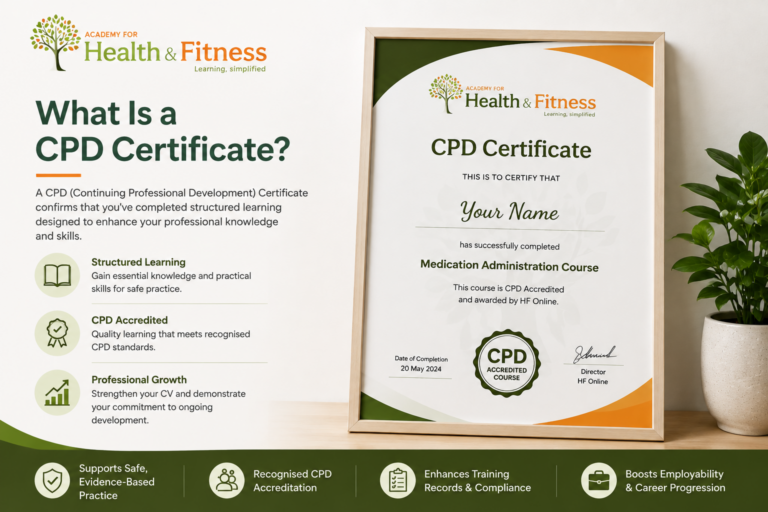
It’s worth being clear about what a CPD certificate does—and doesn’t—represent. A CPD certificate demonstrates completed, verifiable learning, but it does not replace employer competency assessments, regulated qualifications, or professional registration where these are legally required. Instead, it complements them by providing evidence of structured study and continuing professional development, rather than acting as a licence to practise independently or without supervision.
For employers, CPD-certified training provides reassurance that staff have completed recognised learning aligned with professional standards. It also supports workforce development by helping organisations maintain accurate training records, demonstrate a commitment to staff development, and prepare for internal audits or inspections. For individuals, it’s a straightforward way to strengthen a CV, demonstrate initiative, and show prospective employers that you’ve taken proactive steps to develop relevant healthcare knowledge before applying for a role.
Why Employers Value It
A CPD Medication Administration Course supports both individual and organisational goals. It helps keep knowledge current, refreshes medication safety procedures, improves confidence when administering medicines, and encourages consistent standards across healthcare teams. It also gives managers clear evidence of completed learning during annual appraisals, compliance reviews, or Care Quality Commission (CQC) inspections—rather than relying on a verbal assurance that “staff have been trained.” This documented evidence of continuing professional development helps create a stronger culture of safe practice and accountability within health and social care organisations.
Who Should Take a Medication Administration Course?
This course is designed for anyone responsible for handling, administering, recording, or supporting the use of medicines in health and social care — and for employers upskilling their workforce.
- Care Workers
Learn safe administration and accurate record-keeping. - Healthcare Assistants
Build confidence supporting medication procedures under supervision. - Support Workers
Understand medicines management for vulnerable adults. - Senior Carers
Refresh knowledge and strengthen supervisory responsibilities. - Domiciliary Care Staff
Administer medicines safely in people’s own homes, often unsupervised. - Team Leaders / Managers
Support medication governance and staff competency sign-off. - New Care Workers
Develop essential knowledge before handling medicines.
Family and unpaid carers aren’t usually required to complete formal training, but many choose to anyway, for confidence with storage, records, and communicating with healthcare professionals. Paid staff in residential, domiciliary, or supported living roles will typically find it forms a standard part of induction and ongoing development.
Healthcare assistants who support medication-related tasks in clinical or community settings benefit from the same core content: safe handling, records, infection prevention, and knowing when to escalate alongside whatever additional practical training their specific employer requires. Support workers, meanwhile, often need the material framed around person-centred care: MAR charts, safe administration technique, and clear communication with the wider care team, since their role usually sits within a person’s own home or a supported living setting rather than a clinical one.
What’s Included in a Medication Administration Course?
Course content varies between providers, but a comprehensive, high-quality course follows recognised medicines management principles and explains why each procedure matters—not just how to carry it out.

Core Modules & Learning Outcomes
Legislation & Responsibilities: Understand the UK legal framework (including controlled drugs) and learn how national legislation translates into everyday workplace policies.
The 6 Rs of Administration: Master the essential safety checklist—checking the Right Person, Right Medicine, Right Dose, Right Route, Right Time, and Right Documentation before any medication is administered.
MAR Charts & Record-Keeping: Learn how to accurately complete Medication Administration Records (MAR charts) and spot common documentation errors before they lead to incidents.
Storage & Disposal: Understand the strict requirements for safe storage, temperature monitoring, stock rotation, and safe medication disposal procedures.
Controlled Drugs: Learn the additional legal safeguards required for handling controlled drugs under UK law, including double-locking, checking procedures, and record-keeping.
Recognising & Reporting Errors: Develop the practical skills needed to identify medication errors and near-misses, and follow correct internal reporting and escalation procedures.
Administration Techniques: Gain confidence in safe administration methods across multiple routes—including oral, topical, transdermal, eye, ear, nasal, and inhaled medicines.
Infection Prevention & Control: Apply essential hygiene practices—such as handwashing, correct PPE usage, and clean area preparation—to prevent cross-contamination during medication rounds.
Communication & Professional Responsibilities: Understand your duty of care, confidentiality obligations (GDPR), and the importance of clear communication within multidisciplinary care teams.
Key Areas Covered in Depth
MAR Charts and Controlled Drugs
Medication Administration Records are among the most critical documents in care delivery. The Care Quality Commission (CQC) views accurate, up-to-date MAR charts as primary evidence of safe practice, making unexplained gaps a frequent compliance inspection finding. Controlled drugs carry strict legal oversight. Under the Misuse of Drugs Regulations 2001, providers must enforce secure storage and precise register entries. Most reputable care settings mandate a second-signature check on top of the statutory legal minimum to ensure accountability.
Preventing Medication Errors
Common drivers of medication incidents include administering doses to the wrong individual, incorrect timing or dosage, incomplete documentation, poor team communication, and environmental distractions during medication rounds. Comprehensive training embeds the “6 Rs” habit to actively disrupt these failure points before a mistake impacts a patient or resident. Advanced training—such as higher-level or supervisory courses—extends this foundation into medication auditing, policy oversight, and staff competency sign-offs.
Administration Technique and Infection Prevention
Beyond theoretical knowledge, effective training breaks down the practical principles behind each administration route—verifying prescriptions, cross-checking instructions, and logging details accurately whether administering an oral tablet or a topical cream. Because medication safety and infection control are deeply linked, this includes applying strict infection control measures: hand hygiene, appropriate PPE usage, clean preparation spaces, and proper disposal of clinical waste.
Communication and Escalation
Seamless communication ensures continuity of care across carers, healthcare assistants, nurses, pharmacists, and GPs. Courses train care staff to recognize subtle changes in a person’s condition, report concerns immediately, escalate issues through the correct organizational channels, and maintain strict data privacy throughout.
Benefits of Completing the Course
Beyond the certificate itself, this training changes how confidently and safely someone handles one of the highest-responsibility parts of care work. Whether you’re new to health and social care or refreshing your existing knowledge, the skills gained through a Medication Administration Course can improve both everyday practice and long-term professional development.- Reduces the risk of medication errors — Medication errors are among the most common preventable risks in health and social care. Learning the correct procedures for administering medicines, maintaining accurate medication records, and following medicines management protocols helps reduce mistakes while supporting patient safety.
- Builds genuine confidence handling a high-responsibility task — Administering medication requires attention to detail, sound judgement, and an understanding of workplace procedures. Structured training gives learners the confidence to carry out medication-related responsibilities safely while recognising when concerns should be escalated.
- Strengthens your CV for care and healthcare roles — Completing a Medication Administration Course with a CPD Certificate demonstrates initiative, professionalism, and a commitment to continuing professional development. It can help you stand out when applying for roles such as Care Worker, Healthcare Assistant, Support Worker, or Senior Carer.
- Helps employers evidence staff competency during a CQC inspection — Ongoing staff training is an important part of maintaining safe, effective care. Providing employees with medication administration training helps organisations demonstrate that staff have received structured learning and are working in line with recognised medicines management principles.
- Provides a recognised CPD Certificate for your professional portfolio — A CPD certificate offers evidence of structured learning that can be included in your professional development record, annual appraisal, or training portfolio. It reflects your commitment to keeping your knowledge up to date and supporting high standards of care.
- Deepens understanding of controlled drugs and covert administration — Comprehensive courses explore more complex areas of medicines management, including controlled drugs, covert administration, legal responsibilities, and safe medication practices. These are topics that many workplace inductions introduce only briefly but are essential for developing a broader understanding of safe and responsible medication administration.
Career Opportunities After Certification
Medication training rarely creates a brand-new job title on its own, but it’s frequently the deciding factor between similar candidates, and a near-universal requirement for progression into senior or coordination roles.| Career Path | How Medication Training Helps |
|---|---|
| Senior Care Assistant | Often responsible for overseeing medication rounds and supporting less experienced staff. |
| Care Coordinator | Coordinates care plans, including medicines management, across a caseload. |
| Domiciliary Care Worker | Administers or supports medication during home visits, often working independently. |
| Residential Support Worker | Handles routine medication administration as part of daily care home duties. |
| Healthcare Assistant | Supports clinical staff with medication tasks in community or clinical settings. |
| Registered / Deputy Manager | Responsible for medicines policy, audits, compliance, and staff competency sign-off. |
Does it increase your salary?
Not automatically. Pay depends on role, employer, experience, location, and responsibility level. What it does is strengthen your professional profile — entry-level care roles typically start in the low-to-mid £20,000s, with senior, coordination, or medication-lead responsibilities pushing that toward £28,000–£35,000+ depending on employer and region. Medication competency alone won’t set the number, but it’s consistently listed as a requirement once a role moves beyond entry-level.Complementary training
Many learners combine this with related courses such as First Aid, Health and Safety, Safeguarding and Adult Social Care training, Infection Prevention and Control, and Mental Health Awareness — together building a well-rounded foundation for care work.Online vs Classroom Training
Choosing between online and classroom-based medication administration training depends on your schedule, employer requirements, preferred learning style, and the level of support you need during your studies. Both learning formats can provide valuable knowledge, but the right option depends on your personal circumstances and professional goals. An online medication administration course is often the preferred choice for people balancing work, family responsibilities, or shift patterns because it allows learners to study at a time and pace that suits them. This flexibility is particularly useful for care workers, healthcare assistants, and support workers who may have changing schedules or limited availability for fixed classroom sessions. Classroom-based training, however, provides direct face-to-face interaction with a trainer. Some learners prefer this approach because they can ask questions immediately, discuss scenarios with other professionals, and receive guidance throughout the session. Where an employer requires a practical competency assessment before allowing staff to administer medication, an online CPD course is normally combined with workplace-based observation and assessment. The online training provides the theoretical knowledge, while the employer confirms practical competence within the workplace. Key benefits of online medication administration training include:- Study around work or family commitments, at your own pace
- Access course materials 24/7 and revisit modules whenever needed
- Avoid travel time and costs, which is particularly useful for staff working across multiple locations
- Receive consistent training content delivered in the same format, helping larger healthcare teams maintain the same standard of knowledge
- Complete learning remotely without needing to attend scheduled sessions
Online vs Classroom Medication Administration Training
| Feature | 💻 Online Course | 🏫 Classroom Training |
|---|---|---|
| Flexibility | Study anytime, anywhere and complete modules at your own pace. | Fixed schedule and location with set attendance times. |
| Learning Style | Suitable for independent learners who prefer flexible study. | Ideal for learners who benefit from face-to-face interaction. |
| Cost | Often more affordable due to no travel or venue costs. | Usually higher because of trainer, venue, and delivery costs. |
| Accessibility | Available to learners across the UK regardless of location. | Limited to available training venues and dates. |
| Best For | Busy professionals, refresher training, and remote learners. | Learners who prefer direct support and classroom discussion. |
| Course Materials | Digital resources available for repeated review. | Physical or classroom-based resources provided during training. |
Duration, Assessment, and Employer Recognition
Most online medication administration courses can be completed within two to four hours, depending on the provider, course structure, and the learner’s pace. One of the main advantages of online training is flexibility, allowing learners to complete modules around existing work commitments, family responsibilities, or shift patterns. Some learners may complete the course in one sitting, while others prefer to study gradually over several sessions. Assessment methods vary between providers but are commonly completed through knowledge checks throughout the course or a final multiple-choice assessment. Many courses require learners to achieve a pass mark before receiving their certificate, with typical pass requirements often ranging between 60–80%. Successfully completing the course demonstrates that the learner has developed theoretical knowledge of medication safety, medicines management, legal responsibilities, and safe administration procedures. However, it is important to understand that completing an online course does not automatically authorise someone to administer medication independently. Most employers carry out a separate practical competency assessment before allowing staff members to undertake unsupervised medication administration. This workplace assessment helps ensure that employees can apply their knowledge correctly within their specific care setting and according to organisational policies. CPD-certified medication administration training is widely recognised across UK care providers as evidence of relevant professional learning. A CPD certificate can support career development by strengthening a CV, contributing towards appraisals, and providing evidence of staff development during quality reviews or CQC inspections. Although CPD certificates themselves do not usually have an expiry date, healthcare organisations may recommend refresher training to maintain confidence and ensure knowledge remains current. The timing of refresher training is generally decided by the employer and may occur every one to three years or following changes in guidance, workplace procedures, or a medication-related incident.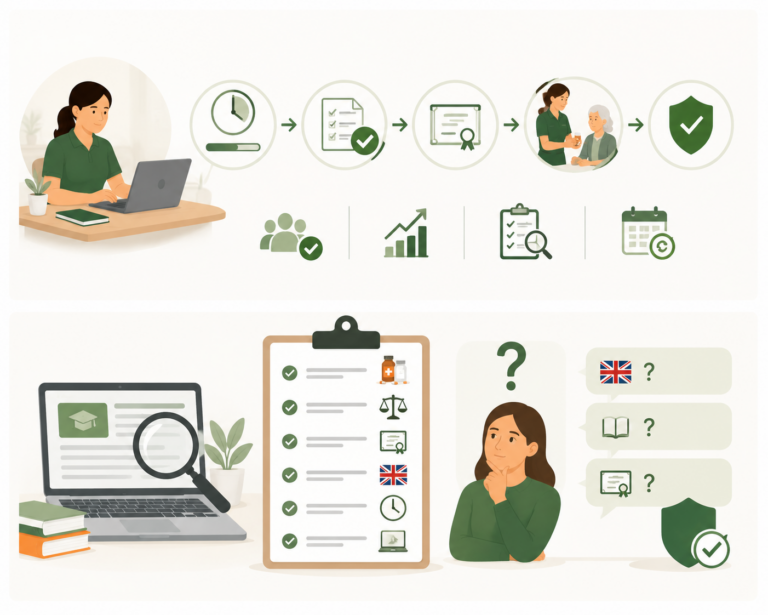
How to Choose the Best Course in the UK
Not all medication administration courses offer the same level of quality. Choosing the right provider is important if you want training that is relevant, current, practical, and recognised by employers. Rather than choosing a course based on price alone, review the course content and provider against a clear checklist before enrolling:- Covers essential areas such as medicines management, medication safety, MAR charts, medicine storage, and controlled drugs
- Includes information about legal responsibilities and infection prevention procedures
- Provides a CPD Certificate after successful completion
- Is written specifically for UK healthcare and social care settings
- Clearly explains learning outcomes and estimated study time
- Offers flexible online learning with the ability to revisit course materials
Common Mistakes Learners Make
Most people enrol on a medication administration course with positive intentions. They want to improve their knowledge, build confidence, and develop skills that support safer care. However, some common mistakes can reduce the overall value they gain from the training. Avoiding these mistakes helps learners get more from their course and apply their knowledge effectively in real healthcare and social care settings. Choosing the cheapest course A low-cost course is not always the best value. While price is an important consideration, learners should look beyond cost alone and evaluate the quality of the training, course content, provider reputation, and whether the programme covers essential topics such as medication safety, MAR charts, medicines management, and legal responsibilities.A well-structured course should provide practical knowledge that supports safe practice rather than simply offering a certificate at the end. Assuming CPD replaces competency A CPD certificate demonstrates that you have completed structured learning and developed your understanding of medication administration. However, it does not automatically mean you are authorised to administer medicines independently.Many employers require additional workplace competency assessments, practical observations, or sign-off procedures before staff can take on medication responsibilities. A certificate supports your development, but employer requirements and role-specific training remain essential. Skimming the content
Medication administration involves important responsibilities relating to patient safety, record keeping, and legal compliance. Completing the course as quickly as possible without fully understanding the material can limit its value.Take time to understand key areas such as medication errors, safe administration procedures, medicine storage, and reporting responsibilities. The aim is not simply to complete the assessment, but to gain knowledge that can be applied confidently in practice.
Ignoring workplace policies
Every healthcare and social care organisation has its own medicines management procedures. A general medication administration course provides a strong foundation, but it does not replace your employer’s specific policies and guidelines.Always follow workplace procedures, seek clarification when unsure, and understand your responsibilities within your role.
Not refreshing knowledge
Healthcare guidance and workplace practices can change over time. Regular refresher training helps keep your knowledge current and ensures that your skills remain aligned with safe medication practices.Your certificate shows what you have achieved, but ongoing learning helps maintain the quality of care you provide.
Skimming the content
Medication administration involves important responsibilities relating to patient safety, record keeping, and legal compliance. Completing the course as quickly as possible without fully understanding the material can limit its value.Take time to understand key areas such as medication errors, safe administration procedures, medicine storage, and reporting responsibilities. The aim is not simply to complete the assessment, but to gain knowledge that can be applied confidently in practice.
Ignoring workplace policies
Every healthcare and social care organisation has its own medicines management procedures. A general medication administration course provides a strong foundation, but it does not replace your employer’s specific policies and guidelines.Always follow workplace procedures, seek clarification when unsure, and understand your responsibilities within your role.
Not refreshing knowledge
Healthcare guidance and workplace practices can change over time. Regular refresher training helps keep your knowledge current and ensures that your skills remain aligned with safe medication practices.Your certificate shows what you have achieved, but ongoing learning helps maintain the quality of care you provide.