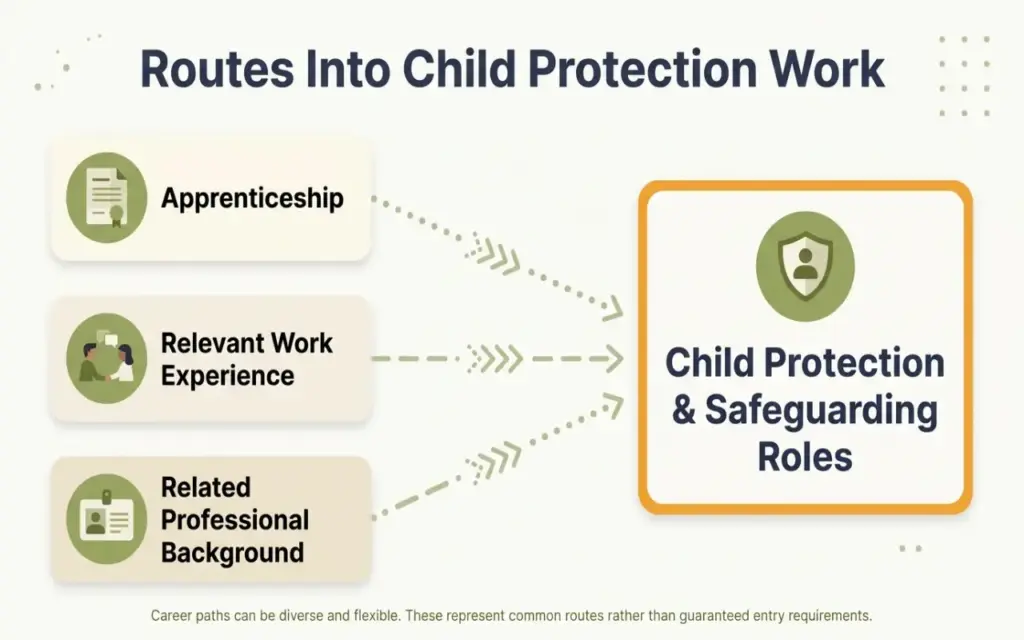
There is no single route to becoming a child protection officer in the UK. Depending on the job and sector, you might enter through an apprenticeship, build relevant experience before moving into safeguarding work, or progress from a profession such as social work, teaching or policing.
What matters is understanding what the employer expects. Relevant experience with children, safeguarding knowledge and the ability to handle sensitive concerns appropriately can all be important. Some positions may also require particular professional qualifications or background checks.
The National Careers Service outlines several routes into a child protection officer career, rather than one fixed qualification. This guide explains those routes and the practical steps you can take towards this type of work.
Build Your Child Protection and Safeguarding Knowledge
If you are preparing for work where safeguarding children may form part of your responsibilities, building a clear understanding of child protection is a useful step. HF Online’s Child Protection and Safeguarding course provides online training for developing your knowledge of safeguarding and child protection
Child Protection and Safeguarding
What Is a Child Protection Officer?
A child protection officer helps protect children and young people from harm. This can involve concerns about abuse, neglect, exploitation and other risks to a child’s safety and wellbeing.
The role may include speaking with children and families, responding to welfare concerns, keeping records, making referrals and working with other agencies. The National Careers Service also uses safeguarding officer as an alternative title for a child protection officer.
However, job titles are not identical across every organisation. A school may have a Designated Safeguarding Lead (DSL), for example, while another organisation may employ a safeguarding officer, safeguarding coordinator or someone whose wider role includes child protection responsibilities.
If you want a more detailed picture of the responsibilities involved, read about safeguarding officer duties and skills.
What Qualifications Do You Need to Become a Child Protection Officer?
There is no single qualification that applies to every child protection officer job in the UK. Requirements depend on the employer, sector, responsibilities of the position and the route you take into the work.
The National Careers Service identifies apprenticeship, progression from related work and direct application as possible routes. Direct applicants may already be qualified professionals with experience of working with children, young people and families.
That makes it important to check actual job specifications rather than assuming that one certificate or course will qualify you for every child protection position.
Do You Need a Degree?
A degree is not presented as a universal requirement for every route into child protection officer work.
Some people move into child protection from established professions. The National Careers Service gives examples including social workers, teachers, police officers, youth workers and family support workers.
These routes can carry their own qualification and registration requirements. Therefore, if you are interested in a particular position, check the employer’s essential and desirable criteria before choosing further study.
Is There a Child Protection Officer Apprenticeship?
An apprenticeship can be one route.
The National Careers Service identifies the Level 3 Safeguarding Support Officer Advanced Apprenticeship as a potential pathway into child protection work with further experience and training. Skills England lists the Safeguarding Support Officer apprenticeship as Level 3 and approved for delivery.
The standard covers safeguarding work across organisations including education and training, health and social care, police support, housing, charities and voluntary organisations.
Availability and employer entry requirements can change, so check the current apprenticeship information before applying.
How to Become a Child Protection Officer: 6 Practical Steps
Knowing that there is more than one route is useful. The next question is what you can actually do to prepare.
These six steps provide a practical starting point.
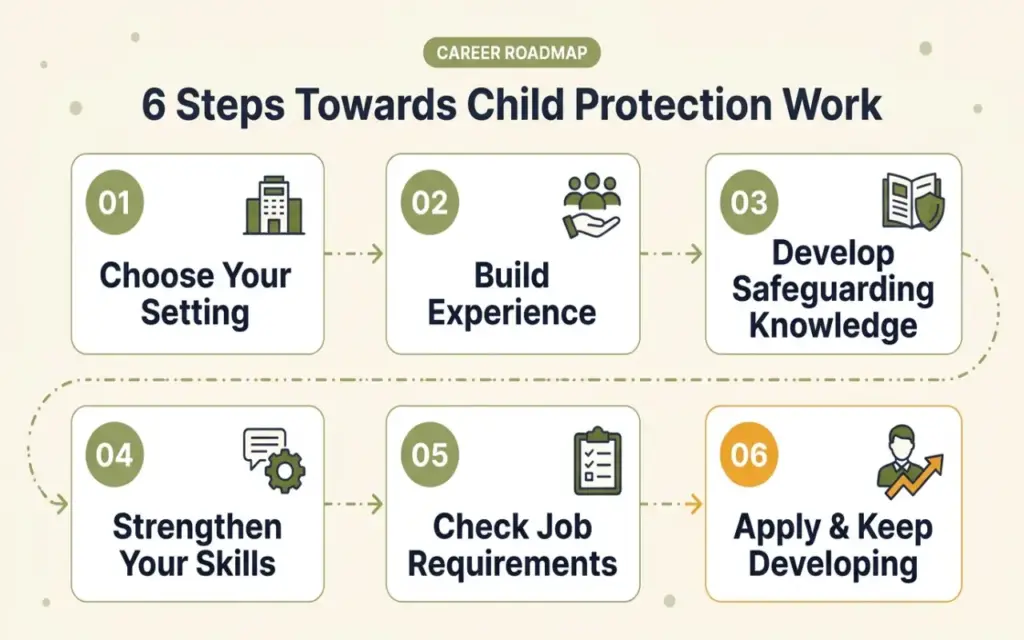
1. Decide Which Setting You Want to Work In
Start by thinking about where you want to work.
Child protection and safeguarding responsibilities exist across different settings, including education, children’s services, charities and voluntary organisations. The precise job title, responsibilities and entry requirements can differ considerably between them.
This matters when planning your route. Someone interested in safeguarding within a school may need a different professional background from someone aiming for a specialist role within another organisation.
If education particularly interests you, working as a school pastoral officer is another related career route worth exploring.
Once you have identified a sector, look at several current vacancies. Compare their essential criteria before deciding what qualifications, training or experience you need next.
2. Build Experience Working With Children and Young People
Relevant experience is particularly important.
The National Careers Service says experience of working with vulnerable children is essential when applying for child protection officer jobs and identifies volunteering as one way to gain experience.
Experience gives you more than something to put on an application. Working appropriately with children and young people can develop your communication, listening and professional-boundary skills. It can also expose you to the policies and procedures used in settings where safeguarding matters every day.
The right experience will depend on your intended role. Look for opportunities where you can develop relevant skills and learn how organisations protect children, while working within the responsibilities appropriate to your position.
3. Build Your Safeguarding and Child Protection Knowledge
Experience needs to be supported by sound safeguarding knowledge.
Depending on your role, useful areas of understanding may include recognising safeguarding concerns, responding appropriately to disclosures or concerns, following reporting procedures, keeping appropriate records and understanding professional responsibilities.
Training can help you develop this underpinning knowledge, but it should be viewed as part of your development rather than an automatic qualification for a child protection officer job.
HF Online’s Child Protection and Safeguarding course is one option for people looking to develop their knowledge of child protection and safeguarding. Before enrolling in any training, check the course content against your learning needs and the requirements of the roles you are targeting.
For a closer look at what to consider before choosing training, see choosing child protection and safeguarding training.
4. Develop the Skills Employers Need
Safeguarding work requires more than theoretical knowledge.
You may need to listen carefully, communicate sensitive information, remain calm when concerns arise and work effectively with other professionals. Accurate record keeping, sound judgement, sensitivity and a non-judgemental approach can also be important.
The National Careers Service highlights skills including active listening, verbal communication, sensitivity, patience and the ability to work well with others.
You do not need to develop every skill overnight. Relevant employment, volunteering, training and feedback from experienced colleagues can all contribute to your professional development.
5. Check the Requirements for the Job You Want
Before applying, read the job description and person specification closely.
Look for:
- required and desirable qualifications;
- experience with children, young people or families;
- safeguarding knowledge or training;
- professional registration, where relevant;
- skills and competency requirements;
- background-check requirements.
Do not assume that every role involving children automatically receives exactly the same type of DBS check. GOV.UK’s DBS eligibility guidance explains that eligibility depends on the specific position and activities involved, and that recruiting organisations are responsible for determining the appropriate level in line with the law.
This is another reason to work backwards from the actual job you want rather than collecting courses or certificates without checking their relevance.
6. Apply for Relevant Roles and Keep Developing
When you are ready to apply, don’t search only for the exact phrase “child protection officer”.
Depending on the organisation, related safeguarding responsibilities can appear under different job titles. “Safeguarding officer” is one alternative title recognised by the National Careers Service, while other roles may have safeguarding responsibilities within a broader remit.
Read each vacancy carefully and tailor your application to its requirements. Give relevant examples of working with children or young people, following procedures, communicating sensitively and applying safeguarding knowledge where appropriate.
Professional development does not stop when you secure a role. Safeguarding guidance, organisational procedures and responsibilities can change, so keeping your knowledge current is part of working responsibly in this field.
Child Protection Officer vs Safeguarding Officer vs DSL
These terms are related, but they should not automatically be treated as three names for exactly the same job.
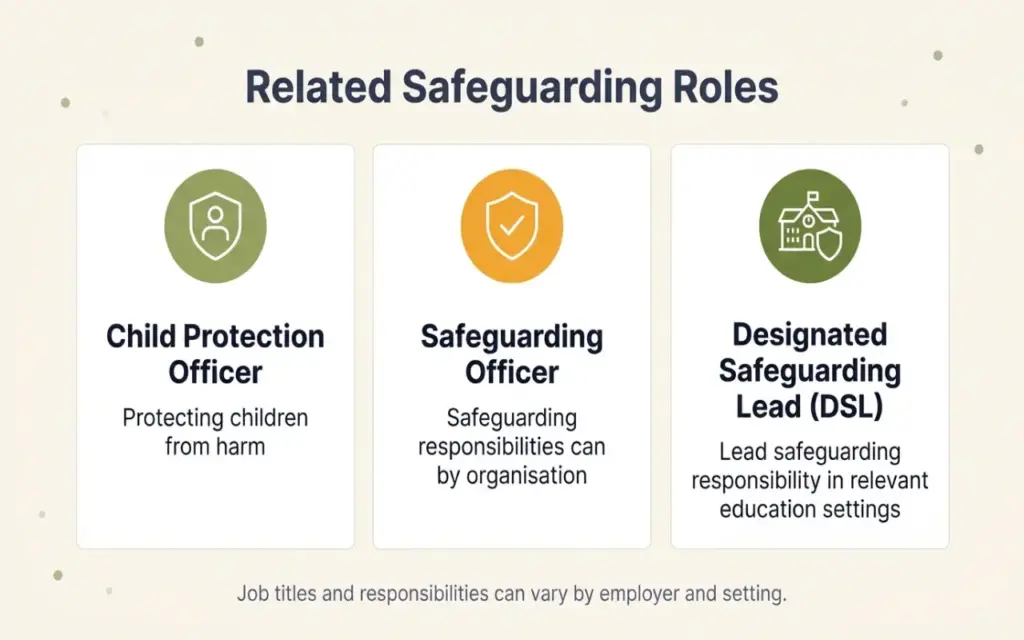
| Term | What It Generally Means | Where You May Encounter It |
|---|---|---|
| Child protection officer | A role focused on protecting children from harm and responding to child protection concerns | Different organisations and services |
| Safeguarding officer | A related title that may cover child or wider safeguarding responsibilities | Public, private and voluntary-sector organisations |
| Designated Safeguarding Lead (DSL) | The person with lead safeguarding and child protection responsibility within the relevant education setting | Schools and colleges in England |
In England, the Department for Education’s Keeping Children Safe in Education guidance sets out statutory safeguarding guidance for schools and colleges. It sets out the safeguarding responsibilities schools and colleges must follow, including the role of the Designated Safeguarding Lead.
So, seeing “DSL” in a school does not mean every child protection officer position elsewhere is the same job.
You may also come across safeguarding coordinators. For a closer look at that position, see the safeguarding coordinator role.
How Much Does a Child Protection Officer Earn?
The National Careers Service currently gives an indicative salary of £27,000 a year for a starter to £50,000 for an experienced child protection officer.
Treat those figures as a guide rather than a guaranteed salary. Pay can differ according to your employer, professional background, experience, responsibilities, location and sector.
For a more detailed breakdown, see child protection officer pay in the UK.
You can also check the current child protection officer salary range on the National Careers Service before making career or salary decisions.
Where Can Child Protection Officers Work?
Child protection and safeguarding work is not confined to one type of workplace.
Depending on your qualifications and experience, relevant roles may exist across education, children’s and family services, charities, voluntary organisations and other services working with children and young people.
Some professionals also move towards specialist child protection responsibilities from existing careers such as social work, teaching or policing.
The setting matters because safeguarding structures and job requirements are not identical everywhere. For example, someone interested specifically in early-years work should check the requirements that apply to that environment rather than assuming school or charity arrangements are the same. Our guide to safeguarding training for nursery staff covers that area separately.
Is Child Protection the Right Career for You?
Child protection work carries significant responsibility, so it is worth considering whether the nature of the work suits your strengths as well as your career ambitions.

You may need to:
- handle sensitive information appropriately;
- listen and communicate without rushing to judgement;
- follow procedures carefully;
- maintain professional boundaries;
- work with children, families and other professionals;
- remain calm when dealing with difficult concerns;
- keep your safeguarding knowledge up to date.
You do not need to arrive with every skill fully developed. But you should be prepared for a role where sound judgement, professionalism and a child-centred approach matter.
Your Next Steps Towards Child Protection Work
Becoming a child protection officer is less about following one universal qualification route and more about building the right combination for the role you want.
Start by choosing the setting that interests you. Check real vacancies, identify the experience and qualifications employers expect, build relevant experience with children and strengthen your safeguarding knowledge.
If developing that knowledge is one of your next steps, the HF Online Child Protection and Safeguarding course can be considered as a professional-development option. Keep it in context, though: your eventual route will depend on the specific role, employer and sector you choose.
Table of Contents