

The UK workforce is changing. According to the Office for National Statistics, health, social care, and hospitality remain among the country’s largest regulated sectors. The hospitality and catering industry alone employs over 3.5 million people, many of whom work under supervisors responsible for food safety compliance. As standards tighten, more professionals are choosing online qualifications to stay compliant without stepping away from work.
At the same time, food safety in the UK is a legal duty, not a best-effort task. Data from the Food Standards Agency shows that around 95% of food businesses are small or medium-sized enterprises, where managers often juggle food safety alongside daily operations. As a result, regulators and customers are paying closer attention to hygiene standards, inspection scores, and how well businesses are managed behind the scenes.
Because of this, supervisors and managers are held to a higher standard than frontline staff. They set procedures, train teams, and manage risk. This article explains why Food Hygiene Level 3 training matters, what it covers, and how it protects both your role and your business.
What Is Food Hygiene Level 3 Training?
Food hygiene training in the UK is set out in clear levels, and each one matches a different level of responsibility. While Level 1 and Level 2 focus on day-to-day tasks, Food Hygiene Level 3 is about management, control, and accountability. In other words, it’s designed for people who don’t just follow rules, but make sure those rules are followed.
Understanding Food Hygiene Training Levels
To begin with, it helps to understand how the levels work.
- Level 1 is for staff who handle low-risk food tasks. For example, someone serving pre-packed food or drinks.
- Level 2 is for food handlers who prepare, cook, or serve food regularly. This is the most common level for kitchen staff.
- Level 3, however, is for those who supervise or manage others and are responsible for food safety systems.
So while Level 2 teaches staff what to do, Level 3 focuses on how to manage food safety properly across the whole business.
How Level 3 Is Different from Level 2
Although Level 2 is essential, it simply isn’t enough for supervisors and managers. Level 3 goes much further.
For example, Level 3 training covers:
- How to identify and control food safety risks
- How to implement and monitor food safety procedures
- How to manage staff training and poor hygiene practices
- How to prepare for inspections and audits
As a result, managers are expected to understand not just safe practices, but also why those practices matter and what to do when things go wrong. If a fridge breaks down or a staff member ignores procedures, it’s the manager who must act correctly and quickly.
Legal Responsibilities for Supervisors and Managers in the UK

When it comes to food safety, UK law is clear. If you supervise or manage food operations, the responsibility sits with you. Although frontline staff must follow rules, managers are legally expected to make sure those rules exist, are understood, and are followed every day.
Key UK Food Safety Laws
To begin with, the Food Safety Act 1990 requires all food sold to be safe and correctly handled. Alongside this, the Food Hygiene Regulations apply across England, Scotland, Wales, and Northern Ireland, setting practical standards for hygiene, training, and food handling.
The Food Standards Agency provides national guidance, while local Environmental Health Officers enforce the rules through inspections.
Why Managers Are Accountable
Although mistakes may happen on the floor, managers are expected to prevent them. This includes training staff, monitoring hygiene, and acting quickly when problems arise. During inspections, officers usually question managers because they control procedures and standards.
Consequences of Non-Compliance
If food safety rules are not followed, the consequences can be serious. Depending on the issue, enforcement action may include:
- Improvement notices, requiring changes within a set time
- Fines, which can be costly for both the business and individuals
- Prosecution, in serious cases involving harm or repeated failures
- Business closure, either temporarily or permanently
Why Level 2 Training Is Not Enough for Managers
Food Hygiene Level 2 is often seen as the standard qualification in food businesses. However, while it is essential for food handlers, it does not fully prepare you for a management role. If you supervise staff or make food safety decisions, Level 2 alone leaves important gaps.
What Level 2 Training Covers
To start with, Level 2 focuses on safe day-to-day food handling. It teaches staff how to:
- Handle food safely
- Avoid cross-contamination
- Maintain basic personal hygiene
- Follow simple cleaning routines
So, for kitchen staff working under supervision, Level 2 is usually enough. However, it is designed to help people follow rules, not manage them.
Where Level 2 Falls Short for Managers
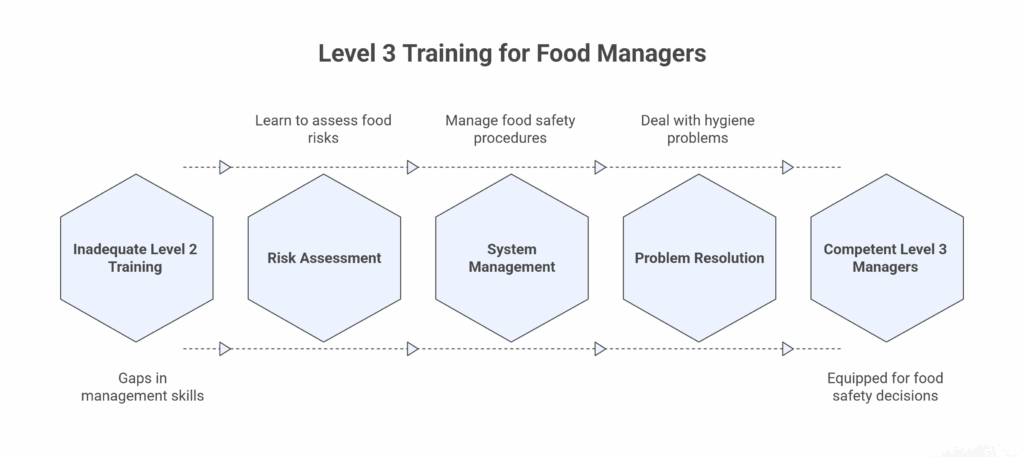
As soon as you move into a supervisory role, the expectations change. Level 2 does not explain how to assess risk, manage systems, or deal with problems when they arise.
For example, if a fridge breaks down overnight, Level 2 does not prepare you to decide what food is safe, what must be discarded, or how to record the incident. Level 3, on the other hand, covers these situations in detail.
How Level 3 Fills the Gap
Level 3 training builds on Level 2 and goes further. It focuses on:
- Managing food safety procedures
- Supervising and training staff
- Monitoring standards and taking corrective action
- Preparing for inspections
Therefore, Level 3 is designed for supervisors, managers, and business owners who are responsible for food safety decisions. If you’re leading a team, speaking to inspectors, or setting hygiene standards, Level 3 isn’t just useful. It’s expected.
Key Topics Covered in Food Hygiene Level 3 Training
Food Hygiene Level 3 training goes beyond basic food handling. While Levels 1 and 2 focus on personal actions, Level 3 focuses on managing food safety across the whole workplace. As a result, it gives supervisors and managers the tools they need to stay in control, even when things don’t go to plan.
From Handling Food to Managing Risk
To put it simply:
- Level 1 teaches awareness for low-risk roles
- Level 2 teaches safe food handling for daily tasks
- Level 3 teaches how to manage food safety systems and people
So, instead of learning what to do, Level 3 helps you understand why things are done and how to fix problems when they happen.
Food Safety Management and HACCP
One key topic is food safety management systems, including HACCP principles. You learn how to:
- Identify food safety risks
- Put controls in place
- Monitor and review procedures
For example, if cooling food safely becomes an issue, Level 3 training shows you how to spot the risk early and correct it before it becomes a bigger problem.
Managing Staff and Daily Standards
Level 3 also focuses on people management. Since managers are responsible for staff behaviour, the course covers:
- Training staff properly
- Correcting poor hygiene practices
- Setting clear standards and routines
This is especially useful when staff turnover is high, as you’ll know how to keep standards consistent.
Dealing with Inspections and Problems
Finally, Level 3 prepares you for inspections and real-life challenges. You learn how to:
- Handle equipment failures
- Keep clear records
- Answer inspector questions with confidence
Therefore, Food Hygiene Level 3 is designed for supervisors, managers, and business owners who need to lead food safety, not just follow it.
Impact on Food Hygiene Rating Scheme (FHRS) Scores
Your Food Hygiene Rating is often the first thing customers see. Whether it’s on the door, online, or on a delivery app, that score shapes trust before anyone tastes the food. Because of this, understanding how the rating works is essential for supervisors and managers.
What Is the FHRS and Why It Matters
The Food Hygiene Rating Scheme (FHRS) shows how well a food business meets hygiene standards at the time of inspection. Ratings usually range from 0 to 5. While a 5 shows very good hygiene, lower scores can raise doubts for customers.
As a result, many people actively check ratings before deciding where to eat. So even a small drop in score can affect footfall.
How Management Knowledge Affects Your Rating
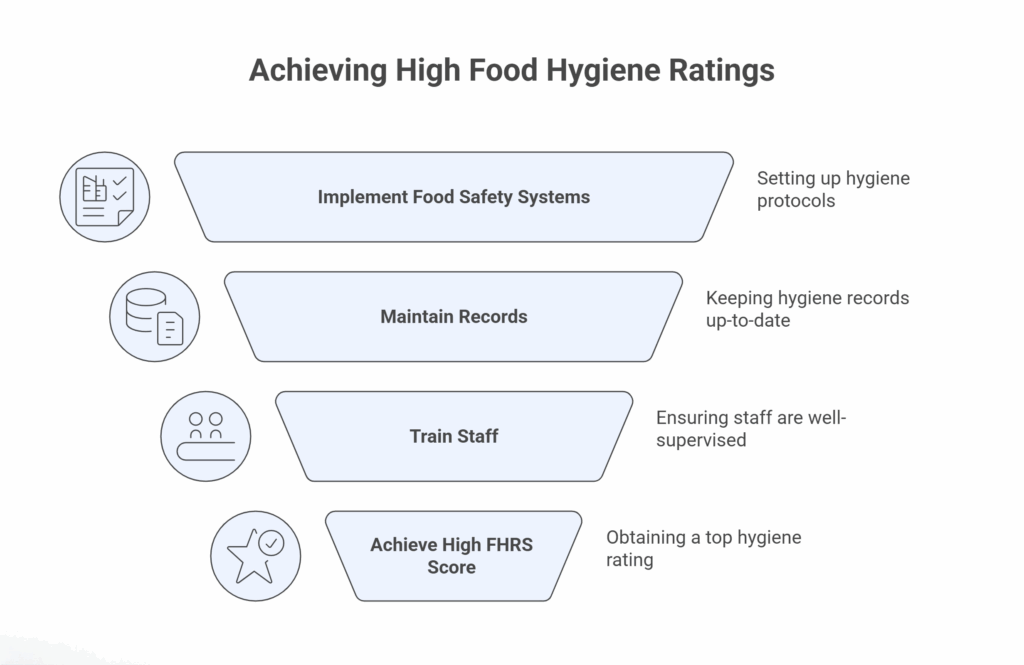
Although inspections look at the whole business, inspectors focus heavily on management control. This includes:
- How food safety systems are set up
- Whether records are complete and up to date
- How staff are trained and supervised
Therefore, if managers don’t fully understand food safety, it often shows during an inspection.
The Link Between Level 3 Training and Higher Scores
Level 3 training gives supervisors the knowledge inspectors expect to see. For example, a trained manager can explain why controls are in place, not just that they exist. In many cases, businesses with trained supervisors are better prepared, calmer during inspections, and more consistent day to day.
Commercial Benefits of a Good Rating
A strong FHRS score brings clear business benefits:
- Customer trust, especially for new visitors
- Increased footfall, both in person and online
- A better online reputation, with fewer negative reviews
Ultimately, investing in Level 3 training helps protect your score. More importantly, it helps protect your business.
Reducing Business Risk and Protecting Your Reputation
Running a food business always carries risk. However, how well you manage food safety determines whether those risks stay small or turn into serious problems. This is where strong management knowledge makes a real difference.
How Food Safety Issues Become Business Risks
When food safety goes wrong, the impact is rarely limited to one mistake. For example, a single case of cross-contamination can lead to customer illness, complaints, and a poor inspection outcome. As a result, what starts as a small error can quickly damage trust.
Common risks include:
- Poor temperature control
- Allergen mistakes
- Inconsistent cleaning routines
- Staff not following procedures
Why Managers Play a Key Role
Although staff handle food, managers control systems. Therefore, inspectors and customers expect you to spot issues early and act fast. With Level 3 training, you’re better prepared to assess risk, correct problems, and document actions properly.
For instance, if a delivery arrives at the wrong temperature, a trained manager knows when to reject it and how to record the decision. This protects both customers and the business.
Protecting Your Reputation Long Term
Reputation is hard to build and easy to lose. A poor hygiene rating, bad review, or social media post can stay online for years. However, consistent food safety management helps prevent these situations.
Ultimately, Food Hygiene Level 3 training isn’t just about compliance. It’s about protecting your name, your customers, and the future of your business.
Who Should Take Food Hygiene Level 3 Training?
Food Hygiene Level 3 training isn’t for everyone. However, if you’re responsible for people, processes, or decisions, it quickly becomes essential. In simple terms, anyone who leads food safety should consider Level 3.
Roles That Benefit Most from Level 3
To begin with, Level 3 is designed for people who supervise or manage food operations. This includes:
- Restaurant, café, and takeaway managers
- Head chefs and kitchen managers
- Catering supervisors in schools, hospitals, and care homes
- Food business owners
- Team leaders in food manufacturing or production
So, if staff look to you for guidance or if inspectors direct questions at you, Level 3 is the right level.
When Level 3 Is Strongly Recommended
Although the law doesn’t name specific qualifications, inspectors expect managers to understand food safety in depth. Therefore, Level 3 is strongly recommended if you:
- Set hygiene procedures
- Train new staff
- Check records and logs
- Deal with inspections and audits
For example, during an inspection, an Environmental Health Officer may ask why certain controls are in place. A Level 3–trained manager can explain this clearly and confidently.
Moving Into a Supervisory Role
Finally, if you’re stepping up from a Level 2 role, Level 3 helps bridge the gap. It prepares you for greater responsibility and shows your employer that you take food safety seriously.
Ultimately, Level 3 isn’t just about knowledge. It’s about being ready to lead safely and confidently every day.
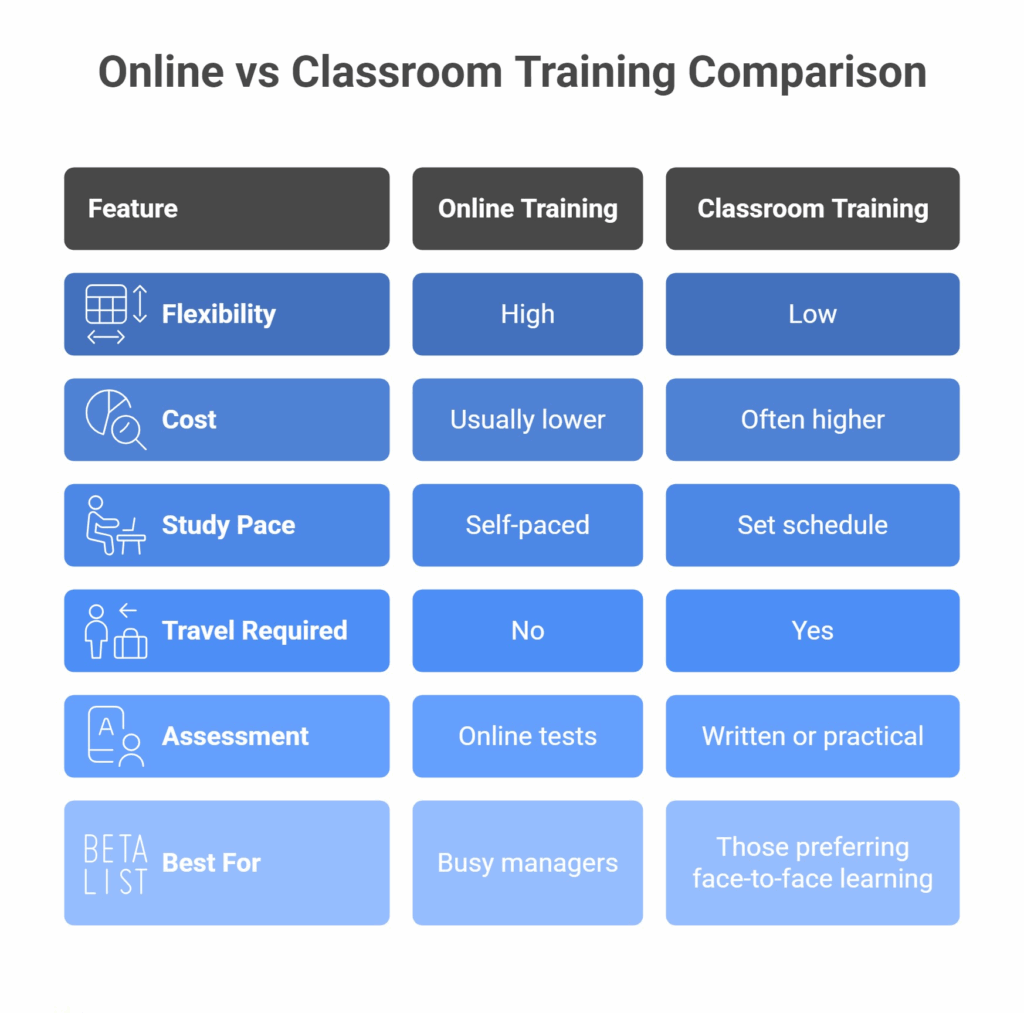
Online vs Classroom Food Hygiene Level 3 Training
When choosing Food Hygiene Level 3 training, one of the first decisions you’ll face is online or classroom learning. Both options are recognised in the UK. However, the right choice often depends on your role, schedule, and budget.
Online Food Hygiene Level 3 Training
Online training has become increasingly popular. This is mainly because it fits around busy working lives.
For example, if you’re managing a kitchen or care setting, stepping away for a full training day can be difficult. With online learning, you can:
- Study at your own pace
- Log in anytime, anywhere
- Pause and return when needed
As a result, many managers prefer online courses because they reduce disruption to daily operations. They are also usually more cost-effective.
Classroom Food Hygiene Level 3 Training
On the other hand, classroom training offers face-to-face learning. Some people find this helpful, especially if they prefer group discussion.
Classroom courses often:
- Run on fixed dates
- Include direct trainer interaction
- Take place over one or two full days
However, while this format works well for some, it may involve travel costs and time away from work.
Online vs Classroom Training Comparison
How Often Should Level 3 Training Be Refreshed?
Food safety standards don’t stand still. Because of this, your knowledge shouldn’t either. Even experienced managers benefit from regular refreshers to stay confident and compliant.
The Recommended Refresh Cycle
Although Food Hygiene Level 3 certificates do not legally expire, industry best practice is to refresh training every three years. This timeframe helps ensure your knowledge stays aligned with current guidance and inspection expectations.
Why Keeping Training Up to Date Matters
Over time, rules evolve and working habits change. Therefore, refresher training helps you:
- Keep up with updates to food safety law and guidance
- Revisit key responsibilities you may not deal with every day
- Correct small gaps before they become inspection issues
For example, allergen controls have become more detailed in recent years. Without updated training, it’s easy to miss what inspectors now expect to see.
What Inspectors Look For
During inspections, Environmental Health Officers often ask managers about their training history. While there is no legal expiry date, outdated training can raise concerns.
So, having recent Level 3 training shows that you stay proactive, understand current risks, and take your role seriously.
In the long run, refreshing your training isn’t just about compliance. It’s about staying prepared, confident, and in control of food safety every day.
Business Benefits Beyond Compliance

Food Hygiene Level 3 training isn’t just about following the rules. In fact, it helps you run your business better day to day. When managers understand food safety properly, work becomes smoother and problems are easier to handle.
Smoother Daily Operations
With the right knowledge, you can spot issues early. As a result, small problems don’t turn into big ones. For example, if temperature checks are missed, a trained manager knows how to fix the issue quickly and keep records up to date.
This saves time. It also reduces pressure on staff during busy periods.
Stronger Leadership and a Confident Team
When you’re confident, your team feels it. Therefore, clear instructions and fair decisions help staff follow rules without confusion.
Level 3 training helps you:
- Explain hygiene rules clearly
- Correct mistakes calmly
- Train new staff properly
Over time, this creates a positive food safety culture where everyone knows their role.
Less Stress When Inspectors Visit
Inspections can be stressful. However, managers with Level 3 training are better prepared. You know where records are, why systems exist, and how to answer questions with confidence.
Final Thoughts
Food Hygiene Level 3 training isn’t just about ticking a box. Instead, it’s an essential investment for anyone responsible for food safety. It gives supervisors and managers the knowledge to lead confidently, manage risk, and meet legal expectations.
Ultimately, the right training protects your customers, your reputation, and your business. When food safety is managed well, everything else runs more smoothly.