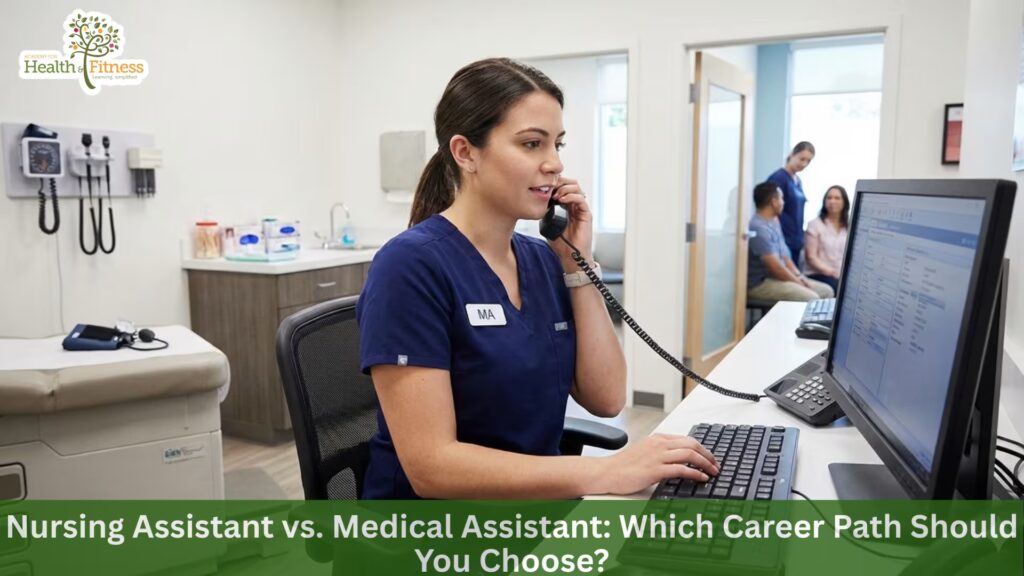


Nursing Assistant vs. Medical Assistant — it’s a choice many people wrestle with when they realise how many different paths exist in health care. Maybe you’re imagining yourself helping patients directly, or maybe the idea of working in a clinic feels more like “you.” That uncertainty is normal, and it’s often the first sign that you’re serious about choosing the right career.
You should choose a nursing assistant role if you prefer hands-on patient care, and a medical assistant role if you want a blend of clinical and administrative duties in a clinic-based setting.
Before you decide, it helps to understand what each role actually looks like. In this guide, you’ll learn:
- What nursing assistants and medical assistants do day to day
- Training, skills and qualifications needed for each role
- Where each role works and who they support
- Key differences and surprising similarities
- Salary expectations and long-term career progression
- How to decide which path suits your personality and goals
Nursing Assistant vs Medical Assistant: Key Differences at a Glance
 What Is a Nursing Assistant?
A nursing assistant is a frontline patient-care professional who supports nurses and helps patients with essential daily tasks. In the UK, they work across NHS hospitals, private hospitals, care homes and community care services, making them one of the most relied-upon roles in modern healthcare.
Nursing assistants support both patients and the wider nursing team by providing hands-on care, monitoring wellbeing and keeping care environments safe and comfortable. Their presence ensures nurses can focus on clinical decision-making while patients receive consistent, compassionate support.
Real examples of what a nursing assistant does each day include:
- Helping patients wash, dress, eat and move around safely
- Taking vital signs like temperature, pulse, respirations and blood pressure
- Noticing changes in a patient’s condition and reporting them to a nurse
- Offering reassurance, communication and emotional comfort
- Keeping rooms clean, restocking supplies and preparing equipment
At its core, the role is simple but powerful: nursing assistants provide direct patient care that keeps the entire care system running smoothly.
What Is a Medical Assistant?

A medical assistant (MA) is a healthcare professional who performs a mix of administrative and basic clinical tasks, but it’s important to note that this role is primarily a US-based job title. In the UK, the closest equivalents are roles such as Health Care Assistants (HCAs) in GP surgeries, clinical assistants and primary care support workers.
Medical assistants typically work in GP practices, outpatient clinics, private practices and specialist community health centres. They support doctors, nurses and practice managers by keeping appointments running smoothly and helping with routine clinical tasks.
A medical assistant’s day may include tasks such as:
- Greeting patients, managing check-in and updating medical records
- Taking blood pressure, height, weight and basic observations
- Preparing patients for examinations
- Assisting GPs with minor procedures
- Handling phone calls, booking appointments and managing referrals
- Processing prescriptions or laboratory requests
In simple terms, medical assistants blend admin and clinical support, focusing more on front-of-house patient flow rather than the hands-on personal care that nursing assistants provide.
Duties: Nursing Assistant vs Medical Assistant
Nursing Assistant Duties
Nursing assistants provide direct hands-on care, supporting patients with daily needs and essential clinical monitoring. Typical duties include:
- Personal care: washing, dressing, toileting, grooming and continence support
- Taking observations: blood pressure, temperature, pulse, oxygen saturation, fluid charts
- Mobility support: safe transfers, repositioning, helping patients walk or move with equipment
- Emotional support: reassurance, companionship and helping reduce anxiety
- Feeding & hydration: assisting with meals, monitoring intake, ensuring safety for those at risk
- Safety checks: fall prevention, maintaining clean environments, reporting concerns promptly
Nursing assistants are often the “eyes and ears” of nurses, noticing changes before anyone else.
Medical Assistant Duties
Medical assistants handle a blend of administrative tasks and light clinical work, usually in GP surgeries or outpatient clinics. Their responsibilities often include:
- Scheduling & record-keeping: booking appointments, updating patient files, handling referrals
- Patient intake: greeting patients, checking symptoms, recording medical history
- Preparing patients for exams: setting up rooms, ensuring equipment is ready
- Basic clinical tasks: blood pressure checks, ECG preparation, taking height/weight, collecting samples
- Supporting GP workflow: handling phone lines, processing prescriptions, managing forms
Medical assistants play a key role in keeping clinics organised and running smoothly, with less hands-on personal care than nursing assistants.
Work Environments

Where Nursing Assistants Work
Nursing assistants usually work in fast-paced, hands-on care settings where patients need day-to-day support and close monitoring. Common workplaces include:
- NHS hospital wards (medical, surgical, A&E, elderly care)
- Care homes and nursing homes
- Community health teams providing home-based or rehabilitation support
These environments often involve shift work, urgent tasks and high patient contact throughout the day.
Where Medical Assistants Work
Medical assistants work in settings that are generally more structured and routine, with a stronger administrative focus. Typical workplaces include:
- GP surgeries and primary care practices
- Private or NHS clinics
- Outpatient departments in hospitals
These environments tend to be more predictable, with set clinic hours and fewer emergencies than hospitals.
How the Pace Differs: Hospital vs Clinic
Hospital-based nursing assistants often handle unpredictable situations, urgent patient needs and rapid changes in condition. Clinic-based medical assistants usually work with scheduled appointments, steady workflows and fewer acute scenarios. As a result, NAs experience more hands-on care, while MAs experience more organised, task-based routines.
Skills Needed for Each Role
Nursing Assistant Skills
Nursing assistants need strong people-first skills because they work directly with patients throughout the day. Key abilities include:
- Compassion & empathy – staying kind and patient, even on tough days.
- Resilience – handling emotional situations and busy shifts.
- Manual handling skills – supporting safe movement, transfers and mobility.
- Clear communication – speaking calmly with patients, families and nurses.
- Observation accuracy – noticing small changes in a patient’s condition and reporting them quickly.
These skills help NAs keep patients safe, comfortable and supported.
Medical Assistant Skills
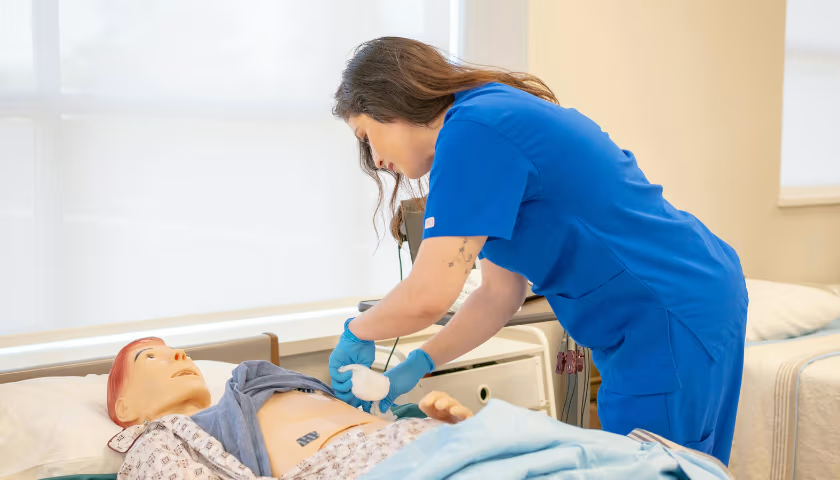
Medical assistants need a mix of administrative and clinical strengths, especially in fast-moving clinic settings. Essential skills include:
- Strong organisation – managing bookings, paperwork and patient flow.
- Multitasking – juggling admin tasks with patient procedures smoothly.
- IT literacy – using clinical software, electronic records and scheduling systems.
- Administrative accuracy – precise data entry, documentation and filing.
- Patient-facing communication – greeting patients, taking histories, explaining procedures.
These skills help MAs keep clinics running smoothly and efficiently.
Skills Needed for Each Role
Nursing Assistant Skills
Nursing assistants rely heavily on people-focused, hands-on skills, because they spend most of their day supporting patients directly. The core strengths employers look for include:
- Compassion & empathy – staying warm, patient and understanding, even when the shift gets tough.
- Resilience – coping with emotional situations and the physical demands of care.
- Manual handling skills – helping patients move safely, from transfers to turning in bed.
- Clear communication – speaking calmly and clearly with patients, relatives and the wider nursing team.
- Observation accuracy – spotting subtle changes in a patient’s condition and reporting them quickly.
Together, these skills ensure nursing assistants keep patients safe, comfortable and supported throughout their care.
Medical Assistant Skills
Medical assistants (or UK equivalents working in primary care) need a strong blend of administrative organisation and clinical awareness, especially in busy GP or outpatient settings. Important skills include:
- Strong organisation – keeping on top of schedules, paperwork and patient flow.
- Multitasking – switching smoothly between admin duties and clinical tasks.
- IT literacy – using electronic records, booking systems and clinical software confidently.
- Administrative accuracy – entering data, updating charts and managing documents with precision.
- Patient-facing communication – greeting patients, taking histories and explaining what to expect during their visit.
These abilities help medical assistants keep clinics running efficiently and professionally, supporting both patients and doctors.
Training & Qualifications Compared

Nursing Assistant Requirements
To become a nursing assistant in the UK, you don’t need a degree — but you do need the right combination of education, practical training and core care skills. Employers typically look for:
- GCSEs – often English and Maths (grades 9–4 / A*–C) or equivalent.
- The Care Certificate – 15 mandatory standards completed during induction in most health and social care settings.
- Vocational qualifications – such as a Level 2 or Level 3 Diploma in Health and Social Care or equivalent care-focused courses.
- Enhanced DBS check – required for working with vulnerable adults and patients.
- Practical training – covering personal care, mobility support, infection control, communication and basic observations.
For those starting without experience, structured training routes — such as the Nursing Assistant Diploma Online — provide a flexible way to develop the clinical, communication and care skills needed for NHS and private-sector roles.
Medical Assistant Requirements
The job title “Medical Assistant” is not commonly used in the UK. Instead, the equivalent roles include:
- Healthcare Assistants (HCAs) in GP surgeries
- Clinical Assistants / GP Assistants
- Patient Care Coordinators or Clinical Support Workers
These roles require a blend of admin and clinical support skills. Training routes usually include:
- On-the-job training provided by GP practices or primary care networks
- Care Certificate – often completed in the first 12 weeks
- Short courses in areas such as medical terminology, patient communication, infection control or basic clinical skills
- Admin and IT training – including electronic patient records (EPR), appointment systems and digital documentation
- Vocational health-care qualifications – e.g., Level 2 or Level 3 Health and Social Care, or primary-care-specific modules
UK medical assistant-style roles focus on supporting GPs, nurses and admin teams, so training is a mix of:
- Administrative skills (booking, documentation, triage support)
- Light clinical skills (observations, ECG prep, sample handling — depending on training)
- Strong digital literacy
This creates a pathway for those who want a clinic-based role rather than ward-based patient care.
Salary Comparison Nursing Assistant and Medical Assistant

Nursing Assistant Salary (UK)
Nursing assistants in the UK are typically employed under NHS Bands 2 or 3, though private care settings may vary slightly.
Typical NHS salary ranges:
- Band 2: £22,000–£24,000 per year
- Band 3: £24,000–£27,500 per year (usually for experienced or more skilled roles)
Pay enhancements:
Nursing assistants can earn more through:
- Night shifts
- Weekend shifts
- Bank holiday rates
- High-cost area supplements (e.g., London weighting adds several thousand pounds a year)
These enhancements often increase real annual earnings beyond the base salary.
Medical Assistant / UK Equivalent Salary (GP-Based Roles)
Since “Medical Assistant” isn’t a standard UK title, the closest equivalents—GP Healthcare Assistants (HCAs), Clinical Assistants, or GP Assistants—tend to earn slightly more due to the mix of admin and clinical responsibilities.
Typical UK GP-practice salary ranges:
- GP Healthcare Assistant: £23,000–£27,000
- Clinical Assistant / GP Assistant: £25,000–£30,000
- Private clinics: may offer £1,000–£3,000 more depending on location and responsibilities.
Salaries vary based on clinical responsibilities (e.g., ECGs, phlebotomy), admin load, and region.
Salary Comparison at a Glance
 Pros and Cons of Each Career Path
Deciding between becoming a nursing assistant or a medical assistant becomes much easier when you see the advantages and challenges side-by-side.
Nursing Assistant: Pros
- High demand across the UK, especially in hospitals and care homes
- Extensive hands-on patient experience, ideal for building clinical confidence
- Clear progression routes into Nursing Associate or Registered Nurse roles
- Work that feels meaningful, with strong patient relationships
- Varied shifts that suit people who enjoy dynamic environments
Nursing Assistant: Cons
- Shift work, including nights and weekends
- Physically demanding, with lifting, mobility support and busy wards
- Emotionally challenging, especially in long-term or end-of-life care
- Fast-paced environments that require resilience
Medical Assistant (UK Equivalent) Pros
- Predictable working hours, often Monday–Friday in clinics or GP practices
- Balanced mix of admin and clinical tasks, perfect for organised multitaskers
- Less physically demanding than hospital-based NA roles
- Stable, structured environments with routine patients and planned appointments
- Strong demand in primary care, especially within expanding PCNs
Medical Assistant (UK Equivalent) Cons
- Less direct patient interaction than nursing assistants
- Limited progression routes compared to NA → Nursing Associate → RN pathways
- Lower exposure to clinical procedures, which may slow clinical skill development
- Can be heavily admin-focused, depending on the practice
Which Career Should You Choose?

Choosing between becoming a nursing assistant or a medical assistant comes down to what you enjoy, how you like to work and where you see your career heading.
Choose the Nursing Assistant Path if you prefer:
- Direct, hands-on patient care throughout the day
- Hospital or care-home settings with varied clinical tasks
- A stepping stone into nursing, nursing associate roles or specialist care
- Fast-paced environments where no two days feel the same
- More clinical contact and experience with complex patient needs
This role suits people who enjoy building relationships with patients, staying active and being part of a large multidisciplinary team.
Choose the Medical Assistant / GP Clinical Assistant Path if you prefer:
- A mix of admin and clinical duties rather than mostly hands-on care
- Predictable hours in GP surgeries, clinics or outpatient centres
- Structured routines with fewer night or weekend shifts
- Managing patient flow, appointments, documentation and basic clinical tasks
- A calmer work environment compared to busy wards
This option is ideal if you enjoy organisation, working with systems and keeping clinics running smoothly.
Quick Personal Checklist
Ask yourself:
- Do I prefer hands-on patient care or a mix of admin + clinical tasks?
- Do I want shift work or regular clinic hours?
- Do I thrive in fast-paced hospital settings or calmer outpatient clinics?
- Is my long-term goal nursing—or a patient-facing admin/clinical hybrid role?
- Do I enjoy teamwork on busy wards or being part of a small GP practice team?
Your honest answers will point you toward the role that fits your personality, lifestyle and future goals.
Conclusion
Nursing assistants focus on direct, hands-on patient care, while medical assistant–style roles lean toward administrative duties with light clinical support. Each path offers meaningful work — just in very different settings.
Choose the route that aligns with your strengths, your lifestyle and the kind of impact you want to make. When you understand the differences clearly, picking the right career path becomes a confident step toward your future.