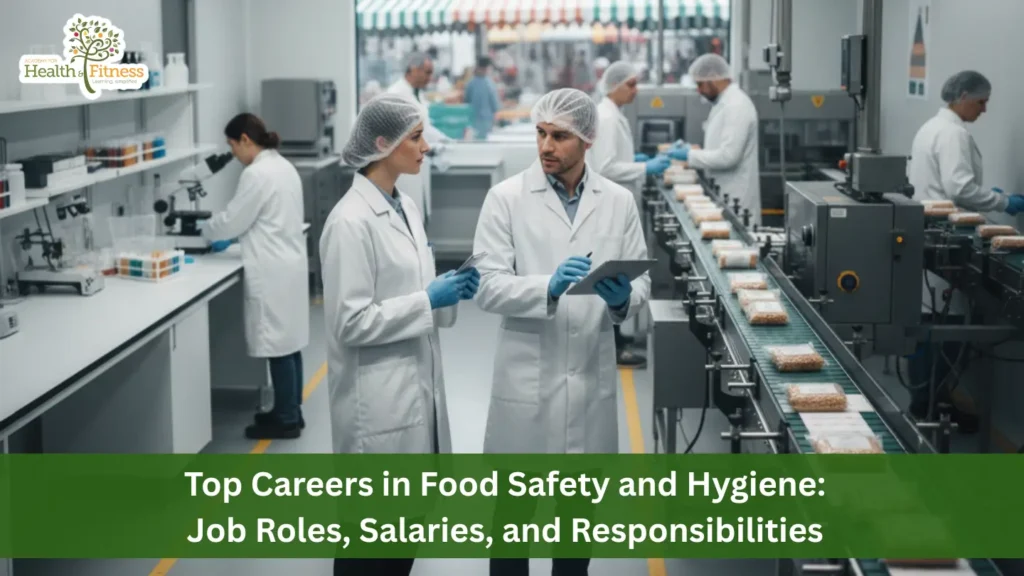


Food safety sits at the heart of the UK food and drink industry, a sector that has grown by 17.9% over the past decade and now contributes £37 billion to the UK economy. With food and drink manufacturing accounting for almost a quarter of total UK manufacturing turnover, the scale of responsibility around hygiene and safety has never been higher.
Every meal served, product packaged, or ingredient imported depends on strict hygiene controls to protect public health and brand trust. When standards slip, the consequences are serious, ranging from costly recalls to long-term reputational damage.
Since Brexit, the regulatory landscape has become more complex. UK businesses must now navigate evolving domestic rules, tighter border controls, and increased scrutiny from enforcement bodies. As a result, demand for skilled food safety and hygiene professionals has grown sharply across manufacturing, hospitality, retail, and local authorities.
This guide explores the most rewarding careers in food safety and hygiene, including job responsibilities, required UK qualifications, and realistic salary benchmarks using 2025 to 2026 data. Whether you’re starting out or looking to progress, you’ll find clear insights to help plan your next move.
Overview of the Food Safety and Hygiene Sector in the UK
Food safety and hygiene underpin how the UK food industry operates every day. Whenever you eat out, buy a ready meal, or order a takeaway, you rely on professionals who make sure food stays safe from contamination. Because of this, the sector offers stable and long-term career opportunities across both public and private organisations.
How the UK Food Safety System Is Structured
Food safety in the UK follows a clear structure. National bodies set the rules, while local teams handle day-to-day enforcement. As a result, responsibilities remain well defined.
At the top level, the Food Standards Agency creates guidance, monitors risks, and supports enforcement. Meanwhile, local councils carry out inspections, issue hygiene ratings, and take action when standards fall short. At the same time, food businesses must manage their own safety systems internally.
Main Industries Within the Sector
Food safety roles exist wherever food is prepared, stored, or sold. Therefore, career options remain broad and flexible.
The main employing sectors include:
- Food and drink manufacturing and processing
- Restaurants, cafés, pubs, and catering services
- Supermarkets and food retail chains
- Public institutions such as schools, hospitals, and care homes
- Local authorities and regulatory bodies
For example, a food factory may employ quality assurance staff to monitor production lines, while a council inspector checks hygiene standards in local takeaways.
Typical Working Environments
Your day-to-day environment depends on your role. However, most positions combine practical work with documentation and communication.
Common work settings include:
- Production sites and warehouses
- Commercial kitchens and catering units
- Offices handling audits and reports
- Field-based roles involving site visits
In addition, digital tools now support much of this work. Online logs, temperature tracking, and audit software help teams act quickly when risks appear.
Why Demand Continues to Grow
The sector keeps growing because food safety failures cost businesses time, money, and reputation. One poor inspection can lead to closure or prosecution. Therefore, organisations invest in skilled professionals to protect both consumers and brand trust.
As food production and delivery continue to expand, the need for food safety and hygiene experts across the UK will only increase.
Essential Skills and Qualifications for Food Safety Careers

If you want to build a career in food safety and hygiene, you need the right mix of skills and recognised UK qualifications. While the job titles may differ, employers usually look for the same core abilities. So, whether you plan to work in a factory, a restaurant group, or local government, preparation matters.
Core Skills Every Food Safety Professional Needs
First of all, food safety roles focus on prevention. You spot risks early and deal with them before they turn into serious problems. Because of this, employers value practical skills over theory alone.
Key skills include:
- Attention to detail, because small issues often cause big failures
- Clear communication, especially when explaining rules to busy teams
- Confidence and judgement, so you can challenge unsafe practices
- Problem-solving, as no two sites or situations look the same
- Organisation and reporting, since records matter in inspections and audits
For example, if a fridge temperature rises during service, you need to act fast, explain the risk clearly, and record what happened. That mix of action and communication defines the role.
Qualifications That Employers Expect in the UK
Although you can start at entry level with basic training, recognised qualifications help you progress faster. In fact, many employers now list them as essential.
Common UK qualifications include:
- Level 2 Food Safety and Hygiene (entry-level roles)
- Level 3 Food Safety (supervisory and management roles)
- Level 4 Food Safety (senior and specialist positions)
- HACCP training for risk-based roles
- Environmental Health degrees for public sector careers
As you move forward, many professionals also join bodies such as the Chartered Institute of Environmental Health, which supports training, standards, and career development.
Experience Matters as Much as Certificates
While qualifications open doors, experience builds trust. So, employers often look for people who understand real working environments.
You might gain experience by:
- Working in food production or hospitality
- Supporting audits or inspections
- Taking hygiene supervisor roles
- Assisting with documentation and checks
For instance, someone who has worked on a production line often spots risks faster than someone with theory alone. That practical insight adds real value.
Ongoing Training and Career Growth
Food laws change, and best practice evolves. Because of this, ongoing training plays a big role in long-term success.
Most professionals continue learning through:
- Refresher courses
- CPD programmes
- Specialist certifications
So, if you invest in your skills early and keep them updated, you position yourself for better roles, higher pay, and stronger job security. Courses like the Food Hygiene and Safety Level 3 are designed specifically for UK workplaces and suit supervisors, managers, and those preparing for audits or inspections.
Top Careers in Food Safety and Hygiene
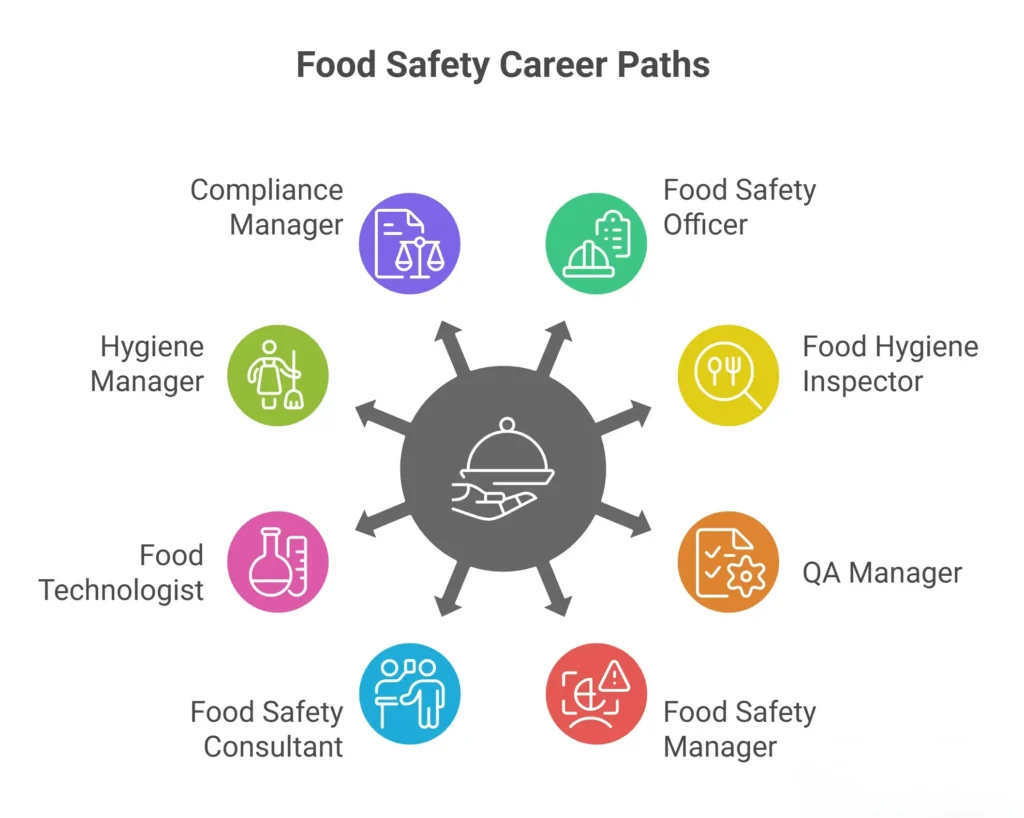
Food safety and hygiene careers cover a wide range of roles, from public sector enforcement to senior roles inside large food businesses. So, to make things clear, we’ve broken down each attractive job position by job role, key responsibilities, and typical UK salary ranges based on 2025–2026 market data.
Food Safety Officer / Environmental Health Officer (EHO)
Job Role
EHOs work mainly for local councils and protect public health by enforcing food safety laws. You act as both an inspector and an advisor.
Key Responsibilities
- Inspect food premises such as restaurants, takeaways, and manufacturers
- Investigate complaints and food poisoning incidents
- Issue improvement or prohibition notices
- Advise businesses on legal compliance
- Prepare legal reports when enforcement is required
For example, if repeated pest issues appear in a restaurant, you lead the investigation and decide the next steps.
UK Salary
- Entry level: £32,000–£38,000
- Experienced: £40,000–£48,000
- Senior / Principal roles: £50,000+
Food Hygiene Inspector
Job Role
This role focuses purely on food hygiene inspections rather than wider environmental health duties. As a result, it suits people who enjoy fieldwork and routine checks.
Key Responsibilities
- Carry out scheduled and unannounced inspections
- Assess hygiene, cleanliness, and food handling practices
- Issue food hygiene ratings
- Write inspection reports and follow-up actions
You may visit several premises in one day, which keeps the role fast-paced.
UK Salary
- Typical range: £28,000–£40,000
- Senior inspectors: up to £45,000
Quality Assurance (QA) Manager – Food Industry
Job Role
QA Managers work inside food manufacturing and processing businesses. You ensure products meet safety, legal, and quality standards before they reach consumers.
Key Responsibilities
- Manage food safety systems such as HACCP
- Lead internal and external audits
- Investigate non-conformances and complaints
- Train staff on food safety and hygiene
- Approve suppliers and raw materials
For instance, if metal detection fails during production, you stop the line and manage corrective action.
UK Salary
- Mid-level: £38,000–£50,000
- Senior QA Manager / Head of QA: £55,000–£70,000+
Food Safety Manager / HACCP Manager
Job Role
This is a specialist role focused on risk management and compliance across one or multiple sites.
Key Responsibilities
- Develop and maintain HACCP plans
- Carry out risk assessments and root cause analysis
- Monitor legal and regulatory changes
- Support inspections and customer audits
- Improve food safety culture across teams
Because of increasing audits and customer demands, this role continues to grow in demand.
UK Salary
- Typical range: £42,000–£60,000
- Multi-site or senior roles: £65,000+
Food Safety Consultant
Job Role
Consultants support businesses that lack in-house expertise. You may work independently or for a consultancy firm.
Key Responsibilities
- Carry out food safety audits and gap analysis
- Prepare policies, HACCP plans, and documentation
- Deliver food safety training
- Support new business openings and inspections
For example, you may help a new takeaway prepare for its first council inspection.
UK Salary
- Employed consultant: £40,000–£55,000
- Freelance consultants: £300–£600 per day (experience dependent)
Food Technologist (Food Safety & Quality Focus)
Job Role
Food technologists focus on safe product development, testing, and compliance, often working alongside QA teams.
Key Responsibilities
- Test products for safety, shelf life, and allergens
- Review ingredient specifications and labelling
- Support new product launches
- Ensure products meet UK legal requirements
This role suits people who enjoy science-based problem solving.
UK Salary
- Graduate level: £26,000–£32,000
- Experienced: £35,000–£50,000+
Hygiene Manager / Hygiene Supervisor
Job Role
Hygiene managers focus on cleanliness and sanitation, especially in manufacturing and large catering operations.
Key Responsibilities
- Manage cleaning schedules and teams
- Verify cleaning effectiveness
- Control pest prevention programmes
- Ensure compliance with hygiene standards
In large factories, this role directly impacts audit results.
UK Salary
- Supervisor level: £28,000–£35,000
- Manager level: £38,000–£48,000
Compliance Manager (Food & Beverage)
Job Role
Compliance managers ensure businesses meet all food-related legal and customer standards, including retailer codes.
Key Responsibilities
- Monitor UK and international food regulations
- Manage customer and certification audits
- Maintain compliance documentation
- Liaise with enforcement bodies and retailers
This role often appears in large food businesses supplying supermarkets.
UK Salary
- Typical range: £45,000–£65,000
- Senior roles: £70,000+
Overall, food safety and hygiene careers offer strong pay, long-term stability, and real impact, making them some of the most reliable and rewarding roles in the UK food industry today.
Entry-Level Jobs and Career Starters in Food Safety
Starting a career in food safety often begins with practical, entry-level roles that build experience quickly. While these positions may seem simple at first, they play an important part in keeping food safe and compliant. So, if you’re new to the sector or changing careers, these roles offer a clear starting point.
Common entry-level job titles include Food Safety Technician, Quality Control (QC) Assistant, Hygiene Operative, and Hygiene Supervisor. In these roles, you check food temperatures, monitor cleaning routines, complete hygiene records, and report any risks to senior staff. At the same time, you help businesses follow food safety rules day to day.
Employers value reliability and awareness at this level. Therefore, following procedures carefully, spotting issues early, and communicating clearly can lead to fast progression. With experience and basic qualifications, these roles often lead to supervisory, QA, or specialist food safety positions across the UK.
Career Progression and Advancement Opportunities
Food safety and hygiene careers offer clear and realistic progression. Once you build experience, you can move into higher roles without starting over. So, whether you begin in hospitality, manufacturing, or inspections, growth remains achievable.
From Entry-Level to Supervisory Roles
Most people start in entry-level positions such as hygiene operative or QC assistant. As you gain confidence, you often step into supervisory roles. These positions involve leading small teams, checking compliance, and supporting audits.
Moving into Specialist and Management Positions
With experience and further training, you can progress into roles like Food Safety Manager, HACCP Manager, or QA Manager. At this stage, you take responsibility for systems, risk assessments, and overall compliance across sites.
Qualifications That Support Progression
Progression becomes easier when you invest in training. Level 3 and Level 4 Food Safety qualifications, along with HACCP training, help you move into senior roles. Because of this, many employers actively support ongoing learning.
Long-Term Career Growth
Food safety skills transfer well across the UK food industry. So, you can move between sectors or into consultancy as your career develops. As regulations continue to tighten, experienced professionals remain in strong demand.
How to Start a Career in Food Safety and Hygiene in the UK
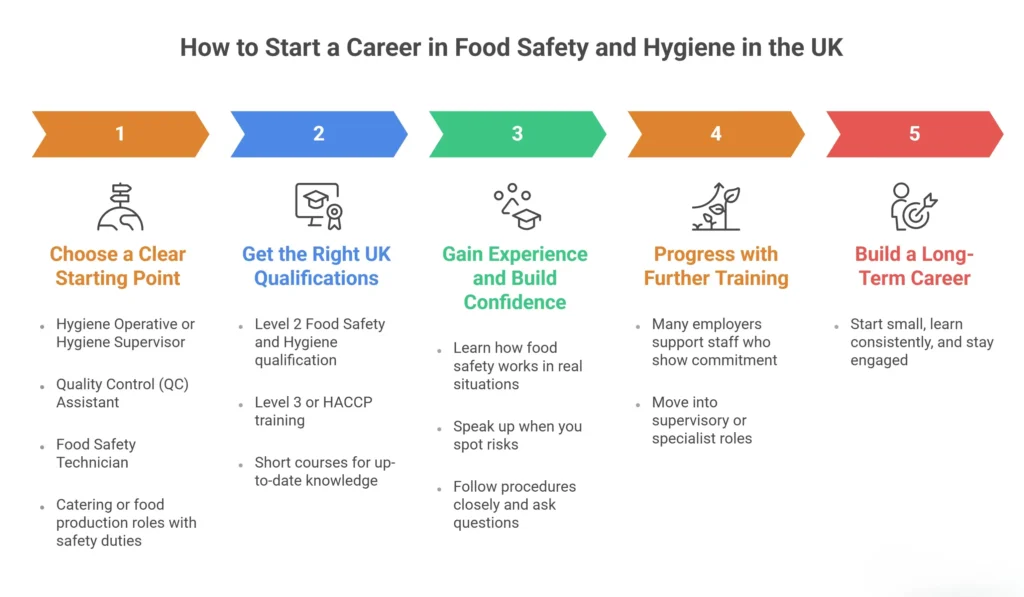
Starting a career in food safety and hygiene does not have to feel overwhelming. In fact, if you take it step by step, the process stays clear and manageable. So, whether you’re leaving education or changing careers, you can enter the sector with the right approach.
Step 1: Choose a Clear Starting Point
First, decide where you want to begin. Food safety covers many settings, and each offers different entry routes. For example, manufacturing roles suit hands-on workers, while hospitality roles suit those already in kitchens or catering.
Common starting points include:
- Hygiene Operative or Hygiene Supervisor
- Quality Control (QC) Assistant
- Food Safety Technician
- Catering or food production roles with safety duties
Once you start in any of these roles, you gain practical experience straight away.
Step 2: Get the Right UK Qualifications
Next, you need recognised training. While you don’t always need a degree, basic certificates matter. So, most people begin with a Level 2 Food Safety and Hygiene qualification. Then, as you progress, you move to Level 3 or HACCP training.
Because employers value up-to-date knowledge, short courses often make a big difference early on.
Step 3: Gain Experience and Build Confidence
At this stage, experience matters more than titles. Therefore, focus on learning how food safety works in real situations. Speak up when you spot risks, follow procedures closely, and ask questions when unsure.
For instance, noticing incorrect food storage or poor cleaning habits shows awareness and responsibility. Over time, this builds trust with managers.
Step 4: Progress with Further Training
Once you settle into the role, progression becomes easier. Many employers support staff who show commitment. As a result, you can move into supervisory or specialist roles by gaining further qualifications and responsibilities.
So, by starting small, learning consistently, and staying engaged, you can build a long-term career in food safety and hygiene across the UK.
Pros and Cons of Working in Food Safety and Hygiene

Working in food safety and hygiene offers a clear mix of rewards and challenges. So, understanding both sides helps you decide if this career fits your personality and long-term goals.
Advantages of Food Safety and Hygiene Careers
One of the biggest advantages is job security. Because UK food businesses must meet legal standards, skilled professionals remain in constant demand. As a result, many roles offer long-term stability.
Another key benefit is career flexibility. You can work across manufacturing, hospitality, retail, or local authorities. So, even if you change sectors, your skills stay relevant.
Additional advantages include:
- Clear progression into senior and management roles
- Competitive salaries, especially with experience
- Work that protects public health and consumers
- Opportunities to move into consultancy or training
For example, improving a business’s hygiene rating often delivers immediate and visible results.
Challenges to Consider
However, food safety roles also bring pressure. Because you deal with compliance and risk, the responsibility stays high.
Common challenges include:
- Handling difficult conversations with business owners
- Working to tight deadlines during inspections
- Keeping up with frequent regulatory changes
- Occasional unsociable or on-call hours
For instance, inspections may take place during busy service periods, which can feel demanding.
Weighing the Pros and Cons
Overall, food safety and hygiene suit people who enjoy structure, problem-solving, and responsibility. While the challenges are real, the stability, progression, and impact often make this career a strong choice in the UK.
Conclusion
Food safety and hygiene careers offer more than just steady work. They provide clear progression, strong earning potential, and the chance to protect public health across the UK. So, whether you’re starting out or looking to move up, this sector rewards commitment and skill.
Ultimately, if you value responsibility, structure, and long-term stability, a career in food safety and hygiene can be a smart and future-proof choice.