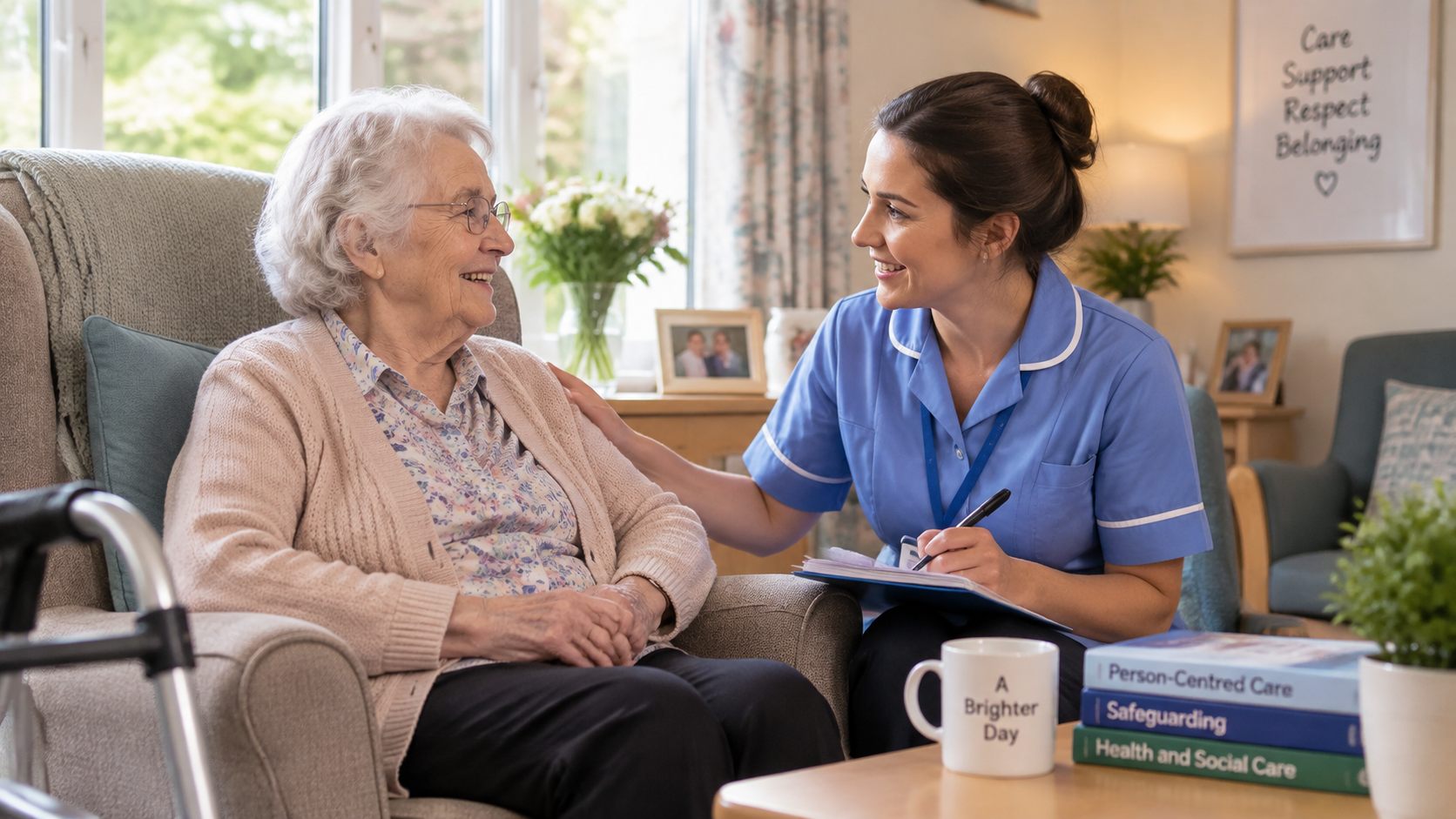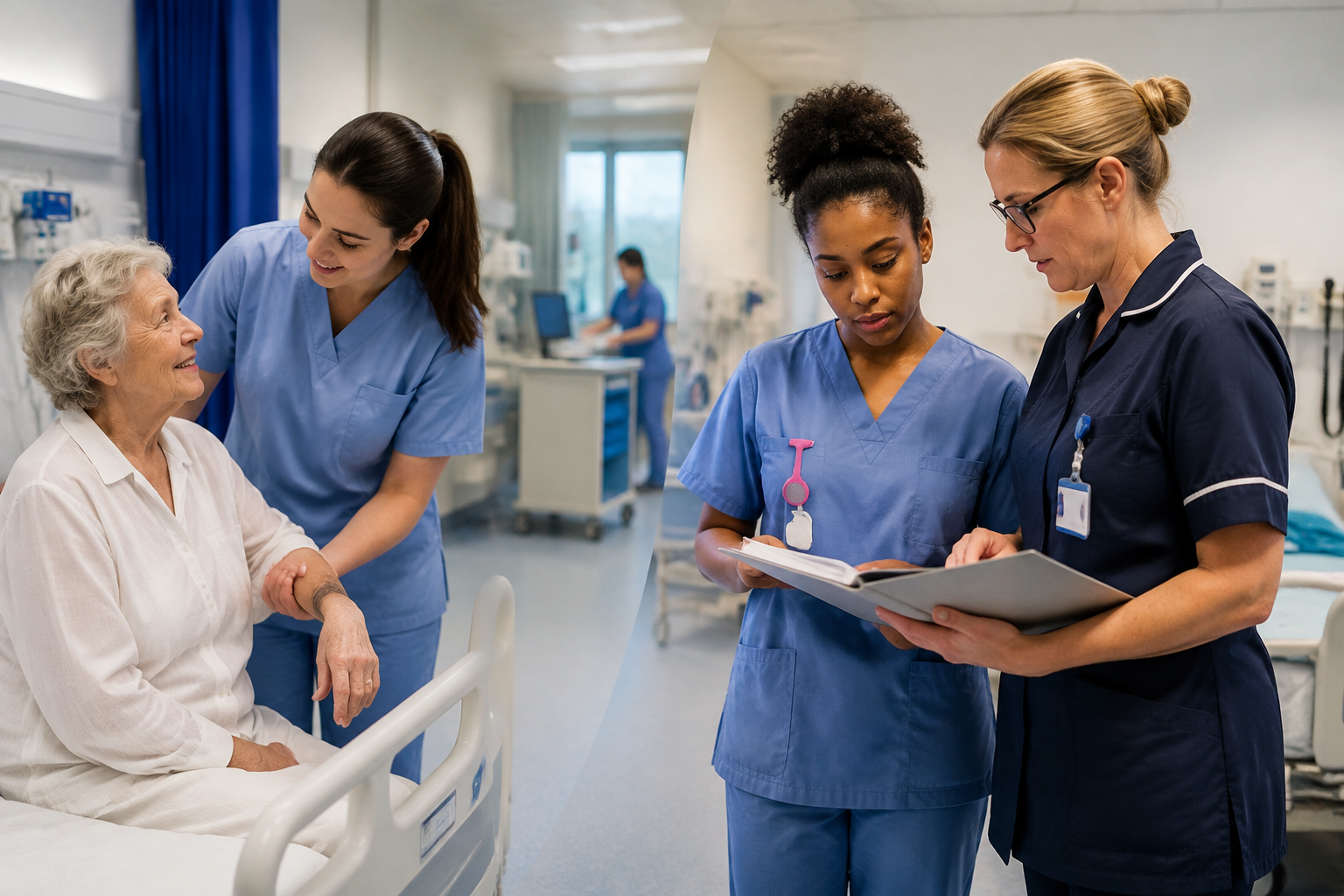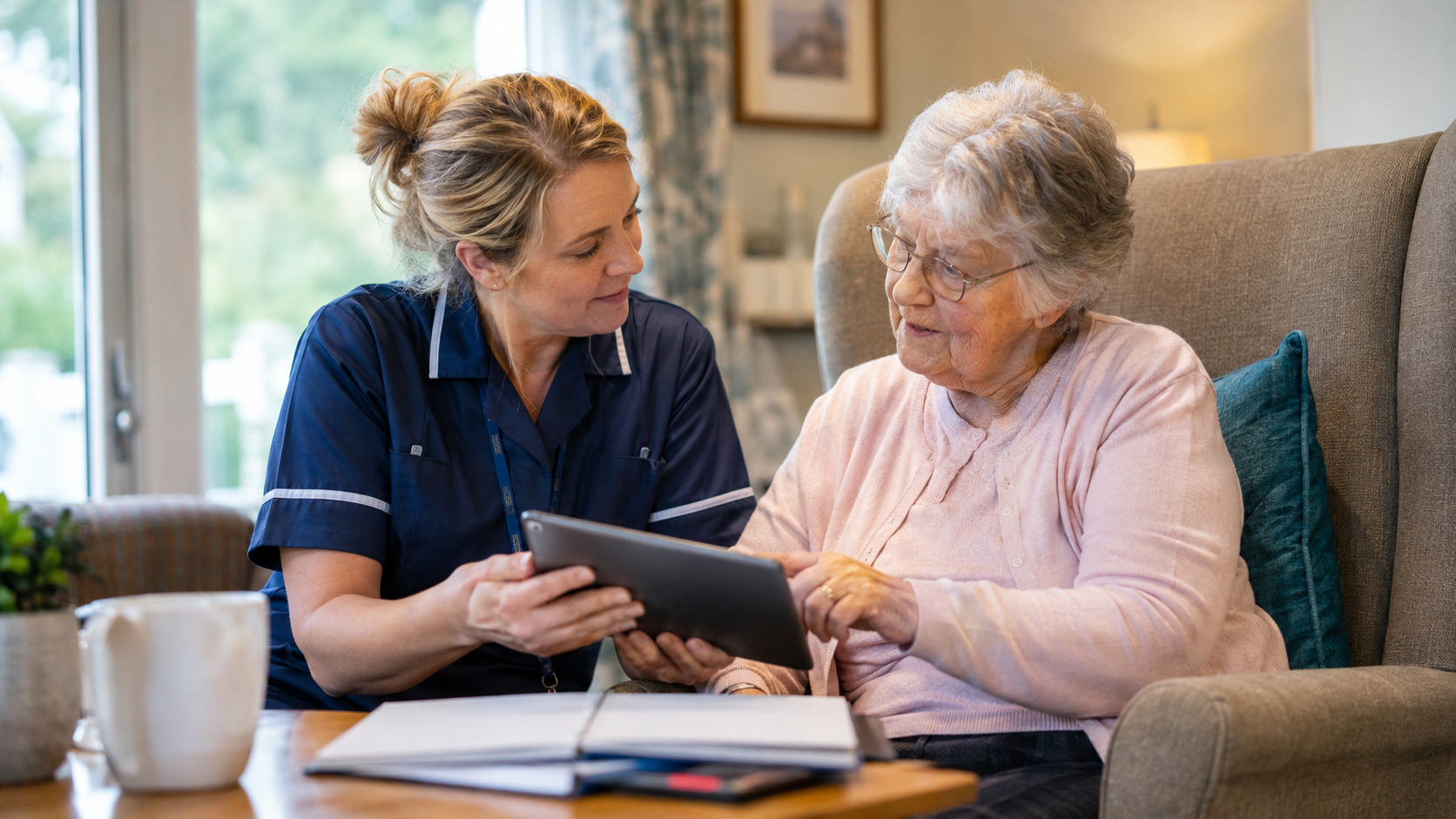



At a care home in Manchester, a night shift support worker noticed that a usually talkative resident had suddenly become withdrawn and drowsy. Her temperature was normal, but the carer picked up on subtle signs—clammy skin, slurred speech, and a delayed response when asked a question. Trusting her instincts, she escalated the issue. The resident was rushed to hospital and diagnosed with sepsis. Without that early intervention, the outcome could have been fatal.
Observation skills in health and social care go far beyond monitoring vital signs. They include recognising changes in mood, behaviour, posture, tone of voice, and environmental factors—all of which can indicate deteriorating health or safeguarding concerns. Being present, perceptive, and proactive are essential parts of quality care.
In the UK, sepsis alone claims around 48,000 lives a year, yet when caught early, survival rates significantly increase (UK Sepsis Trust). That’s why, in today’s care landscape—marked by an ageing population, staffing pressures, and strict accountability—strong observation isn’t a nice-to-have; it’s essential. This blog breaks down why observation skills are vital, what they involve, how to sharpen them, and how they impact everything from safety to dignity. It’s written for frontline care workers, nurses, and managers across care homes, hospitals, and community care settings.
What is Observation in Health and Social Care?
Observation in health and social care isn’t just about looking — it’s about noticing, understanding, and acting on the subtle changes in someone’s condition or behaviour. It’s one of the most important skills you use every day, often without realising it. By paying attention to what people say, how they act, and what’s happening around them, you can catch early signs of illness, distress, or risk before they turn into something serious.
In simple terms, good observation means being alert to both physical and non‑physical clues. You’re not just checking someone’s temperature or blood pressure — you’re also noticing how they move, communicate, and respond.
Observation includes:
- Physical signs – changes in appearance, posture, mobility, or breathing
- Behavioural changes – confusion, withdrawal, agitation, or mood swings
- Emotional cues – anxiety, fear, sadness, or frustration
- Environmental factors – cluttered spaces, uneaten food, or unsafe surroundings
- Non‑verbal signals – facial expressions, tone of voice, or body language
When you put all these pieces together, you start to see the bigger picture. That’s what makes observation so powerful—it helps you spot problems early, protect people’s wellbeing, and provide safer, more person‑centred care.
Want to sharpen your documentation and observation skills even further? We recommend the Observation Skills for Carers course from HF Online.
Why is Observation Important in Health and Social Care?

Let’s be honest—when you work in health or social care, you’re not just providing a service. You’re a lifeline. And often, it’s your observation skills that make the difference between someone getting help in time… or not.
Often, the people we support can’t fully explain how they feel. They may struggle to describe pain, forget important details, or hide discomfort. That’s why picking up on small signs—a change in mood, movement, or appetite—matters so much. Observation bridges the gap between what’s said and what’s really going on.
So why does this skill matter so much? Let’s break it down:
Catching Things Early—Before They Escalate
Something small like a new cough, a slight limp, or increased tiredness can point to a bigger health issue. When early warning signs are recognised and acted on, people can receive help before the situation worsens.
Protecting People from Harm
Observation is key to safeguarding. It helps identify potential signs of abuse, neglect, or self-harm—things that might not be spoken about. Acting quickly can make all the difference in keeping people safe.
Providing Personalised, Respectful Care
No two people are the same. By noticing individual habits and subtle changes, care can be adjusted to fit the person—not just the routine. This kind of tailored care builds trust, dignity, and stronger relationships.
Meeting Legal and Professional Standards
In the UK, observation plays a vital role in meeting the expectations set by the Care Quality Commission (CQC) and NICE. Consistent observation supports better care planning, accurate reporting, and compliance with professional standards.
Speaking for Those Who Can’t
Some individuals, especially those with dementia, learning disabilities, or communication difficulties, rely on others to interpret non-verbal cues. Strong observation ensures their needs are recognised and addressed.
Strengthening the Whole Care Team
Care is always a team effort. When observations are shared during handovers, reports, or discussions, everyone gains a clearer picture. This leads to faster decisions, improved teamwork, and safer outcomes.
Six Types of Observation in Health and Social Care
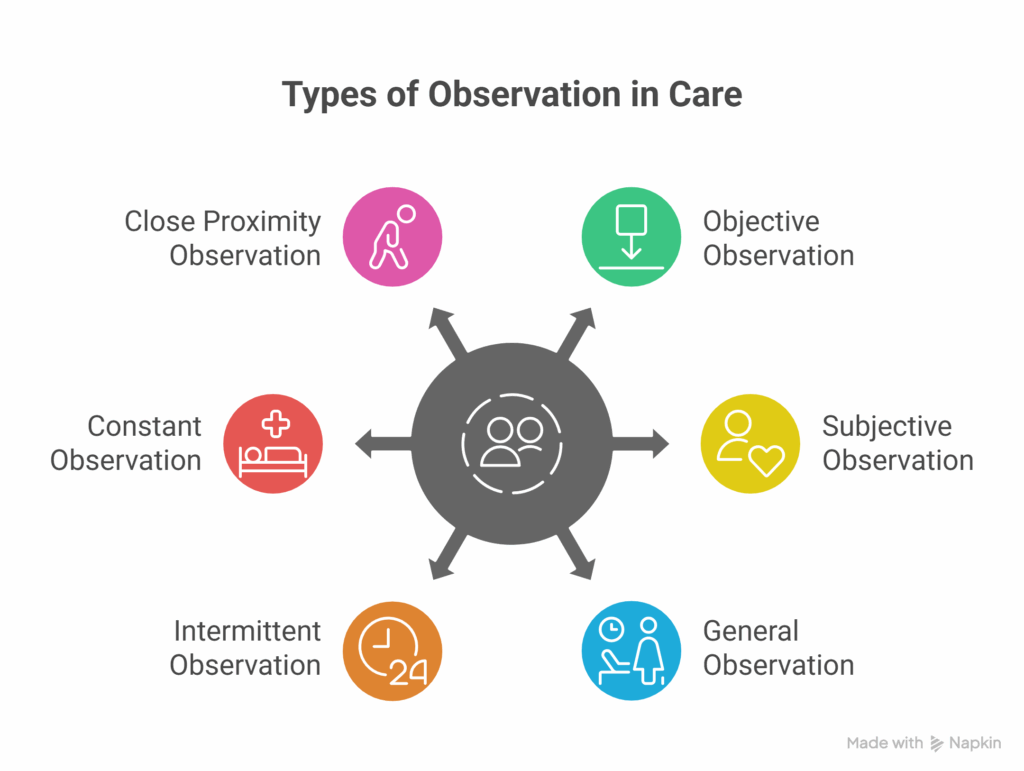
In health and social care, observation isn’t a single action—it’s a set of skills used in different ways, depending on the situation. Some people need constant supervision, while others just need a watchful eye throughout the day. Knowing the right type of observation to use can make a huge difference in the safety, comfort, and wellbeing of the people we care for.
Below are the six main types of observation used in UK care settings—with practical examples, the skills needed, and why each type matters.
Objective Observation
What it is:
Objective observation is about sticking to the facts—what you can see, measure, or clearly hear. There’s no room for guesses, feelings, or assumptions here. This kind of observation includes anything that can be recorded with numbers, timings, measurements, or clear physical evidence. It’s especially important when sharing information with other professionals, because it removes personal bias and focuses only on what actually happened.
Example:
- You record that Mrs. Khan’s blood pressure is 160/100.
- You note that she drank 200ml of water and had a temperature of 38.4°C.
Skills needed:
- Precision in measurement
- Good documentation
- Attention to detail
Subjective Observation
What it is:
Subjective observation is based on what you sense, feel, or interpret through your experience. It’s your professional judgement kicking in when something doesn’t seem quite right—even if there’s no measurable evidence yet. It often involves things like mood, behaviour, or discomfort that aren’t easy to measure but are just as important.
Example:
- Mr. Jones seems more withdrawn than usual, even though his vital signs are normal.
- You feel like something is bothering a resident, even though they haven’t said anything directly.
Skills needed:
- Emotional intelligence
- Empathy
- Good understanding of the person’s usual behaviour
General Observation
What it is:
General observation is the routine, ongoing awareness you maintain while carrying out your usual tasks. You’re not actively watching someone every second, but you’re alert to changes in how they look, move, or behave. It’s used when someone is stable but still needs support. This is the most common type of observation used in day-to-day care.
Example:
- During the morning shift, you notice that Ella is sitting quietly and hasn’t joined her usual breakfast group.
- You see that George is slower on his feet and more tired than normal.
Skills needed:
- Consistent awareness
- Ability to spot small changes
- Active listening and visual observation
Intermittent Observation
What it is:
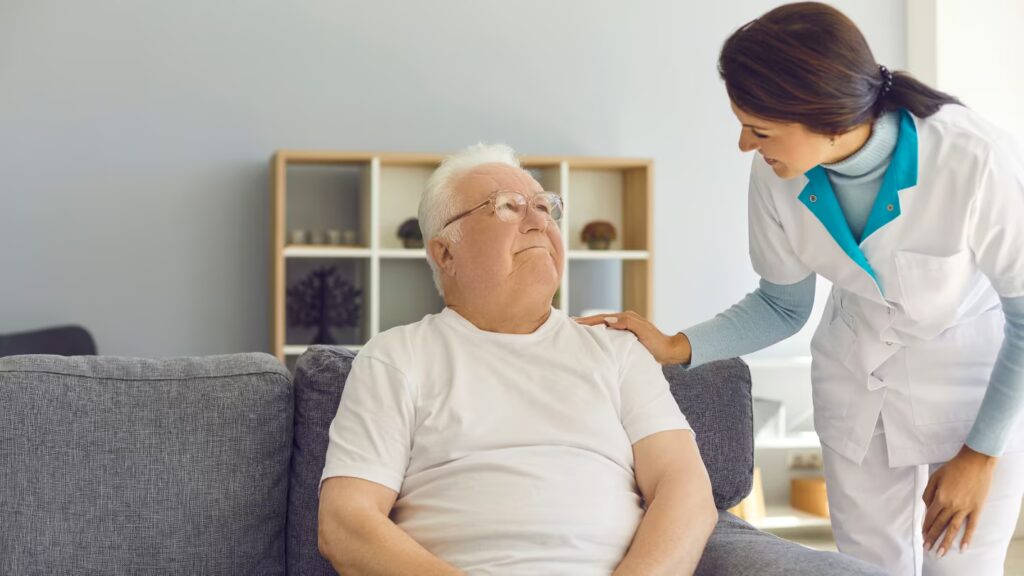
Intermittent observation involves checking on a person at set intervals, usually every 10, 15, or 30 minutes, depending on their care plan. It’s typically used when someone is at risk but doesn’t need to be watched constantly. This allows them more privacy while still keeping them safe. It’s very common in mental health, post-surgery care, or during recovery periods.
Example:
- A person recovering from a seizure is checked every 15 minutes throughout the night.
- Someone with known anxiety is monitored every 30 minutes to ensure they remain calm and safe.
Skills needed:
- Timekeeping
- Discipline and reliability
- Clear recording and escalation when needed
Constant Observation
What it is:
Constant observation means staying with the person continuously, without leaving their side. It’s usually used in high-risk situations, such as when someone might harm themselves or others, or when their medical condition could suddenly change. This type of observation is intense and requires full attention, but it’s often necessary to prevent harm.
Example:
- A person in psychiatric care who is at immediate risk of suicide is monitored constantly, 24/7.
- A resident post-stroke is supervised closely for any changes in consciousness or mobility.
Skills needed:
- Patience and focus
- Strong interpersonal communication
- Quick decision-making under pressure
Close Proximity Observation
What it is:
Close proximity observation is a middle ground between constant and general observation. It means staying within arm’s reach of the person, without watching them too closely. This is useful when someone might suddenly need help but doesn’t require full-time supervision. It’s also helpful when supporting someone who’s mobile but prone to wandering or falling.
Example:
- You walk closely beside a resident with dementia who tends to get disoriented near stairwells.
- You stay near a person recovering from a fainting episode, in case it happens again.
Skills needed:
- Physical presence without being intrusive
- Discretion and awareness
- Fast reaction time
Real Life Examples of Observation in Health and Social Care
Observation doesn’t just happen in theory—it happens every day, often in small but powerful moments. Whether you’re working in a care home, hospital, or someone’s home, your ability to notice changes and act quickly can make all the difference.
Care Home Example – Spotting Early Signs of Infection
What happened:
During a morning round, a support worker noticed that Mrs. Thompson, who usually greets staff cheerfully, was quiet and seemed off balance. Her skin felt clammy, and she hadn’t touched her breakfast.
What the carer did:
Instead of brushing it off as a “bad mood,” the carer recorded the changes and reported them immediately. A nurse took her vitals and found she had a high temperature and low blood pressure—early signs of sepsis.
Outcome:
Thanks to early observation and quick action, Mrs. Thompson was taken to hospital and treated in time.
Skills shown:
- General and objective observation
- Communication and escalation
- Awareness of baseline behaviour
Hospital Ward Example – Recognising Non-Verbal Pain
What happened:
A healthcare assistant noticed that a post-operative patient, Mr. Daniels, was wincing slightly and avoiding movement—even though he hadn’t requested any pain relief.
What the carer did:
The HCA used subjective observation and asked if he was feeling pain. Mr. Daniels admitted he didn’t want to “make a fuss” but was in discomfort.
Outcome:
Pain relief was given, and his recovery improved as he became more mobile and comfortable.
Skills shown:
- Subjective observation
- Empathy and active listening
- Person-centred care
Domiciliary Care Example – Identifying a Safeguarding Concern
What happened:
While visiting a client with dementia, a home carer noticed bruises on the client’s arms, which weren’t there the day before. The client also seemed unusually withdrawn and jumpy.
What the carer did:
The carer recorded the changes using objective and subjective observation, then followed safeguarding protocol and reported it to the team lead.
Outcome:
After investigation, it was found the client had been mishandled by a visiting relative. Action was taken, and the client’s safety was secured.
Skills shown:
- Objective and subjective observation
- Safeguarding awareness
- Proper documentation and reporting
Mental Health Unit Example – Responding to Mood Shifts
What happened:
A support worker noticed that a young adult with a mental health diagnosis had stopped talking to others and was spending more time isolated in their room.
What the staff did:
Using general and intermittent observation, staff recorded mood changes over 48 hours. They discussed concerns during team handover and decided to carry out a mental health check.
Outcome:
The individual shared they were experiencing suicidal thoughts. Immediate support was provided, and a safety plan was put in place.
Skills shown:
- General and intermittent observation
- Team communication
- Mental health awareness
How to Document and Record Observations

Noticing something is only half the job—recording it properly is what turns observation into action. Accurate documentation ensures the care team is informed, helps spot patterns over time, and keeps services compliant with legal and professional standards.
Here’s how to document observations clearly, correctly, and confidently.
Step 1: Know Why You’re Recording
Before you write anything down, remind yourself why good documentation is essential:
- It helps others understand what’s happening
- It creates a record of concerns or changes
- It supports safe handovers between staff
- It protects you legally and professionally
- It’s required by CQC and other regulators
Bottom line: If it’s not recorded, it didn’t happen.
Step 2: Include the Right Information
Your notes should be clear, specific, and useful. Whether on paper or digital systems, always include:
What to Record:
- Date and time of the observation
- What was observed (facts, behaviours, symptoms)
- What you did in response (e.g. informed senior, offered support)
- What happened next or what needs to happen
Example Entry:
12:45 – Noticed Mrs. King appeared very drowsy and had not eaten lunch. Temp: 38.2°C. Reported to nurse. Fluids offered. Awaiting GP visit.
Step 3: Use the Right Language
How you write matters just as much as what you write. Keep it:
- Clear – Stick to facts and real examples
- Professional – Avoid personal opinions unless using professional judgement
- Simple – No need for complicated words
⚠ Avoid:
❌ “He looked strange”
❌ “She was being difficult”
✅ Use:
✅ “He was unusually quiet, did not respond when asked a question.”
✅ “She refused personal care, raising her voice and turning away.”
Step 4: Choose the Right Format
Different care settings use different tools for observation. Make sure you’re using the correct format for your workplace:
- Daily care notes or logbooks
- Observation charts (e.g. food, fluids, sleep, behaviour)
- Body maps (for recording injuries or bruises)
- Digital care systems (e.g. CareDocs, SystmOne, PASS)
If you’re unsure, check your workplace policy or ask your supervisor.
Step 5: Record Observations Promptly
Don’t wait until the end of your shift—write things down as soon as possible. The longer you leave it, the more likely you are to forget key details.
Best Practice:
- Record observations straight after they happen
- Don’t rely on memory—consistency matters
- Always sign or initial your entries (if required)
Quick Recap: Do’s and Don’ts
✔ Do:
- Be objective and factual
- Include time, date, and your actions
- Use plain, professional language
- Follow care setting protocols
- Keep it legible (if handwritten)
❌ Don’t:
- Delay writing important observations
- Use vague or emotional terms
- Make assumptions or guesses
- Miss out what you did in response
Integrating Observation into Everyday Practice
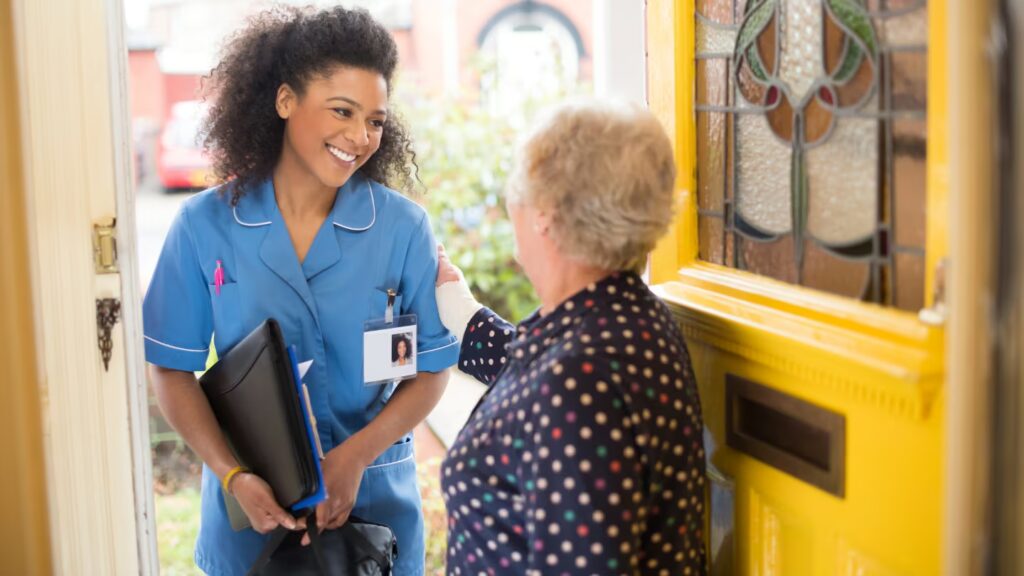
Observation isn’t just standing back and watching—it’s about being present and engaged. Whether you’re helping someone get dressed, serving a meal, or chatting during a walk, you can use that time to pick up on clues.
Try this:
- Ask yourself: “Is this person acting the way they normally do?”
Keep an eye on how they move, speak, eat, and respond to others - Trust your instincts—if something feels off, it’s worth recording or sharing
Even small changes matter, especially when they add up over time.
Make It Part of Routine Tasks
Observation doesn’t have to be separate from your regular care activities. In fact, some of the best observations happen during:
- Personal care – Are there bruises, rashes, or signs of pain?
- Mealtimes – Is someone eating less, refusing food, or acting differently?
- Medication rounds – Are they sleepy, confused, or struggling to swallow?
- Social interactions – Are they more withdrawn or anxious than usual?
By linking observation with daily care, you stay efficient while still being thorough.
Use Team Communication
Even the sharpest carer might miss something if they’re working alone. That’s why observation works best when shared across the team.
Build observation into:
- Handovers – Mention any mood, behaviour, or health changes you’ve seen
- Care plans – Update them when patterns emerge over time
- Team meetings – Raise concerns early so they can be acted on quickly
Remember, one small comment from you might complete the puzzle for someone else.
Make Use of Technology
Many care settings now use digital systems to record and share observations. While it might take some getting used to, tech makes it easier to spot patterns and trends.
Some examples include:
- Mobile apps for logging observations in real time
- Alerts for missed medication, meals, or sleep changes
- Dashboards showing mood, health, or weight shifts over time
Don’t let digital systems replace your judgement—but use them to support it.
Turn Observation into Action
Lastly, observation only matters if it leads to action. That might mean reporting to a nurse, updating a care plan, or simply checking in again later.
Good observation practice includes:
- Recording what you saw clearly (as covered in the last section)
- Escalating concerns when needed
- Following up if no action has been taken
Conclusion
In the words of care‑expert Helen Hingley‑Jones, “Observation involves *careful, thoughtful and feeling‑ful attention… the act of ‘watching’ does not.” In short: when we see, record and respond to small changes, we turn everyday moments into steps toward better safety and wellbeing.
You play a key role in this process—so as you go back to your shift, remember that observation isn’t just one task among many. It’s a continuous practice that shapes thoughtful care, supports professional standards, and ensures the people you support are seen, heard and responded to.
If you’re ready to build confidence in your observation and reporting skills, take a look at the HF Online course for carers—designed to help you do your job safely, effectively, and professionally.