What Is the Care Certificate?

The Care Certificate is a national training programme for people starting out in health or social care. It was introduced in 2015 after the Cavendish Review to make sure every new care worker begins with the same foundation of knowledge and values.
- It was developed by Skills for Care, Health Education England, and Skills for Health.
- The aim is simple: to help new carers understand what good care looks like — care that’s safe, respectful, and consistent.
The Care Certificate includes 16 standards, covering topics such as:
- Understanding your role and duty of care
- Equality, diversity, and communication
- Safeguarding adults and children
- Health, safety, and infection control
Even though the Care Certificate isn’t required by law, it’s widely recognised as a benchmark of quality.
- The Care Quality Commission (CQC) expects care providers to follow it.
- Most employers include it as part of their induction, giving new staff around 12 weeks to complete it.
- Registered professionals like nurses or physiotherapists don’t need to complete it, since they already meet similar standards through their qualifications.
Why Completing the Care Certificate Is Crucial for New Carers

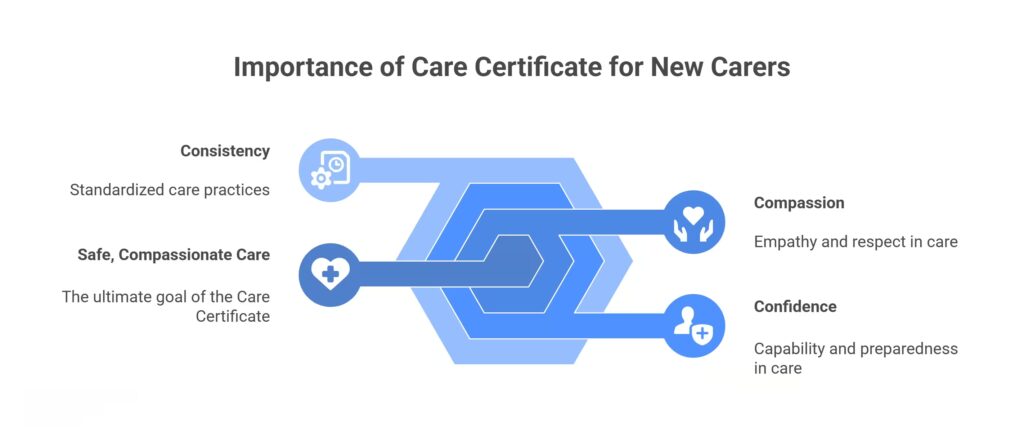
Completing the Care Certificate is crucial because it gives every new carer the same foundation of knowledge, values, and confidence to deliver safe, compassionate care. It helps you understand what good care really looks like — and how to put it into practice every day.
So, why does it matter so much? It really comes down to three things: consistency, confidence, and compassion.
Consistency
Without a shared standard, care can vary a lot from one workplace to another. The Care Certificate fixes that. It makes sure everyone, no matter where they work, starts with the same understanding of what safe, respectful care means. Derbyshire County Council explains that completing it ensures care workers have the right values, behaviours, and skills to deliver high-quality, compassionate care.
Confidence
Starting a new job in care can feel overwhelming — there’s so much to learn and so many responsibilities. The Care Certificate helps you build confidence as you learn. By understanding key principles like duty of care, communication, and safety, you begin to feel more capable and prepared. It’s about turning uncertainty into confidence and giving you the tools to grow.
Compassion
Care isn’t just about tasks — it’s about people. The Care Certificate reminds you of that. It focuses on person-centred care, dignity, empathy, and respect. The Care Quality Commission (CQC) describes it as setting the standard for how new carers start their learning journey — one that shapes not just your skills, but your attitude toward those you support.
The Real-World Benefits of Completing the Care Certificate
Completing the Care Certificate provides significant real-world advantages for carers, employers, and people receiving care. It’s not just about acquiring a certificate—it’s about building confidence, establishing a solid foundation for career growth, and ensuring that care provided is of the highest quality. Here’s how the Care Certificate makes a difference for everyone involved.
For New Carers
Completing the Care Certificate can be a game-changer in your career. It helps boost your confidence, ensures smoother transitions between roles, and opens doors for future career development. Here’s how it benefits you:
Boosted Employability and Confidence
Having the Care Certificate on your CV shows employers that you’ve learned the essential skills required for care roles. It gives you the confidence to work safely and communicate effectively while treating those in your care with respect and compassion.Smooth Transitions
Once you’ve completed the Care Certificate in one care setting, it’s transferable across different workplaces. Whether you move to another care home, home-care service, or an NHS setting, you don’t need to start over with your training, making it easier to find new opportunities.A Head Start on Progression
The Care Certificate doesn’t just equip you with basic skills; it lays a foundation for future career development. Completing it helps you grow professionally, enabling you to take on more responsibility and pursue further training and development in the care sector.
For Employers

Employers benefit greatly from ensuring their staff complete the Care Certificate. It provides assurance that all staff meet a consistent standard of care and are well-equipped to handle their responsibilities. Here’s how the Care Certificate supports employers:
Consistent Care Standards
With everyone trained to the same level, the quality of care remains steady no matter who’s on shift. This consistency is key to maintaining a high standard of care for residents and service users, reducing the risk of errors and ensuring reliability.Improved Safety and Inspection Results
Properly trained staff are less likely to make mistakes that could lead to accidents or safeguarding issues. The Care Certificate helps staff meet important safety standards, which improves inspection outcomes and ensures compliance with regulatory requirements like those from the Care Quality Commission (CQC).Better Staff Retention
When employers invest in proper training, it shows staff they are valued and supported in their roles. This leads to improved job satisfaction and better staff retention, reducing turnover and the costs associated with constant recruitment and training.
For People Receiving Care
The ultimate benefit of the Care Certificate is to those who rely on care services. It ensures that carers are fully prepared to provide safer, more compassionate support, leading to better outcomes for those in care. Here’s how it impacts the people you care for:
Safer, More Compassionate Support
Carers who have completed the Care Certificate understand the importance of protecting dignity, responding to individual needs, and offering care that is safe and respectful. This results in more compassionate, person-cantered care that focuses on the well-being of those in your care.Trust and Reassurance
Families can feel confident knowing their loved ones are being cared for by staff who have been trained to provide competent and high-quality care. The Care Certificate provides peace of mind for families, knowing that their loved ones are in good hands.Better Outcomes
Carers who understand key aspects of care such as nutrition, medication management, safeguarding, and mental health are better equipped to spot early signs of problems. This proactive approach helps address issues before they escalate, leading to improved overall outcomes for individuals in care.
What Happens If You Don’t Complete the Care Certificate?
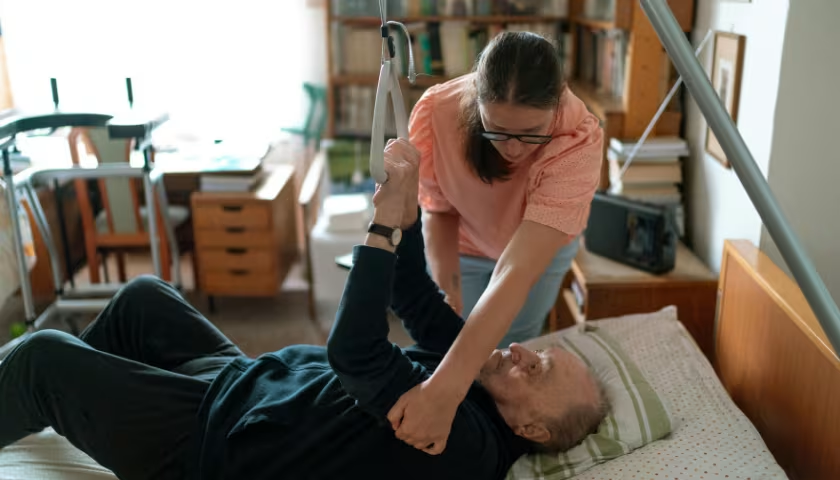
If you don’t complete the Care Certificate, you can still work in a care role — but not on your own. Most employers will let you start as a trainee and expect you to finish the certificate within your first few months.
- You’ll usually work under supervision until you’ve completed all the standards.
- Your manager will guide you through each part and check your progress as you learn.
- According to Derbyshire County Council, you won’t be allowed to work independently until you’re fully signed off.
Failing to complete the certificate on time can have consequences:
- Your employer may limit your duties or delay confirming your permanent role.
- You’ll miss out on learning the key principles that make care safer, more confident, and more rewarding.
Rather than seeing it as a hurdle, think of it as an investment — a way to build trust, credibility, and a strong foundation for your career in care.
How to Complete the Care Certificate
Completing the Care Certificate is straightforward, but it does require commitment. Here’s how it usually works:
- Timeframe – Full‑time staff typically finish within about 12 weeks. Part‑time staff might take a little longer.
- Learning and practice – You’ll combine classroom or online learning with hands‑on experience. Many providers use e-learning modules, worksheets and workbooks followed by supervised practice.
- Portfolio evidence – For each standard you’ll collect evidence: notes, reflections, competency checklists, feedback from colleagues and documented observations. This shows you can put knowledge into practice.
- Observation and sign‑off – A manager or assessor will watch you perform tasks like safe moving and handling, infection control or safeguarding and will sign off each standard when you demonstrate competence.
You can complete the certificate through your employer or study it online. HF Learning provides a flexible, CPD‑accredited course covering all 16 standards. Each module uses videos, real‑life scenarios and interactive quizzes. You can study at your own pace, revisit materials and receive support from tutors. When you’ve completed your portfolio and your assessor is satisfied, you’ll receive a certificate recognised across the UK care sector.
Tips for New Carers Studying for the Care Certificate

Learning while working can be challenging. Here are some tips to make it easier:
- Take it one standard at a time. Focus on one subject – like infection prevention or communication – rather than trying to tackle everything at once.
- Keep a reflective journal. After each shift, jot down what you learned, what went well and what you want to improve. It will help you build evidence and reflect on your practice.
- Ask for feedback. Talk to your mentor or senior colleagues. Ask them to observe you and give constructive feedback.
- Practise empathy and listening. Remember, the certificate isn’t just about tasks. It’s about how you make people feel. Smile, listen, take your time. It all counts.
- Use online resources. Watch short videos, listen to podcasts and join online communities for care workers. Sharing experiences makes learning more relatable.
Conclusion
The Care Certificate isn’t just a piece of paper — it’s the start of your journey in care. It gives you the confidence, knowledge, and values you need to support others safely and with compassion.
If you’re new to care, take your time, learn each standard, and don’t rush the process. Every lesson helps you grow. And once you’ve completed it, you won’t just work in care — you’ll belong in it.