
What jobs can you do with a level 5 in Diploma Health and social care?
A Level 5 Diploma in Health and Social Care typically refers to the Diploma in Leadership and Management for Adult Care (RQF Level 5). This qualification is regulated by Ofqual and often replaces older NVQ or QCF programmes. It builds on Level 3 and Level 4 courses by developing leadership and management skills, knowledge of care legislation and strategic planning.
Compared with Level 3, which focuses on hands‑on care skills and supporting individuals, Level 5 is aimed at people who want to manage teams or services. It can also act as a stepping stone to Level 6 (degree level) or professional routes such as nursing, social work or advanced practitioner roles.
Typical learners include experienced care workers seeking progression, deputy managers who need to formalise their skills and those looking to move from frontline care into leadership.
Key job roles you can do with Level 5

Below are some of the main roles available to Level 5 graduates. Salaries are approximate and reflect UK averages; pay may vary depending on region, employer and experience.
Deputy Manager / Assistant Manager
A Deputy Manager supports the Registered Manager in running a care service. This role involves:
- Supervising teams and ensuring compliance with care regulations
- Helping to recruit and train staff
- Monitoring quality of care and handling safeguarding concerns
According to the National Careers Service (the UK government careers guidance service), the salary for a care home manager ranges from £25,000 for a starter to £55,000 for experienced managers. Deputy managers may start on the lower end of this range and progress upward as they move towards registered manager status.
Registered Care Manager

Registered Managers hold overall responsibility for a care home or service. To become registered, you need appropriate experience, qualifications (often the Level 5 Diploma) and registration with the Care Quality Commission (CQC). Key duties include:
- Managing day‑to‑day operations and ensuring legal compliance
- Overseeing staff recruitment, training and performance
- Liaising with regulators, inspectors and families
As with deputy managers, experienced registered managers can earn towards the upper end of the £25,000–£55,000 salary band, and sometimes more in larger or specialist services.
Senior Support Worker / Lead Practitioner
Senior Support Workers (sometimes called Lead Practitioners or Team Leaders) provide hands‑on care but also supervise and mentor junior staff. They might work in residential homes, supported living, mental health services or community settings. Their responsibilities often include:
- Leading shifts and coordinating staff rotas
- Supporting service users with complex needs
- Ensuring paperwork and care plans are up to date
Acting as a key worker and liaising with families and professionals
The National Careers Service lists residential support workers (similar to senior support workers) with salaries ranging from £22,000 for starters to about £30,000 for experienced staff. A Level 5 qualification can help you move towards the higher end of this range and open up supervisory opportunities.
Health & Social Care Assessor / Trainer
Assessors and trainers support learners through vocational qualifications (e.g. Levels 2–5). They observe practice, provide feedback and ensure that care workers meet required standards. In some organisations, this role is called an IQAs (Internal Quality Assurer) or trainer. Responsibilities include:
- Assessing learners in their workplace and marking evidence
- Planning and delivering training sessions
- Providing constructive feedback to help staff develop
- Keeping accurate records for awarding bodies
A Level 5 can provide the subject knowledge and credibility you need to move into this role. Salaries for assessors vary widely, generally between £25,000 and £35,000, depending on the employer and your experience.
Compliance / Quality Officer

Compliance or Quality Officers focus on meeting regulatory standards and improving service quality. They may work for care providers, councils or regulatory bodies. Duties often involve:
- Auditing services to ensure they meet CQC or local authority standards
- Developing policies, procedures and quality‑improvement plans
- Training staff on compliance requirements
- Preparing organisations for inspections and responding to reports
Pay varies but tends to be similar to, or slightly higher than, senior support roles. As with assessors, Level 5 demonstrates that you have a detailed understanding of care legislation and quality frameworks.
What jobs can you do with a level 5 in Diploma Health and social care?
Employers look for Level 5‑qualified staff because the qualification demonstrates that you understand care regulations, leadership principles and quality standards.
According to a House of Commons Library briefing, about 1.59 million people worked in the adult social care sector in England in 2023/24. Despite this large workforce, the sector still faces high vacancy rates—with Skills for Care estimating that around 8.3 % of social care roles were vacant, leaving approximately 131,000 vacancies. Employers need capable leaders to fill these gaps, and Level 5 equips you to take on that responsibility.
Demand for services is also increasing due to an ageing population and more people living with complex conditions. The King’s Fund noted that there were 1.79 million adult social care roles in England in 2022/23, with 152,000 vacancies and a turnover rate of 28.3 %. These figures highlight a sector that urgently needs skilled managers who can retain staff, improve quality and lead teams effectively.
Career progression and pathways
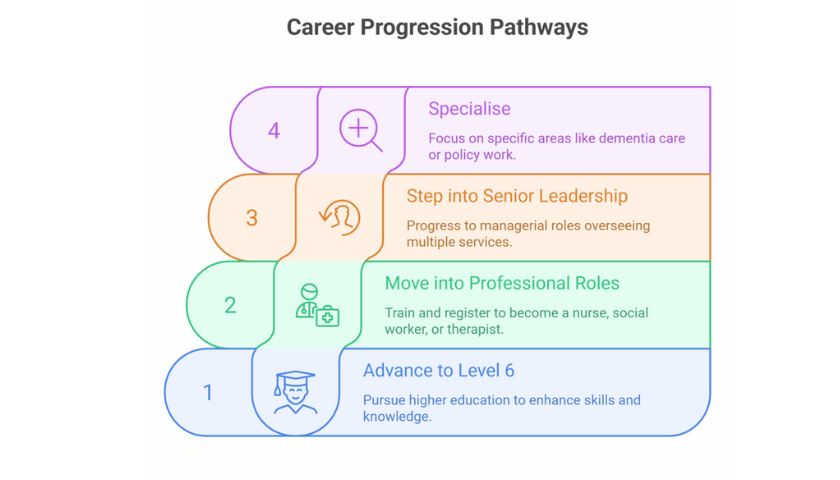 The adult social care workforce pathway developed by the Department of Health and Social Care lists role categories from new to care through to registered manager. Level 5 sits within the supervisor/leader category and can help you climb to practice leader, deputy manager and finally registered manager.
Salary expectations and job‑market trends
Salaries in health and social care vary by role, location and sector.
- Care home managers/Registered managers: £25,000 – £55,000 per year.
- Senior Support Workers / Lead Practitioners: £22,000 – £30,000 per year.
- Health & Social Care Assessor/Trainer: approximately £25,000 – £35,000 depending on employer and qualification
- Compliance/Quality Officers: often in the £30,000 – £40,000 range, with potential to earn more in specialist roles
Vacancy rates remain high; the House of Commons briefing highlighted that around 131,000 vacancies were recorded in 2023/24. Meanwhile, the King’s Fund notes that the sector had 28.3 % staff turnover in 2022/23. These figures suggest strong demand for qualified managers and support workers who can help reduce churn and improve retention.
Tips to maximise your Level 5 qualification
To make the most of your Level 5 Diploma and stand out in job applications:
- Gain diverse experience: Work across different care settings (residential, domiciliary, mental health, learning disabilities) to broaden your skills.
- Continue professional development (CPD): Take short courses in specialist areas such as dementia care, medication management or safeguarding. Stay updated with changes in legislation.
- Network and join professional bodies: Organisations like Skills for Care offer resources, events and communities. Connecting with peers can lead to job opportunities and mentorship.
- Get leadership experience: Volunteer for team‑leader roles, chair meetings or lead quality‑improvement projects. The more evidence you have of leadership, the stronger your CV will be.
- Stay informed about policy and standards: Keeping up with CQC guidance, government white papers and local council policies will help you implement best practice and impress employers.
How to apply/enrol in a Level 5 course
If you haven’t yet earned your Level 5 Diploma, now could be the right time. Many training providers offer flexible learning with online modules, tutor support and work‑based assessments. This allows you to continue working while you study.
For example, you can enrol in a Health and Social Care Level 5 Diploma through HF Online. The programme is designed for learners seeking promotion or entry into care management. Courses like this help you develop leadership skills, understand regulation and prepare for roles such as Deputy Manager, Registered Manager or Quality Officer.
Conclusion
In short, a Level 5 qualification in Health and Social Care gives you access to meaningful leadership roles — from Deputy Manager and Senior Support roles to Registered Manager and compliance positions. It not only boosts your earning potential but also underlines your readiness to lead within the care sector.
As Simon Bottery, senior fellow in social care at the King’s Fund, warns: “Unless we do something fundamental … we’re going to continue to have this chronic problem” in workforce stability and reward structures. That means pursuing Level 5 wisely — with ongoing development and clarity — really can set you apart.