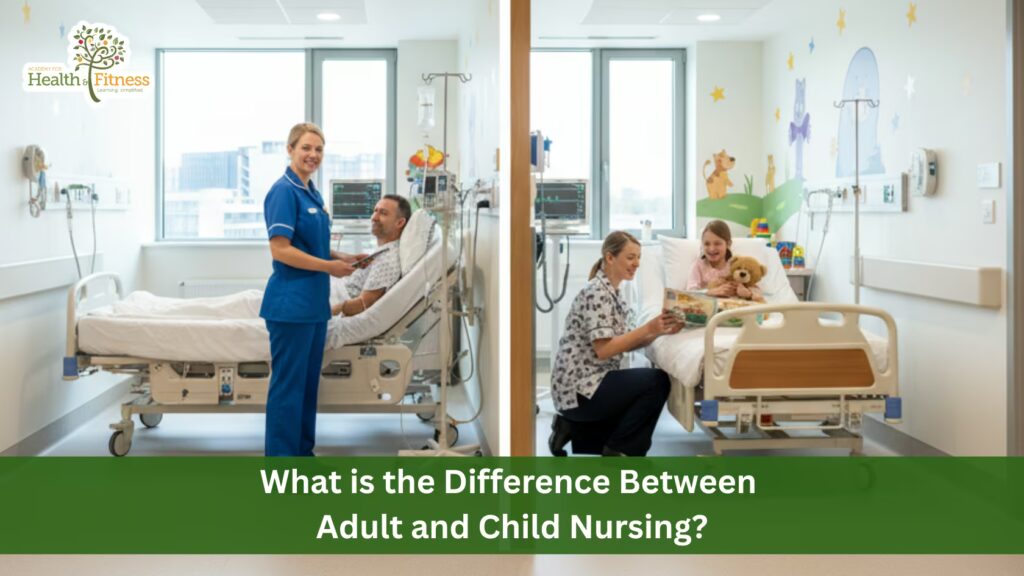


Do paediatric and adult nurses just work with patients of different sizes? No—the differences are foundational. While both roles focus on patient care, the approach, techniques, and emotional demands vary dramatically between adults and children.
At the core, the distinction lies in developmental stage, physiological response, and the necessity of family-centred care. Paediatric nurses treat patients who are still growing—physically, mentally, and emotionally—while adult nurses work with fully developed bodies and often more complex, chronic conditions. Each group requires a tailored approach in communication, medication, and care planning.
In fact, the split within the UK nursing workforce says a lot: adult nurses make up nearly half of all registered nurses, while only 6.5% specialise in children’s nursing, according to the Nursing and Midwifery Council. That gap isn’t just about demand—it reflects the distinct challenges and training each role requires.
This blog breaks down the key differences between adult nursing and paediatric nursing, comparing responsibilities, required skills, patient interaction styles, and training. If you’re considering a nursing career—or switching specialisations—this guide will help you understand where your passion and strengths align.
What is Adult Nursing?

Adult nursing is the most common nursing role in the UK, covering the care of anyone aged 18 and over. It involves much more than giving medication—you support patients physically and emotionally through illness, recovery, or long-term conditions.
You’ll usually find adult nurses in hospitals, GP practices, care homes, or even visiting patients at home. The work is hands-on, fast-paced, and varied.
Key responsibilities include:
- Monitoring patients and updating care plans
- Giving medications and treatments
- Supporting recovery and independence
- Communicating with patients and families
- Coordinating with doctors and healthcare teams
Because many adult patients have complex or long-term conditions, adult nurses play a vital role in long-term health management.
What is Child (Paediatric) Nursing?
Child or paediatric nursing focuses on caring for patients from birth to age 18. But it’s not just treating smaller versions of adults. Children have unique physical and emotional needs, and their care often involves close coordination with families.
You’ll often work in children’s hospitals, neonatal units, community clinics, or schools. Each setting requires a different approach, but the goal is always the same: to help children feel safe, supported, and well.
Key responsibilities include:
- Giving treatments and medication suited to the child’s age
- Using play and simple language to reduce anxiety
- Supporting families through diagnosis and recovery
- Working closely with doctors, educators, and social workers
Because no two children are the same, you’ll need to adapt your care based on age, personality, and condition. And since young patients can be vulnerable, safety and safeguarding are always top priorities.
Key Differences Between Adult and Child Nursing
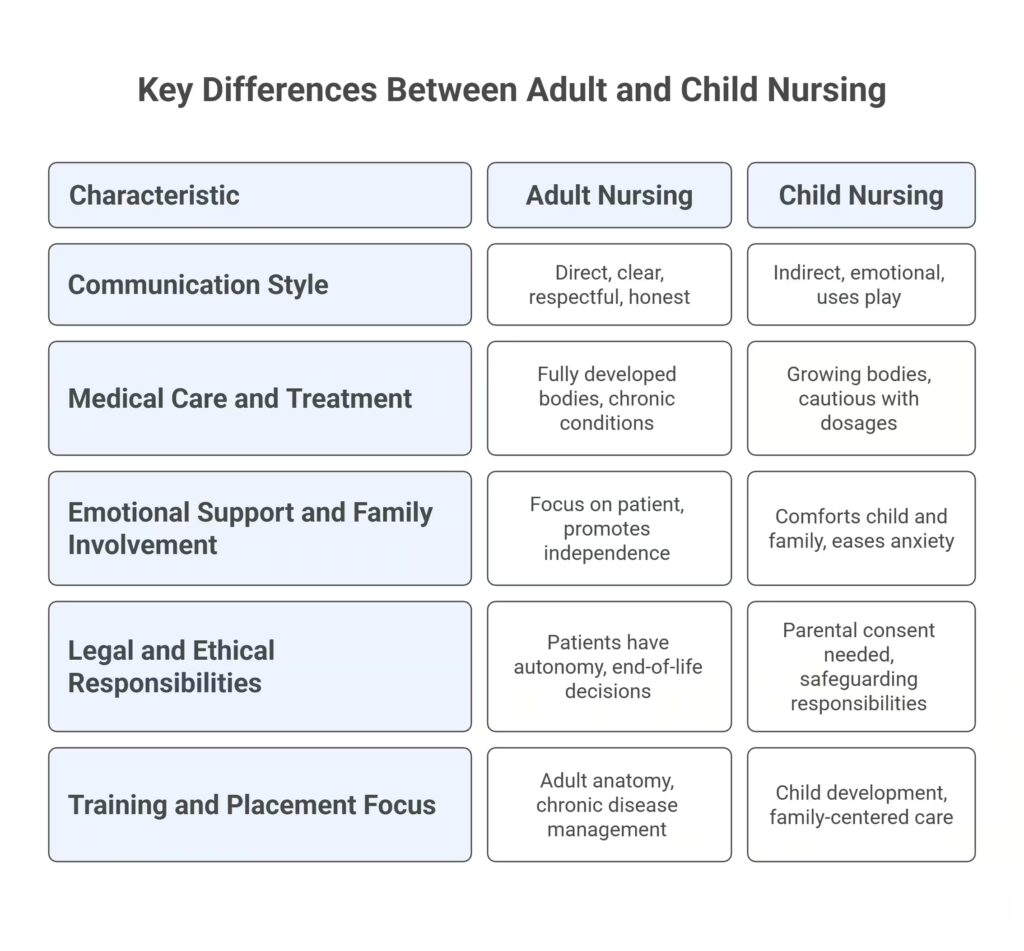
At first glance, adult and child nurses might seem to do similar jobs: caring for patients, managing treatments, and offering support. But when you take a closer look, you’ll quickly see that these two nursing paths are built on very different foundations. The age and development of the patient change everything—from how you communicate to how you deliver care, and even how you make legal decisions.
Let’s walk through the key differences in more detail so you can understand how each role works in real-life settings.
1. Communication Style
How you talk to patients is a big part of nursing—and the approach can be completely different.
- Adult nurses usually communicate directly with the patient. Adults can explain their symptoms, ask questions, and understand treatment plans. The nurse’s job is to keep the conversation clear, respectful, and honest—especially when dealing with sensitive topics like long-term illness or end-of-life care.
- Paediatric nurses, on the other hand, often work with children who can’t fully express how they feel. This means using simple language, visual aids, play, or storytelling to build trust. You also work closely with parents or carers, who are essential in helping you understand the child’s condition and in making care decisions.
Why it matters: In paediatrics, communication is often indirect and emotional. It’s not just about treating the child—it’s about creating a safe, comforting environment for both the child and their family.
2. Medical Care and Treatment
Although the core nursing skills—like taking vitals, giving medication, or assisting in procedures—are shared, the way they’re applied differs quite a bit.
- Adult patients typically have fully developed bodies and immune systems. Many are dealing with chronic conditions like diabetes, heart disease, or arthritis. Treatments are often long-term, and adult nurses help patients manage symptoms, understand medications, and stay independent.
- Children, however, are still growing. Their bodies react differently to illnesses and medication, so nurses need to be extra cautious with dosages and closely monitor for quick changes. In fact, even a minor illness can become serious faster in children, especially babies and toddlers.
Why it matters: Paediatric nurses must understand child development and adapt their care to match a child’s age, size, and medical needs. Even simple treatments need special attention.
3. Emotional Support and Family Involvement
Both adult and child nurses provide emotional support—but how and to whom they give that support is very different.
- Adult nurses focus on supporting the patient directly. This could mean helping someone cope with a new diagnosis, encouraging lifestyle changes, or preparing them for surgery. Emotional care often includes promoting independence and dignity, especially with elderly patients.
- Child nurses provide comfort not only to the child but also to their parents or guardians. Young patients may feel scared, confused, or overwhelmed. Nurses often use play therapy, humour, and patience to ease anxiety. Parents also need emotional support, especially in serious or long-term cases.
Why it matters: In paediatric care, you’re often treating two people at once—the child and their family. Building trust with both is essential.
4. Legal and Ethical Responsibilities
Legal frameworks are important in both adult and child nursing, but they play out differently depending on the patient’s age and capacity.
- In adult nursing, patients have legal autonomy. As long as they are mentally capable, they can make decisions about their care, even if those choices go against medical advice. End-of-life decisions, advanced directives, and consent are common parts of adult care.
- In child nursing, the situation is more complex. Children may not legally be able to give consent for treatments, depending on their age and maturity. In most cases, parents or guardians must give permission. Paediatric nurses must also be trained in safeguarding to identify and report any signs of neglect or abuse.
Why it matters: Nurses working with children must be especially careful about consent, confidentiality, and child protection laws. The ethical pressure is higher when young lives are involved.
5. Training and Placement Focus
In the UK, nursing students choose their specialism—adult, child, mental health, or learning disability—before they start their degree. So, your education and training are shaped by your chosen path from the start.
- Adult nursing students focus on adult anatomy, chronic disease management, and general hospital care. Their placements might include surgical wards, care homes, and outpatient clinics.
- Child nursing students study child development, child psychology, family-centered care, and safeguarding. Their placements include children’s wards, neonatal units, and schools.
Why it matters: The skills you develop during training will match the age group you’ll be caring for, and switching specialisms later usually requires additional study.
Skills Required for Each Role
Now that we understand the core differences in patient approach, let’s explore the specific skills that make an adult nurse and a paediatric nurse successful. While both roles require a solid medical foundation, the day-to-day talents you’ll rely on are surprisingly distinct. Essentially, you’re building two different toolkits for two very different jobs.
Let’s look at what each role demands—and where the skills overlap.
Core Skills All Nurses Need
No matter which path you take, there are a few essential skills every nurse must have:
- Compassion – You’ll often meet people at their worst. Showing care and kindness can make a real difference.
- Communication – You’ll need to explain things clearly, listen carefully, and work with other healthcare professionals.
- Problem-solving – Quick thinking is vital when a patient’s condition changes suddenly.
- Organisation – Juggling tasks, treatments, and patient needs requires strong time management.
- Teamwork – You’ll rarely work alone. Being part of a team is a big part of nursing.
Skills Specific to Adult Nursing
Adult nurses often work with patients who have multiple health issues or long-term conditions. So, your focus is on keeping patients stable, promoting independence, and helping them manage their health over time.
Some key skills include:
- Clinical decision-making – Adults may present complex symptoms or take many medications, so you’ll need to think critically.
- Confidence in handling sensitive topics – From mental health to end-of-life care, you must approach tough conversations with sensitivity and respect.
- Promoting self-care – Adult patients often need guidance on managing their condition after they leave your care.
Why it matters: Adult patients usually want autonomy. Your job is to support them without taking control away from them.
If you’re ready to build these skills and step into a rewarding career, the Adult Nursing Diploma from HF Online is a great place to start. It’s designed for learners in the UK who want a flexible, recognised qualification that opens the door to real-world nursing roles.
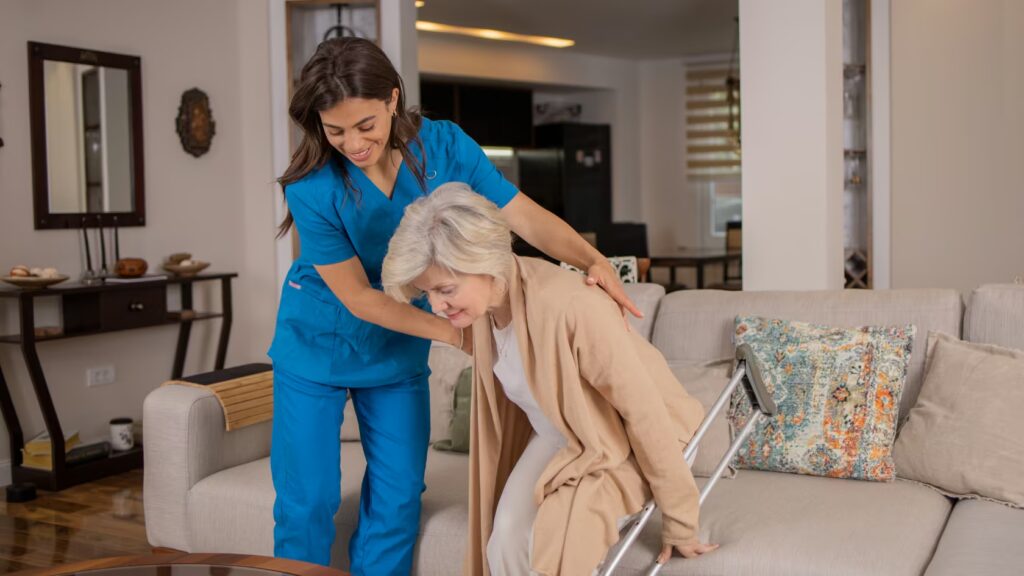
Skills Specific to Child (Paediatric) Nursing
Caring for children means adapting your approach depending on age, development, and emotional needs. One moment, you could be comforting a frightened toddler; the next, explaining a procedure to a teenager.
Important skills include:
- Creativity in communication – You may need to use games, toys, or drawings to connect with younger children.
- Patience and calm – Children often don’t understand what’s happening. Staying calm helps them feel safe.
- Family-focused care – You’ll work closely with parents, keeping them informed and supported at every step.
- Safeguarding awareness – Recognising signs of abuse or neglect is crucial in paediatric roles.
Why it matters: In child nursing, you’re caring for both the child and their family. Being able to connect with both is essential.
The Paediatrics Nurse Job-Ready Programme with Career Guidance by HF Online is built for future paediatric nurses like you. It’s more than a course—it’s a career-focused launchpad that gives you the tools, confidence, and guidance to thrive in real-world child care settings.
Career Paths and Opportunities
One of the great things about nursing—whether you choose adult or paediatric—is that your career doesn’t have to stay in one place. After you qualify, there are plenty of ways to grow, specialise, and even switch paths. Let’s look at what’s possible once you’re in the field.
Career Progression in Adult Nursing
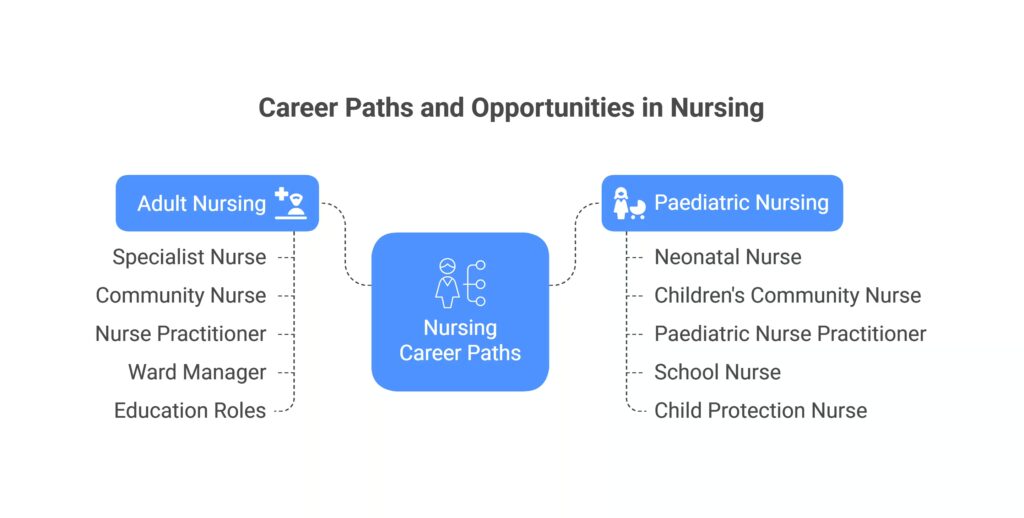
As an adult nurse, you’ll find opportunities to move into more advanced or specialised roles. After gaining some experience, you might choose to focus on a specific area or take on leadership responsibilities.
Here are a few common paths:
- Specialist Nurse – Work in areas like cancer care, cardiology, intensive care, or diabetes.
- Community or District Nurse – Support patients at home or in care settings, helping them manage long-term health needs.
Nurse Practitioner (ANP) – Take on more responsibilities, including diagnosing conditions and prescribing treatment. - Ward Manager or Team Leader – Manage staff, resources, and patient care in a specific department.
- Education or Training Roles – Teach the next generation of nurses at universities or in clinical settings.
Career Progression in Child (Paediatric) Nursing
Paediatric nurses also have a range of options for career growth. Since you’re working with a specific age group, many roles involve further specialisation in that area.
Here are some examples:
- Neonatal Nurse – Care for premature or seriously ill newborns in neonatal intensive care units (NICUs).
- Children’s Community Nurse – Support children and families at home or in local clinics.
- Paediatric Nurse Practitioner – Take on advanced roles, with the ability to assess, diagnose, and manage children’s health.
- School Nurse or Health Visitor – Focus on prevention, education, and early intervention in community settings.
- Child Protection or Safeguarding Nurse – Work with social services and schools to protect vulnerable children.
Which One is Right for You?
Choosing between adult and paediatric nursing comes down to what kind of care you feel most passionate about. Both roles are rewarding, but they suit different strengths and personalities.
Ask Yourself These Questions:
- Do you enjoy talking directly with patients about their care? → Adult nursing may be a better fit.
- Are you more drawn to working with children and families, using patience and creativity? → Paediatric nursing could suit you.
Match Your Strengths:
If you’re good at… | Consider… |
Explaining things simply, using play or visuals | Paediatric Nursing |
Managing long-term conditions and independence | Adult Nursing |
Supporting families through emotional moments | Both |
There’s no perfect choice—just the one that fits you best. Think about what kind of impact you want to have and who you feel most confident helping. If you’re still unsure, try speaking to nurses in both fields or gaining experience through placements.
Conclusion
Adult and paediatric nursing may share a title, but they offer very different experiences. From how you communicate to the type of care you provide, each path has its own challenges and rewards.
If you’re thinking about a career in nursing, consider who you connect with most—adults or children—and what kind of work excites you. Both roles are essential, and both have the power to change lives.