

What Is the Care Certificate?

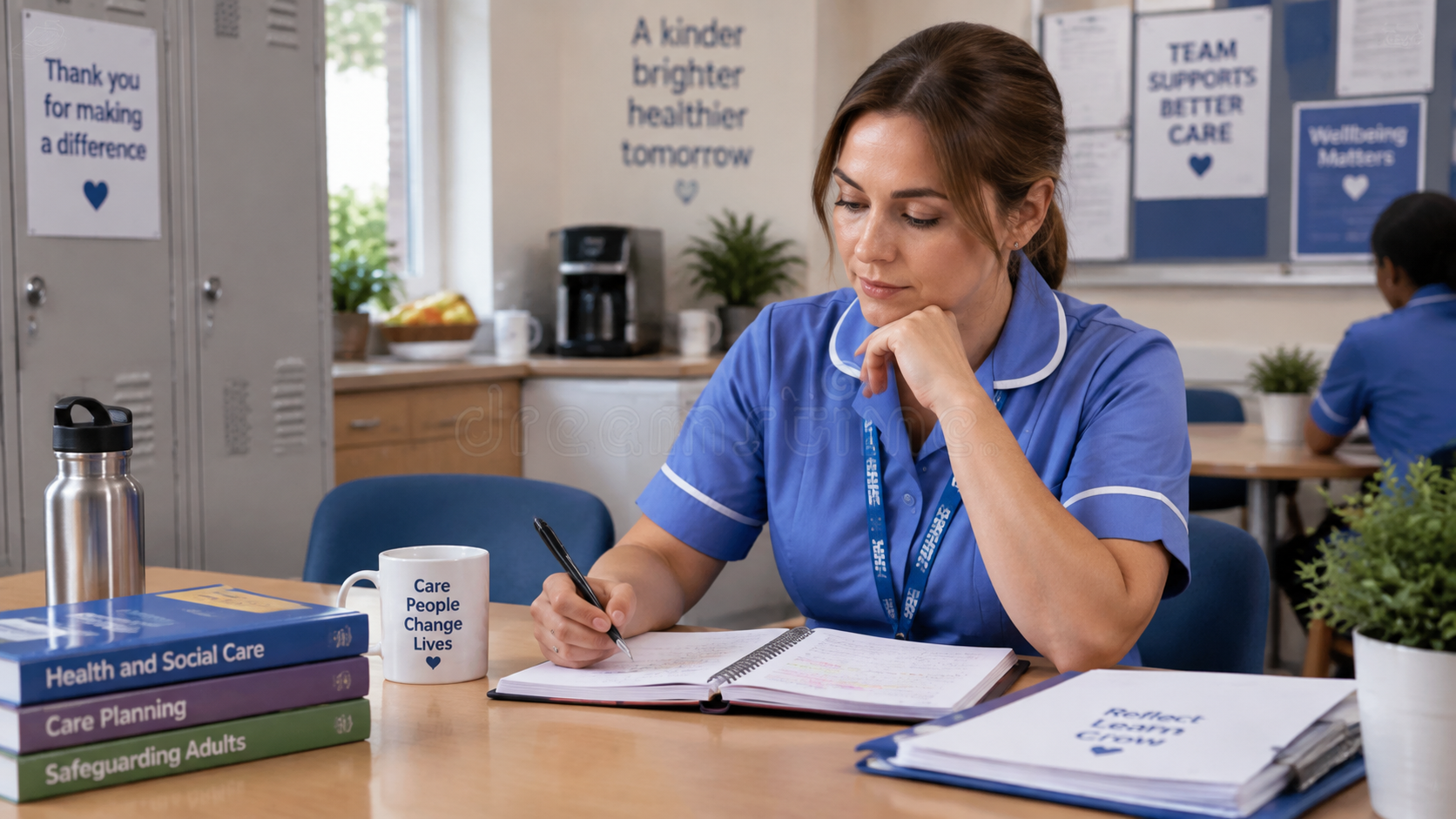
The Care Certificate is the starting point for anyone stepping into a career in care. Simple as that. It’s a structured training programme that gives new health and social care staff the skills, confidence, and heart to provide safe, high-quality support. Think of it as a toolkit — the essential stuff every care worker needs before they ever work alone. It’s about getting everyone on the same page when it comes to values like dignity, respect, and safety.
Launched in 2015, the Care Certificate was developed by Skills for Care, Health Education England, and Skills for Health, following the Cavendish Review — a wake-up call after several high-profile failings in care. The review made something clear: training couldn’t be left to chance. So this programme was created to bring consistency across hospitals, care homes, and community settings.
The certificate originally included 15 standards, but has since been updated to 16 to reflect the growing focus on professional development and lifelong learning in care. The new framework separates Personal Development and Personal and Professional Development into distinct standards — recognising that good carers don’t just learn once; they keep growing.
It now covers 16 standards — from understanding your role and duty of care to safeguarding, communication, infection control, and continuous development. It’s a blend of learning, practice, and reflection. You study, you try, you show what you can do — and your manager signs you off when you’re ready.
Now, is it legally required? No. But here’s the thing — most employers expect it. The Care Quality Commission (CQC) recognises it as a benchmark for induction and training quality. In care homes, NHS trusts, and domiciliary services, new staff are usually given 12 weeks to complete it. Some do it online, others in person — but always with hands-on observation. It’s not just theory. It’s learning that sticks.
What’s in the Care Certificate?

The Care Certificate includes 16 core standards that teach the essential skills, knowledge, and behaviours every care worker needs to deliver safe and compassionate care. It’s a mix of learning, practice, and real experience — not just theory.
Here’s what it covers:
- Core themes such as safeguarding, dignity, communication, equality, and health & safety.
- Practical learning, where you’ll apply what you learn through real-life tasks like:
- Supporting nutrition and hydration
- Maintaining infection control
- Communicating with empathy
- Handling medication safely
- Observation and supervision by a manager or assessor to ensure you can demonstrate your skills confidently.
- Sign-off and feedback to confirm you meet the national standards in real-world care settings.
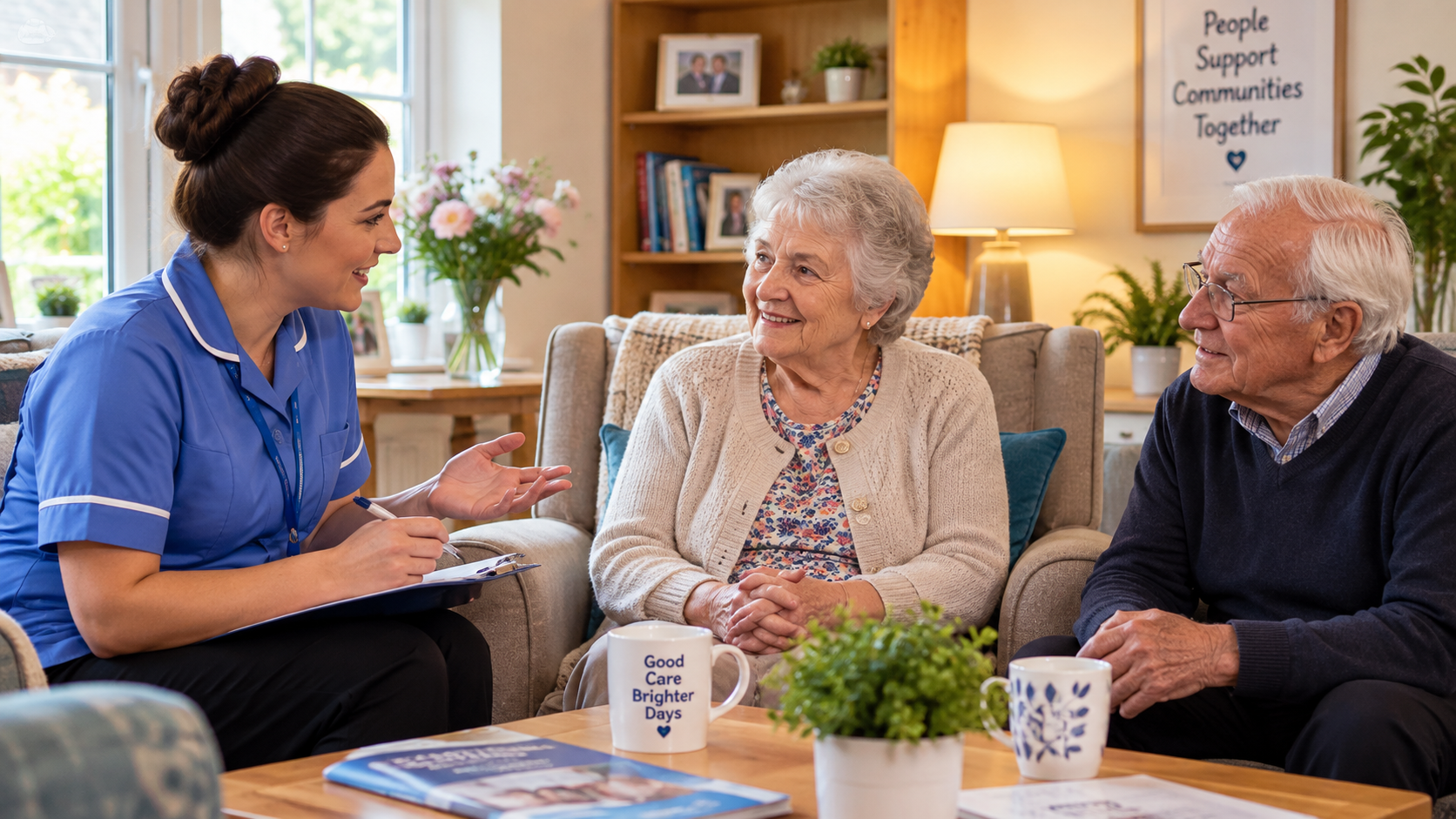
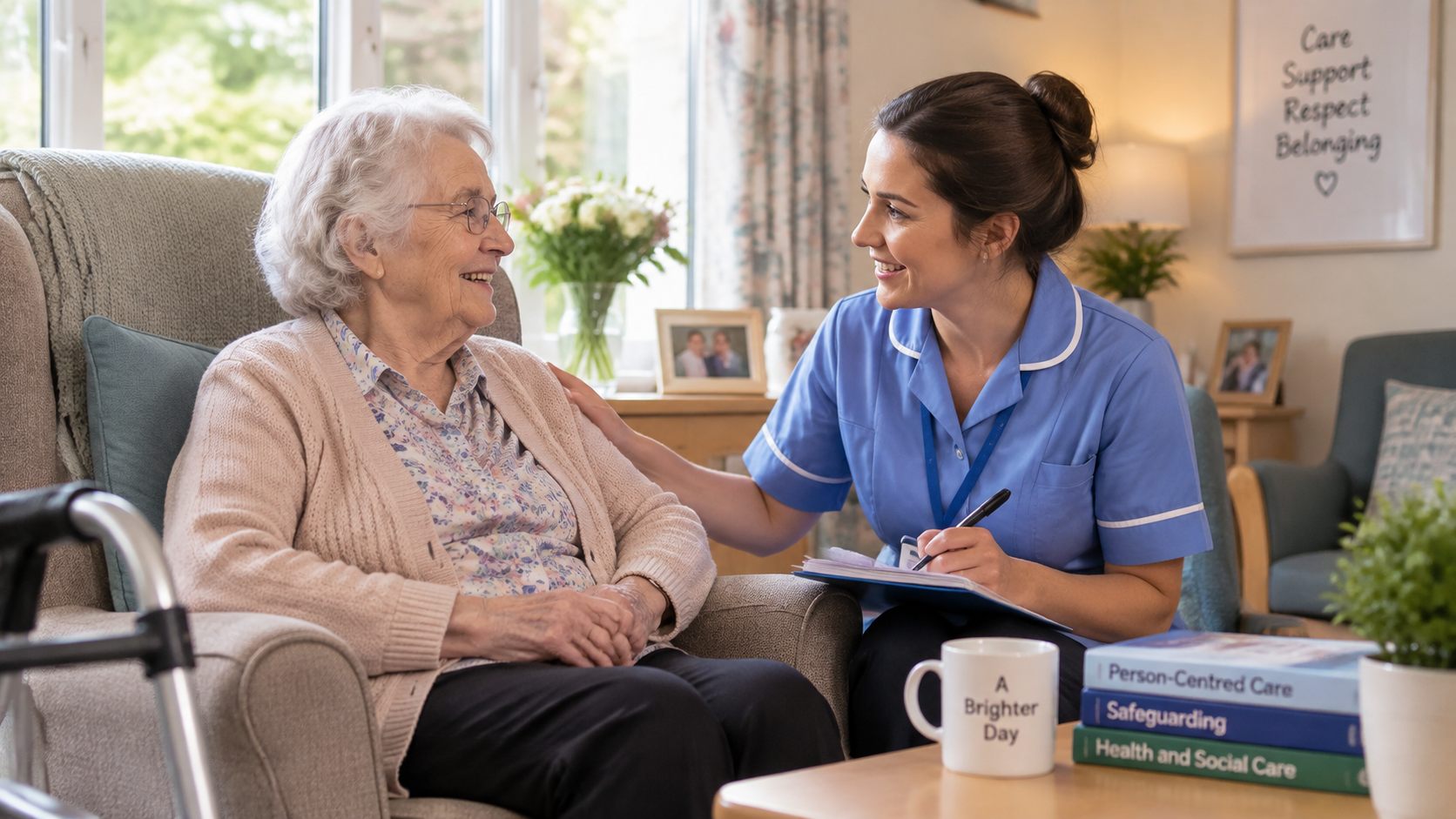
In short, the Care Certificate helps you feel ready and capable — to walk into someone’s home, understand their needs, and offer care that’s kind, safe, and person-centred.
The 16 Care Certificate Standards: A Simple Breakdown
In the world of healthcare, particularly in adult social care, the Care Certificate serves as an essential benchmark for the skills, knowledge, and behaviours required for quality care. This certification ensures that those in caring roles provide the best support to individuals while maintaining safety, dignity, and respect. Let’s break down the 16 Care Certificate standards into manageable sections.
A. Core Values and Behaviours

The first group of standards focuses on the foundational principles of care. These core values and behaviours guide how carers should approach their work, ensuring that they act with integrity, respect, and professionalism at all times.
- Understand Your Role – Learn what you’re responsible for, where your limits are, and when to ask for help.
Example: A support worker helps with washing and dressing but calls a nurse if medication is needed. - Your Personal Development – Reflect on your progress and keep learning. Creating a development plan or journal helps track what you’ve achieved and where you can improve.
- Duty of Care – Understand your legal and moral responsibility to act in someone’s best interests.
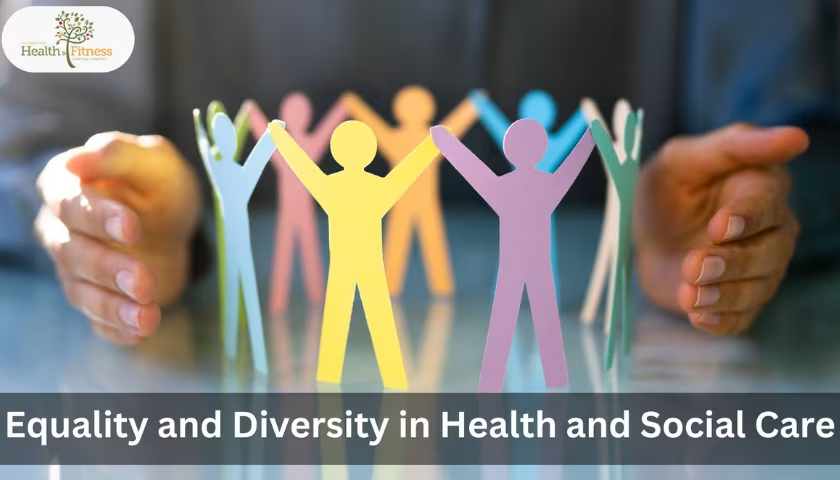
Example: If you spot a bruise or notice neglect, you report it — never ignore it. - Equality and Diversity – Treat everyone fairly and with respect, whatever their background.
Example: Supporting someone’s dietary needs during Ramadan or another religious observance. - Work in a Person-Centred Way – Care should fit the person, not the other way around.
Example: If a resident loves gardening, support them to pot plants instead of sitting indoors. - Privacy and Dignity – Respect people’s space, choices, and identities.
Example: Always ask before entering rooms, close curtains during personal care, and keep personal details private.

B. Communication and Relationships
Effective communication is at the heart of caregiving. This section focuses on how to communicate with service users in a way that is clear, compassionate, and effective.
- Communication – Good care starts with good communication. You’ll learn to listen actively, use plain language, and pay attention to body language.
Example: Explaining medication in simple terms and checking that the person understands. - Fluids and Nutrition – Recognise dehydration or malnutrition and promote healthy eating.
Example: Offering drinks regularly or recording food intake for someone with complex needs.
C. Health, Safety and Safeguarding
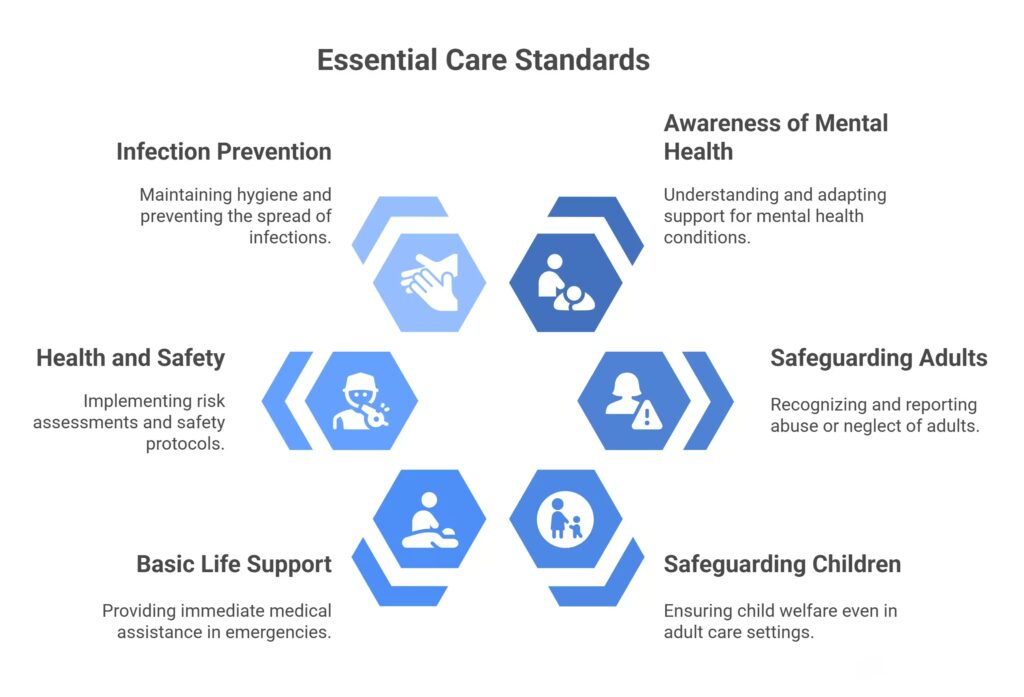
These standards highlight the importance of safeguarding and protecting the health and wellbeing of those you care for. They teach you how to handle emergency situations, maintain safety, and be vigilant about potential risks.
- Awareness of Mental Health, Dementia and Learning Disability – Understand how these conditions affect people’s lives so you can adapt your support.
Example: Using familiar routines to comfort someone living with dementia. - Safeguarding Adults – Know how to recognise and report signs of abuse, neglect, or exploitation.
Example: If a resident is shouted at or left unattended, you raise it immediately. - Safeguarding Children – Even if you work mainly with adults, this standard ensures you know how to act if you ever have concerns about a child’s welfare.
- Basic Life Support – Learn CPR and first aid techniques to respond in emergencies.
Example: Performing chest compressions while waiting for an ambulance can save a life. - Health and Safety – Covers risk assessments, fire safety, moving and handling, and more.
Example: Checking wheelchair brakes before a transfer or keeping walkways clear of clutter. - Infection Prevention and Control – Focuses on hygiene, PPE, and stopping infections from spreading.
Example: Proper handwashing and safe waste disposal — simple habits that protect everyone.
D. Professional Practice
The final section of standards focuses on maintaining a professional attitude and staying up-to-date with best practices in the care sector. This includes how to handle information and plan your professional development.
- Handling Information – Learn how to record, store, and share information securely and accurately.
Example: Updating care notes correctly or discussing cases discreetly with colleagues. - Personal and Professional Development – Encourages goal-setting, reflection, and career progression.
Example: Setting learning targets or shadowing experienced carers to build new skills.
Benefits of Completing the Care Certificate

For Employees
Finishing the Care Certificate builds confidence. When you know what’s expected of you, you can focus on delivering care rather than second‑guessing yourself. Holding a recognised certificate also demonstrates commitment to your role and can improve your job prospects. It’s often the first stepping stone towards higher qualifications, such as the Level 3 or Level 5 Health and Social Care Diplomas.
For Employers
A workforce trained to the same standard reduces risk and improves consistency. It helps employers meet regulatory requirements and fosters a culture of excellence. Hiring carers who already hold the certificate can shorten induction times and reduce the burden on experienced staff. Investing in training also keeps people for longer – as Skills for Care data shows, staff with qualifications and regular training are significantly more likely to stay.
For Service Users and Families
Ultimately, the greatest benefit is for the people receiving support. The standards are built around dignity, respect and safety. Knowing that staff understand safeguarding, basic life support and person‑centred care offers peace of mind to families. It helps build trust and ensures that care is delivered consistently, regardless of who is on shift.
For the Sector
The Care Certificate helps professionalise the care workforce. By establishing a shared language of values and skills, it supports integration between health and social care. It also provides a platform for lifelong learning, encouraging carers to continue their development and progress into senior roles.
Common Challenges and Misconceptions

The Care Certificate often gets misunderstood. Some people see it as “just basic training,” but that couldn’t be further from the truth. Here’s what you should really know:
- It’s not just box-ticking.
The standards build real, practical skills that shape everyday care — from using a hoist safely to supporting someone with dignity and confidence. - It goes beyond theory.
Learning about dementia, mental health, or safeguarding isn’t abstract. It changes how you communicate, how you respond, and how you support people. - Delivery can vary.
Not every organisation has the same resources, time, or supervision. Some new carers may feel rushed or unsupported while completing their training. - Quality is improving.
Skills for Care is working to standardise how the Care Certificate is assessed across the UK, helping ensure fairness and consistency in every workplace. - Training is an investment, not a cost.
Employers who give staff proper time, guidance, and mentorship see higher retention and better quality of care overall.
In short, the Care Certificate isn’t about ticking boxes. It’s about building confidence, competence, and compassion that last far beyond the first 12 weeks of training.
The Care Certificate and Your Career
Completing the Care Certificate isn’t the end of your learning journey – it’s the beginning. With this credential, you’re better positioned to pursue further qualifications and take on more responsibility. Many carers progress from support roles to senior positions, supervisory posts or even management. Others use the certificate as a stepping stone to nursing, social work or allied health professions. Employers and universities recognise its value because it demonstrates that you’ve mastered the fundamentals.
Career development doesn’t happen overnight, but the certificate gives you a solid foundation. It also helps you move between employers, as it’s recognised across England by care providers, local authorities and the NHS. In short, it opens doors.
Conclusion
The Care Certificate isn’t just training — it’s a promise. A promise that care will be kind, safe, and consistent no matter where it’s delivered. It builds confidence, protects dignity, and sets the foundation for genuine compassion in every role.
If you’re starting out or looking to grow in your care career, the Care Certificate is where it begins. Learn it well, live its values, and you’ll make a real difference every single day.