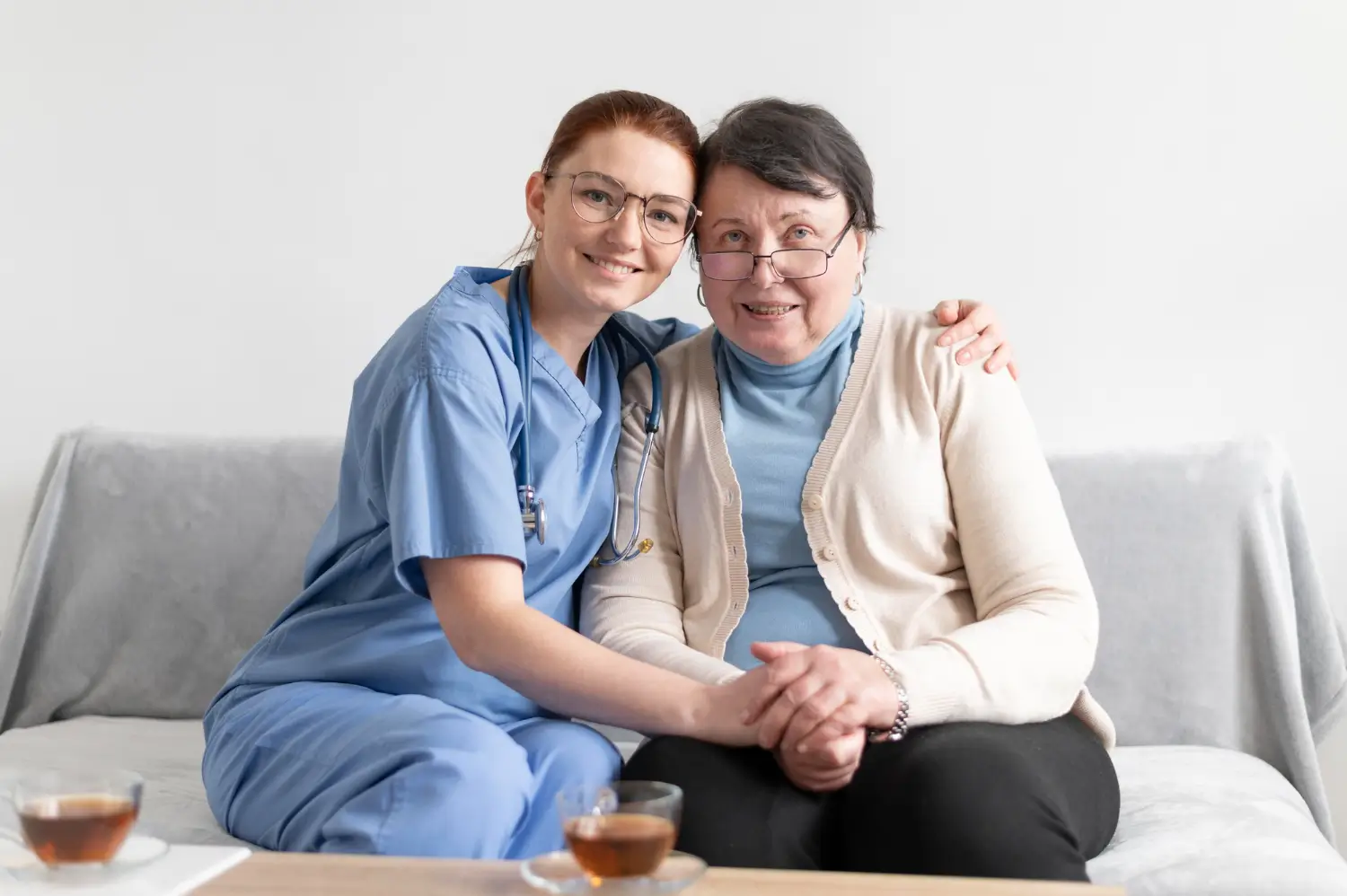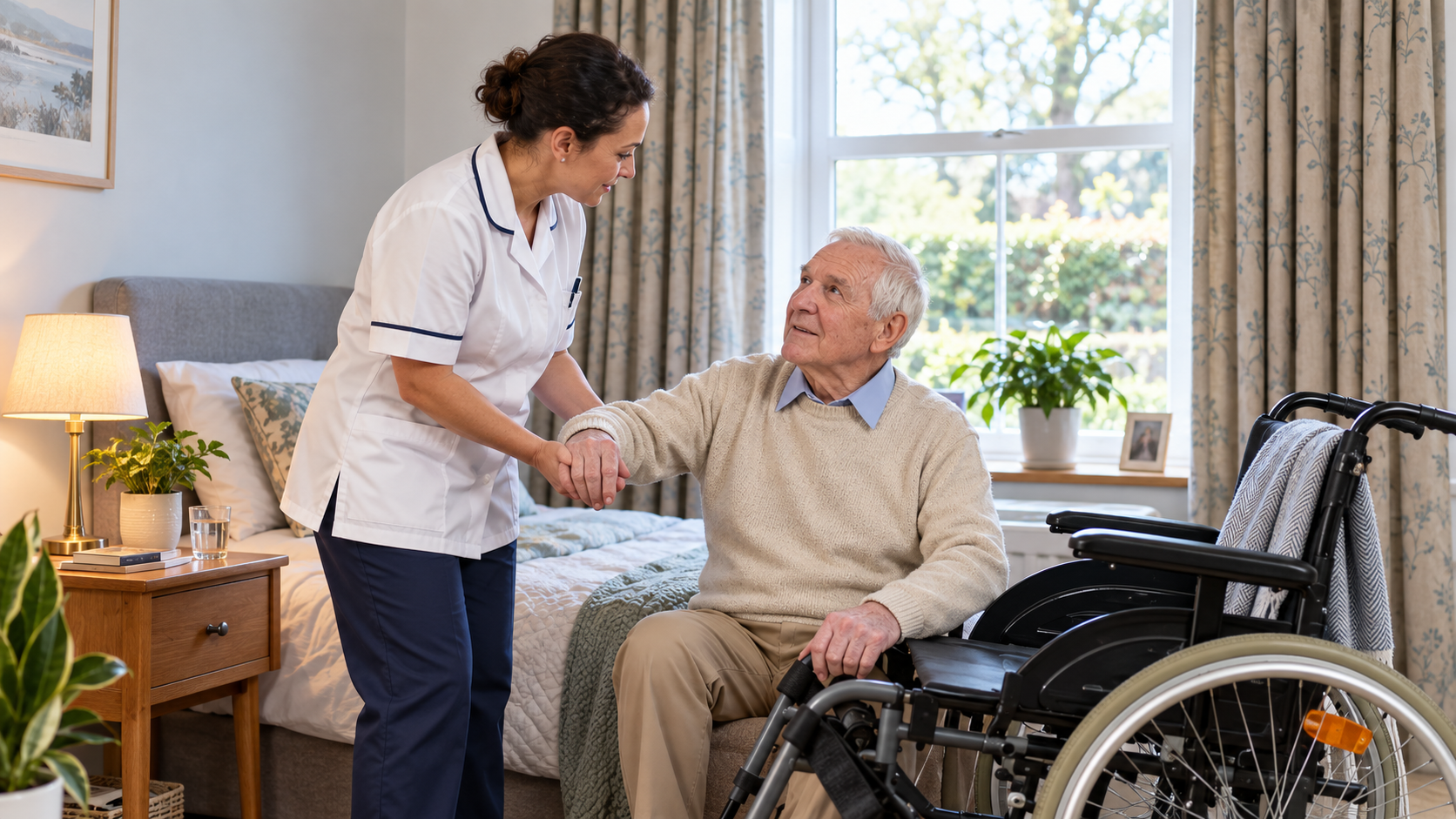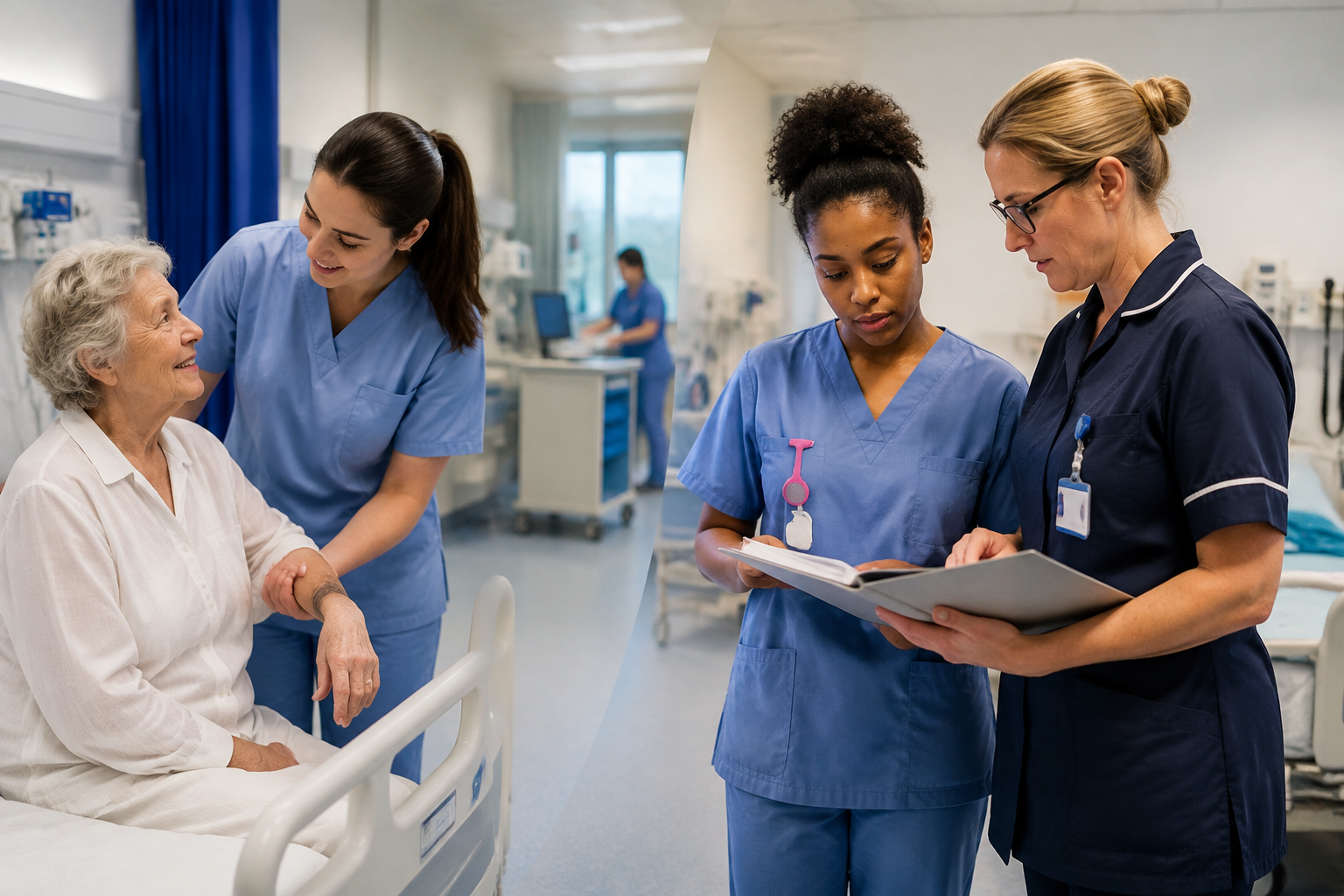

What Is Moving and Handling?
In health and social care, moving and handling means helping people move safely, comfortably, and with dignity. It’s a key part of daily care tasks, especially for individuals with limited mobility.
This involves:
- Assisting someone to sit, stand, or walk
- Helping with transfers (e.g. bed to wheelchair)
- Using equipment like hoists, slide sheets, or walking aids
It’s important to understand that moving and handling is different from manual handling. Manual handling is about moving objects—like boxes or supplies. Moving and handling in care focuses on people, which requires more sensitivity and skill.
Examples in a Care Setting:
- Using a hoist to transfer a resident from bed to chair
- Assisting a person with a walking frame down the hallway
- Repositioning someone in bed to prevent pressure sores
- Supporting someone to get up from the toilet safely
- Using a slide sheet to adjust someone’s position in bed
Every move should protect both you and the person receiving care. Safe techniques reduce injury risks and help people feel respected and secure.
What are the Principles of Safe Moving and Handling in Social Care?

When you’re working in health or social care, moving and handling isn’t just a routine task—it’s a responsibility. Every time we help someone move, whether it’s getting out of bed or transferring to a wheelchair, we need to do it in a way that keeps everyone safe. That’s where the principles of safe moving and handling come in. They guide us to think before we act, use the right tools, and protect both ourselves and the person we’re supporting.
Let’s break down the key principles you should always follow:
1. Assess the Risk First
Before doing anything, take a moment to check the situation.
- Can the person move with some support, or do they need full assistance?
- Is there enough space to move safely?
- Are there any hazards nearby, like slippery floors or obstacles?
By assessing first, you avoid rushing—and reduce the chance of injury.
2. Communicate Clearly
Always talk to the person you’re helping.
- Explain what you’re going to do.
- Check if they feel ready or have any pain or discomfort.
- Encourage them to help if they can—this promotes independence.
Clear communication makes the person feel safe and involved.
3. Use the Right Equipment
Don’t try to manage a heavy or awkward move by yourself.
- Use hoists, slide sheets, transfer belts, or wheelchairs where needed.
- Make sure equipment is clean, safe, and in good working condition.
- If you’re unsure how to use something—ask or check your training first.
Using the right tools saves your back and protects the person in your care.
4. Maintain Good Posture
How you move your own body matters just as much.
- Keep your back straight and bend your knees.
- Avoid twisting—turn your whole body instead.
- Keep the load close to your waist when lifting.
Good technique helps you avoid long-term injuries.
5. Work as a Team
If a task is too much for one person, get help.
- Plan together before you start.
- Agree on who will lead and when to move.
- Move in sync to avoid sudden jerks or imbalance.
Teamwork makes handling safer and smoother.
6. Respect Dignity and Comfort
Never forget—this isn’t just a task. It’s a person.
- Keep them covered and warm when moving.
- Be gentle and patient.
- Reassure them throughout the process.
A safe move also needs to be a respectful one.
What are Moving and Handling Procedures?

Moving and handling isn’t something we just “wing” on the job. There are clear procedures in place to make sure every move is done safely, smoothly, and with care. These procedures help guide what we do, how we do it, and when we should ask for help. They’re there to protect both you and the people you support.
So, what exactly do these procedures involve? Let’s walk through the basics.
1. Start with a Risk Assessment
Before any move, a proper assessment should be done. This helps you figure out:
- What kind of support the person needs
- What equipment (if any) should be used
- Whether more than one carer is needed
- Any health concerns or mobility issues the person has
This isn’t about slowing things down—it’s about thinking ahead so nothing goes wrong. A comprehensive approach to care starts with understanding these needs, and you can learn how to create and manage them with a Health and Social Care Level 3 Diploma.
2. Follow the Care Plan
Each person in your care will have a personal care plan. This includes important information like:
- Their level of mobility
- Preferred handling techniques
- Equipment they’re comfortable with
- Any medical conditions that affect how they’re moved
It’s important we follow this plan every time. If something changes or doesn’t feel right, report it.
3. Use Approved Techniques
Handling someone safely isn’t just about strength—it’s about technique.
Here’s what proper technique looks like:
- Keep your feet shoulder-width apart for balance
- Bend at the knees, not the waist
- Avoid twisting your body while lifting or turning
- Keep the person close to you to reduce strain
And of course, always use equipment properly if it’s part of the procedure.
4. Make Use of Equipment
There’s no shame in using help—that’s what it’s there for. Depending on the situation, you might need:
- A hoist or sling
- A transfer board
- A standing or turning aid
- Slide sheets or handling belts
Always check the equipment is clean, safe, and working before using it. And if you’re unsure how it works—stop and ask.
5. Communicate and Check Comfort
You should always:
- Tell the person what you’re going to do
- Check they’re ready before you start
- Watch for signs of pain or discomfort
- Reassure and support them throughout the move
This isn’t just a task—it’s part of building trust and making people feel safe in your care.
6. Report and Record the Move (If Needed)
After some moves—especially if they were difficult or unexpected—you may need to:
- Record the details in care notes
- Report any issues or incidents
- Flag equipment that needs repair or replacement
This keeps everyone informed and helps prevent problems down the line.
Moving and Handling Techniques in Health and Social Care

Moving and handling techniques are the hands-on skills we use to assist people safely. These methods are designed to protect both our clients and ourselves from injury. Let’s look at some common techniques you’ll use in a care setting.
Assisting a Person to Sit Up in Bed
This is a very common task. We usually use a slide sheet to help reduce friction. We first place it under the person’s torso, and by gently pulling it, we can help them move up the bed without straining our backs. Another way is to use the person’s own strength by having them bend their knees and push up with their legs as you assist them.
Helping a Person to Stand
When a person has some strength in their legs, we can use a stand aid or a simple transfer belt. We position the person at the edge of the bed or chair, facing the direction they need to go. We might use a transfer belt around their waist to give us a safe grip. Then, on a count of three, we guide them as they push up to a standing position, ensuring their balance is stable before they take a step.
Transfers using a Hoist
For people with very limited mobility, a hoist is the safest option. This technique requires using a sling, which is carefully placed under the person while they are lying or sitting. We then attach the sling to the hoist and use the machine to lift and transfer the person, for example, from their bed to a wheelchair. This technique takes all the strain away from us and is a key part of our job.
Repositioning in a Chair
Sometimes, a person might slide down in their wheelchair or chair and need to be repositioned. We can use a small slide sheet or an air cushion to help with this. By getting the person to lean forward slightly and with a partner, we can safely and gently slide them back into a comfortable and secure position, preventing them from slipping or developing pressure sores.
What Types of Moving and Handling Equipment Are There?

In health and social care, we don’t have to rely on strength alone. The right equipment can make moving and handling tasks safer, quicker, and more comfortable—for both you and the person you’re supporting. Knowing what tools are available (and how to use them properly) is a key part of working safely.
Let’s look at some of the most common types of moving and handling equipment you’re likely to use.
1. Hoists
Hoists are used when someone can’t move on their own or needs full support during transfers.
- Mobile hoists – wheeled units that can be moved around the room
- Ceiling track hoists – fixed to the ceiling and glide along a track
- Standing hoists – help people who can bear some weight but need help standing up
Each hoist needs a compatible sling, and it’s important to check the person’s care plan before using one.
2. Slings
Slings are the fabric parts used with hoists to lift and support the person.
- Full body slings – support the entire body
- Toileting slings – give access for hygiene tasks
- Amputee slings – specially designed for people with limb loss
Always choose the correct type and size of sling to match the person’s needs.
3. Slide Sheets
Slide sheets reduce friction and help you reposition someone in bed or on a chair.
- Use them to turn, roll, or move someone up the bed
- They make movement smoother and reduce strain on your back
- Usually used in pairs—one on top of the other
They’re simple, but very effective when used right.
4. Transfer Aids
These help with short-distance moves, like from a chair to a toilet or bed.
- Transfer boards – flat boards that help slide someone across a gap
- Rotating discs – allow someone to pivot safely during a transfer
- Transfer belts (handling belts) – give you a safe grip around the person’s waist
These tools are great when someone can assist a little with their movement.
5. Wheelchairs and Walking Aids
These help with mobility and independence, especially for longer distances.
- Wheelchairs – for people who can’t walk or have very limited mobility
- Walking frames and sticks – provide balance and stability
- Rollators – walkers with wheels, seats, and brakes
Before using them, always make sure the brakes work and the person feels safe and supported.
6. Specialist Beds and Chairs
Some people need extra support when sitting or lying down.
- Profiling beds – adjustable beds that help with positioning and movement
- Rise and recline chairs – help the person stand up or sit back down slowly
- Tilt-in-space chairs – maintain comfort and reduce pressure
These are often used for people with very limited mobility or specific health needs.
Things to Remember When Using Equipment
- Always check the equipment before use—look for damage or wear
- Make sure it’s clean and properly stored
- Follow the care plan and use the correct size or type
- If you’re ever unsure—ask before using it
What is the Legislation Related to Moving and Handling?

Working in health and social care means we are legally required to follow specific laws designed to keep everyone safe. These regulations are in place to protect us from harm and to ensure the people we care for are treated with dignity and respect.
The Health and Safety at Work etc. Act 1974
This Health and Safety at Work etc. Act 1974 is a very important law that applies to all workplaces in the UK. Essentially, it places a duty on employers to ensure the health, safety, and welfare of their employees and anyone else who might be affected by their work. This is the foundation upon which all other safety laws are built.
The Manual Handling Operations Regulations 1992 (MHOR)
This is the key piece of legislation for our work. It specifically deals with the risks of injury from moving and handling. The law requires employers to:
- Avoid hazardous manual handling wherever possible.
- Assess any risks that can’t be avoided.
- Reduce the risk of injury as much as possible, for example, by providing equipment and training.
The Provision and Use of Work Equipment Regulations 1998 (PUWER)
This law is all about the equipment we use. It states that all work equipment, like hoists and electric beds, must be suitable for its purpose, safe to use, and properly maintained. As care workers, we have a duty to use this equipment correctly and report any issues or defects we find.
The Lifting Operations and Lifting Equipment Regulations 1998 (LOLER)
This regulation works alongside PUWER and is all about lifting equipment specifically. LOLER requires that any equipment used for lifting people, such as a hoist, is strong, stable, and regularly checked by a qualified person. This ensures that the equipment is always in a safe condition, providing peace of mind for both us and our clients.
What is a Moving and Handling Risk Assessment?
A moving and handling risk assessment is a careful look at a situation to decide the safest way to move a person. It’s not just a piece of paperwork; it’s a vital process that helps us protect both ourselves and the person we are helping. This assessment must be completed before we attempt any move that carries a risk of injury.
We can remember the key elements of a risk assessment by thinking about the TILE acronym.
- T is for Task: We first consider the task itself. What exactly needs to be done? Does the move involve twisting, bending, or working in a confined space? We also think about how often the task is performed and if it could be completed by a machine instead of a person.
- I is for Individual: We then look at the person being moved. What are their abilities, limitations, and preferences? Do they have any medical conditions that affect their mobility, such as a weak side or joint pain? We must also consider our own abilities as the carer. Are we physically capable of performing the move, and have we been properly trained?
- L is for Load: In our context, the “load” is the person we are helping. We consider their weight, height, and any equipment they may have, such as a cast or a catheter. We also assess how easy or difficult it is to get a secure hold of them and if their weight is evenly distributed.
- E is for Environment: Lastly, we look at the surroundings. Is the floor clear of clutter? Is the lighting good? Is there enough space to move freely? We also check if the bed or chair we are using is in the correct position and if there is a safe place to transfer to.
By thinking through these four points, we can make an informed decision on how to perform the move safely and with the utmost care.
Conclusion
In conclusion, safe moving and handling is far more than just a physical task. It’s a fundamental part of providing compassionate and dignified care. By consistently applying the principles of risk assessment, using the right equipment, and following correct procedures, we can prevent injuries and ensure the well-being of everyone involved.
Ultimately, your commitment to proper training and continuous learning is what makes a difference. This knowledge gives you the confidence to provide safe, respectful, and high-quality care, reinforcing your vital role in the health and social care sector. If you’re looking to elevate your skills and build a rewarding career, consider a comprehensive program like the Health and Social Care Level 3 Diploma.