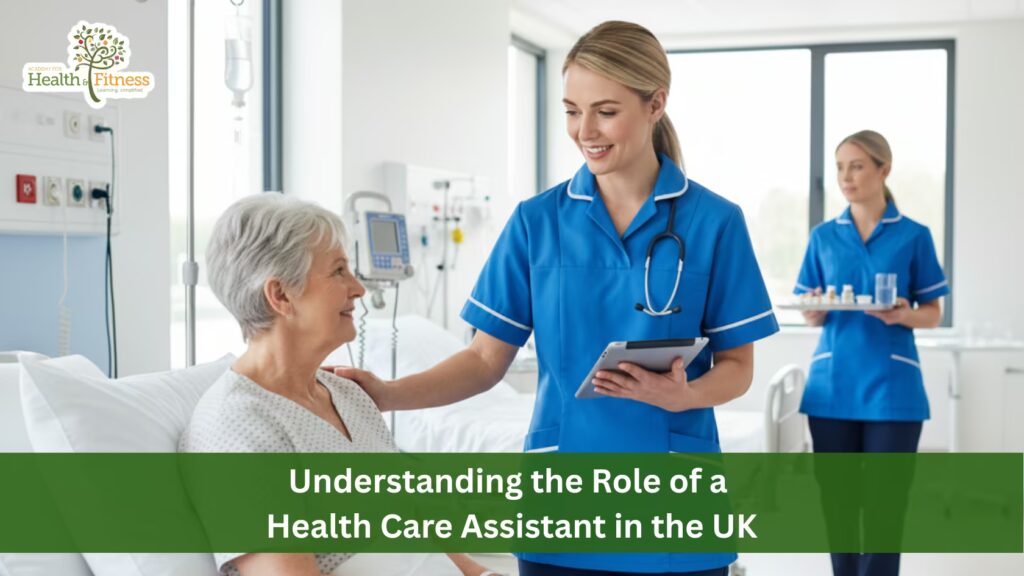


A Health Care Assistant (HCA) in the UK plays a vital role in supporting patient care across the healthcare system. Working alongside nurses, doctors, and other medical professionals, HCAs provide essential services to help patients with daily tasks and recovery. Their work spans both medical and social care, ensuring the comfort and well-being of patients in various settings.
In both the NHS and the private sector, HCAs are crucial to the smooth functioning of healthcare teams. In fact, the NHS saw an increase of 8,000 healthcare support workers in 2023 alone, highlighting the growing demand for skilled HCAs to support patient care and recovery (NHS England, 2024). Their role is especially significant in patient rehabilitation and overall healthcare efficiency.
This guide will walk you through the key responsibilities, qualifications, and potential career progression for HCAs. By reading, you’ll gain insight into how to start your HCA journey, what the job entails, and how to advance in the field.
Who is a Healthcare Assistant?
A Health Care Assistant (HCA) is a professional who supports patients with their daily care needs in hospitals, care homes, clinics, or at home. They work alongside nurses and doctors, helping with tasks like personal hygiene, mobility, and basic medical monitoring.
In simple terms, HCAs ensure patients are comfortable, safe, and cared for, while also assisting the medical team to deliver smooth and effective healthcare. They play a vital role in bridging the gap between patients and healthcare professionals, making them an essential part of the care system.
What Does a Healthcare Assistant Do?

If you’re wondering what a health care assistant actually does, the answer is: quite a lot! HCAs support both patients and healthcare professionals, making daily operations in hospitals, care homes, and clinics run smoothly. Essentially, they help patients with everyday tasks while also assisting nurses and doctors with medical care.
Here’s a closer look at their main responsibilities:
Key Duties of a Health Care Assistant:
- Personal Care: Helping patients with bathing, dressing, eating, and mobility.
- Monitoring Health: Checking vital signs such as temperature, pulse, and blood pressure, and reporting any changes.
- Supporting Medical Staff: Assisting nurses and doctors during procedures or treatments.
- Emotional Support: Offering companionship and reassurance to patients who may feel anxious or lonely.
Maintaining Records: Documenting patient progress and any observations to keep the care team informed.
Roles and Responsibilities of a Healthcare Assistant in Different Care Settings
In essence, while the core values of compassion and dignity remain the same, your day-to-day duties as an HCA can change dramatically depending on where you work. Therefore, understanding these differences is key to finding the right fit for your skills and personality. Let’s break down the main care settings in the UK.

1. NHS Hospitals (Acute Care)
Working in a busy NHS hospital, whether on a surgical ward or in A&E, means you are usually involved in fast-paced, acute care. . Consequently, the emphasis here is often on high turnover and specialized observation.
- Clinical Focus: Crucially, you will spend more time monitoring and recording patient observations (vitals, fluid balance). This data is immediately used by nurses and doctors to make quick decisions.
- Teamwork: You are part of a larger, structured ward team. Furthermore, your duties will be highly task-orientated—meaning you might be responsible for a specific set of tasks for all patients, rather than all tasks for one patient.
- Transfer and Discharge: Similarly, a significant part of the role involves assisting with patient admissions, transfers between departments, and preparing patients for discharge back home.
2. Residential and Nursing Homes (Long-Term Care)
Conversely, if you work in a residential or nursing home, you are providing long-term care. This environment is often slower-paced and allows for deeper, more personal connections with residents.
- Relationship-Building: In fact, you become a consistent presence in the residents’ lives. This allows you to build stronger, trusting relationships, which is highly rewarding.
- Holistic Approach: Your focus shifts towards social engagement and lifestyle support. Therefore, you might assist with activities, social outings, and ensuring a homelike environment, in addition to personal care.
- Specialist Needs: Moreover, many nursing homes specialize in conditions like dementia or complex physical disabilities, requiring you to receive specific, ongoing training in those areas.
3. Community and Domiciliary Care (Supporting Independence)
Alternatively, choosing community or domiciliary care means you work in patients’ private homes. Thus, this setting requires a high degree of independence and excellent time management.
- Lone Working: You will typically travel between multiple patients’ homes throughout your shift. As a result, you need to be confident working independently and making appropriate decisions on the spot.
- Promoting Independence: However, the primary goal is often to enable the patient to live as independently as possible in their own environment. You might be supporting rehabilitation or helping them manage a chronic condition.
- Resourcefulness: Because you don’t have immediate access to all the hospital equipment, being resourceful and adapting your care methods to a home environment is a necessary skill.
Skills and Qualifications Needed to Become a Health Care Assistant
We know that understanding the practicalities of a job is crucial, so let’s look at what you really need to get your foot in the door as a Health Care Assistant (HCA) in the UK. Fortunately, while formal university degrees aren’t usually necessary, a blend of essential personal qualities and specific mandatory training is required.
1. The Essential “Soft” Skills (Personal Qualities)
Your attitude and character are just as important as any certificate in this line of work. In fact, employers often value personal qualities above prior academic achievement, because these skills are difficult to teach.
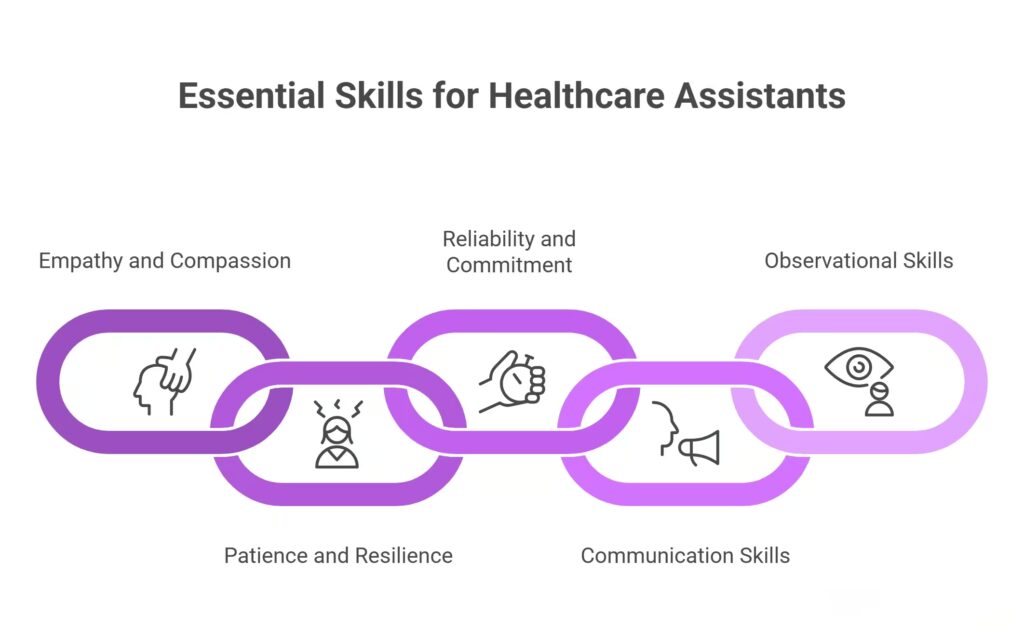
Here are the key soft skills we look for:
- Empathy and Compassion: You need a genuine desire to help others and be able to put yourself in the patient’s shoes. Therefore, treating everyone with kindness and dignity is non-negotiable.
- Patience and Resilience: Care tasks can take time, and you might face challenging situations or behaviour. Consequently, the ability to remain calm, patient, and professional under pressure is critical.
- Reliability and Commitment: Vulnerable people depend on you. Thus, showing up for your shifts and being a trustworthy team member is fundamental.
- Communication Skills: You must be able to listen actively, speak clearly, and communicate any changes in a patient’s condition to the nursing staff accurately and promptly.
- Observational Skills: Moreover, you need to be very observant—spotting subtle changes in a patient’s mood or physical state is vital for their safety.
2. Mandatory Qualifications and Training
While you might not need A-Levels or a degree to apply, every HCA in the UK must complete specific training to ensure they meet the national standard of care.
The Care Certificate
This is arguably the single most important qualification for new HCAs.
- What It Is: The Care Certificate is a set of 16 standards that health and social care workers must adhere to. It provides the fundamental knowledge and competence to provide safe, compassionate, and high-quality care.
- When You Get It: Importantly, most employers will enrol you on the Care Certificate programme as part of your induction, and you are expected to complete it within the first 12 weeks of starting work.
- Topics Covered: It includes essentials like basic life support, safeguarding, communication, and infection control.
Gain the knowledge you need with a dedicated online course like the Care Certificate Course – Standards (1 to 16) Course from HF Online. This helps you quickly master the 16 standards and show employers you are ready to start delivering high-quality care.
Academic Requirements
Generally speaking, there are no strict national academic requirements. However, it is helpful to have:
- Good Literacy and Numeracy Skills: Having GCSEs (or equivalent) in English and Maths at grades 9 to 4 (A* to C) is often preferred, as you’ll be reading care plans and calculating fluid intake.
- Vocational Qualifications: Having a Level 2 or 3 Diploma in Health and Social Care (like an NVQ or QCF) can certainly boost your application and may speed up the induction process.
If you’re looking to boost your career prospects and gain valuable skills before starting as an HCA, the Health and Social Care Level 3 Diploma from HF Online is an excellent choice. This flexible course is designed to prepare you for the demands of the role, making your transition into healthcare smoother and more confident.
3. Essential Checks and Experience
Furthermore, two other areas are non-negotiable before you can start working:
- DBS Check: A satisfactory Disclosure and Barring Service (DBS) check is mandatory, as you will be working with vulnerable people. Therefore, every employer will conduct this criminal background check.
Relevant Experience: Although you can secure an HCA job with no paid experience, any exposure to a caring role is hugely beneficial. For instance, volunteering in a nursing home, or even providing informal care for a family member, counts as relevant experience.
Salary and Benefits of Being a Health Care Assistant
Being a Health Care Assistant (HCA) not only offers a rewarding career but also comes with fair pay and benefits. While salaries can vary depending on experience and location, many HCAs find the compensation reasonable for the work they do.
Salary
- Starting Pay: Entry-level HCAs in the UK typically earn between £19,000 and £22,000 per year.
- With Experience: As you gain experience, the salary can rise to around £24,000–£28,000 annually.
- Overtime and Shifts: Working extra shifts, nights, or weekends often comes with additional pay.
Benefits
- NHS Pension Scheme: If you work for the NHS, you can access a pension plan for long-term financial security.
- Paid Leave: HCAs usually get annual leave, sick pay, and sometimes maternity or paternity benefits.
- Training and Development: Many employers offer training opportunities, helping you gain new skills and progress in your career.
- Job Stability: Healthcare is a growing sector, meaning job security is generally high.
Career Progression and Opportunities for Health Care Assistants

One of the great things about being a Health Care Assistant (HCA) is that the role can open many doors for your future. While it’s an entry-level position, there are plenty of ways to grow and specialise if you are motivated and willing to learn.
Career Progression Paths
As you gain experience, you can move into higher roles within healthcare. Some common progression paths include:
- Senior Health Care Assistant: Take on more responsibilities, such as supervising junior staff and managing daily ward tasks.
- Specialist Roles: You can focus on areas like mental health, elderly care, or palliative care.
- Nursing Roles: Many HCAs choose to train as nurses, with opportunities to become a Registered Nurse (RN) through further education.
Professional Development Opportunities
Employers often provide support for HCAs who want to advance. You might:
- Enrol in NVQ Level 4 or 5 courses to enhance your skills.
- Attend workshops and training sessions to learn specialised care techniques.
- Gain experience through rotational placements across different care settings.
For those aiming higher, the Health and Social Care Level 5 Diploma is a great way to develop leadership and management skills, helping you step into senior or specialised roles confidently.
In short, starting as an HCA is just the beginning. By developing your skills and pursuing further qualifications, you can create a rewarding career path in healthcare, with opportunities for leadership and specialisation along the way.
Challenges Faced by Health Care Assistants in the UK
Being a Health Care Assistant (HCA) is very rewarding, but it can also be challenging. Knowing these challenges helps you prepare and do your job better.
Physical and Emotional Demands
HCAs often do physically hard work, like helping patients move or standing for long hours. It can also be emotionally tough, especially when caring for sick, elderly, or upset patients. So, staying strong and taking care of yourself is important.
Workplace Challenges
- Staff Shortages: Sometimes there aren’t enough staff, so your workload can be heavier.
Stressful Environment: You need to act quickly to help patients, which can be stressful. - Balancing Tasks: You have to take care of patients while also completing paperwork and reports.
Even with these challenges, many HCAs find the job very satisfying. By being prepared and finding ways to cope, you can enjoy this role and make a real difference in people’s lives.
How to Apply for a Health Care Assistant Position in the UK
If you’re ready to start your career as a Health Care Assistant (HCA), the application process is straightforward but requires some preparation. By knowing the steps, you can increase your chances of getting hired.
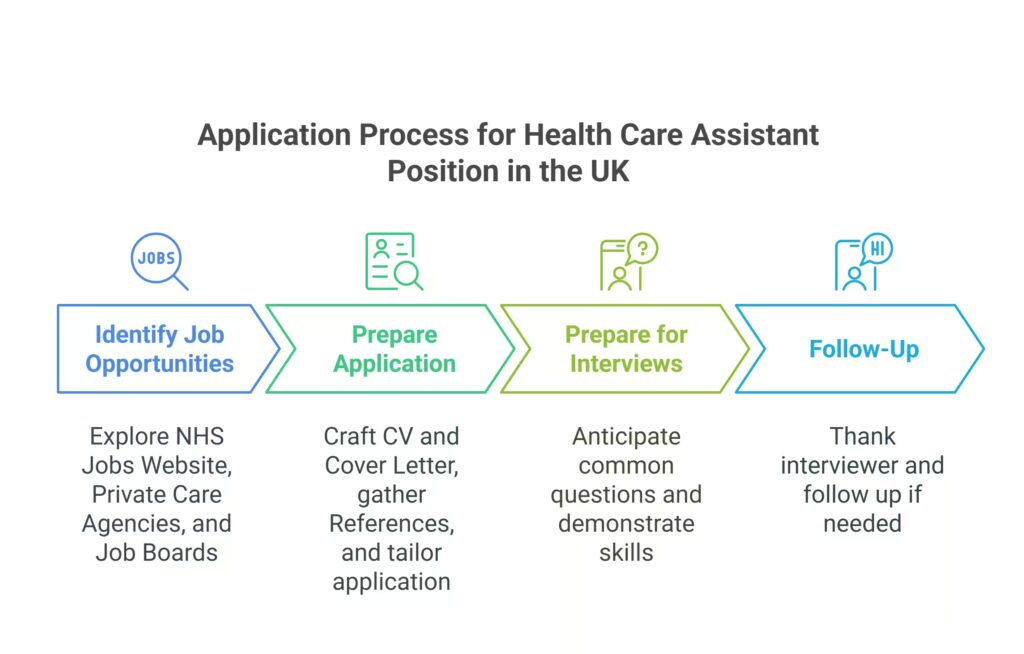
Where to Find HCA Jobs
You can find HCA positions in several ways:
- NHS Jobs Website: The official platform for NHS vacancies across the UK.
- Private Care Agencies: Many agencies hire HCAs for hospitals, care homes, and home care.
- Job Boards and Recruitment Sites: Websites like Indeed, Totaljobs, and Reed often list HCA opportunities.
Preparing Your Application
- CV and Cover Letter: Highlight any relevant experience, skills, and training. Even voluntary experience counts.
- References: Employers usually ask for references from previous jobs, training, or volunteering.
- Tailor Your Application: Adjust your CV and cover letter to match the job description.
Preparing for Interviews
- Common Questions: Be ready to discuss your experience with patient care, teamwork, and handling stressful situations.
- Show Your Skills: Demonstrate compassion, communication skills, and reliability during the interview.
- Follow-Up: Always thank the interviewer and follow up politely if needed.
By following these steps and presenting yourself confidently, you can successfully apply for an HCA role and start your rewarding journey in healthcare.
Conclusion
Working as a Health Care Assistant in the UK is both rewarding and impactful. You play a key role in supporting patients and healthcare teams, making a real difference in people’s lives every day.
Moreover, the role offers opportunities to grow, gain new skills, and enjoy job stability. If you are compassionate, patient, and eager to help others, a career as an HCA can be a truly fulfilling choice.