


Imagine a busy care home where a new staff member discovers an unexplained bruise on a resident. Or a community nurse who needs to administer a complex medication. What ensures the right, safe action is taken every single time? The answer lies not in memory alone, but in a robust framework of policies and procedures.
In essence, a policy sets out the ‘why’—the core principles and commitments of an organisation, such as a zero-tolerance approach to abuse. A procedure provides the ‘how’—the clear, step-by-step instructions that guide staff in turning that principle into consistent practice, from reporting a concern to administering a drug.
In the 2022/23 period, the Care Quality Commission (CQC) conducted over 10,000 inspections of health and social care services across England. These inspections are pivotal in assessing compliance with established policies and procedures, ensuring that services meet safety and quality standards.
This blog will explore the indispensable role that policies and procedures play in ensuring safety, quality, and compliance in health and social care settings. We’ll examine how they guide everyday operations, mitigate risks, and help organisations meet legal and ethical standards.
What is a policy and procedure in health and social care?
Let’s be honest, we often hear the terms “policy” and “procedure” used together, but it’s easy to get them mixed up. Don’t worry, understanding the difference is actually quite simple, and it’s the first step to seeing why they are so important in your day-to-day work.
A policy is a set of guidelines or principles that outline the why behind certain actions. It answers questions like, why do we need to protect patient data? or Why is safeguarding important? Policies give direction by explaining the organisation’s values and overall goals. They help establish a framework for how things should be done, ensuring that care is aligned with the mission of the organisation.
On the other hand, a procedure is the how. It’s a detailed step-by-step guide that explains how to carry out specific tasks. For example, a procedure will explain the exact steps to follow when administering medication or handling a patient’s complaint. Procedures ensure consistency and help staff carry out their roles safely and effectively.
Key Differences Between Policies and Procedures:
- Policy: Outlines why something should be done, focusing on the organisation’s goals and values.
- Procedure: Describes how to carry out specific tasks, ensuring clear and consistent actions.
Together, policies and procedures work hand-in-hand to provide clarity for staff, reduce errors, and promote high standards of care. They are essential for creating an organised, safe, and compliant environment in any health or social care setting.
Importance of policies and procedures in health and social care
Why do we spend so much time writing, reading, and training on these documents? The answer is simple: they are absolutely essential for the safety, quality, and smooth operation of every care setting. In fact, their importance extends far beyond just meeting a regulatory checklist. Let’s look at the critical roles they play in our daily work.
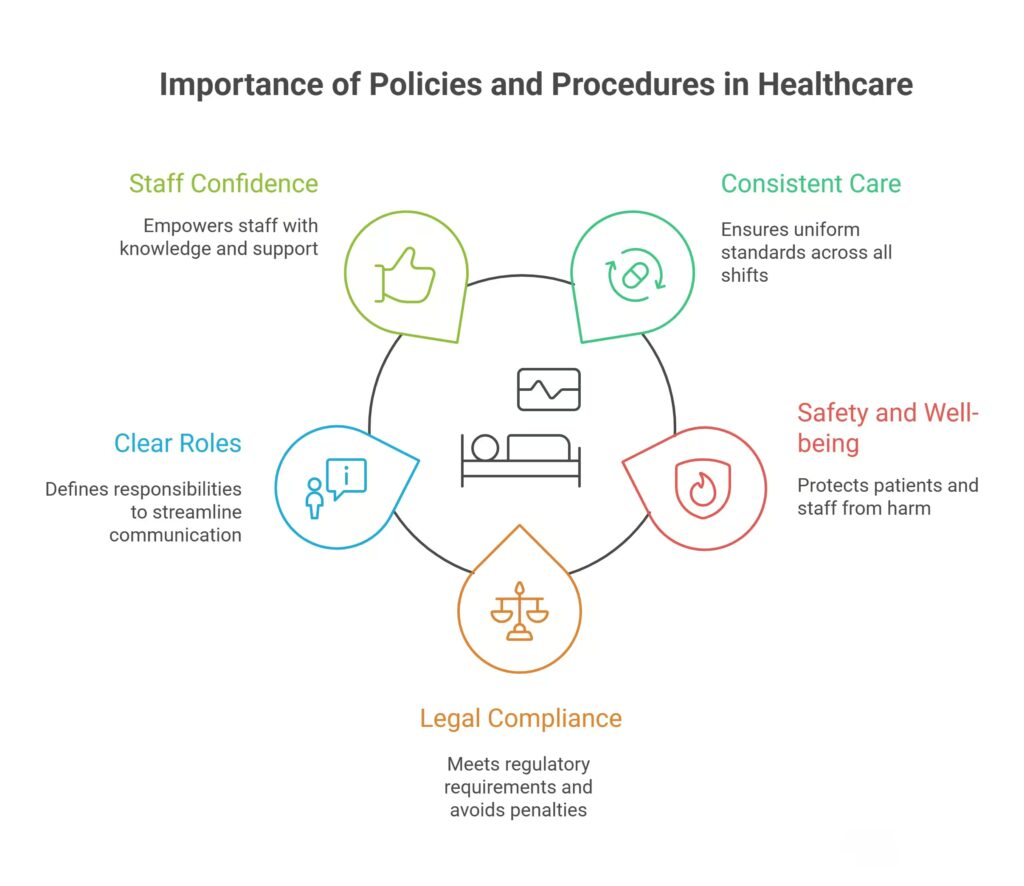
Ensuring Consistent Care Delivery
Policies and procedures help everyone involved in care delivery stay on the same page. They set clear expectations and ensure that no matter who is on shift, the same standards are followed. For instance, if a policy outlines how to handle a medical emergency, a procedure will tell staff exactly what steps to take. As a result, all patients or service users get consistent, high-quality care every time.
Improving Safety and Well-being
One of the primary reasons policies and procedures exist is to protect people. With clear guidelines, care providers know exactly what to do in high-risk situations, reducing the chances of mistakes. For example, safeguarding policies are essential to protect vulnerable adults and children. Procedures around infection control ensure a clean and safe environment, reducing the spread of illnesses. By having these in place, the overall safety and well-being of patients, staff, and visitors are significantly improved.
Maintaining Legal and Regulatory Compliance
Health and social care settings are highly regulated environments. Policies and procedures ensure that care providers meet legal and regulatory requirements, such as data protection laws or standards set by organisations like the Care Quality Commission (CQC). Without a clear policy and procedure framework, organisations risk non-compliance, which could lead to penalties or, even worse, legal issues. Keeping up-to-date with these guidelines is crucial to avoid such risks.
Establishing Clear Roles and Responsibilities
Policies and procedures make sure that everyone knows their roles and responsibilities. This reduces confusion, misunderstandings, and gaps in care. For example, a policy on safeguarding will define who is responsible for reporting concerns, and the procedure will outline exactly how to take action. Clear roles help streamline communication within teams, making care more efficient.
Promoting Staff Confidence and Morale
When staff members are unsure about what to do, it can lead to stress and mistakes. By having detailed policies and procedures in place, staff know exactly how to respond in any situation, giving them more confidence in their roles. This clear structure also contributes to higher morale, as employees feel supported by the organisation’s commitment to safety and care standards.
In summary, policies and procedures are essential in maintaining a safe, consistent, and efficient care environment. They not only protect patients but also support staff and ensure that health and social care settings meet legal requirements and industry standards.
What are the policies and procedures in health and social care?
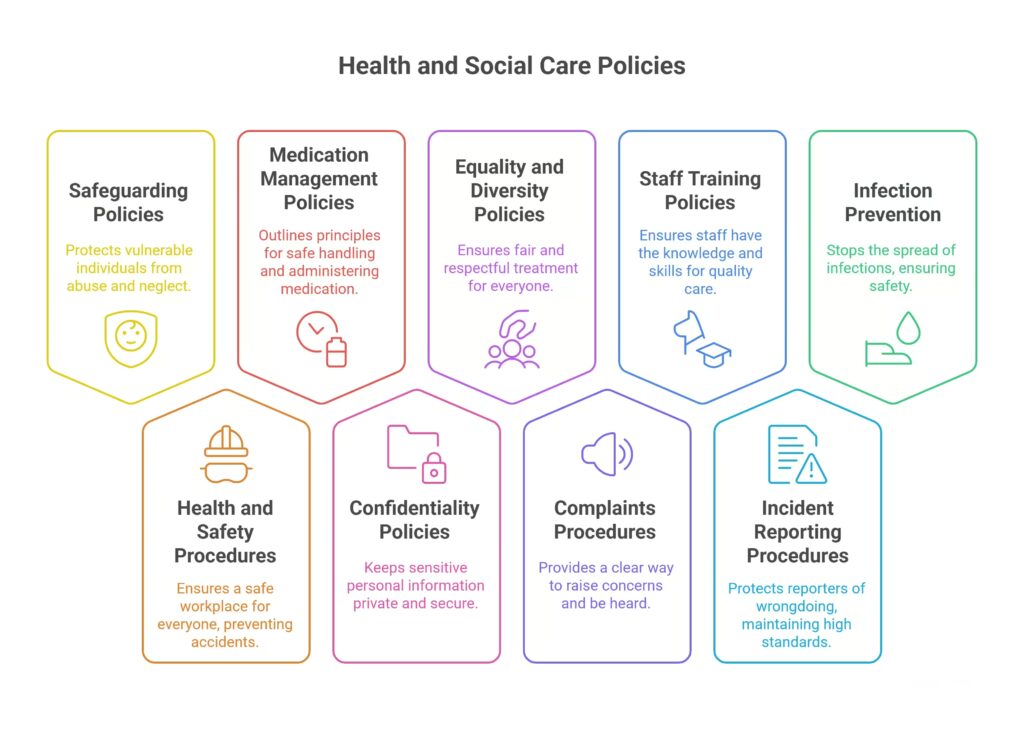
Policies and procedures in health and social care cover a wide range of topics, all designed to ensure that care is delivered safely, effectively, and in compliance with legal and ethical standards. These documents are not just general guidelines—they are the foundation for everyday operations. Let’s take a look at some common types of policies and procedures in health and social care settings.
1. Safeguarding Policies
This is a fundamental priority. The policy commits to protecting children and vulnerable adults from abuse and neglect. Consequently, its procedures give you a clear roadmap for recognising signs of harm and reporting your concerns confidently and correctly.
- Purpose: Safeguarding policies are put in place to protect vulnerable individuals from abuse, neglect, and harm.
- Example: These policies outline how staff should report concerns about the well-being of patients or service users, ensuring that vulnerable individuals are kept safe.
2. Health and Safety Procedures
This policy ensures the workplace is safe for everyone. Its procedures cover everything from fire safety drills and risk assessments to the correct way to lift or move a person, which helps prevent accidents.
- Purpose: These procedures focus on ensuring a safe environment for both staff and patients.
- Example: Procedures will cover everything from preventing accidents to how to handle hazardous materials safely. Regular safety checks and proper use of equipment are also included.
3. Medication Management Policies
Administering medicine requires precision. Therefore, this policy outlines the principles for safe handling, while its procedures provide the strict steps for storing, recording, and giving medication to avoid errors.
- Purpose: These policies are crucial to ensure that medication is administered safely and accurately.
- Example: Procedures will explain the exact steps for administering, storing, and disposing of medication. They also outline what to do if a medication error occurs.
4. Confidentiality and Data Protection Policies
We are trusted with sensitive personal information. This policy promises we will keep it private. As a result, the procedures explain exactly how to handle records, who you can speak to about a service user, and how to store data securely.
- Purpose: These policies ensure that personal and sensitive information about patients and service users is kept private and protected.
- Example: Procedures will include how staff should handle medical records and the steps they need to take to ensure compliance with laws like the General Data Protection Regulation (GDPR).
5. Equality and Diversity Policies
This policy ensures that everyone is treated fairly and with respect, regardless of their background. Its procedures guide you on making reasonable adjustments and providing non-discriminatory care.
- Purpose: These policies promote equal treatment for all service users and staff, regardless of their race, gender, or background.
- Example: Procedures ensure that staff provide care and support that respects cultural, religious, and personal preferences, fostering an inclusive environment for everyone.
6. Complaints and Grievance Procedures
Feedback is a chance to improve. This policy guarantees service users and families have a voice. Meanwhile, the procedure provides a clear, accessible way for them to raise concerns, knowing they will be listened to and taken seriously.
- Purpose: These procedures guide staff on how to handle complaints from patients, families, or employees.
- Example: They explain how to listen to concerns, investigate issues, and resolve conflicts in a transparent and fair manner.
7. Staff Training and Development Policies
- Purpose: Policies ensure that staff have the knowledge and skills to deliver high-quality care.
- Example: Procedures will include steps for onboarding new employees, ongoing training, and performance reviews, making sure staff are up to date with current practices.
8. Incident Reporting and Investigation Procedures
This policy protects you if you need to report a serious wrongdoing in the workplace. It provides a safe and confidential channel for you to speak up without fear, which is vital for maintaining high standards.
- Purpose: These procedures guide the reporting and investigation of accidents, errors, or near-misses.
- Example: Staff will be instructed on how to report incidents, who to inform, and how the investigation will proceed to prevent future occurrences.
9. Infection Prevention and Control (IPC)
Especially important after the pandemic, this policy aims to stop the spread of infections. You will use its procedures daily, for instance, for proper handwashing, using protective equipment, and safely cleaning surfaces.
- Purpose: Prevents the spread of infections, ensuring safety for patients and staff.
- Example: Daily practices like handwashing, wearing PPE, and cleaning surfaces help control infections.
To gain a deeper understanding of health and social care policies and how to apply them effectively in your role, consider advancing your career with the Health and Social Care Level 3 Diploma. This course will equip you with the essential skills and knowledge to manage care services, handle policies confidently, and make a real impact in the lives of those you care for.
Implementing policies and procedures in health and social care
Having a brilliant policy is one thing, but it’s useless if it just sits in a binder on a shelf. So, how do we make sure these important documents become a real part of our daily work? The key lies in a strong and ongoing process of implementation. In other words, we need to turn the words on the page into actions we do every day.
Here’s how we can effectively bring our policies to life:
- Easy Access for Everyone
First of all, every team member needs to know where to find the latest versions of policies. Nowadays, many organisations use a digital system so you can check a procedure right from a computer or tablet.
- Brilliant Training and Support
Simply reading a policy isn’t enough. Instead, we need engaging training sessions, discussions, and hands-on demonstrations. For example, role-playing a safeguarding scenario is far more powerful than just reading about it.
- Lead by Example
Importantly, managers and senior staff must consistently follow and champion the procedures. When you see your team leader always washing their hands correctly or filling out a form perfectly, it reinforces the right way to work.
- Keep the Conversation Going
Furthermore, policies should be a regular topic in team meetings and supervisions. This is a perfect time to ask questions, talk about challenges, and share best practices with your colleagues.
By implementing these strategies, policies and procedures become part of our daily work. To further enhance your expertise and leadership skills, consider the Health and Social Care Level 5 Diploma, which will help you guide your team through effective policy implementation.
Risk of outdated policies and procedures in health and social care

Policies and procedures are meant to guide us, but if they’re not kept up-to-date, they can cause more harm than good. Let’s take a closer look at why keeping policies and procedures current is so important.
1. Compromised Patient Safety
- Risk: Old policies may no longer align with the latest safety standards or medical practices, potentially putting patients at risk.
- Example: An outdated infection control procedure might not address newer, more effective cleaning methods, leaving patients and staff exposed to unnecessary risks.
2. Non-Compliance with Current Regulations
- Risk: Laws and regulations are constantly evolving, especially in health and social care. If policies are not updated regularly, organisations risk failing to meet legal requirements.
- Example: If data protection laws change but the policy on patient confidentiality isn’t updated, the organisation could face fines or legal actions.
3. Confusion Among Staff
- Risk: Staff may become confused if they follow outdated procedures that no longer apply. This can lead to inconsistent care and mistakes.
Example: A procedure for reporting incidents might be outdated, confusing staff on what steps to take, which can delay addressing important issues.
4. Decreased Care Quality
- Risk: Outdated procedures often don’t reflect the latest care practices or patient needs, resulting in subpar service delivery.
- Example: A policy on patient assessment that hasn’t been updated might miss newer techniques or technologies that could improve care.
5. Damaged Reputation and Trust
- Risk: If patients, families, or regulatory bodies discover that policies and procedures are outdated, the organisation’s reputation can be seriously damaged.
- Example: A failure to update safeguarding policies could signal negligence, leading to a loss of trust among service users and staff.
6. Increased Risk of Legal Issues
- Risk: If an organisation fails to keep its policies in line with legal changes, it could face legal action, fines, or lawsuits.
- Example: If patient consent policies are outdated and don’t reflect new legal requirements, it could lead to legal disputes over patient rights.
Regular Review and Updates of Policies and Procedures
A policy that isn’t reviewed regularly is like using an outdated map; it might lead you in the wrong direction. Therefore, a regular review process is not just good practice—it’s essential for maintaining safety and quality. This ensures that our guidance is always based on the latest and best knowledge available.
So, what triggers an update to a policy or procedure? Here are the most common reasons:
- Changes in the Law or Regulations
When official guidance from bodies like the CQC changes, our policies must change too. This is non-negotiable, as it ensures we stay legally compliant. - Learning from Incidents and Near-Misses
If something goes wrong, or almost goes wrong, we conduct a review. Consequently, we can update our procedures to prevent a similar situation from happening again, making our care safer. - Feedback from You and Your Colleagues
You are the one using these procedures every day! Your feedback is incredibly valuable. If you find a step that is unclear or a better way to do something, speaking up can lead to a positive update. - Feedback from Service Users and Families
Similarly, the people we support and their loved ones can offer vital insights. Their experiences often show us where our processes can be improved to be more compassionate or effective. - Advances in Best Practice
Finally, new medical research or new care techniques emerge all the time. Regularly reviewing our policies allows us to integrate these improvements, ensuring we are always providing the most modern and effective care.
Conclusion
In conclusion, policies and procedures are the foundation of safe, effective, and high-quality care in health and social care settings. They guide staff, ensure compliance, and protect both patients and staff from risks.
Regular updates and reviews are crucial to keep these documents relevant and aligned with current practices. By prioritising these processes, organisations can maintain a culture of safety, continuous improvement, and trust in their care services.