

Safeguarding adults at risk often begins with a moment of noticing. It may be a change in behaviour, a missed routine, or something that does not feel right. These early signs are easy to overlook, yet they are often the first indication that someone may be at risk.
This matters because most safeguarding concerns are not raised during emergencies. In England, around 45% of safeguarding concerns are identified by health and social care staff during routine contact. This shows how everyday observation plays a crucial role in spotting risk before harm escalates.
In a safeguarding context, observation goes beyond simply watching. It involves recognising patterns, understanding what is normal for each person, and having the confidence to question concerns. This blog explores how observation protects adults at risk, and why noticing early can make all the difference.
Defining Observation in the Safeguarding Context
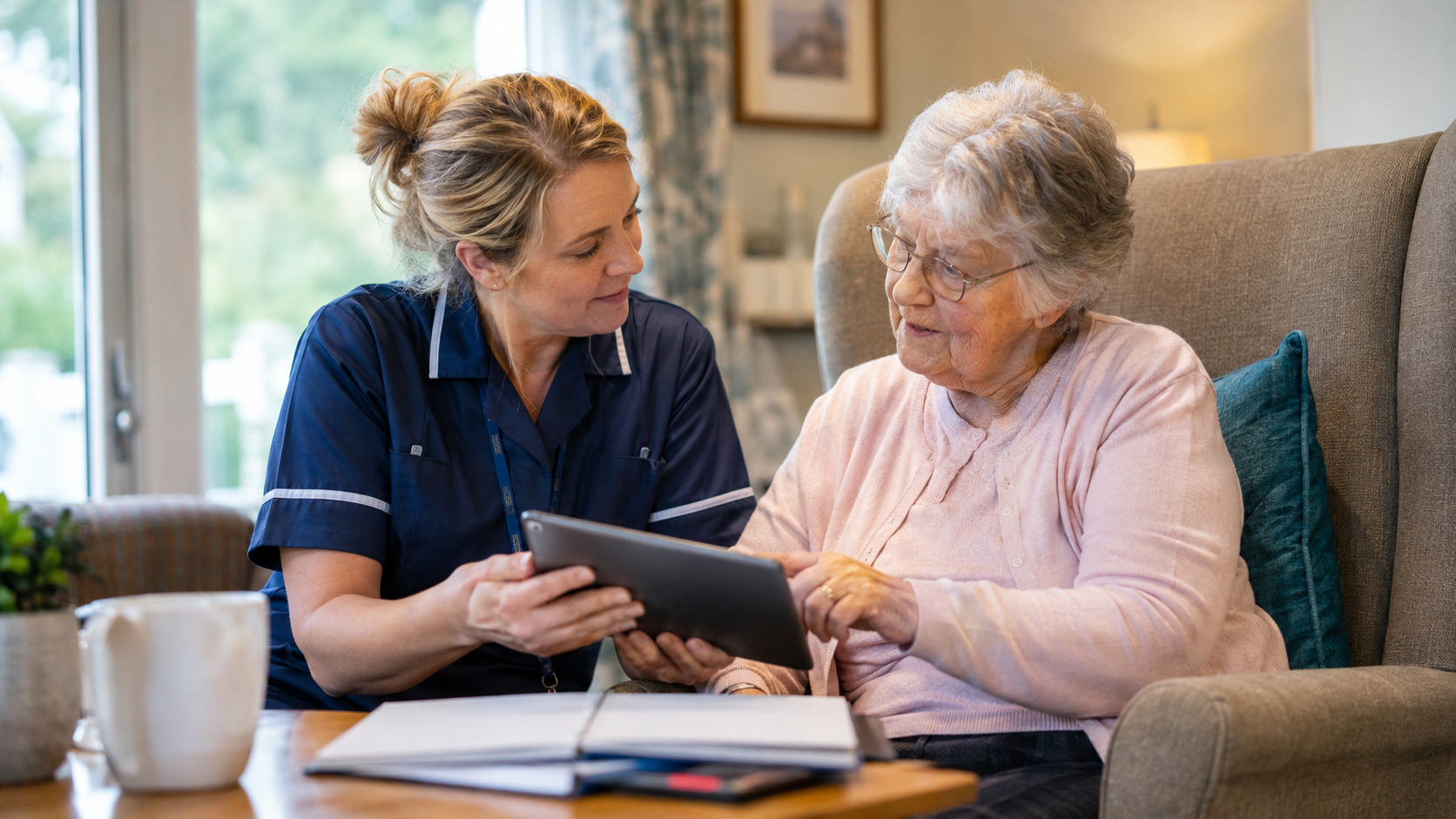
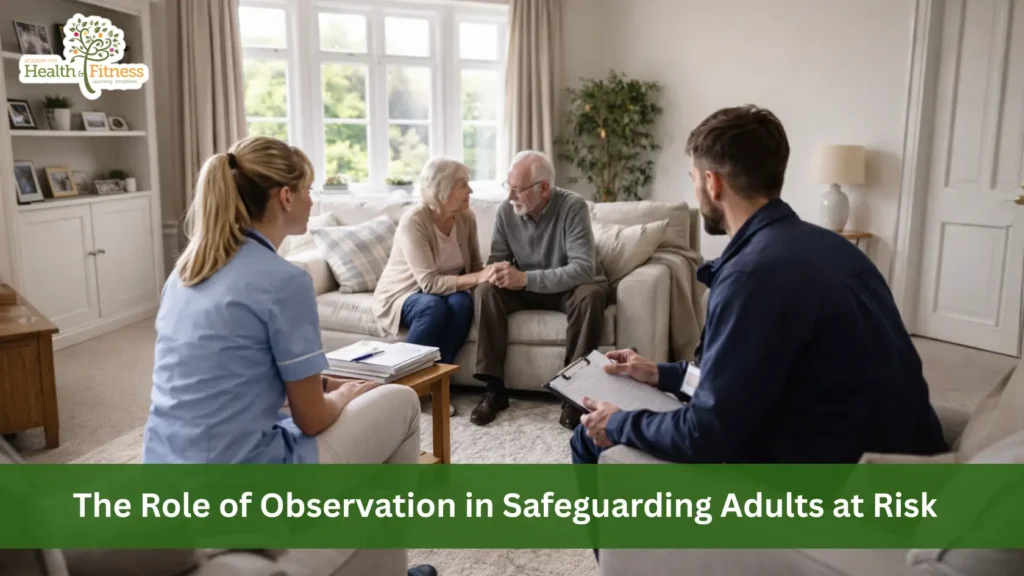
Observation, in safeguarding, is about more than simply watching. Instead, it means noticing changes and understanding what they might mean for an adult at risk. Because you often see people regularly, you are well placed to spot when something feels different.
In this context, observation is active, not passive. For example, you may notice changes in mood, behaviour, appearance, or how someone interacts with others. However, observation only matters when we take it seriously and reflect on what we see.
Observation helps us build a clear picture over time. Therefore, it is not based on one moment, but on patterns and repeated signs. Also, it relies on knowing what is normal for that person.
In safeguarding, observation includes:
- Noticing physical, emotional, or social changes
- Listening to what is said and what is avoided
- Comparing current behaviour to usual patterns
- Sharing concerns when something does not feel right
Many staff benefit from structured learning that helps them understand what to observe and how to interpret changes. Training focused on observation skills can support carers to move from simply noticing to understanding what those changes may mean in a safeguarding context.
Observation within Legal, Ethical, and Professional Responsibilities

Observation plays a key role in how we meet our safeguarding duties. Because you work with adults at risk, you are expected to notice concerns and take them seriously. Therefore, observation is a core part of your duty of care.
From a legal view, observation supports early action. For example, safeguarding laws and guidance require you to act when signs of harm or neglect appear. As a result, failing to notice or respond can increase risk.
Ethically, observation must always be balanced. However, safety should not come at the cost of dignity or choice. So, we must observe with respect and only act in a proportionate way.
Professionally, observation links to accountability and good practice. Therefore, what you see should be recorded, shared, and escalated when needed.
Observation requires you to:
- Recognise and respond to safeguarding concerns
- Follow policies and agreed procedures
- Respect privacy while protecting safety
- Share concerns through the correct routes
Clear safeguarding education helps staff apply these responsibilities with confidence. Courses such as Safeguarding Vulnerable Adults Training support a stronger understanding of legal duties, ethical decision-making, and when observation must lead to action.
The Role of Observation in Early Identification of Risk
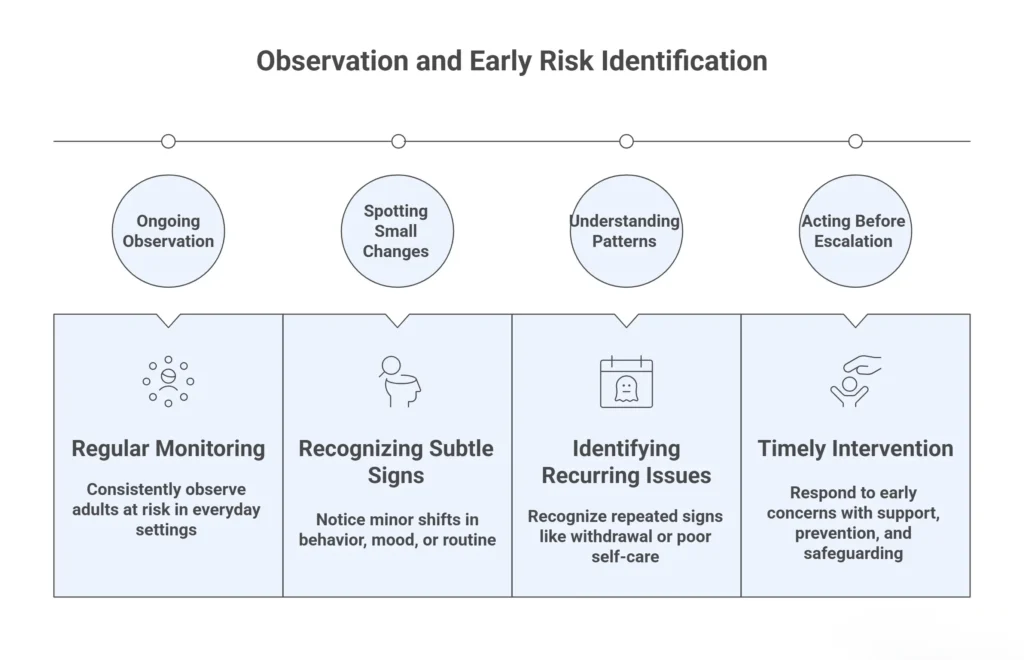
Early identification of risk often begins with everyday observation. Because you see adults at risk regularly, small changes can stand out before serious harm occurs. Therefore, what you notice early can shape safer outcomes.
Spotting Small Changes Early
Risk rarely appears all at once. Instead, it often shows through small changes in behaviour, mood, or routine. However, when you observe consistently, these changes become easier to recognise.
Understanding Patterns Over Time
Observation helps you look beyond one-off events. For example, repeated signs such as withdrawal or poor self-care may point to a deeper issue. As a result, you can raise concerns before harm increases.
Acting Before Risk Escalates
When we notice concerns early, we have more options to respond. Therefore, observation supports timely support, prevention, and safeguarding action. In this way, early observation becomes a key tool in protecting adults at risk.
Person-Centred Observation and Respect for Autonomy
Person-centred observation means putting the individual first. Because every person is different, what feels like a concern for one may be normal for another. Therefore, you must observe in a way that respects their life, choices, and values.
Knowing What Is Normal for the Person
Observation works best when you understand the person well. For example, changes only make sense when you know their usual behaviour and routines. As a result, your observations become more accurate and fair.
Balancing Safety and Choice
Safeguarding should not remove control from the person. However, when there is real risk, safety must come first. So, we should always involve the person where possible and explain why concerns are being raised.
Observing with Dignity and Respect
How you observe matters as much as what you observe. Therefore, observation should never feel like monitoring or control. Instead, it should support trust, respect, and positive relationships.
In this way, person-centred observation protects adults at risk while still respecting their autonomy.
Observation as Ongoing Monitoring and Review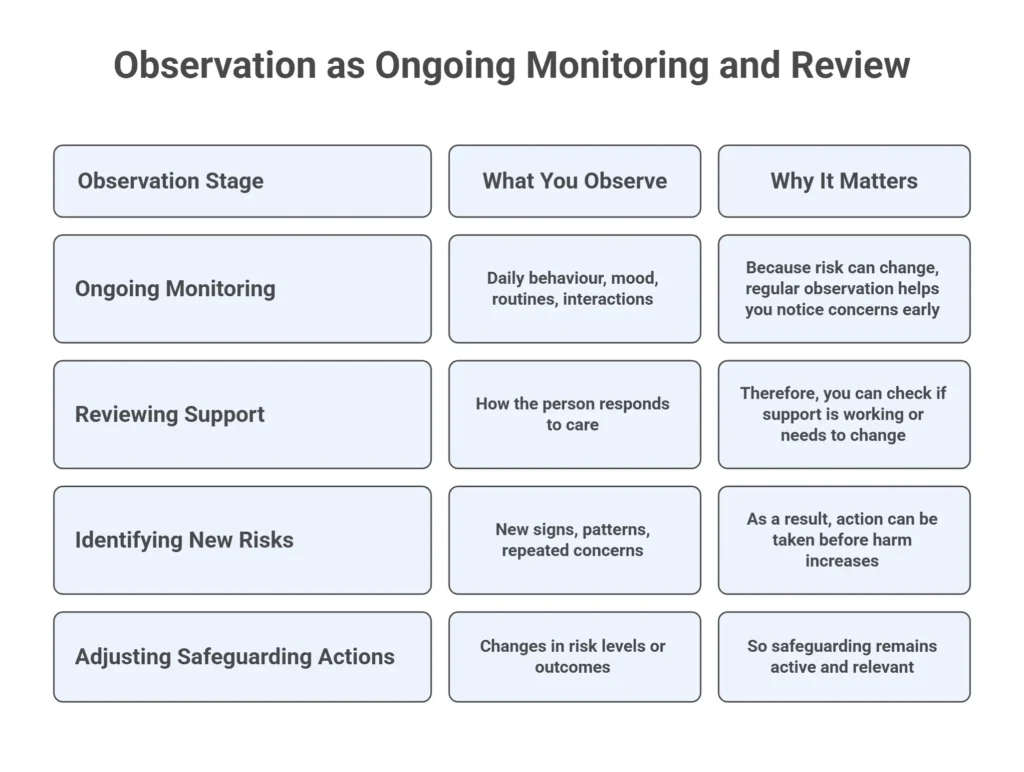
Practical Frameworks & Tools for Staff
Observation becomes easier when you have clear tools to guide you. Because safeguarding work can be complex, frameworks help you know what to look for and when to act. Therefore, using simple tools supports confident decision-making.
Using Structured Observation Frameworks
Frameworks give observation a clear focus. For example, they help you consider physical, emotional, and social signs together. As a result, you are less likely to miss early warning signs.
Recording and Reporting Tools
Observation must be written down clearly. Therefore, good recording tools help you separate facts from opinion and keep information accurate. However, records only help when they are shared through the right channels.
Checklists and Prompts in Daily Practice
Checklists can support busy staff. For example, prompts can remind you to look for changes in mood, routine, or appearance. So, even small tools can strengthen everyday safeguarding practice.
Using Supervision and Team Discussions
Observation improves when it is shared. Therefore, supervision and team meetings allow you to test concerns and reflect safely. In this way, practical tools help turn observation into action.
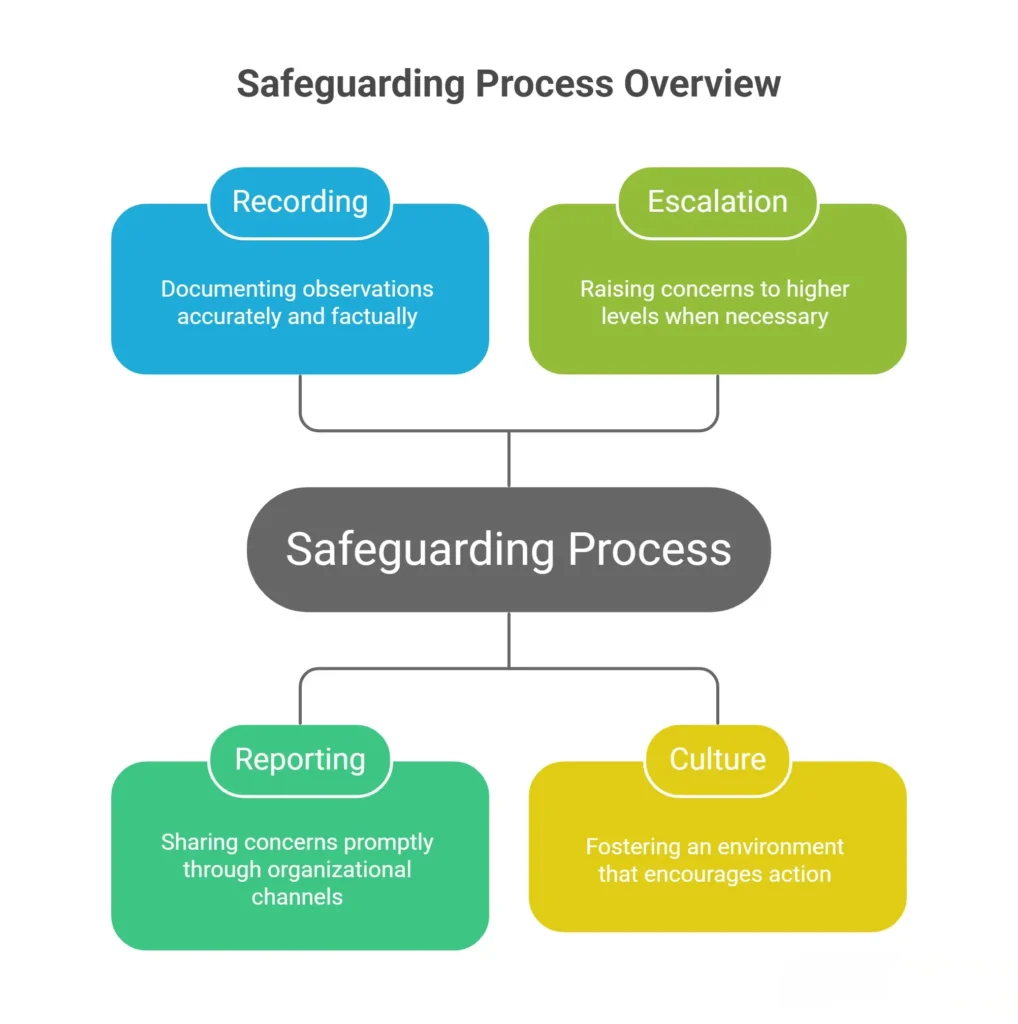
From Observation to Action: Recording, Reporting, and Escalation
Observation only keeps people safe when it leads to action. Therefore, noticing a concern is just the first step. Because safeguarding relies on timely responses, what you do next matters.
Recording What You Observe Clearly
Recording helps turn observation into evidence. For example, you should write down what you see, hear, or are told as soon as possible. As a result, records stay accurate and reliable.
However, records must be factual. Instead of adding opinions, focus on dates, times, and clear descriptions. This helps others understand the concern without confusion.
Reporting Safeguarding Concerns
Once a concern is recorded, it must be shared. Therefore, you should follow your organisation’s safeguarding process and know who to report to. Because delays increase risk, reporting should not be put off.
In some cases, concerns may feel small at first. However, when shared early, they can prevent harm. So, reporting is a protective step, not an overreaction.
Understanding When to Escalate
Not all concerns are resolved straight away. Therefore, if risk remains or increases, escalation is needed. This means raising the concern to a higher level or using formal safeguarding routes.
You should never feel uncomfortable about escalating. Instead, escalation shows responsibility and professional judgement.
Creating a Culture That Supports Action
Observation works best in supportive teams. Therefore, organisations must encourage staff to speak up and ask questions. When people feel listened to, safeguarding becomes stronger.
In this way, recording, reporting, and escalation turn observation into real protection for adults at risk.
Challenges and Pitfalls in Observation
Even with the best intentions, observation can fall short. Because safeguarding work is often fast paced, small warning signs can slip through. So, it helps to recognise where things commonly go wrong.
When Familiarity Gets in the Way
You may work with the same person for a long time. As a result, changes can feel less noticeable or easy to explain away. However, familiarity should never replace curiosity.
When Observation Is Not Consistent
Observation needs to build over time. But if different staff see different things, patterns can be lost. Therefore, shared communication becomes essential.
When Doubt Silences Action
Many people worry about being wrong. Because of this, concerns may stay unspoken. Yet safeguarding depends on raising concerns early, even when you are unsure.
When Notes Do Not Match Reality
Poor records weaken good observation. For example, unclear language or late entries can reduce impact. So, writing clearly and on time matters.
When Pressure Takes Over
Busy shifts and limited resources affect focus. However, safeguarding cannot wait for the “right time.” In the end, knowing these risks helps you observe with greater care and confidence.
Observation in Organisational, Multi-Agency, and Quality Governance
Observation does not sit only with frontline staff. Instead, it plays a key role at organisational and system level. Because safeguarding is a shared duty, what is observed must inform wider decisions.
Observation at an Organisational Level
Organisations rely on observation data to understand risk. For example, repeated safeguarding concerns in one service can point to wider issues. Therefore, trends matter as much as individual cases.
In England, over 587,970 safeguarding concerns were raised by councils in 2022–23. As a result, organisations increasingly use observation and reporting data to review practice and improve quality (NHS Digital, 2023).
Observation Across Multi-Agency Working
Safeguarding rarely involves one service alone. Because health, social care, housing, and police all observe different things, sharing information is vital. Therefore, risks often become clearer when observations are joined up.
For example, one agency may notice missed appointments, while another sees changes in behaviour. When shared, these observations can reveal serious risk.
Observation and Quality Governance
Observation also supports audits, reviews, and learning. Therefore, safeguarding adults boards use observation evidence to spot gaps and improve systems. In this way, everyday observations help strengthen accountability and safer services overall.
Future Directions: Improving Observation Through Innovation

The future of safeguarding depends on how well we use what we already observe. Therefore, improving observation is not about starting again, but about using evidence more wisely. Because national data shows risk is often visible early, observation is becoming more structured and informed.
What the Evidence Is Showing Us
Safeguarding evidence in England points to clear gaps between observation and action. For example, national Safeguarding Adult Reviews (SARs) repeatedly show that warning signs were often seen but not linked together. Therefore, risk was known, but not fully understood.
Analysis by the Local Government Association has found that issues such as self-neglect, domestic abuse, and missed professional contact appear frequently in SARs. However, these risks were often recorded by more than one service without a shared response.
In addition, CQC inspection reports regularly highlight concerns about poor information sharing and inconsistent recording. As a result, patterns of risk are sometimes missed until harm increases.
This evidence shows that observation is taking place. However, improvement is needed in how concerns are connected, reviewed, and acted upon across services.
Learning from Safeguarding Adult Reviews
Serious Safeguarding Adult Reviews repeatedly point to the same issues. Different services often notice separate concerns, but these are not always shared or linked. Therefore, patterns such as repeated self-neglect or missed contact are recognised too late.
Because of this learning, observation is now seen as a shared responsibility across agencies, not an isolated task.
How Innovation Is Supporting Better Observation
Organisations are beginning to use digital tools to support pattern recognition. Therefore, repeated concerns can be flagged earlier and reviewed together. However, technology alone is not enough.
Reflective supervision, case reviews, and shared learning sessions are also growing. As a result, staff are better supported to trust their observations and act with confidence.
In this way, future observation combines strong evidence, joined-up systems, and human judgement to protect adults at risk more effectively.
Conclusion
Observation sits at the heart of effective safeguarding. Because risk often shows itself in small ways, what you notice matters. When we observe with care, consistency, and purpose, we create safer opportunities for adults at risk.
However, observation only works when it leads to action. Therefore, by recording, sharing, and reviewing what you see, safeguarding becomes active rather than reactive. In this way, everyday observation helps prevent harm and supports dignity and safety.