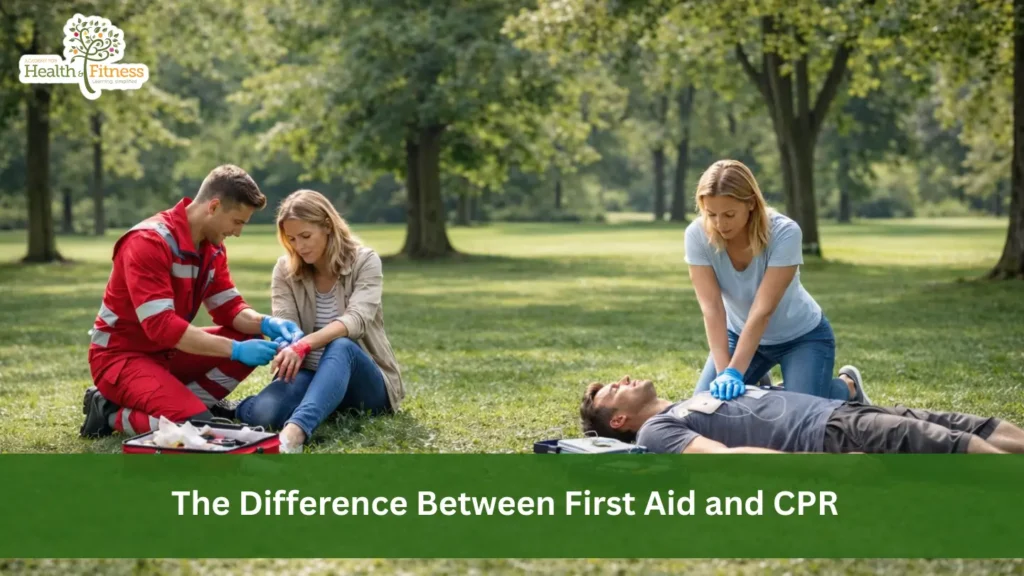


In an emergency, knowing the right steps can be a life-saver, literally. According to British Heart Foundation in the UK alone, more than 30,000 out-of-hospital cardiac arrests happen every year, yet fewer than 1 in 10 people survive without immediate help. Those first few minutes often depend on the actions of people nearby.
While both First Aid and CPR (Cardiopulmonary Resuscitation) are essential emergency response skills, they serve very different purposes. Whether it’s a minor injury or a life-threatening collapse, understanding when to use First Aid and when CPR is needed can make all the difference.
In this blog, we’ll break down the key differences between First Aid and CPR, explain when each should be used, and show why knowing both skills puts you in a far stronger position to help when it matters most.
What is First Aid?
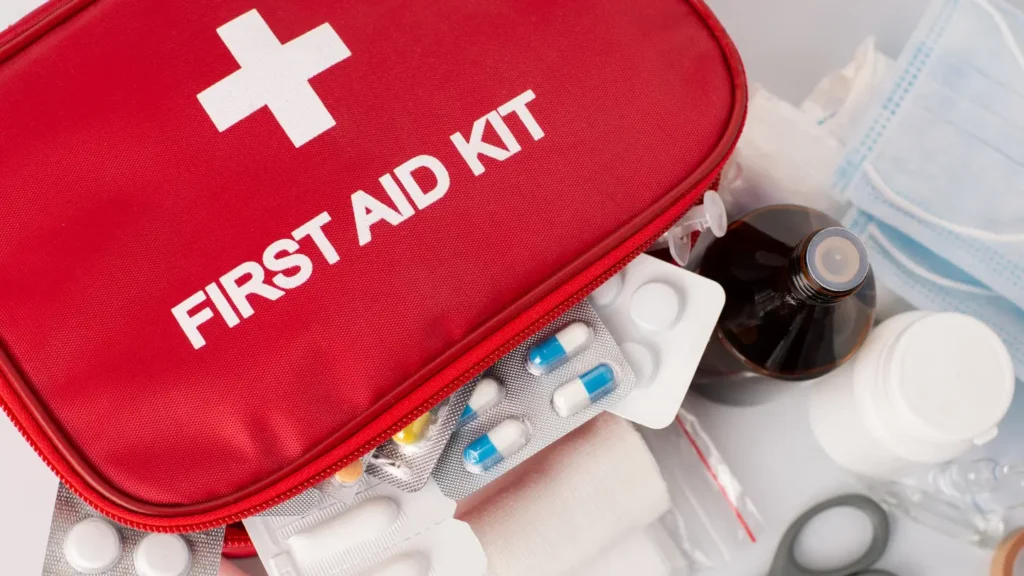
First Aid refers to the immediate care given to someone who is injured or suddenly ill before professional medical help arrives. The goal is to stabilise the person, prevent the condition from worsening, and support recovery.
Because injuries and illnesses come in many forms, First Aid covers a wide range of situations, making it one of the most practical emergency skills anyone can learn.
Key First Aid Procedures
Here are some common first aid procedures and their objectives:
- Controlling Bleeding: By applying pressure to a wound, you can stop or reduce bleeding, minimizing blood loss.
- Bandaging: Bandages protect wounds from infection and contamination, facilitating safe healing.
- Splinting: Immobilizing injured limbs or joints prevents further injury and pain, especially if there’s a suspected fracture.
- Treating Burns: Cooling burns promptly and applying sterile dressings reduces pain and prevents infection.
- Managing Shock: Recognizing and treating symptoms of shock, such as pale skin and rapid breathing, is crucial, as shock can quickly become life-threatening.
Types of First Aid Situations
First Aid can be applied in a wide range of situations, such as:
- Minor Injuries: Cuts, scrapes, and bruises.
- Traumatic Injuries: Broken bones or dislocations.
- Medical Conditions: Sudden illness episodes, like fainting or diabetic emergencies.
- Environmental Injuries: Burns, frostbite, or heatstroke.
What Do You Learn in a First Aid Certification Course?

A First Aid certification course prepares you to deal with both common and serious emergencies. It focuses on practical skills and decision-making so you know how to respond safely.
Typically, you will learn:
- First Aid basics: Assessing the scene, checking responsiveness, and calling for help
- Handling choking emergencies: Assisting both conscious and unconscious people
- Managing nervous system emergencies: Responding to seizures, strokes, and fainting
- Handling allergy emergencies: Recognising severe allergic reactions and anaphylaxis
- Caring for bites and stings: Treating insect stings, animal bites, and marine injuries
- Tending to wound emergencies: Managing cuts, bleeding, and open injuries
- Attending muscle and bone emergencies: Supporting sprains, strains, fractures, and dislocations
- Handling burn emergencies: Treating thermal, chemical, and electrical burns
- Dealing with poisoning emergencies: Recognising poisoning and taking immediate action
As a result, first aid training equips you to respond confidently in many real-life situations.
What is CPR?
CPR, or Cardiopulmonary Resuscitation, is a life-saving technique used when someone’s heart has stopped beating or they have stopped breathing. Unlike First Aid, CPR is only used in life-threatening emergencies.
CPR works by manually keeping blood and oxygen moving to vital organs, especially the brain, until professional help arrives or the heart starts again.
When to Perform CPR
CPR should only be performed when someone is:
- Unresponsive: They are unconscious and don’t respond to verbal or physical cues.
- Not Breathing: Their breathing has stopped or is extremely irregular (gasping).
- Without a Pulse: No heartbeat can be detected.
Steps to Perform CPR
The standard approach to CPR involves the following steps:
- Check Responsiveness: Tap and shout to see if the person responds.
- Call for Help: If there’s no response, call emergency services or ask someone nearby to do so.
- Begin Chest Compressions: Place your hands in the center of the chest and press down hard and fast at a rate of 100-120 compressions per minute.
- Give Rescue Breaths: After 30 compressions, give two rescue breaths, if trained to do so.
- Continue Until Help Arrives: Alternate between compressions and breaths until medical help takes over or the person begins to recover.
What Do You Learn in a CPR Certification Course?
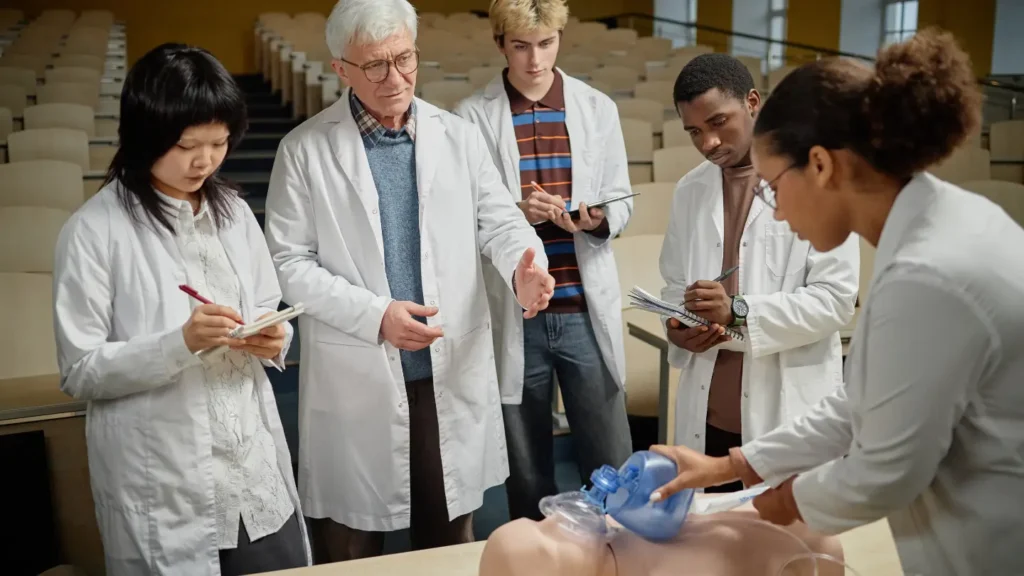
A CPR certification course focuses on fast decision-making and hands-on practice. It prepares you to act confidently when every second matters.
You will learn:
- Recognising emergencies: Identifying cardiac arrest and breathing failure quickly
- Performing chest compressions: Using the correct hand position, depth, and rhythm
- Delivering rescue breaths: Providing oxygen safely when trained to do so
- Hands-only CPR: Performing compressions without breaths, ideal for untrained responders
- Using an AED: Operating an Automated External Defibrillator safely and effectively
Because AEDs are common in public places, CPR training often includes realistic AED scenarios.
The Importance of First Aid and CPR Training
First Aid and CPR can both save lives, but they work in different ways. First Aid provides critical initial care, preventing injuries from escalating and managing immediate health concerns. CPR, on the other hand, is specifically aimed at restarting the heart or breathing and maintaining blood flow until more advanced medical care is available.
Why Knowing Both Skills is Important
Being trained in both First Aid and CPR equips you with a comprehensive toolkit for handling emergencies. In a situation where a person stops breathing, a bystander trained only in First Aid may not know how to respond, while someone trained in CPR can take potentially life-saving action immediately.
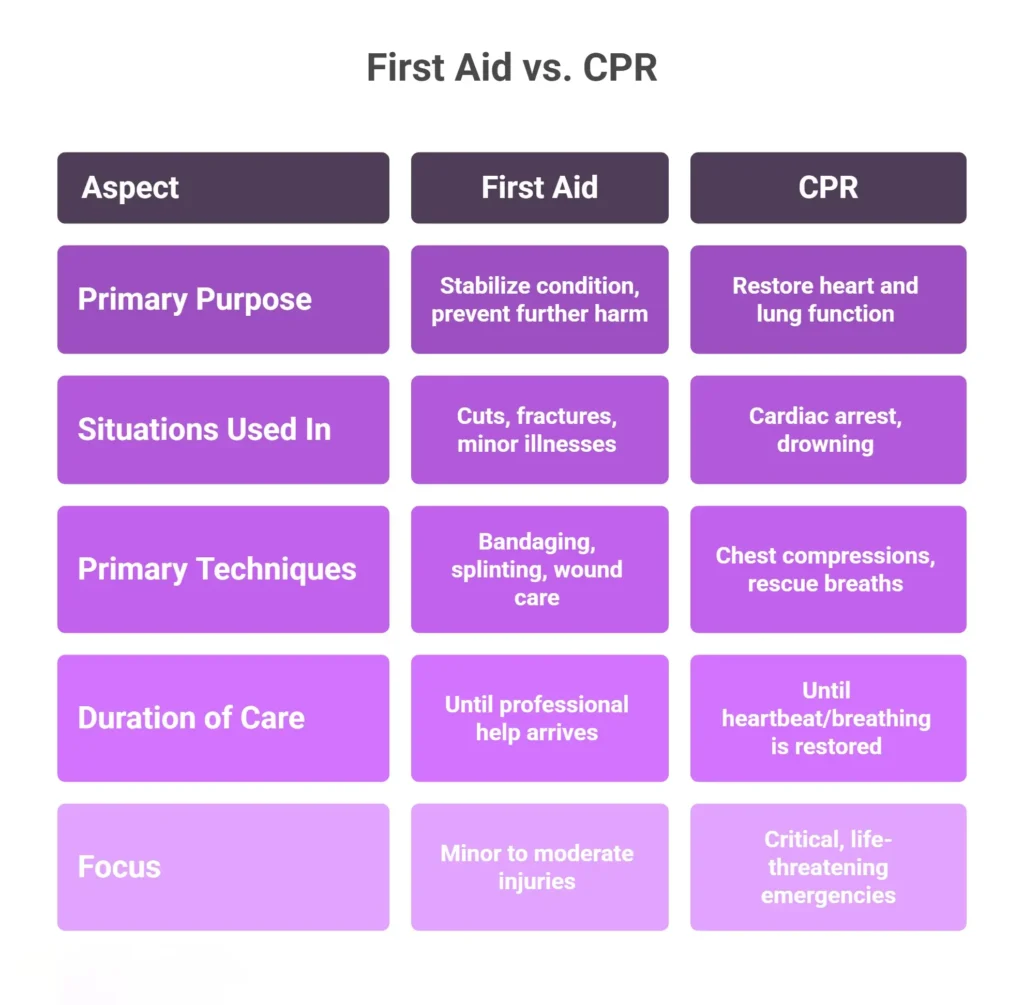
First Aid vs. CPR: Key Differences
To better understand when and how to apply each technique, here’s a comparison of the key aspects of First Aid and CPR:
First Aid Techniques: Beyond Basics
While basic First Aid covers the essentials, advanced First Aid training can include techniques like:
- Airway Management: Techniques like the Heimlich maneuver can clear obstructed airways.
- Use of an Automated External Defibrillator (AED): Knowing how to use an AED device can enhance CPR efforts, especially in cases of sudden cardiac arrest.
- Handling Poisoning and Allergic Reactions: Recognizing symptoms of poisoning or anaphylaxis and administering the right first aid.
CPR Techniques and Guidelines
CPR protocols have evolved over time based on extensive research, leading to better outcomes. Current guidelines focus on high-quality chest compressions, minimizing interruptions, and using AEDs when available.
- Compression-Only CPR: For untrained bystanders, compression-only CPR is recommended, as studies have shown it’s effective and easier to perform.
- Rescue Breaths: If trained, adding rescue breaths after compressions provides additional oxygen, especially in cases of drowning or pediatric emergencies.
- Using AEDs with CPR: An AED can restore a normal heart rhythm and is more effective when used alongside CPR.
Situational Examples: When to Use First Aid vs. CPR
- A child falls and scrapes their knee – Here, First Aid is appropriate. Clean the wound, apply an antiseptic, and cover with a bandage.
- A man collapses and stops breathing – In this situation, CPR is necessary. Start chest compressions immediately and use an AED if available.
- An athlete twists their ankle during a game – This calls for First Aid to prevent further injury and reduce swelling.
- A swimmer is pulled from the water and is unresponsive – Start CPR to restore breathing and circulation.
Integrating First Aid and CPR into Emergency Response
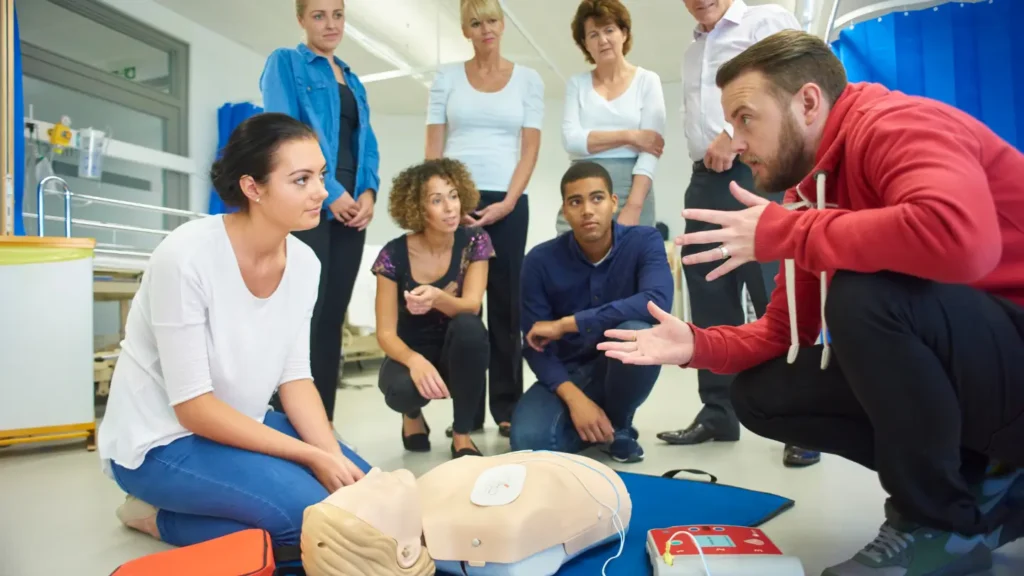
In some emergencies, First Aid and CPR may both be needed. For example, if a person suffers a severe injury with significant blood loss and later goes into cardiac arrest, immediate First Aid for the bleeding is essential before beginning CPR.
The Role of First Aid and CPR Certification
Certifications provide formal training in both First Aid and CPR, enabling you to apply techniques with confidence. Certification programs are typically available through organizations like the Red Cross, St John Ambulance, or the American Heart Association and are recommended for anyone, especially those in healthcare, education, and sports coaching.
Benefits of Certification
- Enhanced Skills: Certification involves hands-on practice, making it easier to perform techniques correctly in real situations.
- Up-to-Date Knowledge: Certification courses provide the latest guidelines in First Aid and CPR.
- Increased Confidence: Training helps reduce hesitation and fear, enabling quicker and more effective response.
Challenges in First Aid and CPR Application
While these skills are essential, some challenges can arise in their application:
- Emotional Response: Staying calm in emergencies is critical but difficult.
- Technique Retention: Skills can fade over time, making regular practice or refresher courses necessary.
- Physical Requirements: CPR can be physically demanding, especially chest compressions.
Tips for Improving First Aid and CPR Readiness
- Practice Regularly: Take refresher courses every few years to keep skills fresh.
- Stay Informed on Updates: Guidelines evolve, so keeping up to date with changes ensures you’re providing the best care.
- Keep a First Aid Kit Handy: Ensure you have a fully stocked First Aid kit at home, in the car, or at work.
- Learn to Use an AED: If AED training is available, take it, as AEDs can greatly improve survival rates in cardiac arrest cases.
Conclusion
First Aid and CPR are two distinct but complementary life-saving skills, each with a critical role in emergency response. Knowing how to provide First Aid equips you to handle a broad range of injuries and illnesses, stabilizing the injured until professional help can take over. On the other hand, CPR is specifically for life-threatening emergencies where every second counts. By understanding the differences and mastering both, you can be prepared to respond to virtually any medical emergency effectively, safeguarding lives and health in the process.