

What Is the Care Certificate?

The Care Certificate is an identified set of standards designed for health and social care workers. Its purpose is simple: to give everyone working in care the same introductory skills, knowledge and behaviours so that they can provide compassionate, safe and high‑quality care. The certificate was developed by Health Education England, Skills for Care and Skills for Health. It applies across health and social care settings and links to national occupational standards and qualifications.
These standards are aimed at the non‑regulated workforce – people like care assistants, healthcare support workers and personal assistants. Regulated professionals (e.g. nurses, doctors, social workers) already cover equivalent skills through their training, so they do not need to complete the certificate. The idea is to build confidence that everyone delivering care has the same baseline knowledge and values.
Why the Standards Matter
You might be thinking, “Aren’t these just rules?” Not quite. The 16 Care Certificate standards aren’t just boxes to tick – they’re principles that shape how we care for people day in, day out. They ensure consistency in a sector where quality can vary.
They help build trust – between carers and the people they support, and between different teams of professionals. They also create a shared language for talking about what good care looks like. Most importantly, they’re about recognising the humanity of the people we care for. It’s not just about doing tasks; it’s about treating someone with dignity, respecting their choices and listening to what matters to them.
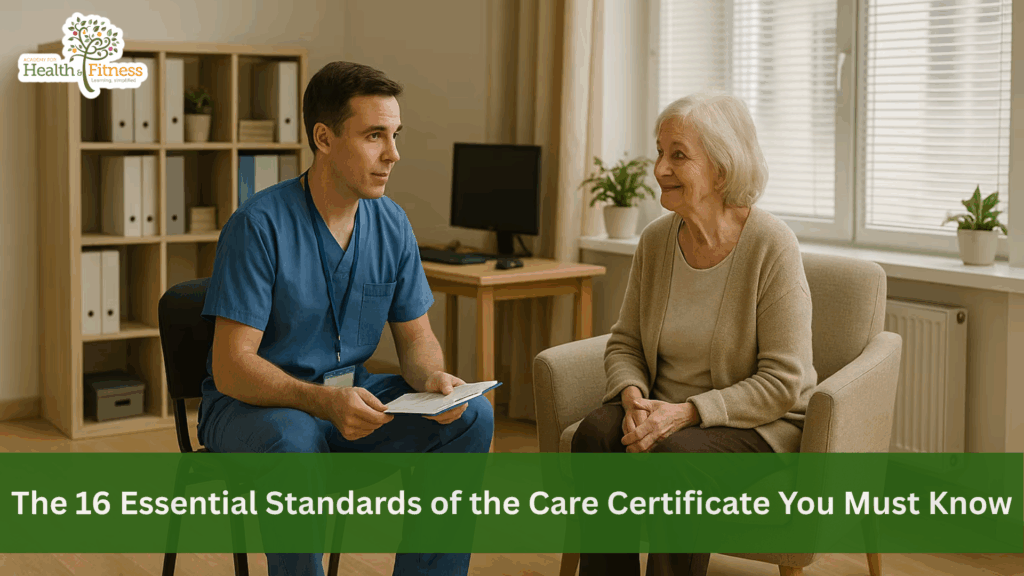
The 16 Essential Standards of the Care Certificate
The Care Certificate sets out 16 standards — the foundation of safe, kind, and person-centred care. They’re grouped here into three simple themes so you can remember them more easily. Each one matters, and together, they shape how real care feels in practice.
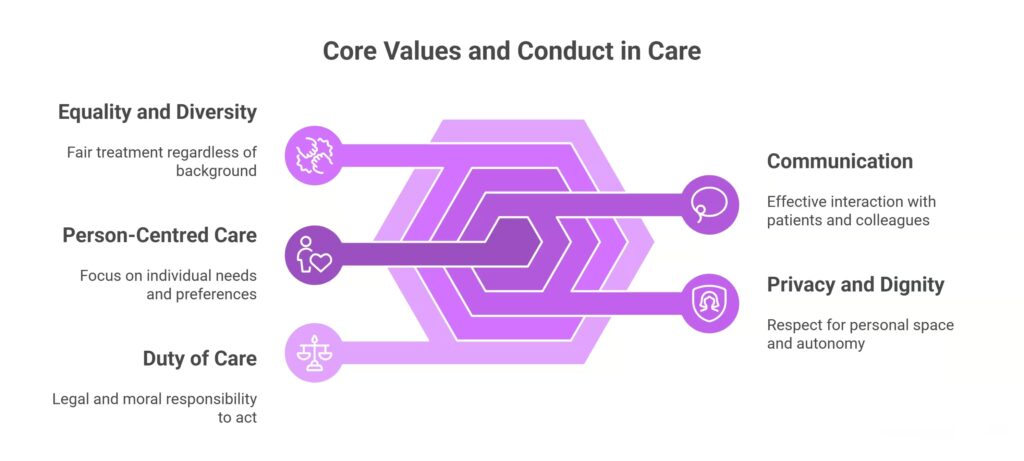
A. Core Values and Conduct
- Understand Your Role – Know what your job actually involves — and where your limits are. You should understand your responsibilities, your workplace policies, and when it’s time to ask for help. For instance, you might help someone dress or eat, but you’d call a nurse for medication support.
- Your Personal Development – Keep learning, always. This standard encourages reflection and feedback. Maybe you talk through a tricky shift with your supervisor or note what went well (and what didn’t). It’s about growing with experience.
- Duty of Care – You have a legal and moral responsibility to act in someone’s best interest. If you notice a bruise, a change in mood, or anything worrying — you report it. You speak up, because silence can cause harm.
- Equality and Diversity – Treat everyone fairly and without discrimination. Respect people’s race, religion, gender, and culture. Maybe it’s preparing a vegetarian meal for someone’s faith or remembering preferred pronouns — it all matters.
- Work in a Person-Centred Way – Care isn’t a one-size-fits-all job. This standard reminds you to see the person, not just the task. If someone loves music, bring that into their routine. It’s the small things that make care feel personal.
- Privacy and Dignity – Always protect people’s privacy and independence. Knock before you enter, close the curtains during personal care, and ask before helping. It’s about respect — simple, but powerful.
- Communication – Good care starts with good communication. Listen carefully, use plain language, and notice body language. Sometimes, a look or a pause says more than words ever could.
B. Health, Safety, and Safeguarding
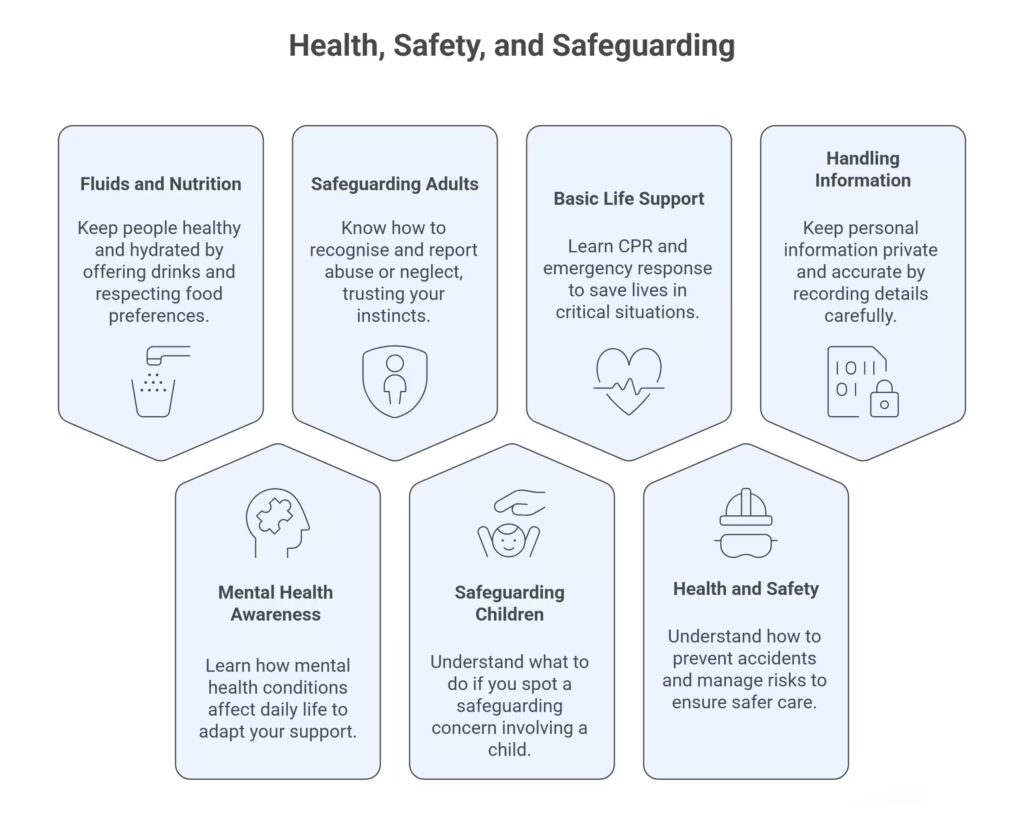
- Fluids and Nutrition – Keep people healthy and hydrated. Offer drinks often, notice if someone isn’t eating, and respect their food preferences. A small detail, like how someone likes their tea, can make a big difference.
- Awareness of Mental Health, Dementia, and Learning Disability – Learn how these conditions affect daily life. Understanding anxiety, memory loss, or sensory issues helps you adapt your support — maybe speaking slower, or keeping routines familiar.
- Safeguarding Adults – Know how to recognise and report abuse or neglect. Trust your instincts — if something feels wrong, it probably is. Follow procedures and always act quickly.
- Safeguarding Children – Even if you mainly support adults, you might encounter children. This standard ensures you know what to do if you ever spot a safeguarding concern involving a child.
- Basic Life Support – Learn CPR and emergency response. You might never need it — but if you do, you’ll know exactly what to do. These skills save lives.
- Health and Safety – Understand how to prevent accidents and manage risks. Check equipment, follow fire procedures, and think ahead. Safe workers mean safer care.
- Handling Information – Keep personal information private and accurate. Record details carefully, store files securely, and never share what isn’t yours to share.
C. Infection Prevention and Control
- Infection Prevention and Control – Hygiene matters — always. Wash your hands, wear PPE correctly, clean equipment, and dispose of waste safely. It protects everyone: you, your team, and the people you care for.
D. New Standard – Professionalism in Care
- Professionalism in Care – The latest addition to the Care Certificate focuses on professional conduct. It’s about integrity, accountability, and being a role model. Even small actions — showing up on time, staying calm, treating everyone kindly — build trust and reflect what great care truly means.
These 16 standards are the heart of good care. They guide how you think, act, and connect with others. And once you start applying them, they become second nature — shaping not just your job, but how you make people feel every single day.
How to Learn and Apply the Standards
Learning the Care Certificate standards isn’t just about ticking boxes — it’s about understanding, practising, and living them every day. Here’s what the process usually looks like:
- Start with learning: Most employers provide online or classroom sessions where you study each standard, read examples, and answer simple knowledge questions.
- Reflect and review: Think about what you’ve learned and how it applies to real situations. Maybe write short reflections or discuss them with your manager.
- Put it into practice: You’ll apply what you learn during your shifts — from communication to infection control — while your manager or assessor observes.
- Get signed off: Once you’ve shown you understand and can apply each standard safely, your assessor signs you off for that part of the certificate.
How long does it take?

Most people complete the Care Certificate within 8 to 12 weeks, but it depends on your hours, experience, and support. Some finish faster, others take a little longer — and that’s okay.
The key isn’t speed. It’s about building confidence and real habits that stick. Think of the standards as daily practices, not homework to rush through. Every shift becomes a chance to get better at what truly matters — safe, compassionate care.
The Real‑World Impact of the Care Certificate
When you apply the Care Certificate standards, you notice the difference. Your confidence grows because you know why you’re doing things a certain way. The people you support feel safer and more respected. Employers see fewer incidents and know their teams are working to a recognised standard. Regulators like the CQC view the certificate as a foundation for ongoing learning, so having it demonstrates that your organisation takes quality seriously. On a personal level, it feels good to know you’re part of something bigger – a commitment across the sector to deliver care that truly makes a difference.
Conclusion
The Care Certificate standards aren’t just guidelines – they’re the heartbeat of quality care. They teach you how to listen, respect and support each person as an individual. They remind you that safety and dignity go hand in hand. And they give you the confidence to start your career knowing you’re doing things right.
If you’re beginning or thinking about a career in care, spend time on these standards. They’ll shape how you see your role and how you treat others. And once you’ve learned them, keep building. Continue asking questions, reflecting on your practice and learning from each experience. That’s what makes a great carer – not just knowledge, but a heart for people.