



What Nutrition & Hydration Mean in the Revised Care Certificate

Nutrition and hydration in the revised Care Certificate mean providing the right balance of food and fluids to protect health, comfort, and dignity in every stage of care. Both are core to daily wellbeing — not just medical needs but emotional and social ones too.
Nutrition is about giving the body what it needs to stay strong. It involves balanced meals that supply energy, vitamins, and nutrients to maintain weight, support recovery, and prevent illness. A healthy diet helps people feel alert, comfortable, and confident in their day-to-day lives.
Hydration means ensuring the body receives enough fluids to function properly. Water supports circulation, digestion, temperature control, and concentration. Even slight dehydration can cause confusion, fatigue, or infection risk — so regular, person-centred fluid support is essential.
In care, both nutrition and hydration are linked directly to recovery, independence, and dignity. A person who eats and drinks well feels more capable, more respected, and more in control of their own routine. Encouraging choice and comfort at mealtimes reinforces that sense of independence and belonging.
Under Standard 8: Fluids & Nutrition of the Care Certificate, every care worker is expected to understand how to support safe, appropriate food and fluid intake, identify risks early, and promote dignity through person-centred nutrition. The 2025 update strengthens this by adding clearer expectations for documentation, digital monitoring, and accountability across all care roles.
The Revised Care Certificate Update – What’s Changed

In March 2025, Skills for Care and Skills for Health updated the Care Certificate to reflect modern care practices and align training with today’s safety and accountability standards. This is the first major review since the certificate was introduced in 2015, ensuring that every care worker’s knowledge and responsibilities meet the realities of current care environments.
Under Standard 8: Nutrition and Hydration, the revised framework brings several key improvements designed to strengthen both understanding and practice:
- Stronger focus on risk identification and reporting.
Care workers must now recognise and document early signs of undernutrition or dehydration, acting promptly to prevent harm. - More detailed expectations for fluid balance monitoring and nutrition recording.
Accurate record-keeping is emphasised to support evidence-based care and regulatory compliance. - Integration of digital tools and documentation.
The update encourages the use of electronic care records and digital monitoring systems to track food and fluid intake, helping reduce human error. - Clearer standards for food safety, personal choice, and meal planning.
The framework reinforces hygiene, safe handling, and respect for individual preferences or cultural needs when preparing and serving meals. - Emphasis on inter-disciplinary coordination.
Care workers are now guided to collaborate closely with dieticians, speech and language therapists, and nurses to ensure consistent, safe nutritional care — particularly where swallowing difficulties or medical diets are involved.
According to the Skills for Care 2025 update PDF, these enhancements “strengthen consistency and quality across all care settings.” They make it easier for both new and experienced staff to understand not only what to do but why it matters — connecting daily routines with safety, respect, and person-centred outcomes.
Understanding Risk in Nutrition & Hydration

Risk in nutrition and hydration indicates any factor that could lead to poor health, discomfort, or harm because an individual’s food or fluid needs are not being met. These risks can be physical, behavioural, or environmental — and they often build up gradually. Recognising them early is the best way to keep people safe and well.
Common Risks Include:
- Undernutrition – when the body doesn’t receive enough calories or nutrients.
- Dehydration – when the body lacks sufficient fluid to function properly.
- Choking hazards – often linked to swallowing difficulties, poor positioning, or food texture.
- Fluid imbalance – when intake and output are not balanced, affecting heart, kidney, or brain function.
- Malnutrition – when ongoing poor nutrition weakens immunity, causes fatigue, and delays recovery.
Key Indicators to Watch For:

Care workers should observe and record early signs such as:
- Unplanned weight loss or visible muscle wasting
- Low appetite or refusal to eat or drink
- Difficulty swallowing — coughing, choking, or taking extra time with meals
- Dry mouth, dark urine, or constipation
- Confusion, dizziness, or fatigue
- Skin dryness or loss of elasticity
- Mood or behaviour changes, such as irritability or withdrawal
Each of these signs, on its own, might seem small — but together they can indicate a serious risk.
Under the 2025 Care Certificate, Standard 8, care workers must now act quickly and confidently. The update stresses:
- Early detection — noticing patterns of poor intake or hydration.
- Prompt recording — documenting accurate, factual observations in care notes or digital systems.
- Timely reporting — escalating concerns to a senior or healthcare professional before harm occurs.
Effective risk management is not just about spotting problems; it’s about preventing them. Recording and sharing information early helps teams act in time — keeping care safe, person-centred, and compliant with national standards.
The 4 Basic Principles of Food Safety (Care Certificate Standard 8)

Food safety is a vital part of Standard 8 in the Care Certificate because safe handling, preparation, and storage protect people from illness and maintain trust in care. The 2025 update reinforces that every care worker — whether in a home, hospital, or community setting — must follow these principles to prevent harm and ensure food is nutritious, safe, and dignified.
1. Clean – Maintain hygiene in food preparation and equipment
Keeping everything clean reduces the spread of bacteria. Care workers should always wash hands before and after handling food, disinfect work surfaces, and use clean utensils. Personal hygiene — such as tied-back hair and clean uniforms — also forms part of professional food safety.
2. Separate – Avoid cross-contamination
Raw and cooked foods must be kept apart to prevent harmful bacteria from spreading. Use different chopping boards and utensils, store raw meat below cooked foods in fridges, and never reuse containers without washing them thoroughly.
3. Cook – Ensure food reaches safe internal temperatures
Cooking food properly kills bacteria that can cause illness. Meals should be heated evenly, checked before serving, and reheated only once if required. In care settings, workers must follow reheating policies carefully and confirm food is safe to eat, especially for vulnerable individuals.
4. Chill – Store food at safe temperatures
Cold food should be stored at or below 5°C, and frozen food should be kept at -18°C or lower. Quick chilling slows bacterial growth and keeps food fresh for longer. Fridges and freezers should be checked regularly, and expired or spoiled items must be discarded promptly.
These four principles apply across all environments:
- In care homes, shared kitchen spaces require strict hygiene routines.
- In hospitals, meals must be prepared and delivered safely across multiple wards.
- In domiciliary care, workers must ensure home food storage meets hygiene expectations, even in small spaces.
According to CQC Regulation 14 (Nutrition and Hydration), providers must supply safe, suitable, and balanced food to meet each person’s needs. This includes protecting against foodborne illness and ensuring that meals are prepared to professional standards.
For example, when a care worker notices that a resident’s leftover soup has been left out at room temperature for several hours. Instead of reheating it, the worker discards it and prepares a fresh portion, explaining to the resident why — “It’s safer to make a new one so you don’t get unwell.” This small action prevents food poisoning and builds trust.
Food safety is not just about cleanliness — it’s about care, awareness, and consistency. Following these four principles supports good nutrition and hydration while protecting people from avoidable harm.
5 Best Practices for Hydration Support

Hydration support ensures that every person receives enough fluids to stay healthy, comfortable, and alert. Water is essential for body function — it regulates temperature, supports digestion, and helps concentration. A lack of fluids, known as dehydration, can quickly lead to confusion, infections, or even hospital admission, especially among older or dependent adults.
Good Hydration Practice Includes:
- Offer fluids regularly and in preferred formats. Some people drink more when offered tea, juice, or flavoured water instead of plain water. Respect preferences and provide choice throughout the day.
- Ensure drinks are within reach for those with limited mobility. Simple positioning helps people remain independent and reduces the risk of dehydration.
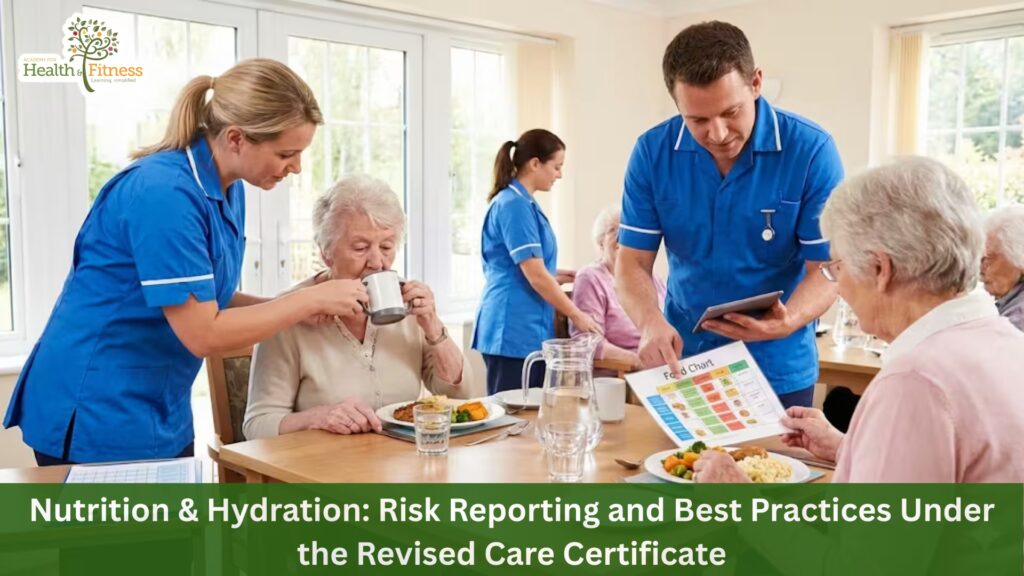
- Use visual prompts and reminders. Clear cups, marked bottles, or hydration charts help track intake and remind both staff and individuals to drink often.
- Document intake and output using fluid charts. Accurate record-keeping ensures early detection of low fluid intake and supports professional communication between shifts.
- Respond quickly when signs of dehydration appear. Signs include dry mouth, fatigue, dark urine, and confusion. Act immediately by encouraging fluid intake and reporting concerns to a senior or healthcare professional.
During an afternoon check, a care worker notices a resident’s lips are dry and they seem tired. Instead of waiting, the worker offers a preferred drink, records the observation on the fluid chart, and informs the nurse for follow-up monitoring. This small action prevents further dehydration and shows accountability — exactly what the 2025 Care Certificate Standard 8 expects in practice.
Hydration is not only a physical need — it’s a matter of dignity and safety. Encouraging choice, offering support, and documenting carefully keep care person-centred and compliant with the revised standards.
Digital Tools & Documentation for Nutrition & Hydration
Digital tools play an increasing role in how nutrition and hydration are monitored, recorded, and managed in care settings. They make information clearer, faster to access, and easier to share — helping staff spot trends before they become risks. But technology works best when it supports, not replaces, human attention and empathy.
How Technology Supports Nutrition & Hydration Practice:
- E-records for food and fluid intake allow staff to log meals, drinks, and portion sizes instantly, ensuring that nothing is missed between shifts.
- Mobile apps for tracking weight and fluid balance help identify early changes in health and prompt further assessment when needed.
- Alerts when thresholds are missed remind carers to act — for example, when fluid intake drops below a safe level or a meal is skipped.
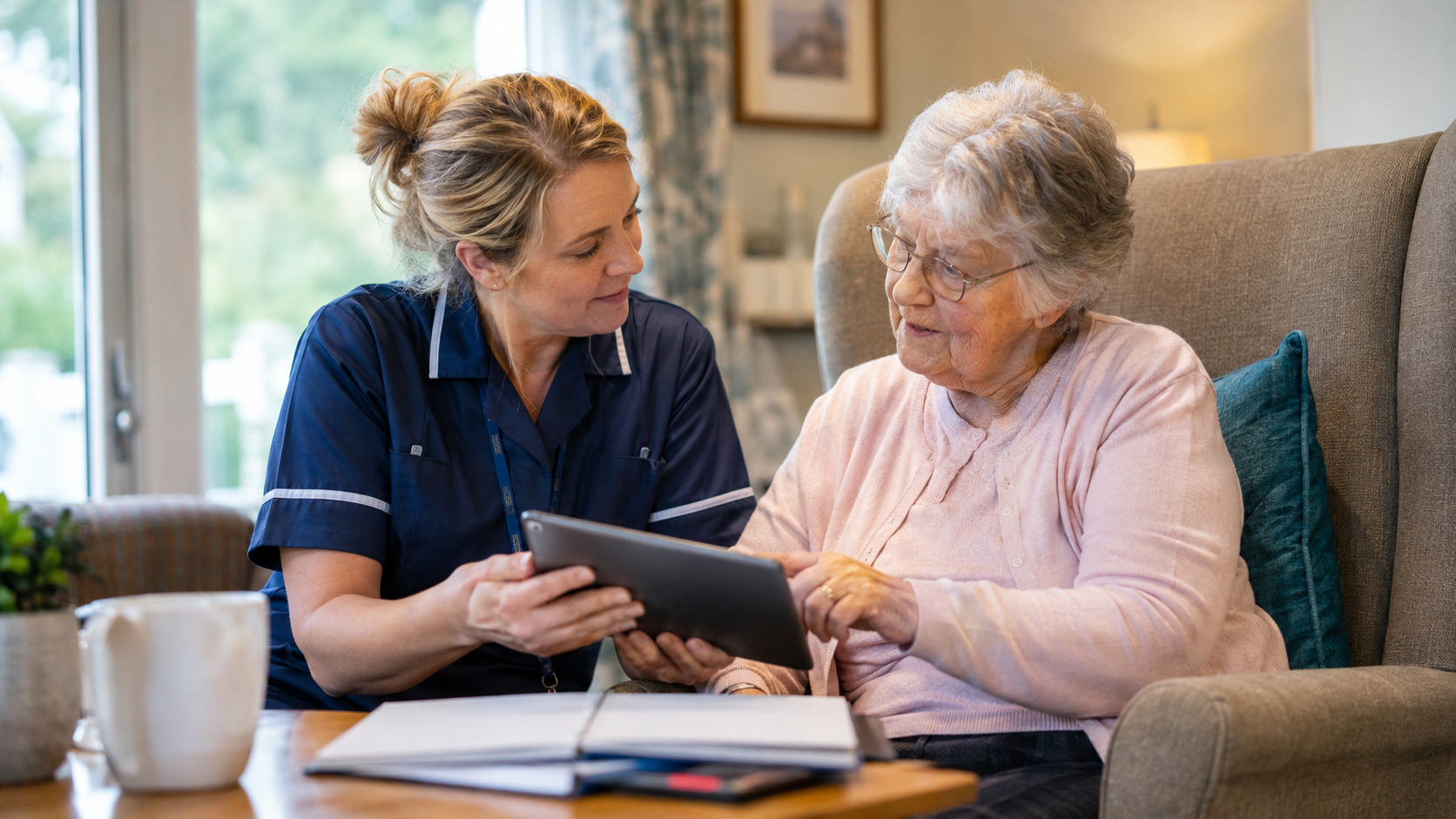
- Tablets at the bedside for immediate updates allow entries in real time, reducing errors from handwritten or delayed notes.
Digital systems also support risk reporting, allowing patterns such as weight loss or dehydration signs to be seen across multiple care records. This makes intervention faster and communication between carers, nurses, and dietitians more consistent.
However, digital systems do not replace observation. Behavioural cues — like reluctance to eat, tiredness, or confusion — must still guide care decisions. Technology provides the record; carers provide the understanding. A care worker records a resident’s lunch on a tablet and notices they refuse their usual drink. Instead of moving on, the worker stops to ask why. The resident says the drink tastes different. The carer offers an alternative, updates the note, and flags it to the nurse. A small act of attention — supported by digital documentation — keeps care personal and responsive.
Under Standard 8, Outcome 8.5 of the Care Certificate, accurate documentation is a professional duty. The 2025 update reinforces that every record should be clear, timely, and factual — whether written or digital. Good documentation shows not just what was done, but that care was given safely, respectfully, and with the person’s wellbeing in mind.
The Role of Risk Reporting

Risk reporting in nutrition and hydration means noticing concerns early, recording them clearly, escalating to the right person, and checking that action is taken. It prevents harm and builds a culture of openness and accountability.
Step-by-step process
- Observe and identify risk – e.g., reduced intake, choking signs, weight loss, dark urine, confusion.
- Record findings and why – write factual notes with times, amounts, triggers, and your rationale for concern.
- Report to the correct staff or manager – follow your procedure; inform the nurse, senior, or on-call clinician.
- Follow up to confirm action – check the plan has changed (texture review, fluid plan, GP referral) and update records.
Timely and honest reporting is emphasised in the 2025 update to ensure patterns are spotted early and actions are auditable across shifts and teams.
Example in practice
A carer notices a resident’s fluid chart shows low intake across two days. Today, the resident again refuses drinks. The carer logs exact amounts, notes fatigue and dry mouth, and escalates to the nurse and unit coordinator. A dietitian review and hydration support plan are arranged, with preferred drinks, prompts, and hourly checks. The carer documents the new plan and confirms it’s being followed on the next shift.
This approach aligns with Care Certificate Standard 8 outcomes on recognising concerns, documenting accurately, and reporting promptly—turning observation into safer, person-centred care.
Empowering Service Users Through Choice
Empowering service users through choice means involving them in every decision about their nutrition and hydration — from what they eat to when and how. Choice reinforces dignity, supports independence, and helps people feel valued and respected. When individuals have control over their meals, they are more likely to eat and drink well, which directly improves their health and wellbeing.
Independence, Choice, and Dignity in Practice
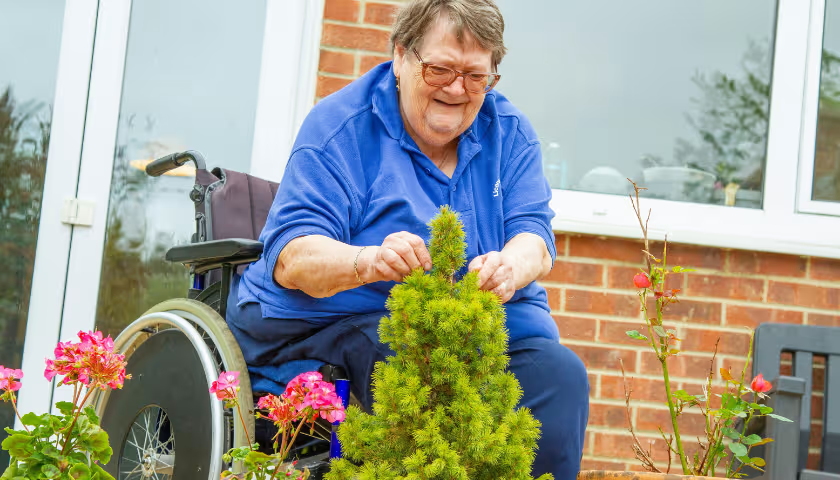
Each person’s needs and preferences are different. Promoting independence does not mean leaving people unsupported — it means enabling safe decisions that reflect personal taste and ability.
Examples include:
- Allowing someone to choose their preferred drink, even if it means offering alternatives such as warm milk or juice instead of water.
- Supporting safe snack-time decisions, such as selecting soft foods for someone with swallowing difficulties.
- Using technology to order meals, helping individuals browse options and feel included in their care routine.
These small actions show respect, build trust, and encourage confidence in both the carer and the service user.
Under Care Certificate Standard 8, Outcomes 8.3 and 8.4, workers are expected to:
- Ensure people have access to food and drink that meet their needs and preferences, as written in their care plan.
- Enable choice and independence wherever possible, giving individuals an active role in maintaining their own wellbeing.
Promoting choice in nutrition and hydration is not just about what’s on the plate — it’s about recognising the person behind the care plan. Every meal shared with dignity strengthens the foundation of compassionate, person-centred care.
Conclusion
Nutrition and hydration are more than care tasks — they are daily opportunities to protect health, dignity, and independence. The 2025 Care Certificate update strengthens these foundations through clearer standards, better documentation, and greater accountability.
By following safe food practices, reporting risks early, and promoting personal choice, care workers turn everyday routines into acts of respect. Small, consistent actions build safer, kinder, and more person-centred care for everyone.