


Picture this: It’s 2 a.m. in a residential care home. A resident is in distress, two staff members have called in sick, and you’re holding everything together with nothing but your training, your instincts, and the weight of responsibility on your shoulders.
If you’ve worked in health and social care, you know—this isn’t just a job. It’s a calling that demands everything from you. According to Skills for Care’s 2023 report, over 60% of care workers regularly battle stress-related challenges. Yet they show up. They lead—often without even realising it.
Here’s the truth: leadership in this sector isn’t about authority. It’s about humanity.
Real leadership means showing up with empathy when you’re exhausted, making difficult decisions with compassion, and creating an environment where your team feels valued enough to give their best. The most effective leaders blend transformational vision with situational awareness, grounded in Servant Leadership principles that build trust, respect, and psychological safety—the foundation of quality care and CQC compliance.
In this blog, we’ll explore various leadership styles in health and social care to help you find the one that works best for you. Discover how the right leadership approach and qualifications can boost your career and enhance the care you provide.
What is leadership and what makes a good leader?

We often hear the word “leadership,” but what does it really mean — especially in health and social care? Leadership isn’t just about giving orders or managing a rota. It’s about guiding a team with purpose, setting a positive example, and helping others do their best, even under pressure.
A leader’s role goes beyond tasks and targets. In this field, it also involves emotional intelligence, patience, and the ability to stay calm when things don’t go to plan. After all, when your team feels supported, they’re more likely to deliver safe, compassionate care — even on the hardest days.
A Good Leader in This Field Typically:
- Communicates clearly and honestly – Whether it’s good news or tough feedback, clear communication keeps everyone on the same page.
- Leads by example – Your actions matter. If you stay calm and respectful, your team is more likely to do the same.
- Listens actively – Good leaders don’t just give directions; they listen to concerns, ask questions, and involve others in decisions when possible.
- Supports development – Whether it’s training, mentoring, or encouragement, a strong leader helps their team grow and build confidence.
- Builds trust – Trust is the foundation of any effective team. It takes time, but consistent, fair leadership earns respect.
- Handles pressure well – Stressful days are part of the job, but how a leader reacts can either ease tension or add to it.
Great leadership requires both practical skills and theoretical knowledge. A course like the Health and Social Care Level 5 Diploma can provide the framework you need to effectively lead teams, build trust, and handle challenging situations. With this qualification, you’ll gain the confidence and competence to lead with empathy and clarity.
The Importance of Leadership Styles in Health & Social Care Organizations
Leadership isn’t just about holding a title — especially in health and social care. Whether you’re managing a team in a care home or leading a shift in a hospital ward, how you lead can shape everything from team morale to patient outcomes.
When the pressure is on — and it often is — people look to their leaders for stability and direction. That’s why your leadership style matters. It influences how decisions are made, how problems are solved, and how supported your team feels day to day.
It Impacts Quality of Care
The quality of care often depends on how well staff are supported and motivated. Leaders who communicate clearly and stay calm under pressure help their teams stay focused, confident, and engaged. On the flip side, poor leadership can lead to mistakes, high stress, and even staff turnover — all of which impact patient outcomes.
It Shapes Team Culture
Leadership style plays a big role in how teams interact and work together. A democratic or supportive leader encourages collaboration and trust. Meanwhile, a more controlling or distant style can create tension and reduce morale. Over time, this affects how safe and respected staff feel in their roles.
It Affects Compliance and Accountability
Health and social care services must follow strict regulations. A good leader keeps the team aligned with these standards and ensures everyone knows their responsibilities. They also lead by example, encouraging accountability and ethical practice across the board — both of which are key for meeting CQC and other regulatory expectations.
It Supports Staff Well-being
Let’s face it — this work is emotionally demanding. Staff need leaders who check in, listen, and offer support when things get tough. When leadership is rooted in empathy and trust, it becomes easier to keep people motivated, reduce burnout, and build a team that wants to stay and grow.
Overview of Major Leadership Styles
When it comes to leadership in health and social care, there’s no one-size-fits-all approach. That’s because every team, situation, and workplace is different. However, knowing the main leadership styles can help you understand your own strengths — and what you might need to improve.
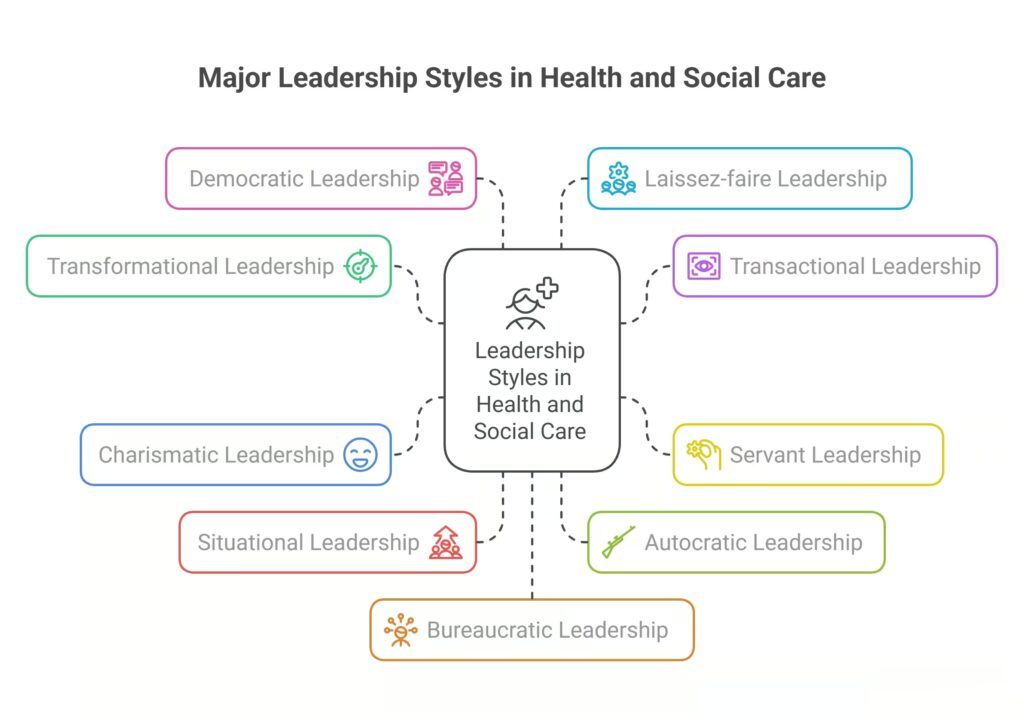
Let’s break down the major leadership styles you’re most likely to come across in this field. As you read, think about which one sounds most like you — or the leaders you’ve worked with.
Transformational Leadership in Healthcare
Transformational leaders focus on inspiring and motivating their teams. They bring energy, vision, and long-term goals to the table. In healthcare, this often means driving change, improving standards, and encouraging staff to grow. While this style builds strong commitment, it works best when the leader also keeps track of daily operations.
Transactional Leadership in Health & Social Care
This style is all about structure, clear expectations, and performance. Leaders set rules, monitor progress, and reward results. In care settings, it helps maintain order and accountability — especially in larger organisations. However, it can feel too rigid if not balanced with support and flexibility.
Servant Leadership in Healthcare
Servant leaders put people first — especially their team and those receiving care. They lead with empathy, listen actively, and create a safe, supportive work environment. This approach builds trust and loyalty, which is vital in emotionally demanding roles. Still, boundaries must be clear to avoid role confusion.
Charismatic Leadership in Health Care
Charismatic leaders use personality and confidence to inspire others. They often lead through passion and strong communication. In healthcare, this can be powerful during times of change or crisis. But while charisma can attract followers, it must be paired with substance and accountability to be effective long-term.
Situational Leadership for Complex Care
This flexible style adjusts based on the team’s needs, experience, and the situation at hand. For example, you might take charge during an emergency but step back during routine tasks. It’s especially useful in complex care settings, where conditions and challenges can change rapidly.
Autocratic & Authoritarian Leadership
Autocratic leaders make decisions without seeking much input. This style can work in urgent situations where speed matters — like during medical emergencies. However, in day-to-day care environments, it may leave staff feeling disempowered or unheard, which can impact morale and trust.
Democratic/Participative Leadership in Care Teams
This leadership style values collaboration. Leaders involve staff in decisions, encourage feedback, and promote team-based problem-solving. It builds a sense of ownership and improves communication. While it may slow decision-making, it’s ideal for building strong, motivated care teams.
Laissez-faire Leadership
Laissez-faire leaders take a hands-off approach. They trust their team to make decisions and work independently. This can work well with experienced, confident staff. But without enough support or structure, it may lead to confusion or lack of accountability.
Bureaucratic Leadership in Health Administration
Bureaucratic leaders stick closely to rules, policies, and procedures. In health administration, this ensures compliance and consistency — especially in regulated environments like hospitals or care agencies. Still, over-reliance on rules can sometimes slow innovation or decision-making.
Coaching Leadership for Professional Development
Coaching leaders focus on growth. They guide team members through challenges, help set personal goals, and support ongoing learning. In health and social care, this approach builds confidence and improves staff retention — especially when paired with regular feedback and reflection.
Affiliative Leadership in Care Settings
Affiliative leaders prioritise harmony and relationships. They work hard to create a positive emotional climate and resolve conflict gently. In care settings, this is great for team bonding and emotional support, though it may need to be balanced with accountability and structure.
Pacesetting Leadership in High-Pressure Environments
Pacesetters lead by example, often setting high standards and expecting others to keep up. In fast-paced environments like emergency care, this can push teams to perform. However, if overused, it can lead to burnout and tension — especially if support is lacking.
Ethical Leadership in Health & Social Care
Ethical leaders focus on fairness, transparency, and doing what’s right — even when it’s hard. In health and social care, this means making decisions that respect dignity, privacy, and equality. It builds trust with both staff and service users, especially in challenging or sensitive situations.
Each of these styles has its place — and most good leaders use a mix depending on the situation. As we’ll explore next, learning to adapt your style is key to becoming a truly effective leader in health and social care.
Comparing Leadership Styles: What Works Best in Practice?
Now that we’ve covered the main leadership styles, you might be wondering — which one actually works best? The simple answer is that there is no single “best” style. Instead, the most effective leaders in health and social care are experts in Situational Leadership, meaning they read the environment and adjust their approach instantly.
Consequently, when employers assess candidates, they are looking for evidence that you understand this flexibility—a key component taught in reputable online programs. Therefore, let’s compare how these styles perform against the critical metrics of our industry.
Comparing Styles: The Situational Effectiveness Grid
We can analyse the suitability of each style by looking at two factors: the task at hand and the competency of the team executing it.
| Leadership Style | Best Suited for… | When It Fails… |
| Servant | Daily Operations and Staff Support. It builds trust and loyalty, which are essential for long-term retention. | During Urgent Crises. Focusing too much on individual needs can slow down critical emergency response times. |
| Transformational | Long-Term Change and Innovation. It inspires staff to embrace new technologies and quality standards. | With Low-Skilled or Overwhelmed Teams. It can be too abstract and requires staff to already possess self-motivation. |
| Democratic | Policy Development and Care Planning. It ensures buy-in and uses the collective wisdom of the multidisciplinary team. | When Decisions Need to Be Immediate. Too much discussion during an emergency is dangerous and ineffective. |
| Autocratic | Immediate Patient Safety Crises. It delivers clear, rapid commands during life-or-death situations. | For Routine Tasks or Long-Term Management. It rapidly destroys team morale, leading to high burnout and resentment. |
The “Best” Leader is the Hybrid Leader
Ultimately, what employers recognise is your ability to be a hybrid leader. For instance, consider a typical scenario in a care home:
- The Routine: Most of your day should be managed using Servant Leadership—checking in, offering support, and removing administrative barriers for your team. Furthermore, this keeps morale high.
- The Policy Change: When introducing a new national hygiene protocol, you’ll use a Democratic approach to discuss the logistics of implementation with staff, getting their practical feedback.
- The Emergency: Suddenly, if a resident has a fall and requires immediate first aid, you must switch instantly to Autocratic to direct the immediate actions of the staff present, ensuring safety protocols are followed precisely.
Therefore, your education is deemed “recognised” if you can demonstrate, through practical examples and simulations, that you know when to wear each leadership hat. Consequently, the quality of the program’s practical assessment, whether virtual or in-person, becomes far more important than the delivery method itself.
Key Traits of Effective Health and Social Care Leaders
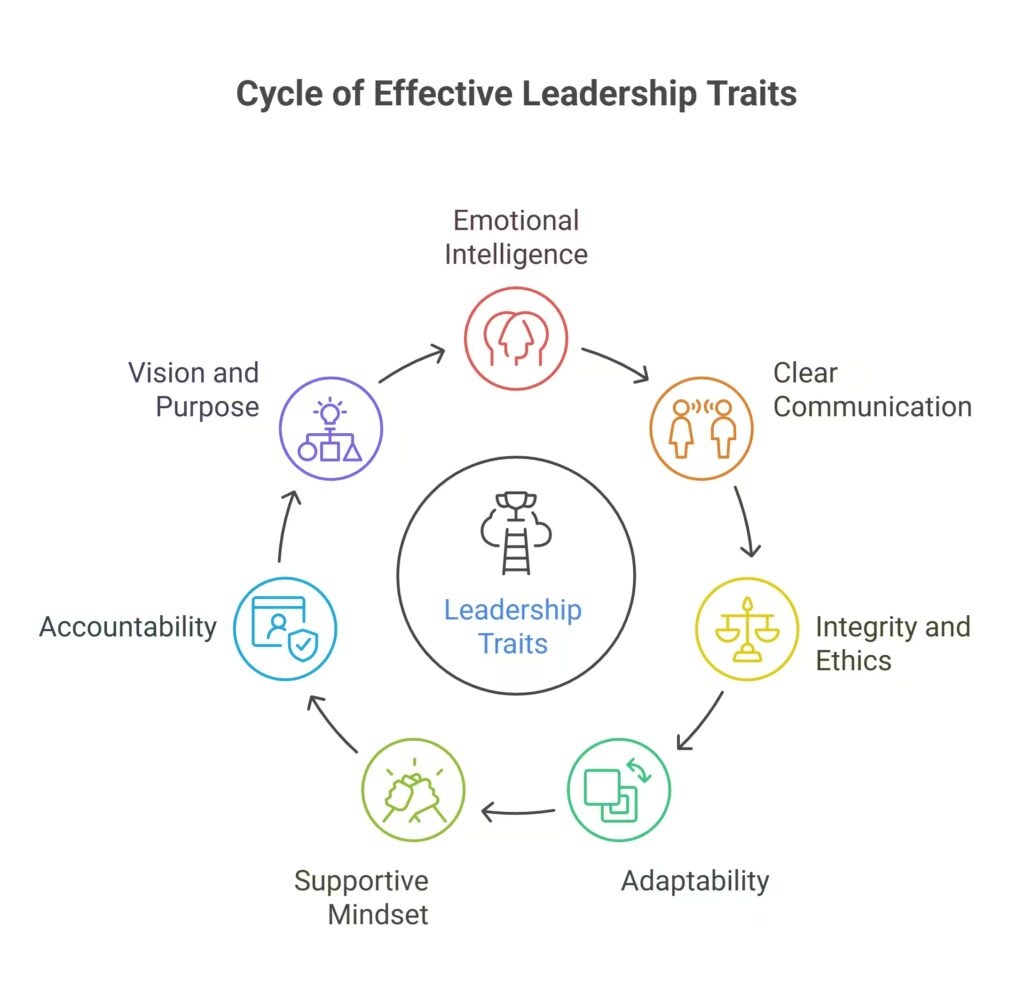
We’ve talked about leadership styles — but what really sets great leaders apart, no matter their style, are the personal qualities they bring to the role. In health and social care, where things can change quickly and emotions often run high, the way you lead matters just as much as what you do. Let’s explore the essential traits that set the best leaders apart.
1. Emotional Intelligence
Strong leaders understand their own emotions — and they can read the emotions of others. This helps them stay calm under pressure, respond with empathy, and defuse tense situations. In care settings, emotional intelligence isn’t optional — it’s essential.
2. Clear Communication
You don’t need fancy words to be a great communicator. What really counts is clarity, honesty, and making sure your team knows what’s expected. Good leaders explain decisions, give feedback constructively, and listen just as much as they talk.
3. Integrity and Ethics
People trust leaders who do the right thing, even when no one’s watching. Whether it’s protecting patient confidentiality or handling concerns fairly, ethical leaders set the tone for the entire team. They lead with fairness, consistency, and strong values.
4. Adaptability
In health and social care, plans often change. A good leader can adapt quickly — without losing focus or panicking the team. They stay flexible, adjust their approach when needed, and keep everyone moving forward, even when things don’t go to plan.
5. Supportive Mindset
Effective leaders don’t just delegate tasks — they lift people up. They notice when someone’s struggling, give praise where it’s due, and make time to help others grow. This kind of support reduces stress, improves morale, and strengthens the whole team.
6. Accountability
Leaders make decisions — and they take responsibility for them. Good leadership means owning both successes and setbacks, and using mistakes as learning opportunities. When you hold yourself accountable, your team is more likely to do the same.
7. Vision and Purpose
Finally, strong leaders know why they do what they do. They don’t just focus on tasks — they focus on impact. Whether it’s improving care quality or supporting staff well-being, a clear sense of purpose keeps the team motivated and connected to the bigger picture.
As you’ve probably noticed, these traits go beyond any single leadership style. They’re the foundation of leadership that actually works — leadership that builds trust, strengthens teams, and puts people at the heart of care.
How to Develop Strong Leadership in Health and Social Care
The good news? Great leaders aren’t just born — they’re developed. Whether you’re just starting out or already managing a team, leadership is something you can build over time. In health and social care, where people depend on you for safety, support, and direction, investing in your leadership skills really does make a difference.
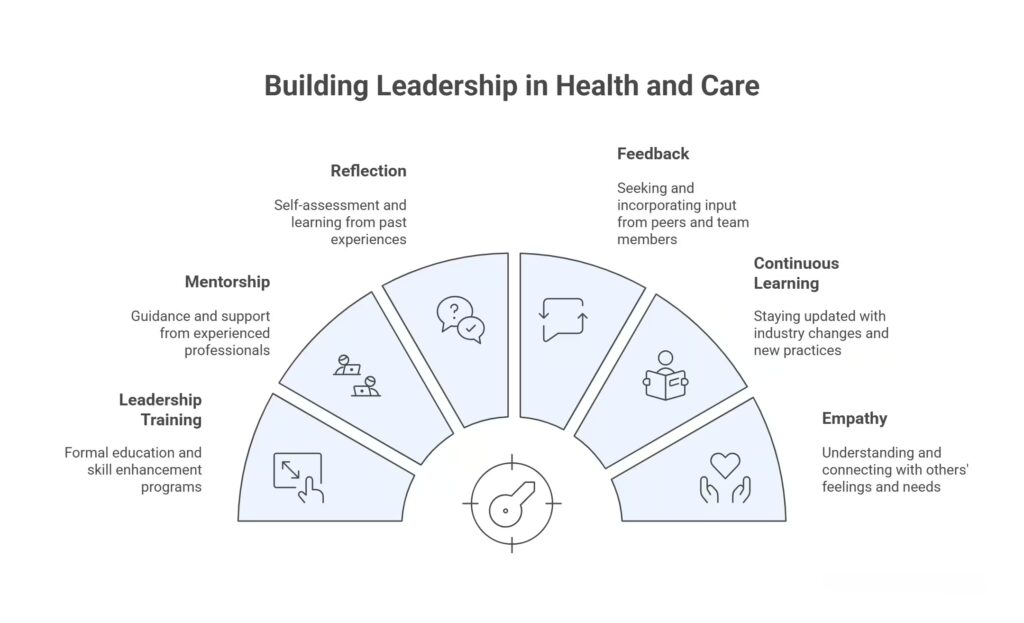
Let’s look at a few practical ways you can grow into a confident, trusted leader — one that others want to follow.
1. Take Part in Leadership Training
One of the most effective ways to improve is through targeted leadership training. Whether it’s an in-person course or an online qualification, these programs help you understand different leadership styles, communication techniques, and how to handle complex situations.
Many health and care organisations offer in-house training. If they don’t, there are accredited courses you can take online — and yes, many of them are recognised by employers (more on that in a moment). Research shows investing in learning and development can reduce the average turnover rate for care workers to 31.7% among those who received training.
2. Find a Mentor or Role Model
Sometimes, the best lessons come from the people around you. Having a mentor — someone who’s been in your shoes — can give you support, honest feedback, and real-life insight. Even if it’s informal, learning from someone else’s experience can boost your own leadership journey.
3. Reflect on Your Practice
Leadership isn’t just about what you do — it’s also about why you do it. Take time to reflect on your actions, decisions, and interactions. What worked well? What could’ve gone better? Regular reflection helps you grow and stay grounded, even when things get busy.
4. Ask for Feedback
It’s not always easy, but asking your team or peers for feedback can really help. You might say, “What’s one thing I could improve as a leader?” Over time, these small insights can lead to big changes in how you lead and how others respond to you.
5. Stay Curious and Keep Learning
Healthcare and social care are always changing. Great leaders stay up to date with new practices, policy changes, and research. Even reading articles or listening to podcasts can help you pick up fresh ideas and stay connected to your purpose.
6. Practice Empathy Every Day
Finally, strong leadership in this field always comes back to empathy. When you lead with understanding, people feel heard, supported, and respected. It doesn’t take a lot — just a genuine check-in or a moment of patience can go a long way.
Developing leadership takes time, but it’s worth it. With each step, you build more confidence, trust, and impact — not just for yourself, but for your whole team. If you’re looking to develop and enhance your leadership abilities, the Health and Social Care Level 5 Diploma is a great step forward. This course will help you build the skills and confidence necessary to thrive as a leader in health and social care.
Conclusion
Ultimately, there is no single “best” leadership style in health and social care. The most effective leaders are adaptable, blending different approaches to meet the needs of their team, patients, and the situation at hand.
Your leadership journey is about continuous growth. By focusing on empathy, integrity, and a commitment to serving others, you can create a positive environment where both your team and the people you care for can truly thrive.