What Is Communication For Nurses?
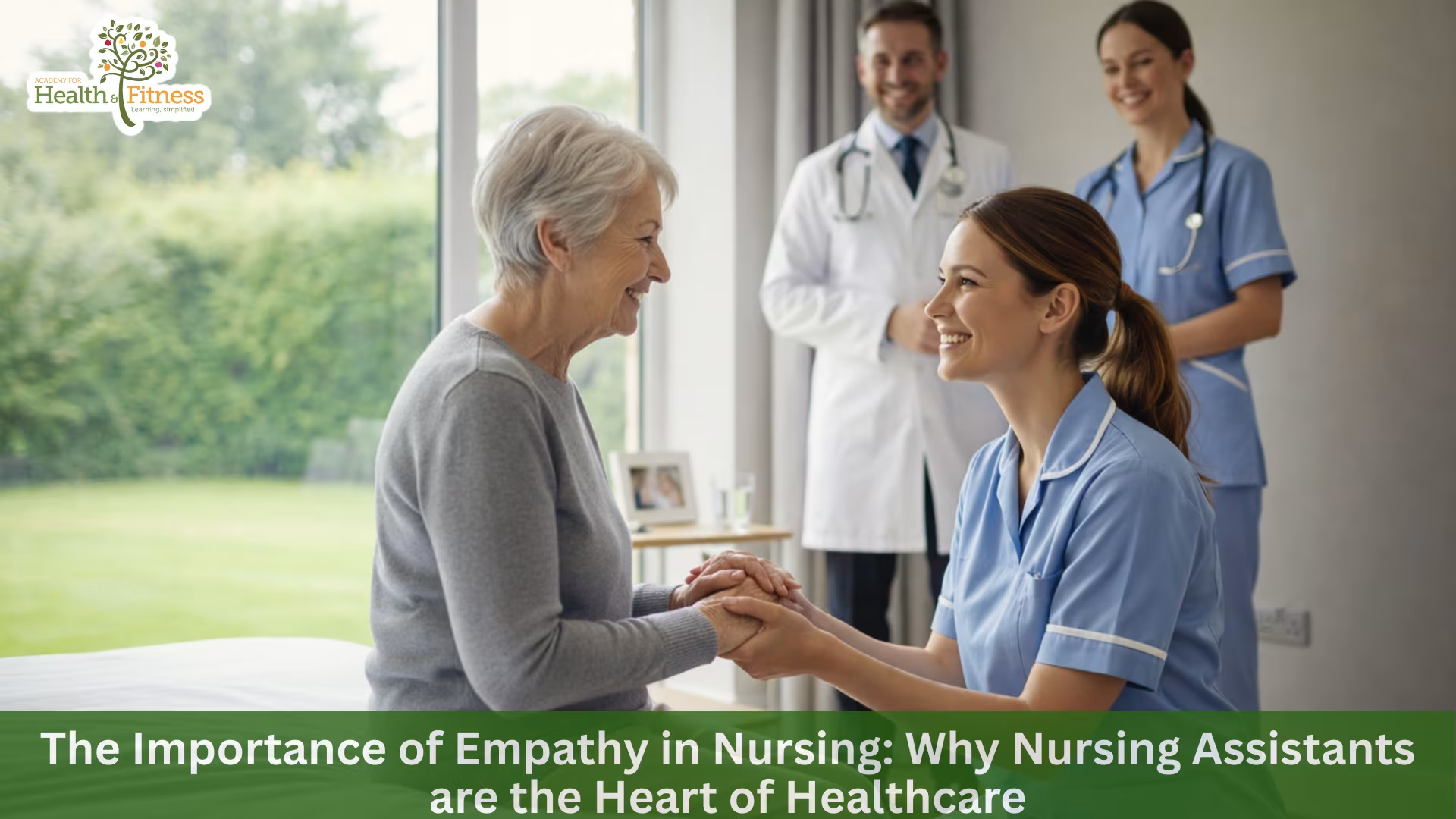
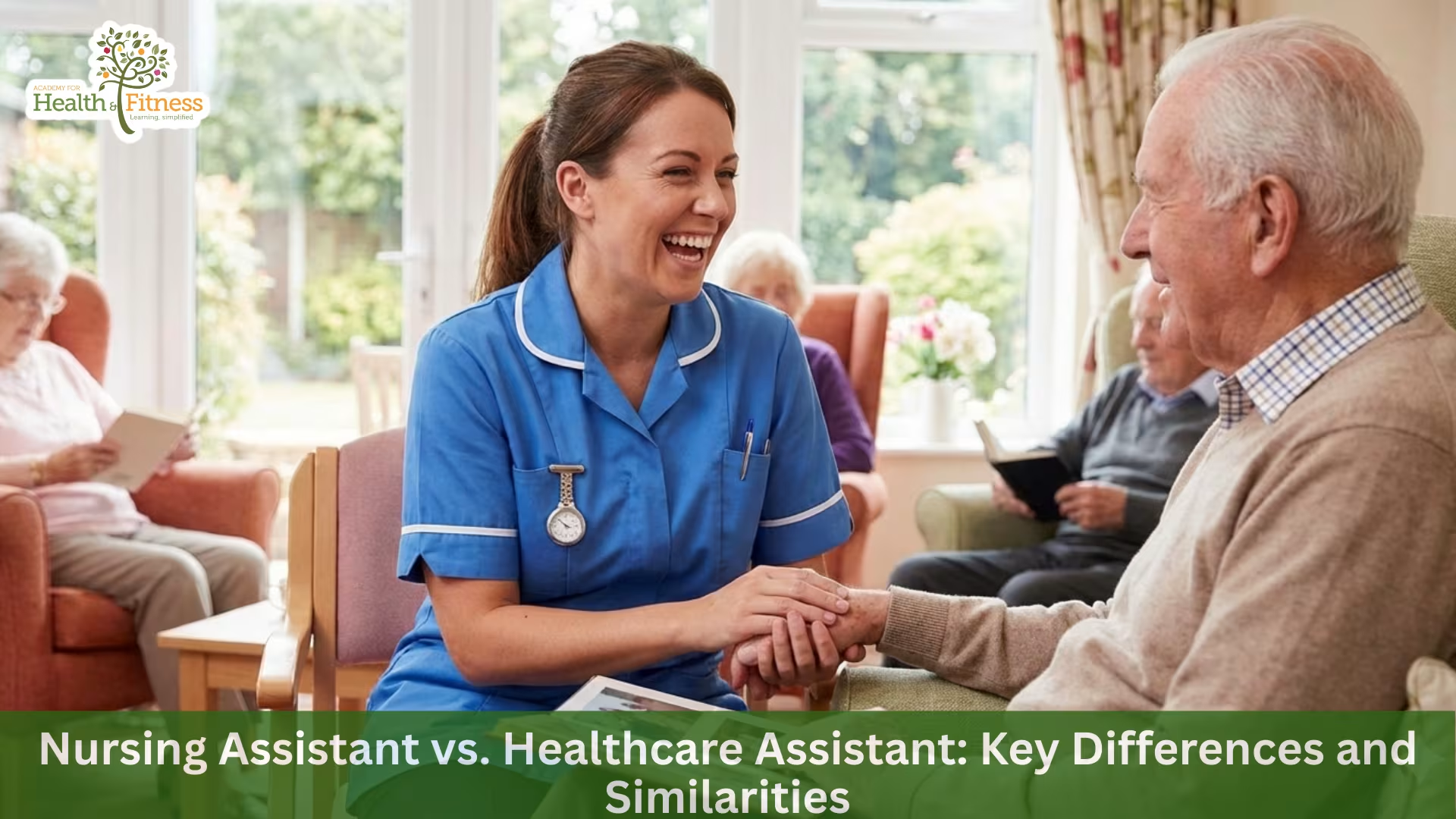
As for the nurses, good communication skills mean the ability of the nurses to listen carefully to each patient to understand their concerns, experiences, and opinions.
It uses both verbal and nonverbal communication skills. The nurses also use communication techniques like asking the patient to repeat the information to ensure they have understood.
Here are the critical elements of communication for nurses.
- Identify personal learning needs and achieve professional growth
- Focus on the solutions and ensure positive results for the patients
- Promote and protect the helping relationship between colleagues
- Listen and consider for informed decision-making
- Ask for feedback to improve communication skill
Essential Nurse Communication Skills

Good communication skills of the nurses are crucial to ensure the patient receives high-quality care. Moreover, improved communication also enhances career prospects.
As nurses have to deal with a wide range of people, they must have excellent verbal, non-verbal, written, presentation skills, and so on.
Let’s check out the list of essential nurse communication skills for a quick outlook.
- Verbal Communication
- Non-Verbal Communication
- Written Communication
- Active Listening
- Patient Education
- Compassion
- Make Personal Connections
- Inspiring Trust
10 Importance Of Communication In Nursing
Clear communication in the healthcare system is important to ensure positive patient care outcomes and job satisfaction.

Let’s get to the 10 importance of communication in detail below.
1. Helps To Understand The Patient’s Condition Immediately
In the healthcare system, the nurses are the first-line caregivers. When you take on the responsibility of the nurses, you will be the first point of contact with the patients.
So, of course, your effective communication is a must to quickly assess, evaluate, and understand the condition of the patient. The doctors are sure to be in a position of power. But they can’t provide the round-the-clock treatment. It will be you, the nurse!
You will be able to apply the doctors’ prescribed treatment plans and care with effective communication. Here communication means with both the doctor and the patients.
2. Ensures Emotional Understanding Of A Patient
Do you know what the hardest task in the nurse’s career is? It is balancing the emotional support with the care responsibilities! Nurses spend more time with patients than any other in the healthcare sector.
And here, the deeper you communicate with your patient, you will be able to offer a deeper level of care. When you can communicate with them effectively, you can easily create an emotional bond.
The patients are more likely to trust you and open up about their problems and concerns. No wonder then you will be able to provide better emotional support with this deep bond.
3. Advocates For Patients
As you see, the patients are more likely to willingly share their condition, preferences, and opinions with you due to good communication.
Ultimately you can become their voice in the complex healthcare system whom they can trust. You can advocate them to their doctors, and families and ensure their perspective is heard and valued in the care plan.
It places you in the place of a trustworthy and caring nurse who provides treatment and attention to the patient they desire!
4. Tracks Change In Care
One size does not fit all! And that’s especially true in the healthcare system. Different patients and different needs. Here, it is the responsibility of the nurses to understand their needs and create a plan.
The patients tell their problems and share their opinions with the nurses willingly due to effective communication. Thus, the nurses get to know the patient’s situation better than any other in the healthcare staff.
It allows them to quickly track the progress or problems and take immediate action. The result will be obvious- Best Care!
5. Ensures Patient Safety
We will say it is the most crucial importance of effective communication in the healthcare system. Only clear and concise communication between doctors, nurses, and patients can prevent misunderstanding.
It is the first thing to ensure there is no mistake in the treatment plan and care which otherwise can compromise the patient’s safety. Due to effective communication, you can convey the patient’s information and ensure they get treatment at the right time.
Even a small mistake in communication, let’s say, for example, the wrong dosage can lead to fatal consequences. So, communication is a must to uphold patient safety.
6. Enhance Patients’ Satisfaction
Effective communication in nursing enhances the satisfaction of the patients. They feel heard and understood.
When you take time to understand your patients, it enhances their overall experience with your care.
Their satisfaction leads them more likely to follow the treatment plan and report the outcomes. It creates a trusting environment in the healthcare system.
7. Promotes Professional Image
Your clear and polite communication with the doctors, patients, and coworkers helps you to create a good impression in the workplace. It can build your professional image and enhance your reputation.
This positive professional image offers you opportunities for leadership roles and access to reliable mentors.
8. Establishes A Comprehensive Treatment Record
It is one of the crucial duties of the nurses- they have to document every care they provide. These documents ensure the continuity of care and ensure everyone stays informed about the treatment of the patient.
Moreover, these documents are proof that the patient has gotten appropriate care and that is within the regulatory requirements. Here, as a nurse, you can ensure everything is correctly recorded with good communication with the other nurses, patients, or their families.
Additionally, well-communicated detailed medical records help to understand the trends and find out the challenges. It ultimately leads to better quality care.
9. Reduces Workplace Stress
It is seen that poor communication can also lead to the turnover of the nurse’s career. The nursing job role is already very challenging. On top of that, if they struggle to connect with the nurses or staff, it increases further stress.
Minor issues can become a herculean matter just due to poor communication. Obviously, it affects the patient’s care and also in the nurse’s life.
But on the flip side, good communication creates a sense of teamwork and a supportive workplace. It reduces stress. Moreover, it enables them to provide high-quality care as they feel emotionally supported.
10. Support Career Growth
Effective communication enhances your ability to collaborate with your coworkers. Moreover, it allows one to lead and resolve problems more easily in the workplace.
Nurses with good communication ability are known for their professionalism and build trust among the patients. Additionally, you can increase your confidence in handling the situation and patients.
Thus good communication creates opportunities for your promotion and successful career in healthcare.
Effects Of Poor Communication

As for the nurses, the most crucial reason behind good communication is that it directly impacts the well-being of the patient.
Poor communication between healthcare professionals can lead to medical errors and even preventable harm. For instance,
- Incomplete or inaccurate information transfer
- Wrong prescriptions
- Incorrect medication doses
- Improper treatment plans
- Compromised patient safety
- Tubing misconnection
- Diagnostic errors
Moreover, miscommunication is a major cause of the sufferings of the patients from many preventable harm.
HIPPA journal reveals that about 7,000 out of 23,000 analyzed medical malpractice lawsuits were just caused by miscommunication. These communication errors even lead to the death of 2,000 patients according to the study.
Another report from StatPearl shows that surprisingly enough 400,000 hospitalized patients experience some kind of preventable harm every year, and medical errors lead to about 100,000 deaths annually. Moreover, 40,000 to 80,000 patients are injured or die due to diagnostic errors.
These studies clearly show the impact of medical errors and miscommunication on the lives of patients. It also affects a lot in the healthcare systems and the healthcare team.
How to Overcome Communication Barriers in Nursing?
In the way of offering quality care to patients, communication barriers often become a major problem between the nurse and the patient.
These barriers can be language barriers, cultural barriers, or emotional barriers.
1. Language Barriers
Language barriers can happen when the nurses and patients talk in different native languages.
It can create confusion and mistakes. In this case, you should use simple and easy words and talk slowly. You can also take the help of pictures, or hand gestures to make them understand you.
2. Cultural Barriers
Cultural barriers are very common in the healthcare sector. That’s because here nurses, patients, and colleagues gather from different values and beliefs.
So, it’s a must to overcome these barriers to ensure quality care. In this way,
- Always respect and appreciate the differences of everyone.
- Never judge people based on their stereotypes
- Encourage them to share more and listen carefully
- Learn their backgrounds and show care
3. Emotional Barriers
The emotional feelings of the nurses can be a barrier to how they communicate with their patients and colleagues. You know these feelings can be anxiety, fear, sadness, or anger.
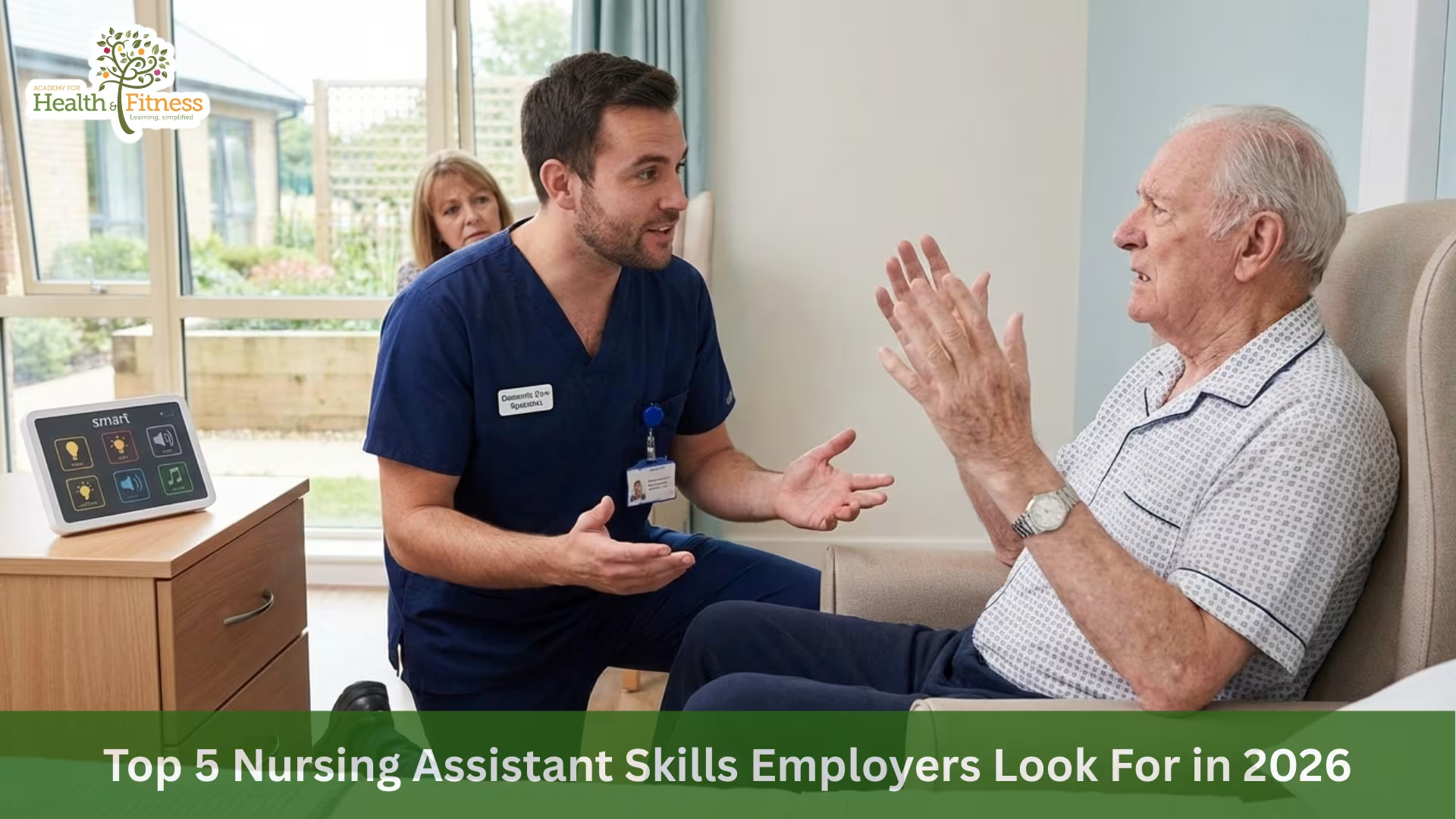
Moreover, some patients suffer from dementia and other cognitive conditions. Try to understand them, and avoid being aggressive and defensive. You should always try to follow the stress management strategies and take care of yourself.
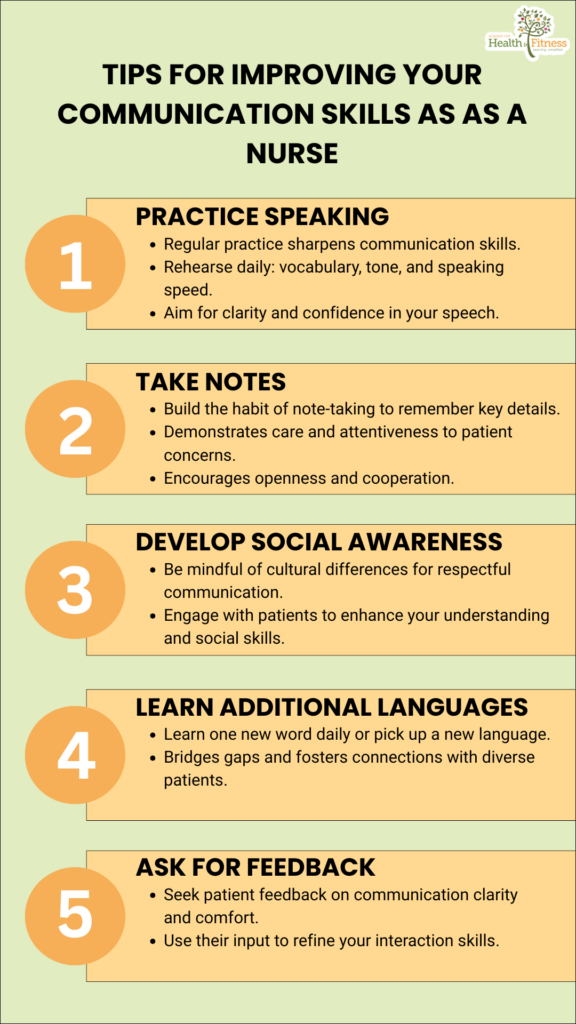
Tips For Improving Your Communication Skills As A Nurse
Want to build trust and provide high-quality care to your patients very easily? Then practice to improve your communication and your ability to connect with the patients.
The below tips can help you out in this regard.
Tips For Demonstrating Excellent Communication Skills
Below let’s discuss some tips that help you to impress your patients with your communication skills.
i) Start by introducing yourself.
When approaching your patients, you should first introduce yourself. It helps to create a friendly environment and trust in the patients.
Say your name, your role, and how you are going to help them. You should encourage them to be more open and cooperative with you.
ii) Avoid distractions
Active listening- it is the most important thing to ensure good communication between you and the patients.
That’s why you should avoid distractions when talking with them. It will help you to listen carefully to what they are saying and show empathy.
What we meant by distractions is the phones, competing tasks, or the chatty colleagues.
iii) Choose a suitable environment.
It also matters where you are communicating. You should choose a place that is perfect for the conversation.
That place may depend on the nature of the topic you want to discuss. For example, you can share the quick updates in the hallway. But choose a quiet place to discuss the treatment plans and instructions.
iv) Be patient
You should take your time to understand the patients to show your good communication skills. Patience will help you to understand the needs of your patients.
Be clear with them about the relevant details. You can also ask them again in case there is something clear.
v) Use a gentle tone
You know the relationship between the nurse and patient can become impersonal very easily. That’s the reason you should try to use a gentle and caring tone when talking with your patients.
Final Words
All in all, in the nursing career, you have to ensure effective communication to offer quality care to your patients. Moreover, it can also enhance your professional growth.
Always be calm and listen to your patients carefully to understand them. You should practice to improve your verbal and nonverbal communication.
Overcome the communication barriers, improve the patient’s outcome, and advance the profession that you are looking forward to!