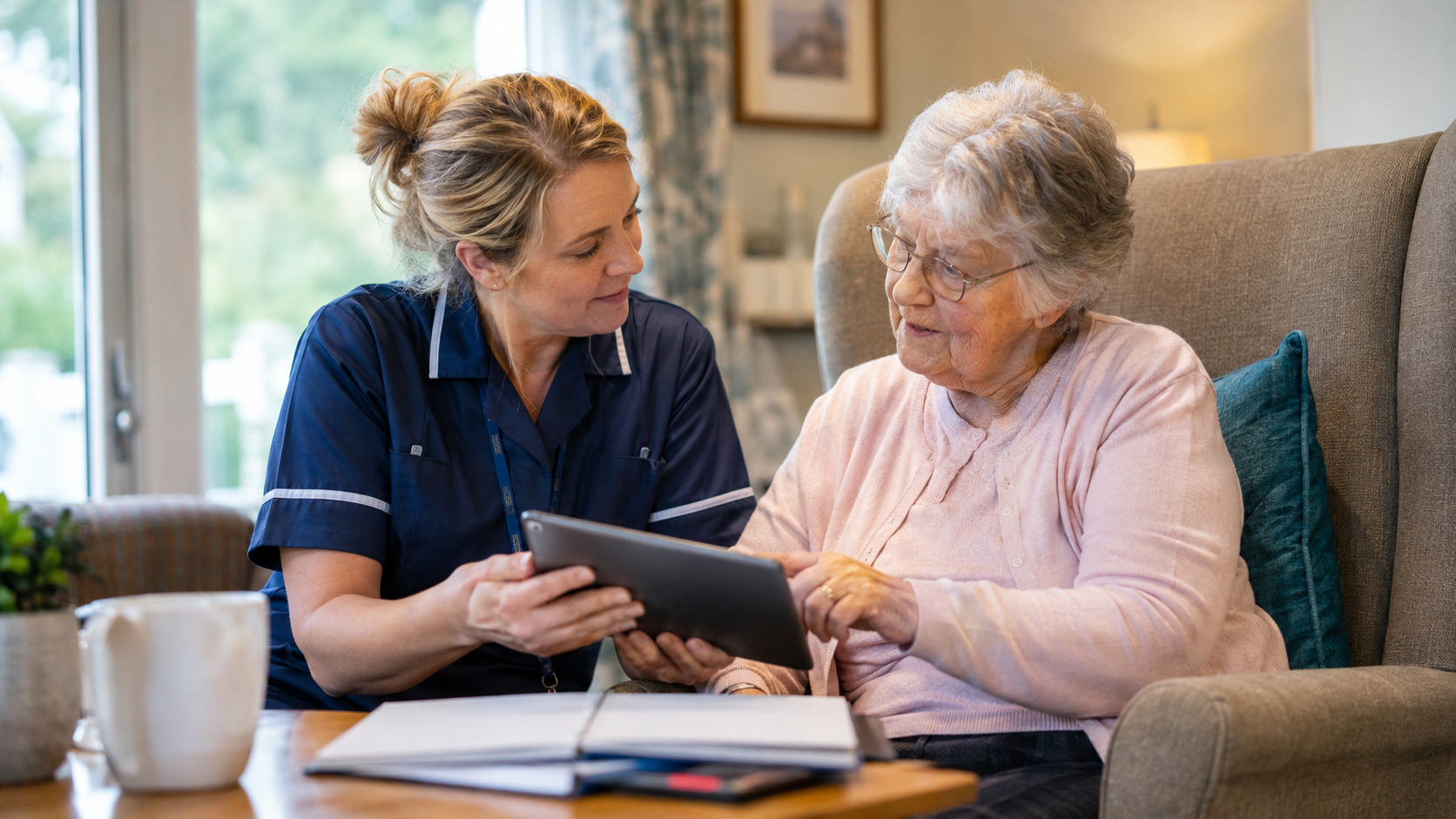


Accurate documentation plays a major role in preventing harm. In fact, research published in BMJ Quality & Safety shows that over 237 million medication errors occur each year in England, many linked to unclear or incomplete records. This highlights how powerful a single well-written observation can be. Imagine noticing a small change in someone’s breathing. If you record that detail clearly and on time, it can guide the whole team toward the right response.
Observation simply means paying close attention to what a person does, says or shows through their behaviour or body. Documentation then captures those details so they can be trusted, shared and acted on. When one is weak, the other suffers. And without both, continuity of care becomes patchy and legal duties are harder to meet.
In this blog, you will learn how to observe with purpose and record with clarity, so your notes support safer decisions, stronger teamwork and better outcomes for the people you care for.
What Observation in a Care Setting Really Means
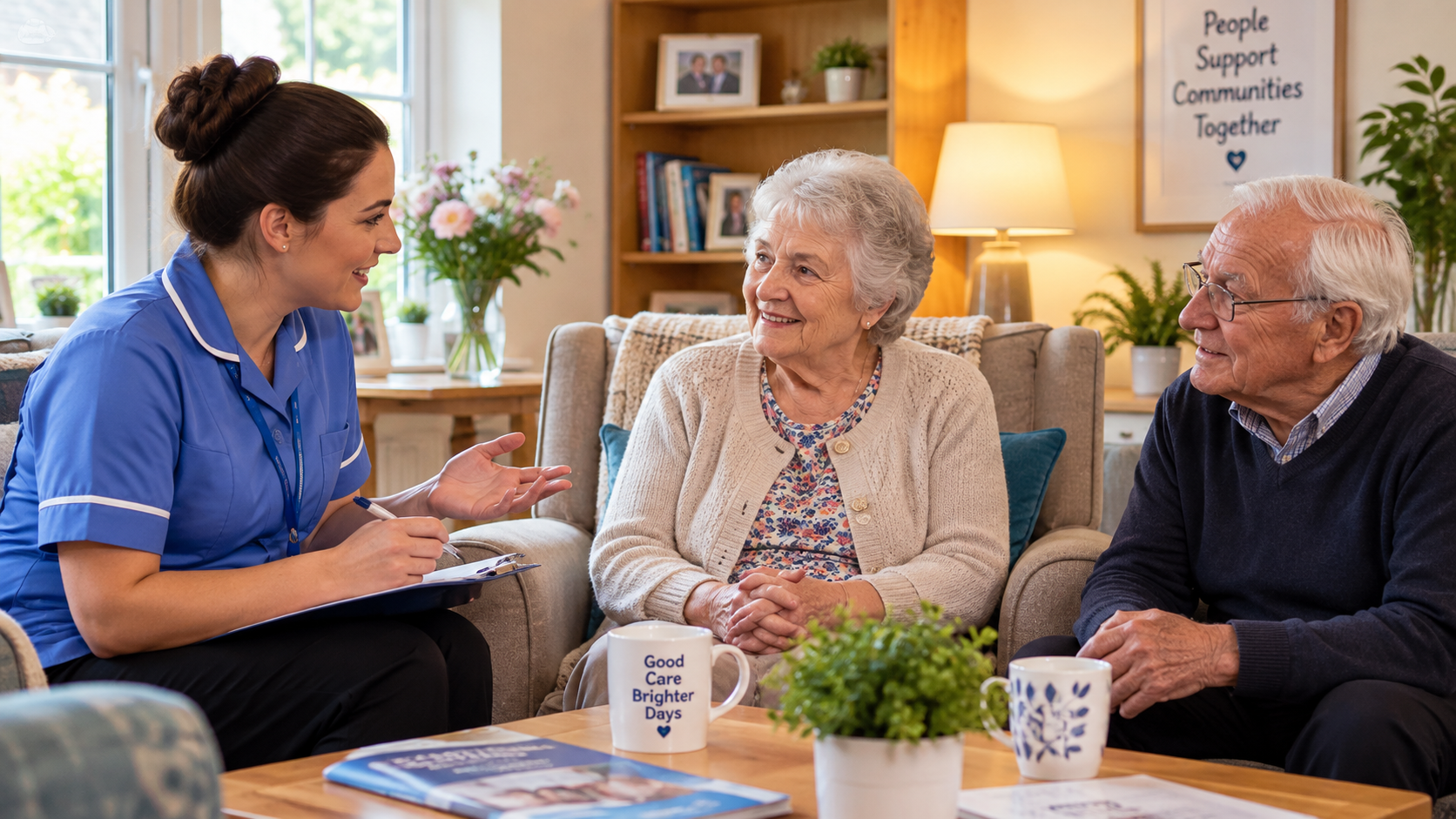
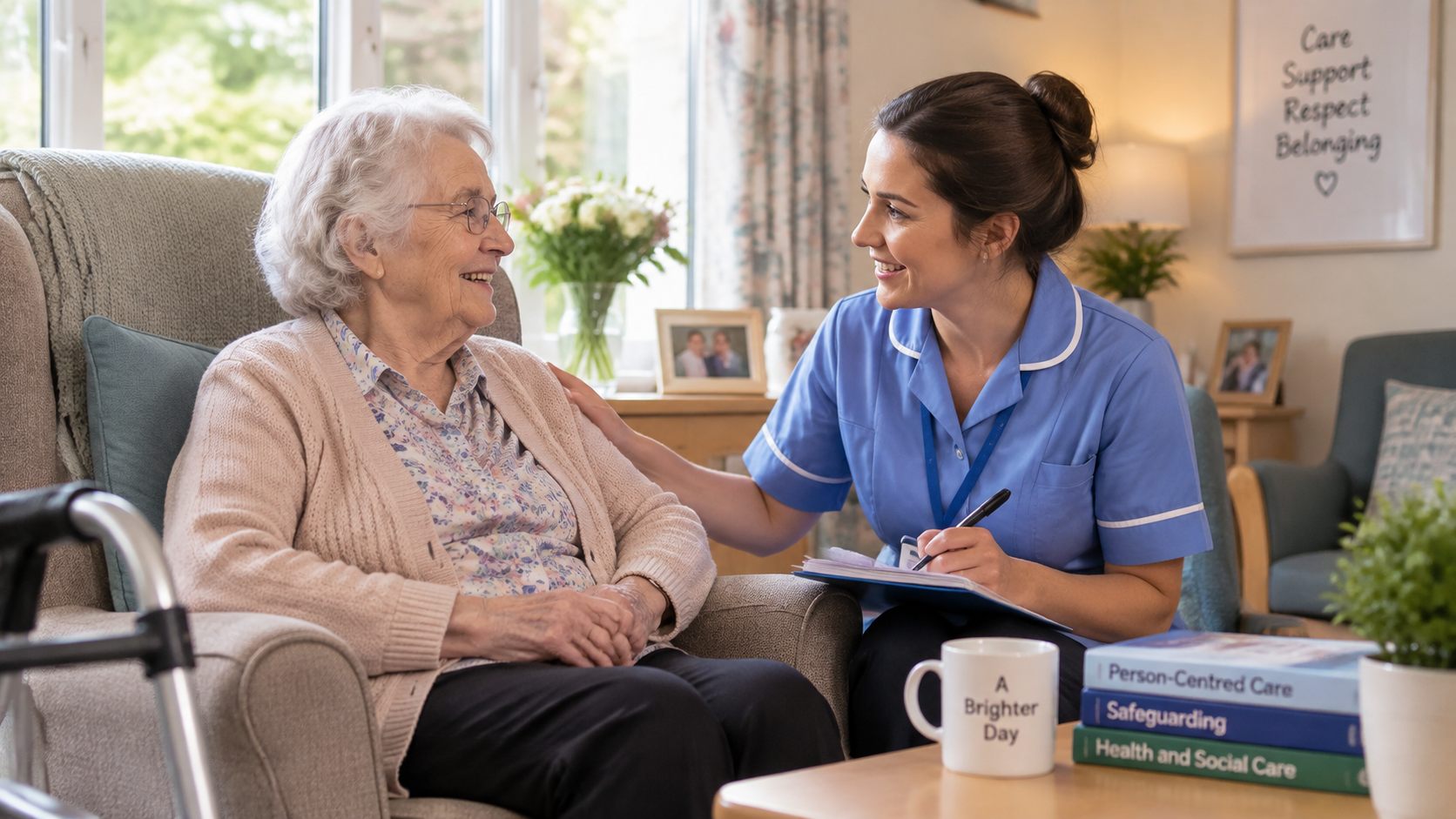
Observation in care is simply paying close attention to the person you support. You watch how they look, move, and behave. You also listen to what they say and notice anything different from their usual self. These small details matter because they show you how the person is really doing.
When you observe someone, you might notice things like:
- How they look for example, pale skin or tired eyes
- How they move such as walking slower or needing more support
- How they sound including short breathing or a shaky voice
- What they tell you like pain, worry, or discomfort
You focus on the facts, not guesses. And because of that, your observations help the whole team understand the person better. When you observe well, you can spot problems early and support the person in a safer, more consistent way.
Preparation Before You Observe and Record

Good observation starts before you even begin watching or writing. When we prepare properly, we stay focused, notice more, and record details that actually help the team. Below is a simple, structured way to get ready.
1. Know the Person
Before observing, you should remind yourself of the person’s usual behaviour. This helps you spot changes quickly.
- How they normally move
- How they usually speak
- Their typical mood or routine
This baseline makes your observations more accurate.
2. Know What You Need to Observe
It is easier to stay focused when you know what you are looking for. You may need to check:
- Mood or behaviour changes
- Eating or drinking patterns
- Mobility or balance
- Pain, discomfort, or breathlessness
Clear goals help you avoid missing important details.
3. Gather the Right Tools
Before you begin, make sure you have what you need.
- Pen or digital device
- Correct recording form
- Space for time and date
- A quiet moment to concentrate
Having everything ready saves time and prevents mistakes.
4. Stay Neutral and Calm
Try to observe without guessing or assuming. When you stay calm and open minded, you can focus on the facts. This also keeps the person comfortable, which makes your observations more accurate.
The Golden Rules for Accurate Recording (The Core Principles)
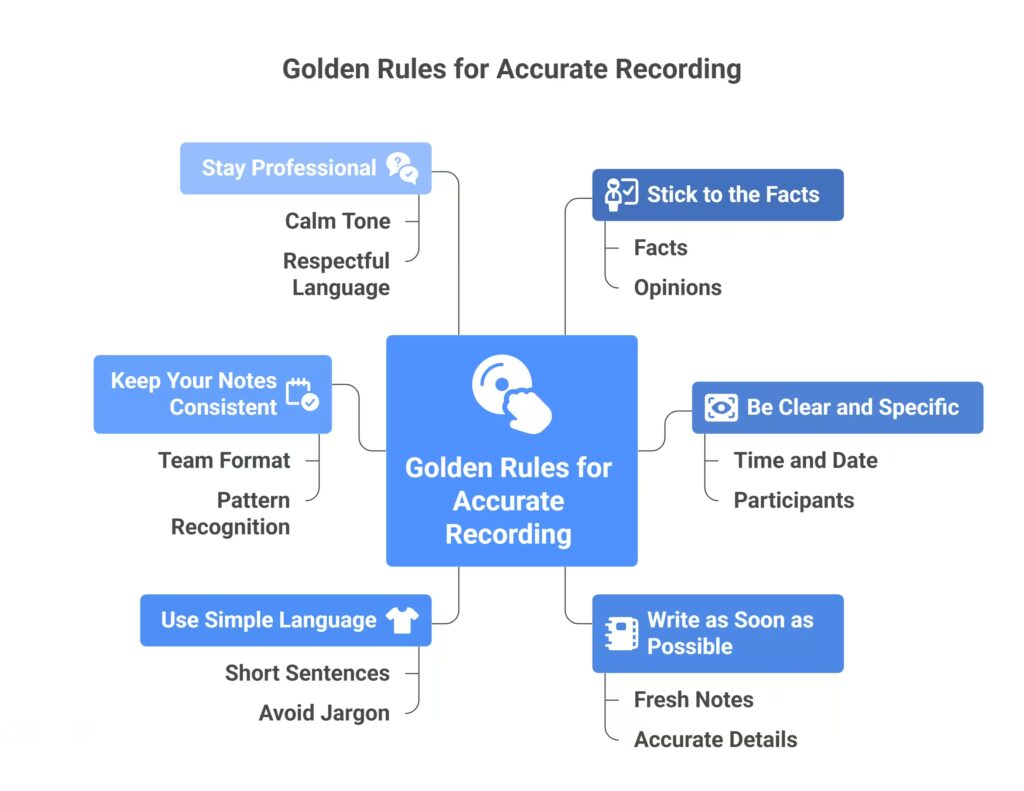
Clear and accurate notes make care safer, so we need simple rules we can follow every day. When we stick to these core principles, our records stay useful, honest, and easy for the whole team to understand.
1. Stick to the Facts
You should write only what you see, hear, or are told.
- “Resident walked with a limp” is a fact
- “Resident is lazy” is an opinion
This rule matters because facts help others make the right decisions, while opinions can confuse the situation.
2. Be Clear and Specific
Your notes should paint a clear picture. You can do this by including details such as:
- The exact time and date
- What happened
- Who was there
- The person’s own words, if relevant
When you are specific, you remove guesswork for the next member of staff.
3. Write as Soon as Possible
We forget small details quickly, so it is better to record your observation straight away. And when you write in the moment, your notes stay fresh and accurate.
4. Use Simple Language
Short, plain sentences are easier for everyone to read. This helps your team respond quickly and reduces the chance of mistakes. Avoid jargon unless it is part of your setting’s standard terms.
5. Keep Your Notes Consistent
If your team uses a certain format, stick to it. This makes it easier for others to follow patterns and compare changes over time.
6. Stay Professional
Even when the situation is stressful, your notes should stay calm and respectful. This protects the person’s dignity and keeps the record professional at all times.
By following these golden rules, we keep our recording clear, helpful, and reliable. These simple habits make a big difference in how well we support the people in our care.
Conducting The Observation ― Best Practices in The Moment
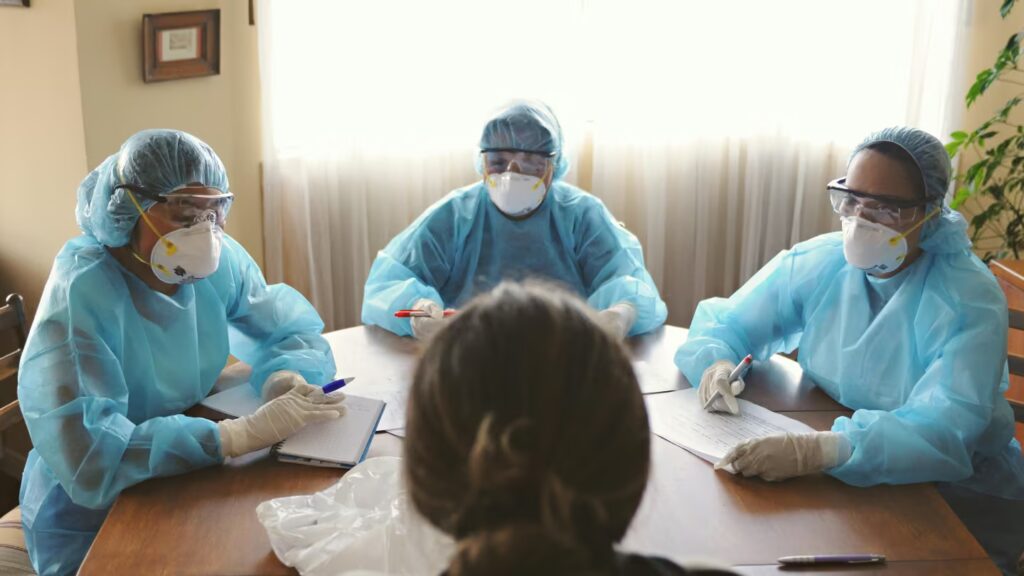
When it is time to observe, the way you handle the moment matters just as much as what you write later. If we stay calm, focused, and present, we notice the things that truly help us understand the person. Below are key habits that make your observations clearer and more accurate.
1. Stay Present and Pay Attention
Try to give the person your full focus. Even small changes can be important.
- Watch their movements
- Listen to their tone of voice
- Notice pacing, breathing, or facial expressions
Because you stay present, you catch changes you might miss if you rush.
2. Keep a Natural Distance
You should stay close enough to notice details, yet not so close that the person feels watched. A relaxed distance helps them behave naturally, which makes your observation more accurate.
3. Avoid Interrupting
While observing, try not to step in unless the person needs help. When we interrupt, we sometimes change what is happening. Instead, let the moment unfold so you get a true picture of their behaviour.
4. Look for Consistency and Change
As you observe, compare what you see to the person’s usual behaviour.
- Are they moving slower than normal?
- Are they quieter or more restless?
- Are they eating or drinking less than usual?
These small differences often point to early signs of change.
5. Use All Your Senses
Observation is not just about looking. You may also:
- Hear unusual breathing or tone
- Smell something unusual, like alcohol or strong breath
- Feel warmth or swelling if assisting with care tasks
This wider awareness helps you build a complete picture.
6. Stay Neutral
Although it is easy to assume, try to stick to what is happening right now. When you stay neutral, your observation becomes more trustworthy.
If you want guided practice on how to observe in the moment, HF Online’s Observation Skills for Carers course offers clear scenarios and step-by-step methods that build your confidence.
Recording The Observation Accurately
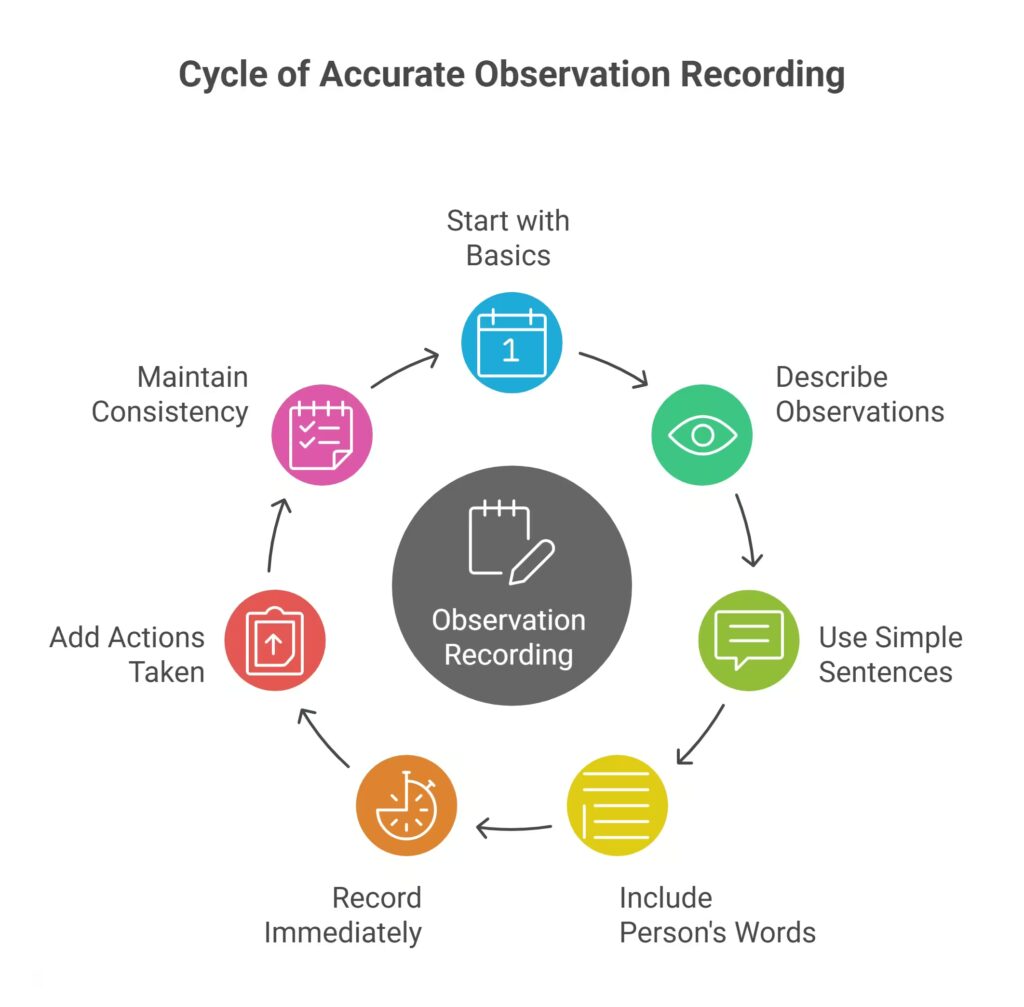
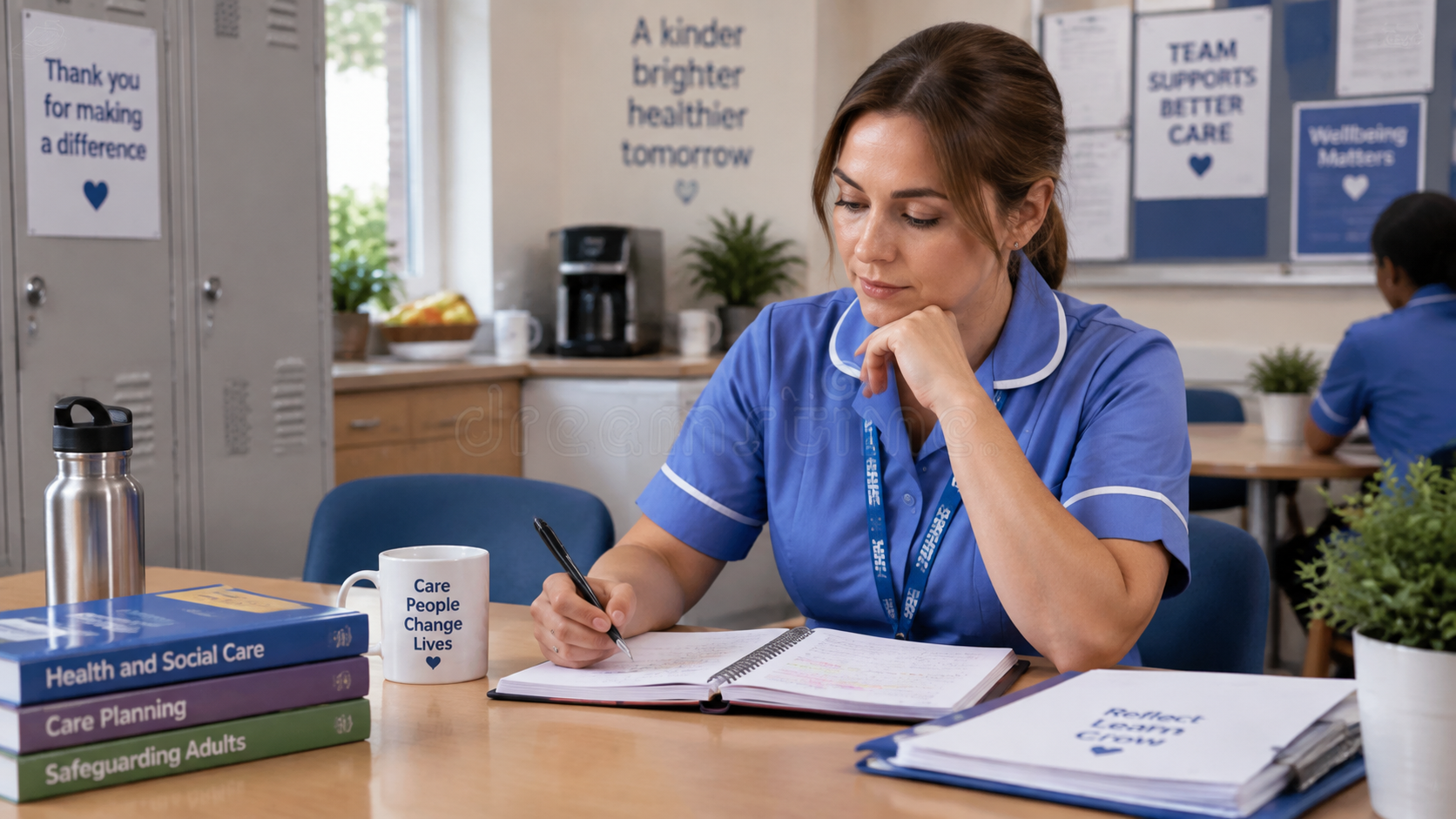
Once you have observed the person, the next step is writing it down clearly. This is the moment where your notes turn into information the whole team can use. When we record carefully, we reduce mistakes and give others a true picture of what happened.
1. Start With the Basics
You should always begin with the simple details.
- Date
- Time
- Location
- Your name and role
These basics keep the record clear and traceable.
2. Describe What You Saw
Try to write exactly what happened. Avoid guessing or adding personal opinions.
- Instead of “He looked unwell,” write “He was sweating and holding his chest.”
- Instead of “She was upset,” write “She cried and said her pain was getting worse.”
Because you stick to facts, your notes stay reliable.
3. Use Short and Simple Sentences
Clear writing helps everyone.
- Keep sentences short
- Use everyday words
- Avoid jargon unless your workplace uses it
When your writing is simple, your team can act on it faster.
4. Include the Person’s Own Words
If the person says something important, write their words exactly as they said them.
- For example: “My legs feel heavy today.”
Quoted speech often gives more insight than your interpretation.
5. Record Straight Away
You should write your notes as soon as you can. This reduces the chance of forgetting key details. And when you record right away, your memory is fresher and more accurate.
6. Add Any Actions Taken
If you did something after the observation, include it.
- Who you informed
- What you advised
- Any support given
This shows a complete picture of the event and your response.
7. Keep It Consistent
Try to follow the format your workplace uses. This makes it easier for the next person to understand your entry and compare it to previous ones.
Using technology and systems to support accurate recording
Today, many care settings use digital tools to make observation recording easier and more reliable. When we use these systems well, we save time and reduce mistakes. Technology does not replace good practice, yet it does support us in keeping records clear and consistent.
1. Digital Recording Systems
Many teams now use apps or electronic care plans. These systems help you:
- Record notes in real time
- Add photos when allowed
- Use checklists or prompts
- Share updates with the whole team quickly
Because everything is stored in one place, information becomes easier to find.
2. Automatic Time and Date Stamps
You no longer need to worry about forgetting the time. Digital systems often add this for you. This keeps your entries accurate and helps others track changes over time.
3. Templates and Structured Forms
Most platforms use simple templates that guide you through what to record.
- Observation boxes
- Drop down lists
- Action logs
- Body maps
These tools help you stay focused and reduce the chance of missing important details.
4. Alerts and Reminders
Some systems send reminders for regular checks. This can be helpful when the day gets busy. And because the reminders keep you on track, you are less likely to forget an important observation.
5. Safer Storage and Easy Access
Digital records are usually backed up and protected. This reduces the risk of lost paperwork and keeps sensitive information secure. At the same time, your team can access notes quickly when they need them.
6. Training Matters
Although technology helps, you still need training to use it well. When you understand the system, you record faster and more confidently.
Digital vs Paper-Based Recording
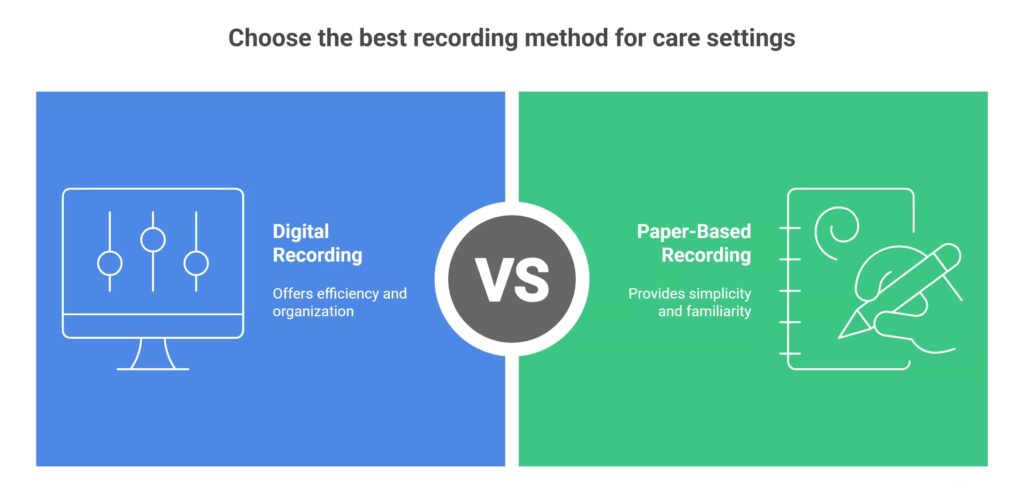
Both digital and paper-based methods are used in care, and each one has its own strengths. When we understand the differences, we can choose the method that works best for our setting. Below, we break down both options in a simple and clear way.
Digital Recording
Digital systems are becoming more common, and for good reason. They often help us work faster and stay organised.
Benefits include:
- Automatic time and date stamps
- Easy access for the whole team
- Clear templates that guide your notes
- Less risk of losing information
- Quick sharing of updates
However, you may still face challenges.
Possible drawbacks:
- You need training to use the system
- Devices need charging or a good internet connection
- Some staff may need time to adjust
Even so, digital tools can greatly improve accuracy when used well.
Paper-Based Recording
Paper notes are still used in many places. They are simple and familiar, which makes them comfortable for daily use.
Benefits include:
- No need for devices
- Easy to carry around
- Low cost
- Works even if the power or internet fails
But there are limits that we must keep in mind.
Possible drawbacks:
- Notes can be lost or damaged
- Writing may be hard to read
- No automatic time stamps
- Harder to track patterns or trends
While paper works, it requires extra care to keep records safe and clear.
Legal, Ethical and Confidentiality Considerations
Recording observations is not just a task. It involves handling private information, so we must protect the person’s rights at all times. When we follow the right rules, we keep care safe, respectful, and professional.
You should only record details that are relevant to the person’s care. Avoid opinions or unnecessary comments, because they can affect privacy and trust. Confidentiality is also essential. This means keeping paper notes secure, locking digital devices, and sharing information only with staff who genuinely need it.
You also have a legal duty to make sure your entries are clear, honest, and recorded in the proper way. If you make a mistake, you should correct it according to your workplace policy, not by deleting it. And even when recording sensitive issues, your language should remain neutral and respectful to protect the person’s dignity.
When we follow these simple principles, we support safe practice and ensure that every record is handled with care.
Conclusion
In the words of the Social Care Institute for Excellence, “Recording is not simply an administrative burden … it is part of good, person-centred support.” When we observe carefully and then write clearly, we make sure that everyone involved in care stands on the same page.
In conclusion, by preparing well, sticking to the facts, using the right tools, and respecting privacy, you help build a stronger care foundation. Your accurate notes become a powerful tool for safety, dignity and consistent support—every time you pick up your pen or open that record.