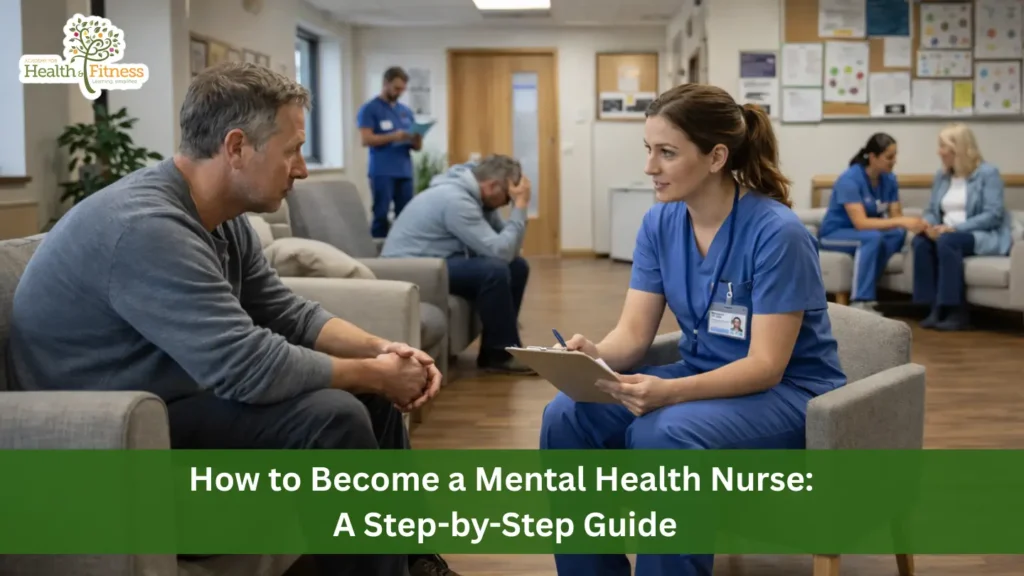


Mental health nursing has become one of the most important roles in UK healthcare. As more people seek support for anxiety, depression, trauma, and long-term mental health conditions, the need for skilled and compassionate nurses keeps rising.
In fact, over 1.4 million people accessed NHS mental health services in 2022 alone. At the same time, mental health nursing vacancies have increased by around 30% over the last decade. Because of this, employers across the UK actively look for trained mental health nurses, both newly qualified and experienced.
If you’re considering this career, you’re not alone. Many people choose mental health nursing because it offers job security, career progression, and the chance to make a real difference every day.
In this step-by-step guide, we’ll explain exactly how to become a mental health nurse in the UK. We’ll cover education routes, registration, specialisation, job options, salaries, and where demand is highest. By the end, you’ll have a clear picture of what the journey looks like and how to get started.
What Is Mental Health Nursing?
Mental health nursing is a specialised branch of nursing that focuses on supporting people with mental health conditions. These conditions can range from common issues such as stress, anxiety, and depression to more complex illnesses like bipolar disorder, schizophrenia, and severe personality disorders.
However, mental health nursing is not only about managing symptoms or giving medication. Instead, it focuses on building trust, supporting recovery, and helping people live meaningful lives.
Mental health nurses work closely with patients, families, doctors, psychologists, and social workers. Together, they create care plans that support both short-term needs and long-term wellbeing.
For example, a nurse in a hospital ward may help someone through an acute mental health crisis. Meanwhile, a community mental health nurse might support a person over months or years, helping them stay well at home and avoid hospital admission.
Because of this variety, no two days look the same in mental health nursing.
Why Choose a Career in Mental Health Nursing?

Before we dive into the steps, it helps to understand why so many people choose this path.
Strong Job Demand
Mental health services are under pressure across the UK. As a result, qualified mental health nurses are in demand in almost every region.
Because of staff shortages, many graduates find work quickly after qualifying.
Meaningful Work
Mental health nursing allows you to support people at some of the most difficult points in their lives. Over time, many nurses say the relationships they build with patients are the most rewarding part of the job.
Career Progression
With experience and further training, you can move into senior roles, specialist areas, leadership positions, or even teaching and research.
Flexible Work Settings
Mental health nurses work in hospitals, community teams, schools, private clinics, and specialist services. This flexibility allows you to shape your career around your interests.
Step 1: Understand the Role and Responsibilities
Before starting your training, it’s important to understand what the job involves.
Mental health nurses typically:
- Assess patients’ mental health needs
- Develop and review care plans
- Administer medication safely
- Support patients during mental health crises
- Work closely with families and carers
- Promote independence and recovery
Although the work can feel emotionally demanding at times, strong support systems exist within teams. In addition, many employers offer wellbeing resources for staff.
Step 2: Choose the Right Educational Pathway
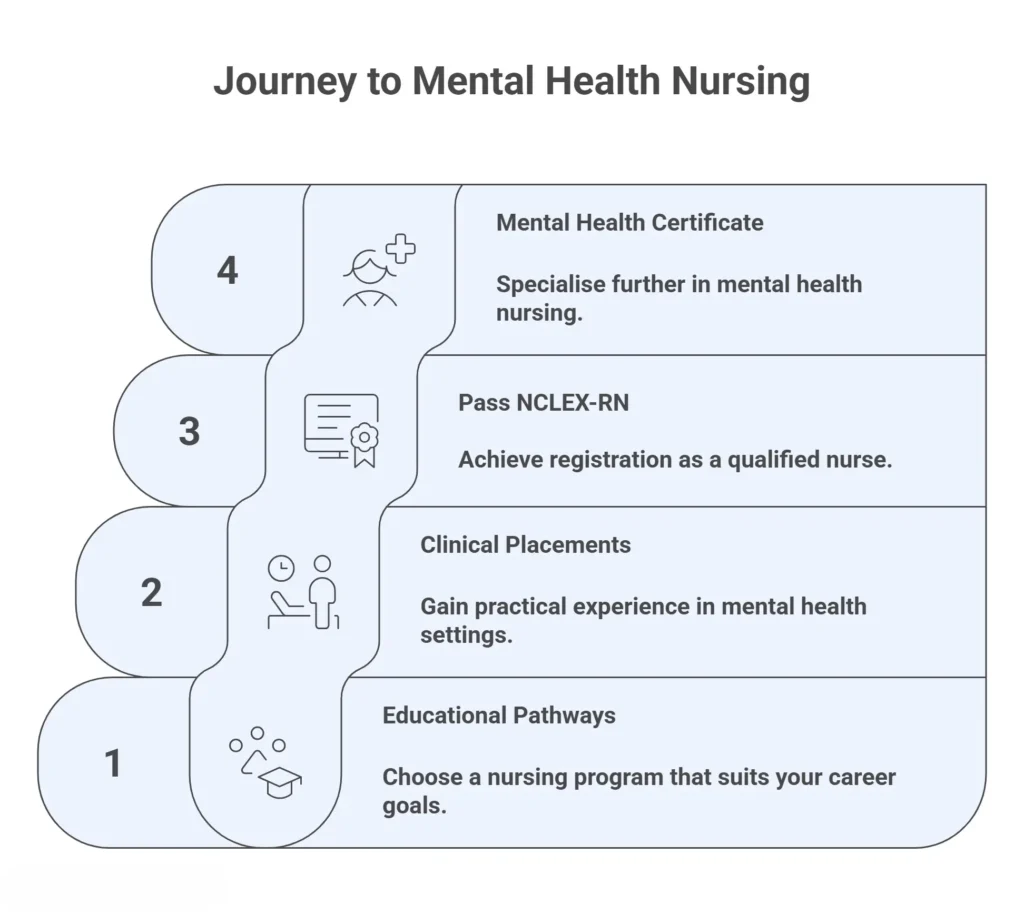
To become a mental health nurse in the UK, you must complete approved nursing education.
Bachelor of Science (BSc) in Mental Health Nursing
The most common and widely accepted route is a BSc (Hons) in Mental Health Nursing. This degree usually takes three years to complete full-time.
During the course, you’ll study subjects such as:
- Mental health theory and practice
- Psychology and human behaviour
- Psychiatric medication and treatment
- Mental health law and ethics
- Communication and therapeutic relationships
At the same time, you’ll complete clinical placements in real healthcare settings. These placements allow you to apply theory to practice while working under supervision.
Because of this structure, students graduate with both academic knowledge and hands-on experience.
Entry Requirements
Most universities ask for:
- A-levels or equivalent qualifications
- GCSEs in English and maths
- Evidence of interest in healthcare or mental health
Some universities also accept Access to Higher Education courses or relevant work experience.
Step 3: Complete Clinical Placements
Clinical placements form a large part of your nursing degree.
Throughout your course, you’ll rotate through different mental health settings, such as:
- Inpatient psychiatric wards
- Community mental health teams
- Crisis intervention services
- Specialist units (for example, addiction or forensic services)
These placements help you build confidence and develop practical skills. They also give you insight into which areas of mental health nursing you enjoy most.
For example, some students discover they prefer community work, while others thrive in fast-paced hospital environments.
Step 4: Register with the Nursing and Midwifery Council (NMC)

After completing your degree, the next step is registering with the Nursing and Midwifery Council.
The NMC regulates nurses in the UK and ensures professional standards remain high.
To register, you must:
- Complete an NMC-approved programme
- Meet health and character requirements
- Submit the required documentation
Once registered, you can legally practise as a mental health nurse in the UK.
Unlike the US, the UK does not use the NCLEX exam. Instead, your degree and training act as proof of competence.
Step 5: Start Working as a Mental Health Nurse
Once registered, you can apply for mental health nursing roles.
Many newly qualified nurses begin their careers within the National Health Service, although private employers also recruit graduates.
At this stage, you’ll continue learning on the job. Most employers offer preceptorship programmes, which provide extra support during your first year of practice.
Because of this support, new nurses gain confidence while developing safe and effective practice.
Step 6: Specialise and Develop Your Career
Although your degree qualifies you as a mental health nurse, many nurses choose to specialise further.
Continuing Professional Development (CPD)
CPD allows you to build expertise in specific areas, such as:
- Cognitive Behavioural Therapy (CBT)
- Crisis intervention
- Substance misuse
- Child and adolescent mental health
- Forensic mental health
Over time, these additional qualifications help you progress into senior or specialist roles.
Postgraduate Certificates and Diplomas
Some nurses also complete postgraduate qualifications in mental health or advanced practice. These programmes often lead to higher responsibility and increased pay.
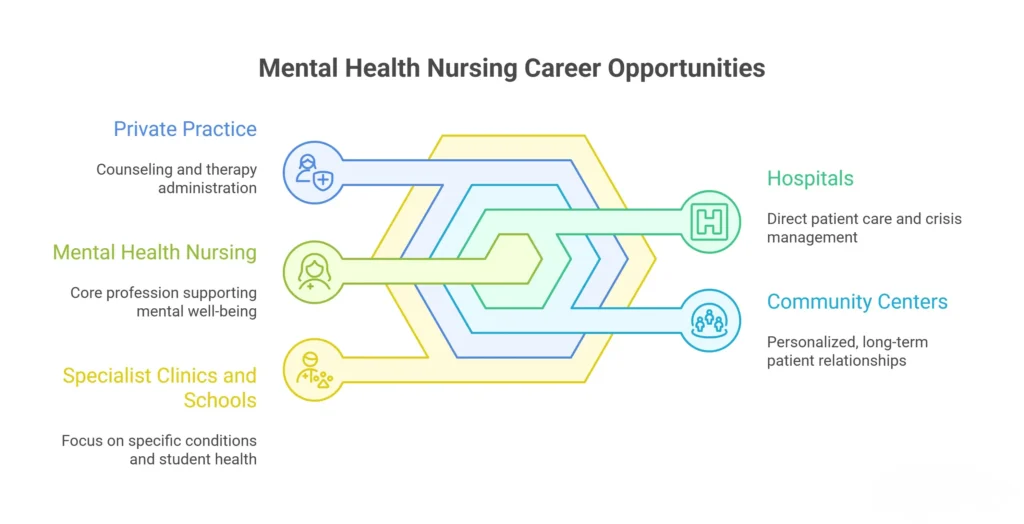
Where Do Mental Health Nurses Work?
Mental health nurses work across a wide range of settings.
Hospitals
In hospitals, nurses support patients during acute mental health episodes. They monitor symptoms, administer treatment, and provide emotional support.
Community Mental Health Services
Community roles focus on long-term care. Nurses often visit patients at home, run clinics, and work with families and support services.
Because of this, community nurses often build strong, long-term relationships with patients.
Specialist Clinics and Rehabilitation Centres
These settings include addiction services, eating disorder clinics, and rehabilitation units. Nurses here often develop advanced skills in specific conditions.
Schools and Universities
Many educational institutions now employ mental health nurses to support students’ wellbeing. These roles focus on early intervention and prevention.
Private Practice
Some experienced nurses move into private clinics or work alongside psychiatrists and therapists. These roles may offer higher pay and more flexibility.
Mental Health Nurse Vacancies in the UK
Current Situation
The UK currently faces a shortage of mental health nurses. Reports show over 10,000 vacancies across NHS mental health services.
This shortage increased after the COVID-19 pandemic, which placed extra strain on mental health care.
As a result, job prospects remain strong for qualified nurses.
Areas with High Demand
London
Large hospitals and specialist centres create consistent demand for mental health nurses.
Regional NHS Trusts
Areas such as Greater Manchester, the West Midlands, and the North East struggle to fill roles, especially in community services.
Scotland and Wales
Rural areas face particular challenges, which creates opportunities for nurses willing to relocate.
Specialist Facilities
Addiction centres and psychiatric hospitals often need experienced nurses with specialist training.
Mental Health Nurse Salary in the UK

Average Salary
Most mental health nurses earn between £25,000 and £40,000 per year. However, experience, role, and location affect earnings.
Salary by Experience Level
Newly Qualified Nurses (Band 5)
£25,000 to £28,000 per year.
Mid-Level Nurses (Band 6)
£30,000 to £35,000 per year. These roles often include added responsibility or specialist skills.
Senior Nurses and Advanced Practitioners (Bands 6–7)
£40,000 to £50,000 or more, particularly in leadership or specialist roles.
Location-Based Differences
Mental health nurses in London and the South East earn more due to cost-of-living allowances. Meanwhile, regional areas may offer faster career progression because of staff shortages.
NHS vs Private Sector
The NHS provides stable pay and benefits. However, private employers sometimes offer higher salaries for experienced nurses, especially in specialist roles.
A Real-Life Example
Take James, for example. He studied mental health nursing at university in Leeds. During his placements, he discovered a passion for community mental health work. After qualifying and registering with the NMC, he joined a local community team.
Over time, James completed CPD courses in crisis intervention and substance misuse. Five years later, he moved into a Band 6 role, supporting complex cases and mentoring new nurses. His additional training helped him progress faster and choose work that matched his interests.
Skills You Need to Succeed as a Mental Health Nurse
To thrive in this role, you’ll need more than academic knowledge.
Key skills include:
- Strong communication
- Emotional resilience
- Empathy and patience
- Problem-solving skills
- Teamwork and collaboration
Although these skills develop over time, having a genuine interest in mental health makes a big difference.
Final Thoughts
Becoming a mental health nurse in the UK involves clear steps: completing an approved degree, gaining hands-on experience, registering with the NMC, and continuing to develop your skills.
While the journey requires commitment, the rewards are significant. You gain a stable career, strong job prospects, and the chance to make a real difference in people’s lives.
If you’re passionate about mental health and want a role that truly matters, mental health nursing could be the right path for you. With demand continuing to rise, now is an excellent time to take the first step.