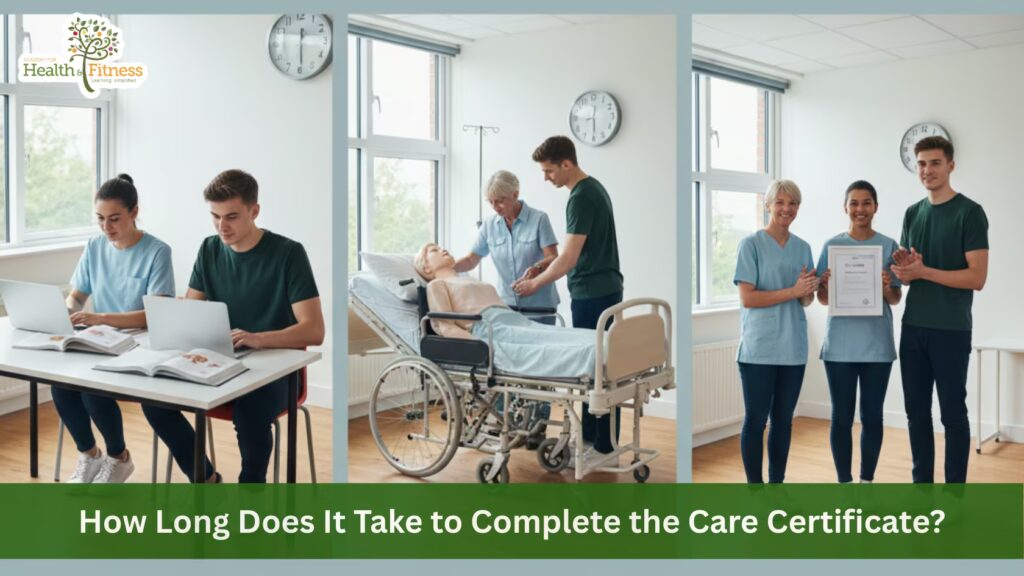




How Long Does It Take to Complete the Care Certificate?

A general guideline
For a full‑time worker with no prior care experience, the certificate usually takes around 12 weeks. This timeframe allows you to study each standard, practise the skills in your job and gather evidence for assessment. It’s not a strict deadline but a guideline – some people finish sooner, others need more time. The key is to balance learning with your day‑to‑day responsibilities.
Variations in time
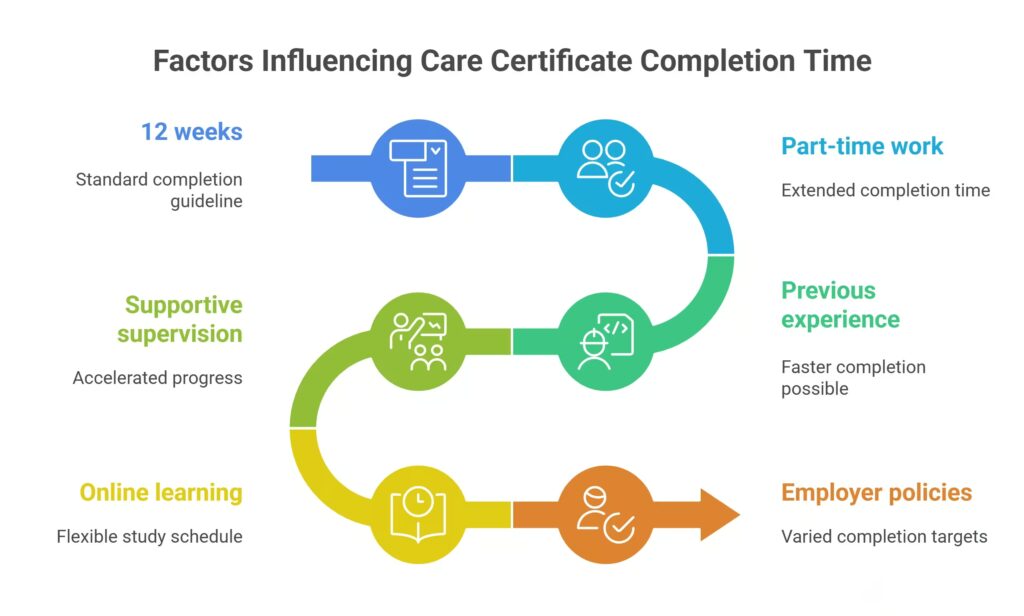
The actual completion time depends on:
- Working hours: If you work part‑time or have irregular shifts, you might need more than 12 weeks to study and demonstrate all the standards.
- Previous experience: If you’ve worked in care before, you may find you already have knowledge or skills in some areas. In such cases you could complete certain standards more quickly.
- Support and supervision: Having a supportive supervisor or mentor can speed up your progress. They’ll help you practise skills and sign you off when you’re ready.
- Learning format: Online courses allow you to fit study sessions around your schedule. Classroom‑based or face‑to‑face sessions may take longer if they’re scheduled infrequently.
- Employer policies: Some organisations set their own completion targets, though most follow the 12‑week guideline. Others might phase sign‑off as you demonstrate competence in different areas.
It’s important to remember that the quality of your learning matters more than finishing quickly. Rushing through can leave gaps in your understanding and confidence.
How the Care Certificate is Structured (The Process)
Completing the Care Certificate involves these steps:
- Enrol through your employer or a trusted online provider. Many care homes and NHS trusts incorporate the certificate into their induction. If you’re using an online provider such as HF Online Learning, you’ll have access to all 16 standards and interactive study materials.
- Work through the standards one by one. Each standard has learning outcomes you need to understand. You’ll read, watch videos and answer knowledge questions.
- Reflect and gather evidence. Keep a simple journal of how you apply what you’re learning at work. This could be noting how you communicated with a service user or managed a safety procedure.
- Get assessed by a supervisor or assessor. Your manager will observe you performing tasks or discuss your evidence with you. You must demonstrate both knowledge and competence before each standard is signed off.
- Receive your certificate. Once all standards are signed off, your employer will award your certificate. You can take it to future jobs as proof of your training.
How to Complete the Care Certificate Faster (Without Rushing)
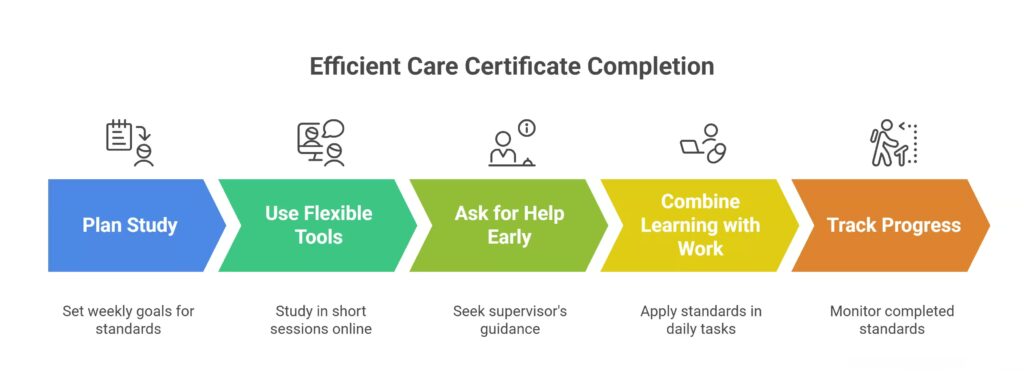
If you’d like to finish sooner, there are ways to be efficient without compromising on quality:
- Plan your study. Set a goal to complete one or two standards each week. This makes the task manageable and keeps you focused.
- Use flexible learning tools. Online platforms such as HF Online Learning let you study in short sessions (around 20–30 minutes per module) and return whenever you have time.
- Ask for help early. Speak to your supervisor about areas you’re unsure of. They can arrange opportunities for you to practise and be assessed.
- Combine learning with work. Look for ways to apply the standards during everyday tasks. For example, you might practise good communication while serving meals or demonstrate infection control when supporting a service user.
- Track your progress. Use checklists or a simple spreadsheet to see which standards you’ve completed. This keeps you motivated and organised.
Why the Care Certificate is Worth Taking Your Time

Completing the Care Certificate isn’t just about ticking boxes; it’s about building confidence, competence and compassion. Taking the time to learn each standard thoroughly helps you:
- Provide better care. You’ll understand how to protect dignity, respect diversity and communicate effectively.
- Stay safe. You’ll learn the correct procedures for safeguarding, health and safety and infection control.
- Advance your career. A solid understanding of the fundamentals makes it easier to move on to advanced qualifications or leadership roles.
- Earn trust. Service users and families can feel more confident in your skills when they know you’ve completed a recognised training programme.
How Long Is the Care Certificate Valid For?

Once you’ve earned your Care Certificate, the good news is — it doesn’t expire. It’s yours for life. The certificate shows that you’ve met the national standards for care, and you don’t have to redo it every few years.
That said, care work never stands still. Regulations change, new practices emerge, and refresher training is encouraged. Most employers will ask you to keep your knowledge up to date through ongoing learning, supervision, and annual competency checks. Think of the Care Certificate as your starting point — the foundation you’ll keep building on throughout your career.
Conclusion
Completing the Care Certificate isn’t about rushing through modules — it’s about building real confidence in what you do. Whether it takes you eight weeks or twelve, every standard you cover helps you grow into the kind of carer people can truly rely on.
Take your time, ask questions, and keep learning. The goal isn’t just to get certified — it’s to give the best care you can, every single day.