The future of healthcare is no longer just about stethoscopes and sterile environments. As technology rapidly transforms every facet of our lives, the health and social care sectors are undergoing a profound digital revolution. From AI-powered diagnostics to robotic-assisted surgery, the integration of technology is not just an option—it’s a necessity. This shift demands a fundamental rethinking of how we educate the next generation of healthcare professionals.
A study from The Lancet found that 87% of medical schools in the U.S. have adopted some form of digital or AI-based simulation training to enhance learning. This includes virtual patient simulations and diagnostic tools that help students practise and refine their skills.
In this blog, we’ll explore how AI and innovative technologies are reshaping health and social care education, offering insights into the tools and trends that are revolutionising training methods and equipping future professionals for success.
The Need for Innovation in Health and Social Care Education
The health and social care sector is under growing pressure from an aging population and complex healthcare needs. Traditional education methods are struggling to keep up with these challenges, creating a gap in the skills of professionals. It’s clear that we need to innovate how we train healthcare workers.
With advances in technology like telemedicine and AI, healthcare professionals must be trained to use these tools effectively. Without this knowledge, they may struggle to provide optimal care. Modernising education is essential to close this gap.
The global shortage of healthcare workers also highlights the limitations of traditional training. We need more flexible, accessible, and scalable education solutions. Technology can help meet this demand by providing efficient, impactful learning experiences.
In today’s rapidly evolving world, health and social care education must keep pace with technological advancements. By embracing innovation, we can ensure that future professionals are ready to meet the challenges of modern healthcare.
The Rise of AI and Tech in Health & Social Care Education
In recent years, AI and technology have made significant strides in health and social care education. What once seemed like futuristic ideas are now becoming everyday tools. From virtual simulations to personalised learning, these innovations are reshaping how students are trained.
AI-Powered Personalized Learning
- AI platforms offer customised learning experiences tailored to individual students.
- These systems adapt to each student’s pace and areas of improvement.
- Personalised learning helps students focus on their weaknesses, making education more efficient.
Virtual and Augmented Reality (VR/AR)
- VR/AR technologies allow students to practise real-life scenarios in a controlled, risk-free environment.
- Simulations include surgeries, patient interactions, and emergency situations.
- These tools offer hands-on practice without the potential dangers of real-world training.
AI in Assessment and Feedback
- AI tools track students’ progress in real time and provide instant feedback.
- Data analytics help educators understand each student’s strengths and weaknesses.
- This allows for quicker adjustments in teaching strategies and improves overall learning outcomes.
The rise of AI and technology is transforming health and social care education by making learning more engaging, accessible, and tailored to individual needs. As these technologies continue to evolve, they will offer even more opportunities for enhancing the training of future healthcare professionals.
AI-Powered Learning Platforms and Tools
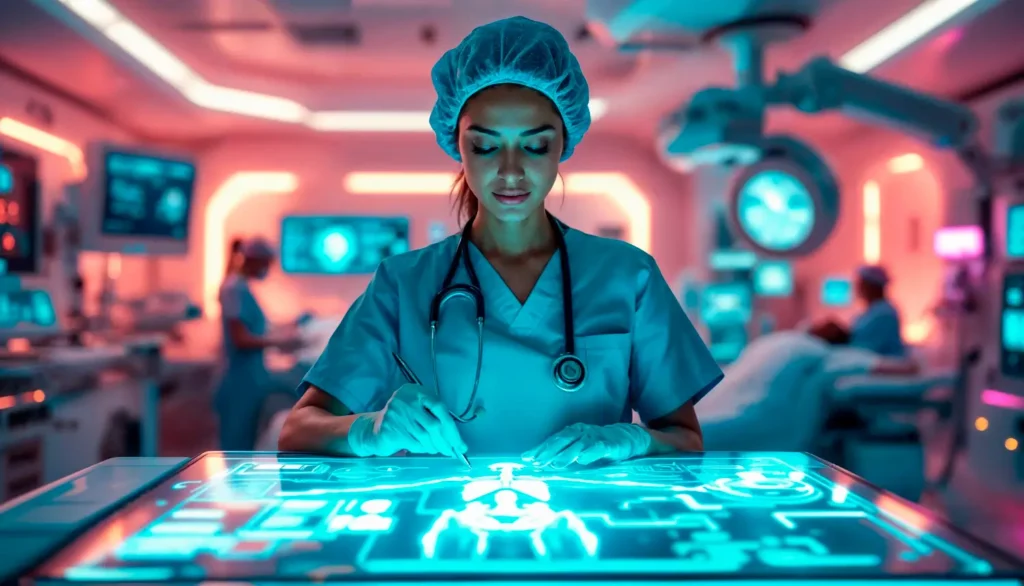
In health and social care education, several AI-powered platforms and tools are making a significant impact on how students learn and practise their skills. These platforms enhance the learning experience by offering personalised content, simulations, and real-time feedback.
Simulations and Virtual Learning Environments
- Osso VR: A platform that uses virtual reality (VR) to simulate medical procedures. It helps students practise surgeries and other procedures in a risk-free, immersive environment.
- Touch Surgery: An AI-powered surgical simulation platform that allows students to practise surgeries and medical scenarios virtually, providing feedback on technique and decisions.
Personalized Learning Platforms
- Cerego: This platform uses AI to adapt to the learner’s progress and provides personalised learning paths. It helps students retain information by adjusting the content based on their strengths and weaknesses.
- Knewton: An AI-driven learning tool that tailors educational content to each student’s needs, ensuring that they focus on areas where they need the most improvement.
Clinical Decision-Making Tools
- IBM Watson Health: An AI tool that helps healthcare professionals learn to make data-driven decisions. It analyses large volumes of medical data to assist students in diagnosing and treating patients in a virtual setting.
These platforms and tools are reshaping how students are educated in health and social care by providing real-time feedback, hands-on simulations, and personalised learning experiences. With the help of AI, students can acquire the necessary skills and knowledge in a more engaging and efficient way.
Virtual Reality (VR) and Augmented Reality (AR) in Healthcare Training
VR and AR are revolutionising healthcare training by offering immersive, hands-on experiences. Here’s how they are changing the way students learn:
Virtual Reality (VR)
- Provides a fully immersive 3D environment for simulating medical procedures.
- Enables students to practise surgeries and patient care scenarios safely.
- Helps build confidence and improve skills without the risk of real patient harm.
Augmented Reality (AR)
- Overlays digital information on the real world, enhancing learning.
- Visualises complex anatomy or medical procedures step-by-step.
- Used to guide students during actual procedures, improving understanding.
Key Benefits
- Allows students to repeat exercises and practice until they feel confident.
- Reinforces learning and improves retention through practical repetition.
- Combines with traditional methods to create more engaging and effective training.
VR and AR are making healthcare education more interactive, preparing students for real-world challenges with practical, risk-free experiences.
Data Analytics and Predictive Tools for Educators
AI is enhancing how educators use data to improve student learning. With data analytics, AI can identify patterns and trends to help understand each student’s progress. This provides valuable insights into strengths, weaknesses, and areas for improvement.
Benefits of AI-Powered Data Analytics
- Personalised Learning: Tools like Knewton and Cerego adapt content based on student performance, ensuring focused learning.
- Real-Time Feedback: AI provides instant feedback, allowing students to adjust and improve continuously.
Predictive Tools in Healthcare Education
- IBM Watson Education: Predicts which students need extra support based on learning patterns.
- Early Intervention: Helps educators provide timely assistance before students fall behind.
Improving Curriculum Effectiveness
- AI analyses student performance to assess the effectiveness of training programs.
- Helps refine the curriculum to enhance learning outcomes and ensure real-world readiness.
Telemedicine and Remote Learning Integration

Telemedicine and remote learning are becoming vital parts of healthcare education. These tools make education more accessible, especially for students in underserved areas. By integrating telemedicine into learning, students can interact with real patients through virtual consultations and gain practical experience.
Expanding Access to Education
- Remote learning platforms allow students to attend classes from anywhere.
- Students in rural or remote areas can access quality education without the need to relocate.
- This flexibility ensures that more people can pursue a career in healthcare, regardless of location.
Real-World Experience with Telemedicine
- Telemedicine tools allow students to participate in virtual patient consultations.
- They gain experience in diagnosing and treating patients without being physically present.
- This type of learning helps students understand how healthcare is evolving in the digital age.
Benefits for Educators and Students
- Educators can use telemedicine to showcase real-world cases during lectures.
- Students can participate in live sessions with healthcare professionals, enhancing their learning experience.
- Remote learning also allows instructors to assess students’ abilities to handle real-time patient interactions.
The Impact of AI in Assessing Competencies
AI is revolutionising how competencies are assessed in health and social care education. It provides more accurate, efficient, and unbiased evaluations. Here’s how AI is changing the assessment process:
Real-Time Feedback
- AI tools offer instant feedback, helping students improve quickly.
- It tracks performance and provides suggestions for improvement right away.
Objective Assessments
- AI ensures consistent and unbiased evaluations based on student performance.
- This leads to fairer and more transparent competency assessments.
Simulated Competencies
- AI-driven simulations assess skills like diagnosis and decision-making.
- Students can repeat scenarios to master competencies before real-world application.
AI is making competency assessments more effective, ensuring that students are well-prepared for healthcare challenges.
Ethical Considerations of AI in Health Education
AI brings many benefits to health education, but there are ethical concerns to address. One key issue is data privacy, as AI systems often rely on sensitive personal data that must be protected.
Bias in AI algorithms is another concern. If the data used to train AI is biased, it could lead to unfair educational outcomes, affecting certain students negatively. There is also the question of AI replacing human educators. While AI enhances learning, it can’t replace the empathy and judgment that human teachers provide.
Finally, AI systems must be transparent. Students and educators should understand how AI makes decisions to ensure trust and accountability. AI has great potential, but we must ensure it’s used ethically, with a focus on fairness, privacy, and transparency.
Future Trends and Challenges
The future of health and social care education is full of exciting possibilities, driven by emerging technologies. One such technology is AI-powered robotics. These robots can be used to simulate patient interactions and assist in training students for complex procedures, providing a more hands-on learning experience.
Emerging Technologies: AI-powered Robotics and Big Data
- AI-powered Robotics: These robots can perform medical tasks and help students practise skills in a realistic environment.
- Big Data: By analysing vast amounts of data, AI can identify trends and improve the way we teach and assess students, making learning more tailored and efficient.
Potential Future Applications in Education
- AI in Personalised Learning: Future AI tools could offer even more personalised education, adapting lessons based on real-time performance data.
- Remote Healthcare Education: With advancements in telemedicine, students could gain more practical experience by interacting with real patients through virtual platforms.
Conclusion
AI and technology are undeniably reshaping health and social care education, offering more personalised, efficient, and immersive learning experiences. These innovations are helping students gain the skills they need while preparing them for the future of healthcare.
However, we must balance the benefits of these technologies with ethical considerations and ensure that they complement human educators. By doing so, we can create a more effective and accessible education system for the healthcare professionals of tomorrow.