



What Does Standard 16 Cover?
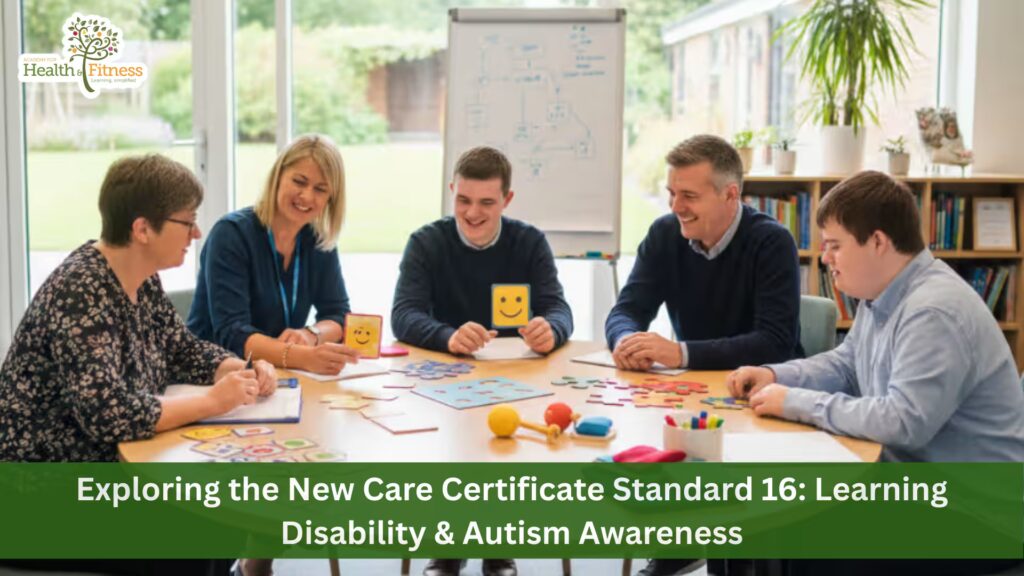
Standard 16 of the Care Certificate — Learning Disability & Autism Awareness — focuses on helping care workers understand how to support people with learning disabilities and autism in a way that’s compassionate, respectful, and person-centred. It’s about seeing the individual first, not the condition.
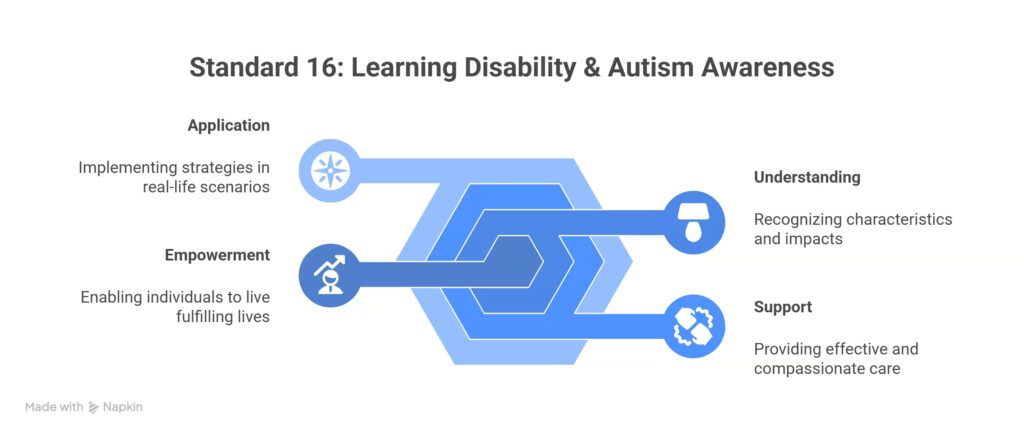
Here’s what it includes:
- Understanding the characteristics of learning disabilities and autism: Recognising that every person’s experience is different — no two individuals are the same. It’s about understanding behaviours, triggers, and communication styles unique to each person.
- The impact on individuals and families: Learning disabilities and autism don’t just affect one person — they affect whole families. Standard 16 helps care workers see the bigger picture and understand the emotional, social, and practical challenges involved.
- Providing effective support: From clear communication to consistent routines, care workers learn how to adapt their approach to meet individual needs. It’s about patience, empathy, and listening without judgment.
- Real-life application: Whether it’s supporting someone during mealtimes, managing sensory sensitivities, or helping with community inclusion, this standard teaches practical strategies that improve quality of life for those you care for.
Ultimately, Standard 16 helps care workers move beyond simply caring for someone to understanding and empowering them.
Why Was Standard 16 Added to the Care Certificate?

The introduction of Standard 16: Learning Disability & Autism Awareness didn’t happen by chance — it’s a response to a real and growing need within the care sector. Over the years, more people with learning disabilities and autism have begun accessing health and social care services, yet too often, they’ve faced barriers — from misunderstanding to a lack of tailored support.
This new standard aims to change that. It helps care workers build the knowledge and confidence to support people in a way that recognises their individuality, communication preferences, and sensory needs. In short, it’s about inclusive, person-centred care — care that respects differences and celebrates what makes each person unique.
Adding this standard also aligns with a wider shift across the sector toward more diverse and inclusive care environments. It reflects the commitment to equality, accessibility, and compassion — making sure every individual, regardless of ability or background, receives the understanding and dignity they deserve.
The Importance of Learning Disability & Autism Awareness in Care

Awareness changes everything. When care workers truly understand learning disabilities and autism, they’re not just completing tasks — they’re creating an environment where people feel safe, valued, and understood.
Care workers play a huge role in shaping how inclusive and supportive a care setting feels. By recognising how autism or a learning disability might affect communication, behaviour, or sensory experiences, carers can adapt their approach — speaking calmly, offering clear choices, or creating predictable routines. These small adjustments can make a massive difference in reducing anxiety and building trust.
It’s also about dignity, respect, and independence. When people feel listened to and supported in a way that suits them, they gain confidence. They’re able to make choices about their own lives, rather than having those choices made for them. That’s what true person-centred care looks like — care that empowers, not limits.
How Standard 16 Enhances Care Worker Skills
Standard 16 i a skill booster. It takes the knowledge care workers already have and strengthens it with deeper understanding and empathy. By learning about learning disabilities and autism, care staff gain new tools to communicate better, respond calmly in challenging situations, and create a more supportive environment for everyone they care for.
In practice, this means knowing how to adapt your approach. Maybe it’s using visual aids to explain daily routines, giving extra time for someone to process information, or creating a quiet space to avoid sensory overload. These simple adjustments can turn confusion into comfort — and frustration into trust.
The benefits flow both ways. For care workers, this awareness builds confidence and professionalism, making it easier to deliver care that truly meets individual needs. For service users, it means feeling seen, respected, and empowered to live more independently. When both sides grow together, the whole care experience improves — and that’s exactly what Standard 16 aims to achieve.
How Standard 16 Enhances Care Worker Skills
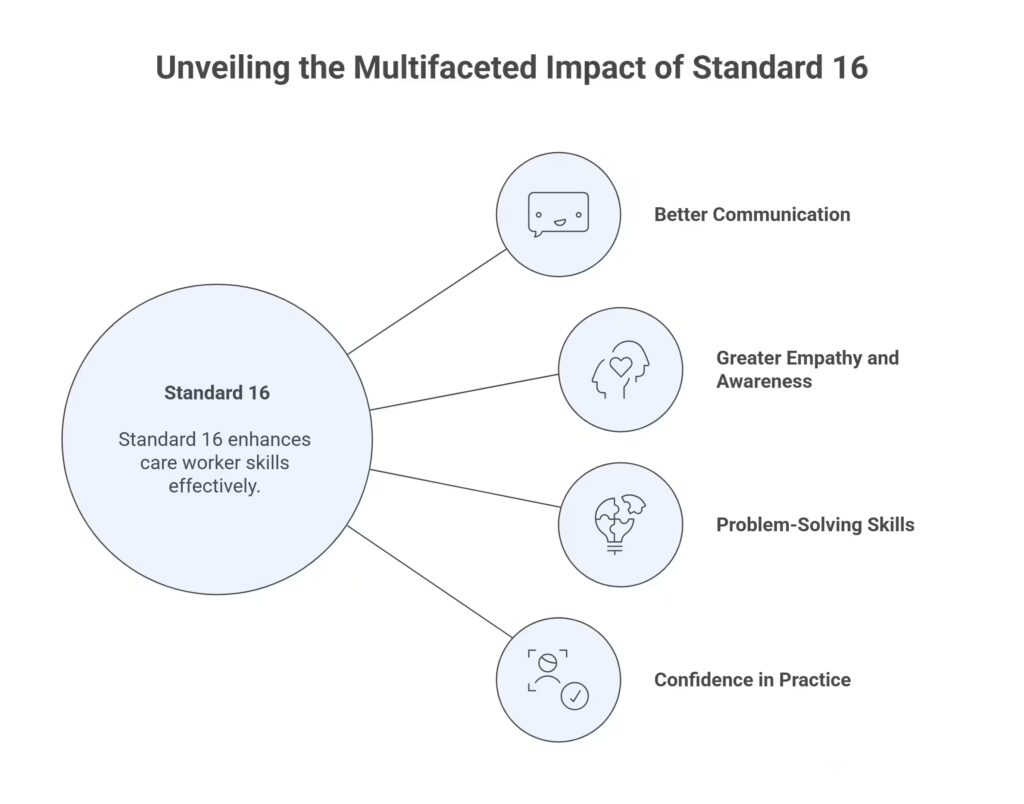
Standard 16 isn’t just another requirement — it’s a powerful tool for growth. It builds on the skills care workers already have, helping them understand how to support individuals with learning disabilities and autism in ways that are respectful, effective, and truly person-centred.
Here’s how it strengthens a care worker’s skillset:
- Better Communication: Learning to adapt tone, pace, and body language makes interactions smoother. Using clear, simple language or visual prompts can help service users understand and respond comfortably.
- Greater Empathy and Awareness: Understanding how autism or learning disabilities affect daily life allows care workers to respond with patience and compassion. It’s about seeing the world from the individual’s point of view.
- Problem-Solving Skills: When carers understand sensory triggers or communication barriers, they can identify challenges early and find creative, calm solutions.
- Confidence in Practice: Knowledge brings confidence. Carers become more assured in their approach, knowing how to respond appropriately in complex or unfamiliar situations.
In practical terms, applying Standard 16 might look like:
- Giving extra time for someone to process information before expecting a response.
- Offering structured routines to provide comfort and predictability.
- Reducing environmental noise and distractions for someone who’s sensory-sensitive.
- Encouraging independence by offering clear choices and positive reinforcement.
The benefits go both ways:
- For care workers: It leads to stronger professional development, better teamwork, and greater job satisfaction.
- For service users: It means safer, more compassionate care where they’re understood, respected, and supported to live with dignity.
When awareness becomes action, care transforms — and that’s exactly what Standard 16 helps make possible.
The Impact of Care Certificate Standard 16 on Service Users
Standard 16 has one clear goal — to make care more inclusive, respectful, and supportive for people with learning disabilities and autism. It shifts the focus from simply caring for someone to understanding them. That difference changes everything.
Here’s how it improves the experience for service users:
- Tailored, Person-Centred Support: Care workers trained under Standard 16 learn to adapt their approach to each individual’s needs. That might mean adjusting communication styles, using visual cues, or breaking down tasks into smaller, manageable steps. Every interaction becomes more personalised, reducing frustration and building trust.
- More Respectful and Empathetic Care: Awareness leads to empathy. When carers understand how sensory sensitivities or communication differences affect daily life, they treat people with more patience and respect — giving them space, time, and choice.
- A Supportive, Stigma-Free Environment: One of the biggest impacts of this standard is reducing stigma. It encourages care teams to see beyond labels and focus on ability, not limitation. That means celebrating individuality instead of making assumptions based on diagnosis.
For people receiving care, this shift means feeling safe, valued, and understood — not just looked after. It helps them build confidence, independence, and a stronger sense of belonging within their community. In short, Standard 16 doesn’t just change training — it changes lives.
How to Complete Care Certificate Standard 16

Completing Standard 16: Learning Disability & Autism Awareness follows the same structure as the other Care Certificate standards — a blend of learning, reflection, and assessment. But it’s more than ticking boxes; it’s about gaining a real understanding of how to support individuals with diverse needs.
Here’s how the process works:
- Learning Stage: Care workers start by studying the key topics — understanding learning disabilities, recognising characteristics of autism, and exploring how these conditions affect communication, behaviour, and daily life.
- Assessment Stage: After completing the learning modules, you’ll be assessed on your knowledge and understanding. This might include quizzes, reflective questions, or written evidence that shows you grasp the concepts and can apply them in your role.
- Practical Application: Managers or assessors observe how you put your learning into practice — for example, how you communicate with someone who has a learning disability or adapt your environment for an autistic service user.
To complete Standard 16 successfully, care workers can use a range of resources and training options, such as:
- E-learning courses (like those from HF Online or Skills for Care) that provide interactive lessons and scenarios.
- Face-to-face workshops or group sessions for discussion, reflection, and shared experiences.
- Workplace guidance and supervision, where managers provide feedback and help connect theory with real-life practice.
The role of managers is crucial. They guide staff through the process, monitor progress, and ensure that each standard — especially this new one — is properly understood and applied. A supportive manager will encourage reflection, offer constructive feedback, and create opportunities to observe good practice in action.
When done well, completing Standard 16 doesn’t just meet a requirement — it strengthens your ability to deliver truly inclusive, person-centred care that makes a genuine difference.
Why Care Certificate Standard 16 Is Crucial for the Care Sector

Standard 16: Learning Disability & Autism Awareness isn’t just another box to tick; it plays a pivotal role in shaping the future of care across the sector. As awareness of neurodiversity grows, it’s clear that a truly inclusive care system is essential for providing high-quality, respectful services to all individuals.
The long-term benefits for the care sector include:
- Improved Care Quality: When care workers are trained to understand learning disabilities and autism, they are better equipped to provide person-centred support that genuinely meets the needs of service users. The result? Fewer misunderstandings, better communication, and higher overall satisfaction.
- Better Service User Outcomes: People receiving care feel valued when their specific needs are understood. Standard 16 helps care workers create more inclusive environments, reducing isolation and encouraging service users to be more independent and engaged in their own care.
- Improved Team Dynamics: Care teams that are well-versed in working with individuals who have learning disabilities and autism are more cohesive. This training fosters a shared understanding and a unified approach to care, which improves collaboration and overall care delivery.
How Standard 16 Helps with Regulatory Compliance:
Standard 16 is recognised by regulatory bodies like the Care Quality Commission (CQC), which values inclusive, person-centred care. By ensuring all new staff complete this standard, employers can demonstrate compliance with CQC requirements and show that they’re committed to meeting high care standards. The certificate also helps organisations maintain their ratings and pass inspections by meeting those regulatory benchmarks.
The Future of Inclusive Care:
As society becomes more aware of neurodiversity, the care sector must continue evolving to meet the needs of all service users. Standard 16 sets a foundation for this change by ensuring that care workers are well-prepared to provide compassionate, inclusive care. It’s not just a one-off standard — it’s part of a growing movement toward continuous education and training that ensures the care sector can meet the needs of an increasingly diverse population.
Conclusion
Standard 16: Learning Disability & Autism Awareness is an essential addition to the Care Certificate, ensuring that care workers are equipped with the knowledge and skills to provide inclusive, compassionate support. This training is crucial not just for meeting regulatory standards but for fostering an environment where service users feel understood, respected, and empowered.
By completing this standard, care workers improve their ability to deliver high-quality care, enhance service user outcomes, and contribute to a more inclusive care environment. It’s a step forward in creating a care sector that truly values and understands the needs of everyone.