



Understanding the Updated Care Certificate Standard

The Care Certificate has recently been updated to include a stronger focus on equality, diversity, inclusion, and human rights. This change ensures that care workers are equipped with the necessary skills and values to create environments where everyone feels valued and respected, regardless of their background or personal circumstances. These updates are crucial as they reflect the growing recognition of the importance of inclusive care in promoting fairness, dignity, and well-being.
These changes were necessary to address the evolving needs of care recipients and ensure that care workers are prepared to support a diverse range of individuals. As our society becomes more diverse, it’s essential that care workers understand the cultural, emotional, and social factors that influence the lives of those they care for. By embedding equality and inclusion into care practices, we can create a more supportive and respectful environment for everyone.
In the context of care, equality, diversity, and inclusion mean recognising and respecting the differences that make each person unique while ensuring they receive the same high standard of care and support. This updated standard emphasises the importance of treating individuals with respect, promoting their rights, and working to eliminate discrimination and bias in every care setting.
Why Equality, Diversity, and Inclusion Matter in Care

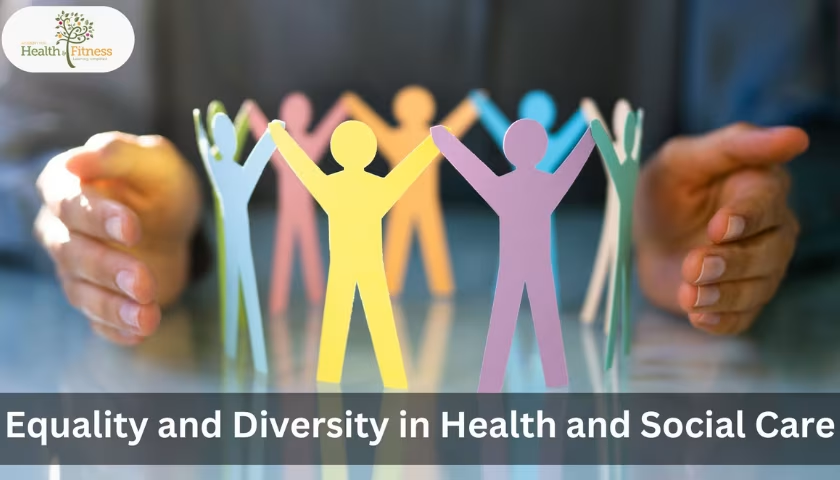
Equality, diversity, and inclusion are essential principles that shape how care is delivered.
- Equality ensures that everyone is treated fairly, with the same opportunities and support, regardless of their race, gender, disability, or background.
- Diversity celebrates the differences that make each person unique, recognising the value of different perspectives, experiences, and cultures.
- Inclusion means creating environments where all individuals feel valued, respected, and part of the community, fostering a sense of belonging for everyone.
Respecting human rights in care is crucial because it upholds the dignity, freedom, and autonomy of service users. Human rights principles ensure that people in care have control over their lives, make informed choices, and receive support in a way that reflects their wishes and preferences.
When care workers embrace these values, it directly improves care quality. It leads to better communication, stronger relationships, and more personalised support. This, in turn, promotes positive outcomes for service users, ensuring they feel valued, safe, and supported in all aspects of their care. By focusing on equality, diversity, and inclusion, care workers can create environments where everyone has an equal opportunity to thrive.
The Impact of Human Rights in the Care Certificate in Care

Human rights play a crucial role in health and social care. They’re not just about laws and regulations – they’re about recognising the inherent dignity of every person. Everyone deserves to have their voice heard, their needs respected, and their decisions honoured. In care, respecting human rights is fundamental to creating an environment where service users feel empowered, valued, and cared for.
The Care Certificate promotes human rights by emphasising respect, choice, and the right to self-determination. It teaches care workers to respect a person’s autonomy, privacy, and dignity, ensuring they are treated with fairness and compassion at every stage of their care journey. It’s about ensuring that people can live their lives on their own terms, without fear of discrimination or neglect.
For example, when working with someone who has a learning disability or dementia, respecting their right to make choices – even simple ones like what they want to wear or eat – can have a massive impact. It’s not just about meeting their physical needs; it’s about seeing them as a person with their own preferences, ideas, and life experiences. By promoting human rights, care workers can support individuals in leading fulfilling lives and making decisions that matter to them, leading to improved well-being and satisfaction.
In short, respecting human rights in the Care Certificate doesn’t just affect the quality of care – it transforms the experience for both the service user and the caregiver. When human rights are at the heart of care, everyone benefits.
What the Updated Care Certificate Standard Covers
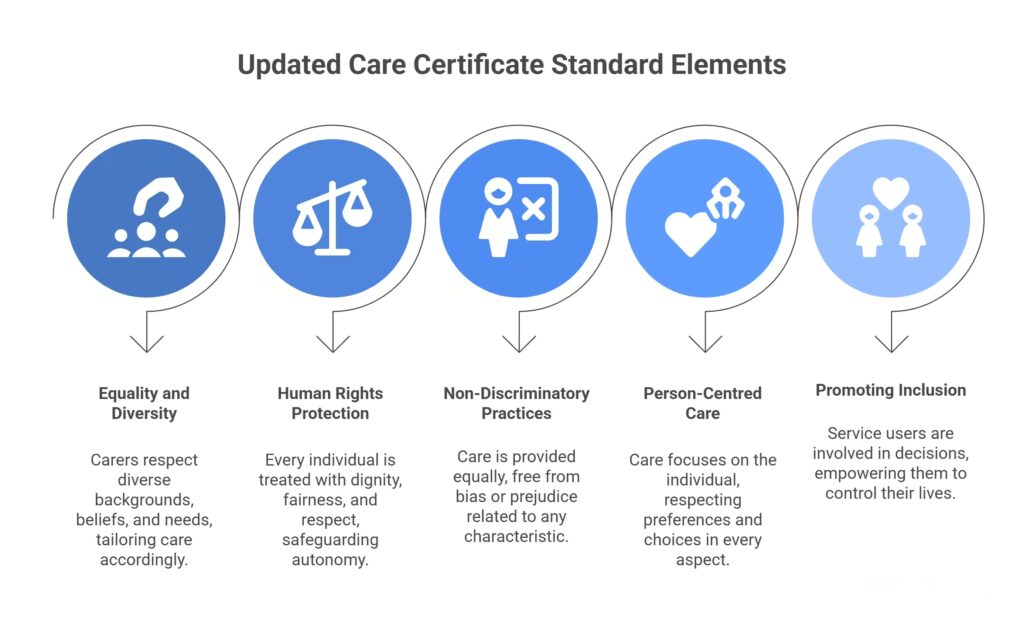
The updated Care Certificate introduces specific elements focused on equality, diversity, inclusion, and human rights, ensuring that care workers can provide support that respects and upholds the dignity and rights of service users. Here’s a breakdown of the key elements of the updated standard:
- Equality and Diversity Awareness: Carers are trained to respect the diverse backgrounds, beliefs, and needs of those they support. This includes acknowledging cultural differences, respecting individuals’ personal preferences, and ensuring that care is tailored to meet the unique needs of each person.
- Human Rights Protection: The updated standard emphasises that every individual has the right to be treated with dignity, fairness, and respect. This includes safeguarding individuals’ autonomy and ensuring that their decisions, particularly regarding their care, are honoured.
- Non-Discriminatory Practices: Carers are educated on how to provide care that is free from discrimination. Whether it’s related to race, gender, sexual orientation, or disability, all service users should be treated equally, without bias or prejudice.
- Person-Centred Care: Carers are taught how to deliver care that focuses on the individual, ensuring that each person’s voice is heard, and their preferences and choices are respected in every aspect of their care.
- Promoting Inclusion and Empowerment: The standard also highlights the importance of involving service users in decisions about their care, empowering them to take control of their lives and maintain independence wherever possible.
How Carers Are Trained to Uphold These Values
Training for the updated Care Certificate standard involves a blend of theory and practice. Carers first learn about the principles of equality, diversity, inclusion, and human rights through formal education, which can include online modules, classroom sessions, and written resources. They are then encouraged to apply this knowledge practically in their work environment.
During training, carers often engage in discussions, role-playing, and scenario-based learning that helps them to internalise and understand how to implement these principles in real care situations. This type of training ensures that carers don’t just understand the theory, but can also put it into practice with service users.
Real-Life Examples in Practice
- Equality in Action: A care worker may ensure that a service user with dietary restrictions due to their religion receives food that aligns with their beliefs. This ensures that the person’s cultural and religious values are respected.
- Respecting Diversity: When interacting with someone who has a learning disability, a care worker may adjust their communication approach to be more accessible, using clear and simple language, visual aids, or sign language to ensure understanding.
- Human Rights in Practice: If a service user with dementia expresses a preference for a specific activity, a care worker would honour that choice, allowing them to maintain control over their routine and reinforcing their right to autonomy.
Through this updated standard, carers are empowered to provide high-quality, person-centred care, ensuring that all individuals, regardless of their background or needs, receive the respect and support they deserve.
Practical Ways to Implement Equality, Diversity, and Inclusion in Care Settings
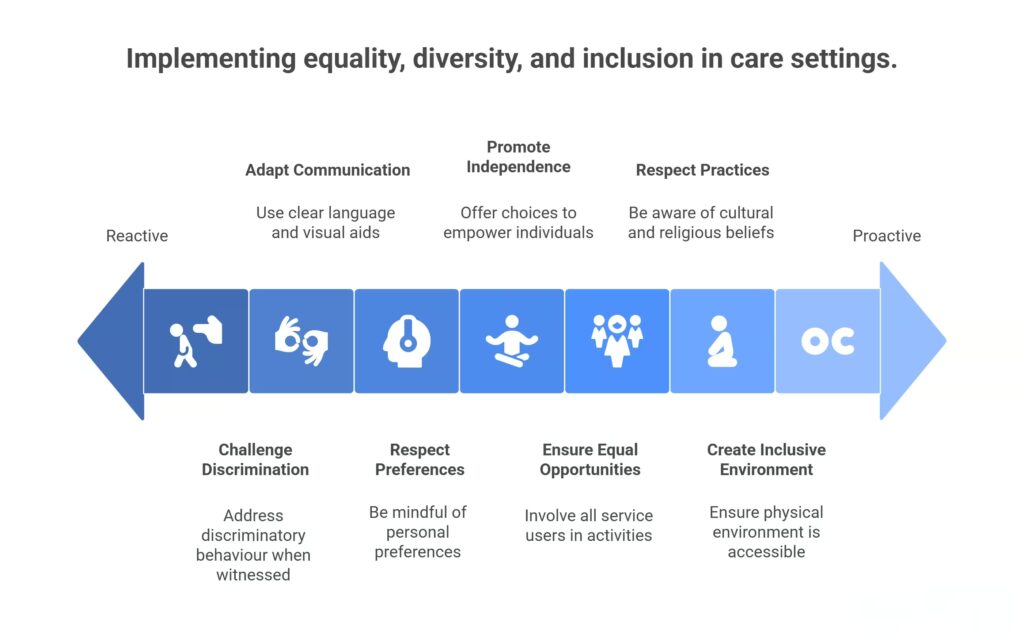
Incorporating equality, diversity, and inclusion into everyday care practices is essential for creating environments where service users feel respected, valued, and heard. Here are some practical tips for care workers to apply these principles in day-to-day care:
1. Respect Cultural and Religious Practices
- Example: Ensure you are aware of the dietary preferences or restrictions of service users based on their cultural or religious beliefs. If a service user observes a specific dietary restriction, provide meals that comply with these needs.
- Tip: Take time to ask individuals about their preferences and beliefs to ensure you’re providing care that respects their culture.
2. Ensure Equal Opportunities for All
- Example: Make sure that everyone, regardless of their age, gender, or disability, has the same opportunities to participate in activities. If a resident uses a wheelchair, offer the same opportunities for social interaction and participation in community events.
- Tip: Be proactive in looking for ways to involve all service users in activities and decisions, providing options that suit different abilities.
3. Adapt Communication Approaches
- Example: When working with service users who have a learning disability or autism, use clear, simple language and visual aids to help explain information. This approach ensures everyone is included in conversations and decision-making processes.
- Tip: Always ask the individual how they prefer to communicate and be flexible in your approach.
4. Challenge Discrimination and Bias
- Example: If you overhear or witness discriminatory behaviour or language towards a colleague or service user, don’t ignore it. Take appropriate action to address the situation, ensuring a safe and respectful environment for everyone.
- Tip: Be an advocate for inclusion and equality by speaking up against prejudice and supporting individuals who may be marginalised.
5. Promote Independence and Autonomy
- Example: When providing care to elderly or disabled individuals, always offer choices—whether it’s choosing what to wear, when to bathe, or what activities to engage in. Empowering people to make choices respects their dignity and promotes independence.
- Tip: Avoid making assumptions about what a person can or can’t do. Instead, offer them the chance to try things for themselves and provide the necessary support if required.
6. Be Mindful of Service Users’ Personal Preferences
- Example: A person with dementia may have specific preferences, such as listening to certain types of music or sitting in a particular chair. Respect these preferences as part of offering person-centred care.
- Tip: Regularly check in with service users about their preferences and be adaptable when their needs change.
7. Create an Inclusive Environment
- Example: Make sure the physical environment is accessible to everyone. For example, ensuring that common areas are wheelchair accessible or providing sensory-friendly spaces for individuals with autism.
- Tip: Assess the care environment regularly to ensure it accommodates the needs of all service users and makes everyone feel welcome.

Addressing Challenges and Potential Barriers
While striving for equality, diversity, and inclusion in care, you might face some challenges. Some common barriers include:
- Lack of Awareness or Training: Not everyone in the care setting may have received adequate training on equality and diversity. To overcome this, encourage continuous professional development (CPD) and suggest workshops or training sessions on inclusive care.
- Language Barriers: In a diverse setting, language differences may arise, especially with individuals whose first language isn’t English. In such cases, ensure the use of translators or communication tools like picture cards or apps to bridge the gap.
- Stereotyping and Prejudices: Some staff members or service users might hold unconscious biases. Encourage open discussions about biases and challenge stereotypes when they arise, making sure that all individuals are treated fairly.
Providing Person-Centred Care with a Focus on Inclusivity
Person-centred care is all about putting the individual at the heart of everything you do. By focusing on inclusivity, care workers can ensure that each service user feels seen, heard, and valued. Here’s how to integrate inclusivity into person-centred care:
- Tailor Care Plans to Individual Needs: Develop care plans that reflect the preferences, choices, and needs of the individual. This could mean adjusting meal plans, activities, or support levels based on personal preferences.
- Encourage Participation and Engagement: Make sure that every service user, regardless of ability, is encouraged to engage in social and recreational activities. For example, if someone has limited mobility, provide alternative ways for them to participate, such as adapted equipment or one-on-one support.
- Respect Autonomy and Empowerment: Always give service users as much control over their lives as possible, even in small decisions. Whether it’s picking their own clothes or choosing the time of day for their medication, small decisions help people maintain their independence.
By implementing these practices consistently, care workers can help create an inclusive, welcoming, and empowering environment that respects and celebrates the diversity of every individual.
How the Updated Standard Benefits Care Workers and Service Users

The introduction of the updated Care Certificate standard, which emphasises equality, diversity, and inclusion, offers significant benefits for both care workers and service users. Let’s explore how:
How Carers Benefit from a Stronger Understanding of Equality, Diversity, and Inclusion
For care workers, gaining a better understanding of these principles enriches their skills, making them more effective and compassionate in their roles. With a strong grasp of equality and inclusion, care workers can more confidently support people from different backgrounds, respecting cultural differences and ensuring a safe environment for all. By learning to recognise and address their biases, they can offer care that is truly person-centred, responsive, and respectful.
Furthermore, a care worker who is trained to understand diverse needs, from communication styles to dietary preferences, will be more equipped to provide tailored care that enhances service user satisfaction. This knowledge also gives carers the tools to advocate for those who may face discrimination or marginalization, thus contributing to a more supportive and just care environment.
How Service Users Experience Improved Care
Service users stand to benefit greatly from the updated standard. When care workers are trained in equality, diversity, and inclusion, service users receive more personalised and respectful care. This improves their experience, as they feel heard, understood, and respected. It might be something as simple as adjusting communication methods to suit someone’s needs or ensuring that cultural traditions and preferences are acknowledged, which can make a huge difference in their comfort and well-being.
Additionally, as care workers embrace these principles, they reduce the chances of bias affecting care delivery, ensuring that service users are treated with dignity and fairness. This leads to higher satisfaction, trust, and overall better outcomes, as the care provided aligns with the individual’s needs and wishes.
The Role of Care Workers in Shaping a More Inclusive Care Environment
Care workers have a central role in creating an inclusive care environment. By adopting the principles of equality, diversity, and inclusion in their daily practice, carers help cultivate a culture where everyone—regardless of race, religion, gender, or disability—feels respected and valued. They can actively challenge discriminatory behaviours and foster an environment where diversity is celebrated.
In turn, this makes care settings more welcoming and open, reducing the stigma that some people may face when receiving care. It also contributes to a more positive working environment, where carers feel supported and empowered to be their best selves. In creating inclusive spaces, care workers build relationships that promote better communication and collaboration, which improves the quality of care provided.
Training and Resources for Meeting the Updated Care Certificate Standard

To ensure care workers meet the updated Care Certificate standard, several training and resources are available. These tools are designed to help carers build the knowledge and skills necessary to provide inclusive, person-centred care.
Training and E-Learning Options
Care workers can complete much of their training online through trusted e-learning platforms. These resources often offer flexible learning options, allowing workers to progress at their own pace while receiving relevant and up-to-date information. Interactive modules on equality, diversity, and inclusion ensure that care workers can apply what they learn in real-world settings. Many online courses offer quizzes, knowledge checks, and assessments to help reinforce learning. One such platform is HF Online, which offers a comprehensive Care Certificate Course covering all 16 standards.
In-Person Training
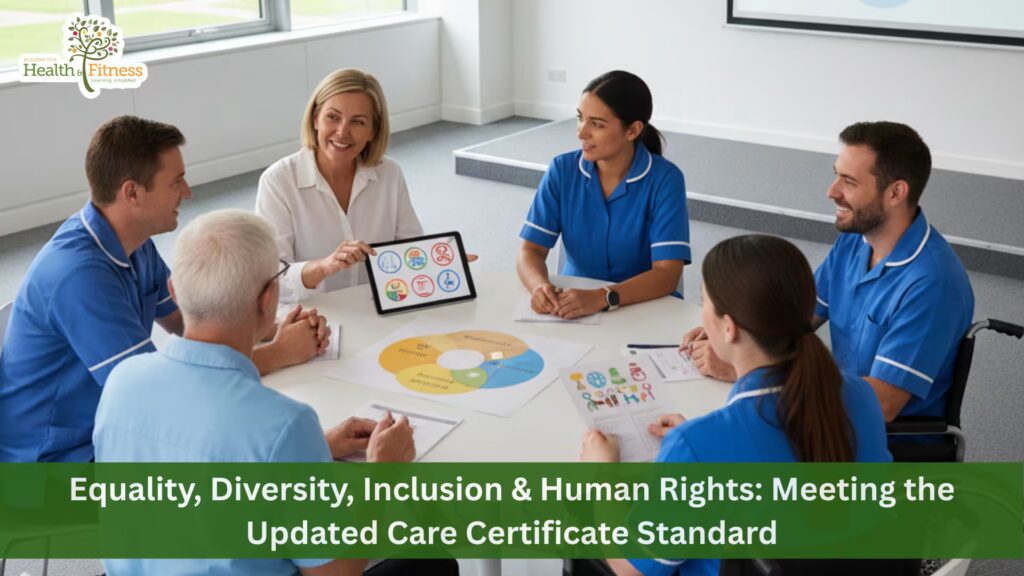
In addition to e-learning, in-person training sessions may also be available. These face-to-face sessions often provide opportunities for carers to engage in discussions, ask questions, and participate in practical exercises that deepen their understanding of the principles of equality and inclusion. In-person sessions also foster a sense of community and team building among carers, which enhances their ability to work together in providing high-quality care.
Assessments and Certifications
Once care workers have completed the necessary training, they will typically be assessed to ensure that they have understood and can apply the principles they have learned. These assessments often include both theoretical exams and practical evaluations, in which workers demonstrate their knowledge and skills in real care settings.
Supporting Staff to Complete the Standard
Employers play an essential role in supporting staff in completing the updated Care Certificate standard. This support includes offering access to training resources, setting aside time for study, and providing guidance and feedback throughout the process. Employers can also help ensure that workers have the opportunity to apply their learning on the job, encouraging reflection and offering constructive feedback to reinforce the training. By offering this support, employers help create a workforce that is not only skilled but also committed to providing the best care possible.
Conclusion
The updated Care Certificate standard on equality, diversity, and inclusion is essential for creating a more inclusive and compassionate care environment. By understanding and applying these principles, care workers ensure they provide respectful, person-centred care that meets the diverse needs of service users.
Employers also benefit, as a more inclusive workforce leads to improved service delivery, staff satisfaction, and better care outcomes. Supporting your team in completing the Care Certificate enhances the quality of care and helps foster a positive, respectful work culture.