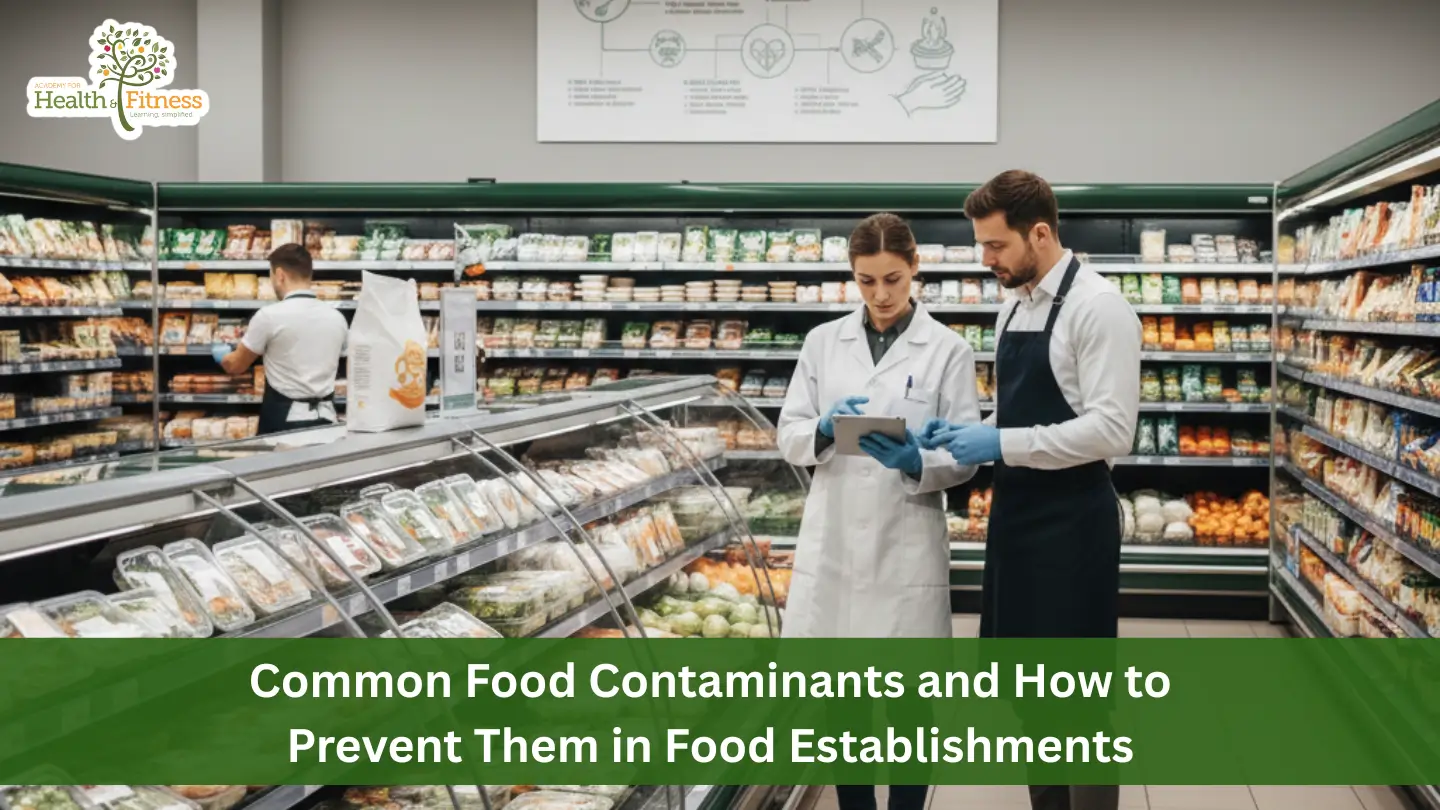


Food contamination happens when food becomes unsafe to eat due to harmful bacteria, chemicals, allergens, or physical objects. It can occur at any stage of food handling, from delivery and storage to preparation and service. In busy food environments, even small lapses in hygiene or handling can quickly lead to contamination.
For UK food establishments, contamination is a serious issue. It puts public health at risk and can lead to foodborne illnesses commonly linked to poor hygiene, cross-contamination, and incorrect temperature control. Recent UK health data shows significant increases in Campylobacter and Salmonella infections, with tens of thousands of cases reported each year.
There are also legal consequences, lower Food Hygiene Rating Scheme scores, and lasting damage to a business’s reputation and customer trust.
This blog explains the most common food contaminants found in UK food premises and how to prevent them. It’s written for food business owners, managers, and food handlers who want to protect customers and meet their legal responsibilities.
What Is Food Contamination?
Food contamination is when food becomes unsafe to eat because harmful substances are present in it. This can include bacteria, viruses, chemicals, allergens, or physical objects. In food establishments, contamination is a serious concern because it directly affects customer health and safety.
In simple terms, contaminated food can cause food poisoning and allergic reactions, even when it looks, smells, and tastes normal. Because of this, food contamination is not always easy to spot. However, the risks are very real and can lead to serious illness.
That’s why many UK food business owners and managers choose recognised training such as the Food Hygiene and Safety Level 3 course, which focuses on contamination risks, legal duties, and practical controls needed in real food environments.
The 4 Types of Food Contamination
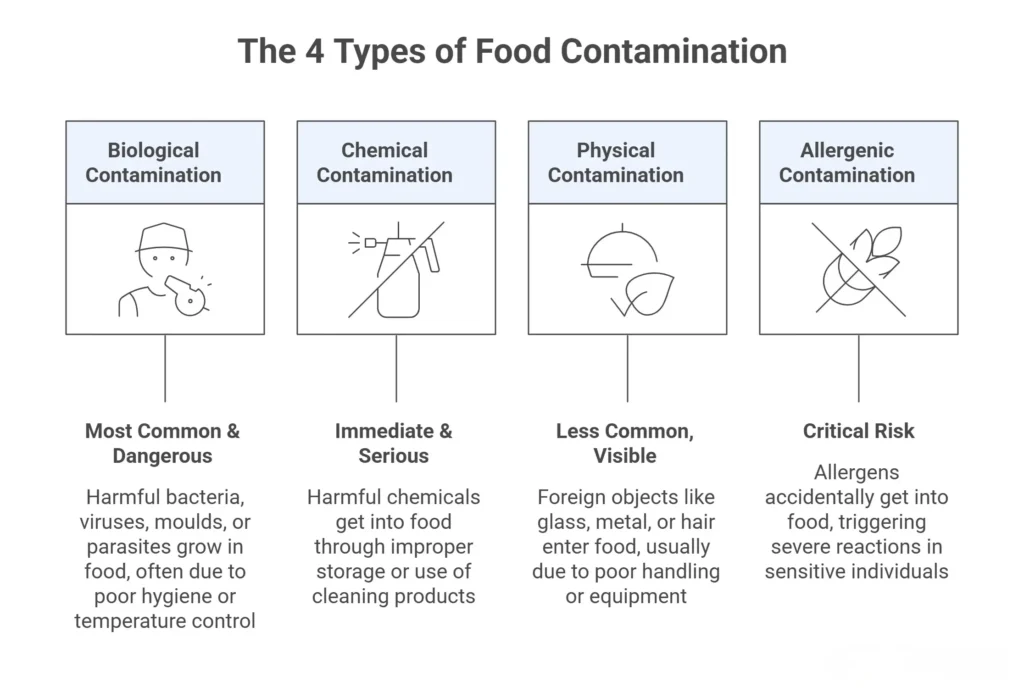
When we talk about food contamination in food establishments, it usually falls into four main types. Each type creates different risks for customers. However, they can all be controlled when you understand where the dangers come from. So, let’s look at each one in more detail and relate them to real kitchen situations.
1. Biological Contamination
Biological contamination is the most common and most dangerous type of food contamination in the UK. It happens when harmful bacteria, viruses, moulds, or parasites grow in food. Because these contaminants are invisible, you often can’t tell there’s a problem until someone becomes ill.
Common biological contaminants include:
- Bacteria such as salmonella, E. coli, and listeria
- Viruses like norovirus
- Moulds and yeasts
This type of contamination usually links to poor hygiene or temperature control. For example, if cooked rice is left at room temperature for too long, bacteria can multiply quickly. As a result, serving that food could lead to food poisoning.
Because biological contamination spreads easily, it often causes outbreaks. Therefore, controlling it is one of the main responsibilities of every food business.
2. Chemical Contamination
Chemical contamination happens when harmful chemicals get into food. This often occurs through poor storage or incorrect use of cleaning products. Although it happens less often than biological contamination, the effects can be immediate and serious.
Common sources of chemical contamination include:
- Cleaning sprays and sanitisers
- Pest control products
- Chemicals used on food equipment
- Food additives used incorrectly
For instance, if staff spray cleaner near uncovered food, droplets can land on it. As a result, customers may ingest chemicals without knowing. Similarly, storing chemicals near food increases the risk of leaks or spills.
Therefore, food businesses must control how they store, use, and label chemicals at all times.
2. Chemical Contamination
Chemical contamination happens when harmful chemicals get into food. This often occurs through poor storage or incorrect use of cleaning products. Although it happens less often than biological contamination, the effects can be immediate and serious.
Common sources of chemical contamination include:
- Cleaning sprays and sanitisers
- Pest control products
- Chemicals used on food equipment
- Food additives used incorrectly
For instance, if staff spray cleaner near uncovered food, droplets can land on it. As a result, customers may ingest chemicals without knowing. Similarly, storing chemicals near food increases the risk of leaks or spills.
Therefore, food businesses must control how they store, use, and label chemicals at all times.
4. Allergenic Contamination
Allergenic contamination is one of the most critical risks for UK food establishments. It happens when an allergen accidentally gets into food that should not contain it. Even small traces can trigger severe allergic reactions.
Common allergens include:
- Nuts
- Milk
- Eggs
- Gluten
- Fish and shellfish
For example, using the same chopping board for a nut-based dessert and a nut-free meal can put a customer at serious risk. As a result, allergen controls must be clear and consistent.
Because allergen laws are strict in the UK, failing to control this type of contamination can lead to heavy fines, closure, and long-term damage to your reputation.
Where does contamination occur?
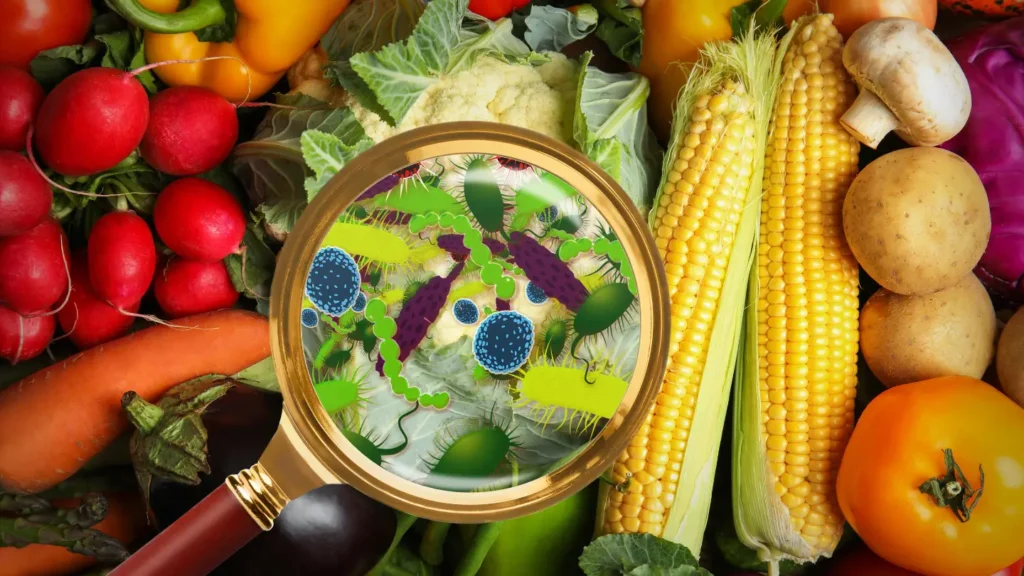
Food contamination can happen at any point in the food chain. That’s why we can’t focus on just one area of the business. Instead, we need to understand where risks start and how they follow food all the way to the customer. When you know the pressure points, you can control them more easily.
During Production
Food contamination can begin before food even reaches your premises. For example, raw foods such as meat, eggs, fruit, and vegetables may already carry harmful bacteria when they come from farms or suppliers.
However, this doesn’t mean you have no control. Choosing approved suppliers and checking deliveries properly helps reduce risk. If raw chicken arrives leaking or at the wrong temperature, you should reject it. Otherwise, contamination may spread throughout your kitchen later on.
During Processing and Packaging
Processing and packaging create another high-risk stage. This is because food often comes into contact with equipment, surfaces, and hands.
For instance:
- Dirty machinery can transfer bacteria
- Poorly cleaned packaging areas can introduce physical objects
- Incorrect labelling can lead to allergen contamination
As a result, even food that starts off safe can become unsafe very quickly. Therefore, regular cleaning and clear procedures are essential at this stage.
During Storage and Transportation
Storage and transportation play a major role in food safety. If food isn’t stored or moved correctly, contamination can easily occur.
Common risks include:
- Raw food stored above ready-to-eat food
- Incorrect fridge or freezer temperatures
- Dirty delivery vehicles
For example, if cooked food travels in a van alongside raw meat without proper separation, bacteria can spread. So, keeping food covered, separated, and at the right temperature is vital.
During Preparation and Handling
Food preparation is where contamination most often occurs in food establishments. This is because staff handle food directly and work at speed.
Typical causes include:
- Poor handwashing
- Using the same equipment for raw and ready-to-eat food
- Touching food after handling rubbish or cleaning chemicals
For example, if a food handler doesn’t wash their hands after handling raw chicken, bacteria can spread to sandwiches or salads. Therefore, good personal hygiene and clear kitchen rules make a big difference.
Understanding cross-contamination
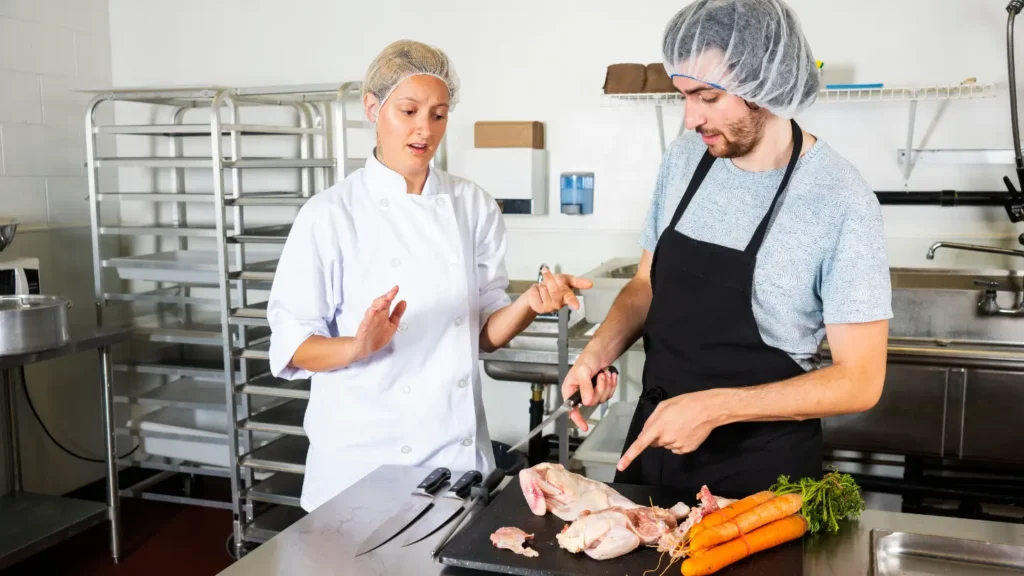
Cross-contamination is one of the main causes of food poisoning in food establishments. It happens when harmful bacteria, allergens, or other contaminants spread from one food or surface to another. Because kitchens are fast-paced and busy, this risk can increase quickly if we don’t follow clear controls.
What Is Cross-Contamination?
Cross-contamination occurs when contamination transfers from a source, such as raw food or unclean hands, to safe food. This often affects ready-to-eat food, which doesn’t get cooked again.
For example, if raw chicken touches a chopping board and you then use the same board for salad, bacteria can spread. As a result, food that looks safe can cause serious illness.
Common Causes of Cross-Contamination
Cross-contamination usually happens during everyday tasks. However, small mistakes can create big risks.
Common causes include:
- Using the same chopping boards or knives for raw and cooked food
- Touching ready-to-eat food after handling raw meat
- Storing raw food above cooked food in fridges
- Using the same cloth on different work surfaces
For instance, if a food handler prepares raw meat and then assembles a sandwich without washing their hands, bacteria can transfer. Therefore, good hygiene habits are essential.
Cross-Contamination and Allergens
Cross-contamination also affects food allergens. This can be life-threatening for customers with allergies.
Examples include:
- Using shared utensils for allergen and non-allergen foods
- Frying different foods in the same oil
- Preparing allergen-free meals in shared areas
Because even tiny traces can cause reactions, allergen controls must be strict. As a result, clear labelling, separate equipment, and proper cleaning are vital.
Why Cross-Contamination Matters
Cross-contamination can lead to food poisoning outbreaks and serious allergic reactions. In addition, it can result in poor hygiene ratings, enforcement action, and loss of customer trust.
However, when you understand how cross-contamination happens, you can prevent it. By keeping food separate and following good hygiene practices, you protect both your customers and your business.
How to Prevent Food Contamination: The 4Cs Strategy
Preventing contamination isn’t just about ticking boxes for an inspector; it is about protecting your customers and your reputation. In the UK, the Food Standards Agency (FSA) promotes the “4Cs” framework. Consequently, if you master these four areas, you will cover almost every risk in a busy food establishment.
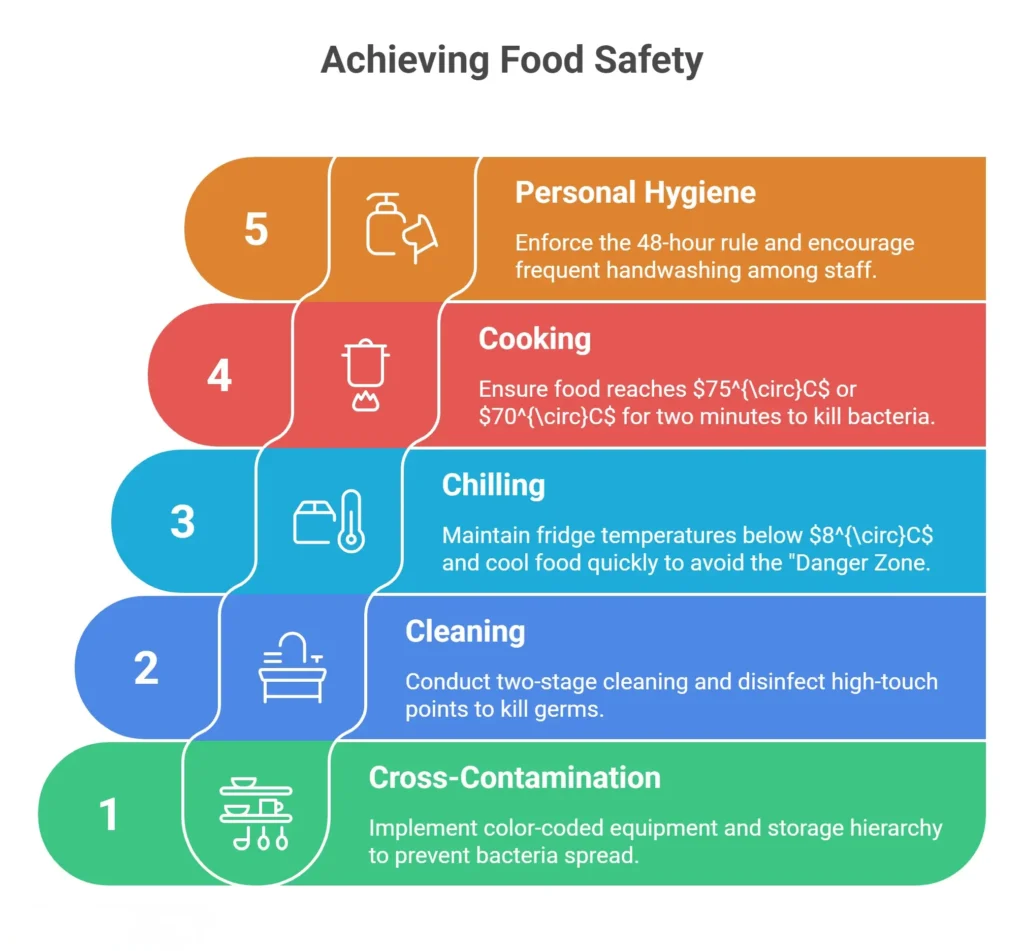
1. Cross-Contamination: Keeping Things Separate
Cross-contamination is perhaps the biggest “silent killer” in professional kitchens. It happens when bacteria spread from one surface or food item to another.
- Colour-Coded Equipment: You should use specific boards for specific tasks. For example, always use red boards for raw meat and green for salad or fruit.
- Storage Hierarchy: Because gravity is not your friend, never store raw meat above ready-to-eat food in the fridge. If a container leaks, the raw juices will contaminate everything below it.
- The “Double-Sink” Rule: If you have the space, dedicate one sink for washing vegetables and another for equipment.
2. Cleaning: More Than Just a Quick Wipe
Cleaning and disinfecting are two different things, yet many people confuse them. Cleaning removes grease and dirt, while disinfecting actually kills the bacteria.
- Two-Stage Cleaning: First, you use a detergent to remove visible dirt. After that, you apply a food-safe disinfectant to kill the microscopic germs.
- Standard Compliance: Always check your cleaning bottles. Specifically, ensure your sanitiser meets the BS EN 1276 standard, as this is the UK benchmark for food safety.
- High-Touch Points: Remember to disinfect “hidden” spots like fridge handles, light switches, and tap heads.
3. Chilling: Beating the “Danger Zone”
Bacteria love warmth. In fact, most food poisoning bacteria grow rapidly between 8°C and 63°C. We call this the “Danger Zone.”
- Check Your Gauges: Your fridge must legally stay below 8°C, but we recommend aiming for 5°C to be safe.
- The 90-Minute Rule: When you finish cooking a large batch of stew or sauce, you must cool it down quickly. Try to get it into the fridge within 90 minutes to prevent spores from growing.
- Real-Life Example: Imagine you’re prepping for a Sunday roast. If you leave a giant bowl of cooked potatoes on the side all morning, you are essentially inviting bacteria to a party. Instead, portion them into smaller containers so they cool faster.
4. Cooking: Getting it Piping Hot
Cooking food thoroughly is your final line of defence. While some customers like a rare steak, poultry and minced meat products must always be cooked through.
- The Magic Numbers: In the UK, the standard “safe” temperature is 75°C. However, if you are cooking at 70°C, make sure the food stays at that temperature for at least two minutes.
- Probe Wipes: You must use a digital thermometer to check the centre of the food. Furthermore, always wipe the probe with a disinfectant wipe before and after every use to avoid transferring germs between dishes.
The Human Factor: Personal Hygiene
Even with the best equipment, your staff can be a source of contamination. Therefore, personal hygiene is a non-negotiable part of your prevention plan.
- The 48-Hour Rule: If a member of your team suffers from a stomach bug, they must stay away from the kitchen. Specifically, they cannot return to work until 48 hours after their last bout of sickness.
- Handwashing: We all know how to wash our hands, but in a rush, people cut corners. You should encourage a culture where staff wash their hands every time they change tasks or enter the kitchen.
Training plays a key role in preventing contamination, especially for supervisors and managers. While basic awareness helps, higher-level training gives staff the confidence to spot risks early and act correctly. Courses like the HF Online Food Hygiene and Safety Level 3 are often used by UK businesses to strengthen food safety leadership and support better inspection outcomes.
What Happens If Food Contamination Is Found?
When inspectors find food contamination, action usually follows straight away. Although some issues seem small at first, they can escalate quickly if ignored. Knowing the process helps you respond calmly and correctly.
Step 1: Inspection by an Environmental Health Officer
First, an Environmental Health Officer (EHO) will check your premises. This often happens without notice.
They will:
- Inspect food handling and storage
- Check hygiene and cleaning standards
- Review records and safety systems
- Speak to staff
If they spot contamination risks, they will act.
Step 2: Immediate Action
If food is unsafe, the officer may require action on the spot.
This can include:
- Disposing of contaminated food
- Stopping certain activities
- Cleaning and sanitising areas immediately
For example, if raw meat contaminates ready-to-eat food, that food must be thrown away straight away.
Step 3: Enforcement Action
Next, the officer decides what formal action is needed.
This may include:
- Improvement Notice – issues must be fixed by a set deadline
- Temporary Closure – used when there’s a serious risk to health
Although improvement notices allow time, failure to comply leads to stronger action.
Step 4: Impact on Your Food Hygiene Rating
Food contamination often lowers your hygiene rating. Because ratings are public, this can affect customer trust and sales.
However, once you fix the issues, you can request a re-rating.
Step 5: Fines or Legal Action (Serious Cases)
If contamination causes illness or keeps happening, legal action may follow. This can mean fines or prosecution. Therefore, early action always works in your favour.
Practical Checklist: Preventing Food Contamination in Your Business
Food safety works best when we keep it simple. A short daily checklist helps you and your team stay focused, even when the kitchen gets busy. Use this list at the start of the shift and throughout the day.
Start of Every Shift
First, check the basics before food prep begins.
- Wash hands properly
- Put on clean uniform or apron
- Cover cuts with blue waterproof plasters
- Tie hair back or wear a hair covering
- Check fridges are at 5°C or below
Although this only takes a few minutes, it prevents problems later in the day.
During Food Preparation
Next, stay alert while handling food.
- Keep raw and ready-to-eat food separate
- Use the correct chopping boards and utensils
- Clean and sanitise surfaces between tasks
- Wash hands after handling raw food
- Keep food covered when not in use
For example, if you move from raw chicken to salad prep, stop and clean first. Even when you’re busy, this step matters.
During Service
As service picks up, safety still comes first.
- Use clean utensils every time
- Avoid touching ready-to-eat food with bare hands
- Keep hot food above 63°C
- Keep cold food chilled
- Clean spills straight away
While rushing feels tempting, slowing down slightly reduces mistakes.
Allergen Checks (All Day)
Because allergen risks don’t stop, keep checking.
- Use separate utensils where possible
- Clean equipment between allergen and non-allergen food
- Check allergen information before serving
- Never guess when a customer asks
One quick check can prevent a serious incident.
End of the Day
Finally, finish the day safely.
- Throw away unsafe or out-of-date food
- Label and store food correctly
- Clean and sanitise all prep areas
- Empty bins and clean bin areas
- Store chemicals away from food
Although you may feel tired, end-of-day cleaning protects the next day’s service.
Final Reminder
If everyone follows this checklist every day, food contamination risks drop quickly. Keep it visible, talk it through with staff, and make it part of the routine.
Conclusion
Food contamination doesn’t usually come from one big mistake. Instead, it builds up when small steps get missed. However, when we follow simple routines every day, we protect customers and keep our business running smoothly.
So, stay consistent, train your team, and don’t rush the basics. When you do the right things daily, food safety becomes part of how you work, not something you worry about later.