

What is a Clinical Support Worker?

A Clinical Support Worker is a vital part of the healthcare team, providing essential support to medical staff and patients. They work closely with healthcare professionals like doctors and nurses to ensure that patient care is delivered effectively and efficiently. While they don’t typically perform medical procedures, they assist in a range of non-clinical tasks that contribute to the overall well-being of patients.
Responsibilities, Typical Settings, and Tasks Involved
Responsibilities: Clinical Support Workers are responsible for a variety of tasks that ensure smooth day-to-day operations in healthcare settings. They assist with patient care, manage patient records, prepare patients for procedures, and monitor their conditions. They may also help with patient hygiene, mobility, and feeding, depending on the needs of the individual.
Typical Settings: Clinical Support Workers can be found working in hospitals, clinics, GP surgeries, community health centres, or other healthcare settings. They may work in areas like outpatient clinics, inpatient wards, or specialised care units.
Tasks: Their day-to-day duties may include:
- Assisting patients with daily activities such as bathing, dressing, and eating.
- Taking vital signs such as blood pressure, temperature, and pulse.
- Preparing patients for procedures or tests.
- Providing emotional support to patients and their families.
- Assisting healthcare professionals with administrative tasks like filing medical records and booking appointments.
Key Skills and Qualifications Typically Required

To succeed as a Clinical Support Worker, certain skills and qualifications are essential:
Skills:
- Communication: The ability to effectively communicate with patients, families, and healthcare teams.
- Empathy and Compassion: Clinical Support Workers must be empathetic, patient, and understanding, as they interact closely with individuals who may be unwell or vulnerable.
- Attention to Detail: Accurately monitoring and reporting changes in a patient’s condition is key.
- Physical Stamina: As the job can involve assisting patients with mobility or performing tasks like lifting and positioning, physical fitness and stamina are essential.
Qualifications:
- Many Clinical Support Workers start with Level 2 or Level 3 qualifications in Health and Social Care.
- The Care Certificate is often a requirement for entry into the role.
- Some may pursue additional qualifications, such as a NVQ or diploma in healthcare support, to progress in the field.
In summary, a Clinical Support Worker plays an essential role in supporting patient care and assisting healthcare professionals. While the job requires a range of skills, it’s a great entry point for those looking to start a career in healthcare and potentially advance to more specialised roles.
What is a Healthcare Assistant?

A Healthcare Assistant (HCA) is a frontline worker who provides essential care and support to patients, working closely with nurses, doctors, and other healthcare professionals. They help with the daily needs of patients, ensuring they are comfortable, well-cared for, and have their basic needs met. While they don’t have the advanced medical training of nurses, HCAs play a crucial role in patient care and are essential to the healthcare team.
Typical Duties
- Personal Care: Assisting patients with activities like bathing, dressing, toileting, and feeding.
- Monitoring Vital Signs: Taking and recording patients’ vital signs, such as blood pressure, heart rate, and temperature.
- Patient Mobility: Helping patients move around, whether it’s assisting them to walk or positioning them in bed.
- Medication Assistance: Under supervision, HCAs may help patients take prescribed medications or remind them to take them.
- Emotional Support: Offering companionship and emotional support to patients, which is crucial for their overall well-being.
- Administrative Tasks: Assisting with record-keeping, booking appointments, or maintaining patient charts.
Work Environments
- Hospitals: On wards, in outpatient clinics, or intensive care units.
- Care Homes: Providing daily support to elderly or disabled residents.
- Community Health: Working in patients’ homes or community settings, offering care for those with chronic conditions.
- GP Surgeries: Assisting doctors and nurses in managing patient care and routine check-ups.
Patient Care Aspects: The role of an HCA is very hands-on and patient-focused. HCAs provide personal care, assist with day-to-day activities, and help monitor patients’ physical and emotional well-being. They often act as a bridge between medical staff and patients, communicating patients’ needs and helping with care plans.
Necessary Qualifications and Skills for This Role
Qualifications
- A Level 2 or Level 3 qualification in Health and Social Care.
- The Care Certificate is often required for entry-level roles.
Additional certifications, such as an NVQ in Health and Social Care, may be needed for more senior roles or to specialise in certain areas of patient care.
Skills:
- Communication: Being able to effectively communicate with patients, families, and healthcare teams is essential.
- Compassion and Empathy: Healthcare Assistants must be caring and patient, especially when dealing with vulnerable patients.
- Attention to Detail: Monitoring patient conditions and recording information accurately is critical.
- Physical Fitness: HCAs may need to assist with lifting or moving patients, so physical stamina is an important part of the role.
- Organisational Skills: The ability to manage time efficiently and stay organised while handling various tasks is key to ensuring quality care.
In summary, a Healthcare Assistant plays a crucial role in direct patient care, providing support with personal care, monitoring health, and offering emotional support. With the right qualifications and skills, this role can offer a fulfilling career with plenty of opportunities for advancement.
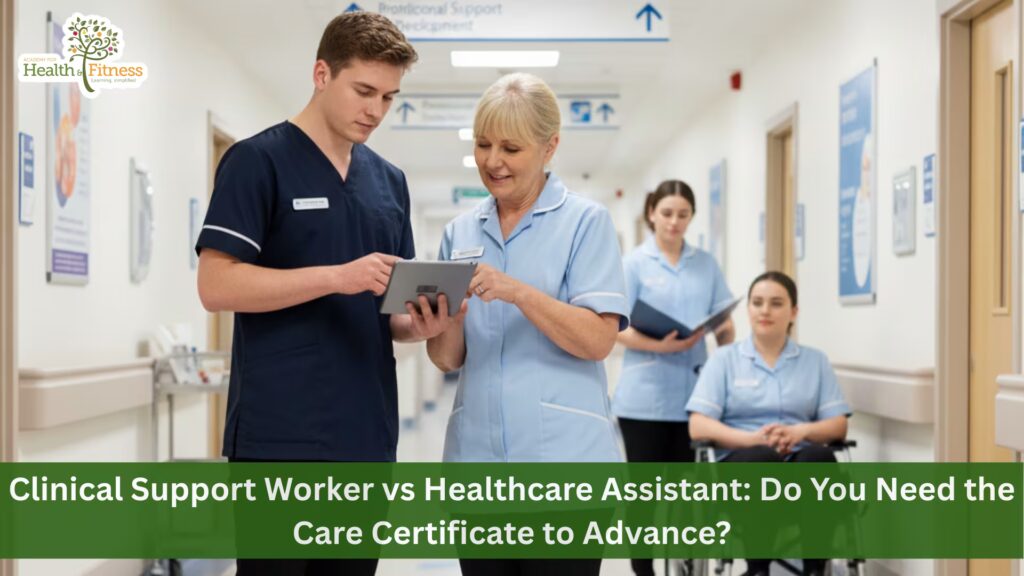
Clinical Support Worker vs Healthcare Assistant: Do You Need the Care Certificate to Advance?
The Care Certificate is essential for getting started in healthcare roles like Clinical Support Workers and Healthcare Assistants, but it may not be enough for significant career advancement on its own. Additional training is often required for higher responsibilities.
When the Care Certificate is Beneficial for Career Advancement
The Care Certificate is a crucial stepping stone when starting a career in health and social care, especially for entry-level roles. While it may not directly lead to rapid career advancement, it provides the essential skills and knowledge needed to perform effectively in these roles.
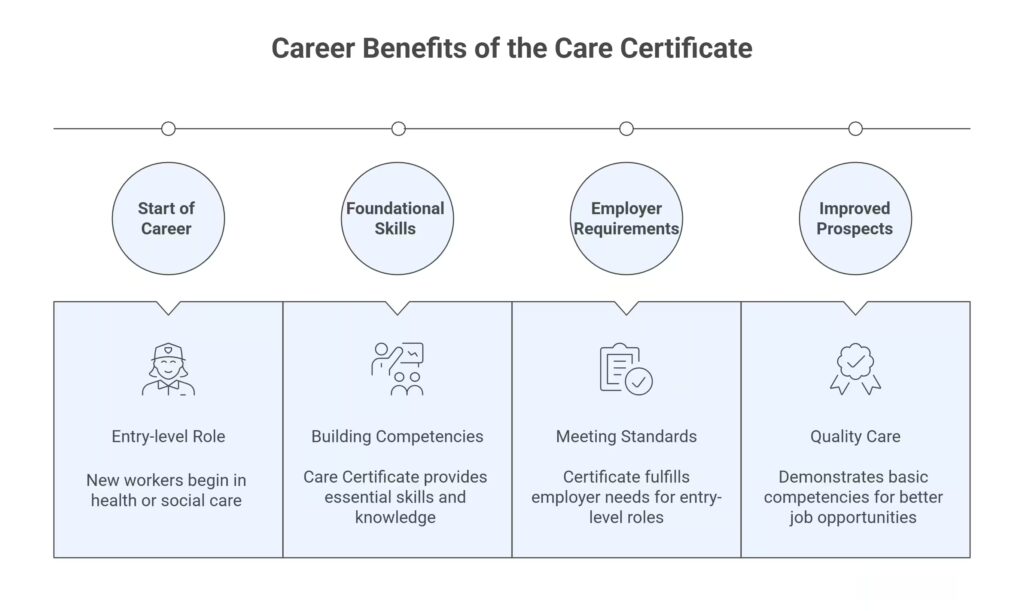
For those just starting out, the Care Certificate is beneficial for:
- Building foundational skills in areas such as communication, infection control, and patient care.
- Meeting employer requirements for entry-level roles, allowing new workers to confidently start their career.
- Improving job prospects by demonstrating that you have the basic competencies needed to provide quality care.
However, while the Care Certificate is important for getting started, it’s often not enough for career progression on its own.
How Additional Training Courses Might Be Needed for Higher Responsibilities
As you gain experience and seek to take on more responsibilities, additional training courses become essential for career advancement. For both Clinical Support Workers and Healthcare Assistants, advanced roles typically require more specialised knowledge and skills beyond what the Care Certificate provides. Some of the key areas where additional training might be required include:
- Specialisation: If you want to specialise in areas like mental health, dementia care, or palliative care, you will need further training specific to those fields.
- Management Roles: If your goal is to become a team leader, care supervisor, or manager, qualifications such as Level 3 or Level 4 diplomas in Health and Social Care will be necessary to gain the skills needed to manage teams, oversee care plans, and ensure compliance with healthcare regulations.
- Clinical Roles: Clinical roles that involve more direct patient care, such as nurse associates or senior clinical positions, require specific qualifications that go beyond the Care Certificate, including medical and clinical training courses.
When the Care Certificate Alone Might Not Be Enough for Career Growth
While the Care Certificate lays the groundwork for a career in healthcare, there are situations where it may not be enough to progress further in your career. This is particularly true for:
- Supervisory and Management Positions: If you’re aiming for a supervisory or managerial role, the Care Certificate alone won’t provide the necessary leadership or strategic skills. Further training in areas like staff management, care coordination, and healthcare law is essential for these roles.
- Specialised Care Areas: For roles in mental health care, specialist nursing, or working with patients with complex needs, additional certifications or qualifications are required. The Care Certificate provides basic care skills, but it doesn’t cover the in-depth knowledge needed for these specialised fields.
- Higher-Level Clinical Support: To advance into higher clinical support roles or even nursing, the Care Certificate will need to be complemented with further qualifications like a diploma in nursing support or Level 3/4 healthcare qualifications.
Clinical Support Worker vs Healthcare Assistant: Key Differences
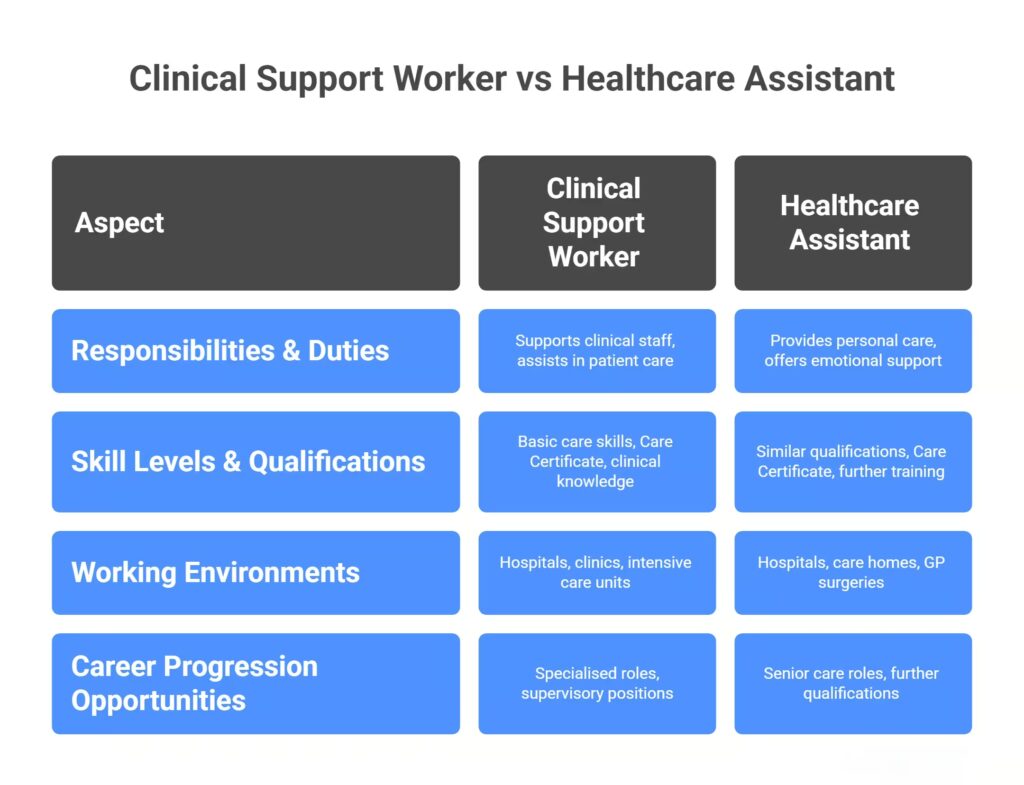
Aspect | Clinical Support Worker | Healthcare Assistant |
Responsibilities & Duties | – Support clinical staff in medical tasks (e.g., taking vital signs, preparing patients for procedures). – Assist in basic patient care tasks like mobility and hygiene. – Assist with administering treatments under supervision. | – Provide personal care to patients (e.g., bathing, dressing, feeding). – Assist with mobility, taking vital signs, and helping patients with daily activities. – Offer emotional support to patients and families. |
Skill Levels & Qualifications | – Requires basic care skills, often with a Level 2 or 3 qualification in Health and Social Care. – The Care Certificate is often required. – May require more clinical knowledge or specialisation for advanced roles. | – Requires similar qualifications (Level 2 or 3 in Health and Social Care). – Care Certificate typically needed. – No formal clinical training is usually required, but further training can help career progression. |
Working Environments | – Commonly works in hospitals, outpatient clinics, and healthcare settings requiring direct clinical support. – May work in specific units like intensive care or surgery wards. | – Works in hospitals, care homes, GP surgeries, or community settings. – Primarily focused on general patient care and personal support in various environments. |
Career Progression Opportunities | – Potential for growth into specialised roles (e.g., mental health support, palliative care). – Can move into supervisory or managerial positions with further qualifications (Level 4, 5). | – Can progress to more senior care roles, such as care supervisor or manager. – Opportunities for further qualifications in nursing, management, or specialised care areas. |
Do You Need the Care Certificate to Advance?

When the Care Certificate is Beneficial for Career Advancement
The Care Certificate is an essential qualification for those just starting their careers in healthcare. For entry-level roles like Clinical Support Workers and Healthcare Assistants, it provides the foundation of skills needed to perform basic patient care tasks. It ensures that you meet the minimum standards required by employers and regulatory bodies, helping you gain the necessary experience in a healthcare setting.
For those aiming to progress into more advanced roles, the Care Certificate is often the first step. It provides the confidence and competence required to handle the basic demands of patient care, making it a key qualification for anyone beginning their journey in healthcare.
How Additional Training Courses Might Be Needed for Higher Responsibilities
While the Care Certificate lays a solid foundation, additional training courses are often required if you want to take on higher responsibilities or specialise in certain areas. For example:
- Specialisation: If you’re interested in working in areas like mental health, dementia care, or palliative care, you’ll need further qualifications specific to those fields.
- Supervisory and Management Roles: To progress into positions such as care supervisor or care manager, you will need further qualifications, like a Level 3 or Level 4 diploma in health and social care, which focus on leadership, team management, and advanced patient care.
- Clinical Roles: If you’re aiming for clinical roles, such as a nurse associate or a clinical team leader, additional clinical training and qualifications beyond the Care Certificate will be required.
These courses help you build expertise, develop advanced skills, and increase your employability as you aim for roles with higher responsibilities.
When the Care Certificate Alone Might Not Be Enough for Career Growth

While the Care Certificate is valuable for entering the healthcare sector, it might not be sufficient for more senior or specialised roles. Here are some situations where the Care Certificate alone may not be enough:
- Supervisory or Managerial Roles: For positions like care supervisor, team leader, or manager, the Care Certificate does not cover the leadership or strategic skills needed. You’ll need further training in areas like staff management, care coordination, and healthcare legislation.
- Specialised Care Roles: In areas like mental health care, palliative care, or nursing support, the Care Certificate is just the starting point. Specialised qualifications are necessary to understand the specific needs of patients and provide the best care.
- Clinical Support in Higher-Risk Areas: To progress into more advanced clinical support roles or roles in high-risk environments (e.g., ICU or emergency care), additional qualifications in clinical techniques, patient management, and advanced care planning are required.
In these cases, while the Care Certificate helps you start your career, further training and qualifications are necessary to climb the career ladder and excel in more specialised or senior roles.
Conclusion
The Care Certificate is an essential starting point for roles like Clinical Support Workers and Healthcare Assistants, providing foundational skills required to enter the healthcare sector. It’s beneficial for gaining the basic competencies needed to deliver quality care in entry-level positions.
However, to advance in your career or specialise in areas like management or clinical roles, additional qualifications and training courses are often necessary. Continuing to develop your skills will ensure long-term career growth and open doors to more rewarding opportunities.